
Best Online Nurse Practitioner Programs: Complete 2026 October Guide to Top-Ranked MSN and DNP Tracks
❓ Compare the best online nurse practitioner programs for 2026 October — accredited MSN and DNP tracks, costs, clinicals, admissions, and pass rates.
Choosing among the best online nurse practitioner programs has become one of the most consequential career decisions a working registered nurse can make in 2026. With more than 400 accredited MSN and DNP tracks now offering remote didactic coursework, the landscape is broader, more competitive, and frankly more confusing than it was even three years ago. This guide cuts through marketing language so you can evaluate accreditation, clinical placement support, faculty access, and certification pass rates with the same rigor an admissions committee will use on you.
Online NP education is not distance learning in the old correspondence-course sense. Today, the strongest programs blend asynchronous lectures, synchronous case conferences over Zoom, simulated patient encounters, and 500 to 1,000 supervised clinical hours completed in your home community. The Commission on Collegiate Nursing Education (CCNE) and the Accreditation Commission for Education in Nursing (ACEN) hold online tracks to the same standards as their in-person counterparts, meaning your diploma will read the same way regardless of delivery format.
What separates a truly excellent online program from a mediocre one is rarely the brand name. It comes down to four pillars: rigorous admissions, dedicated clinical placement teams, faculty who actively practice, and transparent outcomes data. Programs that hide their first-time AANP or ANCC pass rates almost always do so because those numbers fall below the 85% national benchmark, and that single statistic predicts your earning trajectory more than any U.S. News ranking.
Cost matters too, but not the way most prospective students think. Sticker price can be misleading because some lower-priced state programs charge extra fees for clinical coordination, technology, and synchronous lab intensives. A $42,000 MSN at one university may cost the same as a $58,000 program once you add in travel for two-week residencies, malpractice insurance, and certification review courses. We will break down the real total cost of attendance later in this guide.
Specialty fit drives the other half of the decision. Family Nurse Practitioner remains the most popular online track because clinical sites are easier to secure in any zip code, but Psychiatric Mental Health, Adult-Gerontology Acute Care, Pediatric Primary Care, Women's Health, and Neonatal NP programs are increasingly available in hybrid formats. The right specialty depends on your existing RN experience, the populations you want to serve, and the licensure scope in the state where you intend to practice.
This guide is structured the way I wish someone had explained it to me when I was researching programs myself. We will cover accreditation red flags, admission requirements, clinical hour expectations, average tuition by school type, and the realistic timeline from application to first NP paycheck. By the end you will have a personal shortlist of four to six programs that genuinely fit your goals — not a generic ranking that ignores your situation.
Free NP - Nurse Practitioner Study Tools
Interactive NP - Nurse Practitioner resources on PracticeTestGeeks, free to start:
- NP - Nurse Practitioner flashcards — review key terms and concepts card by card
- NP - Nurse Practitioner study guide — topic-by-topic overview of what the exam covers
- NP - Nurse Practitioner cheat sheet — one-page printable summary for last-minute review
Online NP Education by the Numbers

Online NP Program Types and Delivery Formats
Standard 24 to 36 month pathway for nurses who already hold a bachelor of science in nursing. Combines asynchronous coursework with 500 to 750 clinical hours in your home community plus optional on-campus immersions.
Three to four year doctoral pathway producing terminal-degree practitioners. Includes 1,000 supervised clinical hours, a scholarly project, and deeper coursework in health policy, informatics, and evidence-based practice translation.
For associate-degree RNs who want to skip a standalone BSN. Adds nine to fifteen months of bachelor-level bridge courses before MSN coursework begins, saving roughly a semester compared to two separate degrees.
For working NPs who want to add a second population focus such as PMHNP or AGACC. Typically 18 months and 500 clinical hours focused entirely on the new specialty without repeating core MSN content.
Mostly online with two to four short on-campus intensives per year for skills labs, simulation, and high-stakes assessments. Common at large state universities like Vanderbilt, Duke, and the University of South Alabama.
Accreditation is the single non-negotiable filter when evaluating online nurse practitioner programs. In the United States, two bodies accredit graduate nursing education: the Commission on Collegiate Nursing Education (CCNE) and the Accreditation Commission for Education in Nursing (ACEN). A third agency, the Commission for Nursing Education Accreditation (CNEA), is newer but recognized by the U.S. Department of Education. If a program is not accredited by one of these three, you will not be eligible to sit for AANP or ANCC certification, and that ends the conversation immediately.
Beyond institutional accreditation, look at programmatic accreditation specifically for the NP specialty you want. For example, a midwifery program needs accreditation from the Accreditation Commission for Midwifery Education (ACME), and nurse anesthesia tracks need approval from the Council on Accreditation of Nurse Anesthesia Educational Programs (COA). The school's marketing page often blurs these distinctions, so always verify directly on the accrediting body's public database before applying.
State Board of Nursing approval is another layer most applicants overlook. An online program may be CCNE-accredited but not authorized to enroll students who live in certain states, usually because of clinical site regulations or distance education compacts. The NC-SARA (National Council for State Authorization Reciprocity Agreements) covers most states, but California, Massachusetts, and a handful of others sometimes require additional approval. Confirm enrollment eligibility from your home state before submitting your application fee.
Outcome transparency separates serious programs from diploma mills. The strongest online NP programs publish three numbers prominently: first-time certification pass rates by specialty, on-time graduation rates, and post-graduation employment rates within twelve months. If you have to email an admissions counselor to extract these, treat that as a yellow flag. Top programs report 88% to 96% first-time pass rates and 90%-plus employment within six months of certification.
Faculty credentials matter more in online formats because you will rarely see your professors in person. Look for instructors who hold doctoral degrees and maintain active clinical practice at least eight hours per week. Adjunct-heavy faculties can deliver excellent content, but core didactic courses should be taught by full-time doctorally prepared NPs who can answer real-time clinical questions and serve as mentors when you start interviewing for jobs.
Curriculum alignment with the National Organization of Nurse Practitioner Faculties (NONPF) Core Competencies is another quality indicator. Reputable programs map every course directly to NONPF domains: scientific foundations, leadership, quality, practice inquiry, technology, policy, health delivery, ethics, and independent practice. When you read a program's published curriculum, look for explicit competency mapping rather than vague course descriptions, because that mapping signals serious attention to credentialing standards.
Finally, evaluate clinical placement support before you apply, not after you enroll. Programs fall into three camps: full placement (the school finds and contracts all of your preceptors), shared placement (the school provides leads but you finalize agreements), and self-placement (you find every site yourself). For working nurses without strong local healthcare networks, full or shared placement can be the difference between graduating on time and a frustrating six-month delay.
NP Practice Test Questions
Prepare for the NP - Nurse Practitioner exam with our free practice test modules. Each quiz covers key topics to help you pass on your first try.
NP Adult-Gerontology Acute Care Nurse Prac...
NP Exam Questions covering Adult-Gerontology Acute Care Nurse Practitioner. Master NP Test concepts for certification prep.
NP Family Nurse Practitioner
Free NP Practice Test featuring Family Nurse Practitioner. Improve your NP Exam score with mock test prep.
NP Pediatric Nurse Practitioner
NP Mock Exam on Pediatric Nurse Practitioner. NP Study Guide questions to pass on your first try.
NP Case Studies & Practical Application
NP Test Prep for Case Studies & Practical Application. Practice NP Quiz questions and boost your score.
NP Communication & Stakeholder Relations
NP Questions and Answers on Communication & Stakeholder Relations. Free NP practice for exam readiness.
NP Diagnosis & Clinical Decision-Making
NP Mock Test covering NP Diagnosis & Clinical Decision-Making. Online NP Test practice with instant feedback.
NP Patient Education & Health Promotion
Free NP Quiz on NP Patient Education & Health Promotion. NP Exam prep questions with detailed explanations.
NP Pharmacology & Prescribing
NP Practice Questions for NP Pharmacology & Prescribing. Build confidence for your NP certification exam.
NP Professional Standards & Competencies
NP Test Online for Professional Standards & Competencies. Free practice with instant results and feedback.
NP Quality Control & Assurance
NP Study Material on Quality Control & Assurance. Prepare effectively with real exam-style questions.
NP Regulatory Frameworks & Compliance
Free NP Test covering Regulatory Frameworks & Compliance. Practice and track your NP exam readiness.
NP Research & Evidence-Based Practice
NP Exam Questions covering Research & Evidence-Based Practice. Master NP Test concepts for certification prep.
Top Online MSN Nurse Practitioner Tracks for 2026
Public state universities deliver the strongest value in online NP education, particularly for in-state residents. Schools like the University of South Alabama, the University of Cincinnati, East Carolina University, and the University of Missouri-Kansas City offer CCNE-accredited online MSN tracks at total tuition well under $40,000. In-state residency often reduces costs by 30 to 50 percent compared to private institutions, and many states extend reduced regional rates through compacts like the Academic Common Market.
The trade-off with public programs is variability in clinical placement support. Some, like USA and ECU, have strong placement teams that secure preceptors for every student. Others place the burden on the student to find their own sites, which can be challenging if you live in a rural area or a saturated metropolitan market. Always ask the admissions office for the exact placement model in writing before you commit, and request the names of recent preceptor sites in your zip code.
Online vs. Traditional In-Person NP Programs
- +Continue working full-time as an RN while completing graduate coursework
- +Complete clinical hours in your home community at familiar sites
- +No relocation required, saving housing and family disruption costs
- +Asynchronous lectures let you study during night shifts and weekends
- +Same accreditation and certification eligibility as in-person tracks
- +Often lower total cost when you factor in no relocation or lost wages
- +Broad program selection means you can match specialty to local job market
- −Less spontaneous faculty interaction outside scheduled office hours
- −Self-discipline required to keep pace without classroom structure
- −Clinical site sourcing can be difficult in rural or saturated markets
- −On-campus intensives still require two to four trips per year at some programs
- −Networking with classmates and alumni takes more deliberate effort
- −Some employers still prefer graduates of well-known in-person programs
- −Hands-on skills practice limited to scheduled simulation lab visits
Pros and Cons at a Glance
| Pros | Cons |
|---|---|
| Continue working full-time as an RN while completing graduate coursework | Less spontaneous faculty interaction outside scheduled office hours |
| Complete clinical hours in your home community at familiar sites | Self-discipline required to keep pace without classroom structure |
| No relocation required, saving housing and family disruption costs | Clinical site sourcing can be difficult in rural or saturated markets |
| Asynchronous lectures let you study during night shifts and weekends | On-campus intensives still require two to four trips per year at some programs |
| Same accreditation and certification eligibility as in-person tracks | Networking with classmates and alumni takes more deliberate effort |
| Often lower total cost when you factor in no relocation or lost wages | Some employers still prefer graduates of well-known in-person programs |
Online Nurse Practitioner Program Admissions Checklist
- ✓Hold an active unencumbered RN license in the state where you plan to complete clinicals
- ✓Earn a BSN from a regionally accredited institution with a cumulative GPA of 3.0 or higher
- ✓Complete a minimum of one to two years of recent RN clinical experience (some programs waive)
- ✓Submit three professional references including at least one from a current nursing supervisor
- ✓Write a 500 to 1,000 word personal statement aligned to the program's mission and your specialty
- ✓Provide official transcripts from every undergraduate and graduate institution attended
- ✓Complete a graduate-level statistics or research methods course with a B or higher
- ✓Verify your home state is approved for the program under NC-SARA or state authorization
- ✓Budget for application fees ($50 to $150 per program) plus background check and drug screen
- ✓Identify two or three potential preceptors in your community even before you receive admission
Start preceptor outreach six months before your first clinical course
The single biggest reason students delay graduation is failing to secure clinical sites. Even when a program guarantees placement assistance, you accelerate your timeline dramatically by identifying potential preceptors early. Aim to have written letters of intent from two preceptors before you start your second semester, and verify their credentials and willingness to teach NP students well in advance.
Total cost of attendance for online NP programs varies widely, and the published per-credit tuition is only the starting point. A realistic budget includes tuition, fees, technology charges, books and electronic resources, malpractice insurance, background checks and drug screens for each clinical site, travel for any required on-campus intensives, certification review courses in your final term, and the AANP or ANCC certification exam fee itself. When you add these together, even a relatively affordable public MSN often lands between $40,000 and $55,000 all-in.
Public in-state programs remain the most economical pathway. The University of South Alabama, East Carolina University, the University of Texas Health Science Center at Houston, and the University of Cincinnati all offer online MSN-FNP tracks at total tuition between $25,000 and $42,000 for in-state residents. The Academic Common Market reciprocity program extends in-state rates to residents of participating southern states, which can save out-of-state students $10,000 to $20,000 over the course of the degree.
Private nonprofit universities sit in the middle to upper range. Programs at Vanderbilt, Duke, Johns Hopkins, and Georgetown typically run $65,000 to $95,000 in total tuition for the MSN, while DNP tracks at these schools can exceed $120,000. Frontier Nursing University, which specializes exclusively in graduate nursing, offers FNP and PMHNP tracks at roughly $55,000 to $65,000, making it one of the more accessible private options nationally despite its strong reputation for clinical preparation.
Financial aid for graduate nursing students typically combines federal unsubsidized loans, the Federal Direct Graduate PLUS loan, employer tuition reimbursement, the Nurse Corps Loan Repayment Program, HRSA scholarships, and state-specific workforce grants. The Nurse Corps program in particular can repay 60 percent of unpaid nursing loans in exchange for two years of service at a Critical Shortage Facility, with an option to extend for a third year at 25 percent repayment. Many hospital systems offer $5,000 to $20,000 annually in tuition reimbursement contingent on a service commitment after graduation.
Employer-sponsored education benefits often shift the economics dramatically. Magnet hospitals, large academic medical centers, and federal employers like the VA and the Indian Health Service frequently cover most or all of MSN tuition for nurses who remain employed during studies. Some require you to sign a two- or three-year post-graduation service agreement, which is usually a fair exchange given the cost savings and the structured pathway into an NP role at the same institution where you trained.
Hidden costs deserve more attention than they typically get. Plan for $1,500 to $3,000 in books and required digital resources across the program, $200 to $500 annually in NP student malpractice insurance, $400 to $1,200 for a comprehensive certification review course in your final term, and the $315 to $500 certification exam fee. If your program requires on-campus immersions, budget $1,500 to $3,000 per visit when you factor in flights, lodging, meals, and lost wages.
Return on investment for online NP education remains strong despite the upfront cost. Median NP salaries reached $128,490 in the 2024 Bureau of Labor Statistics report, with PMHNP, AGACC, and neonatal specialties commanding $140,000 to $170,000 in many metropolitan markets. Even at the upper end of total program cost, most graduates recover their investment within two to four years of certification, especially compared to staying in a staff RN role where wage growth flattens significantly after the first five to seven years of practice.
Some online programs leave you entirely responsible for finding your own preceptors, often without warning until after you have enrolled and paid your first semester tuition. In saturated markets, this can delay graduation by six to twelve months. Always confirm the exact placement model in writing — full placement, shared placement, or self-placement — before accepting an admission offer, and ask for documented placement timelines from recent graduates.
Clinical placement strategy will shape your online NP experience more than your choice of school. Even at programs with dedicated placement teams, you should treat preceptor outreach as a personal project starting the moment you accept admission. Begin by mapping every clinic, urgent care, community health center, and specialty practice within a thirty-minute drive of your home. Cross-reference that list with the state Board of Nursing's licensee lookup to identify NPs and physicians who already supervise students.
Outreach works best when it is specific and respectful of the preceptor's time. A short, professional email or LinkedIn message stating your program, anticipated start date, specialty focus, and the specific population focus you are pursuing converts much better than a generic request. Mention any mutual connections, prior shadowing experience at the clinic, or alignment with the preceptor's clinical interests. Always attach a one-page student resume and a brief cover letter explaining your goals.
The strongest online programs maintain dedicated clinical placement coordinators who interface with regional health systems. Frontier Nursing University, Duke, Vanderbilt, and the University of South Alabama all have full-time staff whose entire job is matching students to preceptors. Ask any program you are considering for the placement coordinator's name and email, and contact them before committing. A responsive, well-staffed placement office signals an institution that takes your success seriously.
State scope-of-practice rules influence what counts as a valid clinical experience. Full-practice states like Arizona, Colorado, Iowa, Nevada, and Washington allow NPs to practice independently, which generally creates more accessible preceptor pools. Restricted-practice states like California, Texas, Florida, and Georgia require physician collaboration agreements, which can limit which NPs are legally able to supervise students depending on the specific arrangement. Verify your state's rules through the National Council of State Boards of Nursing before finalizing your specialty choice.
Specialty-specific challenges are real. Family Nurse Practitioner placements are the easiest to find because primary care offices exist in every community. Psychiatric Mental Health placements have become more accessible since the telepsychiatry boom of 2020 to 2024, with many programs now allowing up to 50 percent of clinical hours via telehealth. Acute care, neonatal, and pediatric acute care placements are the most difficult because they typically require academic medical center affiliations, so plan an extra six to twelve months of lead time for these tracks.
Documentation discipline matters as much as the clinical experience itself. Most programs require students to log every patient encounter in a tracking platform like Typhon or E*Value, including chief complaint, diagnoses, procedures, and time spent. Falling behind on logging is a common reason students fail clinical courses despite completing the required hours, because programs need that documentation to demonstrate competency mapping to NONPF and accreditor requirements. Schedule fifteen minutes after each clinical day to log encounters while details are fresh.
If you are still exploring which specialty fits your career goals before applying, review the comparison framework in our Nurse Practitioner Specialties: Complete 2026 Guide to Every NP Track to match your existing RN experience and target patient population to the right program. The intersection of your interests, local job market demand, and clinical placement feasibility should drive your specialty choice — not just specialty salary rankings.
Practical preparation for the first semester of an online NP program looks different from undergraduate nursing school. Build a dedicated study workspace, ideally a quiet room with a second monitor, reliable high-speed internet, and noise-canceling headphones for synchronous classes. Most programs assume you have a webcam-equipped laptop with at least 16 GB of RAM and the ability to run video conferencing, simulation platforms, and electronic health record training tools simultaneously without lag.
Time management becomes the differentiator between students who finish on time and those who extend by a semester or more. A typical full-time MSN credit load demands 25 to 35 hours per week, while part-time loads run 12 to 20 hours. Block calendar time for each course in advance, including reading, viewing recorded lectures, completing discussion posts, and clinical preparation. Working nurses who succeed often cluster their RN shifts to free two full days mid-week for graduate work, rather than trying to study in scattered hours.
Build relationships with classmates early. Online programs feel isolating without intentional community building, and study groups dramatically improve retention of pharmacology, advanced pathophysiology, and physical assessment content. Use the program's official Slack, Discord, or learning management system discussion boards, and supplement with small private group chats of three to five classmates pursuing the same specialty. These relationships carry forward into job referrals and career-long peer consultation networks.
Invest in a certification review course in your final semester, regardless of how well you are performing in didactic courses. The AANP and ANCC certification exams cover content in proportions that often differ from your program's curriculum, particularly weighting pharmacology, ethical-legal issues, and population-specific guidelines more heavily than some MSN programs do. Fitzgerald, Barkley, Hollier, and APEA all publish well-regarded review materials with predictive practice exams. A typical review course costs $400 to $1,200 and pays for itself by reducing your retake risk.
Plan your certification exam timing strategically. Most states allow you to apply for the certification exam during your final semester, with eligibility contingent on degree conferral. Take the exam within four to six weeks of graduation while content is freshest, because pass rates drop noticeably for candidates who wait longer than three months. Schedule the exam during a low-stress week, ideally before you start a new NP job, so you can fully focus on preparation without competing demands.
State licensure as an NP follows certification but adds its own administrative steps. Each state Board of Nursing has unique requirements: some accept national certification automatically, others require additional jurisprudence exams or fingerprint background checks. Furnishing or prescriptive authority typically requires a separate application and may include a DEA registration fee of $888. Budget six to twelve weeks between exam passage and your first day of NP practice to complete licensure, credentialing with insurance panels, and hospital privileging where applicable.
Finally, treat your first NP job search like a clinical rotation. Begin researching employers in your final clinical year, attend at least one specialty conference such as the AANP National Conference or APNA Annual Conference, and connect with alumni in roles you would want. Salary negotiation for new NPs is highly variable, with reported offers ranging from $95,000 to $145,000 for the same specialty in the same region. Knowing your floor walking into negotiation, and having competing offers in hand, regularly produces $10,000 to $25,000 swings in starting compensation.
Sample NP - Nurse Practitioner Practice Questions
Try these questions from our free NP - Nurse Practitioner practice tests. The correct answer and an explanation follow each question.
A nurse practitioner participates in a virtual multidisciplinary team meeting via video conference. Which action BEST maintains professionalism and HIPAA compliance during the meeting?
- A. Join from a busy coffee shop to demonstrate flexibility
- B. Use a private space, a HIPAA-compliant platform, and avoid displaying identifiable patient information on shared screens without authorization
- C. Share patient information freely since all attendees are clinicians
- D. Record the meeting on a personal device for future reference
Answer: B. Use a private space, a HIPAA-compliant platform, and avoid displaying identifiable patient information on shared screens without authorization
Teleconference-based care team meetings must use encrypted platforms, private settings, and controlled information sharing to comply with HIPAA and maintain professionalism.
A telehealth session is interrupted by poor video quality, making it difficult to conduct a visual skin assessment. What is the BEST course of action?
- A. Proceed with the assessment using verbal descriptions only
- B. Switch to audio-only and document the technical limitation, scheduling an in-person visit if clinically necessary
- C. Terminate the visit and bill as a complete telehealth encounter
- D. Ask the patient to take photos using a personal app and text them
Answer: B. Switch to audio-only and document the technical limitation, scheduling an in-person visit if clinically necessary
When technology limits a clinical assessment, providers should document the limitation and arrange alternative evaluation to ensure patient safety.
An NP is asked to participate in a root cause analysis after a patient safety event. This activity best reflects which professional standard?
- A. Collegiality
- B. Quality of Practice
- C. Resource Utilization
- D. Ethics
Answer: B. Quality of Practice
Quality of Practice standards include participation in quality improvement initiatives such as root cause analyses to prevent future errors.
Which approach best demonstrates professional competency in NP practice?
- A. Relying solely on initial training
- B. Integrating continuing education, practical experience, and evidence-based decision making
- C. Avoiding challenging situations
- D. Following only personal preferences
Answer: B. Integrating continuing education, practical experience, and evidence-based decision making
This is fundamental to Nurse Practitioner practice. Integrating continuing education, practical experience, and evidence-based decision making represents the professional standard for professional standards in the NP certification framework.
🎓 What degree do online NP programs award?
Accredited online nurse practitioner programs award either a Master of Science in Nursing (MSN) or a Doctor of Nursing Practice (DNP). Both lead to the same national certification eligibility. An MSN track runs roughly 2-3 years, while a BSN-to-DNP track typically takes 3-4 years of study.
START FNP PRACTICE TEST✅ Which bodies accredit online nurse practitioner programs?
Legitimate online NP programs are accredited by the CCNE (part of AACN), ACEN, or NLN CNEA. Accreditation is what makes you eligible to sit for AANP or ANCC certification. Always confirm a program's accreditation status before enrolling, since unaccredited degrees do not qualify you for the certification exam.
START REGULATORY PRACTICE TEST🩺 What is the most popular online NP specialty?
The Family Nurse Practitioner (FNP) track is the most common online NP specialty because it offers broad, lifespan-based practice across pediatrics, adults, and geriatrics. Other online options include Adult-Gerontology, Psychiatric-Mental Health, and Pediatric tracks. Your chosen population focus determines which national certification exam you will take.
START FNP PRACTICE TEST⏱️ How many clinical hours do online NP programs require?
Accredited MSN nurse practitioner programs require a minimum of 500-700 supervised clinical hours, while DNP programs require at least 1,000 total post-baccalaureate hours. These hours are completed in person at approved local sites with a qualified preceptor, even when the coursework is delivered fully online.
START AGACNP PRACTICE TEST💊 Are prescribing and pharmacology covered online?
Yes. Advanced pharmacology is one of the "3 Ps" core courses (pharmacology, pathophysiology, and physical assessment) required in every accredited NP program, taught through online lectures and case work. Prescriptive authority, including controlled-substance rules, varies by state and is governed by each state board of nursing.
START PHARMACOLOGY PRACTICE TEST🌐 Can online NP programs be completed 100% remotely?
The didactic coursework can be completed fully online, but the clinical practicum must be done in person. Many programs are "online" for lectures and exams yet still require students to arrange local preceptorships and sometimes attend brief on-campus intensives for skills validation such as physical assessment.
START PNP PRACTICE TEST📋 Which certifications can online NP graduates earn?
Graduates can sit for certification through the American Association of Nurse Practitioners (AANP) or the American Nurses Credentialing Center (ANCC), depending on their population focus. Family NPs can choose either body; psychiatric-mental health NPs certify through ANCC. Passing one of these exams is required for state licensure as an NP.
START FNP PRACTICE TEST🧠 What does clinical decision-making cover on the NP exam?
Clinical decision-making tests your ability to gather a focused history, interpret findings, form a differential diagnosis, and choose evidence-based management. Online NP programs build this skill through virtual case studies and supervised clinicals. It is one of the most heavily weighted competency areas on national certification exams.
START DIAGNOSIS PRACTICE TEST💵 How much do online NP programs cost?
Tuition for online MSN-NP programs commonly ranges from about $500 to $1,200 per credit, with total programs often between $35,000 and $70,000. Public in-state universities are usually the most affordable. Factor in clinical placement fees, certification exam costs, and licensing fees when budgeting for your education.
START FNP PRACTICE TEST🔑 What are the admission requirements for online NP programs?
Most online NP programs require an active RN license, a BSN (or RN-to-MSN bridge), a minimum GPA around 3.0, and often one to two years of clinical experience. Additional requirements usually include recommendation letters, a goal statement, and a background check before clinical placements begin.
START AGACNP PRACTICE TESTNP Questions and Answers
Nurse Practitioner Jobs by State: Florida, Texas, California, and Beyond — A Complete 2026 Guide
Nurse Practitioner Specialties: Complete 2026 Guide to Every NP Track
Family Nurse Practitioner: Role, Salary & How to Become One
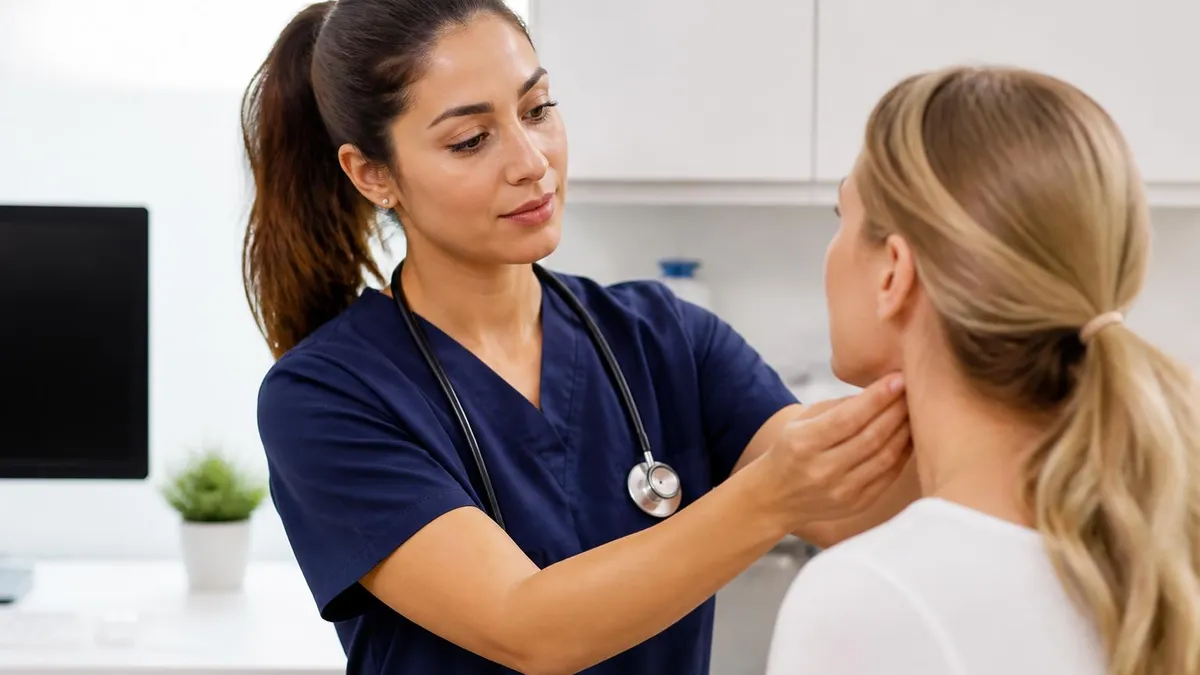
Nurse Practitioner Degree: Complete Guide to NP Education Path
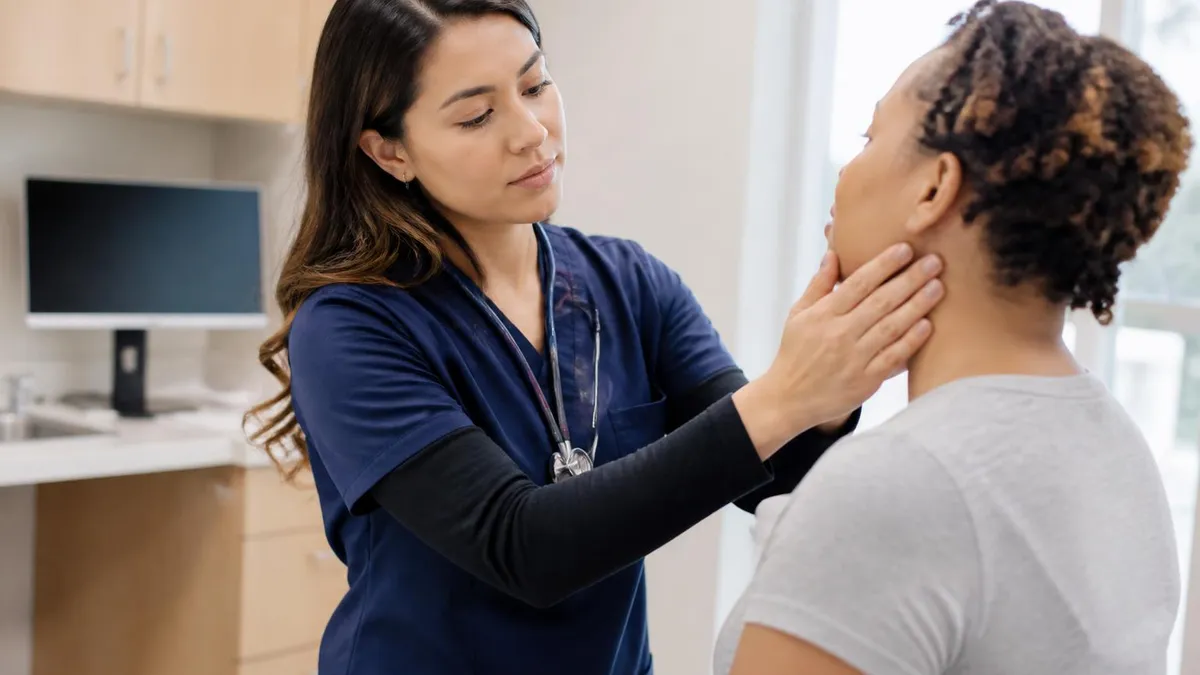
Psychiatric Mental Health Nurse Practitioner Guide
Official Resources
- American Association of Nurse Practitioners (AANP) — the national NP professional body that administers the FNP and adult-gerontology primary care certification exams and publishes practice and licensure guidance.
- American Nurses Credentialing Center (ANCC) — offers nationally recognized NP certifications, including the psychiatric-mental health track, that satisfy state licensure requirements.
- Commission on Collegiate Nursing Education (CCNE) — the AACN agency that accredits nursing degree programs, so verify any online NP program holds CCNE (or ACEN/CNEA) accreditation before enrolling.