
Notary Public Search: What Is a Notary Public and How to Find One Near You
Learn what is a notary public, how to find free notary services near you, notary stamps, seals, and how to become a notary public in your state. 🏆
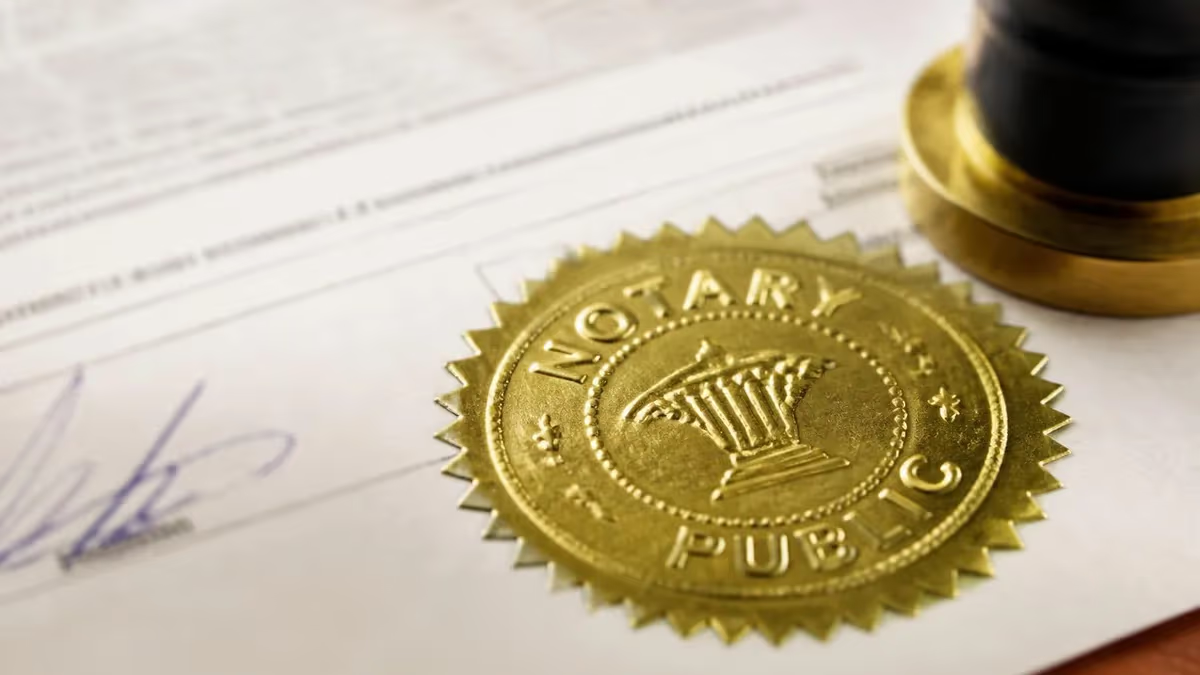
Understanding what is a notary public is the first step in navigating a world filled with legal documents, property transfers, financial contracts, and sworn statements. A notary public is a state-commissioned official authorized to witness the signing of important documents, verify the identity of signers, and deter fraud. Whether you need help with a mortgage closing, a power of attorney, or an affidavit, conducting a notary public search in your area can connect you with a trusted professional who makes those transactions legally valid.
The role of a notary public dates back thousands of years, originating in ancient Rome where scribes called notarii recorded official proceedings and authenticated documents. In the modern United States, every state has its own notary laws, appointment processes, and scope of authority. Some states allow notaries to perform ceremonies like marriages or take depositions, while others limit notaries strictly to witnessing signatures and administering oaths. This variation means that understanding your specific state's rules is just as important as finding a qualified professional near you.
Many Americans are familiar with the term notario publico, particularly in Spanish-speaking communities. It is important to know that in the United States, a notario publico is simply a notary public — a commissioned official with a defined, limited role. In Latin American countries, however, a notario publico holds the equivalent authority of an attorney and can draft legal documents. This distinction matters enormously, and anyone should be cautious about individuals who market notarial services under the Spanish term while implying they have legal expertise they do not possess.
One of the most recognizable symbols of notarial authority is the notary public stamp, also called the notary public seal. This embossed or inked impression is applied to documents to indicate that the notary has properly witnessed the transaction. The stamp typically includes the notary's name, commission number, the state of commission, and the expiration date. Without a valid stamp or seal, many institutions — including banks, courts, and government agencies — will reject notarized documents as incomplete or unverifiable.
Finding a free public notary near me or free notary public near me has become much easier in the digital age. Banks like Bank of America, Chase, Wells Fargo, and many credit unions routinely provide notary services to their account holders at no charge. Public libraries, UPS stores, law offices, insurance agencies, and real estate firms also frequently offer notarial services. Additionally, mobile notary services and remote online notarization (RON) platforms now let you get documents notarized from your home via a video call, which has dramatically expanded access to these essential services.
For those interested in how to become a notary public, the process is generally straightforward but varies significantly by state. Most states require applicants to be at least 18 years old, a legal resident of the state, and free of felony convictions. Some states require completion of a notary public exam, a training course, or both before a commission is granted. States like California, Florida, and Texas have particularly detailed requirements that prospective notaries must meet. If you are in the Sunshine State, learning about notary public florida requirements can help you plan your path to commission effectively.
This comprehensive guide covers everything you need to know about notary public search — from understanding the role and its legal authority, to finding free notary services, obtaining stamps and seals, exploring career opportunities, and preparing for the notary public exam. Whether you are a consumer looking for a notary or an aspiring professional ready to serve your community, the information ahead will give you a clear, practical foundation to move forward with confidence.
Notary Public by the Numbers

Core Roles and Responsibilities of a Notary Public
A notary must confirm each signer's identity using government-issued photo ID such as a passport or driver's license. This step is the cornerstone of fraud prevention and ensures that the person signing is exactly who they claim to be before any document is authenticated.
The notary observes the signer completing the document in real time, confirming the act was voluntary and performed by the identified individual. This witnessed signature gives courts, lenders, and agencies confidence that the document was executed properly without coercion.
Notaries are empowered to administer oaths and affirmations for affidavits, depositions, and sworn statements. When a person swears under penalty of perjury before a notary, that testimony carries significant legal weight in both civil and criminal proceedings.
After witnessing and completing the notarial act, the notary affixes their official stamp or embossed seal to the document. This seal includes the notary's commission details and transforms a private document into one that is officially recognized by institutions nationwide.
Many states require notaries to keep a chronological journal of every notarial act performed. This record includes the date, type of document, signer's name, ID type used, and fee charged — providing an auditable trail that can be crucial if a document is later challenged in court.
Knowing where to look when you need a notary can save hours of frustration. The most common and convenient option for most Americans is their local bank branch. Institutions like Bank of America, Wells Fargo, Chase, and US Bank typically offer notary services free of charge or at minimal cost for account holders.
This is why the search term "notary public in bank of america" is so widely searched — bank notaries are accessible, credentialed, and conveniently located in thousands of communities across the country. Always call ahead to confirm availability, as not every branch has a commissioned notary on staff at all times.
Public libraries represent another excellent source of free notary services. In cities like New York, Chicago, Los Angeles, and many smaller municipalities, public library branches provide notarizations as part of their community service mission. Because the service is taxpayer-funded, there is usually no charge, making libraries the best answer to the question of where to find a free notary public near me without spending a dime. Hours can be limited, so visiting the library's website to check the schedule before making the trip is always wise.
For documents that must be notarized outside of normal business hours — or for signers with mobility limitations — mobile notary services are an ideal solution. A mobile notary travels to your home, hospital room, office, or any other agreed location to perform the notarization at a time that suits you.
While mobile notaries typically charge a travel fee in addition to the per-signature fee, the convenience factor makes them indispensable in situations like real estate closings, estate planning signings at nursing facilities, or urgent business transactions. If you live in Texas and want to explore mobile options, reading about how to become a notary public in texas and mobile notary services in that state can be very helpful.
Remote Online Notarization, commonly abbreviated as RON, has revolutionized access to notarial services in the digital era. Through platforms like Notarize, DocuSign Notary, and NotaryCam, signers can connect with a commissioned notary via live video call, upload their documents digitally, and receive a notarized electronic file within minutes. As of 2026, forty-three states have enacted permanent RON legislation, meaning millions of Americans can handle everything from loan signings to real estate transactions without ever leaving their homes. The notary public seal and stamp in RON transactions are applied digitally and carry the same legal force as their physical counterparts.
Shipping and business service centers — particularly UPS Store locations — are another go-to source for walk-in notary services. With thousands of locations nationwide and extended hours including evenings and weekends, UPS Store notaries offer a practical alternative for people who cannot visit a bank or library during standard business hours. Fees at these locations are typically moderate, usually ranging from five to fifteen dollars per signature depending on the state's fee cap. Always carry multiple forms of identification when visiting any notary, as the professional is required by law to verify your identity rigorously.
Online notary locator tools offered by state governments, the National Notary Association, and the American Association of Notaries make it simple to find credentialed professionals in any ZIP code. By searching through these directories, you can filter by language spoken, availability, type of documents handled, and whether the notary offers mobile or RON services. This level of detail is invaluable for specialized documents like foreign-language affidavits, adoption paperwork, or international business contracts that require a notary with specific experience or linguistic capability.
Community organizations, law offices, insurance agents, and real estate brokerages frequently employ commissioned notaries who can assist clients and community members. Many attorneys keep a notary on staff specifically for estate planning documents like wills, powers of attorney, and living trusts. Real estate offices notarize mortgage documents and deed transfers as a core part of closing transactions. These professionals are often willing to help walk-in visitors during slower periods, and a quick phone call to confirm their availability and fee structure can turn a stressful document search into a simple, efficient visit.
Notary Public Stamp, Seal, and Document Types Explained
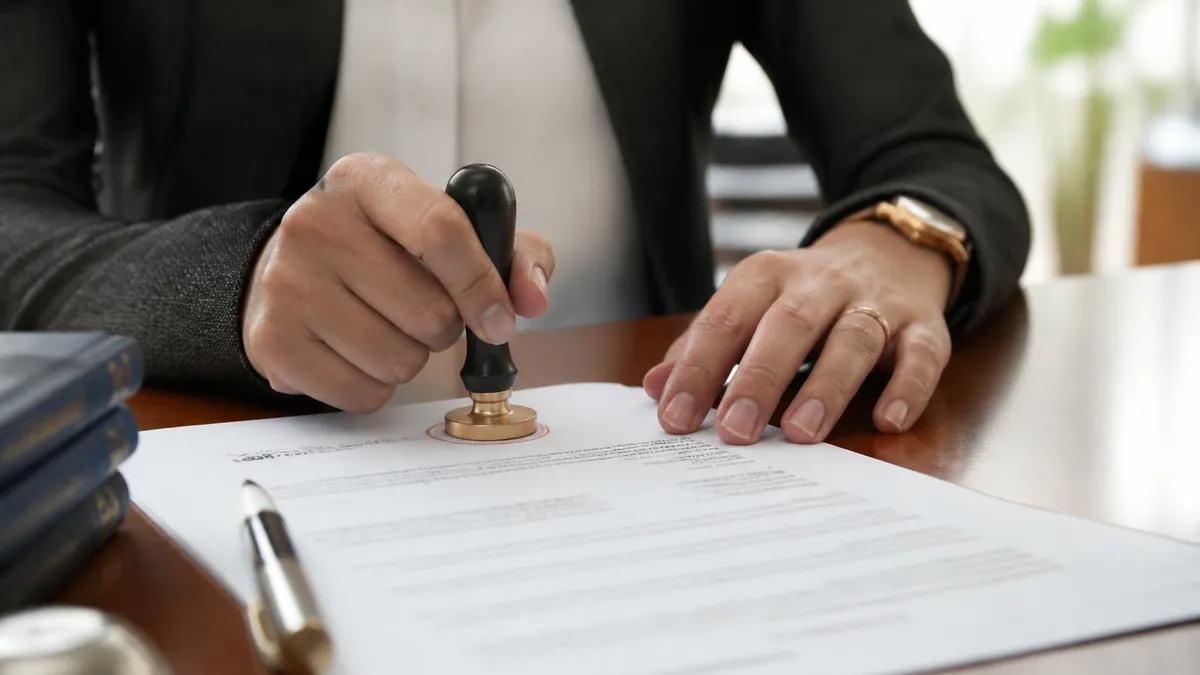
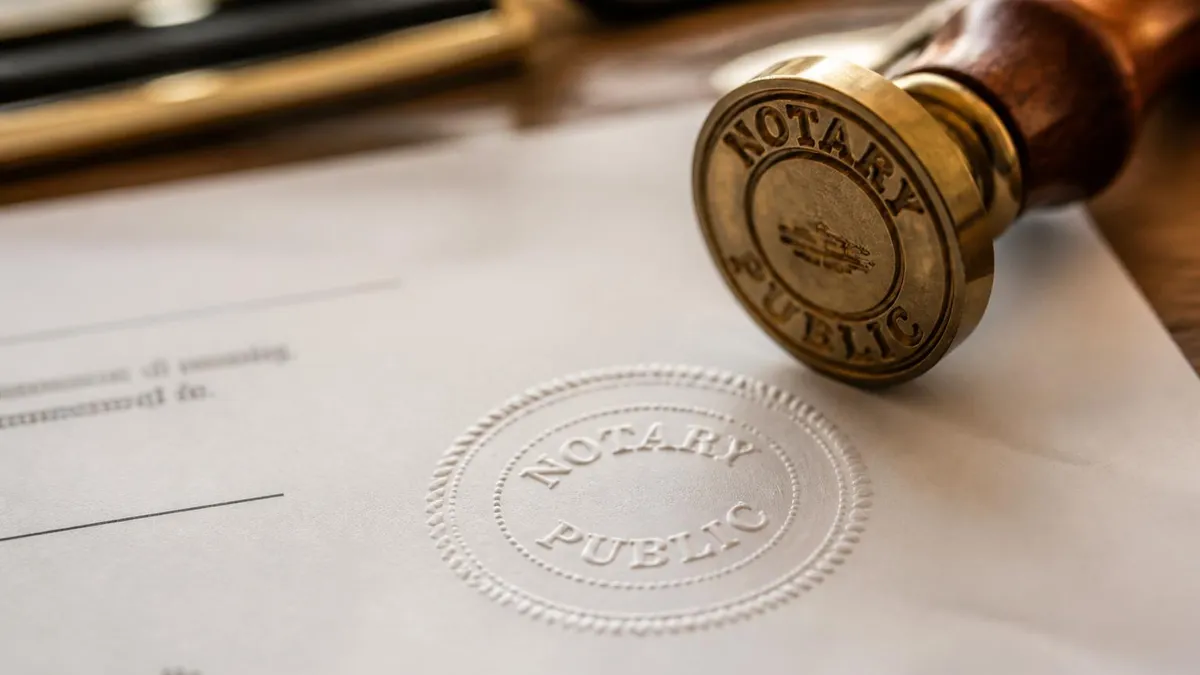
The notary public stamp and the notary public seal are both official markers of notarial authority, but they differ in form. An inked rubber stamp imprints the notary's information in ink directly onto a document, while an embossed seal creates a raised impression in the paper. Both formats include the notary's name, commission number, state of commission, and expiration date. Some states require one format specifically, while others permit either. Without a valid stamp or seal, institutions including banks, courts, immigration offices, and government agencies will typically reject the document outright.
When purchasing a notary public stamp and seal, notaries must ensure the design complies precisely with their state's statutes. Vendors specializing in notary supplies — such as the National Notary Association's supply store — offer state-compliant designs for all fifty states. Commission details must be verified before ordering, as errors on the stamp can render every notarization performed with it legally questionable. Most notaries purchase replacement stamps well before their commission expiration date to avoid any gap in service to their clients.
Pros and Cons of Using Different Notary Service Options
- +Bank notaries are often free for account holders and are conveniently located near most neighborhoods
- +Mobile notaries travel to your location, making them ideal for real estate closings and hospital signings
- +Remote Online Notarization (RON) allows 24/7 access from any internet-connected device
- +Public library notary services cost nothing and serve all community members regardless of income level
- +UPS Store locations offer extended hours including evenings and weekends for walk-in convenience
- +Certified notary signing agents specialize in loan packages, reducing errors in complex mortgage documents
- −Bank notaries may not be available at every branch, and walk-in service is not always guaranteed
- −Mobile notaries charge travel fees that can make the total cost significantly higher than walk-in options
- −RON is not yet available in all states and requires a stable internet connection and compatible device
- −Library notary hours are often limited and may not align with urgent signing timelines
- −Notary fee caps set by states can vary widely, leading to confusion about fair pricing in multi-document situations
- −Poorly trained or inexperienced notaries may complete the wrong notarial act, invalidating important documents
Notary Public Search Checklist: Everything to Do Before Your Appointment
- ✓Confirm the type of notarization required — acknowledgment, jurat, or oath — before scheduling your appointment.
- ✓Gather a valid government-issued photo ID such as a passport, driver's license, or state ID card.
- ✓Do NOT sign the document before meeting the notary, especially if a jurat is required.
- ✓Call ahead to verify the notary's availability, accepted document types, and current fee per signature.
- ✓Check your state's notary fee cap so you know what is a legally permissible charge.
- ✓Bring all pages of the document — notaries cannot notarize incomplete or altered documents.
- ✓If using a mobile or RON notary, confirm the platform's technical requirements and test your connection.
- ✓Verify the notary's commission is active by checking your state's notary public database before the appointment.
- ✓Ask whether witnesses are required for your specific document type, as some states require third-party witnesses.
- ✓Keep a certified copy of every notarized document for your personal records as soon as the appointment concludes.
Never Sign a Document Before Meeting the Notary
One of the most common and costly mistakes consumers make is signing a document before appearing before the notary. For jurats — sworn statements like affidavits — the signature must be made in the notary's presence. Signing early forces the entire document to be reprinted and re-executed, causing costly delays in real estate closings, court filings, and immigration applications. Always arrive unsigned unless the notary has explicitly confirmed that an acknowledgment form is being used and a pre-signed document is acceptable.
Learning how to become a notary public is a rewarding pursuit for anyone who wants to serve their community, build a flexible side income, or expand their professional credentials. The requirements vary considerably from state to state, but most share a common framework.
Applicants must be at least 18 years of age, hold legal residency or citizenship in the state where they are applying, and have no disqualifying criminal history — particularly no felony convictions involving dishonesty, fraud, or crimes against persons. Some states extend eligibility to non-citizen residents who hold valid immigration status, while others restrict commission to U.S. citizens only.
The application process typically begins with completing a state-issued application form, which collects personal information, employment history, and a disclosure of any criminal background. Many states charge an application fee ranging from $20 to $60. After the application is submitted and approved, the applicant must purchase a surety bond — a form of insurance that protects the public from financial harm caused by a notary's negligence or misconduct. Bond amounts commonly range from $5,000 to $25,000 depending on the state, but the annual premium to secure the bond is usually only $30 to $75.
Several states — including California, Colorado, Texas, Montana, and Nevada — require applicants to complete a state-approved notary education course before taking the notary public exam. These courses cover state-specific notary statutes, the proper execution of each type of notarial act, record-keeping requirements, and ethical standards. Course lengths range from three to six hours, and most are now available online for convenience. In California specifically, the six-hour mandatory training course must be completed through a state-approved provider, and the material directly aligns with the topics tested on the state's official notary public exam.
States that require a notary public exam typically administer it through a third-party testing provider or at county clerk offices. The California Notary Public Examination is perhaps the most well-known, consisting of 30 multiple-choice questions drawn from the Notary Public Handbook published by the Secretary of State's office. Applicants must score at least 70% to pass. The exam tests knowledge of California's Government Code provisions on notaries, the types of notarial acts, ID verification requirements, journal-keeping rules, and prohibited conduct. Thorough preparation using practice tests significantly improves first-attempt pass rates.
Once the exam is passed and the application approved, most states require the new notary to file an oath of office and submit their surety bond with the county clerk before their commission becomes active. Some states also require notaries to purchase their official stamp and seal from a state-approved vendor and file a specimen of the seal with the county recorder. This multi-step activation process ensures that the public can verify the notary's legitimacy through official records before trusting them with important documents.
Commission terms typically last four years, after which notaries must renew by reapplying, updating their bond, and in some states retaking the training course or exam. Continuing education requirements are becoming more common as states seek to ensure their notaries remain current on evolving statutes, fraud trends, and remote notarization protocols. Notaries who pursue additional credentials — such as the National Notary Association's Notary Signing Agent certification — can command higher fees and access a broader range of professional opportunities in the mortgage and legal industries.
For those interested in becoming a notary in California specifically, exploring the full requirements for how can i become a notary public in california provides a detailed state-by-state breakdown of every step from application through commission activation. California's rigorous requirements are representative of the growing national trend toward more accountable, professionally trained notarial officers who serve as a meaningful line of defense against document fraud.

In the United States, a notario publico is simply a commissioned notary public with a clearly defined, limited authority. However, some individuals — particularly in immigrant communities — falsely present notario publico services as equivalent to attorney representation, charging substantial fees for unauthorized legal advice or document preparation. This practice is illegal and can result in serious harm including deportation, rejected visa applications, and criminal fraud charges. If you need immigration legal advice, consult only a licensed attorney or accredited representative.
Preparing for the notary public exam requires a structured, deliberate approach because the material spans legal statutes, practical procedures, and ethical standards that may be unfamiliar to first-time applicants. The most effective study strategy begins with obtaining the official study manual published by your state's commissioning authority — typically the Secretary of State or Lieutenant Governor's office. In California, this is the Notary Public Handbook; in Texas, it is the Notary Public Primer published by the Secretary of State. These documents are the definitive source for exam content and should be read thoroughly before any other preparation material.
After reading the official handbook, candidates benefit enormously from taking practice tests that simulate the actual exam environment. Practice questions expose knowledge gaps, reinforce understanding of key concepts, and build the test-taking confidence needed to perform under timed conditions.
The notary public exam in states like California requires a passing score of 70%, and first-time candidates who use practice tests consistently outperform those who rely solely on passive reading. Topics covered include the types of notarial acts, prohibited conduct, journal-keeping requirements, seal specifications, and procedures for handling unusual situations like a signer who cannot speak English or who appears to be under duress.
One area that frequently trips up exam candidates is the distinction between acts that notaries are required to perform versus acts they are prohibited from doing. Notaries in most states are prohibited from preparing legal documents, giving legal advice, notarizing their own signature, and notarizing documents when they have a financial interest in the transaction. Understanding these prohibitions — and the reasoning behind them — is not only essential for passing the exam but for avoiding liability once commissioned. Several exam questions in every state's test directly probe this boundary between notarial authority and unauthorized practice of law.
Study groups and online forums dedicated to notary exam prep offer a community-based learning environment that many candidates find invaluable. Websites, YouTube channels, and discussion boards maintained by practicing notaries and notary associations share tips, sample questions, and first-hand accounts of what to expect on exam day. The National Notary Association, in particular, offers a comprehensive suite of study materials including webinars, flashcard apps, and state-specific exam prep courses that align precisely with the tested content in each jurisdiction.
Time management during the exam is another skill worth practicing deliberately. Most state exams allow 30 to 60 minutes for 30 to 50 questions, which feels generous until candidates encounter several complex statutory interpretation questions that require careful reading. Practicing under timed conditions using realistic sample questions helps calibrate pace, ensuring that candidates do not rush early questions or run out of time at the end. A consistent score of 80% or higher on practice exams is a reliable predictor of success on the actual test.
For comprehensive training resources, enrollment in a structured notary course can bridge gaps that self-study alone may leave. If you want access to state-approved courses that cover everything from the legal framework of notarial authority to the practical mechanics of each act, exploring options for notary public stamp and seal training programs and exam preparation courses gives you a clear starting point for structured learning. These courses are often available entirely online, can be completed on your own schedule, and many come with satisfaction guarantees tied to exam passage.
After passing the exam and receiving your commission, the learning does not stop. Staying current with legislative changes, court decisions affecting notarial practice, and emerging fraud schemes is an ongoing professional responsibility. Many states send update notifications to commissioned notaries when statutes change, and professional associations publish regular newsletters covering industry developments. The most successful notaries treat their commission not as a credential earned and forgotten but as an active professional identity that requires continuous renewal of knowledge and skills.
Once you understand the full landscape of notary public services, a few practical tips can make every notary interaction smoother, faster, and less stressful. First, always research your document's specific requirements before contacting a notary. Different documents — real estate deeds, medical powers of attorney, financial affidavits, immigration forms — often have unique notarization requirements specified either in state law or in the document's own instructions. Misunderstanding these requirements can mean the notarization is done correctly but the wrong type of act was performed, invalidating the entire transaction.
Second, verify the notary's commission status before your appointment using your state's official online verification database. Every state maintains a publicly accessible registry of active, suspended, and expired notary commissions. Searching by the notary's name or commission number takes less than two minutes and gives you complete assurance that the person you are trusting with your documents is legally authorized to perform notarial acts. This step is especially important when using a notary found through an informal referral or a general online marketplace rather than through an official professional directory.
Third, understand the fee structure before you commit. State law in most jurisdictions caps the maximum fee a notary may charge per notarial act — not per document, but per act. A document with five signatures requiring five separate acknowledgments may cost five times the maximum per-act fee. Knowing this structure ahead of time prevents misunderstandings at the appointment and helps you budget accurately, particularly for real estate and legal documents that involve multiple signers or multiple notarial acts on the same package of papers.
Fourth, when using a mobile notary or a remote online notarization platform, read the platform's technology requirements carefully and test your setup at least twenty-four hours before the scheduled appointment. RON platforms typically require a modern web browser, a functioning webcam and microphone, and a stable internet connection with upload and download speeds of at least 1.5 Mbps. Technical failures during a notarial session — particularly for time-sensitive mortgage closings — can cause costly delays. Testing early gives you time to troubleshoot or switch devices if necessary.
Fifth, keep every notarized document in a secure, accessible location after the appointment. While notaries maintain records of the acts they perform, they do not retain copies of the documents themselves. If a notarized power of attorney or affidavit is lost, you may need to execute the entire document again, which can be particularly burdensome if one of the signers has since become unavailable. Storing digital scans of important notarized documents in a secure cloud service provides a backup that can at minimum guide reconstruction if the original is ever misplaced.
Sixth, if you are considering entering the notary profession yourself, the return on investment is genuinely compelling. The total startup cost — including the application fee, surety bond premium, notary stamp and seal, and a journal — typically runs between $100 and $200 depending on the state. A part-time notary who handles ten to fifteen signings per week can earn $500 to $1,500 per month in supplemental income. Notary Signing Agents who specialize in mortgage loan packages earn per-assignment fees ranging from $75 to $200 per closing, making full-time notary work a viable income stream in high-volume real estate markets.
Seventh, take the time to learn the fraud signals that every notary should recognize. Forged identification documents, signers who appear confused or under pressure, documents with altered text or missing pages, and requests to backdate a notarization are all red flags that a professional notary must identify and refuse. The notary's journal entry serves as a legal record that can protect an honest notary from liability when a fraud is later uncovered. Building this habit of careful observation from your very first commission protects both you and the public you are sworn to serve.
Notary Public Questions and Answers

Notario Publico Near Me: How to Find, Verify, and Use a Notary Public in Your Area
What Is a Notary Public Office? Everything You Need to Know

Mobile Notary Public Near Me: How to Find, Book, and Use One in 2026

Notary Public Classes: Complete 2026 Guide to Training, Certification, and Exam Prep
Notary Public Course Online: Complete 2026 Guide to Training, Certification, and Passing Your State Exam
About the Author

Notary Public Law Expert & State Notary Exam Specialist
Georgetown University Law CenterAttorney Sarah Williams is a licensed attorney and National Notary Association (NNA) certified notary with a Juris Doctor from Georgetown University Law Center. She has 13 years of experience in notarial law, document authentication, and real estate closings. Sarah coaches candidates through state notary public examinations, notary signing agent certification, and loan signing agent training programs.