
Public Notary: What They Do, How to Find One & Get Certified 2026 October
Public notary guide: duties, how to find one near you, costs, and how to become certified. Updated 2026 October. 🟢
What Is a Public Notary?
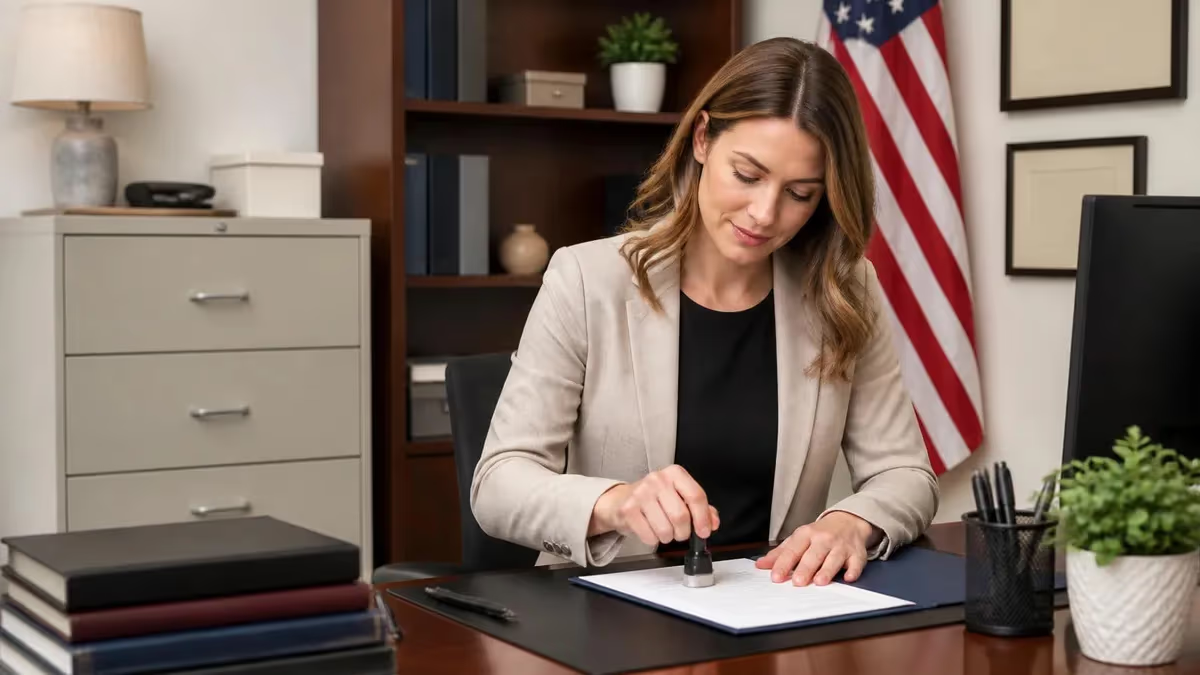
A public notary — often called a notary public — is a state-appointed official who serves as an impartial witness to the signing of important documents. Their job sounds simple on the surface, but it carries real legal weight. When a notary signs and stamps a document, they're certifying that the person who signed it is who they claim to be, that they signed willingly, and that they understood what they were putting their name on.
You've probably dealt with a notary without thinking much about it. Mortgage closings, power of attorney forms, adoption papers, car title transfers — all of these typically require notarization. Without it, those documents may be invalid or unenforceable in court.
One thing worth being clear on: a notary public isn't a lawyer. They can't give legal advice, draft legal documents, or explain what a contract means. Their role is strictly to verify identity and witness signatures. If you need legal counsel, a notary can't substitute for an attorney — no matter how helpful they seem.
What Does a Public Notary Actually Do?
The duties vary slightly by state, but most notaries perform some combination of the following tasks:
- Acknowledge signatures — confirming the signer appeared in person and signed voluntarily
- Administer oaths and affirmations — for affidavits, depositions, and sworn statements
- Certify copies — verifying that a copy of an original document is accurate
- Perform jurats — where the signer swears or affirms the contents of a document are true
- Witness signatures — for documents that don't require acknowledgment but do need a neutral third party
Some states have expanded notary powers to include electronic notarizations and remote online notarizations (RON), where the notary and signer connect via video call. RON became dramatically more common after COVID-19 restrictions made in-person signings impractical — and it's stuck around because of the convenience.
How to Find a Public Notary Near You
Finding a notary is usually easier than people expect. Here are the most reliable options:
Banks and Credit Unions
Your bank branch almost certainly has a notary on staff. Most banks offer free notary services to account holders — call ahead to confirm someone's available. Notary public in bank of america locations and most other major banks typically provide this service at no charge for customers. Same goes for Chase, Wells Fargo, and regional credit unions.
UPS Stores and Shipping Centers
UPS Store locations typically offer notary services for a small fee — usually $5–$15 per signature depending on your state. They keep regular hours and you usually don't need an appointment.
Libraries and Government Offices
Many public libraries have a notary on staff or host notary clinics. Local courthouses, city halls, and DMV offices often have notaries available too, sometimes for free.
Online Notary Finders
The National Notary Association maintains a notary locator at nationalnotary.org. Apps like Notarize and DocuSign connect you with remote notaries 24/7 — if your document type and state allow RON.
Mobile Notaries
For complex closings — like real estate transactions — a mobile notary will come to you. Expect to pay $75–$200 for a mobile notary visit, though that fee is often folded into closing costs.
What Does Notary Service Cost?
State law caps what a notary can charge per signature. As of 2026, those caps range from as low as $2 per signature (Florida) to $20 or more (Minnesota). Here's a rough breakdown:
- Bank or credit union: Usually free for account holders
- UPS Store or shipping center: $5–$15 per signature
- Online remote notary: $15–$35 per session via apps like Notarize
- Mobile notary: $75–$200 depending on distance and complexity
Always ask upfront. A reputable notary will quote their fee before starting. If someone refuses to give a price or charges dramatically above the state cap — find someone else.
What to Bring to a Notary Appointment
Show up prepared and you'll be done in minutes. Bring these three things:
- Government-issued photo ID — driver's license, passport, or state ID. The name must match what's on the document exactly.
- The unsigned document — don't sign it beforehand. The notary needs to witness the actual signing.
- All required signers — everyone who needs to sign must be physically present (or connected via video for RON).
Some documents require witnesses in addition to a notary. If that's your situation, bring your witnesses along — notaries generally can't serve as witnesses on a document they're also notarizing.
The most common mistake people make: signing the document before going to the notary, thinking they're saving time. That defeats the purpose. The notary's job is to watch the signing happen. If you've already signed, many notaries will refuse to notarize it — correctly so.
The Notary Public Stamp Explained
When the notarization is complete, the notary applies a notary public stamp — or seal — to the document. This seal typically includes:
- The notary's full name
- The state where they hold their commission
- Their commission number
- The commission expiration date
- Often, the state seal or emblem
The stamp can be a traditional inked rubber stamp or an embossing seal that creates a raised impression in the paper. Some states require one or the other; most accept either. For electronic documents, a digital seal image is used instead.
Without a valid, current seal, the notarization may be rejected. Banks, courts, and government agencies all check for it — it's not ceremonial.
How to Become a Public Notary
Interested in serving as a notary? The process is accessible to most adults and varies by state. If you want to understand how to become a notary public, here's the general path:
- Meet eligibility requirements — most states require you to be 18+, a legal state resident, and free of felony convictions
- Complete a notary education course — required in California, New York, and several other states; optional but recommended elsewhere
- Pass a notary exam — California requires it; other states are moving toward mandatory testing
- Submit your application — through your state's secretary of state office, with a fee typically ranging from $20–$100
- Get bonded — most states require a surety bond of $500–$15,000 to protect the public from notary errors
- Purchase your supplies — seal, stamp, and notary journal (required in many states)
Once commissioned, you'll serve a term of 2–10 years depending on the state. Renewal is simpler than the initial application, though some states require retesting or continuing education to stay current.
If your state requires an exam, don't underestimate it. Using a national notary practice test helps you get comfortable with question types covering notary laws, prohibited acts, and proper notarization procedures.

Common Notary Mistakes to Avoid
Whether you're getting something notarized or studying to become a notary yourself, knowing what can go wrong saves real headaches later.
The most common mistake signers make is pre-signing the document. Always show up with it unsigned. Another frequent problem is wrong ID — a gym card, a student ID, or an expired driver's license won't work. Bring a current government-issued photo ID, and make sure the name on it matches the document exactly.
For notaries, the biggest errors involve record-keeping. Most states require notaries to maintain a journal — a log of every notarization performed. Skipping journal entries isn't just sloppy; it can mean disciplinary action or loss of commission if something goes wrong and there's no paper trail.
Notarizing for family members is a gray area that varies by state. Some states prohibit it outright; others allow it as long as the notary has no financial interest in the document. If you're a notary and a family member asks for help, look up your state's rules before you agree.
Anyone preparing for a state notary exam will find that the notary public practice test 2026 resources here cover the most heavily tested topics — prohibited acts, proper journal procedures, and the acknowledgment vs. jurat distinction.
Remote Online Notarization (RON)
RON has genuinely changed how notarization works. Instead of driving somewhere, you connect with a commissioned notary via two-way video, show your ID to the camera, sign electronically, and the notary applies a digital seal. The whole session can take under 10 minutes from your couch.
Most states now permit RON for standard documents, though some sensitive document types — certain real estate transactions, wills, and court filings — may still require traditional in-person notarization depending on local rules. Apps like Notarize, OneNotary, and DocuSign Notary offer on-demand notaries around the clock.
If you're applying to become a notary and want to offer RON services, most states require separate authorization beyond your standard commission — additional training and technology certification before you can work remotely. The requirements change as states update their laws, so check with your secretary of state's office for current RON rules.
Notary Public vs. Apostille: What's the Difference?
If you're dealing with documents going to another country, you may have heard the word apostille. An apostille is an official certification that a document — including a notarization — is legitimate and will be recognized by countries that are part of the Hague Apostille Convention. Over 120 countries participate.
To get an apostille, you typically go to your state's secretary of state office after notarization. The apostille certifies the notary's credentials and puts an internationally recognized stamp on the whole package. If the country you're dealing with isn't part of the Hague Convention, you'll need a different process called legalization through the embassy or consulate.
Bottom line: notarization is the first step, apostille is the additional layer required for international documents. Don't skip either if you need the document recognized abroad.
About the Author

Notary Public Law Expert & State Notary Exam Specialist
Georgetown University Law CenterAttorney Sarah Williams is a licensed attorney and National Notary Association (NNA) certified notary with a Juris Doctor from Georgetown University Law Center. She has 13 years of experience in notarial law, document authentication, and real estate closings. Sarah coaches candidates through state notary public examinations, notary signing agent certification, and loan signing agent training programs.