
Notary Public Services Near Me: Where to Find Help Fast in 2026 October
Find notary public services near me fast. Compare banks, UPS, libraries, and mobile notaries. 🔎 Costs, ID requirements, and what to expect.

Searching for notary public services near me usually starts with a stack of paperwork, a looming deadline, and the realization that one missing stamp can derail a real estate closing, a power of attorney, or an affidavit. Before you drive across town, it helps to understand what is a notary public, what they can legally do for you, and which nearby option will get you in and out in under fifteen minutes. This guide walks through every common location, average pricing, and the documents you should bring.
A notary public is a state-commissioned official who acts as an impartial witness during the signing of important documents. Their job is to verify your identity, confirm you are signing willingly, and apply a notary public stamp or seal that makes the signature legally credible. Notaries cannot give legal advice, draft contracts, or interpret immigration forms, but they perform a critical fraud-prevention role for millions of transactions every year across the United States.
The good news is that finding a notary today is easier than ever. Banks, shipping stores, public libraries, courthouses, AAA branches, and even mobile notaries who drive to your home or office all compete for your business. Many charge between five and fifteen dollars per signature, and some banks notarize for free if you are an account holder. Online remote notarization has also exploded since 2020, letting you complete signings over video call in roughly twenty minutes.
Which option you pick depends on three things: the type of document, how quickly you need it stamped, and whether you need additional services like printing, witnesses, or apostille handling. A simple affidavit can be handled at a UPS Store in five minutes. A loan signing with thirty pages and three borrowers usually requires a mobile notary or a title company. Spanish-speaking signers may need a notario publico who understands that the term means something very different in the United States than in Latin America.
This article covers every common location offering notary public services near me, how much each typically costs in 2026, what identification you must present, and the warning signs of a notary who might not be legitimate. We also explain why notaries cannot do everything you might assume, what to do if your bank closed its notary desk, and how remote online notarization works state by state.
By the end you will know exactly where to go, what to bring, what to expect to pay, and how to verify that your stamped document will actually be accepted by the receiving agency. Whether you are a first-time signer or someone who needs notarization several times a year, the practical roadmap below will save you time, money, and the frustration of being turned away at the counter.
If you are studying to become a notary yourself, or you want to understand the rules from the inside, this guide also points you to study resources and state-specific licensing information you can explore after the practical sections.
Notary Services in the U.S. by the Numbers

Where to Find Notary Public Services Near Me
Most major banks including Chase, Wells Fargo, and Bank of America offer free notary services to account holders. Call ahead because not every branch staffs a notary daily, and walk-in availability can vary widely.
Nearly every UPS Store location has at least one notary on duty during business hours. Fees usually run $5 to $15 per signature, and they can also print, scan, and ship the finished documents.
Hundreds of public libraries across the country now offer free or low-cost notary services by appointment. Availability is hit-or-miss, so check your local branch website or call before driving over.
AAA offers free notarization to members at many of its branch locations. Non-members can sometimes use the service for a small fee, making this a hidden gem for travelers and households.
Mobile notaries drive to your home, office, or hospital, typically charging a travel fee plus per-signature cost. Online remote notarization platforms like Notarize and OneNotary handle everything via secure video call.
The cost of notary services varies more than most people expect. Some places charge nothing, others charge fifteen dollars per signature, and mobile notaries can bill anywhere from forty to two hundred dollars depending on travel distance and time of day. Knowing the going rate in your state prevents overpaying and helps you spot suspicious operators who try to charge well beyond the legal maximum. The notary public in bank of america service, for example, is famously free for customers.
State law typically caps how much a notary can charge per signature. In California the maximum is fifteen dollars, in Florida it is ten dollars, and in Texas it is just six dollars for a basic acknowledgment. These caps apply per notarial act, not per document, so a single power of attorney with three signatures can legally cost three times the base rate. Mobile notaries can charge a separate travel fee on top of the per-signature cost, which is also regulated in many states.
Banks and credit unions are usually the cheapest option for account holders. Bank of America, Chase, Wells Fargo, Citibank, U.S. Bank, PNC, and most regional credit unions provide free notarization as a courtesy. The catch is that staffing levels have dropped at many branches since 2020, so always call ahead and ask whether a commissioned notary is on duty that day. Some branches limit free service to two or three signatures per visit.
The UPS Store, FedEx Office, and Staples charge market rates and welcome walk-ins. UPS in particular has become the default for many Americans because locations are open evenings and Saturdays. Expect to pay around ten dollars per signature in most states. These stores also offer printing, copying, witnessing, shipping, and pickup all in one visit, which can be a lifesaver when you need to overnight signed documents to a closing attorney.
Public libraries offer some of the best-kept secrets in notarization. In cities like New York, Houston, Chicago, and Seattle, dozens of branches host free notary hours, often staffed by trained volunteers or library employees. Library notaries can usually only handle one or two documents per visit and may decline to notarize real estate or immigration paperwork. Always book ahead and bring exact change if a small fee applies.
Mobile notaries are the best choice when you cannot travel. They serve hospitals, nursing homes, jails, and home-bound seniors. Pricing usually includes a travel fee of thirty to seventy-five dollars plus the per-signature rate. Many also handle loan signings as Certified Signing Agents, which is a higher-cost specialty service ranging from one hundred to two hundred dollars for a full mortgage package. After-hours and weekend calls cost more.
Online remote notarization is now legal in forty-four states and growing. Platforms like Notarize, OneNotary, BlueNotary, and DocVerify charge twenty-five to seventy-five dollars per session and connect you to a commissioned notary by video within minutes. You will need a webcam, government photo ID, and a smartphone for identity verification. Real estate closings and apostille-eligible documents may have additional restrictions depending on the receiving state.

Notary Public Practice Test Questions
Prepare for the Notary Public Exam exam with our free practice test modules. Each quiz covers key topics to help you pass on your first try.
Notary Public Basic Notary Public
Notary Public Exam Questions covering Basic Notary Public. Master Notary Public Test concepts for certification prep.
Notary Public Duties & Responsibilities of...
Free Notary Public Practice Test featuring Duties & Responsibilities of a Notary. Improve your Notary Public Exam score with mock test prep.
Notary Public Ethics & Professional Conduct
Notary Public Mock Exam on Ethics & Professional Conduct. Notary Public Study Guide questions to pass on your first try.
Notary Public Fraud Prevention & Security
Notary Public Test Prep for Fraud Prevention & Security. Practice Notary Public Quiz questions and boost your score.
Notary Public Identification & Credential ...
Notary Public Questions and Answers on Identification & Credential Verification. Free Notary Public practice for exam readiness.
Notary Public Jurats & Acknowledgments
Notary Public Mock Test covering Jurats & Acknowledgments. Online Notary Public Test practice with instant feedback.
Notary Public Notarial Acts & Procedures
Free Notary Public Quiz on Notarial Acts & Procedures. Notary Public Exam prep questions with detailed explanations.
Notary Public Notary Laws & Regulations
Notary Public Practice Questions for Notary Laws & Regulations. Build confidence for your Notary Public certification exam.
Notary Public MCQ
Notary Public Test Online for MCQ. Free practice with instant results and feedback.
Notary Public
Notary Public Study Material on Notary Public. Prepare effectively with real exam-style questions.
Notary Public Oaths & Affirmations
Free Notary Public Test covering Oaths & Affirmations. Practice and track your Notary Public exam readiness.
Notary Public Recordkeeping & Journal Entries
Notary Public Exam Questions covering Recordkeeping & Journal Entries. Master Notary Public Test concepts for certification prep.
Notary Public Exam Basic Notary Public
Free Notary Public Practice Test featuring Exam Basic Notary Public. Improve your Notary Public Exam score with mock test prep.
Notary Public Exam Duties & Responsibiliti...
Notary Public Mock Exam on Exam Duties & Responsibilities of a Notary. Notary Public Study Guide questions to pass on your first try.
Notary Public Exam Ethics & Professional C...
Notary Public Test Prep for Exam Ethics & Professional Conduct. Practice Notary Public Quiz questions and boost your score.
Notary Public Exam Fraud Prevention & Secu...
Notary Public Questions and Answers on Exam Fraud Prevention & Security. Free Notary Public practice for exam readiness.
Notary Public Exam Identification & Creden...
Notary Public Mock Test covering Exam Identification & Credential Verification. Online Notary Public Test practice with instant feedback.
Notary Public Exam Jurats & Acknowledgments
Free Notary Public Quiz on Exam Jurats & Acknowledgments. Notary Public Exam prep questions with detailed explanations.
Notary Public Exam Notarial Acts & Procedures
Notary Public Practice Questions for Exam Notarial Acts & Procedures. Build confidence for your Notary Public certification exam.
Notary Public Exam Notary Certificates & W...
Notary Public Test Online for Exam Notary Certificates & Wording. Free practice with instant results and feedback.
Notary Public Exam Notary Laws & Regulations
Notary Public Study Material on Exam Notary Laws & Regulations. Prepare effectively with real exam-style questions.
Notary Public Exam Notary Public
Free Notary Public Test covering Exam Notary Public. Practice and track your Notary Public exam readiness.
Notary Public Exam Notary Public MCQ
Notary Public Exam Questions covering Exam Notary Public MCQ. Master Notary Public Test concepts for certification prep.
Notary Public Exam Notary Seal & Stamp Req...
Free Notary Public Practice Test featuring Exam Notary Seal & Stamp Requirements. Improve your Notary Public Exam score with mock test prep.
What Is a Notary Public Allowed and Required to Do
The most important duty of any notary is confirming that signers are who they claim to be. Every state requires the notary to inspect a valid, government-issued photo ID such as a driver license, passport, or state identification card. Expired IDs are almost always rejected, even by one day, because the law treats verification as a fraud-prevention step rather than a formality.
If you lack acceptable identification, some states permit identification by a credible witness who personally knows you and the notary. The witness must also bring valid ID and swear under oath that they vouch for your identity. This option is rare and not universally accepted, so always carry your primary ID whenever possible to avoid being turned away at the counter after waiting in line.
Should You Use an In-Person Notary or Remote Online Notarization?
- +Remote online notarization works 24/7 from any location with internet
- +Average online session takes only 15 to 25 minutes total
- +Identity verification uses multi-factor checks like KBA and ID scanning
- +Sessions are recorded and stored for years, adding a fraud-defense layer
- +No travel time, parking, or waiting in line at a branch
- +Available in 44 states with growing reciprocity for cross-state acceptance
- −Online fees of $25 to $75 are higher than in-person bank notarization
- −Some title companies and courts still require wet-ink in-person signatures
- −Real estate closings in certain states cannot be done remotely yet
- −Requires reliable internet, webcam, smartphone, and government photo ID
- −International signers may face additional verification or platform limits
- −Apostille-bound documents may need traditional notarization for acceptance
Pros and Cons at a Glance
| Pros | Cons |
|---|---|
| Identity verification uses multi-factor checks like KBA and ID scanning | Some title companies and courts still require wet-ink in-person signatures |
| Sessions are recorded and stored for years, adding a fraud-defense layer | Real estate closings in certain states cannot be done remotely yet |
| No travel time, parking, or waiting in line at a branch | Requires reliable internet, webcam, smartphone, and government photo ID |
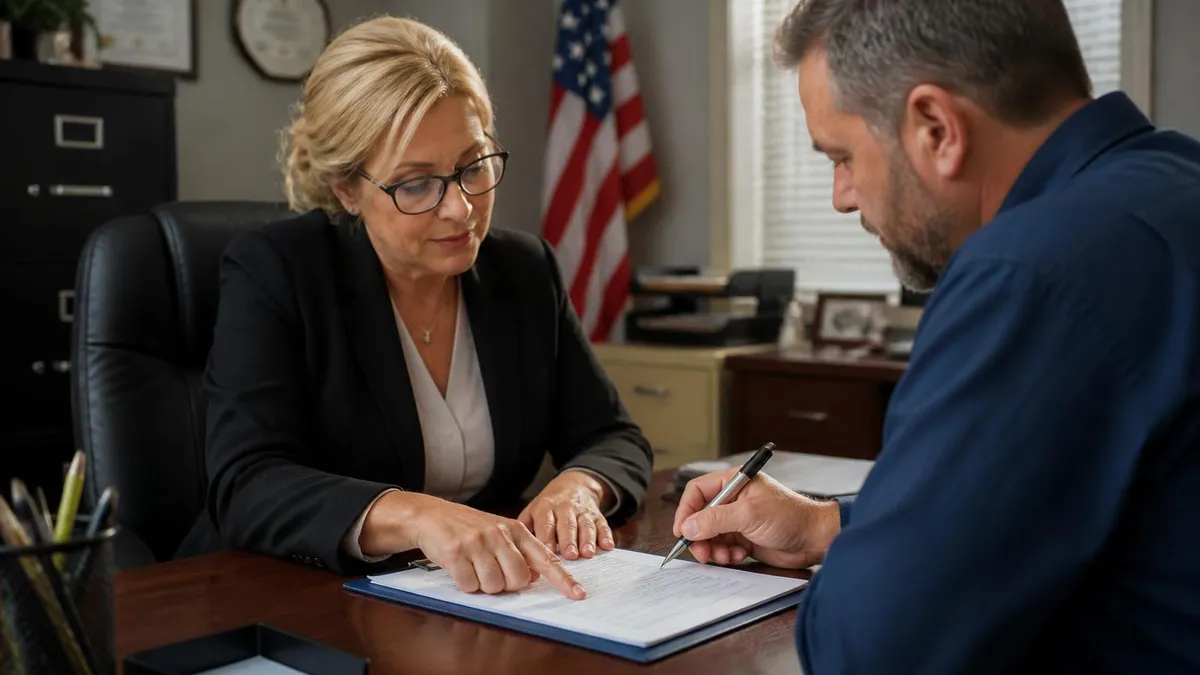
Pre-Visit Checklist for Notary Public Services Near Me
- ✓Bring a valid, unexpired government-issued photo ID such as driver license or passport
- ✓Do not sign the document in advance unless instructed by the notary
- ✓Confirm whether your document needs an acknowledgment or a jurat
- ✓Check that all pages of the document are present and complete with no blanks
- ✓Bring any witnesses required by the document, with their photo IDs
- ✓Call ahead to confirm the notary is on duty and accepting walk-ins
- ✓Have payment ready in cash, card, or check depending on the location
- ✓Bring printed copies if you are visiting a library or AAA branch with no printer
- ✓Ask if the notary handles your specific document type before traveling
- ✓Verify the notary commission is current using your state notary lookup tool
Always Call First
Even at chains like UPS, Chase, or Bank of America, the notary on staff can be out sick, at lunch, or simply not commissioned at that branch. A two-minute phone call confirms availability and saves you a wasted trip. Ask about fees, accepted ID, and whether they handle your specific document.
Remote online notarization, often shortened to RON, has rewritten the rules of what a notary public services near me search really means. Forty-four states now allow notaries to conduct signings entirely over secure video conferencing. The signer logs into an approved platform, uploads the document, completes identity proofing through knowledge-based questions and a live ID scan, and then signs digitally while the notary watches and applies an electronic notary public seal. The whole process typically takes fifteen to twenty-five minutes.
The platforms most Americans use are Notarize, OneNotary, BlueNotary, DocVerify, ProperSign, and Stavvy. Each charges a per-document or per-session fee ranging from twenty-five to seventy-five dollars. Notaries on these platforms hold a separate RON commission in addition to their regular state license, and many states require background checks, additional training, and a dedicated electronic journal. The session is recorded and stored for five to ten years, providing a stronger fraud audit trail than a paper journal.
RON is ideal for affidavits, powers of attorney, real estate refinance documents in many states, vehicle title transfers, business agreements, and trust paperwork. It is especially useful for snowbirds, expats, military families, and anyone signing documents that need to be returned to a different state quickly. International signers can also use RON, although some platforms require a U.S.-issued photo ID or a passport-based verification path that adds an extra step.
However, RON is not universally accepted. Some county recorders still reject electronically notarized real estate documents, and a handful of holdout states have not authorized RON for in-state notaries even though they recognize signings performed by out-of-state notaries. Always confirm with the receiving party, such as your title company, lender, attorney, or court, that an electronic notarization will be accepted before paying for a session. The cost of redoing a notarization can dwarf the fee saved by avoiding a drive.
Identity verification on RON platforms is generally more rigorous than at a bank counter. You will typically scan the front and back of your driver license, take a live selfie, answer five out-of-wallet questions sourced from credit bureau data, and consent to recording. Anyone who fails identity proofing twice is locked out and must use in-person notarization instead. This layered process is one reason many fraud experts now consider RON safer than traditional in-person signings.
If you live in one of the six states that still restrict RON, you may still benefit from in-person electronic notarization, or IPEN, which combines a digital seal with a physical meeting. Hybrid options like this are growing, especially for real estate closings where lenders want digital efficiency but state law requires physical presence. Ask your notary which formats they support and whether your receiving party has a preference.
Whether you choose RON, IPEN, or a classic paper signing depends on your document, your state, and the receiving agency. The point is that searching for notary public services near me in 2026 should include the entire internet as an option, not just a five-mile radius around your house.
In many Latin American countries a notario publico is a licensed attorney with broad legal authority. In the United States a notary public is not an attorney and cannot give legal or immigration advice. Be cautious of any U.S. notary advertising immigration services or charging hundreds of dollars beyond state fee caps.
Most notary visits end in five minutes with a clean stamp and a thank you, but a small percentage end in rejection, frustration, or outright fraud. Knowing the warning signs protects your time, your money, and the legal weight of your document. The two biggest pitfalls are bringing the wrong identification and choosing the wrong notarial act, both of which force you to start over from scratch.
Identification rejections happen more often than people expect. Expired driver licenses, photocopies, photos of IDs on a phone screen, and unlaminated paper IDs are all routinely refused. Some states allow passports, military IDs, tribal IDs, and permanent resident cards, while others have narrower lists. If your only ID is in poor condition or the photo no longer resembles you, bring a backup secondary document and consider scheduling extra time for a credible witness procedure.
Document preparation mistakes are the second top reason notarizations fail. A notary cannot fill in missing dates, choose between an acknowledgment and a jurat for you, or leave blanks for someone else to complete later. If your document has a notarial certificate already attached, read it carefully and make sure the wording matches the act you actually need. Pre-signing documents that require a jurat is a guaranteed do-over, since jurats require you to sign in the notary's presence.
Fraudulent or unethical notaries are rare but real. Red flags include refusing to record the act in a journal, charging significantly more than state caps, offering immigration or legal advice, claiming to translate documents, or pressuring you to sign blank pages. Real notaries follow strict procedures, log every transaction, and refuse service when something feels off. If a notary is willing to bend the rules for you, they will eventually bend them against you.
Always verify a notary's commission status using your state's online notary lookup. Every state secretary of state maintains a free public database where you can search by name, commission number, or county. If the commission has expired, been revoked, or never existed, the stamp on your document is legally worthless. Five seconds of research before the appointment can save weeks of paperwork redo later.
Lastly, save a clean photograph or scan of your notarized document before you leave the office. Original notarial seals are valuable, and lost documents cannot always be re-notarized without redoing the full process. Keep both a paper copy and a cloud backup. If the receiving agency rejects your notarization for any reason, the digital copy lets you troubleshoot quickly with the original notary before fees, deadlines, or signatures expire.
Bring patience, the right ID, and a willingness to ask questions. Most notaries are happy to walk you through unfamiliar paperwork as long as they do not cross into legal advice. A confident signer plus a careful notary equals a document that holds up in court, at the bank, and with the receiving agency on the first try.
If you regularly need notary public services near me, building a personal routine saves time over the long run. Create a simple folder, either physical or digital, holding photocopies of your valid ID, a list of your three closest free notary options with phone numbers and hours, and a printable checklist of common documents you might need notarized. Households that handle real estate, small businesses, elderly parents, or international paperwork will use this folder more often than they expect.
For business owners, consider opening accounts at banks that offer free notary services, even if you only use those accounts occasionally. A small business checking account at Wells Fargo or U.S. Bank can pay for itself the first time you need ten signatures notarized for a vendor agreement or partnership document. Add a UPS Store account if you regularly print and ship, since membership often includes small discounts on notary fees and after-hours service.
Caregivers handling power of attorney, advance directives, or guardianship paperwork should plan for mobile notary visits in advance. Hospitals and assisted-living facilities often require a notary on short notice, and mobile services book up fast on weekends. Keep two or three trusted mobile notaries saved in your contacts, and ask them about after-hours and weekend rates before you actually need them. Pre-existing relationships smooth high-stress signings.
If your work involves recurring notarization, such as real estate, mortgage processing, immigration support, or HR onboarding, consider becoming a notary yourself. Most states make the process straightforward, with application fees of forty to two hundred dollars, a short exam in some states, a background check, and a bond requirement that costs another twenty-five to one hundred dollars. The investment pays off if you would otherwise pay or wait for outside notarization several times a month.
Even non-professionals find that having a notary in the family is useful. Adult children helping aging parents, landlords drafting leases, freelancers signing contracts, and members of community organizations all use notarization more often than they realize. State commissions typically last four to ten years, and renewal is quick. The skills you learn studying for the notary exam also help you spot red flags whenever you sign important paperwork.
For travelers and military families, mark a few notary options in each city you frequently visit. Cross-border families with relatives in multiple states benefit from knowing where the nearest American consulate or military legal assistance office is, since both can sometimes perform notarial acts abroad. Free notarization is available through the Judge Advocate General offices on most U.S. military bases, both for service members and their dependents.
Finally, remember that notarization is just one step. Many documents require additional steps after notarization, such as apostille certification for international use, county recording for real estate, or filing deadlines for affidavits. Build a small workflow that includes a notarization step, a delivery step, and a confirmation step so nothing falls through the cracks. A stamped document that never reaches the receiving agency on time is no better than an unstamped one.
Sample Notary Public Exam Practice Questions
Try these questions from our free Notary Public Exam practice tests. The correct answer and an explanation follow each question.
How should a notary handle a situation where the signer does not speak English?
- A. Refuse to notarize because communication is impossible
- B. Use a qualified interpreter to communicate with the signer, ensuring they understand what they are signing
- C. Proceed with the notarization without communicating, relying on the document itself
- D. Only notarize if the document is translated into the signer's language
Answer: B. Use a qualified interpreter to communicate with the signer, ensuring they understand what they are signing
A qualified interpreter can facilitate communication between a non-English-speaking signer and the notary, as long as the notary can still confirm identity, willingness, and awareness.
What is the name of the site where the Notary will notarize documents?
- A. Venue
- B. Affidavit
- C. Mobile Notary
- D. Protest for non-payment
Answer: A. Venue
In the context of notarization, the 'venue' refers to the specific geographical location, typically the state and county, where the notarial act is performed. This information is a crucial component of the notarial certificate, appearing at the top to legally establish where the document was signed and notarized. It ensures proper jurisdiction and record-keeping for the notarization.
What is the significance of the notary's seal or stamp?
- A. It guarantees the document is legally enforceable
- B. It authenticates the notary's identity and commission, giving the document official status
- C. It certifies the document is free of errors
- D. It verifies the signer paid the correct fee
Answer: B. It authenticates the notary's identity and commission, giving the document official status
The notary's seal authenticates that a commissioned notary performed the act, and it is required for the document to be accepted by courts and other institutions.
May a notary refuse to perform a notarial act because the signer will not pay the fee?
- A. No, a notary must always perform the act for free
- B. Yes, in most states a notary may decline service if the lawful fee is not paid, as long as refusal is not based on unlawful discrimination
- C. Only if the notary works for a bank
- D. Only for documents over ten pages
Answer: B. Yes, in most states a notary may decline service if the lawful fee is not paid, as long as refusal is not based on unlawful discrimination
In most states a notary may condition service on payment of the lawful fee. A notary may not, however, refuse service for discriminatory reasons or in ways that violate state law.
Notary Public Questions and Answers



About the Author

Notary Public Law Expert & State Notary Exam Specialist
Georgetown University Law CenterAttorney Sarah Williams is a licensed attorney and National Notary Association (NNA) certified notary with a Juris Doctor from Georgetown University Law Center. She has 13 years of experience in notarial law, document authentication, and real estate closings. Sarah coaches candidates through state notary public examinations, notary signing agent certification, and loan signing agent training programs.