
Where to Find a Notary Public Near You 2026 October
Where to find a notary public near you: banks, UPS, AAA, libraries, mobile notaries, and online services. Cost, hours, and what to bring. 📚

Looking for a notary public usually starts after someone hands you a document that says "must be notarized." You might be staring at a power of attorney, a real estate affidavit, a parental consent form, or a vehicle title transfer. The signature line waits. The deadline waits less patiently.
So where do you actually go? The short answer is that notaries are far more common than most people realize. They sit behind desks at banks you already use, work the night shift at shipping stores, and ride along with mobile notary services that come to your kitchen table.
Some states even let you sign documents online from your phone. The trick is knowing which option fits your document type, your timeline, and your wallet. This guide walks through every realistic place you can find a notary public in 2026.
You will learn what each option costs, what identification you need to bring, and which mistakes can force you to start over. By the time you finish reading, you should know exactly where to drive, who to call, or which app to open.

Notary Public Quick Facts
Before you drive anywhere, confirm three things about the document itself. First, does it really require notarization, or only a witness? Many state forms only need a witness who is not a beneficiary.
Second, does the document need to be signed in front of the notary, or can you pre-sign? Almost always the answer is in front of the notary. Third, are there multiple signers? Every signer must appear in person, or in the same online session, with valid identification.
If any signer is missing identification, lives in another state, or cannot travel, your best option shifts dramatically. A bank branch will not help you in those cases. A mobile notary or a remote online notary might be the only path forward.
Notaries verify identity and willingness — not the content of your document. A notary cannot give you legal advice, tell you whether to sign, or fix a typo in your form. If you have questions about what the document actually does, talk to an attorney first.
With the basics covered, let's look at the most common physical locations where a notary will be on duty during normal business hours. These are the places most Americans walk into without an appointment.
Roughly nine out of ten simple notarizations get handled at these locations. Pricing, availability, and customer-only restrictions vary, so the section below breaks down what to expect at each.
Common Notary Locations
Free for account holders at Chase, Wells Fargo, Bank of America, US Bank, and most credit unions. Walk-in or short appointment. Check branch hours first.
The UPS Store, FedEx Office (select), and independent pack-and-ship locations offer notary service. Usually $5-$15 per signature, no membership required.
Free notary service for AAA members in many regions. Limited to certain document types in some states. Call ahead.
Many county libraries and city clerks notarize for free or for a small statutory fee. Identification rules are stricter and some refuse real estate documents.
Walk-in availability is rare, but if you already work with the firm, the notary is often free as part of your matter.
A licensed notary drives to your home, hospital, office, or coffee shop. Travel fee $25-$75 plus per-signature charges. Best for hospital, eldercare, and after-hours signings.
Banks remain the most popular choice because the service is genuinely free for customers. Staff handle dozens of notarizations every week.
Walk in with your unsigned document, a government photo ID, and ideally a quick check that the bank still offers the service. The post-pandemic trend has been mixed, with some branches cutting in-person notary hours to weekdays only.
If you are not a customer of any bank that offers free service, your next-best stop is usually The UPS Store. Locations are franchised, so prices vary slightly, but most charge a flat per-signature fee and accept walk-ins seven days a week. Bring exact identification — UPS Store notaries are trained to refuse if the ID looks expired or the name does not match the document.
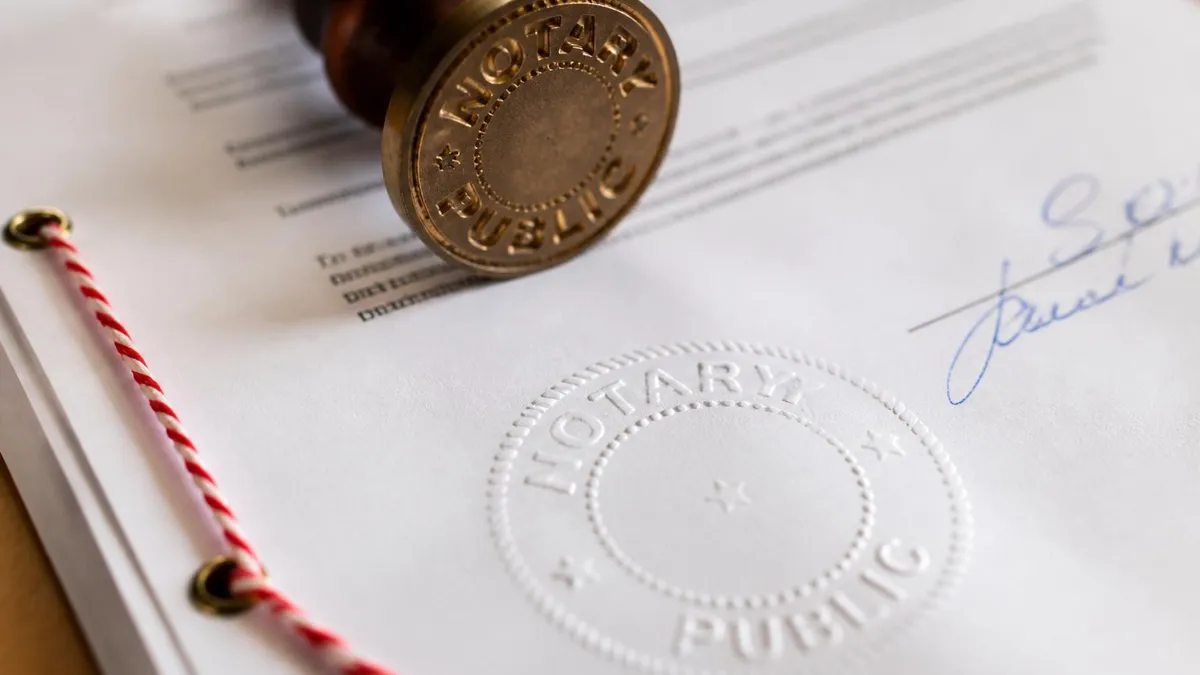
Notary Options Compared
The right option depends on three variables: how quickly you need it done, how much you are willing to pay, and whether the receiving party will accept a remote notarization.
For a one-off bank affidavit, walking into your branch on a Tuesday morning costs nothing. For a real estate closing where the seller is out of state and the lender needs the package signed tonight, remote online notarization can save the deal.
One more wrinkle: some documents legally cannot be remotely notarized, even where the practice is allowed. Wills, certain trusts, and some immigration forms still require in-person ink signatures in most states. When in doubt, ask the entity that will receive the document.
The single most common reason notaries refuse a document is that the signer already signed it. A notary must witness the signature itself. If you signed at home, the notary will hand the document back and ask you to start over with a clean copy. Bring the document unsigned and bring blue or black ink — never pencil, never gel that smudges.
What you bring to the appointment matters as much as where you go. Notaries are personally liable for verifying identity, so they apply strict ID rules even if you have used the same branch for twenty years.
Acceptable identification typically means a government-issued photo ID that is currently valid. It must bear your photograph, signature, and physical description, and match the name printed on the document. A driver's license, state ID card, passport, military ID, or permanent resident card all qualify in nearly every state.
Expired identification is rejected almost universally, even if it expired last week. If your ID is expired and a renewal is in process, you can sometimes use two credible witnesses who know you personally and have valid ID themselves. This is called identification by credible witness.
Name mismatches deserve special attention. If your driver's license still shows your maiden name and the document uses your married name, notaries can sometimes accept the signing if you also bring the marriage certificate.
Before You Visit a Notary
- ✓Bring the document unsigned — signature must happen in front of the notary
- ✓Bring valid, unexpired government photo identification
- ✓Confirm the ID name matches the name on the document
- ✓Bring blue or black ink pen, not pencil or gel that smudges
- ✓Bring all signers to the same appointment, each with valid ID
- ✓Bring witnesses if your document requires them (some affidavits, wills)
- ✓Bring exact payment if visiting a fee-charging location
- ✓Call ahead to confirm the notary is on duty and not at lunch
- ✓Check the document for blank fields — notaries refuse incomplete forms
- ✓Know your state's per-signature fee cap so you are not overcharged
If walking into a branch or store is not realistic, mobile notaries and remote online notaries fill the gap. Mobile notaries operate the way they sound: a commissioned notary loads a stamp kit into a car and drives to wherever the signer is.
Hospital bedside signings, eldercare facilities, late-night real estate closings, and group signings at law offices all rely on this service. Travel fees usually start around twenty-five dollars and climb with distance and time of day.
Many mobile notaries are also signing agents trained specifically for loan documents. That matters during a mortgage refinance, where a poorly handled packet can delay closing by a week.
Remote online notarization is the newest option and the fastest-growing. The signer logs into a platform, holds up a photo ID to the camera, answers knowledge-based authentication questions, and signs the document electronically while the notary watches. The whole session is recorded, time-stamped, and stored in an encrypted journal.
Remote Online Notarization Trade-offs
- +Available 24/7 from your phone or laptop
- +No driving, no appointments, no parking
- +Session is recorded for legal protection
- +Works across state lines in most cases
- +Average appointment under 15 minutes
- −Fee is higher than walking into a bank ($25-$45)
- −Knowledge-based authentication can fail for new credit profiles
- −Some states still prohibit RON for specific document types
- −Receiving party (county, court, lender) may refuse the electronic seal
- −Requires reliable webcam, microphone, and internet
Pros and Cons at a Glance
| Pros | Cons |
|---|---|
| No driving, no appointments, no parking | Knowledge-based authentication can fail for new credit profiles |
| Session is recorded for legal protection | Some states still prohibit RON for specific document types |
| Works across state lines in most cases | Receiving party (county, court, lender) may refuse the electronic seal |
Fees deserve a closer look because they are the single biggest source of disputes between signers and notaries. Every state sets a maximum per-signature fee that a notary may charge.
California currently caps the per-signature acknowledgment fee at fifteen dollars. Florida sits at ten dollars. Texas at six. New York at two dollars per signature, which is why many New York notaries refuse to take on multi-signature packets that would be more efficient elsewhere.
Mobile notaries can charge travel fees on top of the cap, and remote notarization platforms can charge technology fees on top of the cap. The underlying notarial act itself is bounded by state law.
If a notary tries to charge you more than the cap for the notarization itself, you can decline the service and report the overcharge to the state notary commission. Travel and platform fees are separate and unregulated in most states.
Some specialty notary acts cost more because they require additional steps. Apostilles, used for documents headed to a country in the Hague Convention, are processed by the secretary of state. Loan signings are typically priced as a flat rate ranging from one hundred to two hundred dollars.
Sample Notary Public Exam Practice Questions
Try these questions from our free Notary Public Exam practice tests. The correct answer and an explanation follow each question.
A notary public is also an attorney. When this notary notarizes a document for their own client, what concern arises?
- A. No concern — attorneys are held to higher standards so this is permissible
- B. A potential conflict of interest exists because the notary has a financial stake in the transaction
- C. The client must pay double fees — one for legal services and one for notarization
- D. The notarization is automatically invalid due to the dual role
Answer: B. A potential conflict of interest exists because the notary has a financial stake in the transaction
Even attorney-notaries can face disqualifying conflicts of interest when they notarize documents in matters where they also have a professional financial interest.
A notary discovers mid-notarization that the document has blank spaces that could be filled in later. What is the correct response?
- A. Complete the notarization and note the blanks in the journal
- B. Refuse to notarize until all blanks are filled in or crossed out
- C. Fill in the blanks on behalf of the signer
- D. Proceed because blank spaces are the signer's responsibility
Answer: B. Refuse to notarize until all blanks are filled in or crossed out
Notaries should refuse to notarize documents with blank spaces that could be completed after notarization, as this creates fraud risk. All blanks should be filled in or crossed out before notarization.
Marilyn will not renew her commission. What should she do with her Notary Seal?
- A. Deliver it to the County Clerk’s office
- B. Deface or destroy the seal
- C. Send it back to the authorized manufacturer
- D. Mail it to the Secretary of State’s office
Answer: B. Deface or destroy the seal
When a Notary Public's commission expires and they do not intend to renew it, or if they resign, they are typically required to render their official seal or stamp unusable. This prevents any unauthorized or fraudulent use of the seal after their authority has ceased. Defacing or destroying the seal protects the public and maintains the integrity of notarial acts.
Can a notary choose between an oath or affirmation for the signer?
- A. Yes, based on the notary's religion
- B. No, the signer must choose
- C. Yes, depending on the type of document
- D. No, the document dictates the choice
Answer: B. No, the signer must choose
The choice between taking an oath or an affirmation rests solely with the signer, not the notary. This respects the individual's personal beliefs and ensures they are comfortable with the declaration they are making. The notary's role is to offer both options and administer whichever the signer chooses, as both carry the same legal weight regarding truthfulness.
Notary Questions and Answers
Special situations call for special preparation. Hospital signings for very ill patients require careful awareness checks — the notary must confirm the signer understands what they are signing and is acting of their own free will.
Nursing home signings often involve power of attorney documents and may need additional witnesses. International documents bound for use abroad usually require an apostille on top of the notarization, and the secretary of state typically takes several business days to issue one.
Knowing which extra step applies to your document, and starting early, saves real money and prevents missed deadlines that no notary can fix on the spot.
One question that comes up constantly: can a notary refuse service? Yes, and they often must. A notary is required to refuse if the signer is not personally present, if the identification is invalid or expired, or if any portion of the document is blank.
Refusal is also mandatory if the signer appears confused or under the influence, or if the document type is prohibited by state law. Refusal is not personal — it is a legal duty.
If you are refused, ask the notary politely what the specific issue is, fix it, and try again or move to another notary who can handle the situation. Pressuring a notary to bend the rules puts their commission at risk.
Document journals deserve a quick word. Every commissioned notary keeps a journal that records each notarization. In some states a journal is mandatory; in others it is best practice. The journal protects both the signer and the notary if a document is later challenged.
As a signer you are typically asked to provide your printed name, signature, and a thumbprint in the journal alongside the notary's own entries. Thumbprint requirements vary, but California, Florida, and several other states require them for real estate-related notarizations.
If you object to a thumbprint, ask the notary whether it is legally required in your state for that document type before refusing. Most journal entries take less than a minute to complete and you walk out with a permanent record of the act.
Once the notary's seal is on the page, the document is generally ready to file or send. But a few aftercare habits prevent painful problems later. Make a photocopy of the notarized page before the original leaves your hands.
If you are mailing it to a county recorder, a court, or an out-of-state title company, use a tracked, signature-required service. Plain first-class mail is fine for low-stakes papers, but losing an original notarized deed or power of attorney is an expensive lesson.
For remote online notarizations, download the audit video and the electronic certificate as soon as the session ends. Most platforms keep records for years, but having your own backup means you are never locked out if the platform goes dark.
One more habit pays off in the long run: keep a small folder of notarized documents you may need to reference later. Real estate deeds, power of attorney forms, and certified copies sometimes get requested years after the fact. A simple paper file or a scanned PDF folder saves hours of searching when the question comes back around. The five minutes you spend organizing today will easily save you an afternoon of frantic searching the next time somebody asks for proof.
After the Notarization Is Complete
- ✓Verify the notary's printed name, commission number, and expiration date appear clearly on the seal impression
- ✓Confirm the certificate page wording matches exactly what the receiving party such as a court clerk or title company requires
- ✓Make at least one photocopy of the fully notarized document before mailing the original anywhere
- ✓Track the original via a signature-required mail service such as USPS Priority with tracking or FedEx overnight when shipping
- ✓Ask the notary for a copy of the journal entry if your state allows it for your records
- ✓Save the receipt — overcharges above the state statutory fee cap are reimbursable in many jurisdictions
- ✓For remote online notarizations, download the audit video and the electronic certificate file immediately after the session ends
- ✓Confirm directly with the receiving party that the notarized document arrived intact and was accepted as filed
When Each Notary Type Wins
Best when you have an account, the document is straightforward, and you can visit during weekday business hours without a tight deadline pressing on you.
Best when you need walk-in availability on evenings or weekends, do not mind paying a small fee, and your document is not on the prohibited list.
Best when you are already a member, the document is simple, and you live in a state where AAA offers free notarization for several common document types.
Best for budget-conscious signers in cities with active library or clerk programs, when the document is not real estate and identification is straightforward.
Best for hospital, eldercare, multi-signer, after-hours, and out-of-office signings when convenience and timing are worth a travel fee.
Best for tech-comfortable signers facing tight deadlines, out-of-state document needs, or situations where in-person travel is simply impossible right now.
Finding a notary public in 2026 is easier than it has ever been, but choosing the right kind of notary still matters. A simple affidavit at your local credit union is free and takes five minutes.
A multi-signer real estate package across two states is a different animal. Trying to handle it at a walk-in shipping store will probably end in frustration. Match the venue to the document, bring the right identification, and arrive with the paper unsigned.
State rules deserve a final word. Notary law is governed at the state level, not federally. That is why the per-signature fee in Texas looks nothing like the fee in California, and why remote online notarization is everyday business in Virginia but still restricted in a handful of holdouts.
Before any out-of-state document leaves your hands, verify three things: that the notary's commission is currently active, that the notarial certificate matches the language required by the receiving state, and that the seal includes the commission number, expiration date, and county or state of commission.
Hours and same-day availability can flip your choice. Bank branches usually stop notarizing around five in the evening on weekdays and not at all on Sundays. UPS Stores and other pack-and-ship locations are often open seven days a week, with evening hours on Friday and Saturday.
If you need something signed on a Saturday night or a Sunday morning before a flight, the realistic options narrow to mobile notaries who advertise after-hours service and remote online platforms that run twenty-four hours a day.
Cost-conscious signers should also know about a few free or near-free options that get overlooked. Many AARP local chapters offer free notarization for members at certain events. Some employers provide a notary at human resources for employee documents — common at hospitals, universities, and large corporations.
If you serve in the military, your installation's legal assistance office can usually notarize for free for service members and their dependents. Some real estate agents are commissioned notaries and will notarize for clients during a transaction at no extra charge.
Document privacy is another concern. Many signers worry that the notary reads the entire document during the appointment. They do not, and they should not. The notarial act applies only to the signature page where the certificate is attached.
The notary should look at the document long enough to confirm it is complete, has no blanks, and matches what the signer claims it is. The notary's seal and journal entry capture the date, the type of notarization, the signer's name, and the ID used — not the document's content.
If you work with notarized documents regularly — for a small business, a real estate side hustle, or estate planning — bookmark one bank branch, one shipping store, one mobile notary phone number, and one remote online platform. Having all four options ready means whatever the document needs, you can act the same day.
And if becoming a notary yourself interests you, most states require a short course, a written exam, and a modest bond. The notary public practice test is a useful starting point for understanding the duties, prohibited acts, and fee structures before you apply for a commission.
About the Author

Notary Public Law Expert & State Notary Exam Specialist
Georgetown University Law CenterAttorney Sarah Williams is a licensed attorney and National Notary Association (NNA) certified notary with a Juris Doctor from Georgetown University Law Center. She has 13 years of experience in notarial law, document authentication, and real estate closings. Sarah coaches candidates through state notary public examinations, notary signing agent certification, and loan signing agent training programs.