
Notary Public Rules: Can a Notary Notarize for Family Members and Other Critical Boundaries in 2026 September
What is a notary public allowed to do? Learn whether a notary can notarize for family members, 📚 key rules, the notary public stamp, and exam-ready guidance.

Understanding what is a notary public starts with one deceptively simple question that confuses new commissions and seasoned signers alike: can a notary public notarize for family members? The short answer in most states is no, you should not, and in several jurisdictions you legally cannot. A notary is a state-appointed impartial witness, and impartiality evaporates the moment your spouse, parent, child, or sibling sits across the table holding a deed, power of attorney, or vehicle title that affects the household's finances.
This guide walks through the modern rulebook governing every commissioned signer in the United States. We will cover prohibited transactions, identification standards, journal entries, the role of the notary public stamp, and the line between courtesy and conflict of interest. Whether you operate as a mobile signing agent in Dallas, a bank employee handling a notary public in Bank of America branch counter, or a remote online notary licensed in Florida, the underlying ethics travel with you across state lines.
The phrase notario publico carries an entirely different legal weight in Latin American countries, where notarios act as licensed attorneys with broad legal authority. In the United States, our notaries are limited public officials, and confusion between the two has caused real consumer harm. State commissions, the National Notary Association, and the Secretary of State offices have tightened disclosure rules to prevent immigrants and Spanish-speaking clients from being misled by storefront signs.
If you are searching for a free public notary near me, you also need to know what that notary cannot do for you. A notary cannot draft contracts, give legal advice, prepare immigration paperwork outside of certain authorized states, certify a copy of a vital record, or notarize a document that has blank spaces. These limits are not bureaucratic nitpicks. They protect signers from fraud and protect the notary from civil liability and commission revocation.
Rules also govern how the seal touches paper. Most states require a notary public stamp that includes the notary's name, commission number, expiration date, and the words Notary Public alongside the state. Some states still permit an embosser, but the modern photographic-quality inked seal is dominant because it reproduces cleanly on scanned and faxed documents. Texas, California, and Florida have specific dimensional and color requirements that we will detail below.
This article is structured for both the working notary and the candidate preparing for licensure. By the end you will know exactly when to politely decline a relative's request, how to handle a client whose ID is expired, when to refuse a transaction, and how to document everything in a way that survives a courtroom challenge five years from now. We will also link to free practice questions you can use to test your knowledge before walking into the notary public exam.
Let's begin with a panoramic look at the numbers that frame this profession in 2026, then drill into the specific rules that separate compliant notaries from those who lose their commissions every year for avoidable mistakes.
Notary Public Rules by the Numbers
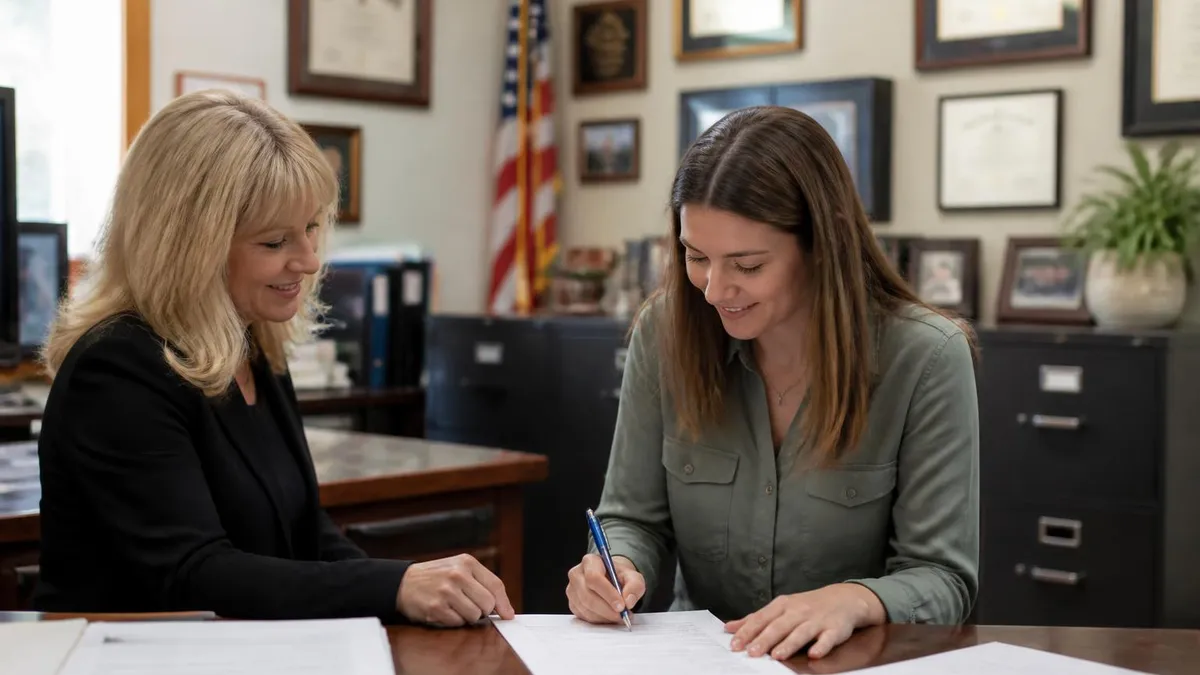
Core Notary Public Rules Every Commission Holder Must Follow
The signer must be physically present before the notary at the time of notarization, except for properly authorized remote online notarizations conducted under your state's RON statute with audio-video technology.
Verify identity through a current government-issued photo ID, personal knowledge of the signer, or one or two credible witnesses depending on your state. Expired IDs are generally not acceptable.
Confirm the signer is acting freely, not under duress, and understands the nature of the document. If they appear confused, intoxicated, or coerced, you must refuse the notarization without exception.
A notary cannot notarize any document in which they are a party, named beneficiary, or have a direct financial stake. This rule is absolute in every U.S. jurisdiction and is the most common cause of voided notarizations.
Record the date, time, document type, signer name, address, ID details, fee charged, and signature in your chronological journal. Most states require retention for at least 10 years after your commission ends.
The family question deserves its own deep dive because it surfaces in nearly every commission renewal class. Can a notary public notarize for family members? The legally safe rule, regardless of your state, is to refuse any notarization for a spouse, parent, child, sibling, in-law, or anyone who shares a household financial interest with you. Even where statutes are silent, courts have repeatedly invalidated notarizations performed for close relatives when challenged, leaving signers without recourse and notaries personally liable.
Florida law explicitly prohibits a notary from notarizing the signature of a spouse, son, daughter, mother, or father. Texas takes a different approach, prohibiting notarization only when the notary has a direct beneficial interest, but the Texas Secretary of State strongly recommends declining family work as a best practice. California treats financial interest as the trigger, but community property rules mean that any notarization for a spouse almost always creates one. Always check your specific jurisdiction before assuming a transaction is safe.
The deeper principle is impartiality. A notary is a neutral third-party witness, and the public's trust in notarized documents depends on the perception that the notary had no reason to bend the rules. When your daughter brings you a real estate deed signed by her ex-husband, your objectivity is compromised even if your intent is pure. A skeptical attorney examining the document years later will argue that you had every incentive to overlook irregularities, and they will often win.
Bank-employed notaries face this issue daily. A customer walks into a notary public in Bank of America branch and asks the teller-notary to notarize a power of attorney naming the teller's cousin as agent. Even though the teller has no direct interest, the appearance of impropriety is enough for most bank compliance departments to require a different notary. Large banks now train staff to politely redirect family notarizations to another branch employee or a public notary outside the family chain.
What about extended relatives, friends, or roommates? The law is silent on most of these, but ethical practice draws the line wherever your impartiality could reasonably be questioned. Notarizing for an old college friend on a routine acknowledgment is fine. Notarizing for that same friend on a $400,000 mortgage where you also happen to be the listing real estate agent is a commission-ending mistake. Always ask yourself whether you would be comfortable explaining the relationship under oath.
If you operate as a ups notary public or staff a retail counter, you can lean on store policy as a graceful out. A simple, I'm sorry, our store policy is that I cannot notarize for relatives, ends the conversation without insulting anyone. Keep a list of three nearby alternative notaries you can hand to declined customers. This turns a potential conflict into a customer service win and protects your commission at the same time.
Finally, document every refusal in your journal with a brief note such as Declined, signer is brother-in-law. If a complaint is ever filed alleging you refused unfairly or, worse, that you secretly did the notarization off-book, that journal entry becomes powerful evidence in your favor. Refusals are not failures. They are signs of a notary who understands the weight of the public trust.

Notary Public Practice Test Questions
Prepare for the Notary Public Exam exam with our free practice test modules. Each quiz covers key topics to help you pass on your first try.
Notary Public Basic Notary Public
Notary Public Exam Questions covering Basic Notary Public. Master Notary Public Test concepts for certification prep.
Notary Public Duties & Responsibilities of...
Free Notary Public Practice Test featuring Duties & Responsibilities of a Notary. Improve your Notary Public Exam score with mock test prep.
Notary Public Ethics & Professional Conduct
Notary Public Mock Exam on Ethics & Professional Conduct. Notary Public Study Guide questions to pass on your first try.
Notary Public Fraud Prevention & Security
Notary Public Test Prep for Fraud Prevention & Security. Practice Notary Public Quiz questions and boost your score.
Notary Public Identification & Credential ...
Notary Public Questions and Answers on Identification & Credential Verification. Free Notary Public practice for exam readiness.
Notary Public Jurats & Acknowledgments
Notary Public Mock Test covering Jurats & Acknowledgments. Online Notary Public Test practice with instant feedback.
Notary Public Notarial Acts & Procedures
Free Notary Public Quiz on Notarial Acts & Procedures. Notary Public Exam prep questions with detailed explanations.
Notary Public Notary Laws & Regulations
Notary Public Practice Questions for Notary Laws & Regulations. Build confidence for your Notary Public certification exam.
Notary Public MCQ
Notary Public Test Online for MCQ. Free practice with instant results and feedback.
Notary Public
Notary Public Study Material on Notary Public. Prepare effectively with real exam-style questions.
Notary Public Oaths & Affirmations
Free Notary Public Test covering Oaths & Affirmations. Practice and track your Notary Public exam readiness.
Notary Public Recordkeeping & Journal Entries
Notary Public Exam Questions covering Recordkeeping & Journal Entries. Master Notary Public Test concepts for certification prep.
Notary Public Exam Basic Notary Public
Free Notary Public Practice Test featuring Exam Basic Notary Public. Improve your Notary Public Exam score with mock test prep.
Notary Public Exam Duties & Responsibiliti...
Notary Public Mock Exam on Exam Duties & Responsibilities of a Notary. Notary Public Study Guide questions to pass on your first try.
Notary Public Exam Ethics & Professional C...
Notary Public Test Prep for Exam Ethics & Professional Conduct. Practice Notary Public Quiz questions and boost your score.
Notary Public Exam Fraud Prevention & Secu...
Notary Public Questions and Answers on Exam Fraud Prevention & Security. Free Notary Public practice for exam readiness.
Notary Public Exam Identification & Creden...
Notary Public Mock Test covering Exam Identification & Credential Verification. Online Notary Public Test practice with instant feedback.
Notary Public Exam Jurats & Acknowledgments
Free Notary Public Quiz on Exam Jurats & Acknowledgments. Notary Public Exam prep questions with detailed explanations.
Notary Public Exam Notarial Acts & Procedures
Notary Public Practice Questions for Exam Notarial Acts & Procedures. Build confidence for your Notary Public certification exam.
Notary Public Exam Notary Certificates & W...
Notary Public Test Online for Exam Notary Certificates & Wording. Free practice with instant results and feedback.
Notary Public Exam Notary Laws & Regulations
Notary Public Study Material on Exam Notary Laws & Regulations. Prepare effectively with real exam-style questions.
Notary Public Exam Notary Public
Free Notary Public Test covering Exam Notary Public. Practice and track your Notary Public exam readiness.
Notary Public Exam Notary Public MCQ
Notary Public Exam Questions covering Exam Notary Public MCQ. Master Notary Public Test concepts for certification prep.
Notary Public Exam Notary Seal & Stamp Req...
Free Notary Public Practice Test featuring Exam Notary Seal & Stamp Requirements. Improve your Notary Public Exam score with mock test prep.
Identification Standards and the Notary Public Seal
Most states accept a current, government-issued photo identification card that includes the signer's signature and photograph. Driver's licenses, state ID cards, U.S. passports, military IDs, and permanent resident cards are the standard four. Some states also accept tribal IDs, foreign passports, and Mexican consular cards under specific conditions.
Expired IDs are problematic. Roughly 18 states allow IDs expired within three to five years, while others demand a current document. When in doubt, request a second form of ID or use credible witnesses. Never accept a photocopy, a digital image on a phone screen, or any document that has been tampered with, laminated over a sticker, or has a mismatched signature panel.
Becoming a Notary Public: Is the Commission Worth It?
- +Modest income boost of $2,000 to $6,000 annually for mobile notaries
- +Highly portable side business compatible with most full-time jobs
- +Low startup cost — typically $150 to $400 including stamp, journal, and bond
- +Strong demand from real estate, healthcare, and legal industries
- +Builds trust and credibility within your local community
- +Opens the door to becoming a Notary Signing Agent for loan closings
- +Remote online notarization expands your customer reach across state lines
- −Personal civil and criminal liability for errors or misconduct
- −Must maintain detailed records, often for 10+ years after the commission ends
- −State exam, background check, and renewal fees recur every 4 to 10 years
- −Surety bond does not protect you personally — it protects the public
- −Strict prohibitions on legal advice can frustrate customers seeking guidance
- −Family and friends may pressure you to bend rules you cannot bend
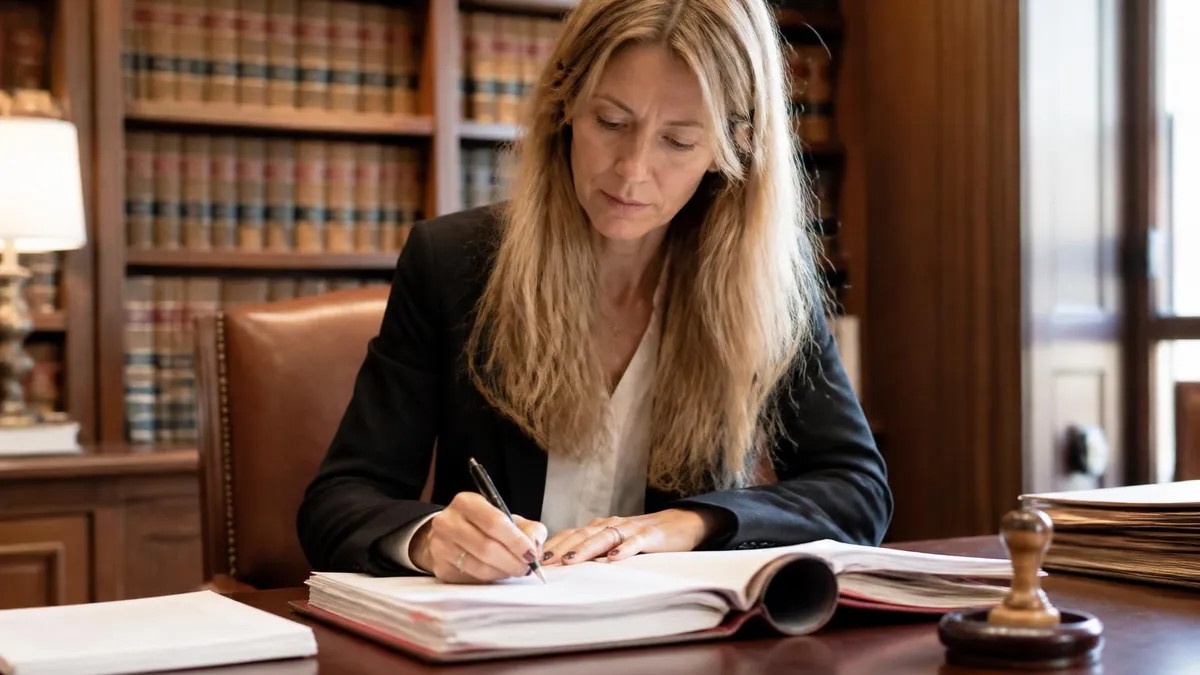
Notary Public Compliance Checklist Before Every Signing
- ✓Confirm the signer is physically present in front of you (or appearing via approved RON platform).
- ✓Verify a current government-issued photo ID or arrange credible witnesses.
- ✓Check that the ID's name matches the document name and the signature in your journal.
- ✓Review the document for blank spaces, missing pages, and altered text.
- ✓Ask whether the signer understands the document and is signing willingly.
- ✓Confirm you have no personal or financial relationship with any party named.
- ✓Select the correct notarial certificate: acknowledgment, jurat, or copy certification.
- ✓Administer an oath or affirmation when performing a jurat or sworn statement.
- ✓Complete the journal entry with date, time, fee, ID, and signer signature.
- ✓Apply your notary public stamp clearly and never on top of any other text.
- ✓Sign your name exactly as commissioned, including middle initials if applicable.
- ✓Return the document promptly and store your journal and seal in a locked location.
Notarizing without personal appearance is the #1 reason notaries lose their commissions.
State investigators consistently report that more than 60 percent of revocations involve a notary who stamped a document the signer did not sign in front of them. Even when the signer is a longtime customer or close friend, mailing or emailing the document for a notarization later is a clear violation of every state's statute. The only exception is properly authorized remote online notarization conducted on an approved RON platform.
Fraud prevention is the modern notary's most important job. As document fraud and identity theft have grown, states have layered new responsibilities onto the commission. Notaries are expected to spot fake IDs, recognize coerced signers, and detect altered documents. The notary public seal lends a document the appearance of authority, which makes fraudsters eager to obtain a legitimate seal on a fraudulent paper. Your stamp is essentially an authentication token, and you are the gatekeeper.
Start with the ID. Examine the card edge for splitting or lamination tampering. Verify the photo matches the person, paying attention to ears, nose shape, and unique markings rather than just hair and glasses, which can change. Tilt the card to confirm holograms move correctly and the laser-engraved details have proper depth. Most state IDs now include a ghost image, raised tactile features, and UV elements you can check with an inexpensive flashlight you carry in your notary bag.
Pay attention to behavior. Signers who avoid eye contact, who let someone else answer questions for them, or who seem unfamiliar with their own document are warning signs. Elder financial abuse often appears as an older signer being escorted in by an adult child or caregiver who insists on staying close and speaking on their behalf. Politely ask the escort to step away so you can speak to the signer alone. If the signer cannot answer basic questions about what they are signing, you must refuse.
Document review is equally important. Look for whiteout, overwritten dates, mismatched fonts, missing pages, and blank fields. Notaries are not required to read the document line by line, but you are required to verify it is complete and that the signer understands what type of act is being performed. If a customer asks you to fill in the date later or to backdate a notarization, refuse on the spot and document the refusal in your journal.
Remote online notarization adds a layer of technology-mediated fraud prevention. RON platforms typically combine knowledge-based authentication, credential analysis using AI-driven document scanning, and live video review. While the technology is impressive, the notary is still personally responsible for the integrity of the act. If a platform glitches and you certify a notarization that should have been refused, the commission is yours to lose, not the vendor's.
If you ever discover that a document you notarized was used fraudulently, contact your state commissioning authority immediately, file a police report, and consult an attorney about your obligations. Most state notary statutes provide some protection for notaries who act in good faith, follow the rules, and document their work. The journal is your single best defense. A complete, contemporaneous, accurate record will save your commission and possibly your finances in a dispute.
Carrying errors and omissions insurance on top of your surety bond is strongly recommended. The bond protects the public, not you. E&O insurance reimburses you for legal defense and damages when a claim is filed. For roughly $50 to $150 per year, you gain real personal protection against the kind of allegations every working notary will eventually face at least once in their career.
In many Latin American countries, a notario publico is a licensed attorney with broad legal authority. In the United States, a notary public is not an attorney and cannot provide legal advice, draft contracts, or prepare immigration documents unless separately licensed. Advertising yourself as a notario publico in Spanish-language marketing is illegal in most states and can lead to commission revocation, fines, and even criminal charges. Always disclose clearly: I am a notary public, not an attorney, and I cannot give legal advice.
Path to commissioning varies state by state, but the core steps are remarkably similar. Anyone asking how to become a notary public should start by checking their Secretary of State website for current eligibility, then complete the required application, education course, background check, exam, and bond purchase. Texas commissions notary public Texas applicants for a four-year term with no exam required, while California and New York require a written exam, fingerprinting, and a more intensive process that can take several months to finalize.
Education quality varies widely. Some states provide a free downloadable handbook and consider that sufficient, while others mandate a state-approved course of three to six hours. Even when your state does not require formal training, consider enrolling in free notary public near me classes or a paid online program. The investment pays off the first time you confidently refuse a problematic notarization that an untrained notary would have stamped without thinking.
The notary public exam itself tests your knowledge of state-specific rules, identification standards, journal requirements, and ethical boundaries. California's exam is famously rigorous with a 70 percent pass score and questions written to penalize careless reading. Florida and most other states use shorter open-book or take-home tests. Either way, treating the exam seriously by studying the official handbook cover to cover is the surest path to passing on the first try.
After you pass the exam and receive your commission certificate, you will need to file an oath of office at your county clerk's office, purchase your surety bond, order your notary public seal from an approved vendor, and obtain a journal. Many new notaries also buy errors and omissions insurance, business cards, a thumbprint pad, and a fraud-detection flashlight. Total startup costs typically run $150 to $400, depending on whether you choose mobile notary equipment or stay at a single fixed location.
Ongoing professional development matters. Laws change. Remote online notarization is now legal in more than 45 states, but the procedures and platforms vary. Notary signing agent work for mortgage closings requires additional training and background checks managed by industry associations. Joining the National Notary Association or your state's notary association gives you access to legislative updates, continuing education webinars, and peer forums where complex questions get answered by experienced colleagues.
Recordkeeping deserves a final word. Your journal is your shield. Use a bound, sequentially numbered journal where each entry includes the date, time of notarization, type of notarial act, document title and date, signer's full name, address, ID type, ID number and expiration, fee charged, and the signer's signature. Some states also require a thumbprint for high-risk documents such as deeds and powers of attorney. Store your journal and seal separately in locked locations to prevent theft and unauthorized use.
When your commission expires or is revoked, you must surrender or destroy your seal and retain your journal for the statutory period, often 10 years. Failure to follow these post-commission rules has triggered fines and even criminal charges for notaries who assumed the obligation ended with the commission. Treat your last journal entry with the same care as your first.
Practical exam prep for the notary public exam is the next step for most readers. Begin by downloading your state's official notary handbook. Read it twice, the first time for general understanding and the second time with a highlighter focused on numbers, fees, deadlines, and prohibited acts. Numbers are heavily tested because they create unambiguous correct answers. Memorize maximum fees per act, journal retention periods, commission term length, and the dollar amount of your surety bond.
Build flashcards for the seven most-tested topics: personal appearance, identification, willingness, capacity, notarial certificates, journal entries, and prohibited acts. Spaced repetition apps like Anki are ideal because they surface the cards you struggle with more often. Plan for 8 to 15 hours of total study, more if you are coming in without any legal or compliance background. Schedule short daily sessions rather than one long cram weekend, which is far less effective for long-term retention.
Take at least three full-length practice exams under realistic conditions. Sit in a quiet room, set a timer matching your state's exam length, and avoid consulting the handbook during the test. After scoring, review every missed question and re-read the corresponding handbook section. Practice tests serve two purposes: identifying knowledge gaps and reducing test-day anxiety by making the format feel familiar before you ever sit for the real thing.
Pay extra attention to scenario questions. Many state exams use short fact patterns and ask which action is correct. These reward students who have practiced applying the rules, not just memorized them. Use our free public notary what is question library to drill scenarios involving family members, expired IDs, blank documents, and signers who appear confused. Reading the answer explanations is where the real learning happens, not just checking right or wrong.
On test day, arrive at least 20 minutes early with two forms of ID, your registration confirmation, and any state-required materials. For computer-based exams at a testing center, leave watches, phones, and bags in the provided locker. Read every question twice before selecting an answer. Watch for absolute words like always and never, which often signal a trap. Eliminate clearly wrong choices first to improve your odds even when you must guess between two remaining options.
After passing, do not assume you are done learning. Subscribe to your state notary association's newsletter, save your handbook as a PDF for quick search, and bookmark your Secretary of State's notary FAQ page. Laws change every legislative session, and a rule you learned in 2026 may be different in 2029 when your commission comes up for renewal. The best notaries treat their commission as a living credential, not a static certificate.
Finally, keep humility at the center of your practice. The most experienced notaries are the ones who still pause, re-read the certificate wording, and double-check the journal before stamping. Confidence in this profession comes from following the rules every time, not from speed. A careful notary protects the public, protects themselves, and earns the kind of reputation that quietly grows a sustainable side income or full-time signing business for years to come.
Notary Public Questions and Answers

Notary Public Handbook: State-by-State Guide and Free Downloads

Notary Public Directory: How to Find, Verify, and Use a Trusted Notary in 2026
NPT

Notary Public Classes: Complete 2026 Guide to Training, Certification, and Exam Prep

Notary Public Meaning: What Is a Notary Public and What Do They Actually Do in 2026?
About the Author

Notary Public Law Expert & State Notary Exam Specialist
Georgetown University Law CenterAttorney Sarah Williams is a licensed attorney and National Notary Association (NNA) certified notary with a Juris Doctor from Georgetown University Law Center. She has 13 years of experience in notarial law, document authentication, and real estate closings. Sarah coaches candidates through state notary public examinations, notary signing agent certification, and loan signing agent training programs.