
Notario Publico Cerca de Mi: Cómo Encontrar un Notario 2026 October
Busca un notario público cerca de ti. Aprende qué hace un notary public en EE.UU., dónde encontrar uno, y la diferencia con un abogado notario. ✏️

Notario Público Cerca de Mi: Cómo Encontrar un Notary Public en EE.UU.
Millions of Spanish speakers search for a notario público cerca de mí every year — and many of them walk away confused, overcharged, or worse. The word notario público means something very different in the United States than it does in Mexico, Guatemala, El Salvador, or anywhere else in Latin America. That gap in meaning causes real legal problems for immigrants every day. Before you find a notary, you need to understand what you're actually looking for — and what you're not.
In the US, a notary public is not a lawyer. Full stop. A US notary witnesses signatures, verifies your identity, and administers oaths. That's it. They can't give you legal advice, can't represent you before immigration courts, and can't prepare legal documents on your behalf. Learning what is a notary public in the American context is the single most important thing you can do before seeking notarial services.
In Latin America, a notario público is an attorney — often one of the most powerful legal professionals in the country. They hold special authority to certify legal transactions, draft contracts, and handle property transfers. People bring their most serious legal matters to a Latin American notario. That's not what happens here. A US notary stamps and witnesses. That's the whole job.
This distinction sounds simple. But it creates a dangerous opening for fraud. Dishonest operators call themselves notarios to attract Spanish-speaking clients who assume they're dealing with an attorney. They charge hundreds or thousands of dollars for immigration help they're not qualified to provide. The results range from rejected applications to permanent bars from the US. This isn't rare — the FTC and state attorneys general warn about it constantly. Read the warning box below before anything else.
If you need notarial services — a witnessed signature, a sworn statement, an acknowledged document — this guide will show you where to find a qualified US notary public near you, what to expect to pay, and which documents most commonly require notarization for Spanish-speaking communities. And if you're thinking about becoming a notary yourself to serve your community, we cover that too — it's simpler than most people assume.
En EE.UU., un "notario" NO es un abogado. Personas sin licencia legal se llaman notarios para atraer inmigrantes de habla hispana. Cobran dinero por ayuda con inmigración que no están calificados para dar — y pueden arruinar tu caso. Esto es ilegal en la mayoría de los estados. Si alguien que no es abogado o acreditado representante de inmigración te ofrece ayuda con formularios del USCIS o representación en corte de inmigración, aléjate. Reporta el fraude a la Comisión Federal de Comercio (FTC) en reportfraud.ftc.gov o a la fiscalía de tu estado.
- US Notary Public: Witnesses signatures, verifies identity, administers oaths. NOT a lawyer. Cannot give legal advice. Commission typically lasts 4 years. Fee: $5–$15 per signature.
- Latin American Notario Público: Licensed attorney with special state powers. Drafts legal contracts, handles real estate transfers, certifies legal authenticity. Extensive legal training required.
- The Bottom Line: When you need a witnessed signature in the US, find a US notary. When you need legal advice on immigration, hire an immigration attorney or accredited representative.
Qué Hace un Notary Public en EE.UU.
A US notary public performs three core functions: witnessing signatures, verifying identity, and administering oaths. That's the whole list. When you sign a mortgage document, a power of attorney, or an affidavit, the notary watches you sign, checks your government-issued ID, and stamps the document with their official notary public stamp. The stamp tells whoever receives the document that a duly commissioned official watched the signing happen.
Notaries don't read your documents to check if they're legally sound. They don't advise you on whether signing is a good idea. They verify two things: that you are who you say you are, and that you signed willingly. If you're crying, look distressed, or seem coerced — a good notary will stop the proceeding. That's called refusing a non-voluntary signing, and it's part of their job.
There are a few specific notarial acts you'll encounter. An acknowledgment is the most common — you appear before the notary and acknowledge that you signed the document. A jurat is different: you sign in front of the notary AND swear that the contents are true. Jurats are common for affidavits. A copy certification means the notary verifies that a copy matches an original document — useful for passports, diplomas, and similar records.
Not every state allows all notarial acts. Some states don't permit copy certifications for documents that can be obtained from a government office. If you need a certified copy of a birth certificate, your state vital records office usually handles that — not a notary. Knowing which act you need before you walk in saves time for everyone. Showing up prepared — with the right act in mind — means your appointment is done in minutes instead of becoming a frustrating back-and-forth about what you actually need.
Cómo Encontrar un Notario Público Cerca de Ti
Finding a notary is genuinely easy in the US — they're everywhere. Here's where to look, ranked from fastest to most specialized.
Your bank or credit union. Most branches have a notary on staff available free of charge for account holders. Chase, Wells Fargo, Bank of America, and most credit unions all offer this. Call ahead to confirm the notary is working that day — they're not always on shift. If you're looking for notary public in bank of america specifically, call your local branch to confirm availability before you go. Some branches only have a notary on certain days, so don't just walk in and assume.
The UPS Store. Notary services are available at most UPS Store locations for a small fee ($5–$15). No appointment needed at many locations. This is probably the most consistent option if your bank doesn't have a notary on a given day. UPS Stores have extended hours — evenings and weekends included — which makes them convenient when banks are closed.
Public libraries. Many US public library systems offer free notary services to community members. Hours vary — most are walk-in during limited windows. Search your library's website for "notary" to check availability. Libraries are an underused option; because it's free and low-stress, it's worth calling your local branch before you pay anywhere else.
Mobile notaries. A mobile notary travels to you. Hospitals, nursing homes, real estate closings, and home signings all use mobile notaries. Fees are higher — typically $25–$100 — because you're paying for travel. Worth it if you can't travel, need evening or weekend service, or are dealing with a time-sensitive signing at a specific location.
Online notarization. Remote Online Notarization (RON) is now legal in most states. You connect via video call, show your ID on camera, and the notary applies a digital stamp. Convenient, fast, no travel required. Check whether the receiving party accepts RON — some government agencies still require wet ink signatures and physical stamps, so confirm before booking an online session.
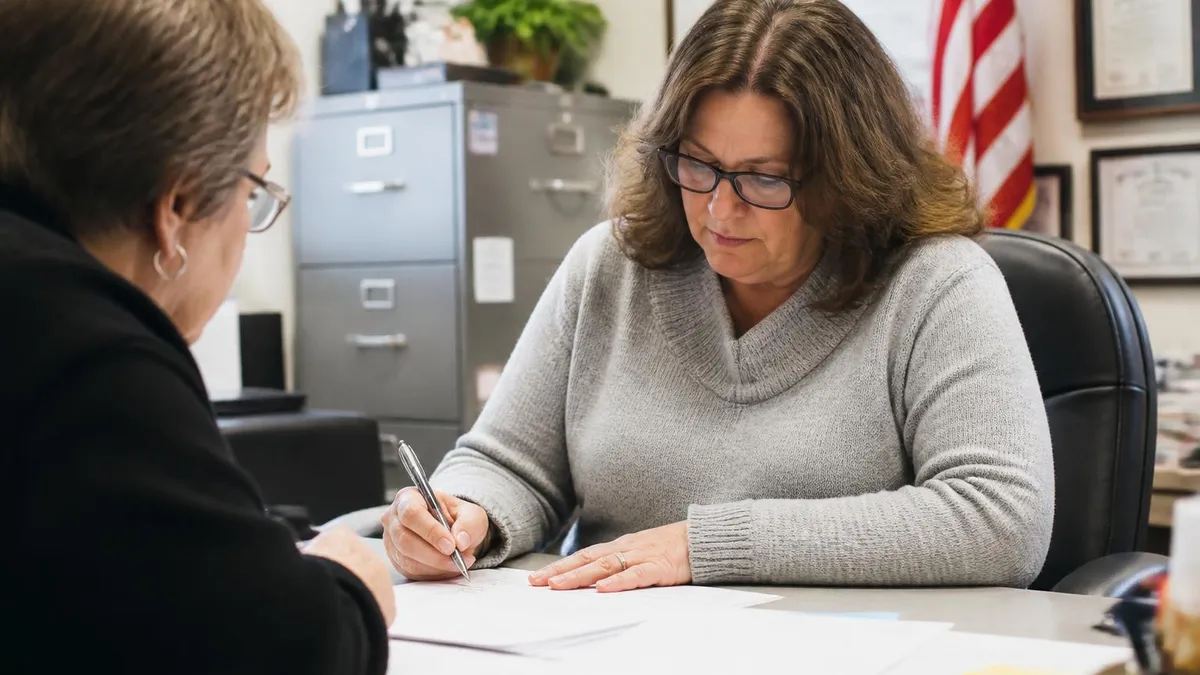
Notarial Acts: Know Which One You Need
- ✓Acknowledgment — you confirm to the notary that you signed the document voluntarily (most common act)
- ✓Jurat — you sign in the notary's presence AND swear under oath that the contents are true
- ✓Copy certification — notary verifies a copy matches the original (not allowed in all states for government docs)
- ✓Oath or affirmation — notary administers a sworn statement without a written document
- ✓Signature witnessing — similar to acknowledgment; notary watches you sign and verifies identity
- ✓Protest (commercial) — used for dishonored negotiable instruments; rare, mostly in banking contexts
Tarifas: Cuánto Cuesta un Notario
Notary fees in the US are regulated by state law. Most states cap per-signature fees between $5 and $15. California caps at $15 per signature. Florida caps at $10. Texas caps at $6 for the first signature. These aren't suggestions — they're legal limits. A notary who charges $50 to notarize a single signature is breaking the law, not just overcharging. If that happens to you, report it to your state's Secretary of State office.
Mobile notary fees work differently. The per-signature fee cap still applies, but the notary can charge separately for travel. That travel fee isn't regulated, so $50–$100 total for a mobile visit is normal and legal. Just confirm the total cost before they arrive. Get it in writing if possible — a quick text or email confirmation of the quoted total fee protects both of you and prevents surprises when it's time to pay.
Free notary services exist at many banks, credit unions, libraries, and even some AAA offices for members. If cost is a concern, start with your bank. Don't pay more than you have to — and never let anyone charge you hundreds of dollars for a notarization that should cost $10. That's a red flag, not a premium service. The notary's job takes ten minutes. The fee should reflect that.
One more thing on fees: for multi-page documents, the notarization fee applies to the number of notarial acts, not the number of pages. If a deed requires one signature block notarized, that's one act — even if the deed is twenty pages long. You pay per notarization, not per page. Knowing this prevents you from being overcharged on long documents.
Notary Fee Limits by State (Examples)
Documentos Que Comúnmente Se Notarizan
Spanish-speaking communities in the US frequently need notarization for a specific set of documents. Immigration affidavits — like the Affidavit of Support (Form I-864) — often require notarized signatures. The notary isn't validating what you wrote; they're confirming you signed it willingly, in their presence, after verifying your identity. Powers of attorney (poderes notariales), especially when a family member in another country needs authority to act on your behalf, almost always require notarization and sometimes apostille certification.
Real estate transactions require notarized signatures on deeds, mortgage documents, and title transfers. If you're buying, selling, or refinancing a home, expect multiple notarized documents at closing — and expect that the title company or lender will bring their own notary. School enrollment forms sometimes require notarized proof of residency or guardianship. Consent letters for a minor child to travel internationally with one parent need notarization in many countries. And affidavits for name changes, age verification, or relationship proof come up in immigration contexts more than most people expect.
One thing to watch: if a document will be used abroad, you may need an apostille in addition to notarization. An apostille is a special authentication stamp that makes a US document legally recognized in another country under the Hague Convention. Apostilles are issued by the Secretary of State's office in your state — not by notaries.
A notary notarizes your signature on the document, and then you separately send it to the state for the apostille. Two steps, two different offices. Don't confuse them — submitting a document overseas without an apostille when one is required means the document won't be recognized, and you'll have to start the process over.
One more situation worth knowing: if you're in a rural area without nearby bank branches or UPS Stores, online notarization is your best option. Most RON platforms work from a smartphone or laptop with a camera — no special equipment. The process takes about ten minutes: upload your document, verify your identity via webcam, sign electronically while the notary watches, and receive a digitally sealed copy. The digital seal is legally equivalent to a physical stamp in RON-authorized states, so the receiving party should accept it just as they would a traditional notarization.
Notario Público en EE.UU.: Expectations vs. Reality
- +Notarization is fast — most appointments take under 15 minutes
- +Notaries are available at hundreds of locations: banks, UPS Store, libraries, mobile
- +State-regulated fees mean you should never pay more than $5–$15 per signature
- +Online notarization (RON) is legal in most states — no travel needed
- +Bilingual notaries exist in most metro areas — ask when you call
- +Commission is renewable — a great side income for bilingual community members
- −A US notary public is NOT a lawyer — cannot give immigration advice under any circumstances
- −Notario fraud is widespread — unlicensed operators prey on Spanish-speaking immigrants
- −Bank notaries aren't always available — call ahead or you may waste a trip
- −Not all states allow copy certification of government-issued documents
- −Documents going abroad need an apostille separately — notarization alone isn't enough
- −RON (online notarization) isn't accepted by all agencies — confirm before booking
Pros and Cons at a Glance
| Pros | Cons |
|---|---|
| Notaries are available at hundreds of locations: banks, UPS Store, libraries, mobile | A US notary public is NOT a lawyer — cannot give immigration advice under any circumstances |
| Online notarization (RON) is legal in most states — no travel needed | Notario fraud is widespread — unlicensed operators prey on Spanish-speaking immigrants |
| Bilingual notaries exist in most metro areas — ask when you call | Bank notaries aren't always available — call ahead or you may waste a trip |
| Commission is renewable — a great side income for bilingual community members | Not all states allow copy certification of government-issued documents |
Cómo Convertirse en Notario Público
If you want to serve your community — and there's real demand for Spanish-English bilingual notaries — becoming a notary is more accessible than most people expect. You don't need a law degree, you don't need years of training, and in many states the whole process takes four to six weeks. The commission fee is modest, the exam (where required) is passable with a few days of focused study, and the ongoing requirements are minimal.
Requirements vary by state, but the general path is: apply to your state's commissioning authority (often the Secretary of State), complete any required education or exam, pass a background check, and submit a surety bond. The bond protects the public from financial harm caused by notary errors — it's not insurance for you, it's protection for the people you serve. Our full breakdown of how to become a notary public covers each state's specific requirements and what the exam actually tests.
Most states require applicants to be at least 18, a legal resident of the state, and free of felony convictions. Application fees typically run $20–$100. Some states — California and Florida, for example — require a formal training course and a proctored exam. Others have minimal requirements: fill out the form, pay the fee, take an oath of office. The commission term is usually four years, after which you renew. Errors and Omissions (E&O) insurance isn't always mandatory but is strongly recommended — it protects you if a clerical mistake on your part causes a legal dispute.
Bilingual notaries are in high demand. If you're fluent in Spanish and English, you'll find steady demand from law firms, real estate agents, hospitals, and community organizations. A notary can't explain the legal meaning of a document — but being able to communicate the notarial process in Spanish, confirm what the signer needs to do, and make someone feel at ease in a potentially stressful signing is genuinely valuable. Check what the how to become a notary public role requires in your specific state before you begin the application — requirements vary significantly.
Encontrando un Notario Que Habla Español
Bilingual notaries exist — finding them takes a little more effort than a generic search. The National Notary Association's find-a-notary tool lets you filter by location and sometimes by language. Yelp and Google Maps reviews often mention language ability in the text. Spanish-language community boards, church bulletins, and immigrant services organizations sometimes maintain lists of trusted bilingual notaries in the area.
When you call to schedule, just ask directly: "¿Habla usted español?" A bilingual notary can explain what's about to happen, confirm that you understand what you're signing, and walk you through the process in your primary language. They still can't give legal advice — that line doesn't move — but knowing what the notarization process means in real terms, in the language you're most comfortable with, reduces stress and mistakes.
Even a bilingual notary is still not a lawyer. Clear on that going in, the experience is much better for everyone. If you need legal help with immigration, ask the notary to refer you to a local legal aid organization — most are happy to point you in the right direction.
US Notary Public: Key Numbers
Mobile Notary vs. In-Person Notary: Pros and Cons
- +Mobile notary comes to your home, hospital, or office
- +Available evenings and weekends in most areas
- +Ideal for elderly or disabled signers who can't travel
- +One notary can handle multiple signers at same location
- +In-person bank/library notary is often free
- +Walk-in availability at UPS Store locations nationwide
- −Mobile notary travel fees add $25–$100 to total cost
- −Bank notaries may not be available every day
- −Library notary hours are limited — often 2–3 days/week
- −Online notarization not accepted by all agencies
- −May need to search specifically for bilingual notary
- −Remote notarization requires reliable internet and camera
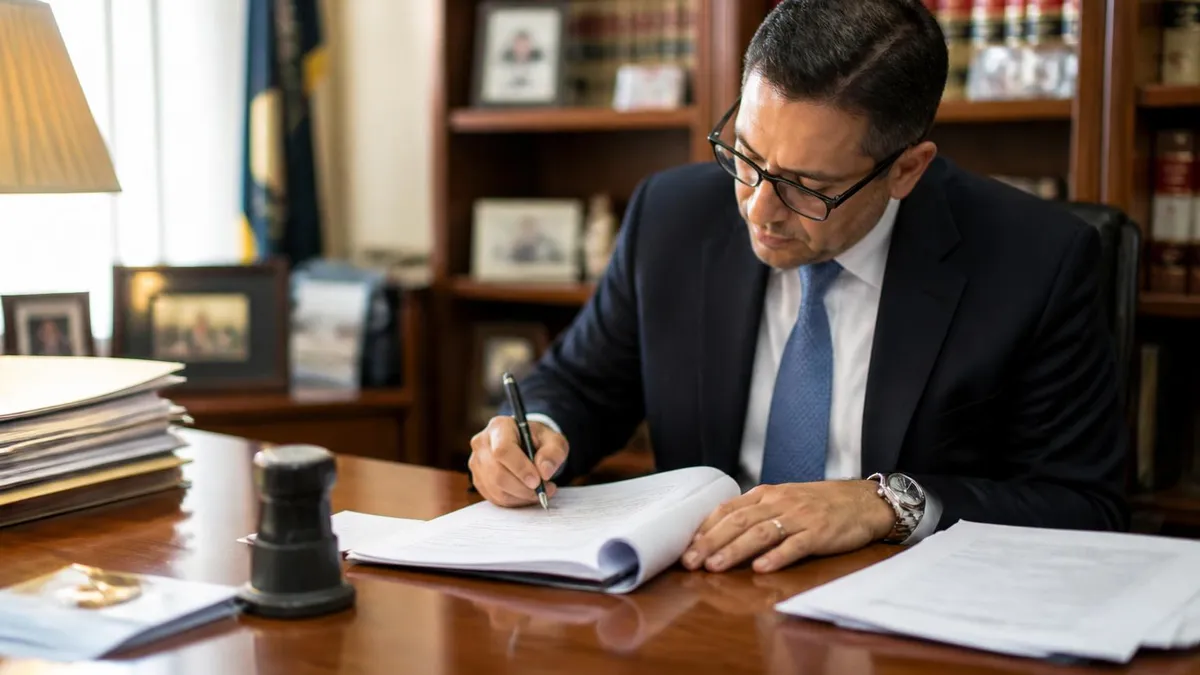
What to Bring to Your Notary Appointment
- ✓Government-issued photo ID (passport, driver's license, state ID, or permanent resident card)
- ✓The unsigned document — never sign before arriving, notaries must witness the signing
- ✓All pages of the document, not just the signature page
- ✓Any additional signers who need to be present
- ✓Payment: cash or card — confirm method when scheduling
- ✓If required: witnesses (notary can sometimes serve as one, but not always)
How to Get a Document Notarized: Step by Step
Find a Notary Near You
Prepare Your Document
Bring Valid Photo ID
Sign in Front of the Notary
Receive Notarial Stamp and Certificate
Submit or Apostille If Required
Common Documents Notarized by Spanish-Speaking Communities
- Examples: Affidavit of Support (I-864), relationship affidavits, age affidavits
- Who Signs: US petitioner or sponsor
- Note: Notarization witnesses the signature — USCIS still evaluates the content separately
- Purpose: Grants someone legal authority to act on your behalf
- Common Use: Managing property in home country, banking, signing on behalf of absent party
- Note: May also require apostille if used outside the US
- Examples: Deeds, mortgage documents, title transfers, refinancing papers
- Who Handles: Title companies typically provide a notary at closing
- Cost: Often included in closing costs
- Purpose: Allows a child to travel internationally with one parent or a non-parent guardian
- Required By: Many countries and airlines when a child travels with only one parent
- Note: Both parents typically must sign if possible; notarization confirms identity
- Examples: Proof of guardianship, residency affidavits, medical authorization
- Who Needs: Grandparents, aunts/uncles, or other relatives raising children
- Cost: $0 at most school district offices or free bank notary
Encontrar un Notario: By Location Type
Best for: Free notarization for account holders
Cost: Usually free
How to find: Call your branch and ask if a notary is available. Chase, Wells Fargo, Bank of America, and most credit unions offer this service. Hours match branch hours.
Limitation: Notary may not be present every day — always call ahead.
Notary Public Questions and Answers
About the Author
Notary Public Law Expert & State Notary Exam Specialist
Georgetown University Law CenterAttorney Sarah Williams is a licensed attorney and National Notary Association (NNA) certified notary with a Juris Doctor from Georgetown University Law Center. She has 13 years of experience in notarial law, document authentication, and real estate closings. Sarah coaches candidates through state notary public examinations, notary signing agent certification, and loan signing agent training programs.