
Notaría Pública Cerca de Mí: What Is a Notary Public and How to Find One in the US
Find a notaria publica cerca de mi, learn what is a notary public, 💡 how to get a notary stamp, and where to get free notary services near you.

If you have ever searched for a notaria publica cerca de mi — that is, a notary public near me in Spanish — you are not alone. Millions of Americans and Spanish-speaking residents search every month for a trusted notary to authenticate documents, witness signatures, and prevent fraud.
Understanding what is a notary public is the first step toward using notarial services confidently, whether you need to notarize a power of attorney, a deed, or an affidavit. This guide explains everything you need to know, from locating free services to understanding the notary public stamp. You can also explore our notaria publica cerca de mi practice resources to deepen your knowledge.
A notary public is a state-commissioned official authorized to serve as an impartial witness during the signing of important legal documents. The role dates back centuries to ancient Rome, where scribes known as notarii kept official records.
In the modern United States, every state has its own laws governing notary powers, but the core mission remains the same: deterring fraud, verifying identity, and certifying that signers acted voluntarily. The term notario publico is widely used in Latin American countries, though its meaning and legal authority differ significantly from the US notary public role, a distinction we will cover in detail below.
Notaries are everywhere once you know where to look. Banks, credit unions, law offices, shipping centers like UPS and FedEx, libraries, and real estate offices all commonly employ commissioned notaries. Many offer services free of charge to customers or members, making free public notary near me a very achievable goal for most people. Some mobile notaries will even travel to your home, hospital, or workplace — especially useful for elderly individuals or those with mobility challenges who cannot easily travel to a physical office.
The documents you might need notarized span a wide range of life events. Real estate transactions almost always require notarized deeds, mortgage documents, and title transfers. Estate planning involves notarized wills, trusts, and durable powers of attorney. Immigration paperwork, vehicle title transfers, business contracts, sworn affidavits, and school enrollment forms for international students may all require a notary's official seal and signature. Knowing which documents require notarization in your state can save you significant time and prevent costly legal complications down the road.
For Spanish-speaking communities across the United States, finding a bilingual notaria publica cerca de mi is especially important. Many Hispanic and Latino residents feel more comfortable discussing sensitive legal matters in Spanish, and a bilingual notary can help ensure that the signer fully understands the document they are signing — a requirement in many states. Community resource centers, Hispanic chambers of commerce, and local legal aid organizations are excellent starting points for locating bilingual notary services in your area.
Technology has made it easier than ever to access notarial services. Remote Online Notarization, commonly called RON, allows signers to meet with a commissioned notary via secure video conference and sign documents electronically. As of 2026, more than 40 states have enacted RON legislation, meaning you can get documents notarized from the comfort of your home without ever setting foot in an office. Platforms like Notarize.com, DocVerify, and others have made this process fast and legally recognized in participating states.
Whether you are searching for in-person or online notarial services, understanding the basics of how notaries operate, what a notary public stamp looks like, and what the notary public seal signifies will help you navigate the process with confidence. This article covers everything: how to find free notaries, how to become one yourself, the differences between US notaries and Latin American notarios, state-specific rules including notary public Texas requirements, and how to prepare if you are studying for the Notary Public exam.
Notary Public in the US by the Numbers

Core Duties and Responsibilities of a Notary Public
Notaries must confirm that signers are who they claim to be. This typically requires government-issued photo ID such as a driver's license, state ID, or passport. Some states allow credible witnesses or personal knowledge as alternatives.
The notary watches the signer physically place their signature on the document, or the signer acknowledges a prior signature. This step ensures that signatures are voluntary and authentic, protecting all parties from later disputes.
For jurats and sworn statements, the notary verbally administers an oath or affirmation, asking the signer to swear or affirm that the document's contents are true. Lying under a notarized oath can constitute perjury.
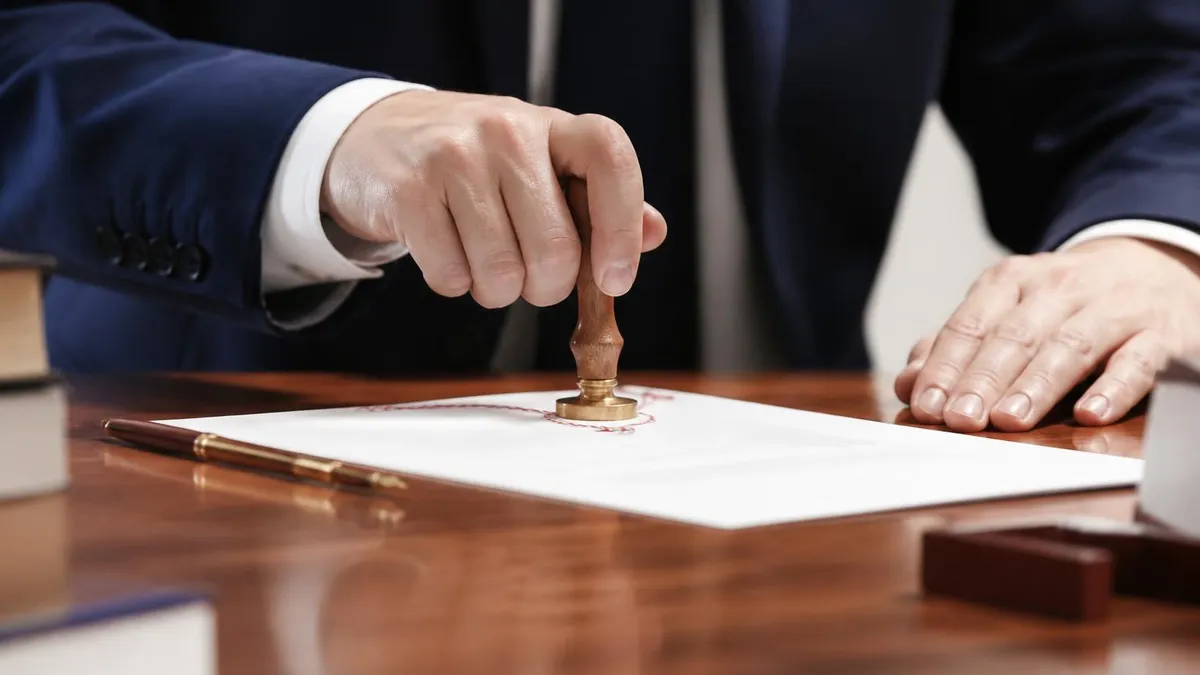
After completing the notarial act, the notary applies their official seal — either an ink stamp or embosser — and signs the document. The notary public seal contains the notary's name, state, commission number, and expiration date.
Many states require notaries to keep a chronological journal of every notarial act performed, recording dates, document types, signer names, ID presented, and fees charged. This journal is critical evidence if a notarization is ever challenged.
Knowing where to find a free notary public near me can save you both time and money. The single most accessible source of free notarization in the United States is your bank or credit union. Major institutions like Bank of America, Chase, Wells Fargo, and Citibank all offer notary services to account holders at no charge, and many extend the service to non-customers as a community goodwill gesture.
Notary public in Bank of America branches is a commonly searched phrase, and the answer is yes — most branches have at least one commissioned notary on staff during regular business hours, though calling ahead to confirm availability is always advisable.
Public libraries are another frequently overlooked source of free or very low-cost notarial services. Many urban and suburban library systems employ notaries or host scheduled notarization clinics, sometimes in partnership with local bar associations or legal aid organizations. Check your local library's website or call the reference desk to ask about availability. Library notaries tend to be especially helpful for seniors, low-income residents, and immigrants who may not have a banking relationship or the financial resources to pay private notary fees.
UPS Stores, FedEx Office locations, and many AAA branches offer notary services, typically for a modest fee of $5 to $15 per signature. These are convenient options because they maintain extended hours, including evenings and weekends, when bank branches are often closed. For urgent situations — a property closing that must happen on a Saturday, for instance — these retail notary locations can be lifesavers. Always call ahead to verify that a commissioned notary is scheduled to work during your planned visit.
Mobile notaries represent a premium but highly convenient option. These are independent notaries who travel to the client's location — home, office, hospital room, or rehabilitation center — for an additional travel fee. Mobile notary fees typically range from $50 to $200 depending on travel distance and document complexity, with loan signing agents (who handle mortgage closings) sometimes charging $150 to $300 per appointment. Apps and platforms like Notary Rotary, SnapDocs, and Notarize can connect you with a mobile notary within hours.
Legal aid organizations and nonprofit community centers often provide notary services to qualifying individuals at no cost. These services are particularly valuable for immigration documents, family court paperwork, and public benefits applications. If you are searching for a bilingual notaria publica cerca de mi, start with organizations serving Hispanic and Latino communities in your city. Many Catholic Charities offices, YMCA branches, and immigrant services nonprofits maintain bilingual staff notaries or can make referrals to trusted community members.
When scheduling a notarization appointment, always bring more identification than you think you will need. Most notaries require at least one current, government-issued photo ID, but having a secondary form of identification — a Social Security card, a utility bill with your name and address, or a credit card — adds an extra layer of assurance. If the document you need notarized has multiple pages, make sure all pages are present and that no blank spaces remain that could be filled in after the notarization, which would invalidate the act.
It is also worth understanding what a notary cannot do. Notaries are not attorneys and cannot provide legal advice, draft documents, or tell you whether a particular document is appropriate for your legal situation. If you are unsure about the legal implications of a document you are being asked to sign — particularly a power of attorney, a deed, or an immigration-related form — consult a licensed attorney before proceeding to notarization. Many legal aid organizations offer free or sliding-scale consultations that can help you make an informed decision.
Notary Public Practice Test Questions
Prepare for the Notary Public Exam exam with our free practice test modules. Each quiz covers key topics to help you pass on your first try.
Notary Public Basic Notary Public
Notary Public Exam Questions covering Basic Notary Public. Master Notary Public Test concepts for certification prep.
Notary Public Duties & Responsibilities of...
Free Notary Public Practice Test featuring Duties & Responsibilities of a Notary. Improve your Notary Public Exam score with mock test prep.
Notary Public Ethics & Professional Conduct
Notary Public Mock Exam on Ethics & Professional Conduct. Notary Public Study Guide questions to pass on your first try.
Notary Public Fraud Prevention & Security
Notary Public Test Prep for Fraud Prevention & Security. Practice Notary Public Quiz questions and boost your score.
Notary Public Identification & Credential ...
Notary Public Questions and Answers on Identification & Credential Verification. Free Notary Public practice for exam readiness.
Notary Public Jurats & Acknowledgments
Notary Public Mock Test covering Jurats & Acknowledgments. Online Notary Public Test practice with instant feedback.
Notary Public Notarial Acts & Procedures
Free Notary Public Quiz on Notarial Acts & Procedures. Notary Public Exam prep questions with detailed explanations.
Notary Public Notary Laws & Regulations
Notary Public Practice Questions for Notary Laws & Regulations. Build confidence for your Notary Public certification exam.
Notary Public MCQ
Notary Public Test Online for MCQ. Free practice with instant results and feedback.
Notary Public
Notary Public Study Material on Notary Public. Prepare effectively with real exam-style questions.
Notary Public Oaths & Affirmations
Free Notary Public Test covering Oaths & Affirmations. Practice and track your Notary Public exam readiness.
Notary Public Recordkeeping & Journal Entries
Notary Public Exam Questions covering Recordkeeping & Journal Entries. Master Notary Public Test concepts for certification prep.
Notary Public Exam Basic Notary Public
Free Notary Public Practice Test featuring Exam Basic Notary Public. Improve your Notary Public Exam score with mock test prep.
Notary Public Exam Duties & Responsibiliti...
Notary Public Mock Exam on Exam Duties & Responsibilities of a Notary. Notary Public Study Guide questions to pass on your first try.
Notary Public Exam Ethics & Professional C...
Notary Public Test Prep for Exam Ethics & Professional Conduct. Practice Notary Public Quiz questions and boost your score.
Notary Public Exam Fraud Prevention & Secu...
Notary Public Questions and Answers on Exam Fraud Prevention & Security. Free Notary Public practice for exam readiness.
Notary Public Exam Identification & Creden...
Notary Public Mock Test covering Exam Identification & Credential Verification. Online Notary Public Test practice with instant feedback.
Notary Public Exam Jurats & Acknowledgments
Free Notary Public Quiz on Exam Jurats & Acknowledgments. Notary Public Exam prep questions with detailed explanations.
Notary Public Exam Notarial Acts & Procedures
Notary Public Practice Questions for Exam Notarial Acts & Procedures. Build confidence for your Notary Public certification exam.
Notary Public Exam Notary Certificates & W...
Notary Public Test Online for Exam Notary Certificates & Wording. Free practice with instant results and feedback.
Notary Public Exam Notary Laws & Regulations
Notary Public Study Material on Exam Notary Laws & Regulations. Prepare effectively with real exam-style questions.
Notary Public Exam Notary Public
Free Notary Public Test covering Exam Notary Public. Practice and track your Notary Public exam readiness.
Notary Public Exam Notary Public MCQ
Notary Public Exam Questions covering Exam Notary Public MCQ. Master Notary Public Test concepts for certification prep.
Notary Public Exam Notary Seal & Stamp Req...
Free Notary Public Practice Test featuring Exam Notary Seal & Stamp Requirements. Improve your Notary Public Exam score with mock test prep.
Understanding the Notary Public Stamp and Seal
The notary public stamp is an ink-based rubber stamp that notaries apply directly to a document after completing a notarial act. It must include specific information required by state law, typically the notary's full legal name, the state of commission, the commission number, and the commission expiration date. Some states also require the county of the notary's principal place of business. The stamp must be clearly legible and cannot overlap the signer's signature or other critical text on the document.
Different states impose different size and format requirements for the notary public stamp. Many states specify a maximum or minimum rectangular border size, while others permit circular stamps. The ink color also matters: black ink is universally accepted and reproduces most reliably in photocopies and scanned documents, while blue or purple ink may cause problems with certain document scanning systems. Notaries are personally responsible for securing their stamp and preventing unauthorized use — a lost or stolen stamp must be reported to the commissioning state authority immediately.

Pros and Cons of Using a Mobile Notary vs. Bank Notary
- +Mobile notaries travel to your location, eliminating the need to leave home or office
- +Available evenings, weekends, and holidays when banks are closed
- +Ideal for hospital patients, elderly individuals, or those with mobility limitations
- +Can handle complex loan signings and multi-document closings efficiently
- +Many mobile notaries are bilingual and serve Spanish-speaking clients
- +Appointment-based service ensures dedicated, uninterrupted attention to your documents
- −Mobile notary fees range from $50–$300, significantly higher than free bank services
- −Quality varies widely — not all mobile notaries are equally experienced or professional
- −Scheduling delays can occur in rural areas with fewer available notaries
- −Some mobile notaries are not authorized for certain document types in all states
- −Bank notaries are free for account holders and backed by institutional accountability
- −Remote or mobile notaries may have limited equipment for embossed seal requirements
Notarization Checklist: What to Bring and Do Before Your Appointment
- ✓Bring a current, government-issued photo ID such as a driver's license, state ID card, or passport.
- ✓Bring a secondary form of ID (Social Security card, credit card, or utility bill) as backup.
- ✓Ensure the document is complete — do not leave blank spaces that could be filled in after notarization.
- ✓Do NOT sign the document before meeting the notary unless the act is an acknowledgment and your state allows pre-signing.
- ✓Confirm the document type and state requirements to ensure the correct notarial certificate wording is used.
- ✓Check whether your document requires witnesses in addition to a notary, and arrange for them to be present.
- ✓Call ahead to verify a licensed notary will be available at your chosen location on the day you plan to visit.
- ✓Ask about fees in advance — most states cap notary fees per signature, but mobile notary travel fees vary.
- ✓Review the notary's commission expiration date on their stamp to confirm it has not lapsed.
- ✓Keep a copy of the notarized document for your records before submitting the original to any agency or institution.
Notary availability changes daily — call ahead to avoid wasted trips.
Even if a branch or office normally has a notary on staff, that person may be out sick, on vacation, or serving another client. A quick 60-second phone call before you travel can save you significant frustration, especially if you are carrying time-sensitive documents like real estate deeds or court filings. Ask specifically: 'Do you have a commissioned notary available today, and what hours are they working?'
If you are interested in how to become a notary public, the process is more accessible than most people realize, but the specific requirements vary considerably from state to state. In general, you must be at least 18 years old, a legal resident of the state in which you are applying, able to read and write English, and free of certain felony convictions. Some states impose additional requirements, such as completing a state-approved notary education course and passing a written examination before your commission is approved.
California is one of the most rigorous states for notary commissioning. Applicants must complete a six-hour state-approved training course, pass a proctored written exam with a score of at least 70 percent, pass a background check, and file a $15,000 surety bond before being commissioned. Texas, by contrast, has a simpler process: applicants submit an application through a state-approved vendor, pass a background check, and file a surety bond, but no mandatory education or examination is required. Understanding notary public Texas rules versus California rules illustrates just how different state requirements can be.
The surety bond deserves a special mention because it is a requirement in most states. A notary surety bond — typically ranging from $5,000 to $25,000 depending on the state — protects the public, not the notary. If a notary makes a mistake or commits misconduct that causes financial harm to a client, the injured party can make a claim against the bond to recover their losses. The notary is then personally responsible for reimbursing the surety company, so the bond is not insurance for the notary — it is a financial guarantee for the public's protection.
Once commissioned, a notary must obtain their official supplies: an inked stamp, an embosser (if required by their state), and a notary journal. These can be purchased from office supply stores or from notary supply vendors endorsed by state notary associations. Total startup costs typically range from $50 to $200, including supplies, bond, and application fees. Many notaries recoup these costs quickly if they work in industries where notarization is frequent, such as real estate, legal services, banking, or insurance.
Errors and Omissions insurance, often abbreviated E&O, is optional in most states but highly recommended. While the surety bond protects the public from the notary's mistakes, E&O insurance protects the notary from the cost of defending a lawsuit, even if the notary ultimately prevails. Annual E&O premiums are affordable — typically $40 to $200 per year depending on coverage limits — making it a prudent investment for any notary who handles significant document volumes or high-value transactions.
Continuing education requirements also vary. Some states, including California, require notaries to complete additional training before renewing their commission. Others have no ongoing education requirements. Membership in professional organizations such as the National Notary Association (NNA) provides access to training materials, legal updates, supply discounts, and a professional community of peers. The NNA also administers a Notary Public Certified (NNA Certified Notary) designation that many employers and clients specifically request.
If you are considering becoming a loan signing agent — a specialized type of notary who handles mortgage closings — you will need additional training beyond the basic notary commission. Loan signing agents must understand mortgage document packages, know how to guide borrowers through the signing process without providing legal advice, and meet lender and title company certification requirements. Platforms like the Signing Professionals Workgroup (SPW) and NotaryDash provide certification paths that many title companies and signing services require before assigning loan signings to independent notaries.

In Latin American countries, a notario publico is a highly trained legal professional — equivalent to a lawyer or civil law attorney — with the authority to draft contracts, handle property transfers, and practice law. In the United States, a notary public has NO legal authority to provide legal advice or draft legal documents. Beware of individuals who call themselves 'notarios' and offer immigration legal services — this is illegal in all 50 states and has resulted in serious harm to thousands of immigrants who paid for unauthorized legal advice.
The distinction between a US notary public and a notario publico in Latin America is critically important, particularly for recent immigrants from Mexico, Central America, and South America. In countries like Mexico, a notario publico holds a law degree, has passed rigorous government examinations, and is appointed by the state government to a limited number of positions.
The Mexican notario can draft property deeds, authenticate business incorporations, certify translations, and perform many functions that in the US would require a licensed attorney. When Spanish-speaking immigrants arrive in the United States and see a sign advertising notario publico services, they may assume the same high level of legal authority — a dangerous misunderstanding.
Notario fraud — a form of unauthorized practice of law — has devastated countless immigrant families. Individuals advertising as notarios in the US frequently charge hundreds or thousands of dollars to fill out immigration forms, a service that paralegals and accredited representatives can legally provide under attorney supervision at much lower cost. The worst cases involve individuals who filed fraudulent or incorrect immigration applications, causing clients to lose their cases, face deportation proceedings, or accrue years of delays. If you need immigration legal help, seek out a licensed attorney or an accredited representative recognized by the Board of Immigration Appeals.
Understanding this distinction is also essential for employers, landlords, and financial institutions who may receive documents bearing a foreign notarial certificate. A document notarized by a Mexican notario publico carries vastly different legal weight than a US notarized document, and may require apostille certification under the Hague Apostille Convention before it is recognized in the US. An apostille is a standardized international authentication certificate issued by a designated government authority in the document's country of origin, confirming that the notarization or certification is genuine.
For US documents that will be used abroad — in Mexico, Colombia, Spain, or any of the more than 120 countries that have signed the Hague Convention — the process works in reverse. After having your document notarized by a US notary public, you typically submit it to your state's Secretary of State office for an apostille. The Secretary of State verifies the notary's commission, attaches the apostille certificate, and returns the completed document package to you. Fees vary by state but typically range from $10 to $30 per apostille.
When documents must be used in countries that have not signed the Hague Convention — some countries in Africa and Asia — a more complex process called legalization or authentication through a chain of government certifications is required. This process involves certification by the state, then by the US State Department, and finally by the destination country's embassy or consulate. This multi-step process can take weeks and cost significantly more than an apostille, making advance planning essential for anyone conducting international business or managing cross-border family matters.
It is also worth noting that some US states have enacted specific laws targeting notario fraud. California, for example, requires anyone advertising notary services to Spanish-speaking clients using the term notario or notario publico to prominently display a notice stating that they are NOT an attorney and cannot give legal advice. Violation of this law is a misdemeanor, and repeated violations can result in criminal prosecution. Other states have similar or stronger protections. If you witness someone offering notario legal services fraudulently, you can report them to your state's attorney general office or bar association.
For a comprehensive comparison of state-specific notary rules, verification of a notary's commission status, and guidance on international document authentication, see our detailed guide to resources for Spanish-speaking communities. You can also build your understanding of proper notary procedures, ethical obligations, and fraud prevention by reviewing our free practice materials at notaria publica cerca de mi study resources, which cover the full scope of US notary law in an accessible, exam-ready format.
Preparing for the notary public exam requires a clear understanding of your state's specific laws, but several foundational concepts appear on virtually every state examination. The most heavily tested areas include the proper completion of notarial certificates, the types of notarial acts (acknowledgments, jurats, copy certifications, oaths, and affirmations), acceptable forms of signer identification, prohibited acts, journal requirements, and the handling of documents in foreign languages. Many states also test candidates on conflict of interest rules — specifically, when a notary must refuse to notarize a document because they have a personal financial interest in the transaction.
Acknowledgments and jurats are the two most common notarial acts and the most commonly confused. An acknowledgment is appropriate when a signer acknowledges that they previously signed a document voluntarily and with full legal authority — the signer does not have to sign in front of the notary, just appear before the notary and confirm their prior signature.
A jurat, by contrast, requires the signer to sign the document in the notary's presence and to swear or affirm under oath that the document's contents are true. Using the wrong certificate for a particular document type is a serious error that can render the notarization invalid.
State-specific laws govern maximum fees, journal requirements, seal specifications, and acceptable identification. For example, California allows a notary to charge up to $15 per notarial act, while Texas permits up to $6 for the first acknowledgment and $1 for each additional. Florida allows up to $10 per act. These fee caps apply only to traditional in-person notarizations; remote online notarizations are often subject to different, typically higher, fee structures set by the platforms that facilitate them. Knowing your state's fee schedule is not just a compliance requirement — it protects you from inadvertently overcharging clients.
One area that trips up many notary candidates is the concept of a personally known signer versus an identified signer. In states that allow personal knowledge as a basis for identity verification, the notary must have direct personal acquaintance with the signer — not merely recognize them as a neighbor or have met them once at a party.
The relationship must be substantial enough that the notary can state with reasonable certainty who the person is. When in doubt, requiring government-issued photo ID is always the safer course and protects the notary from liability if the signer's identity is later disputed.
Exam candidates should also study the rules governing incomplete or altered documents. Notaries are prohibited from notarizing documents with blank spaces that could be completed after the notarization, because doing so would allow the document's contents to be changed without invalidating the notarial certificate.
If a document contains blank spaces intended to remain blank — for example, a form that has pre-printed blanks that do not apply to this particular transaction — the notary should draw a line through those spaces or have the signer initial them before proceeding. Some states require notaries to describe this practice specifically in their journal entry.
Understanding what happens when a notarization is challenged in court is also important test material. Notarized documents carry a legal presumption of validity, meaning that courts generally accept them as authentic unless the opposing party can produce evidence of fraud, duress, or notary misconduct. A detailed, accurate journal entry is the notary's best defense: it records when the notarization occurred, what identification was presented, and that the signer appeared willing and competent. Without a journal, a notary who is challenged in court has little protection beyond their memory, which fades over time.
Finally, many notary exam prep courses emphasize the importance of professional demeanor and customer service. A notary who makes signers feel rushed, confused, or uncomfortable is more likely to make procedural errors and less likely to build the repeat business that makes notarization a sustainable professional service. Taking the time to explain what you are doing and why — without crossing into legal advice — creates a positive experience that encourages referrals and repeat clients, particularly in communities where trust in official processes may have been undermined by historical experiences with fraud or government overreach.
Notary Public Questions and Answers



About the Author

Notary Public Law Expert & State Notary Exam Specialist
Georgetown University Law CenterAttorney Sarah Williams is a licensed attorney and National Notary Association (NNA) certified notary with a Juris Doctor from Georgetown University Law Center. She has 13 years of experience in notarial law, document authentication, and real estate closings. Sarah coaches candidates through state notary public examinations, notary signing agent certification, and loan signing agent training programs.