
What Is A NDT? Complete Guide to Non-Destructive Testing in 2026 September
Learn what a NDT is, how non-destructive testing works, methods used, and career paths. ✅ Complete 2026 September guide for US professionals.

A NDT — short for non-destructive testing — is a category of inspection and analysis techniques used to evaluate the properties, integrity, and internal structure of materials, components, and assemblies without permanently altering or damaging the item being examined. From oil pipelines and aircraft fuselages to bridges and pressure vessels, NDT methods allow engineers and inspectors to detect flaws, measure thickness, verify welds, and assess structural soundness without ever cutting, breaking, or compromising the part. This makes NDT an essential discipline across virtually every safety-critical industry in the United States.
The core advantage of non-destructive testing is economic as much as technical. Traditional destructive testing methods — pulling a sample to failure, sectioning a weld, or chemically dissolving a coating — yield precise data but consume the part in the process. A NDT approach, by contrast, allows 100% inspection of production runs, in-service assets, and aging infrastructure. Manufacturers can inspect every weld on a pressure vessel rather than sacrificing one per batch, and utility companies can scan hundreds of miles of pipe annually without shutting down service for days at a time.
NDT is governed in the United States by a robust framework of standards, qualification levels, and certifying bodies. The American Society for Nondestructive Testing (ASNT) sets the most widely recognized personnel qualification standards through documents like SNT-TC-1A and CP-189, while organizations such as the American Welding Society (AWS) and ASTM International publish method-specific procedures. Inspectors who want to learn about ndt training pathways will find that formal classroom education, hands-on practice hours, and written examinations are all required before a technician can independently certify components in the field.
The field is remarkably broad. NDT encompasses a wide spectrum of physical phenomena: sound waves traveling through metal, magnetic flux leaking around a crack, X-rays attenuated by density variations, dye penetrating surface openings, eddy currents responding to conductivity changes, and infrared radiation revealing subsurface heat anomalies. Each method has its own physics, its own set of applicable materials, its own depth of penetration, and its own sensitivity to particular flaw types. No single NDT method finds every defect, which is why complex inspection programs often combine two or more techniques.
From a career standpoint, NDT technicians are in high demand. The Bureau of Labor Statistics groups many NDT roles under quality control inspectors, and independent salary surveys consistently show experienced Level II and Level III technicians earning between $55,000 and $95,000 per year, with specialized aerospace and nuclear inspectors sometimes exceeding $110,000. The skill set is portable — an ASNT-certified ultrasonic testing technician can work in petrochemical, power generation, aerospace, or construction — making NDT one of the more versatile technical trades in the US economy.
For students, career-changers, and experienced inspectors refreshing their knowledge, practice testing is one of the most effective preparation strategies available. Understanding the underlying principles of each NDT method, memorizing key equations for ultrasound velocity and flaw sizing, and drilling on discontinuity evaluation scenarios all translate directly into higher scores on certification exams. This guide covers the full landscape of what a NDT professional needs to know: the major methods, the certification structure, the career outlook, and the study strategies that consistently produce passing scores.
Whether you are exploring NDT for the first time or preparing to sit for an ASNT Level II examination, the pages ahead provide a structured, comprehensive foundation. We cover the history and scope of the discipline, break down the six most commonly tested NDT methods, walk through the certification pathway step by step, and give you actionable study tips drawn from the experience of thousands of test-takers.
By the time you finish this guide, you will have a clear picture of what non-destructive testing is, why it matters, and exactly what you need to do to build a rewarding career in the field.
NDT Industry by the Numbers

The Six Core NDT Methods Every Inspector Must Know
A low-cost surface method that uses capillary action to draw colored or fluorescent dye into open discontinuities. After a dwell time, developer is applied to draw the penetrant back out, revealing cracks, porosity, and seams visible to the naked eye.
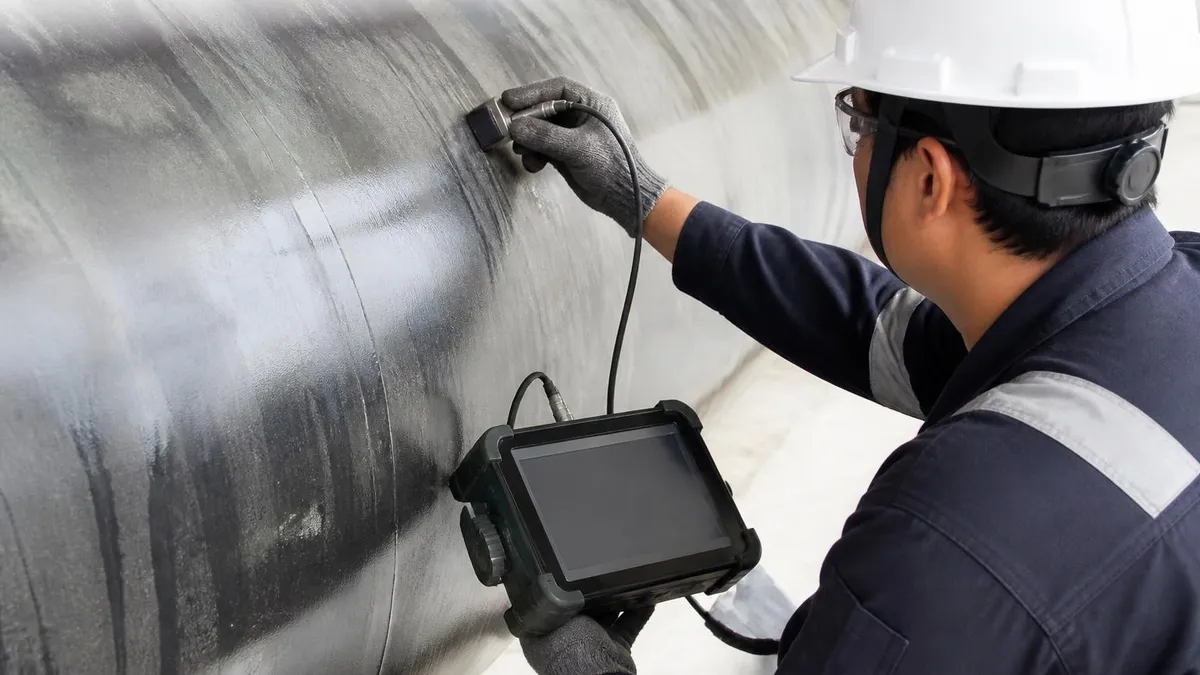
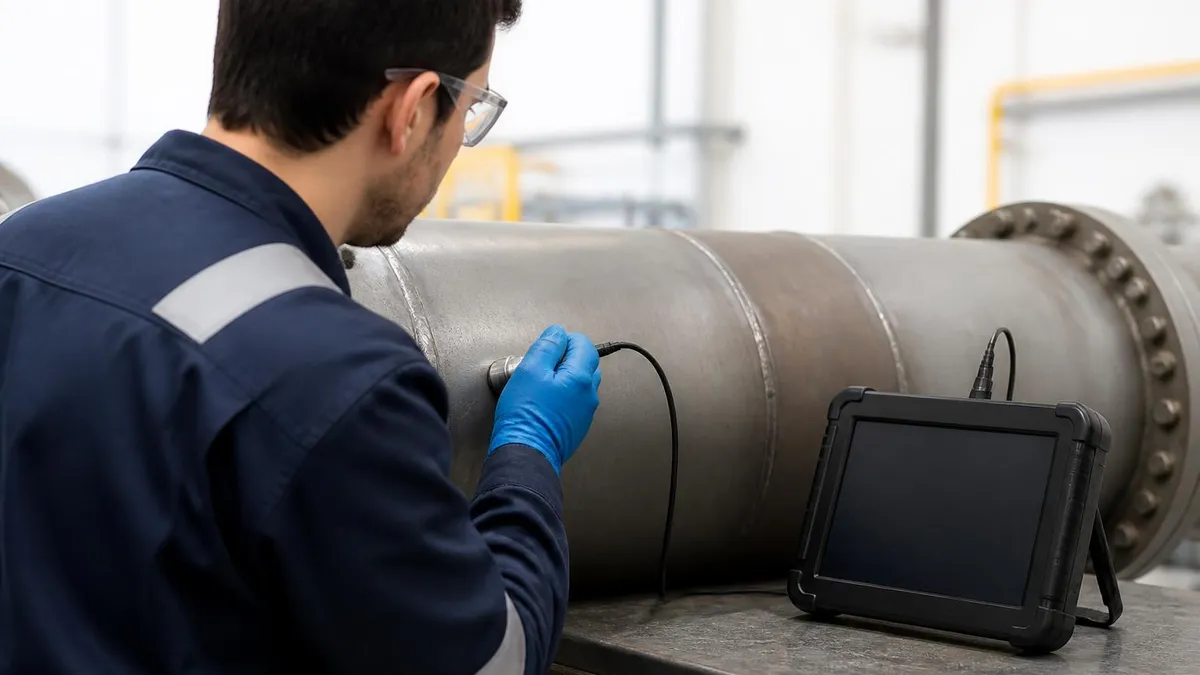
High-frequency sound waves are introduced into a material and reflections from internal features are analyzed. UT is highly sensitive to volumetric flaws like inclusions and laminations and is the dominant method for weld inspection and thickness measurement in pipelines.
Ferromagnetic materials are magnetized and fine iron particles are applied to the surface. Flux leakage at surface and near-surface discontinuities attracts the particles, forming visible indications. MT is fast, reliable, and widely used in weld and casting inspection.
X-rays or gamma rays penetrate a component and expose a film or digital detector on the opposite side. Density variations caused by voids, inclusions, or thickness changes appear as contrast differences on the radiograph — the standard method for weld volumetric inspection.
An alternating magnetic field induces circulating eddy currents in a conductive material. Disruptions caused by cracks, corrosion, or conductivity changes alter the current pattern and are detected electronically. ET excels at tubing inspection and surface crack detection in non-ferrous alloys.
ASNT certification is structured around three personnel qualification levels, each with progressively greater responsibility and knowledge requirements. Level I technicians are trained to set up equipment and perform specific, defined tests under the supervision of a higher-level technician. They can calibrate instruments using reference standards and record indications, but they do not independently evaluate or accept/reject components. Level I is the entry point for most new NDT inspectors and typically requires 40 to 80 hours of formal training per method, depending on the specific NDT technique.
Level II technicians represent the working backbone of the industry. They are qualified to set up and calibrate equipment, conduct tests, interpret and evaluate results, and prepare written inspection reports. A Level II can also train and direct Level I technicians.
The training hour requirements jump significantly at this level — 80 to 160 hours per method are common thresholds in SNT-TC-1A — and candidates must also accumulate documented hands-on experience hours before they are eligible to sit for the written and practical examinations. Most inspection job postings in the United States require ASNT Level II certification as a baseline credential.
Level III is the highest ASNT qualification and is primarily an administrative, engineering, and program-management credential. Level III holders are responsible for establishing and approving written NDT procedures, interpreting codes and standards, and ensuring that an employer's entire NDT program meets regulatory and contractual requirements. The ASNT Level III examination is a rigorous multi-part test that assesses knowledge across NDT fundamentals, specific method principles, and materials/process knowledge. Many employers require a bachelor's degree in engineering or a related technical field for Level III candidates, though extensive field experience can sometimes substitute.
Beyond ASNT, several industry-specific certification schemes exist. The aerospace sector often mandates NAS 410 (previously EN 4179) qualifications, which have stricter training and examination requirements than SNT-TC-1A. The nuclear power industry operates under NRC-mandated qualification programs based on ASME Section XI and the Performance Demonstration Initiative (PDI). AWS Certified Welding Inspectors (CWI) frequently overlap with NDT roles in fabrication shops, and API standards govern inspection in the oil and gas industry. Understanding which certification scheme applies to your target employer is an important early step in career planning.
Recertification is an ongoing requirement throughout an NDT career. Under ASNT guidelines, Level I and II certifications must be renewed every five years through a combination of documented continuing education, vision testing, and — depending on the employer's written practice — a reexamination. This keeps inspectors current with evolving standards, new equipment technologies, and updated code requirements. For professionals who want a deeper understanding of the full certification ecosystem, there is extensive information available through ASNT's official publications and local section events.
Preparing for ASNT written examinations requires a solid grasp of both method-specific physics and the practical application of acceptance criteria. Exam questions typically draw from ASNT study guides, relevant ASTM or ASME standards, and industry reference materials. Candidates frequently underestimate the depth of knowledge required, particularly in areas like ultrasonic beam spread calculations, magnetic field strength requirements, and penetrant dwell time sensitivity. Structured practice testing — working through hundreds of realistic multiple-choice questions under timed conditions — is the single most reliable predictor of exam success and is strongly recommended by instructors across the country.
One often-overlooked aspect of NDT qualification is the vision examination. ASNT SNT-TC-1A requires all NDT personnel to undergo annual near-vision acuity testing (Jaeger J1 or equivalent at 12 inches) and color contrast discrimination checks for methods where color differentiation is essential, such as liquid penetrant testing. Failing to maintain current vision documentation can invalidate a technician's qualification status, so keeping this administrative requirement current is just as important as staying sharp on technical knowledge.
NDT Method Comparisons: Choosing the Right Technique
Surface methods like liquid penetrant testing and magnetic particle testing are optimized for detecting discontinuities that are open to or very near the surface. They are fast, relatively inexpensive to perform, and require minimal equipment investment, making them the default choice for weld toe cracking, fatigue cracks, and forging laps. However, they cannot detect flaws buried more than a few millimeters below the surface, which is a significant limitation in heavy-section components.
Volumetric methods — primarily ultrasonic testing and radiographic testing — can detect flaws throughout the entire cross-section of a component. Radiography excels at detecting volumetric flaws like porosity and slag inclusions in welds and produces a permanent film record that is easy to interpret. Ultrasonic testing is more portable, produces no radiation hazard, and can size flaws with greater precision using techniques like time-of-flight diffraction (TOFD), but requires highly skilled operators and is more sensitive to operator technique than radiography.

NDT as a Career: Advantages and Challenges
- +High demand across multiple industries — aerospace, oil and gas, power generation, construction, and manufacturing all require certified NDT technicians year-round
- +Portable credentials — an ASNT Level II certification is recognized by employers nationwide, allowing technicians to relocate or switch industries without re-qualifying from scratch
- +Competitive pay with overtime — field NDT inspectors on pipeline or shutdown projects routinely earn substantial overtime, pushing annual compensation well above base salary figures
- +Variety of work environments — inspectors work in refineries, shipyards, offshore platforms, nuclear plants, aerospace facilities, and manufacturing shops, so the job never becomes monotonous
- +Clear advancement pathway — technicians can progress from Level I to Level II to Level III in each method, and Level IIIs can advance into management, consulting, or standards-writing roles
- +Relatively short entry timeline — motivated candidates can earn their first ASNT Level II certification in 12 to 18 months, far faster than a four-year engineering degree
- −Physical demands — field inspectors often work in confined spaces, at elevation, in extreme heat or cold, and in industrial environments with noise, dust, and chemical exposures
- −Radiation safety requirements — radiographic testing technicians must comply with strict NRC and state regulatory requirements for dosimetry, storage, and transportation of radioactive isotopes
- −Continuing education burden — certifications must be renewed every five years, requiring inspectors to stay current with evolving codes, new equipment, and updated acceptance standards
- −Shift work and travel — many NDT roles involve rotating shifts, overnight work, or extended travel to remote project sites, which can be difficult for inspectors with family commitments
- −Certification cost — training courses, exam fees, reference books, and vision testing add up; earning a single ASNT Level II can cost $1,500 to $4,000 out of pocket without employer support
- −High-stakes responsibility — an inspector who misses a critical flaw can contribute to catastrophic equipment failure, injury, or death, placing significant psychological weight on the role
NDT Certification Exam Preparation Checklist
- ✓Obtain the current edition of the ASNT Study Guide for your specific method (PT, UT, MT, RT, or ET) and read it cover to cover before attempting practice questions.
- ✓Download the relevant ASNT SNT-TC-1A or CP-189 document and understand the training hour and experience requirements for your target certification level.
- ✓Complete all employer-required training hours and ensure your supervisor documents them in your qualification record before scheduling your examination.
- ✓Schedule and pass your annual near-vision acuity test (Jaeger J1 at 12 inches) and, for PT, confirm your color contrast discrimination is documented.
- ✓Work through at least 500 practice questions under timed conditions before your exam date, focusing on areas where you consistently score below 80%.
- ✓Study applicable codes and standards cited in your employer's written practice — often ASME, ASTM, AWS, or API documents specific to your industry sector.
- ✓Review the mathematical formulas for your method: UT beam angles and sound velocity, MT amperage calculations, RT exposure factor calculations, or ET impedance relationships.
- ✓Schedule a mock practical examination with your training supervisor or a certified Level III to practice hands-on techniques under realistic test conditions.
- ✓Confirm the examination logistics — location, acceptable identification, permitted reference materials, and time limits — at least two weeks before your scheduled test date.
- ✓On exam day, read every question carefully, eliminate obviously wrong answers first, and flag difficult questions to return to rather than spending excessive time on any single item.
Practice Testing Cuts Failure Rate by Nearly Half
Candidates who complete 400 or more timed practice questions before their ASNT Level II examination pass at significantly higher rates than those who rely solely on reading study guides. The combination of active recall, time pressure, and immediate feedback on wrong answers accelerates retention of technical formulas and code requirements far more efficiently than passive reading alone. Build practice sessions into your study schedule from day one — not just the week before your exam.
The career outlook for NDT professionals in the United States is genuinely strong heading into the second half of the 2020s. Infrastructure investment through the Infrastructure Investment and Jobs Act has directed hundreds of billions of dollars toward bridge rehabilitation, pipeline replacement, and grid modernization — all sectors that require extensive NDT inspection services. At the same time, the domestic energy transition is driving demand for inspectors qualified to work on wind tower welds, hydrogen storage vessels, and liquefied natural gas facilities, all of which have specialized NDT requirements.
Aerospace remains one of the highest-paying sectors for NDT inspectors. Commercial aviation's post-pandemic recovery has pushed major MRO (maintenance, repair, and overhaul) facilities to expand their inspection workforces, and the continuing growth of space launch vehicles has created demand for inspectors fluent in composite testing methods. Aerospace NDT roles often require NAS 410 Level II qualifications, familiarity with fluorescent penetrant systems, and experience with automated phased array UT on composite structures — a combination that commands a premium in the labor market.
The nuclear power sector offers some of the most rigorous and best-compensated NDT work in the country. Outage inspections at operating nuclear plants are time-critical, technically demanding, and governed by strict regulatory requirements. Inspectors qualified under the ASME Section XI Performance Demonstration Initiative can earn $90 per hour or more during refueling outages, though the work requires acceptance of high travel demands and exposure monitoring. The emerging small modular reactor (SMR) market is expected to create additional nuclear NDT demand through the early 2030s.
Oil and gas — both upstream production and downstream refining — continues to represent the single largest employer of NDT technicians in the US. Pipeline integrity inspections under DOT regulations, API 510 pressure vessel inspections, and API 570 piping inspections are performed continuously at facilities across the country. Experienced inspectors who add API certification credentials alongside their ASNT qualifications significantly expand their marketability and earning potential in this sector.
Remote and automated NDT technologies are reshaping the workforce. Drone-mounted ultrasonic and visual inspection systems are reducing the need for rope-access inspectors in certain elevated environments, and robotic crawlers are performing tank floor scans that previously required confined space entry. Rather than eliminating jobs, these technologies tend to shift the skill requirements — inspectors increasingly need data analysis skills, familiarity with PAUT (phased array UT) data acquisition software, and the ability to evaluate outputs from automated systems rather than performing all inspections manually.
Compensation varies significantly by geography, industry, and certification level. Gulf Coast petrochemical inspectors typically earn more than counterparts in the Midwest due to the concentration of refineries and chemical plants and the premium placed on experienced shutdown inspectors. Level III consultants who work independently or for inspection service companies can command daily rates of $800 to $1,500, particularly when their expertise spans multiple methods and industry codes. Building a reputation for technical accuracy and reliability in this relatively small professional community pays dividends throughout a career.
For anyone considering entering the field, the single most important early decision is which NDT method to pursue first. Most career counselors recommend starting with either liquid penetrant testing or magnetic particle testing because the training requirements are shorter, the physics are more intuitive, and these methods open doors to entry-level inspection roles quickly. Once employed, technicians can add ultrasonic testing — the most versatile and highly compensated method — while gaining the real-world experience hours required for ASNT Level II qualification in UT.

ASNT SNT-TC-1A mandates that all NDT personnel demonstrate acceptable near-vision acuity annually. If your vision certificate expires, your qualification is technically lapsed — even if your written certification paperwork is still current. Schedule your Jaeger J1 near-vision test at the start of each calendar year and keep the documentation in your personnel qualification file alongside your training records and examination results. Do not wait until your recertification renewal date to discover a gap in your vision documentation.
Practical study strategies for NDT certification exams differ meaningfully from the approaches that work for general academic tests. NDT examinations are heavily weighted toward applied knowledge — the ability to select the correct technique for a given material and flaw type, calculate a specific numerical result, or identify the acceptance standard that applies to a particular code jurisdiction. This means that rote memorization of definitions is insufficient; candidates must be able to apply principles to novel scenarios they have not seen before.
Spaced repetition is among the most evidence-backed study techniques for technical certification exams. Rather than studying the same material in a single long session, candidates who distribute practice over weeks — reviewing difficult topics again a day later, then three days later, then a week later — retain information far more durably.
Free and paid flashcard apps can automate this scheduling, and many NDT instructors now provide digital flashcard decks organized by method and ASNT exam domain. Building a spaced repetition habit from the beginning of your study period is far more effective than cramming in the final days before your examination.
Active recall — the act of retrieving information from memory rather than simply re-reading it — dramatically strengthens long-term retention compared to passive review. After reading a section of your ASNT study guide, close the book and write down everything you can remember about the topic. Quiz yourself on formulas before looking them up. Explain a concept aloud as if teaching it to a colleague. These retrieval practice techniques force your brain to strengthen the neural pathways associated with the information, making it more accessible under the stress of the actual examination environment.
Group study with other NDT candidates can accelerate preparation, particularly for the practical components of certification examinations. Working through reference block calibration procedures together, quizzing each other on ASME acceptance criteria, and discussing disagreements about specific questions deepens understanding in ways that solo study cannot replicate. Many ASNT local sections host study groups in the weeks before major examination administrations — connecting with these communities early is a high-value, low-cost preparation resource that many candidates overlook.
Time management during the examination itself is a skill that requires deliberate practice. ASNT written examinations typically allow two to three hours for 60 to 100 questions, which sounds generous but can feel tight when difficult calculation questions require multiple steps.
Practice under timed conditions — not just for the total exam duration but for individual question pacing — so that you develop an intuition for when to commit to an answer and when to flag a question and return to it. Candidates who spend too long on early difficult questions frequently run out of time before reaching easier questions later in the exam.
Reference materials allowed during ASNT examinations vary by level and employer-written practice. Some open-book examinations permit candidates to bring approved code documents, conversion charts, and method-specific reference standards. Even in open-book formats, candidates who are not already highly familiar with the reference materials often waste excessive time searching for answers rather than confirming answers they already know. Tabbing your reference books, annotating key tables, and knowing exactly which pages contain critical information is as important as knowing the content itself.
Finally, physical and mental preparation in the days leading up to your examination should not be neglected. Sleep deprivation significantly impairs working memory and the ability to perform multi-step calculations accurately — the exact cognitive functions most heavily tested on NDT certification exams.
Arriving at the examination site well-rested, having eaten a nutritious meal, and with all required documentation in hand puts you in the best possible position to demonstrate the knowledge you have worked hard to build. The examination is not a surprise; it tests exactly the domains covered in the study guides you have been working through for weeks or months.
One of the most practical steps any NDT candidate can take is to familiarize themselves with the specific written practice document used by their employer. Under ASNT SNT-TC-1A, each employer is responsible for creating and maintaining a written practice that specifies the training, experience, and examination requirements for each NDT method used at that facility.
The written practice defines which edition of SNT-TC-1A the employer follows, the minimum training and experience hours for each level, the examination content and passing scores, and the vision testing schedule. Understanding your employer's written practice is essential because the certification you receive is employer-specific, not universally transferable without re-examination at a new organization.
The distinction between SNT-TC-1A and ASNT CP-189 is important for candidates to understand. SNT-TC-1A is a recommended practice that gives employers significant flexibility in how they structure their qualification programs — different employers can and do have meaningfully different requirements for the same method and level. CP-189, by contrast, is a standard with fixed minimum requirements that do not change from employer to employer. CP-189-qualified technicians hold credentials that are more easily transferred between organizations, which is one reason why some large inspection service companies have adopted CP-189 as their baseline qualification standard.
For candidates targeting the aerospace sector, NAS 410 qualifications introduce additional rigor beyond standard ASNT requirements. NAS 410 mandates that training be performed by a National Aerospace NDT Board (NANDTB) certified instructor, that a specific percentage of examination questions be drawn from approved question banks, and that practical examinations be administered and witnessed by an authorized Level III. The aerospace industry's stringent approach reflects the catastrophic potential consequences of missed flaws in flight-critical structures — a perspective that informs the culture of precision and documentation that defines professional NDT practice across all sectors.
Acoustic emission testing (AE) represents one of the more specialized and growing corners of the NDT field. Unlike most other methods that require a technician to scan a component with a probe or radiation source, AE monitoring involves attaching sensors to a structure and listening for the stress waves emitted by active crack growth, plastic deformation, or leak sources during pressurization or loading.
This makes it uniquely suited for proof testing of pressure vessels, in-service monitoring of bridges and storage tanks, and leak detection in buried pipelines. AE specialists are among the more specialized — and better compensated — technicians in the NDT workforce.
Digital radiography (DR) and computed tomography (CT) are rapidly replacing conventional film radiography in many industrial and aerospace applications. Digital systems eliminate film processing chemicals, produce images that can be enhanced and measured digitally, and allow instant review of results rather than waiting for film development. Industrial CT systems can produce three-dimensional volumetric images of castings, welds, and composite structures, enabling dimensional measurement and flaw characterization that was simply impossible with film. Technicians who invest in DR and CT training position themselves at the leading edge of where radiographic testing is heading.
Thermographic NDT — using infrared cameras to detect subsurface anomalies through heat flow patterns — is another growth area, particularly in the inspection of composite aircraft structures, building envelopes, and electronics. Active thermography, where the inspector applies a controlled heat pulse and observes how the temperature field evolves over time, can detect delaminations, disbonds, and moisture intrusion in composites without touching the component. As composite materials continue to displace metals in aerospace, wind energy, and automotive applications, thermographic inspection skills will become increasingly valuable.
Regardless of which NDT methods you specialize in, the foundation of a successful career is a commitment to accuracy, documentation, and continuous learning. Certification examinations are milestones, not endpoints. The most respected NDT professionals are those who stay current with evolving codes, invest in training on new technologies, participate in professional associations like ASNT, and approach every inspection with the discipline and attention to detail that the safety-critical nature of the work demands.
The stakes are real — non-destructive testing exists precisely because the consequences of undetected flaws can include equipment failure, environmental damage, and loss of human life. Professionals who internalize that responsibility consistently perform at the highest levels throughout their careers.
NDT Questions and Answers
NDT Training: Complete Guide to Non-Destructive Testing Certification Courses in 2026

What Is NDT? A Complete Guide to Non-Destructive Testing in 2026
Indeed NDT Jobs: Complete Guide to Finding Non-Destructive Testing Careers in 2026

Crane NDT Inspection: Complete Guide to Non-Destructive Testing for Lifting Equipment

NDT Job Scope: Complete Guide to Non-Destructive Testing Career Opportunities in 2026
About the Author

Educational Psychologist & Academic Test Preparation Expert
Columbia University Teachers CollegeDr. Lisa Patel holds a Doctorate in Education from Columbia University Teachers College and has spent 17 years researching standardized test design and academic assessment. She has developed preparation programs for SAT, ACT, GRE, LSAT, UCAT, and numerous professional licensing exams, helping students of all backgrounds achieve their target scores.