
Ncae Pre Reviewer: How to Use a Pre-Test to Prepare for the CB-NCAE 2026
🎯 An NCAE pre reviewer is self-study practice for the CB-NCAE, taken by Grade 9 and 10 learners. Get the format, free pre-tests and a study plan.

An NCAE pre reviewer is a practice set you take before the real National Career Assessment Examination to find your weak areas. For School Year 2026-2027, DepEd gives the computer-based CB-NCAE to Grade 9 and Grade 10 learners, so a good pre-test mirrors on-screen testing, timed sections, and the aptitude and interest topics.
Ncae Pre Reviewer: Key Facts (Updated November 2026)
| Fact | Details | Source |
|---|---|---|
| Administered by | The Department of Education (DepEd), Philippines | DepEd |
| Delivery | Computer-based (CB-NCAE); learners install the Safe Exam Browser on Windows or Mac, or Full Exam Kiosk on Android | DepEd Regional Memorandum No. 24, s. 2026 |
| Who is tested (SY 2026-2027) | All Grade 9 and Grade 10 learners in public schools and in private schools with government recognition | DepEd CB-NCAE memorandum |
| Learner fee | No learner fee; costs are charged to the NASBE Program Support Fund and school MOOE | DepEd CB-NCAE memorandum |
| Grade 9 Technical Assessment window | January 4 to 29, 2027 | DepEd Regional Memorandum No. 24, s. 2026 |
Before the details, one clarification. Many learners search for a pre-test because they want to know how ready they are, not because a pre-test is required. It is not an official DepEd step. Use it the way athletes use a scrimmage: low stakes, honest scoring, and a clear list of fixes. For broader practice material, start from the main ncae science practice test hub, then return here for the pre-test routine.
What Is a Pre-Test for the NCAE?
A pre-test is a short diagnostic you take before serious studying begins. Its job is to measure your starting level, not to give you a final grade. For the NCAE, that means sampling the kinds of items you will see on screen, such as verbal reasoning, number patterns, and career interest statements. Score it honestly, record the result by topic, and treat every missed item as a clue about what to review first.
The phrase ncae pre reviewer sometimes causes confusion. A reviewer is a study packet with lessons and sample questions, while a pre-test is the quick check that tells you which lessons to open first. Many learners combine them into a single pre reviewer: a short test, an answer key, and brief explanations. That combination is efficient, because you can test yourself, check the answer immediately, and read why the correct choice works.
The NCAE itself is not a pass-or-fail test. DepEd uses it to help learners understand their strengths and interests as they think about senior high school tracks and strands. That changes how you should prepare. You are not trying to beat a cutoff; you are trying to show an accurate picture of your abilities. Cramming answers from memory defeats that purpose, whereas practicing reasoning and reading skills gives you results that actually guide your choices.
Because the CB-NCAE is taken on a computer, format practice matters. Learners must install the Safe Exam Browser on Windows or Mac, or Full Exam Kiosk on Android, according to the DepEd memorandum. Try your pre-test on the same device you will use, in a quiet room, with notifications off. Comfort with scrolling, selecting answers, and watching a timer removes small frictions that otherwise cost you minutes and concentration on exam day.
Timing is the next piece. The Grade 9 Technical Assessment for SY 2026-2027 is scheduled for January 4 to 29, 2027, so most Grade 9 learners have several weeks to run a pre-test, study, and re-test. A sensible pattern is one pre-test now, targeted study for three or four weeks, then a second pre-test close to your school's assigned date. Always confirm your exact schedule with your school, since local arrangements can vary.
Finally, decide in advance what a good result means. Because the NCAE has no passing cutoff, your pre-test goal is improvement, not perfection. If you score 55% on abstract reasoning in week one and 70% in week four, that is real progress worth celebrating. Write your baseline score on the first page of your notebook, so the improvement is visible and motivates you when studying starts to feel repetitive.
What Are the Key Numbers for the NCAE?

What Should an NCAE Pre Reviewer Cover?
Verbal and numerical items test reading comprehension, vocabulary, and basic quantitative reasoning. A pre-test should include short passages and word problems so you can measure both accuracy and the pace at which you read and calculate under time pressure.
Pattern series, figure matrices, and logic puzzles measure how well you spot rules. A good pre reviewer offers several of these with explanations, because the skill improves quickly once you learn to name the rule behind each pattern.
Interest statements ask what activities you enjoy, with no right or wrong answers. Practicing them helps you answer honestly and consistently, which gives your counselor a clearer profile when discussing senior high school tracks and strands.
Grade 9 learners also take a Technical Assessment, scheduled for January 4 to 29, 2027. Ask your school which technical areas apply, then add a few drills on those topics to your pre-test so nothing in that window surprises you.
Which Websites Can You Use for an NCAE Pre-Test?
The safest sources are official ones. Start with the memorandum your school received from DepEd, then ask your guidance counselor or adviser which practice materials they recommend. Official documents tell you who is tested, which device rules apply, and when the window opens. They rarely contain full practice tests, so you will usually supplement them with a trusted practice site, free quiz banks, and teacher-made worksheets that match the skills the examination measures.
Free quiz banks are the next best option. On PracticeTestGeeks you can take timed multiple-choice sets on general scholastic ability, abstract and logical reasoning, and occupational interests, then see explanations after each question. The advantage is instant scoring and repeatable attempts. Take each set once cold, review every miss, and wait a few days before retaking it, so you measure learning rather than memory of the answer letters you saw earlier in the week.
Google Sites reviewers are everywhere, and quality varies widely. Some are tidy, teacher-built pages with clear answer keys; others copy questions from unknown origins or contain wrong answers. Before trusting one, read the guide that answers what is the nca practice pages on Google Sites really offer, including how to check authorship, dates, and answer accuracy. A reviewer with no author, no date, and no explanations deserves suspicion.
Use a simple checklist to judge any website. Does it name who wrote the questions? Does it show an update date within the current school year? Does every answer include a short explanation? Does it avoid promising leaked or guaranteed items? Sites that fail two or more of these checks are better skipped. Your time is limited, and one wrong answer key can quietly teach you a pattern that you must later unlearn.
Messaging groups and shared drives deserve extra caution. A file passed along ten times may have lost pages, scrambled numbering, or picked up edits nobody can trace. If you receive a PDF this way, solve three or four questions yourself and compare your answers with the key. If two answers look wrong, discard the file. Spot-checking costs five minutes and protects hours of future study from being built on mistakes that look convincing.
Cost is another useful filter. According to the DepEd memorandum on the CB-NCAE, learners are not charged a fee for the examination, since administration costs come from the NASBE Program Support Fund and school MOOE. A paid course is therefore optional, never mandatory. If a seller claims payment is required to take the test, ask your school head directly before sending any money, and keep the message as evidence.
Finally, build a small personal library instead of hunting endlessly. Choose one pre-test, two or three topic drills, and one full timed set. Save the links in a notes app, label each with the date you used it, and log your scores in a simple table. A short, organized kit that you actually finish beats twenty bookmarked sites you never open, and it makes your progress visible week by week.
How Do You Use an NCAE Reviewer for Grade 10?
Spend the first week on a diagnostic. Take one complete pre-test under timed, device-based conditions and avoid looking anything up. Record your score for each topic as a percentage, such as 70% on verbal items and 45% on abstract patterns. These numbers become your study map. Without them, learners tend to review topics they already enjoy, which feels productive but leaves real weaknesses untouched.
Next, read your results the way a coach reads game film. Circle the three lowest topics, note whether misses came from knowledge gaps, careless slips, or running out of time, and set a target for each. A realistic goal is gaining ten to fifteen percentage points in each weak area over the following two weeks. Write the goals on paper and keep them where you study.
Is an NCAE Reviewer With an Answer Key PDF Worth Using?
- +Shows exactly which topics need review before the exam
- +Lets you practice offline when internet access is unreliable
- +Gives immediate feedback on every question you answer
- +Costs nothing when you choose free, well-sourced files
- +Builds a written record of your scores across several weeks
- +Can be shared with a study group for discussion
- −Some PDFs are outdated and describe old paper-based rules
- −Answer keys without explanations teach little from a miss
- −Unknown authors may publish wrong answers
- −Print copies cannot reproduce on-screen timing
- −Reading the key too early turns a test into a worksheet
- −Heavy reliance on memorized items does not improve real skills
How Do You Prepare With a Pre-Test for the NCAE?
- ✓Confirm your testing date with your adviser or guidance counselor.
- ✓Read the DepEd memorandum your school received about the CB-NCAE.
- ✓Take one untimed warm-up set to learn the question styles.
- ✓Take a full timed pre-test on the device you will use.
- ✓Record your score for each topic as a percentage.
- ✓Label every miss as a knowledge gap, careless error, or time issue.
- ✓Drill your three weakest topics for 30 to 45 minutes, five days a week.
- ✓Check that the Safe Exam Browser or kiosk app opens on your device.
- ✓Retake a fresh pre-test one week before your testing date.
- ✓Sleep well the night before and pack your charger and school ID.
A pre-test is a map, not a score
The NCAE is designed to describe your strengths and interests, not to sort learners into pass and fail. Use a pre-test to find gaps and practice the on-screen format, then fix the pattern behind each miss. Improvement between your first and second pre-test matters far more than any single number.
Where Can You Find an NCAE Reviewer for Grade 10?
Grade 10 learners can find reviewer content in three places: school-provided materials, free online quiz banks, and teacher-shared notes. Because DepEd gives the CB-NCAE to both Grade 9 and Grade 10 learners in SY 2026-2027, the question styles are the same across the two levels, though Grade 10 learners often face tighter schedules with project deadlines. Begin by asking your adviser whether the school will run a mock session, since many schools prepare their own.
For a deeper walkthrough, our guide on what is nca reviewers for Grade 10 lists subjects, sample questions, and a four-week plan you can adapt. Use it to map each topic to a weekly goal. Then pair that plan with the quizzes linked on this page, so every study session ends with a short timed check. The check keeps you honest and shows whether the weekly goal was actually met.
Subject coverage matters more than volume. A reviewer that spends forty pages on one topic and none on another leaves blind spots. Look for balance across verbal ability, number and quantitative reasoning, abstract patterns, and career interests. If a packet is lopsided, fill the gaps with separate drills. Aim for roughly equal time on each area at first, then shift extra minutes toward the topics where your pre-test showed the lowest accuracy.
Is There an NCAE Reviewer With an Answer Key PDF?
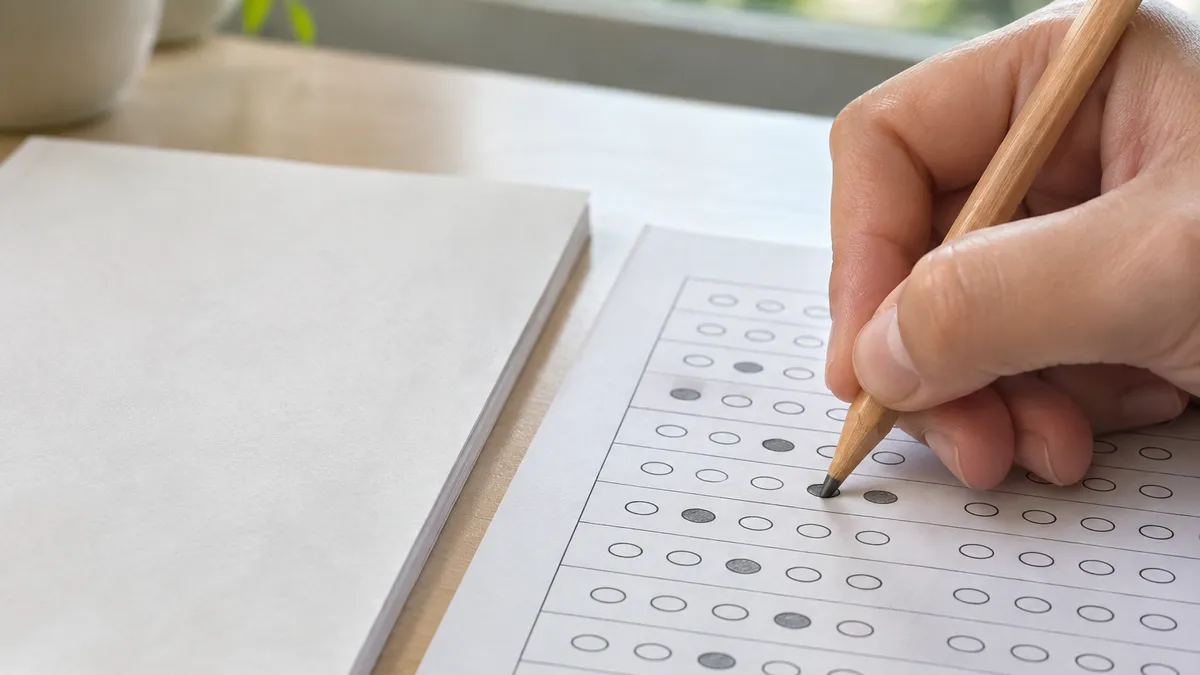
Yes, printable reviewers with answer keys exist, and they are useful when your internet is unreliable or you simply prefer paper. Print them, solve with a pencil, and mark your score on the last page. Offline practice also trains you to work out patterns on scratch paper, just as you will during the examination. Pair a printed set with at least one online timed set to rehearse the screen.
An answer key is only as good as its explanations. A bare list of letters tells you what was right but not why, so you learn nothing from a miss. Prefer keys that show the reasoning: the rule behind a pattern, the arithmetic steps, or the clue word in a reading passage. When a key lacks explanations, write your own one-line reason for each miss and compare it with your teacher's view.
Check version dates on every PDF. The CB-NCAE is computer-based, and older paper-era packets may describe answer sheets, shading ovals, or testing rules that no longer apply. The content skills still transfer, but the logistics do not. Look for files that mention on-screen testing, or ignore the logistics sections and use only the question sets for skill practice.
Keep your answer key closed until you finish. Many learners peek after every few items, which turns a diagnostic into an open-book worksheet. Set a timer, answer everything, then check once. If you must review in the middle, flag the question and move on. Delayed feedback is uncomfortable, but it better matches the real exam, where no answer key appears and every decision is final.

The January 4 to 29, 2027 window applies to the Grade 9 Technical Assessment, and schools assign specific days within it. Do not rely on social media posts or group chats for your date. Ask your adviser, and report anyone who asks you to pay a fee, since the DepEd memorandum states no learner fee.
What Does NCAE Mean, and Is It the Same as NCAA?
NCAE stands for National Career Assessment Examination, a DepEd assessment that gives learners information about their aptitudes and interests. It has nothing to do with sports. If you typed a similar word and landed on results about ncaa volleyball brackets or rankings, that is the US college athletics association, which is unrelated. Our explainer on the meaning of the NCAE walks through who takes it and why it exists.
The spelling confusion is common because the letters are close. Searches for an incae reviewer, ncae reviewer, or ncaa reviewer usually come from the same learners looking for the same thing: practice material for the career assessment. The correct acronym is NCAE, with an E for Examination. Using the right spelling when you search helps you reach DepEd documents and legitimate practice pages rather than unrelated athletics pages.
Who Takes the CB-NCAE in School Year 2026-2027?
For School Year 2026-2027, the CB-NCAE is given to all Grade 9 and Grade 10 learners in public schools and in private schools with government recognition. That is a broad group, so schools often stagger testing across computer rooms. Your section may test on a different day than your friends. Ask your adviser for your slot, and do not assume the published window means every learner sits on the same date.
The Grade 9 Technical Assessment has its own window, January 4 to 29, 2027, according to the memorandum. This is a separate piece from the general aptitude and interest portions, so a Grade 9 learner should plan for it specifically. Ask whether your school will test the components on one day or spread them out. Knowing the sequence in advance reduces surprises and lets you pace your review accordingly.
Device readiness is the most overlooked task. The Safe Exam Browser runs on Windows or Mac, and the Full Exam Kiosk runs on Android. Schools usually handle installation on lab computers, but learners using personal devices may need to install it themselves. Do this early, test that the app opens, and report any problem to your teacher long before testing week, when computer labs are crowded and support staff are stretched thin.
Remember what the results are for. The NCAE gives guidance staff a profile of each learner, which supports conversations about senior high school tracks and strands. A low score on one area is not a verdict on your future. It may simply show a skill you have not yet practiced. Use results to ask better questions about your options, then talk with parents, teachers, and counselors before deciding.
Preparation should be proportionate. A few hours a week over three or four weeks, including at least two timed pre-tests, is enough for most learners to feel comfortable with the format. Heavy cramming rarely changes aptitude scores, but poor sleep and anxiety can lower them. Treat the exam as a normal school task, keep your routine steady, and save your energy for the days that truly matter.
How Should You Study After Taking an NCAE Pre-Test?
Start by sorting every miss into one of three buckets: knowledge gaps, careless errors, and time pressure. A knowledge gap means you did not know the rule. A careless error means you knew it but slipped, perhaps misreading a word like not or except. Time pressure means you were right when given more minutes. Each bucket needs a different fix, so labeling matters more than simply counting how many items you got wrong.
For knowledge gaps, study the rule and then do five fresh items on that exact skill. Do not rewatch the same lesson repeatedly. Active practice teaches more than passive reading. If you missed number series questions, for example, write out the differences between terms for ten sequences. After a day, try five more without notes. When you hit four out of five correct twice in a row, move to the next weakness.
For careless errors, change your process rather than your knowledge. Underline key words in each question. Cover the answer choices while you form your own answer, then compare. Re-read the question one last time before confirming. These tiny habits take only seconds per item, yet they often recover several points. Track how many careless misses you make per practice set and aim to cut that number in half over two weeks.
For time pressure, practice with a visible countdown. Divide the available minutes by the number of questions to get a per-item budget, then notice when you exceed it. If an item stalls you, mark it, guess intelligently, and move on. Returning later with fresh eyes usually works better than staring. Over several sessions your budget instinct improves, and you stop sacrificing easy final questions to a single difficult puzzle early in the section.
Use the interest inventory sections differently. They have no right or wrong answers, so you cannot study for them like math. Instead, reflect honestly on activities you enjoy, subjects that hold your attention, and work settings you imagine for yourself. Answering what you think adults want to hear produces a muddled profile. A truthful profile gives your counselor better information and helps you choose a track that you will not regret later.
In the last week, shift from learning to rehearsal. Take one full timed pre-test, review it the same day, and then lightly revisit your notes on weak topics. Avoid starting new, unfamiliar material in the final forty-eight hours. Pack what you need: a charged device, a charger, your school ID, and any items your school lists. Prepare these the night before so the morning is calm and unhurried.
On test day, eat breakfast, arrive early, and read each instruction screen fully. Answer easy items first to build confidence, and keep an eye on the timer without staring at it. If the browser or device misbehaves, raise your hand right away rather than struggling quietly. Afterward, resist comparing answers with classmates. The goal was an honest snapshot, and you gave your best effort with the preparation you had.
NCAE Questions and Answers

NCAE (National Career Assessment Examination) Test Prep

NCAE Reviewer for Grade 10 (2026): Subjects, Sample Questions and a 4-Week Study Plan

NCAE Practice Test on Google Sites: Are Those Reviewers Reliable? (2026 Guide)

Ncae Meaning: What the National Career Assessment Examination Is and Who Takes It

NCAE Social Science Reviewer 2026 — Araling Panlipunan

NCAE Abstract Reasoning Reviewer 2026 — Patterns & Logic

NCAE Scholarship Eligibility: Scores, Requirements & How to Apply
NCAE Reviewer PDF 2026: Free Printable Practice Tests and Answers
How this page was made: written with AI tools and published by Nathan Beja, founder of Practice Test Geeks, who is responsible for its content. Exam facts are checked against the official sources listed below. Not reviewed by a subject-matter expert. Editorial policy
Sources & references
Exam facts on this page (fees, format, dates, passing scores) are checked against these official sources; the date is our last check. Editorial policy
- region8.deped.gov.ph — Fees · verified Oct 2026
- depedph-my.sharepoint.com — Test delivery, eligibility, test dates · verified Oct 2026