
Makeup Artist Supplies: The Complete Pro Kit Buying Guide for 2026 October
🏆 Build your makeup artist supplies kit with our 2026 October buying guide. Brushes, foundations, palettes, sanitation gear and budget breakdowns for pros.
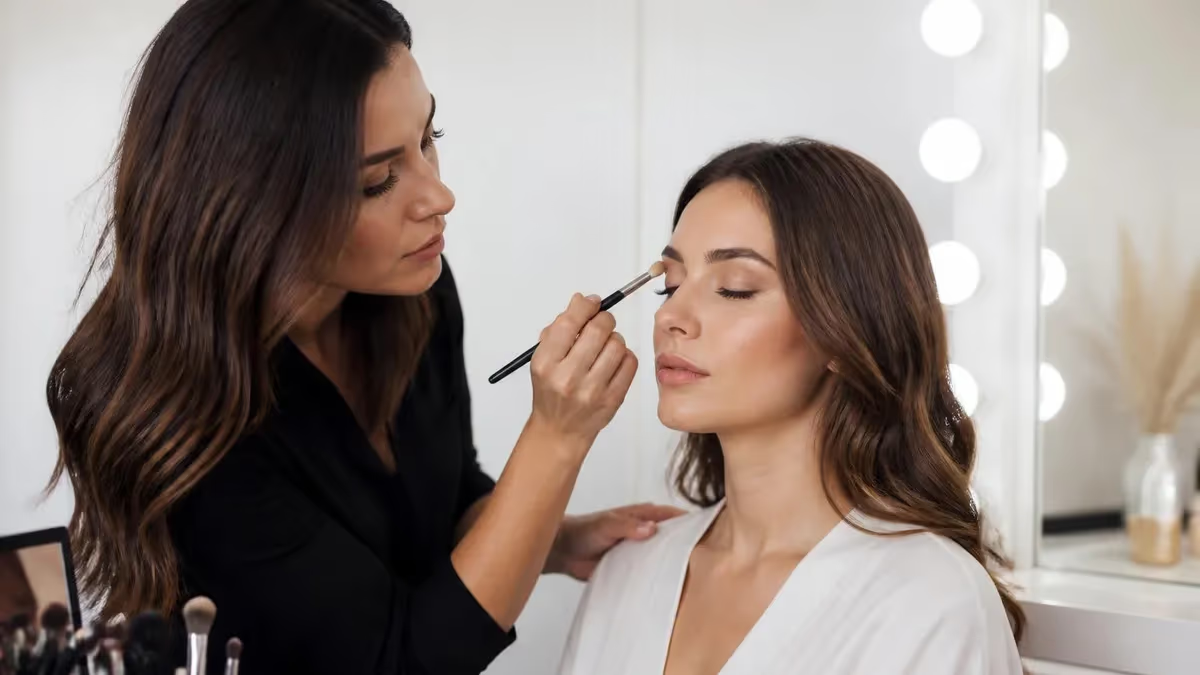
Building a professional makeup artist supplies kit is the single biggest investment most new MUAs make, and getting it right separates working pros from hobbyists. Whether you searched makeup artist near me to study local competition or you are stocking your first travel case, your kit determines what jobs you can take, how fast you work, and how clients perceive your value. The right supplies cover every undertone, every lighting condition, and every emergency a bride, actor, or photo subject can throw at you on set.
The phrase makeup artist supplies covers far more than lipsticks and brushes. A working pro kit includes color theory tools, sanitation gear, organization systems, set-care items, and backup electronics. New artists routinely underestimate the breadth of inventory needed for a single eight-hour wedding day. Veterans know that the difference between a smooth shoot and a disaster is usually a $4 disposable mascara wand or a spare set of lash tweezers tucked into a pocket of the train case.
This 2026 guide walks through every category of makeup artist supplies a working pro needs, from foundation ranges and concealer wheels to airbrush compressors, setting sprays, and the sanitation supplies required by most state cosmetology boards. We cover budget kits under $1,500, mid-tier kits in the $3,000 to $5,000 range, and premium editorial kits north of $10,000. Each recommendation is based on what working bridal, film, and editorial artists actually use on jobs.
We also dig into where to buy. Pro discount programs at Make Up For Ever, MAC Pro, Bobbi Brown Pro, and Camera Ready Cosmetics can save you 20 to 40 percent, but only if you have your certification, business license, or portfolio approved. Independent artists who skip these programs often pay full retail for years before realizing they were eligible from day one. Getting your paperwork in order before you start shopping is one of the highest-return moves in this business.
If you are still deciding which credentials open which pro doors, the makeup artist certification pathway lays out the standard requirements. Most pro discount programs accept a state cosmetology license, a recognized MUA certificate, an active IATSE union card, or a documented commercial portfolio. Even one of these is usually enough to unlock the major brand pro programs. Keep digital copies of every credential on your phone — pro counter staff often ask for proof on the spot before processing a discount.
Beyond the products themselves, this guide covers the logistics most makeup artist supplies articles skip: how to depot palettes for travel, how to label and date open products to stay compliant with set hygiene standards, how to build a sanitation kit that satisfies film production safety officers, and how to organize a Zuca or Yazmo train case so you can reach any item in under five seconds. Those workflow details are what turn a fully stocked kit into a fast, professional, repeatable service.
Read this guide top to bottom if you are building your first kit, or jump to the category you need using the table of contents on the right. By the end you will know exactly which makeup artist supplies to buy, in what order, at what price point, and how to keep them organized for years of working sets, weddings, and editorial bookings.
Makeup Artist Supplies by the Numbers
Core Categories Every Pro Kit Needs
Foundations, concealers, color correctors, primers, and setting powders covering at least 40 shades from porcelain to deep ebony with cool, neutral, and warm undertones for any client.
Eyeshadow palettes (neutral, smoky, jewel-tone), gel and liquid liners, mascara wands, individual and strip lashes, brow pencils, gels, and pomades in six shades minimum.
Lipsticks in nude, pink, red, berry, and brown families, plus glosses, liners, and matte stains. Pro depot palettes let you carry 30 shades in the footprint of three tubes.
Full brush set (face, eye, detail), beauty sponges, tweezers, lash applicators, spoolies, eyelash curlers, and brush cleaner. Synthetic fibers for cream products, natural for powders.
70% isopropyl alcohol, brush cleaner, palette knives, disposable mascara wands, lip wands, cotton swabs, tissues, palette for mixing, gloves, and 99% alcohol spray bottle.
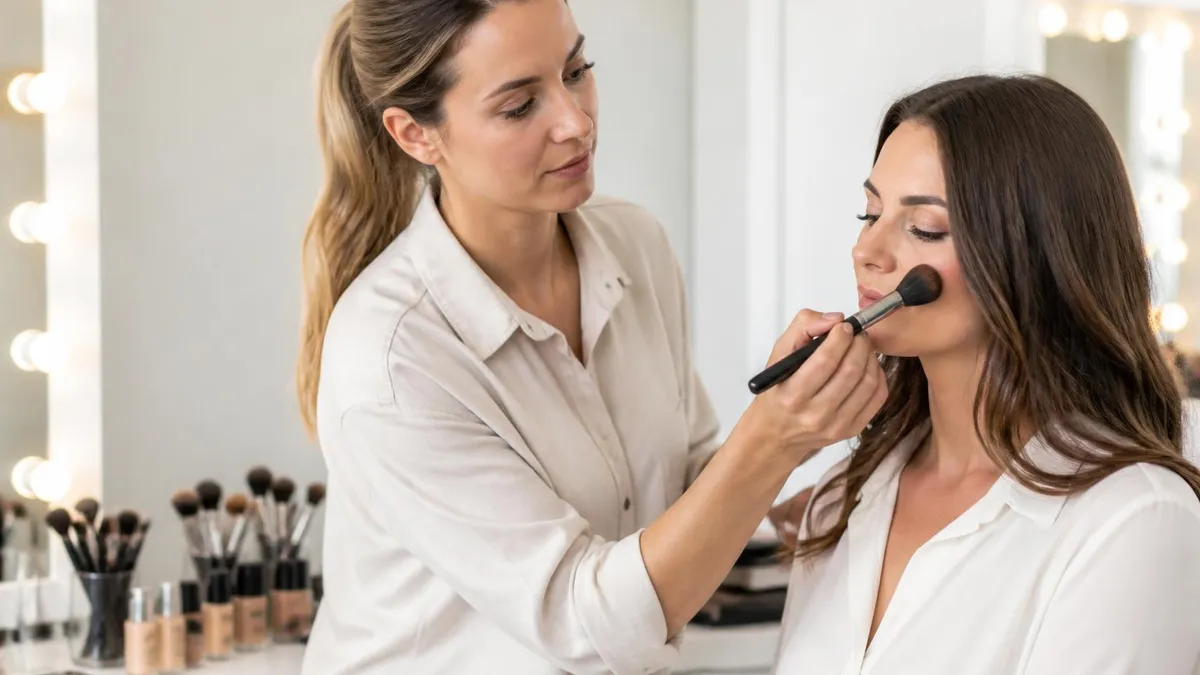
Complexion products are the heart of any makeup artist supplies kit, and the area where new artists most often underbuy. A working makeup artist and their kit will be judged on how well they match skin tones, period. If a bride sits down and you cannot find her exact shade and undertone, no amount of contour skill recovers the booking. The professional standard is at least 40 foundation shades spanning porcelain through deep ebony, with cool, neutral, and warm undertones represented across the range.
Most pros do not buy 40 individual foundation bottles. Instead, they invest in depot-friendly palettes like the RCMA VK series, Graftobian HD Creme palette, Ben Nye Media Pro, or Kett Fixx Creme. These give 12 to 18 shades in one compact unit and let you custom mix any client in seconds. Add a small selection of liquid foundations from Make Up For Ever Ultra HD, Estée Lauder Double Wear, and Fenty Pro Filt'r for clients who prefer a lighter, more natural finish.
Concealers do double duty in a pro kit. You need a brightening shade two steps lighter than skin for under-eye work, a true-match shade for blemishes, and an orange or peach corrector for dark circles on medium and deep skin tones. RCMA, Ben Nye, and Cinema Secrets all make concealer wheels with 12 shades for under $50, which is one of the highest-value purchases in the entire makeup artist supplies world.
Color correctors deserve their own discussion. A green corrector neutralizes redness and rosacea, peach and orange cancel blue and purple under-eye shadows, yellow brightens dull complexions, and lavender counteracts sallowness. These are not optional for pro work, especially weddings and film where HD cameras pick up every undertone. A single Ben Nye or Graftobian corrector wheel covers all five primary correctors in one palette.
Primers, setting sprays, and setting powders complete the complexion category. Carry a hydrating primer for dry skin, a mattifying primer for oily T-zones, and a grip primer for long-wear bridal jobs. Setting sprays from Urban Decay All Nighter, Skindinavia Bridal, and Charlotte Tilbury Airbrush Flawless are bridal kit staples. Setting powders should include a translucent for all skin tones plus banana powder for brightening under-eye areas.
Foundation longevity on set comes down to layering, not product choice. Most pros prime, apply cream foundation, set with a light dusting of powder, add cream blush and contour, set again with a second powder pass, and finish with setting spray. This six-step process holds through 12-hour wedding days, tears, hugs, and outdoor August humidity. Buy your makeup artist supplies with this layering workflow in mind — every product needs to play well with the products above and below it.
Finally, do not forget bald caps, body makeup, and tattoo cover. Dermablend, Kett Hydro, and Temptu body foundations let you extend coverage to chest, back, and arms for bridal and editorial work. Tattoo cover specifically is a six-figure niche skill — couples paying for destination weddings expect their MUA to handle visible ink, and most general kits skip this entirely. Add a small Dermablend or Kat Von D tattoo concealer set and charge an extra $75 per covered area.
MUA Practice Test Questions
Prepare for the MUA - Makeup Artist exam with our free practice test modules. Each quiz covers key topics to help you pass on your first try.
MUA Makeup Artist MCQ
MUA Exam Questions covering Makeup Artist MCQ. Master MUA Test concepts for certification prep.
MUA Makeup Artist
Free MUA Practice Test featuring Makeup Artist. Improve your MUA Exam score with mock test prep.
MUA Professional Makeup Artist
MUA Mock Exam on Professional Makeup Artist. MUA Study Guide questions to pass on your first try.
MUA Bridal & Special Occasion Makeup
MUA Test Prep for Bridal & Special Occasion Makeup. Practice MUA Quiz questions and boost your score.
MUA Color Theory & Skin Tone Analysis
MUA Questions and Answers on Color Theory & Skin Tone Analysis. Free MUA practice for exam readiness.
MUA Product Knowledge & Cosmetic Ingredients
MUA Mock Test covering Product Knowledge & Cosmetic Ingredients. Online MUA Test practice with instant feedback.
Brush & Tool Essentials for Working Makeup Artists
Face brushes form the backbone of a pro brush roll. You need a large powder brush for setting, a fluffy buffing brush for foundation, a dense kabuki for cream products, a fan brush for highlight, a tapered contour brush, and a small concealer brush. Most working artists carry doubles of foundation and powder brushes because they get the most product saturation and need swapping mid-job.
Top brands for pro face brushes include Wayne Goss, Hakuhodo, Rae Morris, Sigma Beauty F-series, and MAC Pro. Synthetic taklon fibers handle cream products best because they do not absorb pigment. Natural goat and squirrel hair excel at powder pickup and diffusion. A working artist makeup artist mixes both fiber types across the kit, choosing fiber based on product, not brand prestige or price tag.
Building Your Kit New vs. Buying Used Pro Kits
- +New products carry full manufacturer hygiene guarantees and known expiration dates
- +Pro discount programs apply directly to new purchases at 20-40% off retail
- +You build muscle memory with one consistent set of tools and shade systems
- +Manufacturer warranty covers brush shedding, palette breakage, and defects
- +No mystery products from unknown sources that may be expired or counterfeit
- +Returns and exchanges work normally for new kit components
- −Total upfront cost for a complete new kit runs $3,000-$10,000
- −Long lead times for restocking discontinued shades you committed to
- −Some pro lines have minimum order quantities that exceed beginner needs
- −Used pro kits from retiring artists can offer 60-70% savings if vetted
- −Sanitation history is unknown — never accept used liquid or cream products
- −Risk of buying products you do not actually use once jobs begin
Pros and Cons at a Glance
| Pros | Cons |
|---|---|
| New products carry full manufacturer hygiene guarantees and known expiration dates | Long lead times for restocking discontinued shades you committed to |
| You build muscle memory with one consistent set of tools and shade systems | Some pro lines have minimum order quantities that exceed beginner needs |
| Manufacturer warranty covers brush shedding, palette breakage, and defects | Sanitation history is unknown — never accept used liquid or cream products |
| No mystery products from unknown sources that may be expired or counterfeit | Risk of buying products you do not actually use once jobs begin |
Sanitation & Set Hygiene Supplies Checklist
- ✓70% isopropyl alcohol in spray bottle for brush spritz between clients
- ✓99% isopropyl alcohol for sanitizing metal tools and palette surfaces
- ✓Beautyso Soft or Cinema Secrets brush cleaner for daily deep cleaning
- ✓Disposable mascara wands — minimum 200 per kit for set work
- ✓Disposable lip wands and gloss applicators in 100+ count
- ✓Stainless steel palette and palette knife for cream product hygiene
- ✓Nitrile gloves for working with open wounds, cold sores, or compromised skin
- ✓Cotton rounds, Q-tips, and lint-free wipes for cleanup and corrections
- ✓Hand sanitizer for the artist between every client touch
- ✓Date labels and Sharpie for marking product open dates per FDA cosmetic guidelines
Never Double-Dip on Set
One eye infection traced back to your kit can end your career and trigger insurance claims. Always decant cream and liquid products onto a stainless steel palette before application. Use disposable wands once and discard. A $40 sanitation kit upgrade prevents $40,000 in legal exposure.
Budgeting a complete makeup artist supplies kit is where most aspiring pros either overspend on prestige brands or underspend on critical infrastructure. The 2026 sweet spot for a working freelance bridal and special-event MUA sits between $3,000 and $5,000 for a kit that handles 95 percent of paying jobs. Editorial and film artists can reasonably scale up to $8,000 or $10,000 once jobs justify the inventory. Going above that without confirmed bookings ties up cash that should be funding marketing and continuing education.
The starter tier under $1,500 forces tough choices. Prioritize an RCMA VK foundation palette ($175), a Graftobian concealer wheel ($45), a Ben Nye color corrector wheel ($45), one neutral and one smoky eyeshadow palette ($90), a basic 20-brush set from Real Techniques or Morphe ($120), beauty sponges ($30), lashes and adhesive ($80), setting spray and powders ($90), lipsticks in five shades ($100), sanitation supplies ($75), and a soft-sided train case ($150). Total: about $1,000 with $500 reserved for misses and travel.
The mid-tier $3,000 to $5,000 kit upgrades every category. RCMA plus Kett Fixx Creme plus Make Up For Ever liquid foundations across 40 shades ($800), full Hakuhodo or Wayne Goss brush set ($600), expanded eye palette library from Viseart, Anastasia, and Natasha Denona ($500), pro lash collection across 30 styles ($200), bridal-grade setting sprays ($150), Zuca or Yazmo rolling case ($350), and a complete sanitation station ($150). This is the kit that books $400-plus bridal trials and weddings.
Editorial and film kits above $8,000 add airbrush compressors and single-action guns ($600), Temptu or Dinair airbrush makeup library ($800), bald caps and SFX adhesives ($200), Dermablend body foundation collection ($300), tattoo cover specialty kit ($150), backup brushes in editorial-grade sable ($800), pro shade ring systems for matching on darker skin tones, and a hardshell wheeled case from Yazmo or The Set Bag with custom inserts ($600). These kits earn back their cost in two to three editorial bookings.
One often-missed budget category is backup electronics. A pro kit needs a phone tripod and ring light for trial photos, a portable battery pack, a label maker for product dating, and a small Bluetooth speaker for client comfort during bridal services. These ancillary items run about $250 total but turn a stocked train case into a complete mobile studio. The detailed artist makeup artist pricing breakdown shows how each kit tier maps to typical service pricing.
Replenishment is the budget category nobody talks about. Plan to spend 15 to 20 percent of your gross income on kit replenishment in your first three years. Mascaras expire in three months once opened, foundations in six to twelve months, powders in two years. Disposables run out constantly during busy bridal seasons. Building $200 to $400 per month of replenishment into your pricing prevents the slow erosion of kit quality that ends careers around year four when artists realize their products are all expired.
Pro discount programs are the single highest-return budget hack in this business. MAC Pro saves 35 to 40 percent on every order. Make Up For Ever Pro program offers similar discounts plus early access to new shades. Camera Ready Cosmetics offers competitive pro pricing across multiple brands in one cart. Bobbi Brown, Smashbox, Urban Decay, and NARS all run pro programs. Applying with your certification or business license takes 20 minutes and saves thousands every year for the life of your career.
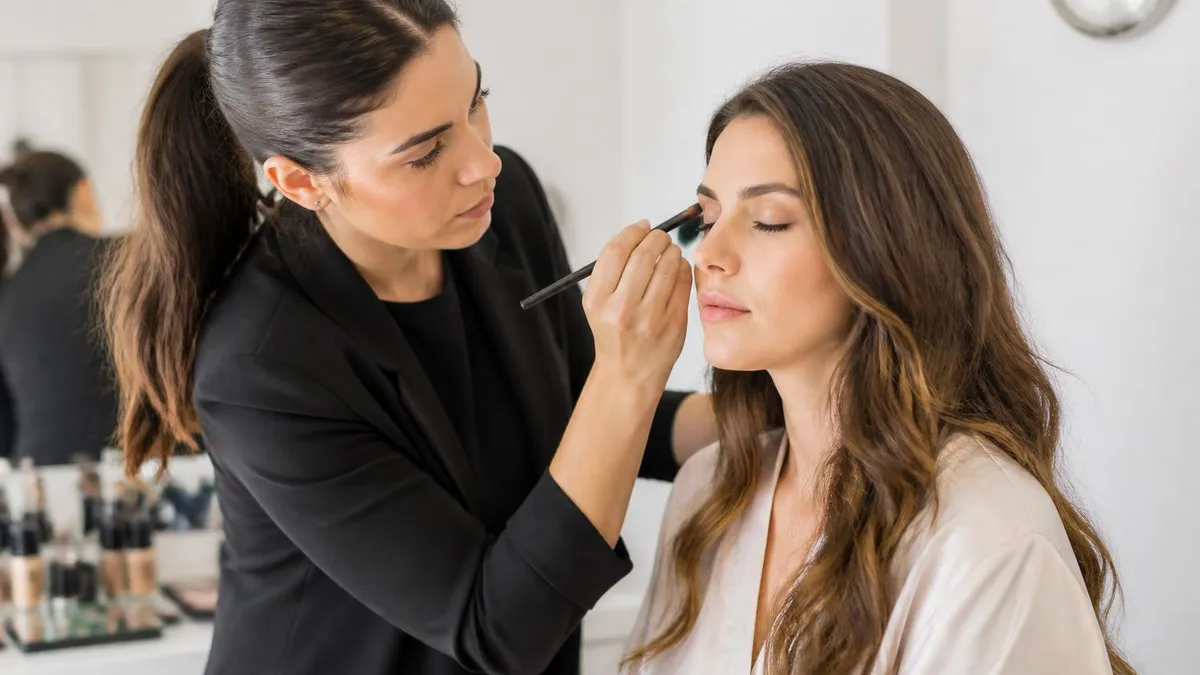
Every state cosmetology board and most film production safety protocols require dated product labels. Mascaras and liquid eyeliners expire 90 days after opening. Foundations expire 6-12 months after opening. Failing to date and rotate products is the most common sanitation violation cited on professional sets and at state board inspections.
Where you buy your makeup artist supplies matters as much as what you buy. The pro retail landscape has shifted dramatically since 2020, and the artists who know which channel to use for which category save thousands per year. Camera Ready Cosmetics, Frends Beauty Supply, Alcone, and Naimies Beauty Center are the four dominant brick-and-mortar pro stores. Each carries pro-only brands and offers walk-in trade discounts for verified MUAs with portfolio or credential proof.
Online, Camera Ready Cosmetics and Beautylish are the most reliable national pro retailers. They carry the deep, niche pro brands — RCMA, Kett, Graftobian, Skin Illustrator, Ben Nye, Viseart, Mehron, and Temptu — that mainstream Sephora and Ulta do not stock. Both retailers verify pro status with a quick credential upload and unlock contractor pricing across hundreds of brands in one checkout. Plan to do 60 to 70 percent of restock orders here once approved.
Direct from brand is best for premium investment pieces. Hakuhodo brushes, Wayne Goss Anniversary brushes, and Rae Morris brushes ship direct with manufacturer warranty. Make Up For Ever, MAC Pro, NARS Pro, and Smashbox each run their own pro programs with discounts at brand-owned stores and websites. These programs require separate applications but pay off in dedicated brand training, early-access launches, and 35 to 40 percent discounts that beat any third-party retailer.
Trade shows like The Makeup Show, IMATS, and Cosmoprof North America are gold for stocking the kit at one event. Brands routinely offer 30 to 50 percent show-only pricing, throw in free training sessions with master artists, and let you swatch and compare products you would never order blind online. Plan one show per year minimum if you live within driving distance of NYC, LA, Atlanta, or Las Vegas. Show purchases are tax deductible as professional development.
Amazon and general retail should be reserved for non-pro categories only. Train cases, sanitation supplies, disposable wands, gloves, tissues, mirrors, and tripods are all safe Amazon buys. Never buy cosmetics, brushes, or skin-contact products from Amazon — counterfeit rates run 30 percent or higher on premium brand listings and there is no recourse if a client reacts to a fake foundation. The lori anne allison makeup artist career path documentation makes the same point about sourcing legitimacy.
Estate and retirement sales from veteran artists are a hidden goldmine for hardshell cases, brushes, and unopened palettes. Local MUA Facebook groups post these monthly. Verify provenance, never buy opened liquids or creams, and inspect brushes for shedding before purchase. A retiring editorial artist often sells $3,000 of brushes and cases for $800 because they need the space cleared fast. These deals appear regularly if you stay plugged into your regional pro community.
Finally, plan your purchasing in three waves. Wave one: foundations, concealers, brushes, sanitation — the kit that lets you work paid jobs. Wave two: expanded eye palettes, lashes, specialty lips, second-tier brushes — depth that lets you charge premium rates. Wave three: airbrush, SFX, body makeup, editorial backups — the gear that opens film, commercial, and editorial markets. Trying to buy waves two and three before wave one is paid off is the single most common cash-flow mistake new MUAs make.
Once your makeup artist supplies are bought, the work shifts to organization, maintenance, and inventory management. A $5,000 kit organized badly performs worse than a $1,500 kit a pro knows inside out. The fastest artists on set are not the ones with the most products — they are the ones who can reach any item blind, in under five seconds, while keeping eye contact with the client. That speed comes from a deliberate organization system practiced over hundreds of jobs.
Start with kit zoning. Divide your train case into four zones: complexion (foundations, concealers, primers, setting products), eye (palettes, liners, mascaras, lashes), lip and cheek (lipsticks, glosses, blushes, contour), and tools and sanitation (brushes, sponges, wipes, alcohol, disposables). Use clear acrylic dividers from The Container Store or Muji to keep zones from cross-contaminating. Color-code with washi tape if you work in low light at venues.
Depotting saves more space than any organizational hack. Pull eyeshadows, lipsticks, foundations, and blushes out of their original packaging and into Z Palettes, RCMA palettes, or custom magnetic palettes. A single Z Palette holds 28 standard eyeshadow pans, replacing seven cardboard quads. Depotting also lets you cluster shades by color family across brands, which speeds up custom mixing on set and makes shade matching faster for clients with complex undertones.
Maintenance is non-negotiable. Brushes need deep cleaning weekly with shampoo and conditioner, plus spritz sanitizing between every client. Stainless steel palettes get scrubbed nightly after jobs. Train case interiors get wiped with alcohol monthly to control bacteria buildup. Build a 20-minute end-of-day maintenance ritual after every job — clean, restock, date-check, and pre-pack tomorrow's likely needs. Pros who skip this ritual end up with infections, expired products, and emergency runs to Ulta at 6 a.m. before shoots.
Inventory tracking matters for taxes and replenishment. Use a simple Google Sheet or apps like Stylseat, GlossGenius, or even Notion to log every product, purchase date, open date, and replacement cost. At tax time this list becomes your equipment depreciation schedule, saving thousands. Mid-year it tells you exactly when to reorder before running out mid-bridal-season. The discipline of weekly inventory takes 15 minutes and prevents the slow drift that kills kit reliability.
Travel logistics deserve real planning too. TSA allows liquids over 3.4 oz in checked bags only, so bridal destination artists need a hardshell checked case rated for cargo hold pressure. Decant setting sprays into 3.4 oz spray bottles for carry-on emergency backup. Pack alcohol wipes (not liquid alcohol) for in-flight kit access. Insure your kit through Bonded Pro, Front Row Insurance, or Heffernan — premiums run $300 to $600 per year and cover theft, damage, and loss while traveling.
Finally, build a quick-grab emergency mini-kit for between gigs. A small zippered pouch holding one foundation, concealer, mascara, blush, lip color, three brushes, and disposables lets you handle last-minute requests without unpacking the full Zuca. Many pros land surprise referrals from venues and clients between scheduled jobs. The pros who can say yes on the spot — because they have a mini-kit in the car — book 20 percent more than those who turn down ad-hoc work. Treat your makeup artist supplies system as infrastructure, not just inventory, and your business compounds faster every year.
Sample MUA - Makeup Artist Practice Questions
Try these questions from our free MUA - Makeup Artist practice tests. The correct answer and an explanation follow each question.
Which professional standard must a makeup artist follow regarding patch testing a client for potential product allergies?
- A. Patch tests are optional and only required for clients who request them
- B. A patch test should be performed 24–48 hours before applying any new product near sensitive areas like the eyes
- C. Patch tests are only required for theatrical body paint, not facial products
- D. Clients should patch test themselves at home before arriving
Answer: B. A patch test should be performed 24–48 hours before applying any new product near sensitive areas like the eyes
Industry best practice is to patch test new or potentially reactive products 24–48 hours before a full application to identify allergic reactions before they occur at a critical appointment.
A bridal makeup trial is essential because it allows the artist and client to do what?
- A. Purchase products in bulk
- B. Test the full look, identify adjustments, and confirm timing
- C. Train the bridal party
- D. Negotiate a final price only
Answer: B. Test the full look, identify adjustments, and confirm timing
The trial ensures the look photographs well, lasts through the event, and meets the client's expectations before the wedding day.
When mixing foundation shades, a makeup artist adds a drop of yellow to a pink-based foundation. What does this achieve?
- A. Adds depth and darkness
- B. Shifts the undertone toward warm/neutral
- C. Increases SPF protection
- D. Adds shimmer to the finish
Answer: B. Shifts the undertone toward warm/neutral
Adding yellow pigment shifts a cool pink-based foundation toward a warmer, more neutral undertone.
Why is it important for a makeup artist to patch test products on clients with sensitive skin?
- A. To check if the product color is correct
- B. To identify potential allergic reactions before full-face application
- C. To test the longevity of the product
- D. To determine the correct foundation shade
Answer: B. To identify potential allergic reactions before full-face application
A patch test on a small skin area reveals any allergic reactions or sensitivity before the product is applied to the entire face.
MUA Questions and Answers

About the Author
Licensed Cosmetologist & Beauty Licensing Exam Specialist
Paul Mitchell SchoolsMichelle Santos is a licensed cosmetologist with a Bachelor of Science in Esthetics and Salon Management from Paul Mitchell School. She has 16 years of salon industry experience and 8 years preparing students for state cosmetology board exams in theory, practical skills, and sanitation. She specializes in licensure preparation for cosmetologists, estheticians, and nail technicians.
Join the Discussion
Connect with other students preparing for this exam. Share tips, ask questions, and get advice from people who have been there.
View discussion (7 replies)