
MSF Rider Coach: Complete Guide to Becoming a Certified Motorcycle Safety Instructor
Become an MSF rider coach: requirements, msf course cost, written test prep & salary. Complete 2026 September guide. ✅

Becoming an msf rider coach is one of the most rewarding career paths available to experienced motorcyclists in the United States. The Motorcycle Safety Foundation trains thousands of new riders every year through its nationally recognized BRC and eCourse programs, and qualified coaches are the backbone of that system. Whether you are a seasoned rider looking to give back to the community or a professional seeking a meaningful side income, understanding the full pathway — from eligibility requirements to msf course cost — is the essential first step toward earning your coaching credential.
The MSF Rider Coach preparation process involves more than simply demonstrating excellent riding ability. Candidates must pass a rigorous msf test covering both knowledge and on-range skills, complete an intensive five-day RiderCoach Preparation (RCP) course, and satisfy ongoing continuing education requirements to maintain their certification. Many aspiring coaches are surprised to discover how comprehensive the curriculum is, but that depth is precisely what makes MSF certification meaningful to employers, state DMVs, and students alike.
Understanding msf course cost is a practical priority for anyone exploring this career path. The RiderCoach Preparation course itself is typically funded or subsidized by the sponsoring organization — often a community college, state highway safety office, or private training center — but individual expenses such as travel, lodging, gear, and registration fees can add up quickly. Getting a clear financial picture early helps candidates budget appropriately and choose the right sponsoring organization for their situation.
The msf written test is a mandatory component of rider coach evaluation, and it covers a broader range of material than the standard student knowledge test. Coaches must demonstrate deep familiarity with adult learning theory, BRC curriculum structure, range exercise facilitation, and hazard recognition principles. Strong written test performance signals to MSF evaluators that a candidate can not only ride well but also explain complex concepts clearly and consistently to novice students.
Many candidates use an msf practice test to build confidence before their official evaluation. Practicing with realistic questions helps identify knowledge gaps early, reduces test anxiety, and builds the kind of automatic recall needed when a coach must answer student questions on the range in real time. The best practice resources mirror the format and difficulty of the actual msf course written test, covering topics from clutch control fundamentals to emergency braking technique and risk offset strategies.
The demand for qualified MSF rider coaches has grown steadily alongside rising motorcycle registrations across the country. States with active safety incentive programs — where completing an MSF course waives the DMV riding test or unlocks insurance discounts — generate particularly high student enrollment, creating strong demand for coaches in those regions. This supply-demand dynamic translates into competitive compensation packages, flexible scheduling, and genuine job security for certified professionals.
This guide covers every stage of the MSF rider coach journey: eligibility criteria, the RiderCoach Preparation course structure, written and riding evaluations, cost breakdowns, pro tips for passing on your first attempt, and how to use an msf practice test strategically to maximize your readiness. By the time you finish reading, you will have a complete roadmap to earning and maintaining your MSF coaching credential.
MSF Rider Coach Program by the Numbers

MSF Rider Coach Eligibility Requirements
Candidates must hold a valid motorcycle endorsement or license and demonstrate at least one full year of active street riding experience. MSF evaluators look for smooth, confident control across a wide range of speeds and conditions before approving a candidate for the RCP course.
A background check and DMV record review are standard prerequisites. Candidates with recent at-fault crashes, DUI convictions, or repeated moving violations are typically disqualified. The exact look-back period varies by sponsoring organization but is usually three to five years.
Every MSF rider coach candidate must be sponsored by an approved training site — a community college, state program, or private range operator. The sponsor handles registration, course fees, and ongoing scheduling. Finding a quality sponsor early dramatically simplifies the certification process.
Coaches spend long hours on their feet on a hot or cold range, demonstrating exercises repeatedly and providing hands-on guidance to students. MSF requires candidates to confirm they can safely perform all BRC range exercises with full personal protective gear, including helmet and jacket.
Most sponsoring organizations require or strongly recommend that candidates have previously completed the MSF Basic RiderCourse as a student. This firsthand experience gives candidates essential insight into the student perspective and helps them empathize with beginners on the range.
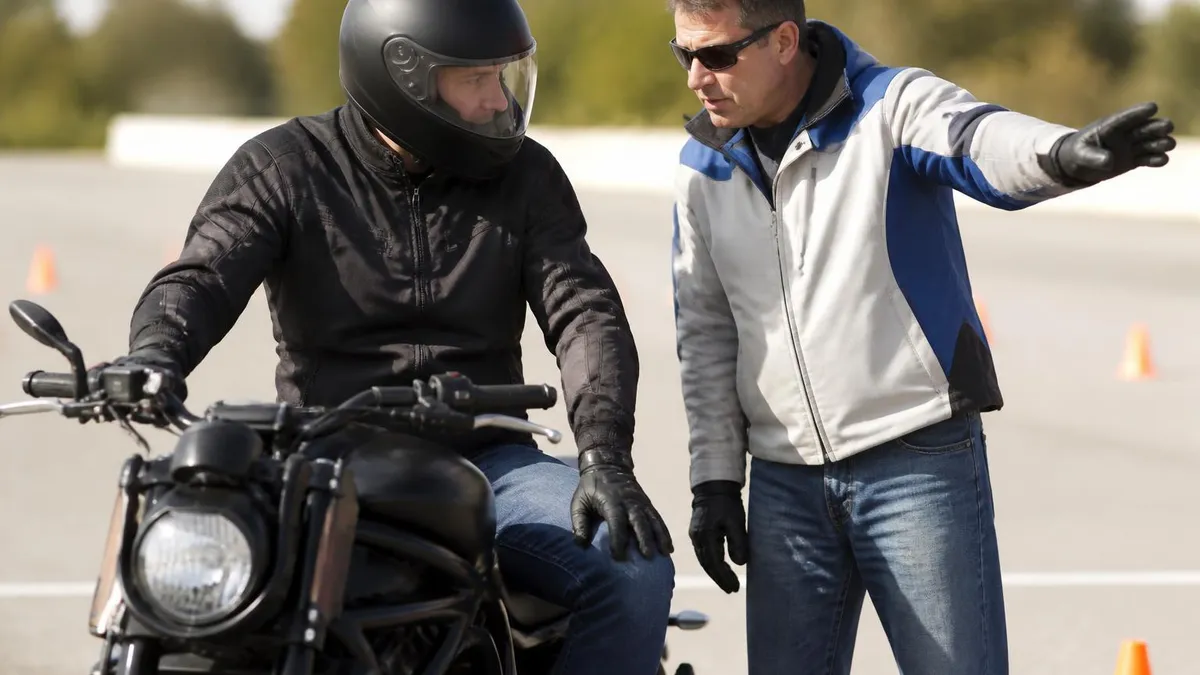
The RiderCoach Preparation course is the cornerstone of MSF instructor certification and represents the most intensive phase of the entire process. Offered through MSF-approved training providers across the country, the RCP is a five-day immersive experience that blends classroom instruction with extensive on-range coaching practice. Candidates spend mornings learning adult learning theory, curriculum delivery techniques, and student assessment methods, then move to the range in the afternoons to practice demonstrating BRC exercises and providing immediate, constructive feedback to peers acting as mock students.
The curriculum inside the RCP is organized around MSF's core coaching philosophy: guide rather than tell, demonstrate rather than lecture, and always prioritize student safety over speed of instruction. Facilitators introduce candidates to the concept of the "teachable moment" — the brief window after a student makes an error when they are most receptive to correction. Mastering this skill separates great coaches from good ones, and the RCP spends considerable time role-playing difficult student scenarios including the anxious beginner, the overconfident returnee, and the physically challenged rider who needs modified exercise parameters.
Range facilitation skills are evaluated throughout the RCP, not just on the final day. Evaluators watch how candidates position themselves on the range during exercises, how clearly they project their voice across open pavement, and how consistently they enforce gear and safety protocols. Candidates who review the msf basic rider course test answers before arriving at the RCP often find that their stronger content knowledge frees up mental bandwidth, allowing them to focus more fully on coaching technique rather than struggling to recall curriculum details.
A critical component of the RCP is the "teach-back" or micro-teaching segment, where each candidate must plan, introduce, and debrief a specific BRC exercise in front of peers and evaluators. This exercise tests the candidate's ability to deliver concise pre-exercise briefings, position observers safely, identify and correct student errors in real time, and bring the group together for a meaningful debrief. Candidates are evaluated on clarity, pacing, safety awareness, and their ability to adapt when a student struggles unexpectedly.
Understanding msf class cost during the RCP phase is important for financial planning. While the RCP tuition is usually covered by the sponsoring organization, candidates are often responsible for their own travel and lodging if the course is held off-site. Some states offer stipends or mileage reimbursement through their highway safety offices, particularly in regions actively recruiting new coaches. Candidates should ask their sponsor explicitly about what costs are covered before committing to a specific RCP session.
The written knowledge component of the RCP draws heavily on the BRC Instructor Guide, the MSF RiderCoach Training Manual, and supplementary readings on motor learning and coaching methodology. Unlike the student msf written test, which focuses on riding rules and hazard awareness, the coach-level test emphasizes how to teach those concepts effectively. Questions may ask candidates to identify the correct coaching cue for a specific exercise, describe how to modify an activity for a small class, or explain the rationale behind MSF's sequencing of range exercises from basic to complex.
By the end of the five-day RCP, successful candidates will have demonstrated competency in all BRC range exercises, passed the written knowledge exam, and received a satisfactory evaluation on their micro-teaching segments. Those who fall short in one or more areas may be given remediation time or asked to repeat specific components before full certification is awarded. MSF takes the quality of its instructor pool seriously, and the RCP is designed to be rigorous enough that only genuinely prepared candidates earn their coach credential on the first attempt.
MSF Test, Written Test & Course Written Test Breakdown
The msf written test for rider coach candidates covers adult learning principles, BRC curriculum structure, safety protocols, and hazard recognition theory. Unlike the student version, this exam expects candidates to explain not just what riders should do but why certain techniques work and how to teach them effectively to people with no prior experience. Most RCP programs allocate a 60- to 90-minute window for the written evaluation, and a passing score of 75% or higher is required in most states.
Effective preparation for the msf written test starts well before the RCP course begins. Candidates who read through the BRC Instructor Guide, review the MSF RiderCoach Training Manual, and complete several rounds of an msf practice test consistently outperform those who rely solely on the five-day training itself. Focus especially on adult learning terminology, the rationale behind each BRC range exercise sequence, and the proper protocols for managing student errors safely on the range.

Is Becoming an MSF Rider Coach Worth It?
- +Flexible scheduling — most coaches teach evenings and weekends around a primary job
- +Meaningful community impact through genuine rider safety education
- +Steady demand driven by state insurance discount and DMV waiver programs
- +Free or subsidized ongoing professional development and curriculum updates
- +Deepens your own riding skills through constant demonstration and reflection
- +Strong professional network with other coaches, DMV staff, and safety advocates
- −RCP is physically and mentally demanding — five long days with limited rest
- −Sponsoring organization required — independent certification is not available
- −Unpredictable class cancellations reduce income reliability for part-time coaches
- −Range work in extreme heat, cold, or rain is standard — outdoor conditions apply
- −Annual re-certification and continuing education obligations require ongoing time investment
- −Student-to-coach ratio limits how many classes one coach can run per season
MSF Rider Coach Certification Checklist
- ✓Obtain a valid motorcycle endorsement or license in your home state at least 12 months before applying
- ✓Request a certified copy of your driving record and confirm it meets the sponsoring organization's standards
- ✓Complete the MSF Basic RiderCourse as a student to build firsthand curriculum knowledge
- ✓Identify and contact at least three MSF-approved sponsoring organizations in your region
- ✓Confirm which RCP expenses your sponsor will cover — tuition, travel, lodging, or gear
- ✓Read the MSF RiderCoach Training Manual and BRC Instructor Guide before the RCP begins
- ✓Complete a full msf practice test series to identify knowledge gaps in curriculum content
- ✓Spend at least 10 hours practicing BRC range exercises on your own motorcycle before the RCP
- ✓Prepare and rehearse a micro-teaching segment — time yourself delivering a BRC exercise briefing
- ✓Gather all required gear: DOT helmet, jacket, gloves, over-the-ankle boots, and long pants
Practice the Micro-Teaching Segment First
Survey data from MSF RiderCoach Preparation facilitators consistently shows that candidates who struggle most during the RCP are not those who ride poorly — they are those who have never practiced teaching out loud before. Record yourself delivering a BRC exercise briefing at home, then watch it back critically. Clear, confident verbal delivery during the micro-teaching evaluation is the single biggest differentiator between candidates who pass on the first attempt and those who need remediation.
The financial dimension of becoming an MSF rider coach deserves careful attention, particularly for candidates who are self-funding any portion of their preparation. The cost of msf course training at the coach level is significantly higher than the student course, but the long-term earning potential and professional benefits often justify the upfront investment. Understanding exactly what expenses fall on the candidate versus the sponsoring organization is the first step in accurate financial planning.
When a community college or state highway safety office sponsors a coach candidate, they typically cover RCP tuition entirely and may also provide a per diem for meals and lodging if the training is held at a regional facility. Private range operators, by contrast, may split costs with candidates or require partial repayment if the candidate does not teach a minimum number of classes within the first year. Reading the sponsorship agreement carefully — ideally with a clear understanding of your own scheduling constraints — prevents costly misunderstandings down the road.
For coaches who go on to teach regularly, the per-class compensation structure varies considerably by region and employer type. State-administered programs in high-enrollment states like California, Texas, and Florida tend to offer the most competitive rates, with experienced coaches earning $200 to $400 per BRC session. Community college instructors may be classified as adjunct faculty, which opens access to benefits like health insurance and retirement contributions on a prorated basis. Private operators typically pay flat stipends without benefits but offer more scheduling flexibility and sometimes a higher per-class rate to compensate.
Annual income projections for MSF rider coaches depend heavily on how many classes they teach and whether they are working full-time or part-time. A coach who teaches two BRC sessions per weekend throughout the riding season — roughly April through October in most northern states — might log 30 to 40 sessions annually. At an average of $250 per session, that produces gross supplemental income of $7,500 to $10,000 per year without counting any classroom-only or eCourse facilitation assignments that some sponsors also offer.
Full-time lead coaches and RiderCoach Trainer candidates can earn substantially more. MSF RiderCoach Trainers — the professionals who facilitate the RCP itself — command higher compensation and typically have at least five years of active coaching experience behind them. Reaching that level requires a separate invitation and evaluation process, but it represents a meaningful career advancement pathway for coaches who want to grow within the MSF ecosystem and contribute to the development of the next generation of instructors.
Gear costs are a recurring expense that many first-time coaches underestimate. Because coaches must model proper riding attire at every class, their gear takes significantly more wear than a typical recreational rider's equipment. Budget for replacing helmets every five years at minimum, and inspect jacket, glove, and boot condition annually. Some sponsoring organizations provide gear stipends or allow coaches to purchase through institutional accounts at discounted rates, so it is worth asking about this benefit during the application process.
Tax considerations matter for coaches classified as independent contractors. Unlike W-2 employees, 1099 contractors are responsible for self-employment tax on top of federal and state income tax, which can reduce take-home pay by 15 to 25 percent compared to a stated gross rate. Tracking mileage to and from the range, gear purchases, professional development costs, and any home-office expenses related to curriculum prep can generate meaningful deductions that partially offset this burden. A simple spreadsheet updated after every class day makes year-end tax preparation far less painful.

RiderCoach Preparation courses fill quickly, especially in high-demand states, and many programs run only two or three sessions per year. If you secure sponsorship in the spring, the next available RCP may not begin until late summer or fall. Contact your sponsoring organization immediately after confirming eligibility and ask to be placed on the waitlist for the earliest available session — waiting too long can delay your certification by an entire riding season.
Preparing strategically for the MSF written test and skills evaluation is the single most effective thing a coach candidate can do to improve their chances of first-attempt success. Many candidates make the mistake of relying exclusively on what they will learn during the five-day RCP, treating the course as their preparation rather than as the culmination of preparation they began weeks earlier. The candidates who impress evaluators most arrive already fluent in BRC curriculum structure and adult learning principles, freeing them to focus entirely on coaching technique rather than content recall during the intensive training days.
Building that fluency starts with systematic study of the core source documents. The MSF RiderCoach Training Manual is the authoritative reference for all knowledge test content at the coach level, covering everything from how to set up a range for Exercise 2 to the theoretical basis of MSF's coaching cue system. Candidates who read this manual cover to cover — not just skimming for highlights — typically report feeling significantly more confident walking into the RCP than peers who relied only on secondary resources.
The student-level curriculum is equally important. Because coaches must explain BRC content at a beginner level, a deep personal understanding of why certain techniques work (not just that they do) is essential. Using the msf basic rider course handbook pdf free download to review foundational concepts from the student perspective helps candidates internalize the curriculum at the level needed to teach it effectively. Reading the material as a future coach — always asking "How would I explain this to someone who has never ridden before?" — transforms passive review into active preparation.
An msf practice test is one of the most efficient tools available for identifying knowledge gaps before the RCP. The best practice tests present questions in the same multiple-choice format as the official exam, covering curriculum content, coaching methodology, and safety protocols. Working through a full practice test under timed conditions — without pausing to look up answers — reveals exactly which topic areas need more study. Candidates who complete three or more full practice tests before attending the RCP consistently report feeling better prepared for both the written exam and the verbal question-and-answer segments facilitated by RCP instructors.
Range skill practice requires a different kind of preparation than written study, but it is equally important. Candidates should plan to ride the specific BRC exercises — the U-turn box, the figure-eight pattern, the quick stop — repeatedly in the weeks before the RCP.
The goal is not just to execute these exercises correctly but to execute them consistently and smoothly enough that the movements become automatic. When a coach must simultaneously demonstrate a technique, narrate what they are doing, and watch a student for safety hazards, there is no mental bandwidth left for uncertain throttle management or hesitant clutch control.
Peer study groups are an underutilized resource for coach candidates, particularly those who are going through the process alongside others from the same sponsoring organization. Practicing micro-teaching segments in front of a peer who gives honest feedback is dramatically more effective than rehearsing alone. A peer can tell you whether your pre-exercise briefing was actually clear, whether you used too much jargon, and whether your position on the imaginary range made safety sense — feedback that no amount of solo practice can replicate.
Finally, physical and mental preparation should not be neglected in the weeks before the RCP. The five-day course is genuinely exhausting — early mornings, long range sessions, evening study, and the sustained cognitive load of evaluation. Candidates who arrive well-rested, physically conditioned for hours on their feet, and emotionally prepared for constructive criticism will perform noticeably better than those who treat the RCP as just another training event. Treat the RCP like a professional certification exam that happens to be held on a motorcycle range, because that is exactly what it is.
Once you have earned your MSF rider coach credential, maintaining it requires ongoing engagement with the program that goes well beyond simply showing up to teach classes. MSF requires certified coaches to participate in annual update sessions — typically half-day or full-day workshops where curriculum changes, new safety research, and updated range exercise protocols are communicated. Attending these updates is not optional; coaches who miss them risk losing active status and may need to undergo re-evaluation before returning to the classroom or range.
Building a strong relationship with your sponsoring organization's lead coach or program director is one of the most valuable long-term investments a new coach can make. Lead coaches serve as mentors, peer evaluators, and advocates within the sponsoring institution. They can recommend you for additional teaching opportunities, provide feedback after observing your classes, and flag you when advanced training or RiderCoach Trainer candidate opportunities become available. New coaches who treat mentorship as a priority consistently advance faster than those who focus solely on teaching their assigned classes.
Student feedback is a rich source of professional development data that experienced coaches leverage deliberately. Most MSF programs collect end-of-course evaluations from students, and reviewing your own scores honestly — looking for patterns rather than defending against individual comments — reveals coaching habits that may be invisible to you in the moment. If multiple students in different classes mention that your range instructions were hard to hear, that is an actionable signal to work on projection. If students consistently rate your coaching on range exercise 5 lower than other exercises, that specific segment deserves extra rehearsal before your next class.
The msf test landscape continues to evolve as MSF updates its curriculum and assessment methodology. Coaches who stay current with these changes — not just through mandatory updates but through voluntary engagement with MSF's online resources and rider coach community forums — position themselves as leaders within their sponsoring organizations. Staying informed also helps coaches give accurate guidance to students who ask about the msf written test, state DMV endorsement requirements, and how MSF course completion affects their insurance rates.
Teaching the eCourse-facilitated BRC is an additional opportunity many coaches overlook. As MSF has expanded its eCourse delivery model, the on-range portion of the BRC has been redesigned to assume students arrive with baseline knowledge already acquired online. Coaches who understand this curriculum variation and can adapt their facilitation style accordingly become significantly more versatile — and therefore more valuable to sponsors who run both traditional and eCourse-integrated programs.
Advanced coaching opportunities within the MSF system include becoming a RiderCoach Trainer, joining MSF's curriculum development advisory panels, or serving as a state or regional coordinator for highway safety programs. Each of these paths requires additional experience, formal application, and evaluation, but they represent a meaningful professional ladder for coaches who are passionate about motorcycle safety education and want to increase their impact and income beyond the per-class level.
The foundation of long-term success as an MSF rider coach is genuinely caring about your students' safety outcomes. Coaches who approach every class with that mindset — asking not just whether they delivered the curriculum correctly but whether their students are genuinely better prepared to navigate real traffic — build reputations that attract consistent enrollment, positive word-of-mouth, and the kind of professional satisfaction that no per-class stipend alone can provide. That commitment to the mission is ultimately what separates enduring coaches from those who burn out after a season or two.
MSF Questions and Answers

MSF eCourse: Complete Guide to Online Training, Written Test Prep & Course Costs
MSF Practice Test Video Answers
Motorcycle Safety Foundation Course: Complete 2026 Training Guide

MSF Card & Basic Rider Course: Complete 2026 Guide to Test Prep, Costs & Your Certificate

Ohio MSF Course: Complete Guide to Training, Costs & Written Test Prep
About the Author

Business Consultant & Professional Certification Advisor
Wharton School, University of PennsylvaniaKatherine Lee earned her MBA from the Wharton School at the University of Pennsylvania and holds CPA, PHR, and PMP certifications. With a background spanning corporate finance, human resources, and project management, she has coached professionals preparing for CPA, CMA, PHR/SPHR, PMP, and financial services licensing exams.