
MSF Course Schedule: Complete Guide to Costs, Written Test Prep & What to Expect
MSF course schedule, cost, written test tips & prep resources. Everything you need before registration. ✅ Real numbers, real advice.

The msf course schedule is the first thing most new riders research after deciding to get their motorcycle license — and for good reason. The Motorcycle Safety Foundation's Basic RiderCourse is offered at hundreds of training sites across every U.S. state, but sessions fill up fast, especially in spring and summer. Understanding how the schedule works, what the msf course cost typically runs, and how the classroom and riding portions split across your weekend is essential before you click "register." This guide walks you through everything you need to know so you show up prepared and confident.
Most MSF BRC sessions are offered in a two-day format. Day one covers the eCourse prerequisite and a classroom orientation (sometimes combined), while day two — or sometimes days two and three — puts you on a small motorcycle in a controlled parking-lot range. The total seat time across both days usually runs between 15 and 20 hours. Some providers compress the schedule into a single long Saturday-Sunday block; others spread it across a weekday evening plus a full weekend day. Checking the specific format at your local site before registering is always a smart move.
When it comes to the cost of msf course training, expect to pay between $150 and $350 depending on your state and the sponsoring organization. Many state DMVs partially subsidize the course, which is why prices in heavily funded states like California or New York can dip below $100, while riders in less-subsidized markets pay closer to full commercial rate. The fee typically covers the range instruction, the use of the school's motorcycle, helmet loaner (if needed), and your completion card — which waives the skills test at the DMV in most states.
The written component of the MSF course — sometimes called the msf written test or the knowledge assessment — is taken either at the end of the eCourse module or at the beginning of the in-person classroom session. You need to pass this test before you can participate in the range exercises.
The good news is that the test draws heavily from the same material covered in the eCourse, so if you pay attention during the online modules, you will already recognize most of the questions when the test appears. Skipping the eCourse content and hoping to wing the knowledge assessment is a recipe for disappointment.
Seat availability is the most common scheduling frustration new riders face. Urban training centers near major cities may run multiple sessions per weekend, while rural sites might only schedule one cohort per month. In peak riding season — roughly April through September across most of the country — popular Saturday morning slots can fill up three to six weeks in advance. If your target date is sold out, check for cancellations midweek; most sites release held spots about a week before the class date when unconfirmed registrants fail to pay.
Age and licensing requirements vary slightly by state, but in almost every jurisdiction you must be at least 16 years old, hold a valid learner's permit or driver's license, and wear full protective gear on the range. The MSF provides loaner helmets at many sites, but boots that cover the ankle, long pants, a long-sleeved jacket, and full-fingered gloves are your responsibility. Showing up without proper gear is grounds for removal from the range, so review the gear checklist your provider sends after registration and take it seriously.
One of the biggest benefits of completing the MSF BRC on schedule is the insurance discount. Most major motorcycle insurers — including Progressive, Geico, and State Farm — offer a 5–15% premium reduction for riders who hold a valid MSF completion card. That discount often pays for the course cost within the first policy year, making the investment financially sound in addition to the obvious safety benefits. Keep your course completion card somewhere safe; you will need it when you call your insurer to apply the discount.
MSF Course by the Numbers

MSF Course Schedule: Step-by-Step Format
Complete the MSF eCourse Online
Day 1 Morning: Classroom Orientation
Day 1 Afternoon: Range Introduction
Day 2 Morning: Advanced Range Exercises
Day 2 Afternoon: Skills Evaluation
Understanding the full msf class cost picture means looking beyond the registration fee. While the headline price at most sites falls between $150 and $350, several ancillary expenses can add up if you are not prepared. Gear is the most significant variable: if you don't already own motorcycle boots, a jacket, gloves, and long pants, budget an additional $150–$400 for entry-level protective gear. The range does not supply these items, and you will not be allowed to participate without them.
State-subsidized programs represent the most affordable path to MSF training. California's CMSP (California Motorcyclist Safety Program) caps its BRC fee at $50 for residents taking courses at community colleges. Florida's program charges approximately $20 for the eCourse prerequisite and a flat range fee, often under $150 total. Michigan, Ohio, and Washington all have robust subsidy structures that bring costs down significantly for in-state residents. When comparing prices, always search for your specific state's program before assuming you'll pay the national average.
Some employers and military installations sponsor free or reduced-cost MSF training for employees or service members. The U.S. Army, Navy, and Air Force all mandate MSF training for personnel who ride motorcycles on or off base, and they often provide the course at no cost to the service member. Veterans transitioning to civilian life may also qualify for VA education benefits that can cover motorcycle safety training costs. It is worth a quick call to your HR department or base safety office before paying out of pocket.
The msf course practice test resources available online can also influence your total investment, though in a positive way. Riders who prepare thoroughly with practice questions tend to pass the knowledge assessment on their first attempt and are less likely to accumulate range penalty points that could lead to a retest fee. Some sites charge $25–$50 for a retest, so spending an hour or two on practice materials before arriving is genuinely cost-effective preparation.
Payment timing is another scheduling consideration. Most MSF providers require a non-refundable deposit of $25–$75 at the time of online registration, with the balance due either at a cancellation deadline (usually 72 hours before the course) or on day one before the class starts. Cancellations made outside the window typically forfeit only the deposit; same-day no-shows usually forfeit the full fee. Read the cancellation policy on your specific provider's registration page — policies vary more than the course curriculum does.
Group discounts are occasionally available for clubs, dealerships, or corporate accounts that register five or more riders at once. If you're signing up alongside friends from your riding club or co-workers interested in getting their endorsements together, call the training site directly to ask about group pricing. Even a 10–15% group discount on a $250 course translates to $25–$37 per person — enough to cover fuel or lunch on training day.
Finally, factor in the downstream financial benefit when evaluating msf course cost. Beyond the insurance discount mentioned earlier, completing the BRC waives the DMV skills test in 49 states, saving you the skills test fee ($25–$75 depending on state) and the time cost of scheduling a separate DMV appointment. In many states you can take your MSF completion card directly to the DMV and walk out the same day with a full motorcycle endorsement on your license — making the course both the most cost-efficient and time-efficient path to riding legally.
MSF Written Test: Everything You Need to Know
The msf written test covers five broad topic areas drawn directly from the eCourse content: personal protective gear, the mental skills of riding (including SEEing — Search, Evaluate, Execute), motorcycle controls and pre-ride inspection, basic vehicle dynamics like braking and cornering, and environmental hazards such as road surfaces, weather, and traffic. Questions are presented in multiple-choice format with four answer options. The passing threshold is 75%, meaning you must answer at least 15 out of 20 questions correctly at most sites, though some providers use a 25-question version requiring 19 correct answers.
Topics that trip up first-time test takers most often include the correct following distance for motorcycles (2 seconds in normal conditions, 3–4 seconds in poor conditions), the proper lane position when approaching a curve (outside-inside-outside), and the order of priority when executing an emergency stop (apply both brakes simultaneously, not front-only). Reviewing these specific concepts in the eCourse before your class date takes less than 30 minutes and dramatically reduces test anxiety on the morning of day one.

MSF Basic RiderCourse: Is It Worth Your Time and Money?
- +Waives the DMV skills test in 49 states, saving time and a separate test fee
- +Provides a motorcycle and helmet so you don't need to own equipment to start
- +Insurance discount of 5–15% typically recoups the course fee within one policy year
- +Small class sizes (usually 6–12 riders) mean personalized instructor coaching
- +Completion card is recognized nationwide and often satisfies employer safety requirements
- +Structured curriculum builds foundational skills in the safest possible controlled environment
- −Course schedule fills up weeks in advance during spring and summer peak seasons
- −Total cost including gear can reach $500+ for a brand-new rider starting from scratch
- −Two-day weekend format is difficult for riders with inflexible work schedules
- −Range exercises take place outdoors and can be canceled or shortened in severe weather
- −The 75% written test passing threshold can catch underprepared riders off guard
- −Completion card must be renewed every few years at some insurers to maintain the discount
Pre-Course Checklist: Be Ready Before Your MSF Schedule Date
- ✓Complete the free MSF eCourse at MSFsafety.org and save your completion confirmation code.
- ✓Register and pay your deposit at least two weeks before your preferred course date.
- ✓Bring your valid driver's license or motorcycle learner's permit to day one of class.
- ✓Wear ankle-covering boots with a low heel — sneakers and sandals are not permitted on the range.
- ✓Pack a long-sleeved jacket with some abrasion resistance, even in warm weather.
- ✓Bring full-fingered gloves that fit snugly and allow finger movement for brake and clutch operation.
- ✓Wear long pants — jeans are acceptable, though reinforced riding pants offer better protection.
- ✓Bring water and a snack; range sessions run for hours with minimal breaks in many programs.
- ✓Review the SEE strategy, following distances, and emergency braking procedures the night before.
- ✓Complete at least one full MSF practice test to confirm your written test readiness before arriving.
The eCourse Is Your Best Study Guide — Use It Twice
Riders who revisit the MSF eCourse content the evening before their class date pass the written knowledge assessment at a significantly higher rate than those who complete it once and move on. The test questions are deliberately drawn from eCourse language, so re-reading the module summaries for 30 minutes the night before is the highest-ROI preparation you can do. Pair this with a quick run through a dedicated msf basic rider course test answers resource and you'll walk into the classroom feeling genuinely ready.
The range skills portion of the MSF course is where most riders feel their nerves most acutely — and where the structured schedule pays its biggest dividends. Instructors are trained to start every cohort from absolute zero, assuming no prior riding experience. The very first exercise is simply sitting on the motorcycle, getting familiar with the controls, and walking the bike forward using foot power.
Nobody is rushed onto the throttle before they're ready, and the progression from that first cautious step to executing a proper emergency brake at 20 mph happens in a carefully sequenced series of drills over roughly eight hours of range time.
Clutch control is the skill that most beginner riders underestimate before arriving. On a manual-transmission motorcycle, the friction zone — the narrow band of clutch engagement between fully released and fully engaged — is where low-speed maneuverability lives.
MSF instructors spend a disproportionate amount of day-one range time drilling riders on finding and holding the friction zone at walking speed, and for good reason: it's the foundation of everything from U-turns to parking-lot navigation. If you have any access to a bicycle or even a manual-shift car before your class date, practicing the mindset of smooth, gradual clutch modulation will give you a head start.
The swerve exercise on day two is consistently cited by graduates as the most eye-opening moment of the course. Riding at approximately 20 mph, you trigger a swerve maneuver from a standing position — moving the handlebars sharply to one side and then counter-steering back — without braking. The drill teaches countersteering instinct and demonstrates viscerally that a motorcycle can avoid an obstacle faster by steering around it than by braking to a stop. This knowledge alone has a documented impact on crash avoidance in the real world, which is the entire point of the structured schedule.
Emergency braking from 20 mph sounds simple but involves several simultaneous actions that must be coordinated correctly to avoid locking the rear wheel or overloading the front. The MSF teaches the squeeze-and-roll technique: squeeze the front brake lever progressively (not grab it), roll off the throttle simultaneously, and apply steady rear brake pressure. Riders who panic-grab the front brake during the evaluation typically lock the front wheel and receive a penalty point. Practice visualizing this sequence — throttle off, front squeeze, rear press — so it becomes automatic before you face the evaluation stakes.
Lane positioning during the skills evaluation reflects real-world riding judgment, not just rule memorization. The MSF scores riders on their ability to choose the correct lane position relative to other vehicles and road features. In a straight lane, riding in the left third (position 1) maximizes your visibility to oncoming traffic and gives you a buffer from the road edge.
Before entering a curve, moving to the outside of the lane gives you the maximum sight line into the turn. These positioning decisions are assessed during the final evaluation ride and count toward your overall score, so reviewing lane position theory during the classroom session — not just memorizing it for the written test — pays off directly on the range.
Riders who struggle during range exercises are often surprised to learn that instructors have significant discretion to offer additional coaching time and, in some cases, allow a partial retest of specific skills rather than requiring a full course repeat. If you are struggling with a particular exercise, speak up and ask for another demonstration or a slow-motion walkthrough with the instructor coaching on foot alongside you. The MSF curriculum is designed with learning in mind, not gatekeeping — instructors want you to pass and will work with you to help you reach the standard.
By the end of day two, the skills evaluation typically takes 45–90 minutes for a cohort of 10–12 riders. Results are shared on the spot, and successful graduates receive their MSF course completion card — a small laminated document that functions as proof of course completion for both DMV endorsement and insurance discount purposes. Keep this card with your vehicle registration or take a photo of it immediately; replacement cards can be requested from MSF but require a waiting period and a small administrative fee.

MSF course sessions in popular metro areas fill up 4–6 weeks in advance during peak riding season (April through September). If your target endorsement date is time-sensitive — for example, you're starting a new job that requires a motorcycle license — register at least 6 weeks early to ensure you get your preferred schedule. Waitlists exist at some sites, but relying on a cancellation opening is a gamble that often delays riders by an additional 2–4 weeks.
After you pass both the written assessment and the skills evaluation, the path from MSF graduate to fully licensed rider is typically straightforward — but the specifics depend on your state. In most jurisdictions, you bring your MSF completion card to the DMV, pay a standard endorsement fee (typically $10–$30), and the motorcycle endorsement is added to your driver's license on the spot.
No additional skills test is required. Some states, including California and New York, require a separate DMV written knowledge test even with an MSF card, though the course completion still waives the road skills test. Check your specific state DMV website for the exact post-course steps before you make the trip.
Your MSF completion card is valid for a set period that varies by insurer and state DMV. For insurance discount purposes, most carriers honor the card for three years from the date of issue, after which they require you to complete a refresher course (such as the MSF's Experienced RiderCourse) to renew the discount. For DMV endorsement purposes, the card is typically valid for 12 months from completion — if you don't visit the DMV within that window, you may need to retake the course. Mark both deadlines on your calendar the day you receive the card.
The MSF Experienced RiderCourse (ERC) is worth mentioning here for riders who already hold an endorsement and are simply looking to sharpen skills or renew an insurance discount. The ERC is a one-day, range-only format that skips the written test and focuses entirely on advanced skills: slow-speed maneuverability, swerving, braking, and hazard avoidance at higher speeds than the basic course. The ERC typically costs $75–$150 and follows the same state-subsidized pricing structure as the BRC. Many experienced riders take it every few years as a skills tune-up even when their discount is not at stake.
If you want to go further than the ERC, the MSF also offers the Advanced RiderCourse (ARC), which introduces more complex traffic scenarios and is taught partly on public roads rather than solely in a parking lot. The ARC is appropriate for riders with at least one full season of street riding experience and runs roughly $150–$200 at most sites. It is not offered as frequently as the BRC or ERC, so check the scheduling calendar at your nearest site early if the ARC is on your learning roadmap.
For riders interested in the msf course test preparation process specifically, the most common post-course complaint is not about the riding — it's about arriving underprepared for the written knowledge assessment and feeling rushed during the brief classroom session. The written test is the first gate, and failing it on day one creates immediate stress that can carry over onto the range. Treating the eCourse as serious preparation rather than a checkbox to rush through is the simplest way to set yourself up for a smooth, enjoyable two days.
Insurance enrollment is one of the most time-sensitive items on the post-course to-do list. Call your insurer — or shop for motorcycle coverage if you're purchasing a bike — within 30 days of receiving your card. Some insurers require the discount application to be filed before your first policy renewal date to be applied retroactively; others apply it from the next billing cycle regardless of when you call. Either way, don't let the card sit in a drawer for six months before capitalizing on the savings you earned by completing the course.
Finally, consider joining a local riding club or group after completing your MSF training. The social dimension of motorcycling accelerates skill development in ways that solo riding cannot — you'll observe other riders' lines, braking points, and hazard responses in real traffic conditions, which builds situational awareness far faster than riding alone. Many MSF training sites maintain alumni mailing lists or social media groups where new graduates can connect with more experienced local riders. It's a resource worth tapping, especially in your first riding season when supervised group rides can meaningfully reinforce the skills you built on the MSF range.
Practical preparation for the MSF course extends beyond studying the written material — it also means thinking strategically about which session slot to register for and what to bring on each day. Morning sessions starting at 7:00 or 8:00 a.m. are generally cooler and less fatiguing for physical range work, especially in summer months when afternoon heat on an asphalt parking lot can be draining. If your site offers both morning and afternoon starts, the morning slot is almost always the better choice for day two in particular, when the skills evaluation demands your sharpest focus and physical coordination.
Hydration deserves more attention than most first-time MSF students give it. Standing on a hot asphalt range in full gear for three to four hours is physically demanding, and dehydration accelerates mental fatigue — which is exactly what you don't want during clutch drills or the final evaluation.
Bring at least 32 ounces of water per range session, more in summer. Electrolyte tablets or sports drinks are helpful if you know you sweat heavily. Instructors will typically call brief water breaks every 45–60 minutes, but don't wait for the break if you feel thirsty — ask permission to step off for a moment.
Footwear is the gear item that causes the most last-minute scrambling. The MSF requirement is clear: boots must cover the ankle. Cowboy boots, work boots, and hiking boots all qualify. Low-top sneakers, slip-on shoes, sandals, and flip-flops do not. If you show up in non-compliant footwear, the instructor is required to turn you away from the range, and most sites will not issue a refund for a gear violation. Pack your boots in the car the night before so there's no morning-of scramble.
Weather contingency planning is something most first-time MSF riders overlook until the forecast changes. Outdoor range sessions are subject to weather holds and cancellations, typically when lightning is within a certain radius, when rain is heavy enough to create unsafe surface conditions, or when extreme heat creates a health hazard.
If your session is canceled due to weather, most sites will reschedule you at no additional charge, but the next available slot might be weeks away during peak season. Flexible scheduling — registering early enough that a one-week weather delay still keeps you on track for your target endorsement date — is the smartest buffer to build in.
Practice visualizing the range exercises before you arrive. Mental rehearsal is a documented performance tool used by professional athletes, and it transfers directly to motorcycle training. Close your eyes and walk through the clutch friction zone drill, the cone weave, the U-turn box, and the emergency brake stop. Visualize smooth, coordinated inputs — not perfection, but intentionality. Riders who show up having mentally rehearsed the exercises tend to execute them with noticeably less hesitation on the actual range, which translates directly to lower penalty scores during the evaluation.
The day after your MSF course — especially if you're purchasing a motorcycle immediately after — is not the right day to take on busy highway riding. The skills you built on the range were developed at 20 mph in a controlled environment. Your first real-world rides should be on low-traffic residential streets or quiet industrial areas at similar speeds.
Gradually introduce more complex traffic environments over the course of your first several weeks. The MSF's own guidance suggests that new riders should accumulate at least 1,000 miles of lower-stakes riding before regularly riding in heavy urban traffic or at highway speeds.
If you want to continue your formal education beyond the BRC, the cost of msf course for the follow-on Experienced and Advanced RiderCourses is considerably lower than the initial BRC — often half the price — because the site doesn't need to provide a loaner motorcycle or the same level of introductory instruction.
Treat the BRC not as a destination but as the entry point into a progressive skill-building journey. The riders who benefit most from the MSF system are those who return for advanced training as their riding evolves, not those who complete the basic course and consider their education finished.
MSF Questions and Answers

MSF eCourse: Complete Guide to Online Training, Written Test Prep & Course Costs
MSF Practice Test Video Answers
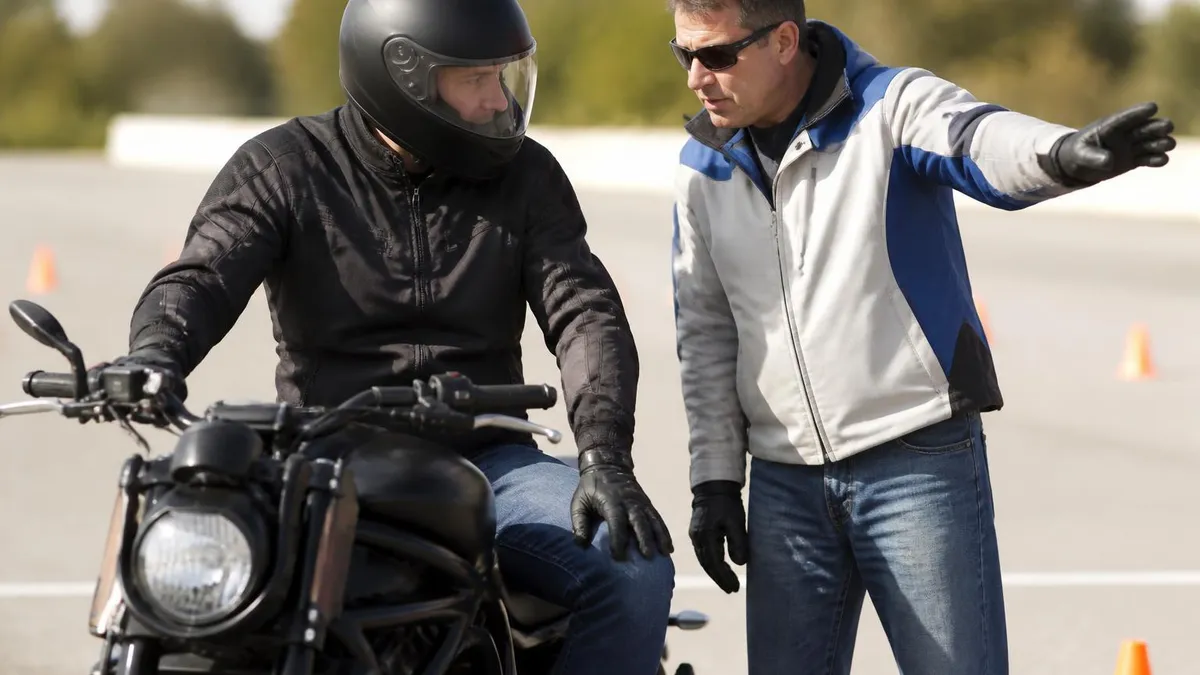
Motorcycle Safety Foundation Course: Complete 2026 Training Guide

MSF Card & Basic Rider Course: Complete 2026 Guide to Test Prep, Costs & Your Certificate

Ohio MSF Course: Complete Guide to Training, Costs & Written Test Prep
About the Author

Business Consultant & Professional Certification Advisor
Wharton School, University of PennsylvaniaKatherine Lee earned her MBA from the Wharton School at the University of Pennsylvania and holds CPA, PHR, and PMP certifications. With a background spanning corporate finance, human resources, and project management, she has coached professionals preparing for CPA, CMA, PHR/SPHR, PMP, and financial services licensing exams.