
MSF Course by State: Complete Guide to Training, Costs & Written Test Prep
MSF course cost varies by state — learn what to expect for training, written test, and fees. 🎯 Complete guide for every US state.

Understanding the MSF state requirements before you sign up for a Basic RiderCourse can save you time, money, and a lot of frustration. Every state in the US has its own rules about motorcycle licensing, insurance discounts, and how the Motorcycle Safety Foundation training program fits into the process. Whether you live in California, Texas, Florida, or a smaller state like Vermont, the core MSF curriculum stays the same, but tuition fees, licensing waivers, and reimbursement programs vary significantly depending on where your bike is registered.
The msf course test is the written and riding skills evaluation that stands between you and your endorsement in most states. Passing it earns you an MSF completion card that many DMVs accept in place of a separate road skills test. Some states go further and waive the written knowledge exam at the DMV as well, meaning the BRC is the only formal test you ever need to take. Knowing your state's specific policy before you enroll helps you plan ahead and avoid duplicate fees.
The msf course cost is one of the first questions every prospective rider asks, and it is a fair one. Tuition ranges from about $50 in states with strong public subsidies to over $400 in states where no government reimbursement exists. The national average sits around $200 to $250 for the Basic RiderCourse. Some states fund the program through motorcycle registration fees, effectively passing the savings directly to riders who choose to get trained. Others rely entirely on private range operators, which means market pricing applies.
The msf written test covers risk awareness, protective gear selection, braking technique, cornering, lane positioning, and hazard avoidance. Most state-administered versions include 25 to 50 multiple-choice questions, and riders typically need to score 80 percent or higher to pass. The riding portion evaluates low-speed maneuvers, quick stops, swerving, and cone weave exercises on a closed range. Both components must be passed on the same day in most states, though retake policies differ by training site and by state regulation.
State-by-state variation in the msf class cost also reflects geography and population density. Urban states with many competing range operators tend to keep prices lower through competition. Rural states with few ranges and long travel distances may charge more to cover instructor overhead and facility costs. A handful of states — including Iowa, Oregon, and Louisiana — cover course tuition entirely through public funding, so eligible residents pay nothing out of pocket. Always check with your state's rider education office before assuming what the price will be.
Taking the msf practice test before your course day is one of the most effective ways to walk in confident. The written portion of the BRC is not designed to trick you, but unfamiliar terminology and scenario-based questions can catch unprepared riders off guard. Studying the Motorcycle Safety Foundation's Motorcycling: The Riding Experience workbook, combined with a few rounds of online practice questions, dramatically improves first-attempt pass rates. Riders who prepare in advance also tend to absorb more from the range exercises because they are not splitting attention between physical skills and concept review.
This guide walks through everything you need to know about the MSF program on a state-by-state basis: tuition ranges, licensing waiver policies, insurance discount eligibility, written test format, and the smartest ways to prepare. Whether you are a first-time rider working toward your endorsement or an experienced motorcyclist looking to refresh your skills, this resource gives you the full picture so you can make an informed decision before you ever set foot on the range.
MSF Course by the Numbers

MSF Basic RiderCourse Structure
Before arriving at the range, riders complete an online eCourse covering fundamental concepts: risk perception, gear selection, braking physics, and mental strategies. This pre-study replaces the traditional classroom session and typically takes 3 to 4 hours to finish at your own pace.
The first on-range day introduces clutch control, throttle management, braking, and low-speed balance. Riders practice on small motorcycles provided by the training site. This session runs approximately 5 to 6 hours and builds the foundation for all subsequent exercises.
The second range day adds cornering, swerving, quick stops, and the formal skills evaluation. Instructors score riders on each exercise. A passing score on all evaluated maneuvers, combined with the written test, earns you the MSF completion certificate.
Most state BRC programs include a written test on the final day covering the eCourse material. Questions focus on riding strategies, hazard identification, and protective equipment. Riders need 80 percent or better to pass. The test is typically 25 questions administered on paper or a tablet.
Graduates receive an MSF card proving course completion. This card is accepted by most state DMVs as proof of skills competency, often waiving the DMV road test. It also qualifies riders for insurance premium discounts from most major motorcycle insurers nationwide.
The msf course cost differs more dramatically from state to state than most new riders expect. The lowest-cost programs are found in states where motorcycle rider education is funded through a dedicated surcharge on motorcycle registrations. Iowa, for example, has offered free Basic RiderCourse training to state residents for many years through the Iowa Motor Vehicle Enforcement program. Louisiana similarly subsidizes courses heavily, and residents often pay $25 or less. These states made a policy decision that subsidized training reduces crash rates and long-term medical costs, making the investment worthwhile for public budgets.
Mid-range pricing — roughly $150 to $250 — is the norm in states like Colorado, Arizona, Michigan, and Georgia, where some public funding exists but does not cover the full tuition. Riders in these states often receive a partial subsidy from the state's motorcycle safety fund, with the training provider charging the remainder. In many cases, employers or motorcycle clubs will reimburse the fee, and insurance companies frequently offer $50 to $100 rebates for completing the course. Always check with your insurer before paying out of pocket.
The highest msf class cost environments are typically found in states where private for-profit training centers operate with minimal state support. California, New York, and New Jersey have large populations and strong demand, but course prices can reach $350 to $450 at some providers. The good news in California is that DMV licensing fees saved by waiving the skills test partially offset the training cost. Understanding the full cost-benefit picture — including license fee savings and insurance discounts — often makes even expensive programs financially sensible within the first year of riding.
The cost of msf course also varies within states depending on the training provider. Community colleges that host BRC programs typically charge less than private motorcycle dealerships that offer the same curriculum. Harley-Davidson and BMW dealership-affiliated training centers sometimes bundle merchandise discounts with enrollment, which can reduce the effective cost. Riders willing to travel 30 to 60 miles to a community college range may save $75 to $100 compared to the nearest private provider. The cost of msf course can also be reduced by completing the eCourse pre-study online before you arrive, since some providers charge separately for classroom time.
Reimbursement programs add another layer of savings opportunity that many riders miss entirely. The American Motorcyclist Association maintains a database of state-by-state funding programs, and several major insurers including GEICO, Progressive, and Allstate offer completion bonuses ranging from $50 to $150 when you submit your MSF card after enrollment. Military veterans may qualify for additional fee waivers through state programs that recognize motorcycle training as safety-relevant vocational education. Always ask your training site coordinator about every available discount before you pay full price.
When comparing costs across state lines, remember that the course price is only one component of the total investment. Range bikes are provided at no extra charge at virtually all MSF training sites, so you do not need to own a motorcycle to take the course. Helmet and jacket rentals at the range typically cost $10 to $20 if you do not own gear.
Add fuel to drive to the range and any hotel costs if you are traveling, and your true out-of-pocket expense becomes clear. Most riders find the total investment — even in expensive states — pays for itself quickly through insurance savings alone.
Many riders wonder whether the msf course written test is harder than the DMV knowledge exam they already passed for their car license. In most states the BRC written test is actually more forgiving because it focuses exclusively on motorcycle-specific content drawn from the eCourse you just studied.
The DMV written exam, by contrast, may include questions on traffic law nuances, signage interpretation, and vehicle inspection rules that go beyond the BRC scope. Riders who study the eCourse material thoroughly and take a few rounds of the msf course practice test online before their course day consistently report that the written evaluation is straightforward and fair.
MSF Written Test: What to Expect by Region
Western states including California, Oregon, Washington, Nevada, and Arizona generally administer the MSF written test as part of the BRC on the final range day. California uses its own DMV motorcycle handbook as supplementary material alongside the MSF eCourse, so riders should review both. Oregon funds its program through the Oregon Motorcycle Safety Program, keeping fees low and maintaining a consistent 25-question written test scored at 80 percent to pass.
Nevada and Arizona rely more heavily on private training providers, meaning the written test format can vary slightly by site, though all must meet MSF national standards. Washington state offers one of the most comprehensive rider education systems in the West, with multiple course levels and a well-subsidized fee structure. Riders in these states report high first-attempt pass rates when they complete the eCourse online before arriving at the range.

MSF BRC vs. Learning on Your Own: What Makes Sense?
- +Earn a DMV road skills test waiver in most states, saving a separate fee and appointment
- +Insurance discount of 5 to 15 percent with most major motorcycle insurers upon showing MSF card
- +Structured curriculum covers all essential skills in a proven sequence with professional feedback
- +Range bikes provided so no personal motorcycle required — ideal for absolute beginners
- +Safe, closed-course environment for practicing emergency braking and swerving without traffic risk
- +State-funded programs in Iowa, Oregon, Louisiana, and others make the course free or nearly free
- −Upfront cost of $50 to $400 depending on state before any reimbursements apply
- −Schedule availability can be limited, especially in rural areas with few training sites
- −Range motorcycles are typically small-displacement bikes, which may not reflect your intended riding style
- −Weekend scheduling commitment of 15 to 16 hours is significant for riders with busy schedules
- −Some experienced riders find the basic-level curriculum too introductory for their existing skill set
- −Waiting lists at popular sites during spring riding season can delay enrollment by several weeks
MSF BRC Enrollment Checklist: Everything You Need Before Day One
- ✓Confirm your state's DMV accepts the MSF BRC completion card as a road skills test waiver
- ✓Look up your state's motorcycle safety program website to find subsidized or reimbursed training options
- ✓Register at an MSF-affiliated site at least 2 to 3 weeks early to secure your preferred date
- ✓Complete the online eCourse pre-study in full before arriving at the range on day one
- ✓Take at least 2 rounds of MSF practice test questions online to build written test confidence
- ✓Confirm the range provides loaner motorcycles and whether helmet or jacket rentals are available
- ✓Check with your motorcycle insurer about completing a proof-of-enrollment form for discount eligibility
- ✓Bring a valid government-issued ID and any required enrollment forms or payment confirmation
- ✓Wear over-the-ankle boots, long pants, long sleeves, and full-finger gloves to every range session
- ✓Review your state's motorcycle endorsement process so you know exactly what to do with your MSF card after graduation
Insurance Savings Often Cover the Entire Course Fee
Most major motorcycle insurers — including GEICO, Progressive, Allstate, and State Farm — offer premium discounts of 5 to 15 percent for riders who present a valid MSF completion card. On a $1,000 annual premium, a 10 percent discount saves $100 every year. Over three years, that is $300 in savings, which more than covers even the most expensive state course tuition. Ask your insurer for the exact discount rate before you enroll and you may find the course pays for itself in the first policy renewal.
State-level licensing policies tied to MSF completion are where the real practical benefit of the program becomes clear. In the majority of US states, presenting a valid MSF BRC completion card at the DMV means you skip the road skills test entirely. For many new riders, that is a significant relief — the DMV skills test requires riding your own motorcycle to a testing facility, performing maneuvers in a high-stress environment, and often waiting weeks for an available appointment. The BRC eliminates all of that in a single structured weekend course.
California represents one of the largest state markets for motorcycle licensing, and its policy is a strong example of how state integration works. California DMV accepts the MSF BRC card to waive the DMV riding skills test. New riders still need to pass the written knowledge test at the DMV separately, which covers the California Motorcycle Handbook. This means California riders benefit from the BRC for the skills waiver but must still study state-specific traffic laws and signage independently. Knowing this distinction prevents riders from being caught off guard at the DMV window.
Florida takes a more comprehensive approach. The Florida Rider Training Program, which uses the MSF BRC curriculum, waives both the DMV knowledge test and the DMV skills test for graduates. Florida riders who complete the BRC walk into the DMV with nothing left to do except present their completion card, pay the endorsement fee, and walk out with a motorcycle endorsement on their license. This full dual-waiver policy makes the BRC especially valuable in Florida and explains why training site registration fills quickly each season.
Texas operates through a system called the Texas Department of Licensing and Regulation's Motorcycle Safety Program, which administers BRC sites statewide. Texas offers a skills test waiver for BRC graduates but requires riders to pass the written knowledge test at the DPS office. The written exam covers Texas traffic law from the Texas Motorcycle Operator Manual. Texas also has a strong tradition of military-affiliated rider training programs, with several bases hosting MSF courses for active-duty service members at reduced or no cost.
New York and New Jersey present a contrasting picture. These states have some of the most expensive BRC tuition in the country due to high operating costs, but they also offer clear licensing benefits. New York waives the DMV motorcycle road test for BRC graduates. New Jersey's Motorcycle Safety Program similarly grants road test exemptions. Given the DMV scheduling backlog in both states — which can stretch to 2 to 4 months for a motorcycle road test appointment — having the BRC waiver can mean the difference between riding this season and waiting until next year.
Midwest states have built some of the most rider-friendly training ecosystems in the country. Ohio's Motorcycle Ohio program, for example, partners with community colleges across all 88 counties to ensure geographic access. Ohio waives both the DMV written and skills tests for BRC graduates, making the course the single required step between a temporary tag and a full endorsement. Michigan, Minnesota, Wisconsin, and Indiana follow similar models with strong community college partnerships and dual waivers, making the BRC the standard path to licensure rather than an optional add-on.
Understanding your specific state's policy is non-negotiable before you enroll. Policies change, and some states have updated their waiver rules in recent years. Visit your state DMV website directly and search for motorcycle endorsement requirements. The MSF's own site at msf-usa.org lists affiliated training providers by zip code but does not always reflect the most current state licensing integration policies.
When in doubt, call your local DMV and ask specifically whether BRC graduation waives the road skills test, the written test, or both — then plan your preparation strategy accordingly. For specific written test video walkthroughs, the msf basic rider course test answers resource offers detailed question-by-question breakdowns that complement your eCourse study.

MSF licensing waiver policies are set by individual state DMVs and can change without broad public announcement. Several states have modified their dual-waiver programs in recent years, adding or removing the written test exemption. Before paying your course tuition, call your state DMV directly and confirm whether your BRC completion card will waive the road skills test, the written knowledge test, or both. Do not rely on third-party websites — including this one — for the definitive current policy in your state.
Preparing for the msf test begins long before you arrive at the range. The single most effective preparation strategy is to complete the MSF eCourse online module in full, take detailed notes, and then immediately practice with online question sets that mirror the written test format. Riders who space out their eCourse completion over 3 to 5 days tend to retain more information than those who rush through it the night before. The eCourse is designed to be absorbed in segments, with each module building on the previous one.
The msf written test draws exclusively from eCourse content, so the investment in studying that specific material pays off directly. Common question topics include: the correct following distance behind other vehicles (3 seconds or more), the proper technique for quick stops (squeezing the front brake progressively while applying the rear), the most dangerous time to ride (the first hour after light rain, when oil has risen but not washed away), and the recommended body position for cornering (outside-inside-outside path, weighted footpeg, and looking through the turn). Memorizing the answers to these scenario types is worth your time.
Online practice tests are one of the most underutilized preparation resources available to BRC candidates. The cost of msf course sometimes discourages riders from investing additional time in prep, but free practice questions are abundant. Sites like PracticeTestGeeks offer timed question sets that simulate the actual written test experience. Working through 50 to 100 practice questions across 2 or 3 sessions dramatically reduces test anxiety and identifies knowledge gaps before they matter. Riders who treat the written test casually and skip practice questions are the ones who are surprised by a low score on the day.
Physical preparation for the range sessions is equally important and often overlooked. The BRC requires standing, walking, mounting and dismounting motorcycles, and maintaining balance during slow-speed exercises for 5 to 6 hours at a stretch. Riders who are physically fatigued make more errors during the evaluated exercises. Getting adequate sleep the night before, eating a proper breakfast, and staying hydrated throughout the day makes a measurable difference in performance, especially during the late-afternoon evaluation exercises when concentration typically dips.
Gear selection for your BRC days affects both comfort and safety. The MSF requires at minimum: a DOT-approved helmet, over-the-ankle footwear, long pants, long sleeves, and full-finger gloves. While the range provides motorcycles, it does not provide riding-specific protective gear beyond the helmet in most cases. Arriving in gear that fits well and allows comfortable movement — particularly in the shoulders and hips — helps you execute range maneuvers without clothing restriction. Avoid overly stiff work boots that reduce ankle sensitivity on the brake and shift pedals.
The night before your final range day, review the specific exercises that will be evaluated: the cone weave, the quick stop from 12 mph, the U-turn within a box, and the swerve. Each exercise has specific pass/fail criteria related to foot-down penalties, speed, boundary violations, and stopping distance. Understanding exactly what the evaluators are looking for removes the ambiguity and lets you focus your mental rehearsal. Visualizing yourself executing each exercise correctly, from entry to completion, is a proven technique used by competitive riders that works equally well for BRC candidates.
Finally, remember that the MSF BRC is designed to be passable by motivated beginners. The failure rate is relatively low when riders arrive prepared, well-rested, and having completed the eCourse. If you do not pass the first time, most sites allow same-day retakes of the written test and next-available-date retakes of the riding evaluation at no additional charge. Treat a retake as useful additional practice rather than a failure, and approach it with the same calm focus you brought the first time. The goal of the program is to create safer riders, and the MSF evaluators want you to succeed.
Once you have passed both the written and riding evaluations at the BRC, the paperwork process is straightforward but varies by state. In most states, you receive a physical or digital MSF completion card on the final day. You then take this card to your state DMV and request the motorcycle endorsement be added to your existing driver's license.
In states with dual waivers — like Florida, Ohio, and Minnesota — this is the final step. In states with partial waivers like California and Texas, you may still need to pass a separate DMV written test before the endorsement is issued.
The timeline from BRC graduation to endorsed license is typically 1 to 5 business days in states that process in-person DMV transactions quickly. Some states allow online endorsement applications with uploaded proof of BRC completion, which can be even faster. In New York and New Jersey, where DMV offices experience higher volume, plan for 7 to 14 business days. The endorsement itself is usually printed directly on your existing license at a DMV office or mailed as a license update, depending on your state's system.
Insurance notification should happen immediately after you receive your MSF card — do not wait for your license endorsement to complete. Contact your insurer with the card information (your name, completion date, and course ID) and ask them to apply the safe rider discount to your next premium cycle. Some insurers require a copy of the card by mail or email; others update the discount over the phone. Processing the discount before your next billing cycle ensures you capture the savings from the first renewal rather than missing a month's benefit.
Advanced riders who already hold a motorcycle endorsement can still benefit significantly from BRC completion. The insurance discount applies regardless of whether you are a first-time licensee or a veteran rider renewing your coverage. Some states also offer an Intermediate Rider Course (IRC) or an Advanced RiderCourse (ARC) for experienced motorcyclists, and completion of these courses may generate additional insurance discounts or fulfill continuing education requirements under certain state employer safety programs. The MSF course ecosystem extends well beyond the basic level.
Seasonal timing matters more than most riders realize when planning BRC enrollment. Spring — March through May — is peak enrollment season in most US regions, and course slots fill quickly at popular training sites. Riders who wait until April to look for a May course often find waitlists that push them to June or July.
The smartest timing strategy is to enroll in late fall or winter for the following spring, especially if you are targeting a specific weekend to align with the start of your riding season. Some sites offer indoor or heated range facilities that allow year-round training, which significantly reduces the scheduling pressure.
For riders considering the MSF eCourse as an alternative to the in-person BRC, it is important to understand what the eCourse does and does not cover. The eCourse completes the knowledge component of the BRC online but does not replace the required range training.
Some states accept eCourse completion as meeting the written test requirement of the BRC while still requiring the range sessions to earn the licensing waiver. Check your state's specific eCourse policy before purchasing — in some states, eCourse completion alone is not sufficient to obtain any DMV test waiver. The eCourse is best understood as pre-study for the in-person course, not a substitute for it.
The MSF also offers a 3-Wheel Basic RiderCourse for riders interested in three-wheeled motorcycles and sidecar rigs, a course curriculum that is gaining popularity as the three-wheel vehicle segment grows. This course follows a similar written and skills evaluation format to the standard BRC but is adapted for the unique handling characteristics of three-wheel platforms.
If your riding interest is in a Can-Am Spyder, Piaggio MP3, or similar platform, ask your training site coordinator whether they offer the 3-Wheel BRC, since not all sites carry the three-wheel curriculum. State licensing waiver policies for the 3-Wheel BRC vary and may differ from standard BRC policies, so confirm your state's rules independently before enrolling.
MSF Questions and Answers

MSF eCourse: Complete Guide to Online Training, Written Test Prep & Course Costs
MSF Practice Test Video Answers
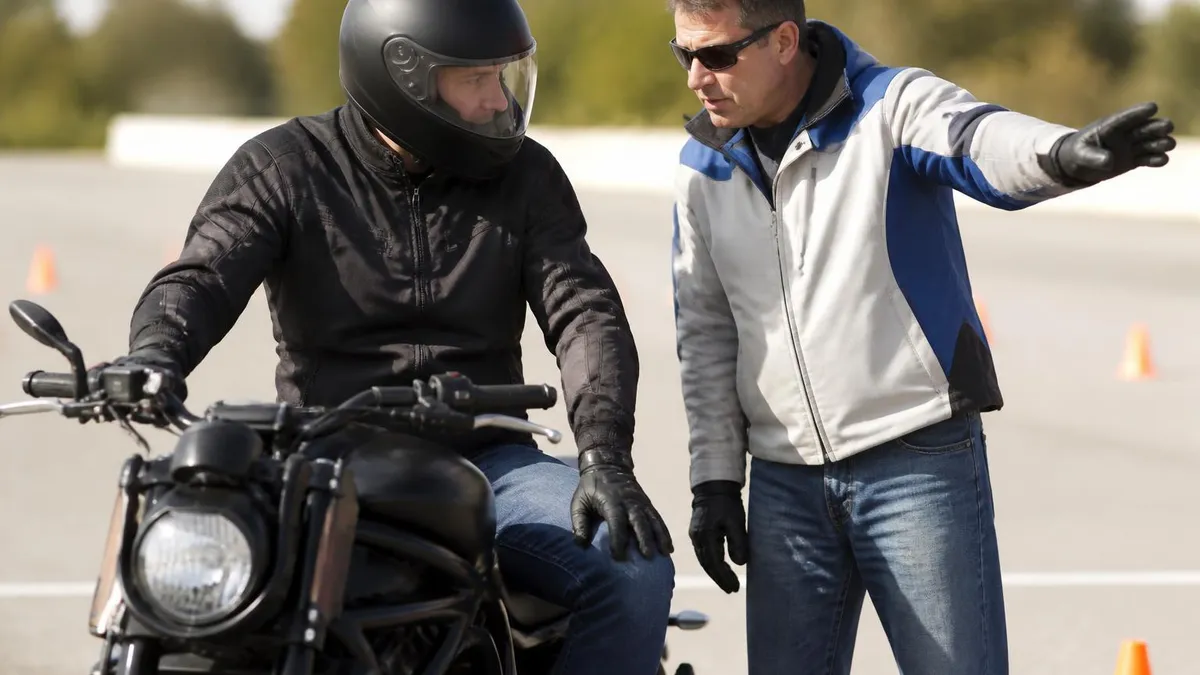
Motorcycle Safety Foundation Course: Complete 2026 Training Guide

MSF Card & Basic Rider Course: Complete 2026 Guide to Test Prep, Costs & Your Certificate

Ohio MSF Course: Complete Guide to Training, Costs & Written Test Prep
About the Author

Business Consultant & Professional Certification Advisor
Wharton School, University of PennsylvaniaKatherine Lee earned her MBA from the Wharton School at the University of Pennsylvania and holds CPA, PHR, and PMP certifications. With a background spanning corporate finance, human resources, and project management, she has coached professionals preparing for CPA, CMA, PHR/SPHR, PMP, and financial services licensing exams.