
Do I Need to Take the MSF Course? Requirements, Costs & What to Expect
Do you need to take the MSF course? ✅ Learn state requirements, msf course cost, written test tips, and how to prepare in 2026 September.

If you're wondering do I need to take the MSF course before getting your motorcycle license, the short answer depends on your state — but in most cases, completing a Motorcycle Safety Foundation Basic RiderCourse is either legally required or strongly recommended. More than 40 U.S. states either mandate MSF training for new riders or offer license test waivers to graduates, making the program one of the most important steps on your path to legal, safe riding. Understanding exactly what's required in your state can save you time, money, and a trip to the DMV.
The MSF Basic RiderCourse was designed to give new riders a structured, hands-on introduction to motorcycle operation under the guidance of certified coaches. The course typically runs over a single weekend, combining classroom instruction with range exercises on a closed course. Many students are surprised to discover that the msf course test covers not just physical skills but also critical decision-making, hazard recognition, and defensive riding strategies that you simply cannot learn by riding on your own.
One of the biggest concerns riders have before signing up is the MSF course cost. Prices vary widely by state and provider, but you can generally expect to pay between $150 and $350 for a full Basic RiderCourse. Some states subsidize the program, bringing fees as low as $20 to $50 per student. Before assuming it's out of budget, check whether your state offers financial assistance — many do, especially for first-time applicants. We'll break down cost details further in this article so you know exactly what to budget.
Beyond the licensing angle, the MSF course builds real skills that protect you on the road. New riders who complete formal training are statistically less likely to be involved in crashes during their first year of riding. The curriculum covers braking, cornering, low-speed maneuvering, and emergency responses — skills that even experienced riders sometimes lack. Whether the course is required in your state or optional, treating it as foundational training rather than a bureaucratic checkbox will serve you far better in the long run.
Another reason riders ask about the MSF course is the written test component. The MSF written test, sometimes called the knowledge test or BRC end-of-course evaluation, covers material from the course handbook and classroom sessions. It is not the same as your state's DMV written exam, though the two tests share overlapping content. Knowing the difference between these assessments — and preparing for both separately — is an important part of getting licensed efficiently without unexpected delays or retakes.
This article walks you through every aspect of the question: which states require the MSF course, what the training looks like day by day, how much it costs, how to prepare for the written and riding evaluations, and what happens after you pass. Whether you're a complete beginner or an experienced rider returning to formal training, you'll find actionable, up-to-date information here to help you move forward with confidence and clarity.
We've also included free practice resources throughout this page so you can start familiarizing yourself with MSF test content right now. The more familiar you are with the material before day one of class, the more mental bandwidth you'll have during the range exercises — which is where most students find the real challenge. Let's start with a high-level look at the numbers that define the MSF program nationwide.
MSF Course by the Numbers

Which States Require the MSF Course?
Several states, including Connecticut, Hawaii, and parts of New York, require completion of an approved rider education course before a motorcycle license or endorsement can be issued. The MSF BRC satisfies this requirement in all of these states.
A large group of states mandates the MSF course specifically for minor applicants. If you're under 18 in states like Texas, Florida, or Illinois, you must complete a safety course before the DMV will process your endorsement application, regardless of experience.
The most common category: states where the MSF BRC is not required but graduates receive a waiver exempting them from the DMV motorcycle skills test. This applies in California, Michigan, Ohio, and many others — saving time and reducing test-day anxiety.
Even in states where the course is fully optional, most major insurers — including Progressive, GEICO, and State Farm — offer discounts of 5–15% on motorcycle premiums for MSF graduates. In some cases, the discount pays back the course fee within a single policy year.
Active-duty military personnel and veterans may access free or discounted MSF training through on-base programs or partnerships with the VA. Some branches mandate safety training before service members can operate motorcycles on or off post, using MSF curriculum as the standard.
Understanding the full MSF course cost picture requires looking beyond the registration fee. The base tuition for the MSF Basic RiderCourse typically ranges from $150 to $350 depending on your state, the training provider, and whether you enroll through a community college, a private riding school, or a dealership-sponsored program. In states with strong public funding for rider education — such as Maryland, Oregon, and California — fees can be as low as $25 to $75 because state highway safety funds cover the majority of the cost.
In addition to tuition, factor in equipment costs if you don't already own gear. The MSF requires all students to wear a DOT-approved helmet, eye protection, long pants, long sleeves, full-fingered gloves, and over-the-ankle footwear during range exercises. If you need to purchase a helmet and gloves before the course, budget an additional $80 to $200 depending on brand and quality. Many training centers rent helmets for a small fee — typically $10 to $25 — if you prefer not to buy before your first course.
The good news is that the cost of msf course is often partially recoverable. Most auto and motorcycle insurance carriers offer premium discounts for MSF graduates, and these savings compound over multiple policy years. A rider who saves $120 per year on insurance effectively recoups a $300 course fee within three years — and continues saving annually after that. Always ask your insurer about the exact discount amount before and after completing training so you can calculate your real net cost.
Some states have separate fees for the endorsement itself. After passing the MSF course, you'll typically visit the DMV to have the motorcycle endorsement added to your driver's license. This DMV processing fee generally runs between $10 and $35 depending on your state. If your state requires a separate motorcycle learner's permit before you can enroll in the course, there may be an additional $5 to $20 application fee at that stage. These smaller charges add up, so it helps to know the full cost stack before you begin the licensing process.
Retake policies vary by provider. Most MSF course providers allow students who fail the end-of-course riding evaluation to retake it once within 90 days at no charge or for a reduced fee. The written knowledge evaluation — the MSF written test — can usually be retaken the same day if you fail on your first attempt. However, if you fail the riding evaluation twice, you may need to re-enroll and pay full tuition again, which makes preparation especially important for the skills portion of the assessment.
Many riders ask about the MSF eCourse, which is an online alternative to the classroom portion of the BRC. The eCourse costs approximately $25 to $45 and allows you to complete pre-study at your own pace before attending the range sessions. States that accept the eCourse format sometimes reduce the total in-person time required, which can be appealing for riders with tight schedules. However, the hands-on range component is never replaced by online learning — it's always delivered in person with a certified coach.
Finally, consider the cost of not taking the course. Riders without formal training have higher crash rates in their first year, face higher insurance premiums, and spend more time at the DMV because they must pass the full skills test rather than receiving a waiver. When you account for all these factors together, the MSF course consistently represents one of the highest-return investments a new rider can make — both financially and in terms of personal safety on the road.
MSF Written Test: What You Need to Know
The MSF course written test — also called the knowledge evaluation — typically consists of 50 multiple-choice questions drawn from the course handbook and classroom instruction. You must score at least 80% (40 out of 50 correct) to pass. The test is administered on paper or a tablet at the end of classroom instruction, before you move to the riding range. Questions focus on traffic laws, hazard recognition, braking techniques, gear selection, and safe following distances.
Unlike the DMV motorcycle knowledge test, the MSF written test is specifically tied to content taught during the BRC. If you study the MSF Rider's Handbook thoroughly and pay close attention in the classroom, most students find the knowledge evaluation manageable. Topics tested include right-of-way rules, crash avoidance strategies, protective gear requirements, and how alcohol or fatigue affects riding performance. Arriving well-rested and having reviewed key terms the night before significantly improves your score.

Is the MSF Course Worth Taking Even If It's Optional in Your State?
- +Waives the DMV motorcycle skills test in 40+ states, saving time and reducing test anxiety
- +Provides structured instruction in emergency braking, swerving, and cornering that self-taught riders often lack
- +Qualifies you for insurance discounts of 5–15% with most major motorcycle insurers
- +Motorcycles are provided on the range, so you don't need your own bike to get started
- +Certified coaches give personalized feedback that online videos and books cannot replicate
- +Completion card (MSF card) serves as proof of training for insurers, employers, and military bases
- −MSF course cost of $150–$350 is a significant upfront investment for budget-conscious riders
- −Courses often have waitlists weeks or months long in high-demand areas during peak riding season
- −The weekend-long format is time-intensive and may conflict with work or family commitments
- −Range bikes are typically small-displacement motorcycles that feel very different from larger bikes you may own
- −Failing the riding evaluation may require re-enrollment and full tuition payment to retake
- −The curriculum is standardized nationally, so local traffic conditions or riding environments may not be specifically addressed
MSF Course Preparation Checklist: 10 Steps Before Day One
- ✓Verify your state's exact licensing requirements and whether the MSF BRC waives the DMV skills test.
- ✓Register for a course at least 4–6 weeks in advance, especially during spring and summer when slots fill fast.
- ✓Download the free MSF Rider's Handbook and read it fully before the first classroom session.
- ✓Complete at least one full MSF practice test online to identify your weakest knowledge areas.
- ✓Purchase or borrow a DOT-approved helmet, gloves, jacket, long pants, and over-the-ankle boots before the course.
- ✓Get a good night's sleep before each day of training — fatigue significantly impairs coordination and reaction time.
- ✓Arrive on day one with a valid driver's license or learner's permit as required by your state and provider.
- ✓Eat a solid breakfast and bring water and snacks — range days are physically demanding and span many hours outdoors.
- ✓Leave your phone in your bag during range sessions so you can focus fully on instructor feedback and technique.
- ✓After passing, visit the DMV promptly to add the motorcycle endorsement before your MSF completion card expires.
Your MSF Card Can Save You Hundreds on Insurance
Most major insurers apply a motorcycle safety discount automatically when you submit your MSF completion card — typically 5–15% off your annual premium. On a $1,200 annual policy, that's $60–$180 back in your pocket every single year. Always provide your MSF card when requesting insurance quotes, not after you've already accepted a rate.
After you pass both the MSF written test and the range riding evaluation, you'll receive an MSF DRC (Basic RiderCourse) completion card — sometimes called your MSF card — which serves as official documentation that you completed the program. This card is issued by your instructor on the final day of the course and is typically valid for one year from the date of completion. It's a small piece of paper or plastic, but it carries significant weight: insurance companies, DMV offices, military base commanders, and employer safety programs all recognize it as proof of formal training.
Your next step after receiving the card is to visit your state DMV to have the motorcycle endorsement added to your driver's license. In states that accept the MSF BRC as a skills test waiver, you'll simply present your completion card, pay the endorsement fee, and the DMV will update your license — no skills test required. In states that require a separate DMV written knowledge test for the endorsement, you'll need to pass that exam as well. Check your state DMV website for the exact sequence of steps because it varies by jurisdiction.
Once you have the endorsement, you are legally permitted to operate a motorcycle on public roads in your state, subject to any restrictions printed on your license. Some states impose conditions on new endorsement holders, such as no nighttime riding or no passengers for the first six months. These restrictions are typically listed directly on your license and expire automatically after the restriction period ends. Violating them before they expire can result in fines and may complicate future license renewals.
Many riders choose to continue their education after the BRC by enrolling in the MSF's intermediate or advanced courses. The Experienced RiderCourse (ERC) is designed for riders who already have their license but want to sharpen skills like precision braking, cornering, and hazard response. The ERC completion card is also accepted by most insurers for discounts, so it can deliver ongoing financial benefits in addition to the safety improvements. Several states also offer specialized courses for scooter riders, three-wheel vehicle operators, and off-road enthusiasts through the MSF curriculum.
If you're planning to ride in multiple states or travel by motorcycle across state lines, your home state endorsement is recognized nationwide — you don't need a separate endorsement for each state you visit. However, if you establish residency in a new state, you'll need to transfer your license to that state's system, which may require showing your existing endorsement or, in rare cases, passing a new knowledge test. The MSF card from your original training will still be useful in these situations as supporting documentation.
Many employers who require motorcycle operation as part of the job — package delivery services, police departments, military branches — specifically require employees to hold an MSF completion card or equivalent documentation. Having your BRC card on file can open doors professionally that wouldn't otherwise be available. Some law enforcement agencies run their own advanced rider training programs but still base the foundational skills test on MSF standards, so your BRC training translates directly into that environment.
The practical outcome of passing the MSF course is not just a card or a license endorsement — it's a genuine shift in how you perceive and respond to riding situations. Students consistently report that after the course they notice hazards earlier, manage their speed more deliberately, and feel far more comfortable in emergency situations than they did before training.
That confidence, grounded in real practice rather than assumptions, is ultimately the most valuable thing you take home from the weekend. To learn more about what the card itself means and how to use it, explore our guide to the msf course practice test and completion documentation.

MSF completion cards are typically valid for only 12 months from the date issued. If you don't visit the DMV to add your endorsement before the card expires, you may need to retake the course and pay full tuition again. Schedule your DMV appointment within the first week after passing the course to avoid this entirely preventable problem.
Preparing for the MSF course's riding evaluation is just as important as studying for the written test — and it's an area where many students underestimate the difficulty. The range evaluation measures your ability to perform specific maneuvers within defined boundaries on a closed course. Exercises typically include a quick stop from speed, a swerve around a cone, a U-turn within a marked box, and a slow-speed weave through cones. Each exercise is scored by your instructor based on technique, boundary compliance, and control.
One of the best things you can do before attending the range sessions is to watch video walkthroughs of MSF exercises. You can find msf basic rider course test answers and technique demonstrations that show exactly how each maneuver should look when executed correctly. Watching these videos helps you build a mental model of the exercise before you're on the bike, which dramatically speeds up the learning process once you're actually in the saddle. Students who arrive with a visual mental model of the exercises consistently perform better than those who encounter them cold.
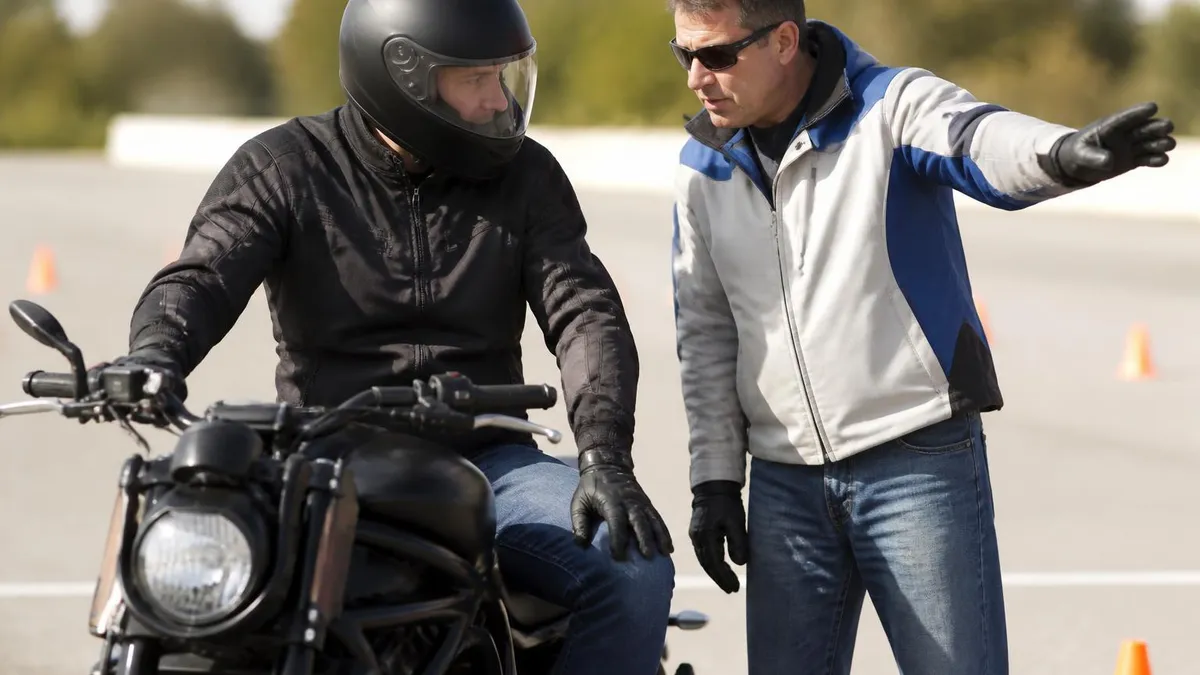
During the range sessions themselves, your instructors are coaches, not judges — they want you to succeed and will provide immediate, specific feedback after each exercise. The key is to listen carefully and implement corrections on the next attempt rather than mentally replaying mistakes. Riders who get stuck ruminating on errors tend to repeat them, while riders who acknowledge the feedback and redirect their focus to the next attempt improve quickly. This mental skill — staying present and responsive during practice — is one of the most transferable lessons the MSF course teaches.
The slow-speed exercises are often the most challenging for beginners. Riding a motorcycle slowly requires more active balance management than riding at speed, which feels counterintuitive. The U-turn box, in particular, requires you to use a combination of throttle, clutch control, and counterbalancing to complete a tight turn within a small space without putting your foot down. Practice the technique of looking through the turn — focusing your eyes on the exit point rather than the obstacle you're trying to avoid — as this single habit dramatically improves low-speed turning performance.
Clothing and gear choice also affects your range performance more than many students expect. Stiff or uncomfortable boots can make precise foot placement on the controls difficult. Gloves that are too thick may reduce throttle sensitivity. Wear gear that you've broken in at least slightly before the course so that discomfort doesn't distract from what you're learning. If you're purchasing new gear specifically for the course, try to wear it around the house for a few evenings beforehand to soften stiff leather and ensure nothing pinches or restricts movement on the bike.
Rest and nutrition on range days deserve serious attention. Most BRC range sessions run four to six hours with limited breaks. Standing in the sun, wearing protective gear, and concentrating intensely on new physical skills is genuinely tiring. Riders who skip breakfast or fail to hydrate adequately often find their performance declining significantly in the afternoon sessions. Bring a large water bottle, high-protein snacks, and sunscreen. Treat the range day with the same physical preparation you'd bring to an athletic event, because in many respects, that's exactly what it is.
After completing each range session, take a few minutes to mentally review what you did well and what you want to improve before the next session. This kind of deliberate reflection — rather than passive repetition — accelerates skill development. If you have questions about a technique, ask your instructor during the debrief rather than waiting until the next exercise.
The instructors are there to help, and a brief conversation after a session often unlocks progress that hours of additional practice alone wouldn't achieve. For more structured preparation, the cost of msf course page includes eCourse options that let you preview classroom material at your own pace before attending in person.
Practical tips for maximizing your success on MSF test day begin long before you walk into the classroom. The single most effective preparation strategy is consistent, spaced-out study over several weeks rather than intensive cramming in the 24 hours before the course. The MSF written test covers a substantial amount of material — braking physics, traction management, hazard recognition, traffic law, and emergency procedures — and genuinely understanding these concepts requires time for the information to consolidate in memory.
Use free online practice resources strategically. Rather than simply clicking through questions until you get them right, pause on each incorrect answer and ask yourself why the correct answer is correct. What principle or rule does it illustrate? How would you apply that principle in a real riding situation? This active engagement with the material — rather than passive repetition of correct answers — is what actually transfers to the physical riding skills you'll practice on the range. The concepts aren't separate from the riding; they explain and reinforce every technique the instructor will teach you.
On the day of the classroom session, arrive early. Finding parking, locating the right room, and getting settled takes time, and arriving flustered or rushed immediately puts you at a disadvantage. Introduce yourself to the instructor if you have specific concerns — for example, if you have any physical limitations, prior experience on certain bike types, or learning accommodations you need. Instructors are experienced at adapting their teaching to individual students, but only if they know what you need going in. Coming in relaxed and prepared sets a tone for the entire day.
During the written evaluation itself, read each question carefully before looking at the answer choices. Many incorrect answers are specifically designed to be plausible, and rushing through the question stem causes preventable errors. If you're unsure about an answer, use process of elimination: rule out the options that are clearly wrong before weighing the remaining choices. Don't second-guess your first answer unless you have a concrete reason — research consistently shows that initial instincts on knowledge tests are more reliable than late revisions made out of anxiety.
For the riding evaluation, remember that the MSF scoring system is points-based — each mistake costs you points, and you fail only if you accumulate too many. A single imperfect execution of one exercise does not mean you've failed the course. Stay calm after a mistake, reset your mental focus, and approach the next exercise fresh. Riders who catastrophize a single error and carry that anxiety into subsequent exercises consistently score worse than those who treat each exercise as independent. The instructors want you to pass and will be rooting for your recovery after any stumble.
After the course is finished, don't let your newly learned skills fade. The first 90 days of riding after the BRC are statistically the highest-risk period for new riders. Apply everything you learned immediately and deliberately — practice your quick stops in empty parking lots, work on your slow-speed control, and actively scan intersections the way your instructor taught you. Consider joining a local riding club or mentorship program where experienced riders can provide real-world guidance as you build hours on the road. The BRC is a beginning, not an endpoint.
Finally, revisit the MSF curriculum periodically throughout your riding life. Many experienced riders who take the Experienced RiderCourse after years in the saddle are surprised to discover gaps in their technique or habits that have drifted from best practices. Motorcycle safety is a continuous practice, not a one-time certification. The riders who stay safest over the long term are those who approach every ride with the same deliberate attention that made them successful in that first BRC weekend. Treat the course not as a requirement to check off but as the beginning of a lifelong commitment to skilled, responsible riding.
MSF Questions and Answers

MSF eCourse: Complete Guide to Online Training, Written Test Prep & Course Costs
MSF Practice Test Video Answers
Motorcycle Safety Foundation Course: Complete 2026 Training Guide

MSF Card & Basic Rider Course: Complete 2026 Guide to Test Prep, Costs & Your Certificate

Ohio MSF Course: Complete Guide to Training, Costs & Written Test Prep
About the Author

Business Consultant & Professional Certification Advisor
Wharton School, University of PennsylvaniaKatherine Lee earned her MBA from the Wharton School at the University of Pennsylvania and holds CPA, PHR, and PMP certifications. With a background spanning corporate finance, human resources, and project management, she has coached professionals preparing for CPA, CMA, PHR/SPHR, PMP, and financial services licensing exams.