
MRIA Explained: How MR Angiography Works and How to Master It for Exams
📚 MRIA explained: how MR angiography works, key sequences, clinical uses, safety, and free practice questions to master the topic for your MRI registry exam.
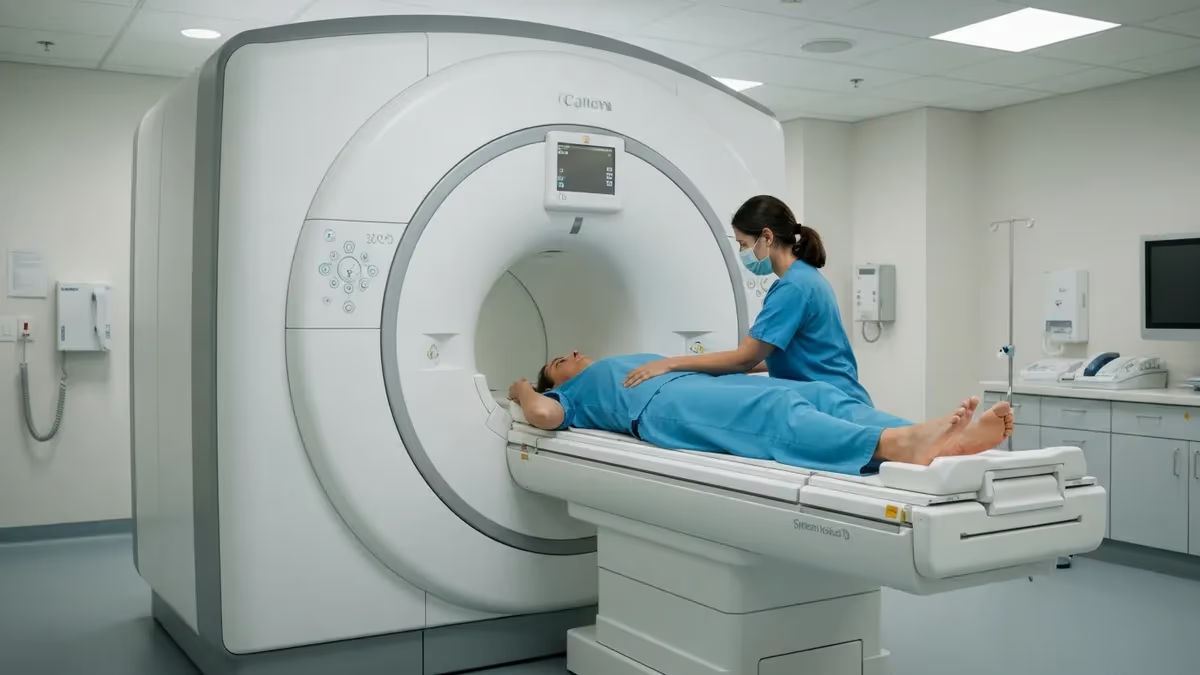
An MRIA, or magnetic resonance imaging angiography, is one of the most powerful non-invasive tools modern radiology offers for examining blood vessels without surgery, catheters, or ionizing radiation. If you are studying for an MRI registry exam, training as a technologist, or simply trying to understand a scan your physician ordered, learning how an mria works will sharpen both your clinical reasoning and your test scores. This guide breaks the technique into plain language, walks through the physics that makes it possible, and connects every concept to the kind of questions you will face on certification boards.
The term mria sits at the intersection of two ideas that students often confuse. The first is the broad family of MRI techniques that map soft tissue using strong magnetic fields and radiofrequency pulses. The second is angiography, the specific goal of imaging arteries and veins. When you combine them, you get a study that shows the lumen of a vessel, the direction of flow, and sometimes the velocity of blood itself. Understanding that overlap is the foundation everything else in this article builds on.
Unlike a CT angiogram, an mria can often be performed without any contrast agent at all. Techniques such as time-of-flight and phase-contrast rely entirely on the motion of blood to generate signal differences between flowing and stationary tissue. This matters enormously for patients with kidney disease, contrast allergies, or a need for repeated imaging over time. For exam purposes, you must know exactly when contrast is required, when it is optional, and which physical principle each sequence exploits to make vessels appear bright or dark.
Radiologists order an mria for a wide range of indications, from screening for cerebral aneurysms to evaluating carotid stenosis, renal artery narrowing, and peripheral arterial disease in the legs. Each anatomical region favors a slightly different protocol, field strength, and post-processing strategy. A study of the circle of Willis in the brain looks very different on the console than a runoff study of the lower extremities. Recognizing those differences quickly is a skill that separates confident technologists from those who hesitate at the scanner.
Because the topic blends physics, anatomy, and pathology, it appears repeatedly across registry and board exams. You might be asked to identify the artifact that mimics a stenosis, to choose the correct sequence for a slow-flow lesion, or to explain why a saturation band is placed above or below the imaging volume. The good news is that a handful of core concepts unlock most of these questions. Master them once and you will see the same logic recur in dozens of slightly reworded items.
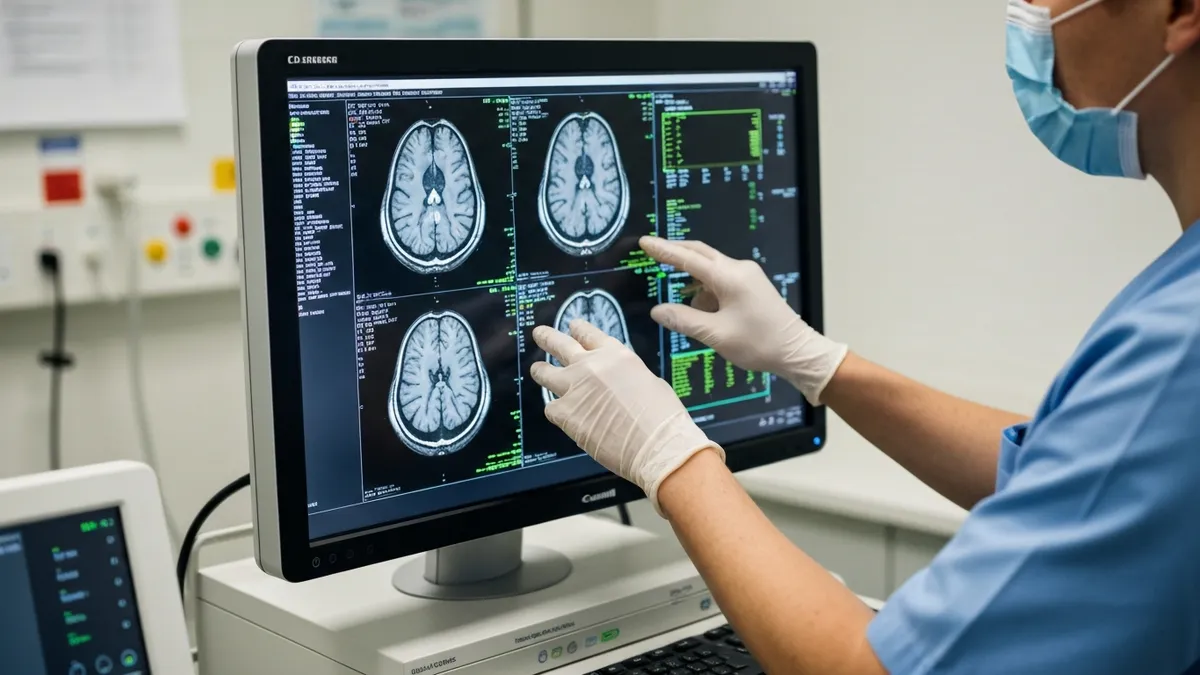
Throughout this guide we will reference what a healthy scan looks like, including a normal mria of the intracranial circulation, so you can build a mental baseline before learning to spot disease. We will also point you toward free practice questions after each major section so you can test recall immediately rather than waiting until the end. Active retrieval, not passive rereading, is what moves information into long-term memory and onto your answer sheet.
By the time you finish, you should be able to define the modality precisely, describe its main sequences, list its clinical uses, weigh its advantages against its limitations, and answer the most common exam questions with confidence. Keep a notebook handy, take the embedded quizzes, and revisit any section that feels shaky. The structure of this article mirrors the structure of a good study session, moving from broad concepts to fine detail and finishing with rapid-fire review.
MR Angiography by the Numbers
MRIA Sequence Types at a Glance
Non-contrast technique that brightens inflowing blood against a saturated background. The workhorse for screening intracranial arteries and the circle of Willis when no injection is desired.
Encodes blood velocity into signal phase using bipolar gradients, allowing quantitative flow measurement. Requires a correctly chosen VENC to avoid aliasing or missed slow flow.
Uses gadolinium to brighten vessels regardless of flow direction. Ideal for tortuous, slow, or body and peripheral vessels, but demands precise bolus timing.
Maximum intensity projection collapses thin slices into rotatable 3D vessel maps. Volume rendering and curved reformations add complementary perspectives for the radiologist.
The physics behind an mria starts with the same nuclear magnetic resonance phenomenon that drives every MRI study. Hydrogen protons, abundant in the water of blood and tissue, align with a strong external magnetic field measured in tesla. A radiofrequency pulse tips those protons out of alignment, and as they relax back they emit signals the scanner records. What makes angiography special is how the sequence manipulates the signal from blood that is moving versus tissue that is standing still, turning motion itself into image contrast.
Time-of-flight, abbreviated TOF, is the workhorse of non-contrast brain angiography. The scanner repeatedly saturates a slab of tissue with rapid radiofrequency pulses, suppressing the signal from stationary protons that stay inside the slab. Fresh blood flowing into that slab has not been saturated, so it appears bright against the dark background. This inflow effect is strongest when blood moves perpendicular to the imaging plane and weakest when flow runs parallel to it, a fact that explains several classic artifacts you will be tested on.
Phase-contrast imaging takes a different approach and encodes the velocity of moving protons directly into the phase of their signal. By applying bipolar gradients, the sequence makes stationary tissue cancel out while moving blood accumulates a measurable phase shift proportional to its speed. Technologists must set a velocity encoding value, called VENC, that matches the expected flow. Set it too low and fast flow aliases into a confusing wraparound artifact; set it too high and slow flow becomes invisible. Choosing the right VENC is a frequent registry question.
Contrast-enhanced angiography, often shortened to CE-MRA, sidesteps these flow dependencies by injecting a gadolinium-based agent that shortens the T1 relaxation time of blood. The vessels light up brightly regardless of flow direction or velocity, which makes the technique excellent for tortuous or slow-flow regions where time-of-flight struggles. Timing is everything here. The scanner must capture data during the arterial phase before the contrast washes into the veins, so a timing bolus or automated detection trigger is used to synchronize acquisition with peak enhancement.
Once raw data is collected, post-processing transforms thin slices into the three-dimensional vessel maps clinicians actually read. The most common technique is maximum intensity projection, or MIP, which collapses a stack of slices into a single image by displaying only the brightest voxel along each ray. Radiologists rotate these MIPs in space to inspect a vessel from every angle. Volume rendering and curved planar reformations add further perspectives, but MIP remains the foundational reconstruction every student must understand thoroughly.
Field strength shapes image quality in ways the exam loves to probe. A 3-tesla magnet produces a stronger signal and better small-vessel detail than a 1.5-tesla system, which is why many neurovascular protocols favor the higher field. However, higher field strength also amplifies certain artifacts and increases the energy deposited in tissue, measured as the specific absorption rate. Knowing these trade-offs, and how they interact with sequence selection, lets you predict the right answer even when a question pairs an unfamiliar pathology with a familiar physics principle.
Putting these pieces together, a complete angiographic study is really a deliberate sequence of choices: which physical mechanism to exploit, which field strength to use, how to position saturation bands, whether to inject contrast, and how to reconstruct the result. Each choice has a reason rooted in physics and anatomy. When you can explain those reasons rather than memorize protocols, both your scanning and your exam performance improve dramatically, because you can reason your way to answers you have never seen phrased that exact way before.
TOF, Phase-Contrast, and Contrast MRA Physics
Time-of-flight angiography is the default non-contrast technique for the brain. It relies on the inflow of unsaturated blood into a repeatedly excited slab, making vessels appear bright against suppressed background tissue. Because the effect depends on flow moving into the slab, it works best for fast, perpendicular arterial flow. Radiologists favor it for screening the circle of Willis for aneurysms because it requires no injection and tolerates patients who cannot receive contrast safely.
The main weakness of time-of-flight is its sensitivity to flow direction and speed. Slow or in-plane flow loses signal and can mimic disease, while turbulence past a stenosis exaggerates narrowing. Saturation bands must be placed to suppress unwanted arteries or veins. Despite these quirks, its speed, safety, and lack of contrast keep it a registry-exam favorite, so you should know its physics and pitfalls cold before test day.
MR Angiography vs. Other Vascular Imaging: Pros and Cons
- +No ionizing radiation, making it safe for repeated and pediatric imaging
- +Can often image vessels without any contrast injection
- +Excellent soft-tissue and vessel-wall detail compared with CT
- +Quantifies flow velocity and direction with phase-contrast
- +Non-invasive alternative to catheter angiography for screening
- +Multiple sequences allow tailoring to each anatomical region
- −Longer scan times than CT angiography
- −Sensitive to patient motion, which can ruin a study
- −Flow-related artifacts can mimic or exaggerate stenosis
- −Contraindicated with many implants and ferromagnetic devices
- −Gadolinium caution required in severe kidney disease
- −Higher cost and lower availability than ultrasound or CT
MRI Angiography Study Checklist
- ✓Define MRIA and distinguish angiography from general MRI imaging.
- ✓Explain the inflow effect that makes time-of-flight vessels bright.
- ✓Match a clinical scenario to the correct sequence choice.
- ✓Set an appropriate VENC and recognize aliasing artifact.
- ✓Describe how gadolinium shortens T1 to brighten vessels.
- ✓Identify maximum intensity projection and its limitations.
- ✓Compare 1.5T and 3T trade-offs including SAR.
- ✓Name common artifacts and prescribe the correct fix.
- ✓List contraindications and MR-conditional implant rules.
- ✓Recognize turbulence-related overestimation of stenosis.
Turbulence makes stenosis look worse than it is
On time-of-flight images, turbulent flow just beyond a tight stenosis causes signal dropout that exaggerates the true degree of narrowing. When a question shows an apparent occlusion on TOF, suspect flow-related signal loss and reach for contrast-enhanced or phase-contrast confirmation before calling it a complete blockage.
Clinically, the most common reason to order a brain angiogram is to screen for or characterize intracranial aneurysms, especially in patients with a family history or a sudden severe headache. Time-of-flight imaging of the circle of Willis can reveal an outpouching of an artery wall long before it ruptures, giving neurosurgeons the chance to intervene electively. On the exam you should know that aneurysms larger than a few millimeters are reliably detected, while very small or thrombosed lesions can be missed, which is why catheter angiography sometimes remains the gold standard.
Carotid artery evaluation is another high-yield application. Atherosclerotic plaque narrows the vessel and raises stroke risk, and angiography quantifies the degree of stenosis that guides whether a patient needs surgery or stenting. A well-known pitfall is that turbulent flow just past a tight stenosis causes signal loss on time-of-flight images, making the narrowing look more severe than it truly is. Recognizing this flow-related overestimation, and knowing that contrast-enhanced or phase-contrast techniques reduce it, is exactly the nuance registry writers enjoy testing.
In the abdomen, renal artery angiography helps diagnose fibromuscular dysplasia and atherosclerotic renovascular hypertension, conditions that can cause treatable high blood pressure in younger or refractory patients. Because the renal arteries are small and move with respiration, breath-hold contrast-enhanced sequences usually outperform non-contrast methods here. The mesenteric vessels supplying the bowel and the portal venous system can be studied with similar approaches, each demanding careful timing so the arterial and venous phases are captured separately rather than blurred together.
Peripheral angiography of the legs, known as a runoff study, traces blood from the aorta down to the feet to map blockages in patients with claudication or critical limb ischemia. These studies often use a moving table and a single contrast injection chased down the body, a technique called bolus chasing. Timing becomes especially tricky because flow slows as it descends and disease itself delays arrival, so technologists must understand how to adapt acquisition speed to the patient rather than relying on a fixed default.
Reading any angiogram begins with orientation and a systematic search pattern. The radiologist confirms the study covers the intended anatomy, checks image quality for motion or wrap, and then traces each major vessel in turn, comparing left to right for symmetry. Comparing a suspected abnormality against the appearance of a known healthy baseline prevents both false alarms and missed findings. Building that disciplined habit early pays dividends on image-based exam questions that ask you to pick the abnormal vessel from several look-alikes.
Artifacts deserve their own paragraph because they generate a disproportionate share of difficult questions. Beyond the turbulence-related signal loss already mentioned, you will encounter in-plane saturation that dims vessels running within the slab, venous contamination when saturation bands are positioned incorrectly, and pulsation ghosts that smear bright signal across the phase-encoding direction. Each artifact has a recognizable appearance and a specific remedy. Learning to name the artifact and prescribe the fix in a single mental step is one of the highest-return study skills for any imaging certification.
Finally, the report ties everything together into language clinicians act on. A good interpretation states whether vessels are patent, describes the location and percentage of any stenosis, notes aneurysms with their size and neck, and flags any limitation from artifact or technique. Understanding how findings translate into reports helps you answer the increasingly common exam items that present a clinical scenario and ask what the next appropriate step would be, blending image interpretation with patient management in a way that mirrors real practice.
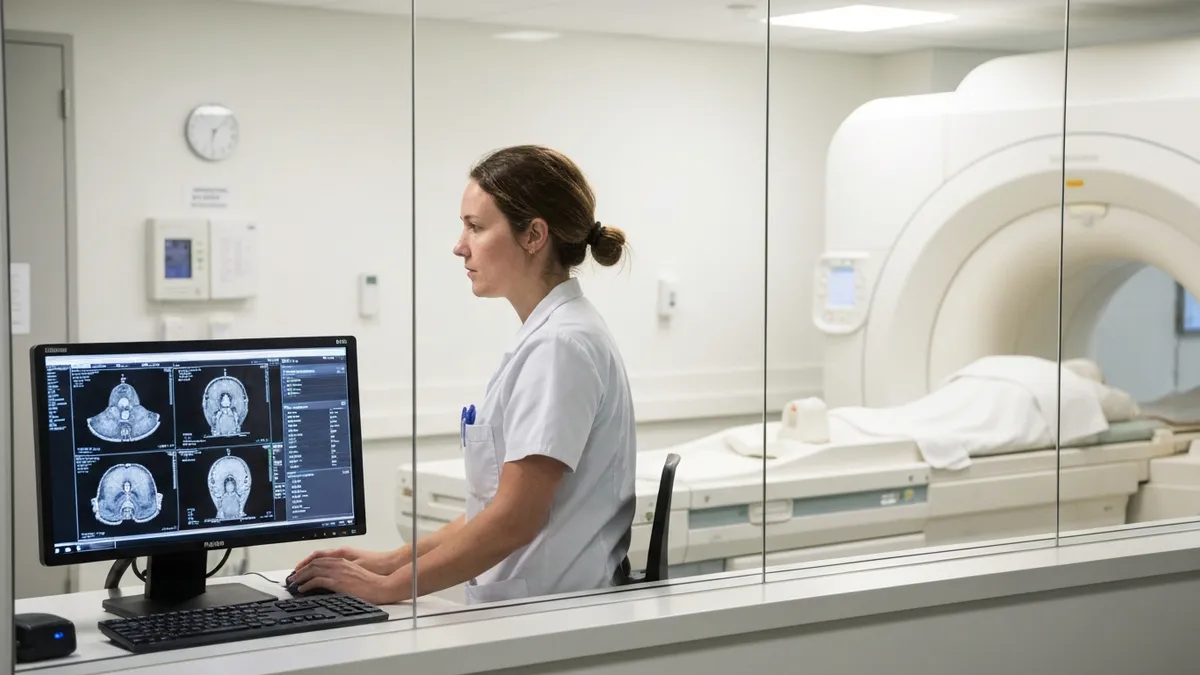
The static magnetic field never turns off, so unscreened ferromagnetic objects become dangerous projectiles. Always verify pacemakers, aneurysm clips, cochlear implants, and metallic foreign bodies, and confirm any device's MR-conditional limits before scanning. A single missed screening question can cause a serious or fatal incident.
Safety screening is the non-negotiable first step of every angiographic study, and it is tested relentlessly because the consequences of error are severe. The strong static magnetic field never turns off, so any ferromagnetic object brought into the room becomes a projectile. Patients must be screened for pacemakers, certain aneurysm clips, cochlear implants, and metallic foreign bodies in the eyes. Many modern implants are labeled MR conditional, meaning they are safe only under specific field-strength and gradient limits the technologist must verify before scanning.
Gadolinium-based contrast agents introduce their own considerations. While far safer than iodinated CT contrast for most patients, gadolinium carries a small risk of allergic-type reactions and, in patients with severe kidney impairment, a rare but serious condition called nephrogenic systemic fibrosis. For this reason facilities screen renal function before administering contrast and increasingly favor newer macrocyclic agents that release far less free gadolinium. Knowing which patients can safely receive contrast, and which non-contrast technique to substitute, is a recurring decision point on both exams and the job.
The specific absorption rate, or SAR, quantifies how much radiofrequency energy the patient's tissue absorbs as heat. Angiographic sequences with rapid pulses can push SAR toward regulatory limits, especially at 3 tesla. Scanners monitor SAR automatically and will pause acquisition if limits are exceeded, but technologists should understand the levers that reduce it, such as lengthening repetition time or reducing flip angle. Exam questions often pair SAR with field strength, expecting you to know that doubling the field roughly quadruples the energy deposited for the same sequence.
Acoustic noise is another safety factor patients feel directly. The rapidly switching gradients that encode spatial information produce loud knocking sounds that can exceed safe thresholds, so hearing protection is mandatory. Beyond comfort, the same gradient switching can stimulate peripheral nerves if changed too quickly, a sensation patients describe as twitching. Regulatory limits cap the rate of gradient change to prevent this, and technologists balance scan speed against patient tolerance, a trade-off that appears in questions about why a faster protocol was not simply chosen.
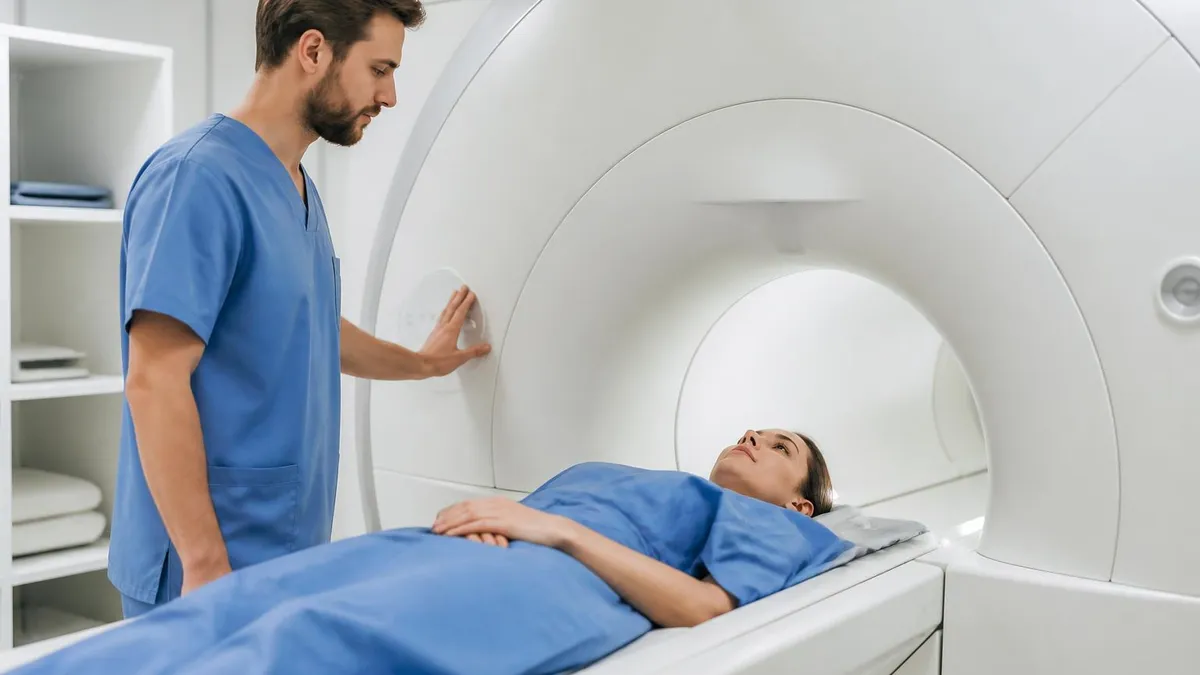
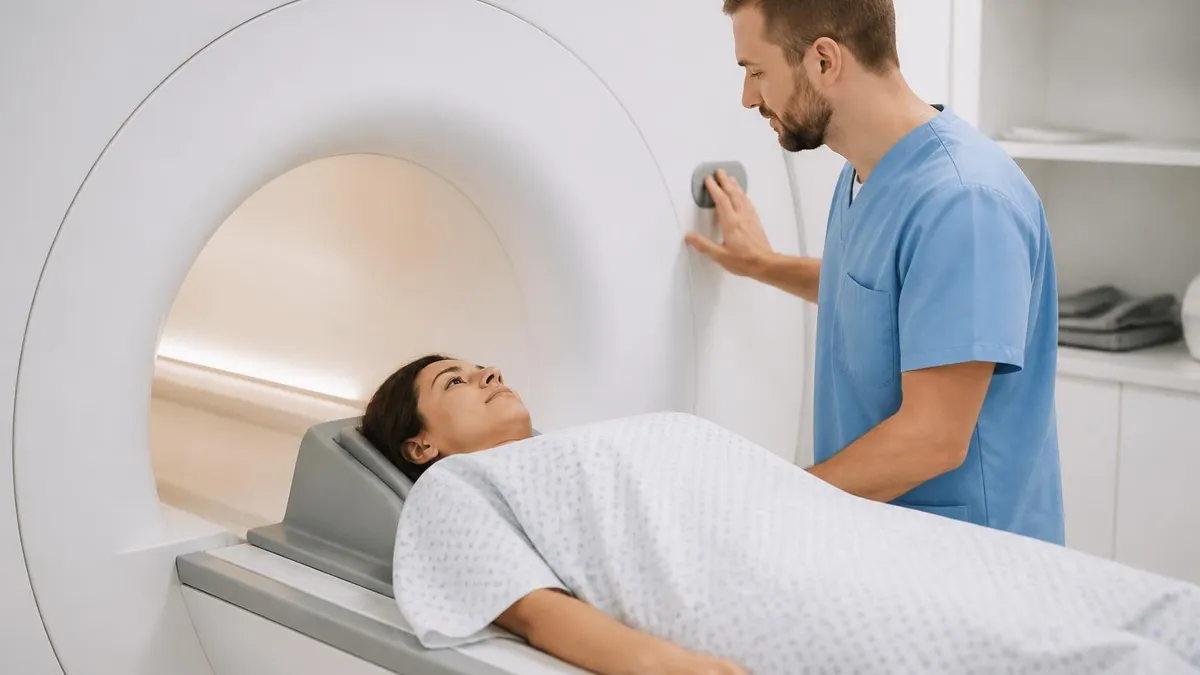
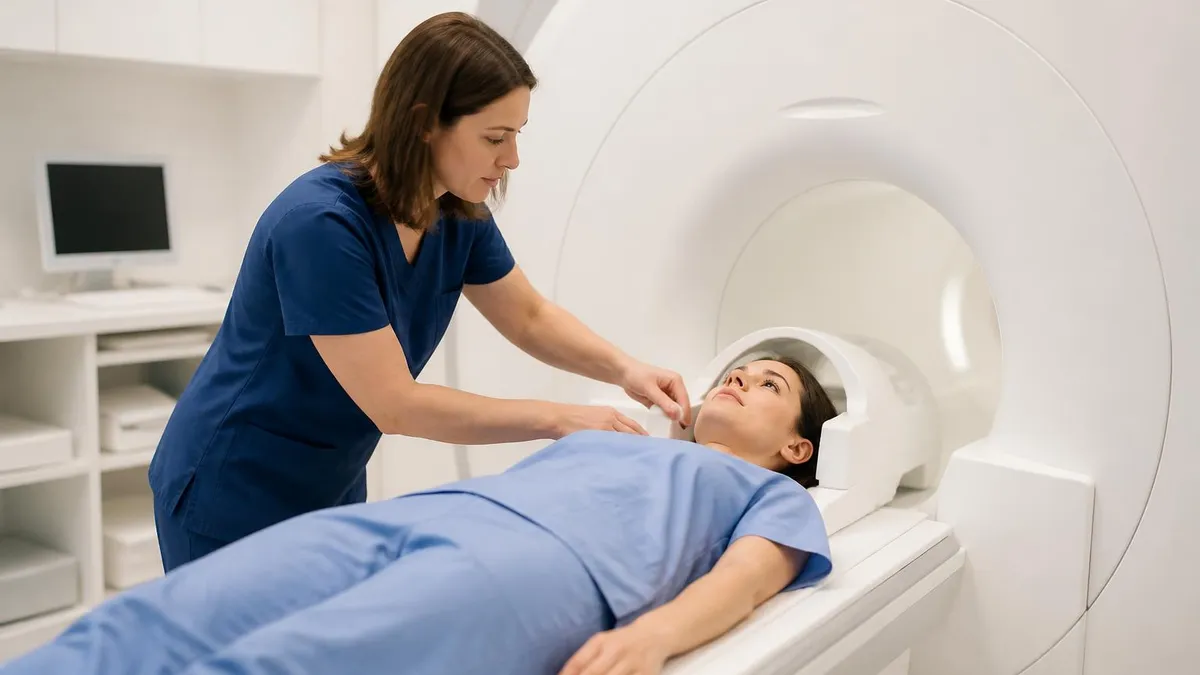
Claustrophobia and patient cooperation shape image quality more than beginners expect. A patient who cannot hold still produces motion artifact that can render an entire study non-diagnostic, wasting magnet time and contrast. Strategies include clear communication, prone or feet-first positioning, mild sedation, and the use of faster sequences or wide-bore magnets. Because angiography often depends on precise breath-holds, coaching the patient through the timing is a genuine clinical skill, and questions sometimes test whether you recognize patient factors as the cause of a degraded image.
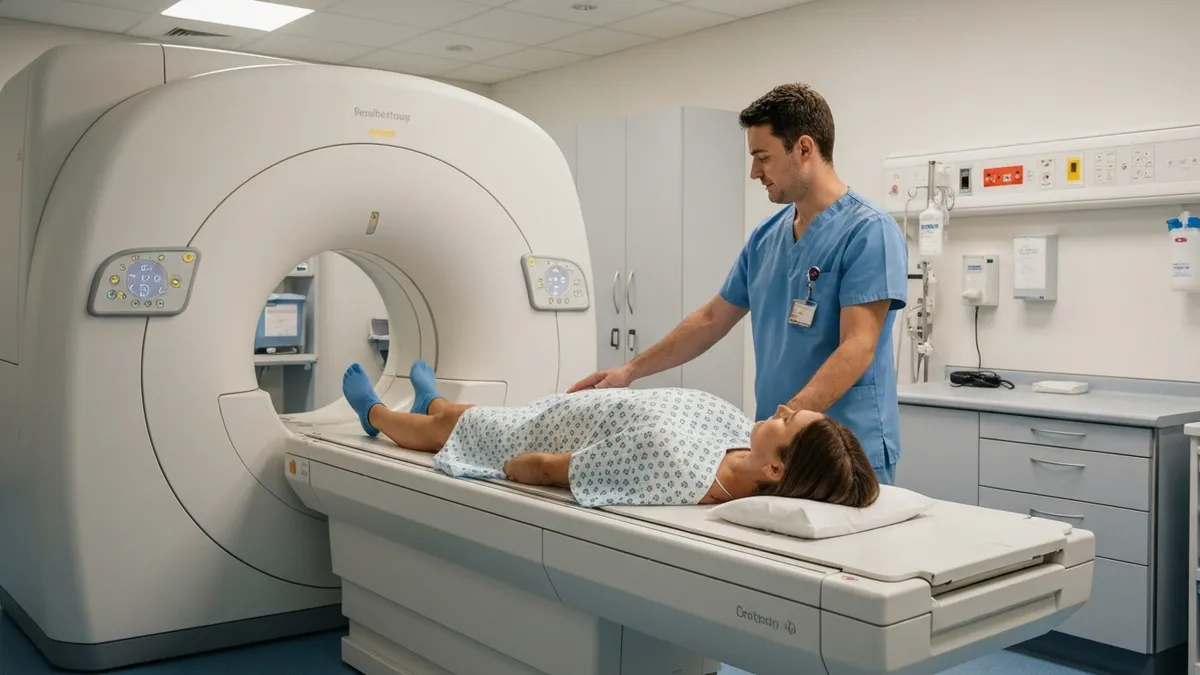
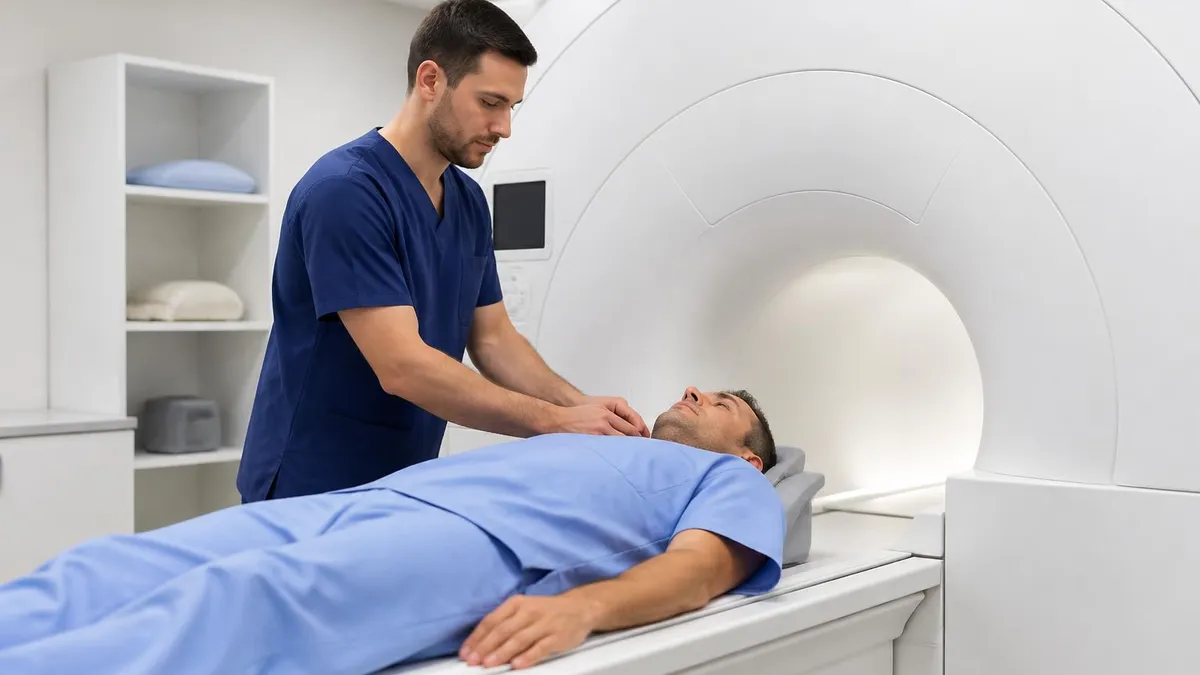
Pediatric and pregnant patients require special judgment. MRI uses no ionizing radiation, which makes it attractive in these populations, but gadolinium crosses the placenta and is generally avoided in pregnancy unless the benefit clearly outweighs the risk. Sedation considerations, smaller anatomy, and the need for non-contrast techniques all come into play. Reviewing how protocols adapt for these groups, perhaps alongside a refresher on the mria hardware itself, rounds out the safety knowledge most certification blueprints expect you to demonstrate.
Documentation closes the safety loop. Every screening form, contrast dose, and adverse reaction must be recorded, and the technologist signs off that the patient was cleared for the field strength used. This paper trail protects patients and staff alike and supports quality audits. On the exam, expect at least a few questions framed around proper documentation and the chain of responsibility, because regulators and accreditation bodies treat these records as evidence that a safe, repeatable process was genuinely followed.
With the science covered, the final stretch is about studying efficiently so all this knowledge survives exam-day pressure. Start by mapping the test blueprint to the topics in this guide, then rate your confidence in each area honestly. Spend the most time where weakness and exam weight overlap rather than rereading what you already know. This targeted approach beats marathon review sessions because it concentrates effort where each hour buys the largest score improvement, which is precisely how high scorers allocate their limited preparation time.
Active recall should be the backbone of your routine. After reading a section, close the material and write down everything you remember, then check for gaps. Convert recurring facts into flashcards, especially the paired relationships this subject loves, such as VENC and aliasing, turbulence and overestimated stenosis, or field strength and SAR. Spaced repetition software schedules these cards so you review them just before forgetting, which research consistently shows produces far stronger long-term retention than cramming the night before a test.
Practice questions are not just a final check; they are a primary learning tool. Every wrong answer reveals a misunderstanding you can fix while it still costs nothing. Work through the free quizzes linked throughout this article, then review not only why the correct answer is right but why each distractor is wrong. That second habit builds the discriminating judgment exams reward, because most difficult items hinge on telling two plausible options apart rather than recalling an isolated fact in a vacuum.
Image interpretation demands its own dedicated practice. Collect labeled examples of normal and abnormal angiograms and quiz yourself on identifying vessels, spotting stenosis, and naming artifacts. Time yourself, because image questions on the real exam come with a clock. Train your eye to follow the same systematic search pattern every time so that under pressure you do not skip a region. A consistent routine turns intimidating picture questions into a familiar checklist you can execute almost automatically.
Manage the logistics of test day deliberately. Confirm your appointment, gather your identification, and plan to arrive early so stress does not erode focus. The night before, prioritize sleep over last-minute cramming, since a rested brain retrieves information far more reliably than an exhausted one stuffed with fresh but shaky facts. Eat a normal breakfast, hydrate, and bring water if permitted. These unglamorous details protect the months of preparation you have already invested from being undermined in a single morning.
During the exam itself, pace yourself and use a simple strategy for hard items. Answer everything you know quickly to bank those points, flag uncertain questions, and return to them with the time you saved. Read each stem carefully for qualifiers like except, most, or least, which flip the meaning of an otherwise familiar question. Eliminate clearly wrong options first to improve your odds when you must make an educated guess rather than leaving an answer blank.
Finally, think about your trajectory beyond this single exam. The reasoning skills you build here transfer directly to clinical work and to advanced credentials down the road. If a career in imaging appeals to you, explore the demand and earning potential outlined in our guide to mria career paths once you pass. Treat this certification not as a finish line but as one well-marked milestone on a longer professional journey, and let that perspective keep your motivation steady through the final push.
MRI Questions and Answers
About the Author

Medical Laboratory Scientist & Clinical Certification Expert
Johns Hopkins UniversityDr. Sandra Kim holds a PhD in Clinical Laboratory Science from Johns Hopkins University and is certified as a Medical Technologist (MT) and Medical Laboratory Scientist (MLS) through ASCP. With 16 years of clinical laboratory experience spanning hematology, microbiology, and molecular diagnostics, she prepares candidates for ASCP board exams, MLT, MLS, and specialist certification tests.
Join the Discussion
Connect with other students preparing for this exam. Share tips, ask questions, and get advice from people who have been there.
View discussion (8 replies)