
MRI Zones Explained: Zone I Through IV Safety Classification, Access Control, and What Every Patient and Tech Must Know
Master MRI zones I through IV — who can enter, what dangers exist, and how facilities enforce access control to protect patients and staff. 📗
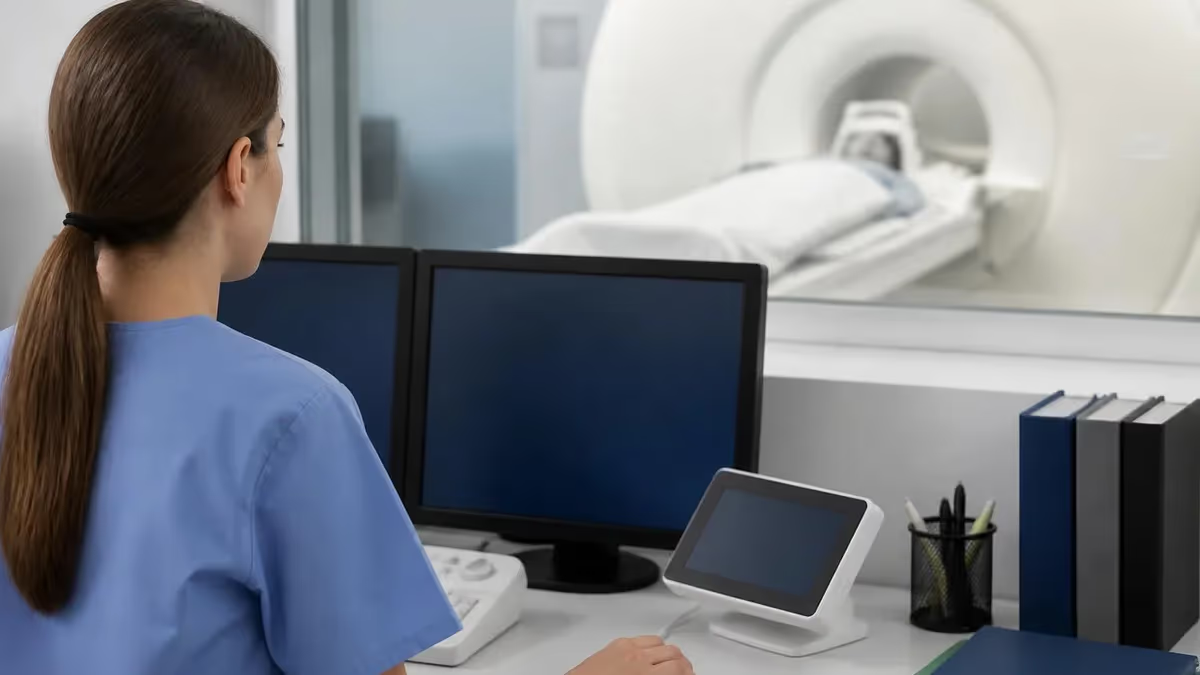
Understanding MRI zones is one of the most fundamental safety concepts in magnetic resonance imaging. The American College of Radiology (ACR) developed a four-zone classification system that divides MRI facilities into areas of progressively restricted access based on proximity to the magnet and the risk of ferromagnetic projectile hazards. Every MRI technologist, radiologist, nurse, and hospital administrator must be fluent in this framework because violations — even brief ones — can result in life-threatening injuries or fatalities. The system has been refined over decades of real-world incidents and is now the cornerstone of accreditation standards across the United States.
Zone I is the most publicly accessible area, typically the waiting room or hallway outside the MRI suite. Anyone can enter Zone I without screening, and no special training is required. This space serves as the first buffer between the general public and the high-field magnet environment deeper within the facility. Signage in Zone I should clearly direct visitors and explain the general nature of the MRI environment, preparing them for the screening process they will encounter before moving forward into restricted areas.
Zone II is where the transition from unrestricted to medically supervised access begins. In Zone II, patients and accompanying individuals are screened by trained MRI personnel who verify medical history, implant status, and the presence of any metallic objects. This zone typically includes reception desks, patient holding areas, and changing rooms equipped with lockers. The ACR guidelines specify that no patient should proceed past Zone II without completing a formal screening questionnaire reviewed by a qualified MRI technologist or radiologist.
Zone III represents a significantly elevated hazard level and is restricted to screened, MRI-safe personnel and patients who have completed the full screening protocol. Free ferromagnetic objects — including oxygen tanks, IV poles, gurneys, and even items as small as hair clips — can accelerate to dangerous velocities when introduced into the strong magnetic field that permeates Zone III. This zone is typically the control room corridor and the anteroom directly adjacent to the magnet room. Physical barriers such as locked doors with keypad or badge access are required to prevent unauthorized entry.
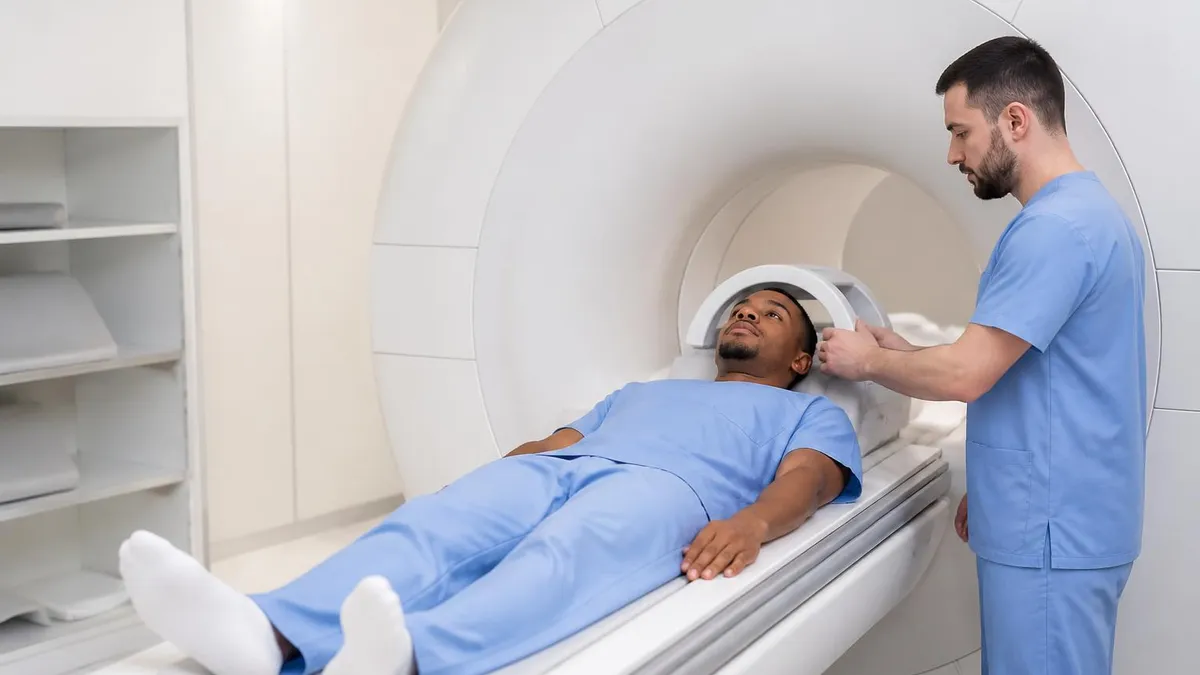
Zone IV is the magnet room itself — the most hazardous area in the entire facility. Inside Zone IV, the static magnetic field is always on, even when the scanner is not actively imaging. A common and deadly misconception among lay personnel is that the magnet can be simply switched off like a light.
Superconducting magnets used in clinical 1.5T and 3T scanners operate continuously, and the fringe field extends outward into Zone III. Only personnel and patients who have been fully screened and cleared may enter Zone IV, and even then, only under the direct supervision of Level 2 MRI personnel.
The ACR distinguishes between Level 1 and Level 2 MRI personnel based on training depth. Level 1 personnel have passed basic MRI safety training and may work in Zones I through III under supervision, but they require direct Level 2 oversight before entering Zone IV. Level 2 personnel have received more comprehensive MRI safety education and are authorized to make independent screening decisions, including determining whether a patient with a borderline implant can safely undergo scanning. Understanding this personnel classification is inseparable from understanding the zone system itself — they operate together as an integrated safety architecture.
For students preparing for the ARRT MRI registry examination, the zone classification system appears consistently across practice exams and real board questions. Mastering which zones require what level of screening, what physical barriers must be in place, and how personnel classifications map onto zone access privileges will give you a measurable advantage on test day.
This guide covers each zone in detail along with the clinical reasoning behind every restriction, helping you build the durable understanding needed to both pass the exam and protect patients throughout your career. Be sure to also review related imaging safety content such as mri zones considerations specific to spinal imaging protocols.
MRI Zone Safety by the Numbers
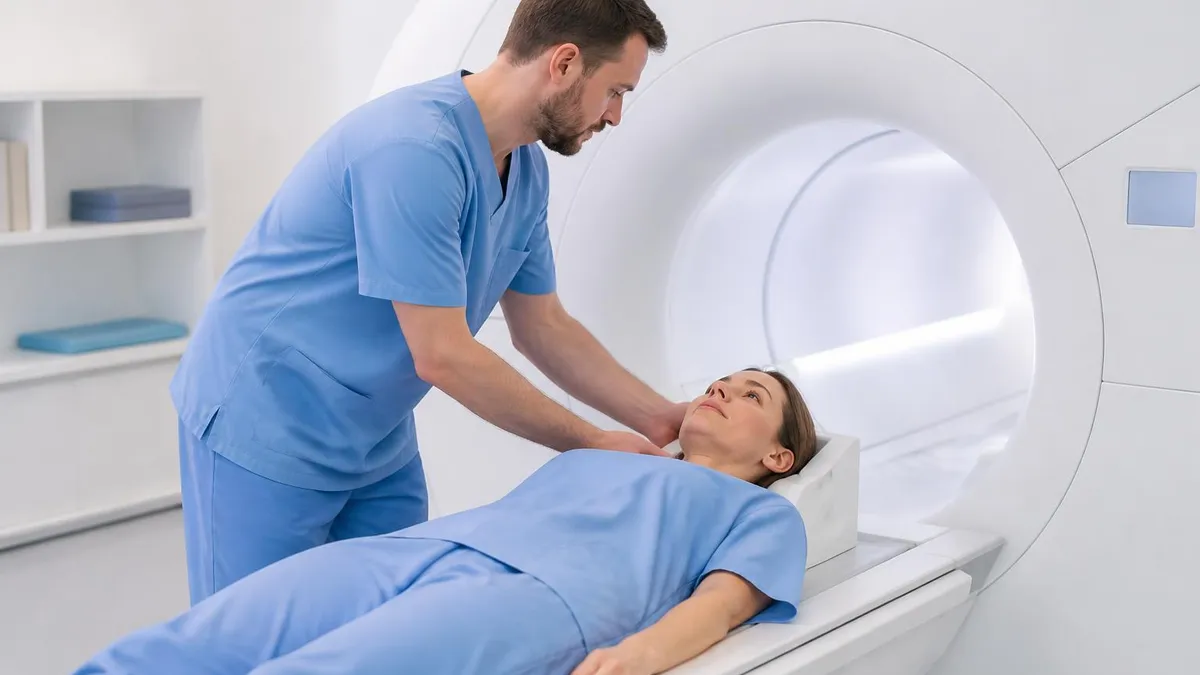
The Four MRI Zones: Classification Overview
Open to the general public with no screening required. Includes waiting rooms, hallways, and public lobbies adjacent to the MRI facility. Signage should orient visitors and begin preparing them for subsequent screening steps before they advance further into the suite.
Transitional area where trained MRI personnel conduct formal screening. Patients complete metal and implant questionnaires, change into facility gowns, and store personal items. No patient moves past Zone II without written screening clearance reviewed by a qualified MRI technologist.
Accessible only to screened personnel and pre-cleared patients. Contains the control room and anteroom. Physical access controls — locked doors, badge readers, or keypads — are mandatory. Free ferromagnetic objects pose significant projectile risk here due to proximity to the active magnetic field.
Highest-hazard area. The superconducting magnet is always energized. Only fully screened individuals under direct Level 2 supervision may enter. Even minute ferromagnetic items become dangerous projectiles. Emergency quench procedures and oxygen monitoring equipment must be immediately accessible within or adjacent to this zone.
The physics behind why Zone III and Zone IV carry such extreme risk are rooted in the behavior of ferromagnetic materials in the presence of a strong static magnetic field. Unlike paramagnetic or diamagnetic materials, ferromagnetic substances — iron, nickel, cobalt, and many common steel alloys — experience a force proportional to both the field strength and the field gradient.
Near a 1.5T or 3T superconducting magnet, this force can accelerate even a small object to lethal velocity within a fraction of a second. A standard oxygen cylinder, for example, has been recorded achieving projectile speeds exceeding 40 miles per hour when pulled into the bore of a clinical scanner.
The fringe field is a particularly misunderstood aspect of MRI zone safety. The fringe field refers to the portion of the magnetic field that extends outside the bore of the scanner and into the surrounding room — and in older facilities without adequate magnetic shielding, into adjacent corridors.
Modern scanners use active shielding coils to reduce the fringe field footprint, but even a shielded 3T magnet maintains a significant fringe field within the first several feet of the bore opening. This means that the hazard in Zone IV does not begin at the edge of the scanner table — it begins at the Zone IV boundary, which is typically defined by the 5-gauss line established during facility planning.
The 5-gauss line is a regulatory and clinical benchmark used in MRI facility design to define where pacemakers and other active implanted devices pose a risk of malfunction due to the external magnetic field. The ACR and the FDA both use the 5-gauss boundary as a planning threshold, and facility architects must ensure that this line does not extend beyond the walls of Zone IV into public or semi-public spaces.
In practice, this means that structural shielding — either through passive ferromagnetic shielding built into the walls or through the scanner's active shielding coils — must be designed to keep the 5-gauss line inside Zone IV at all occupiable elevations.
Zone IV safety is further complicated by the behavior of quench. A quench is the rapid and uncontrolled transition of the superconducting magnet coil from its superconducting state to a resistive state, releasing the enormous energy stored in the magnetic field and rapidly boiling off the cryogenic helium coolant.
During a quench, large volumes of helium gas are vented — ideally through dedicated quench pipes to the exterior of the building — but in the event of a quench pipe failure, the helium can displace oxygen within Zone IV and create an asphyxiation hazard within seconds. MRI technologists must know the location of the emergency quench button and must be trained to evacuate Zone IV immediately if a spontaneous quench occurs.
Claustrophobia management intersects with zone safety in a clinically important way. Sedated or anxious patients in Zone IV may move unexpectedly, potentially dislodging attached ferromagnetic monitoring equipment or IV accessories. All equipment brought into Zone IV must be verified as MR-conditional or MR-safe using the current ASTM International labeling standards. The legacy terms "MR-safe" and "MR-compatible" have been replaced by a three-tier system: MR Safe (no known hazards in all MRI environments), MR Conditional (safe under specified conditions), and MR Unsafe (poses unacceptable risks). Technologists must be able to interpret device labeling accurately before allowing any item into Zone IV.
Emergency response within Zone IV requires special protocols that differ substantially from standard hospital emergency procedures. When a patient experiences a medical emergency inside the magnet room, standard crash carts and defibrillators cannot be brought into Zone IV unless they have been specifically tested and labeled MR Conditional. Facilities must maintain MR-conditional emergency equipment staged in Zone III for rapid deployment, and all personnel involved in emergencies within Zone IV must have completed specific MRI emergency response training. The Joint Commission and ACR accreditation standards both require documented emergency drills for MRI facilities on a regular basis.
Understanding the interaction between implanted devices and the Zone IV environment is essential for MRI registry candidates. The major categories of concern include active implanted devices such as pacemakers and neurostimulators, passive metallic implants such as orthopedic hardware and surgical clips, and external devices such as insulin pumps and cochlear implant processors.
Each category presents a different risk profile: active devices may be reprogrammed or damaged, passive implants may heat or torque depending on their composition and orientation, and external devices must typically be removed before Zone IV entry. Registry examination questions frequently test candidates on the decision-making framework for borderline implant cases — precisely the clinical judgment that separates competent MRI technologists from those who may inadvertently harm patients.
MRI Practice Test Questions
Prepare for the MRI - Magnetic Resonance Imaging exam with our free practice test modules. Each quiz covers key topics to help you pass on your first try.
MRI Knowledge
MRI Exam Questions covering Knowledge. Master MRI Test concepts for certification prep.
MRI Physics
Free MRI Practice Test featuring Physics. Improve your MRI Exam score with mock test prep.
MRI Anatomy and Pathology
MRI Test Prep for MRI Anatomy and Pathology. Practice MRI Quiz questions and boost your score.
MRI Anatomy and Positioning
MRI Questions and Answers on MRI Anatomy and Positioning. Free MRI practice for exam readiness.
MRI Contrast Agents
Free MRI Quiz on MRI Contrast Agents. MRI Exam prep questions with detailed explanations.
MRI Patient Care and Positioning
MRI Practice Questions for MRI Patient Care and Positioning. Build confidence for your MRI certification exam.
MRI Personnel Classifications: Who Can Enter Which Zone
Level 1 MRI personnel have completed basic MRI safety training that covers the general hazards of magnetic fields, radiofrequency energy, and acoustic noise. They are authorized to work in Zones I through III and may accompany screened patients into Zone III, but they cannot independently supervise Zone IV entry or make final screening decisions for patients with complex implant histories. Examples of Level 1 personnel include hospital nurses, patient transporters, and radiology support staff who routinely work near the MRI suite.
The training required for Level 1 status is typically a structured educational course covering projectile risk, implant safety categories, the four-zone classification system, and the basics of emergency procedures. Many facilities require annual refresher training to maintain Level 1 designation. Without Level 1 clearance, no non-patient individual should be permitted past Zone I, regardless of their general medical credentials or seniority within the hospital hierarchy. A visiting cardiologist or anesthesiologist, for example, must still complete Level 1 training before accompanying a patient through Zone III.
Zone System Strengths and Practical Limitations
- +Provides a nationally standardized, evidence-based framework adopted by ACR, Joint Commission, and The FDA
- +Physical access barriers in Zone III and IV prevent accidental entry by unscreened individuals
- +Tiered personnel classification ensures that safety decisions are made only by appropriately trained staff
- +Clear zone boundaries simplify facility design and help architects plan adequate shielding from the outset
- +Supports liability protection for facilities that can document compliance with ACR zone protocols
- +Scalable to facilities of all sizes, from standalone outpatient MRI centers to large academic medical centers
- −Zone boundaries can be ambiguous in retrofitted or non-standard facility layouts not designed specifically for MRI
- −Level 1 training quality varies widely across institutions, creating inconsistent competency among non-MRI staff
- −The zone system does not automatically address the risk from non-ferromagnetic hazards such as RF burns or acoustic injury
- −Compliance can erode over time as staff turnover dilutes institutional safety culture without mandatory retraining
- −Emergency responders who have not received MRI orientation may unknowingly bring ferromagnetic equipment into Zone IV
- −Paperwork-heavy screening processes can create bottlenecks that pressure staff to abbreviate screening under high patient volume
MRI Zone Safety Compliance Checklist for Technologists
- ✓Verify that Zone III and Zone IV doors are locked and accessible only via badge, keypad, or direct Level 2 supervision at all times.
- ✓Confirm that all patients complete a written screening questionnaire and that results are reviewed by a Level 2 person before Zone IV entry.
- ✓Check that Zone II contains adequate changing facilities, lockers, and clear signage directing patients to remove all metallic items.
- ✓Ensure all equipment and monitoring devices brought into Zone IV carry current MR Safe or MR Conditional labeling verified against the manufacturer's latest IFU.
- ✓Review implant documentation for any patient with surgical hardware, active devices, or unclear metallic foreign body history before proceeding to scan.
- ✓Confirm MR-conditional emergency equipment (crash cart, defibrillator, oxygen) is staged in Zone III and accessible within 30 seconds.
- ✓Verify that the quench vent pipe is unobstructed and that quench button location is clearly marked and accessible from within Zone IV.
- ✓Document Level 1 and Level 2 training completion dates for all personnel and flag any staff approaching their annual retraining deadline.
- ✓Brief all non-MRI personnel and visitors entering Zone II or beyond using the standardized facility safety orientation script.
- ✓Conduct and document a quarterly zone access audit to confirm that physical barriers, signage, and personnel training records remain in compliance with ACR guidelines.
The Magnet Is Always On — Even When No One Is Scanning
The single most dangerous misconception about MRI Zone IV is the belief that the magnetic field can be turned off between patient scans. Superconducting clinical MRI magnets at 1.5T and 3T operate continuously and maintain full field strength 24 hours a day, 7 days a week. A quench — the only way to rapidly deenergize the magnet — is a costly emergency measure that can cause irreparable damage to the scanner and carries its own safety hazards. Zone IV must be treated as an active hazard zone at all times, regardless of whether a scan is in progress.
Real-world MRI zone violations have produced some of the most extensively studied safety incidents in medical imaging history. The 2001 death of six-year-old Michael Colombini at Westchester Medical Center — caused by an oxygen cylinder that was brought into Zone IV by a hospital worker who was unaware of the hazard — stands as the most widely cited sentinel event in MRI safety literature.
The cylinder accelerated through the air and struck the child in the head while he was inside the scanner. Subsequent investigations revealed that the hospital lacked clearly marked zone boundaries and had not provided adequate MRI safety training to the workers involved. This incident directly accelerated the adoption of the ACR zone classification framework as a national standard.
Institutional culture is one of the most significant and most difficult-to-quantify factors in MRI zone safety. Facilities with strong safety cultures report fewer violations, faster identification of potential hazards, and better staff compliance with screening protocols.
Conversely, facilities where time pressure, staff shortages, or senior authority figures bypass screening procedures tend to see a gradual erosion of safety practices that can persist for months before producing an incident. The phenomenon of "normalization of deviance" — where small, uncorrected safety shortcuts become the de facto standard — is well documented in both aviation and healthcare and is directly applicable to the MRI zone environment.
From an accreditation standpoint, both the ACR and The Joint Commission require documented zone policies as part of MRI facility accreditation. Surveyors will ask to review written policies defining zone boundaries, screening procedures, personnel training records, and emergency protocols. Facilities without these documents in place risk losing accreditation, which in turn affects reimbursement eligibility under Medicare and major private insurers. The financial incentive to maintain zone compliance is therefore significant in addition to the purely ethical imperative to protect patients.
Pediatric patients present unique challenges within the MRI zone framework. Children under age twelve typically cannot reliably self-report metallic implants, foreign body history, or prior surgeries, making caregiver interviews a mandatory supplement to the standard screening questionnaire.
Additionally, parents or guardians who accompany children into Zone IV for comfort or sedation monitoring must be fully screened themselves — including removal of ferromagnetic jewelry, body piercings, and hearing aids. Many facilities have developed pediatric-specific screening forms and pre-visit preparation materials to streamline this process and reduce the risk of last-minute Zone IV access denial after a family has already arrived for a scheduled appointment.
Patients with psychiatric conditions or cognitive impairments may be unable to complete the standard screening questionnaire accurately or may not understand instructions to remain still inside the bore. In these cases, Level 2 personnel must exercise heightened clinical judgment and may need to rely on medical records, caregiver reports, and prior imaging history to reconstruct a complete safety profile. Sedation protocols are often employed for this population, which introduces additional Zone IV hazards — specifically, the need for MR-conditional anesthesia equipment and the presence of anesthesia personnel who themselves must be screened before entering Zone IV.
The interplay between zone access policy and time-sensitive clinical situations deserves careful consideration. Stroke patients, for example, may require emergent MRI within a narrow therapeutic window where delays for comprehensive screening could worsen outcomes. ACR guidance acknowledges this tension and permits risk-benefit determinations by Level 2 personnel when a patient's clinical urgency genuinely outweighs the risk of abbreviated screening. However, these decisions must be documented contemporaneously, must involve the treating physician, and must never completely waive the basic ferromagnetic screening steps that protect not only the patient but everyone else in the Zone IV environment.
Continuing education for MRI technologists must go beyond initial certification to address evolving implant technologies, new scanner platforms, and updated ACR guidance. The rapid proliferation of MR Conditional pacemakers over the past decade, for example, has required technologists to develop nuanced expertise in reading device labeling, contacting device manufacturers for current specifications, and communicating with referring cardiologists about pre-scan programming requirements. The zone system provides the structural framework for safety, but ongoing education provides the clinical knowledge that allows technologists to apply that framework intelligently to a constantly changing patient population and device landscape.

No individual — regardless of professional title, seniority, or perceived urgency — may enter Zone IV without completing the standard ferromagnetic screening process under the supervision of a Level 2 MRI person. Physicians, surgeons, and executives are not exempt. Skipping or shortening screening to accommodate time pressure or professional status is one of the most common precursors to serious MRI incidents, and it represents a direct violation of ACR guidelines and facility accreditation requirements.
Preparing for the ARRT MRI registry examination requires a systematic approach to the zone classification system that goes beyond memorizing the four zone names. Exam questions in this domain tend to test clinical application — for example, asking what a technologist should do when a patient reveals a history of a metal fragment near the orbit after already entering Zone III, or how to handle a situation where an emergency physician rushes toward Zone IV with a standard laryngoscope during a patient crisis.
These scenarios require you to understand not just the definitions but the reasoning that underpins them, which is why content-rich study resources matter more than simple flash-card review.
The ARRT MRI registry examination is administered in a computer-adaptive format with 200 questions, 170 of which are scored. The patient safety and MRI safety domain accounts for a meaningful portion of the examination blueprint, and questions on zones, screening procedures, implant classification, and emergency protocols appear consistently across testing windows. According to the ARRT content specifications, candidates are expected to apply safety knowledge in realistic clinical scenarios rather than simply recall definitions — which mirrors the way that zone policies function in actual practice, where the technologist must adapt general rules to specific patient situations in real time.
Effective registry preparation for MRI zone content should include working through case-based practice questions that present ambiguous screening scenarios and ask you to identify the correct next action. For example: a patient arrives for a routine brain MRI and declares no implants on the screening form, but the scout image reveals a circular metallic density in the left orbit.
What should the technologist do? The correct answer involves immediately stopping the exam, exiting Zone IV with the patient, consulting the radiologist, and obtaining radiographic confirmation of the foreign body before proceeding — a sequence of decisions that is informed directly by zone policy and ferromagnetic hazard awareness.
Study strategies that work well for MRI zone content include creating scenario-based flashcards that pair a clinical situation with the correct zone policy response, reviewing the ACR white papers on MRI safety (freely available on the ACR website), and working through the ARRT practice examination booklet which contains sample questions across all content domains including safety. The key insight is that zone questions on the registry exam are rarely simple recall — they test your ability to reason about access, authority, and risk in dynamic clinical contexts, which makes active problem-solving practice more valuable than passive reading of definitions.
Time management during registry preparation for the zone and safety content domain is important because this material interacts with multiple other examination domains. Implant safety, for example, connects to scanner physics (understanding why specific absorption rate matters for MR Conditional devices), to patient care (how to manage a patient who becomes agitated inside Zone IV), and to quality management (how to document a near-miss incident involving a zone violation). Building a connected understanding of how zone policy fits into the broader MRI knowledge framework will make your preparation more efficient and your exam performance more confident.
Simulation and hands-on practice in a real MRI environment are irreplaceable complements to written study. If you have access to a clinical training site, ask to observe the full patient intake process from Zone I through Zone IV, paying particular attention to how the screening form is reviewed, how implant questions are handled, and what physical access controls are in place at the Zone III boundary.
Note any deviations from ideal ACR guidance and consider why they exist — sometimes legitimate facility constraints require adaptive solutions, and understanding those adaptations will sharpen your critical thinking for exam scenarios that present real-world complications rather than idealized textbook cases.
Finally, remember that passing the registry examination is the beginning of your commitment to zone safety, not the culmination of it. The patients you will care for throughout your career depend on your sustained vigilance about who enters Zone III and Zone IV, what they bring with them, and whether they have been properly screened.
The four-zone framework, combined with Level 1 and Level 2 personnel training and rigorous screening documentation, represents the most effective system currently available for preventing the catastrophic events that have occurred when these safeguards were bypassed. Treating every screening interaction as important — regardless of how routine it seems — is the professional standard that the best MRI technologists embody throughout their careers.
Practical tips for maintaining MRI zone compliance in a busy clinical environment begin with physical environment design. The most effective Zone III barriers are those that require an active, conscious action to open — a badge swipe, a keypad entry code, or a door that can only be opened from the Zone II side by a staff member.
Passive barriers such as signs or unlocked doors with warning labels are insufficient because they can be ignored or forgotten under pressure. If your facility uses passive barriers, advocate for hardware upgrades as part of your quality improvement responsibilities — accreditation surveyors are specifically looking for evidence that physical access controls are actively enforced.
Screening form design matters more than most facilities appreciate. A poorly designed screening questionnaire that uses unfamiliar medical terminology or fails to ask about specific implant categories — such as "have you ever had any type of electronic device implanted" rather than just "do you have a pacemaker" — will produce false negatives that pass through the Zone II checkpoint but represent real risks inside Zone IV.
If you have the opportunity to review or revise your facility's screening form, consult the most current ACR guidance and compare your form against the comprehensive question set recommended in ACR MRI Safety White Paper updates published in recent years.
The moment of Zone III entry for a new patient is an excellent opportunity to conduct a brief verbal reinforcement of the screening items most likely to be missed. Even patients who have completed a thorough written questionnaire sometimes recall additional information — a recently placed dental implant, a work-related metal fragment from years ago, a neuromodulation device that they did not recognize by the name used on the screening form — when they are asked conversationally by an attentive technologist.
This verbal reinforcement is not a replacement for the written screening form but a supplementary safety layer that has been credited with catching potential hazards in many facilities.
Documentation practices around zone access events — including near-misses, policy deviations, and incidents — are essential for institutional learning and regulatory compliance. Every time a ferromagnetic object is discovered at the Zone III threshold, every time a patient discloses an implant after the initial screening, and every time an unauthorized individual attempts to enter Zone III or IV, that event should be recorded in the facility's safety incident reporting system.
Aggregate analysis of these records over time can reveal patterns — particular shifts with higher violation rates, equipment types that are frequently mistakenly brought to Zone III, staff members who may need refresher training — that would be invisible without systematic documentation.
Communication between MRI technologists and referring clinical teams is a consistently underappreciated dimension of zone safety. Referring physicians sometimes order MRI examinations for patients with implants without fully considering whether those implants are compatible with MRI, leaving the technologist to discover the problem at Zone II or even Zone III. Building strong relationships with high-volume referring services — orthopedics, cardiology, neurosurgery — and providing them with updated implant compatibility resources reduces the frequency of last-minute cancellations and the pressure that such cancellations create to rush through screening on rescheduled appointments.
Zone safety culture is ultimately built through leadership modeling. When the senior radiologist on shift respects the screening process for themselves — submitting to questionnaire review, removing their own metallic items before entering Zone IV — they communicate to the entire team that zone protocol applies to everyone without exception.
Conversely, when authority figures bypass screening steps, even once, they erode the culture that protects patients. Technologists who work in environments where safety culture is weak should know that they have both the ethical responsibility and the legal standing to enforce zone access protocols, even when the individual seeking access outranks them on the hospital hierarchy.
As MRI technology continues to evolve — with ultra-high-field research scanners at 7T becoming more common and interventional MRI suites blurring the line between imaging and surgical environments — the zone classification framework will need to adapt. Interventional MRI in particular poses novel challenges because surgical personnel, equipment, and anesthesia teams must operate within Zone IV in real time, requiring surgical instruments certified as MR Safe or MR Conditional and specialized personnel training that goes beyond the standard Level 1 and Level 2 framework.
Staying current with ACR guidance updates, participating in professional society webinars on emerging safety challenges, and engaging with the broader MRI safety community through organizations like the American Board of Magnetic Resonance Safety (ABMRS) will keep you at the forefront of this evolving field throughout your career.
MRI Questions and Answers
MRI of Cervical Spine: Complete Guide to Imaging, Anatomy, Pathology, and Patient Preparation
Knee MRI Images: A Complete Guide to Reading, Understanding, and Interpreting Knee Scans
Ace Your Exam with MRI Practice Test 2026 Prep

MRI Tech School 2026 — Programs, Requirements, and What to Expect

MRI Procedure: What to Expect Before, During and After Your Scan
About the Author

Medical Laboratory Scientist & Clinical Certification Expert
Johns Hopkins UniversityDr. Sandra Kim holds a PhD in Clinical Laboratory Science from Johns Hopkins University and is certified as a Medical Technologist (MT) and Medical Laboratory Scientist (MLS) through ASCP. With 16 years of clinical laboratory experience spanning hematology, microbiology, and molecular diagnostics, she prepares candidates for ASCP board exams, MLT, MLS, and specialist certification tests.
Join the Discussion
Connect with other students preparing for this exam. Share tips, ask questions, and get advice from people who have been there.
View discussion (8 replies)