
MRI Schools Near Me: How to Find, Compare, and Choose the Best MRI Technologist Programs
🏆 Find MRI schools near me with accredited programs, clinical training, and ARRT exam prep. Compare costs, timelines, and admission requirements.
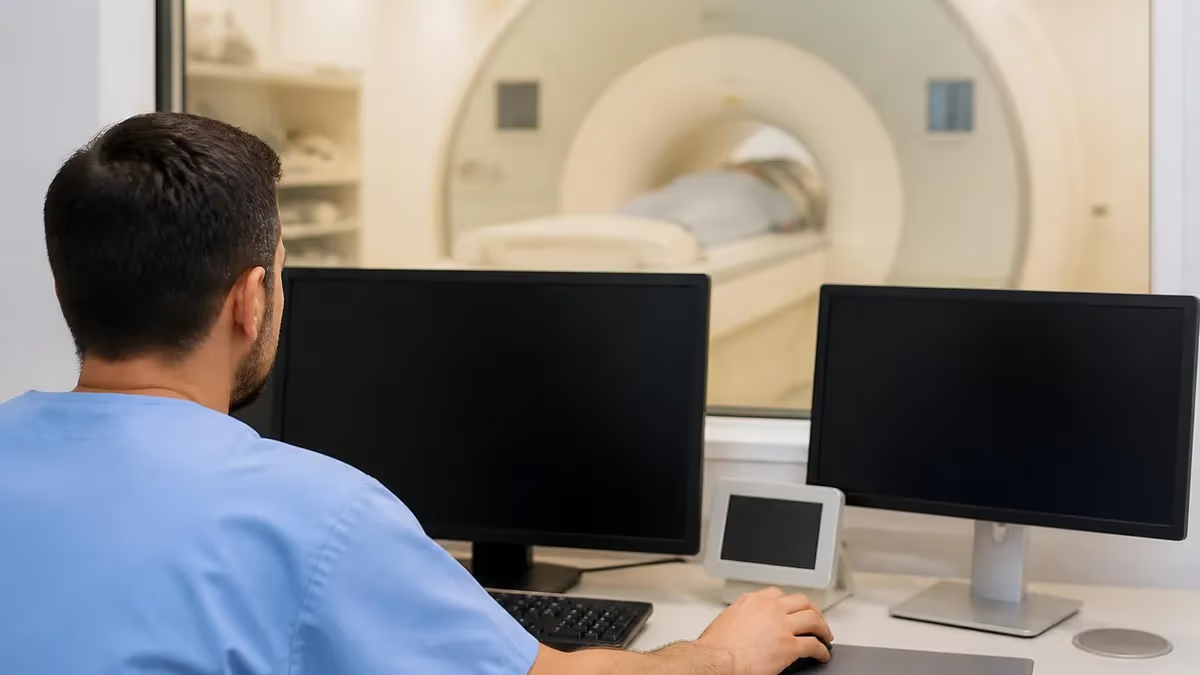
Searching for MRI schools near me is one of the most critical first steps you can take toward a rewarding career in medical imaging. Whether you are a recent high school graduate exploring healthcare career options or an experienced radiologic technologist looking to add MRI credentials, finding the right program close to home makes a significant difference in your success.
Local programs allow you to balance coursework with personal obligations, reduce commuting costs, and build professional connections within the healthcare community you already know. Proximity to clinical training sites also ensures you gain hands-on scanner time at hospitals and imaging centers in your area.
MRI technologists are highly skilled professionals who operate complex magnetic resonance imaging equipment to produce detailed cross-sectional images of the human body. Unlike X-ray or CT technologists who work with ionizing radiation, MRI professionals use powerful magnetic fields and radiofrequency pulses. This distinction makes MRI a particularly attractive specialty for those concerned about long-term radiation exposure. The technology itself continues to advance rapidly, with newer pulse sequences, higher field strengths, and AI-assisted protocols expanding the scope of diagnostic imaging every year.
The demand for qualified MRI technologists across the United States remains strong heading into 2026 and beyond. The Bureau of Labor Statistics projects employment growth of approximately seven percent for MRI technologists through the next decade, which is faster than average for all occupations. An aging population requiring more diagnostic imaging, expanded insurance coverage, and the ongoing shift from invasive procedures to noninvasive imaging all contribute to sustained job openings. Rural and suburban areas in particular face shortages of trained MRI professionals, creating excellent opportunities for graduates of local programs.
When evaluating MRI schools near your location, accreditation should be your very first consideration. Programs accredited by the Joint Review Committee on Education in Radiologic Technology, known as JRCERT, meet rigorous educational standards that ensure graduates are eligible to sit for the American Registry of Radiologic Technologists certification exam. Attending an unaccredited program can waste your time and money because many employers will not hire technologists who lack ARRT credentials. Always verify accreditation status directly on the JRCERT website before submitting any applications or paying tuition deposits.
Most MRI technologist programs in the United States are structured as either certificate programs, associate degree programs, or bachelor's degree programs. Certificate programs typically last twelve to eighteen months and are designed for students who already hold credentials in another imaging modality such as radiography or sonography. Associate degree programs run approximately two years and are ideal for students entering the field for the first time. Bachelor's degree programs take four years but often include broader coursework in patient care, management, and research methods that can accelerate career advancement into supervisory roles.
Geographic location matters more than many prospective students realize when choosing an MRI program. Programs located near large medical centers and teaching hospitals tend to offer superior clinical rotation experiences because students gain exposure to a wider variety of scan types, patient populations, and equipment manufacturers.
If you live in a metropolitan area, you may have access to multiple accredited programs, which allows you to compare tuition rates, clinical site partnerships, and program outcomes such as graduation rates and ARRT pass rates. Students in rural areas may need to consider hybrid or online-didactic programs that pair remote coursework with local clinical placements.
Throughout this comprehensive guide, you will learn how to identify accredited MRI programs in your area, understand the typical costs and financial aid options, compare program formats, prepare a competitive application, and position yourself for long-term career success after graduation. We will also cover the certification process, salary expectations by region, and practical tips for making the most of your clinical training. By the end, you will have a clear roadmap to follow as you pursue your goal of becoming a certified MRI technologist.
MRI Technologist Career by the Numbers
Steps to Enroll in an MRI Technologist Program
Research Accredited Programs Nearby
Verify Prerequisite Requirements
Prepare Financial Aid and Applications
Submit Applications and Interview
Complete Clinical Rotations
Pass the ARRT MRI Certification Exam
Accreditation is the single most important factor when evaluating MRI schools near your location. The Joint Review Committee on Education in Radiologic Technology, or JRCERT, is the recognized accrediting body for MRI technologist programs in the United States. JRCERT evaluates programs based on curriculum design, clinical education quality, faculty qualifications, student outcomes, and institutional resources. Graduating from a JRCERT-accredited program is a prerequisite for sitting the ARRT MRI certification exam, which is the industry-standard credential that virtually all employers require. Without accreditation, your degree or certificate may not be recognized.
There are three primary program formats available to students searching for MRI schools near me. Certificate programs are the fastest path, typically requiring twelve to eighteen months of focused MRI coursework and clinical rotations. These programs are designed exclusively for students who already hold credentials in radiography, nuclear medicine, or radiation therapy. Because you enter with foundational imaging knowledge, the curriculum focuses specifically on MRI physics, cross-sectional anatomy, pulse sequence design, and advanced scanning techniques without repeating general education courses.
Associate degree programs offer a more comprehensive educational experience, usually spanning two academic years. These programs accept students without prior imaging credentials and include general education courses alongside MRI-specific coursework. Students in associate degree programs benefit from a broader academic foundation that may include communication, psychology, and ethics courses relevant to patient interaction. Many employers view an associate degree favorably because it demonstrates commitment to a well-rounded education. Additionally, credits earned in an associate program often transfer toward a bachelor's degree if you decide to continue your education later.
Bachelor's degree programs in MRI or medical imaging sciences represent the highest level of entry-level education in this field. These four-year programs combine extensive clinical training with upper-division coursework in healthcare management, research methodology, and advanced imaging physics. Graduates of bachelor's programs are well positioned for leadership roles such as lead MRI technologist, department supervisor, or clinical coordinator. Some programs also prepare students for specialized certifications in cardiac MRI or breast MRI, which can significantly increase earning potential and expand your scope of practice.
Online and hybrid MRI programs have become increasingly popular, particularly for working professionals who cannot attend traditional on-campus classes. In a hybrid model, didactic coursework is delivered through an online learning management system while clinical rotations are completed at approved sites near the student's home. This format provides tremendous flexibility, but students must be self-disciplined and proactive about scheduling clinical hours. Verify that any online or hybrid program maintains JRCERT accreditation and has established clinical affiliations in your geographic area before enrolling.
Community colleges across the country serve as an excellent starting point for aspiring MRI technologists. Many two-year institutions offer JRCERT-accredited radiologic technology programs that qualify graduates to pursue MRI certification through a post-primary pathway. This route involves completing your radiography degree, gaining clinical experience as a registered technologist, and then passing the ARRT MRI specialty exam. While this pathway takes longer than a direct-entry MRI program, it provides the advantage of dual credentials in both radiography and MRI, making you significantly more versatile and employable in the job market.
When comparing programs, always request the most recent program effectiveness data directly from each school. JRCERT requires accredited programs to publish five-year averages for credential examination pass rates, job placement rates, and program completion rates. A program with consistently high pass rates above eighty-five percent and job placement rates above ninety percent is likely providing effective instruction and strong clinical training. Programs that fall significantly below these benchmarks may indicate issues with curriculum quality, faculty support, or clinical site availability that could affect your educational experience and career readiness.
MRI Practice Test Questions
Prepare for the MRI - Magnetic Resonance Imaging exam with our free practice test modules. Each quiz covers key topics to help you pass on your first try.
MRI Knowledge
MRI Exam Questions covering Knowledge. Master MRI Test concepts for certification prep.
MRI Physics
Free MRI Practice Test featuring Physics. Improve your MRI Exam score with mock test prep.
MRI Anatomy and Pathology
MRI Test Prep for MRI Anatomy and Pathology. Practice MRI Quiz questions and boost your score.
MRI Anatomy and Positioning
MRI Questions and Answers on MRI Anatomy and Positioning. Free MRI practice for exam readiness.
MRI Contrast Agents
Free MRI Quiz on MRI Contrast Agents. MRI Exam prep questions with detailed explanations.
MRI Patient Care and Positioning
MRI Practice Questions for MRI Patient Care and Positioning. Build confidence for your MRI certification exam.
MRI School Costs, Financial Aid, and Return on Investment
Tuition for MRI technologist programs varies dramatically depending on program type and institution. Certificate programs at community colleges or vocational schools typically range from eight thousand to fifteen thousand dollars in total tuition. Associate degree programs at public community colleges average between twelve thousand and twenty-five thousand dollars, while private institutions may charge thirty thousand to fifty thousand dollars or more. Always factor in additional costs such as textbook fees, clinical uniform requirements, background check processing, drug screening, liability insurance, and ARRT examination registration fees when calculating your total investment.
Out-of-state tuition at public institutions can double or even triple the cost compared to in-state rates, which is why searching for MRI schools near your home address is so financially advantageous. Many states also offer reciprocity agreements that allow residents of neighboring states to attend programs at in-state tuition rates. Contact the admissions office of each program you are considering to ask about residency requirements and any available tuition discounts for local students. Even small differences in tuition can amount to thousands of dollars in savings over the course of your program.
Pros and Cons of Attending MRI Schools Near You vs. Relocating
- +Lower living expenses when you stay in your current housing situation
- +Existing support network of family and friends helps during rigorous coursework
- +Familiarity with local hospitals creates networking and employment advantages
- +In-state tuition rates significantly reduce total program costs
- +Clinical rotation sites are conveniently located near your home
- +Potential to maintain part-time employment during the program
- −Fewer accredited MRI programs may be available in your immediate area
- −Local programs may have longer waitlists due to high community demand
- −Limited exposure to diverse patient populations at smaller clinical sites
- −Nearby programs may lack specialized tracks like cardiac or breast MRI
- −Rural locations may offer fewer post-graduation job opportunities
- −Program schedules may conflict with local employment obligations
Application Checklist for MRI Schools Near Me
- ✓Verify JRCERT accreditation status for every program on your list.
- ✓Complete all prerequisite courses including anatomy, physiology, and medical terminology.
- ✓Submit your FAFSA application before the priority filing deadline.
- ✓Request official transcripts from all previously attended institutions.
- ✓Obtain two or three professional or academic letters of recommendation.
- ✓Write a compelling personal statement explaining your interest in MRI.
- ✓Complete required health screenings including immunizations and tuberculosis testing.
- ✓Pass a criminal background check and drug screening as required by clinical sites.
- ✓Schedule and attend program interviews or information sessions.
- ✓Prepare a backup plan by applying to at least two or three programs simultaneously.
Clinical Hours Are the Differentiator
Programs that offer more than 1,000 clinical hours consistently produce graduates with higher first-attempt ARRT pass rates and faster job placement. When comparing MRI schools, prioritize programs with extensive clinical partnerships at multiple hospitals and outpatient imaging centers. More scanner time during training directly translates to greater confidence and competence on day one of your career.
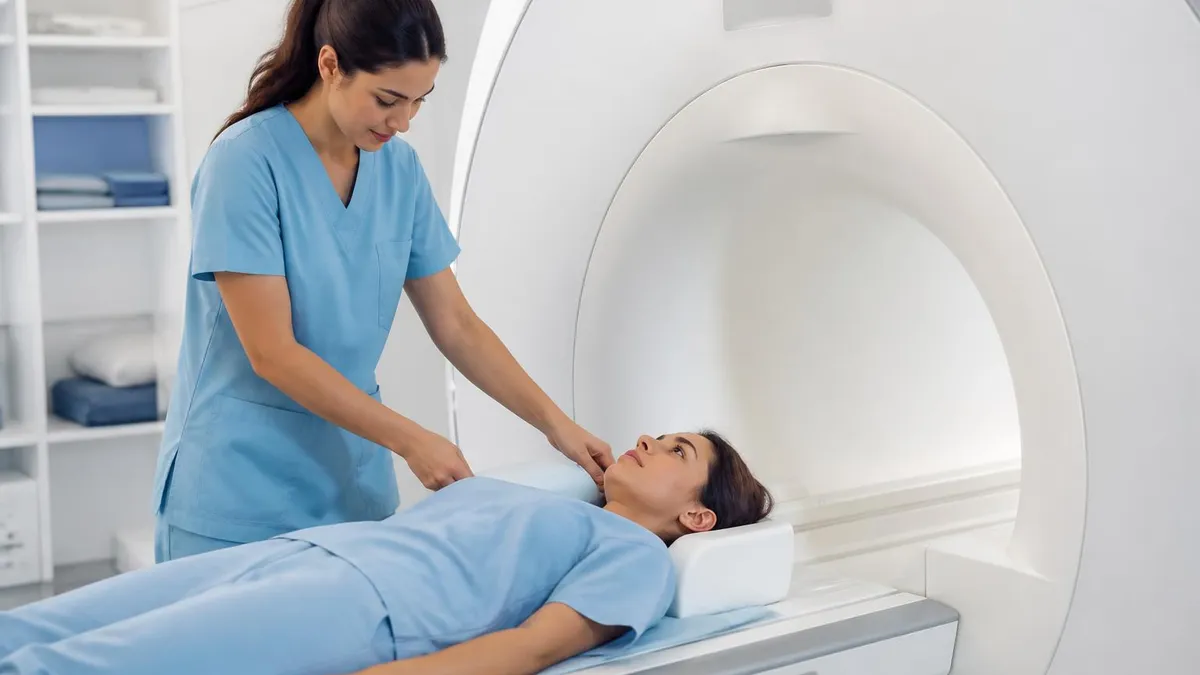
Clinical training is the heart of any MRI technologist program, and the quality of your clinical rotations will have a lasting impact on your career readiness. During clinical rotations, you will work alongside experienced MRI technologists at hospitals, outpatient imaging centers, and specialty clinics to learn how to operate MRI scanners in real patient care settings. Most accredited programs require between eight hundred and twelve hundred clinical hours, during which you will progress from observing procedures to independently performing scans under supervision. This hands-on experience is where textbook knowledge transforms into practical skill.
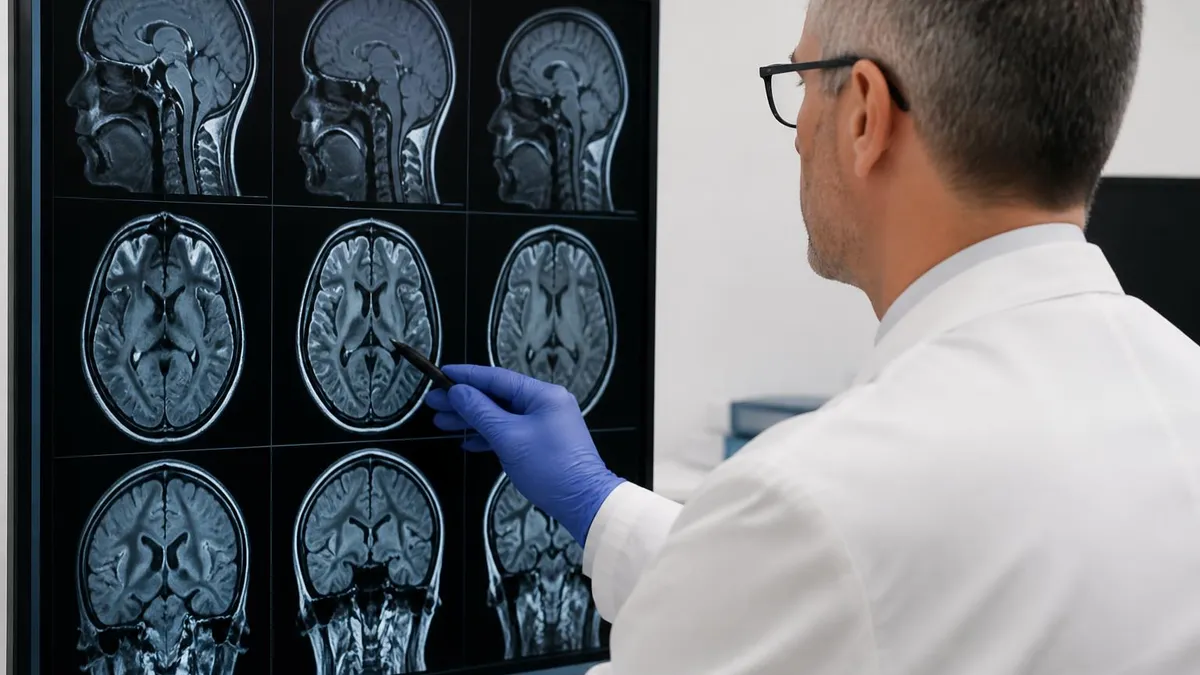
Your clinical education will cover a comprehensive range of MRI examinations spanning every major body region. You will learn to perform brain scans for stroke evaluation, spine imaging for disc herniation and spinal cord compression, musculoskeletal studies for ligament tears and fractures, abdominal scans for organ pathology, and cardiac MRI for heart function assessment. Each examination type requires specific coil selection, patient positioning, and protocol parameters. Mastering these technical details during clinical rotations is essential because employers expect new graduates to be competent in the most common scan types from their very first day on the job.
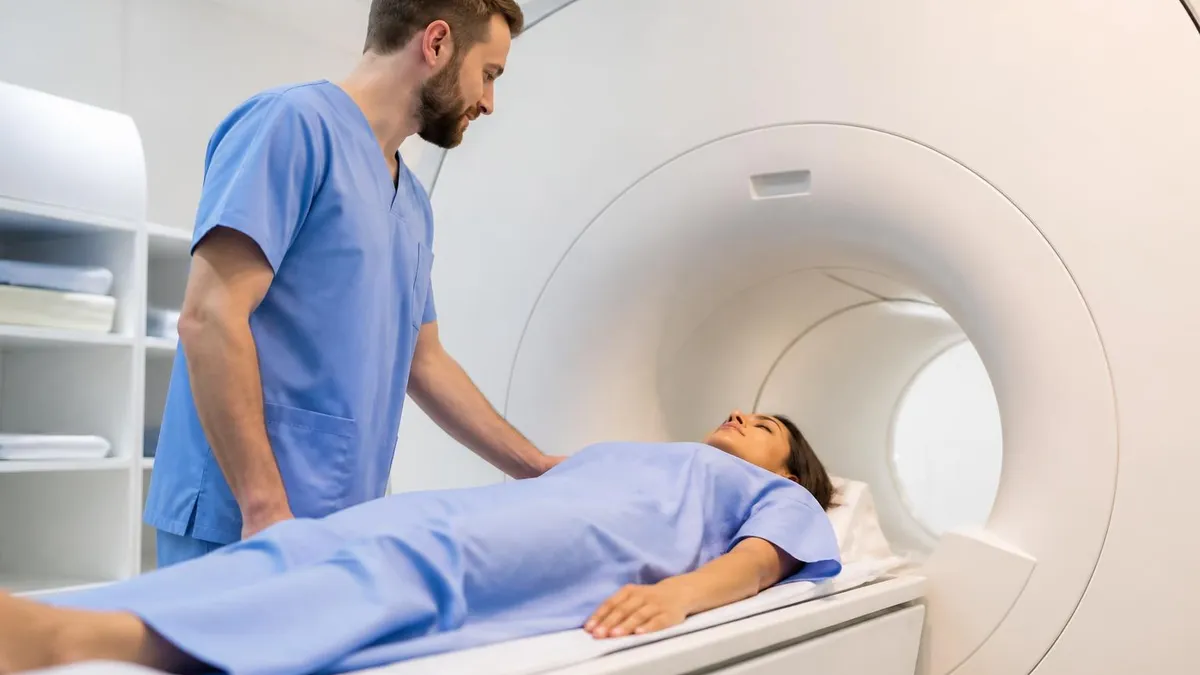
MRI safety training is a critical component of your clinical education that you must take extremely seriously. The powerful magnetic field of an MRI scanner is always active, which means ferromagnetic objects brought into the scan room can become dangerous projectiles. During clinical rotations, you will learn thorough patient screening protocols to identify contraindications such as pacemakers, cochlear implants, metallic foreign bodies, and certain types of surgical hardware. You will also practice emergency procedures for managing adverse reactions to gadolinium contrast agents and responding to patients experiencing claustrophobia or medical emergencies inside the scanner bore.
Different clinical sites offer different learning experiences, and the best MRI programs rotate students through multiple facilities. A large academic medical center might expose you to complex neuroimaging cases, fetal MRI, and research protocols, while a community hospital provides high volumes of routine musculoskeletal and spine examinations. Outpatient imaging centers teach you to work efficiently with tight appointment schedules and diverse patient populations. By training at several locations, you develop adaptability and a broader clinical skill set that makes you attractive to potential employers regardless of the practice setting.
Patient communication skills are just as important as technical proficiency during your clinical training. Many patients arrive for their MRI examination feeling anxious about the enclosed scanner bore, the loud gradient noises, and the length of the procedure. You will learn to explain the examination process clearly, provide realistic time estimates, offer earplugs or headphones, and use verbal coaching techniques to help patients remain still throughout the scan. Pediatric and geriatric patients present additional communication challenges that require patience, empathy, and creative problem-solving to ensure diagnostic-quality images are obtained without sedation whenever possible.
Throughout your clinical rotations, maintain a detailed competency log that tracks every examination type you perform, the number of repetitions, and the feedback you receive from supervising technologists. Most programs require students to demonstrate competency in a specified number of examination categories before graduation. Going beyond the minimum requirements by volunteering for additional scan types, staying late to observe complex cases, and asking questions about protocol optimization will accelerate your learning and strengthen your resume. Clinical supervisors who observe your dedication and initiative often become valuable references during your job search.
Many MRI programs also incorporate simulation-based training using phantom scanning sessions and virtual MRI software to supplement real patient clinical hours. Simulation allows you to practice protocol setup, parameter adjustment, and artifact troubleshooting without the time pressure of patient care. Some advanced simulation platforms even replicate common scanner malfunctions and emergency scenarios. While simulation cannot fully replace real patient interaction, it provides a safe learning environment where mistakes become educational opportunities rather than patient safety concerns, which is especially valuable during the early stages of your clinical training.
Graduating from a non-JRCERT accredited MRI program may disqualify you from sitting for the ARRT MRI certification exam. Without ARRT credentials, most hospitals and imaging centers will not consider your application. Always confirm accreditation status directly on the JRCERT website before enrolling in any program, even if the school claims accreditation in its marketing materials.
After completing your MRI technologist program, the next milestone is earning your ARRT certification, which serves as the industry-standard credential recognized by employers across the United States. The ARRT MRI certification exam is a computer-based test consisting of approximately two hundred questions covering four major content areas: patient care and safety, imaging procedures, data acquisition and processing, and physical principles of MRI. You must pass this examination within three years of graduating from your accredited program, though most successful candidates take the exam within the first few months after graduation while the material remains fresh.
Preparation for the ARRT MRI exam should begin well before your graduation date. Many students find that forming study groups with classmates, using structured review courses, and completing hundreds of practice questions are the most effective preparation strategies. Focus your study efforts on the content areas where you feel least confident, and use practice exams to identify knowledge gaps. The ARRT provides a detailed content specification document on its website that outlines every topic eligible for testing, and this document should serve as your master study guide throughout your preparation period.
State licensure requirements vary significantly and can affect where you are eligible to practice after earning your ARRT certification. Some states require MRI technologists to hold a state-issued license in addition to national ARRT certification, while others accept ARRT credentials alone. A handful of states also require specific continuing education topics or additional examinations. Research the licensure requirements in your state and any neighboring states where you might consider working. Completing licensure paperwork promptly after passing the ARRT exam ensures you can begin your job search without unnecessary delays.
Salary expectations for newly certified MRI technologists depend heavily on geographic location, facility type, and shift availability. Metropolitan areas and states with high costs of living, such as California, New York, Massachusetts, and Washington, tend to offer the highest wages, often exceeding eighty-five thousand dollars annually for experienced technologists. Rural areas and southern states typically offer lower base salaries but may compensate with lower living costs, signing bonuses, and relocation assistance. Travel MRI positions, where technologists work short-term contracts at facilities experiencing staffing shortages, can pay exceptionally well with weekly rates often exceeding two thousand dollars plus housing stipends.
Career advancement opportunities for MRI technologists extend well beyond the scanner room. With experience and additional education, you can move into roles such as lead MRI technologist, quality assurance coordinator, clinical instructor, department manager, or MRI applications specialist for equipment manufacturers. Pursuing a bachelor's or master's degree in healthcare administration, medical imaging sciences, or a related field opens doors to higher-level management and academic positions. Some technologists also transition into MRI research roles at university medical centers, contributing to the development of new pulse sequences, contrast agents, and imaging biomarkers.
Continuing education is a requirement for maintaining your ARRT certification and staying current with the rapidly evolving MRI field. The ARRT requires certified technologists to complete twenty-four continuing education credits every two years. These credits can be earned through online courses, conference attendance, journal article reviews, and academic coursework. Many employers provide continuing education allowances and paid time off for professional development activities. Staying current with advances in three-tesla imaging, diffusion tensor imaging, MR spectroscopy, and artificial intelligence applications in MRI will keep your skills relevant and your career trajectory moving upward.
Networking within the MRI professional community is an often-overlooked strategy for career growth. Join professional organizations such as the American Society of Radiologic Technologists and the International Society for Magnetic Resonance in Medicine to access educational resources, job boards, and mentorship opportunities. Attend state and national conferences to learn about emerging technologies and connect with hiring managers. Building relationships with technologists, radiologists, and physicists in your area creates a professional network that can lead to job referrals, collaborative projects, and advancement opportunities throughout your career.
Making the most of your MRI education requires a proactive approach that extends beyond simply attending classes and showing up for clinical rotations. Start building good study habits from day one by reviewing lecture material the same evening it is presented, creating flashcards for MRI physics formulas and anatomical landmarks, and scheduling regular study sessions with classmates. Students who fall behind in MRI physics coursework often struggle to catch up because each new topic builds directly on previous concepts. Treating your program like a full-time commitment from the start will pay dividends when exam time arrives.
During your clinical rotations, seek out every opportunity to scan patients on different MRI platforms and field strengths. If your primary clinical site operates a specific manufacturer's scanner, ask your clinical coordinator about spending time at a site with a different brand. Familiarity with multiple platforms, whether Siemens, GE Healthcare, Philips, or Canon, makes you significantly more employable because you can adapt quickly to whatever equipment your future employer uses. Each manufacturer uses slightly different terminology and interface layouts, and exposure during training eliminates the steep learning curve you would otherwise face on the job.
Develop a strong understanding of MRI artifacts because troubleshooting image quality problems is a skill that separates competent technologists from truly excellent ones. Common artifacts such as motion ghosting, chemical shift, susceptibility distortion, aliasing, and zipper artifacts each have specific causes and solutions. Practice identifying artifacts on clinical images during your rotations and discuss correction strategies with your supervising technologists. When you can quickly recognize and resolve artifact issues during a scan, you demonstrate the kind of problem-solving ability that clinical managers value highly during the hiring process.
Time management is an essential practical skill that your MRI program may not explicitly teach but that you will need immediately upon entering the workforce. In clinical practice, MRI technologists often handle back-to-back patient appointments with strict time slots for each examination. Learning to work efficiently without sacrificing image quality or patient care is a balancing act that requires practice. During your clinical rotations, pay attention to how experienced technologists organize their workflow, prepare the scan room between patients, and handle unexpected delays or add-on examinations throughout the day.
Building a professional resume before graduation gives you a significant advantage in the job market. Include your clinical rotation sites, the types of examinations you have performed, any special procedures or advanced techniques you have learned, and the total number of clinical hours completed. Quantifying your experience with specific numbers, such as the number of brain scans or musculoskeletal examinations performed, provides hiring managers with concrete evidence of your readiness. If you have received any awards, completed additional certifications such as basic life support, or participated in departmental quality improvement projects, include those accomplishments as well.
Consider starting your job search at least two months before your expected graduation date. Many hospitals and imaging centers begin recruiting for entry-level MRI positions well in advance, and having your application in the pipeline early increases your chances of securing interviews before graduation. Attend career fairs hosted by your program or professional organizations, and create profiles on healthcare-specific job boards. If a particular employer or facility interests you, do not hesitate to reach out directly to the MRI department manager to inquire about upcoming openings and express your interest in joining their team.
Finally, remember that your first MRI position is the beginning of a long and potentially very rewarding career, not the final destination. Stay curious, remain open to feedback from colleagues and radiologists, and commit to lifelong learning. The MRI field evolves rapidly, and technologists who actively pursue new knowledge and skills will always be in demand. Whether your goal is to specialize in cardiac imaging, transition into MRI education, advance into management, or explore research opportunities, the foundation you build during your training program will support every step of your professional journey for years to come.
MRI Questions and Answers
MRI of Cervical Spine: Complete Guide to Imaging, Anatomy, Pathology, and Patient Preparation
MRI Medical Abbreviation: What MRI Stands For and Why It Matters
Knee MRI Images: A Complete Guide to Reading, Understanding, and Interpreting Knee Scans
ICD 10 Codes for MRI: Complete Guide to Abnormal MRI Coding, Documentation, and Reimbursement
Is Nickel Titanium MRI Compatible? A Complete Guide to MRI Safety Materials
Join the Discussion
Connect with other students preparing for this exam. Share tips, ask questions, and get advice from people who have been there.
View discussion (8 replies)