
MRI and Dental Implants Titanium: Safety, Risks, and What Patients Should Know in 2026 October
🎓 MRI and dental implants titanium safety explained: are titanium implants MRI-safe, what to tell your tech, artifact risks, and screening steps.
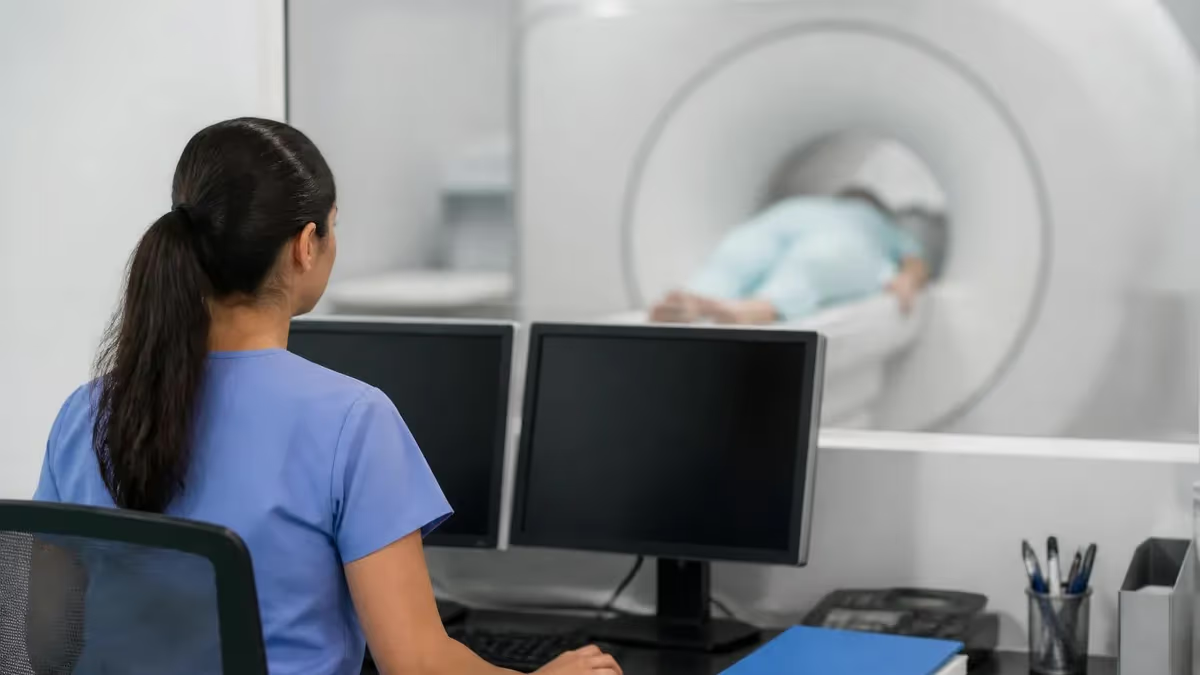
When patients schedule a magnetic resonance imaging scan, one of the most common concerns involves metal in the body, and the conversation around mri and dental implants titanium has become especially common as implant dentistry has exploded in popularity over the past decade. Titanium dental implants are now placed in roughly three million Americans every year, and many of those patients will eventually need an MRI for an unrelated condition. Understanding how the magnet interacts with that small titanium post is essential for both safety and image quality.
The short answer most radiologists give is reassuring: titanium dental implants are considered MRI-conditional or MRI-safe in nearly every modern clinical setting. Titanium is paramagnetic, meaning it has a very weak attraction to magnetic fields, and at the field strengths used in clinical MRI (1.5T and 3T), titanium implants do not heat dangerously, do not migrate, and do not pose a torque risk. Patients can almost always proceed with their scan without delay or modification.
That said, the conversation does not end there. While safety is generally not the concern, image quality can be. Titanium produces what radiologists call susceptibility artifact — a distortion of the magnetic field around the implant that creates dark or bright halos on the resulting images. For a knee MRI, this is irrelevant. For a head or neck MRI, especially one looking at the floor of the mouth, tongue base, or mandible, the artifact can obscure exactly the anatomy the radiologist is trying to evaluate.
Patients also frequently confuse different types of dental hardware. A titanium implant post is very different from a stainless steel orthodontic bracket, a magnetic denture attachment, or a cobalt-chromium partial denture framework. Each of these behaves differently in the magnet. Some pose no risk at all. Others can heat, distort images significantly, or in rare cases need to be removed before scanning. The screening form your MRI technologist hands you exists precisely to sort through these distinctions before you enter the scanner room.
The American College of Radiology, the FDA, and major implant manufacturers like Nobel Biocare, Straumann, and Zimmer Biomet all publish guidance confirming that commercially pure titanium and titanium alloy (Ti-6Al-4V) dental implants are safe at 1.5T and 3T. Most are also tested and labeled MRI-conditional up to 7T research scanners. The labeling matters: if you have documentation of your implant brand and lot, your MRI center can verify safety in seconds.
This guide walks through every angle of the MRI-titanium-implant question: how titanium behaves in a magnetic field, what artifact looks like and how to minimize it, what to tell your technologist, when to worry about other dental hardware, and how the rules differ for 3T versus 1.5T machines. Whether you are a patient preparing for a scan, a dental professional fielding questions, or an imaging student studying MR safety, you will leave with concrete, current answers grounded in the 2026 standard of care.
Before going further, it helps to anchor one foundational point: the term "MRI-safe" has a specific meaning under ASTM F2503 labeling. Truly MRI-safe means the device poses no known hazards in any MRI environment. MRI-conditional means safe under specified conditions (field strength, gradient, body part). MRI-unsafe means it should never enter the magnet room. Nearly all modern titanium dental implants fall in the MRI-conditional category, with conditions that are easily met by any standard clinical scan.
MRI and Titanium Dental Implants by the Numbers
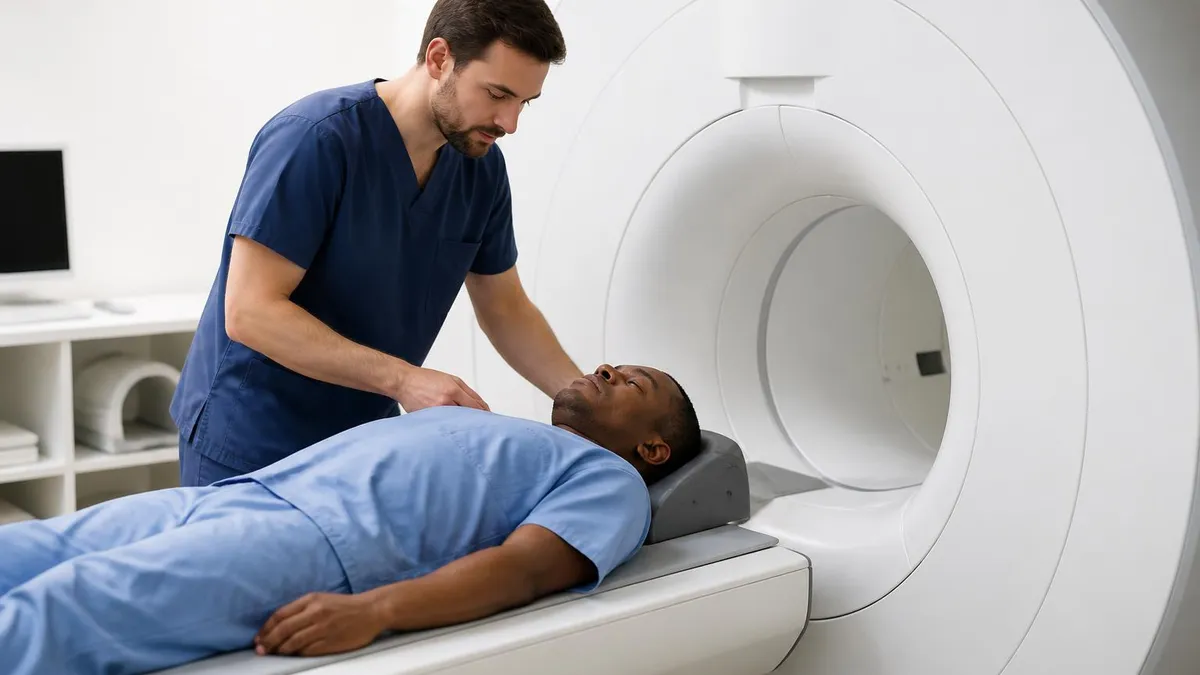
Why Titanium Is Considered MRI-Safe
Titanium has extremely weak magnetic susceptibility, roughly 1/1000th that of iron-based metals. The magnet exerts almost no pulling or twisting force on a titanium implant, even at 3 Tesla.
Dental implants fuse directly to bone over 3-6 months through osseointegration. Once integrated, even ferromagnetic forces could not displace them. Titanium adds another layer of safety on top of mechanical fixation.
Studies measuring titanium implant heating during routine head MRI sequences show temperature increases under 2°C, well within FDA limits of 4°C. Heating is not clinically relevant in dental implant patients.
Major implant brands carry ASTM F2503 MRI-conditional labeling for both 1.5T and 3T systems. Documentation is available through manufacturer websites and the patient's implant passport card.
Titanium dental implants have been studied in MRI since the 1990s. No case of implant displacement, dislodgement, or thermal injury has ever been documented in peer-reviewed literature at clinical field strengths.
The interaction between titanium and a powerful magnet is a question of physics, and understanding the physics demystifies most patient concerns. A clinical MRI scanner operates at either 1.5 Tesla or 3 Tesla — that is roughly 30,000 to 60,000 times stronger than the Earth's magnetic field. Inside that field, materials respond based on their magnetic susceptibility. Ferromagnetic materials like iron, nickel, and certain stainless steels are strongly attracted and pose real risks. Titanium, by contrast, is weakly paramagnetic, which is why it has become the implant material of choice.
What does "weakly paramagnetic" actually mean in the scanner? It means the implant feels a tiny pull, far too small to overcome the bone integration holding it in place. It means the implant does not absorb radio-frequency energy in a way that produces dangerous heating. And it means the implant does not create the kind of dramatic projectile risk that the dramatic safety videos online tend to feature. Titanium screws, plates, and dental posts have all been scanned millions of times without incident.
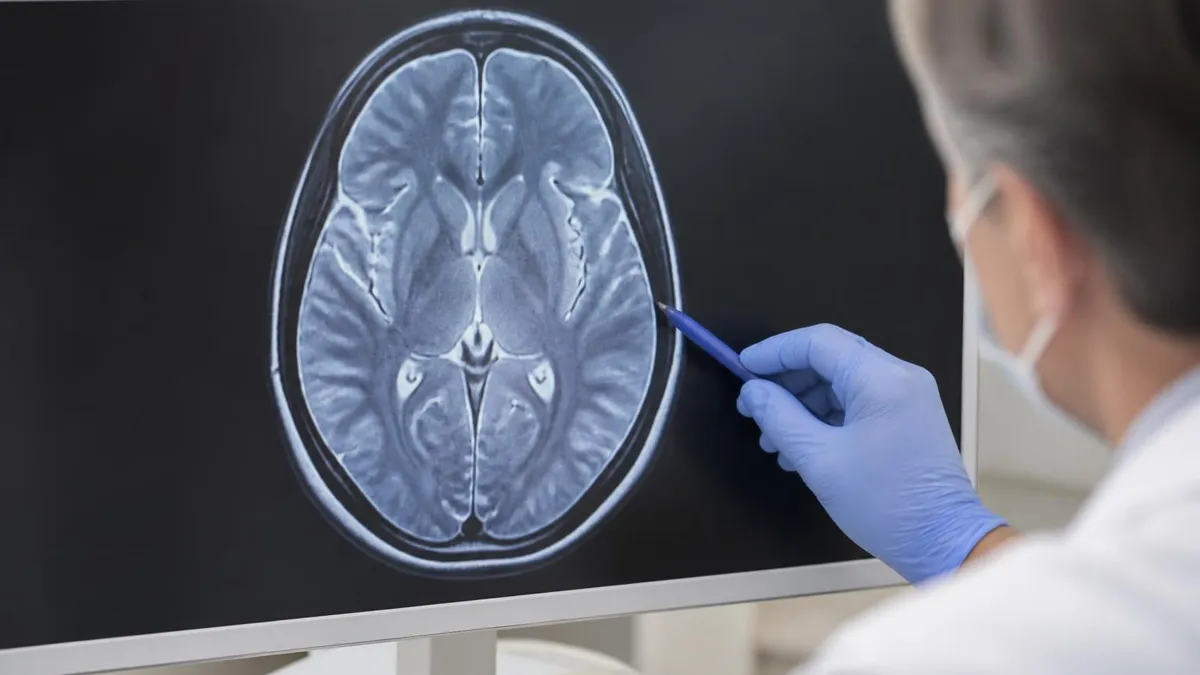
Where titanium does behave noticeably is in image distortion. The implant disrupts the local magnetic field homogeneity, creating what radiologists call susceptibility artifact. On standard sequences, this appears as a black void at the implant site surrounded by a halo of bright, geometrically distorted signal. The artifact typically extends 10-20 millimeters around each implant on 1.5T systems and proportionally larger on 3T. For most body MRIs this is meaningless. For dedicated head and neck imaging, it can be a real diagnostic challenge.
Field strength matters more than most patients realize. A 3T scanner produces roughly twice the artifact diameter of a 1.5T scanner around the same implant. This is one of the few clinical situations where a lower field strength may actually be preferred. If a patient with multiple anterior implants needs an MRI specifically to evaluate the floor of the mouth or anterior tongue, the radiologist may request a 1.5T scan with metal-artifact-reduction sequences rather than the default 3T protocol.
Modern scanners and sequences have made enormous progress in handling metal artifact. Techniques like MAVRIC (Multi-Acquisition Variable-Resonance Image Combination), SEMAC (Slice Encoding for Metal Artifact Correction), and VAT (View Angle Tilting) can reduce titanium artifact by 50-80%. These sequences add time to the scan but produce diagnostic images in regions that would otherwise be obscured. Not every facility runs them by default, so requesting them when relevant is worthwhile.
The patient experience itself is unchanged by the presence of titanium implants. There is no sensation of pulling, warming, or vibration at the implant site during a typical scan. Patients sometimes report mild taste sensations from other oral metals (the so-called "battery effect" between dissimilar metals in saliva), but pure titanium implants do not produce this. Anyone who has had a routine MRI with implants in place can attest: the scanner is loud, the scan is long, but the implants are entirely uneventful.
One final point on the physics: titanium alloy implants (Ti-6Al-4V) contain small amounts of aluminum and vanadium. Both are also non-ferromagnetic, so the alloy behaves nearly identically to commercially pure titanium in the magnet. Patients sometimes worry that "alloy" implies something less safe, but the opposite is true — the alloy is mechanically stronger while preserving all the magnetic properties that make titanium MRI-friendly. This applies to virtually every implant brand sold in the United States today.
MRI Practice Test Questions
Prepare for the MRI - Magnetic Resonance Imaging exam with our free practice test modules. Each quiz covers key topics to help you pass on your first try.
MRI Knowledge
MRI Exam Questions covering Knowledge. Master MRI Test concepts for certification prep.
MRI Physics
Free MRI Practice Test featuring Physics. Improve your MRI Exam score with mock test prep.
MRI Anatomy and Pathology
MRI Test Prep for MRI Anatomy and Pathology. Practice MRI Quiz questions and boost your score.
MRI Anatomy and Positioning
MRI Questions and Answers on MRI Anatomy and Positioning. Free MRI practice for exam readiness.
MRI Contrast Agents
Free MRI Quiz on MRI Contrast Agents. MRI Exam prep questions with detailed explanations.
MRI Patient Care and Positioning
MRI Practice Questions for MRI Patient Care and Positioning. Build confidence for your MRI certification exam.
MRI Screening for Dental Implants Titanium Patients
Before any MRI, you will complete a metal screening form that asks specifically about dental work. Disclose every implant, even if it was placed years ago. Bring your implant card or surgical record if you have one — these list the brand, model, and lot number that allow the technologist to verify MRI-conditional labeling in seconds. Most modern centers have this information catalogued in MRIsafety.com or similar databases.
If you do not remember the brand, your dentist can usually pull the record within minutes. Do not skip the disclosure simply because someone told you titanium is always safe. Screening also catches non-titanium components like magnetic denture attachments, which need different handling. Honest, complete reporting on the form takes thirty seconds and prevents both safety concerns and last-minute scan cancellations.
Getting an MRI with Titanium Dental Implants: Pros and Cons
- +No safety risk at standard 1.5T or 3T clinical field strengths
- +No need to remove implants or postpone the scan
- +FDA-cleared and ASTM-labeled for MRI compatibility
- +No sensation, heating, or movement during the exam
- +Documented decades of safe scanning experience
- +Compatible with both contrast and non-contrast protocols
- −Local image artifact extends 10-20mm around each implant
- −Head, neck, and sinus imaging quality may be reduced
- −3T scanners produce larger artifact than 1.5T
- −Metal-artifact-reduction sequences add scan time
- −Multiple full-arch implants can compound distortion
- −Occasionally requires CT as a complementary study
Pros and Cons at a Glance
| Pros | Cons |
|---|---|
| No need to remove implants or postpone the scan | Head, neck, and sinus imaging quality may be reduced |
| FDA-cleared and ASTM-labeled for MRI compatibility | Metal-artifact-reduction sequences add scan time |
| No sensation, heating, or movement during the exam | Multiple full-arch implants can compound distortion |
| Documented decades of safe scanning experience | Occasionally requires CT as a complementary study |
Pre-MRI Checklist for Patients with Titanium Dental Implants
- ✓List every dental implant, crown, bridge, and removable appliance on the screening form
- ✓Bring your implant identification card or recent dental records if available
- ✓Confirm brand and approximate placement date for each implant
- ✓Disclose any magnetic denture attachments or implant-supported overdentures
- ✓Mention orthodontic retainers, wires, or recently placed braces
- ✓Ask whether the scan targets the head, neck, or another body region
- ✓Request metal-artifact-reduction sequences if imaging near implants
- ✓Ask whether 1.5T or 3T is preferred for your specific clinical question
- ✓Remove all external metal including jewelry, hairpins, and hearing aids
- ✓Notify the technologist if you feel any focal heating during the scan
Titanium does not move, but it does distort.
The most important distinction in MRI safety for dental implants is the difference between safety and image quality. Titanium is mechanically and thermally safe in essentially every clinical scanner. However, it consistently produces susceptibility artifact that can affect diagnostic value for head and neck imaging. Always disclose, never delay — but ask whether artifact reduction sequences should be added.
Titanium dental implants are only one category of dental hardware patients may carry into the scanner, and the safety profile changes significantly with other materials. Stainless steel orthodontic brackets, for example, are ferromagnetic to varying degrees depending on the specific alloy. Most modern orthodontic stainless steel is austenitic (300-series) and only weakly magnetic, but older or budget appliances can contain enough nickel-iron content to produce noticeable artifact and, in rare cases, mild heating. Active orthodontic patients should always tell the technologist.
Magnetic denture attachments are a different category entirely. These small rare-earth magnets, often samarium-cobalt or neodymium, are embedded in the denture base or in the implant abutment to hold removable dentures in place. They are strongly ferromagnetic and can demagnetize permanently when exposed to MRI fields. Permanent demagnetization renders the denture nonfunctional and is not covered by warranty. Patients with magnet-retained overdentures should remove the prosthesis before entering the scan room.
Cobalt-chromium partial denture frameworks present another consideration. Cobalt-chromium is paramagnetic, similar to titanium, and is generally MRI-safe at 1.5T and 3T. However, it produces even larger artifact than titanium when imaged directly because of its higher magnetic susceptibility coefficient. Removable cobalt-chromium partials should always be taken out before scanning — both to reduce artifact and to protect the appliance from any unexpected interaction with patient positioning hardware.
Gold crowns and bridges are essentially MRI-invisible. Gold is diamagnetic, meaning it actually weakly repels magnetic fields, but at such a small magnitude that it produces almost no artifact and zero safety concern. Porcelain-fused-to-metal crowns vary depending on the underlying metal substructure — most use precious-metal alloys that are MRI-compatible, but some budget restorations from international sources may contain non-precious nickel alloys that warrant disclosure.
Endodontic posts and files left in root canals are typically stainless steel or nickel-titanium. The nickel-titanium (NiTi) used in modern endodontics is non-ferromagnetic and produces minimal artifact. Older silver points or stainless steel posts can produce more noticeable distortion. None of these poses a safety risk, but the radiologist appreciates knowing they exist when interpreting jaw imaging. Cone-beam CT records from your dentist can document exactly what hardware is in place.
Recently placed implants deserve special mention. Within the first six to twelve weeks after surgery, implants are still osseointegrating and have not yet achieved full mechanical lock with bone. Theoretical concerns about implant movement during MRI are not supported by clinical evidence — titanium's near-zero magnetic attraction means even a brand-new implant will not shift. However, many oral surgeons prefer to delay elective MRI for six to eight weeks simply for postoperative healing reasons unrelated to MRI safety.
Patients sometimes ask about zirconia implants, an alternative to titanium that has grown more popular over the past five years. Zirconia is ceramic, not metal, and is completely non-magnetic. It produces minimal MRI artifact and zero safety concern. If you are choosing between titanium and zirconia and MRI imaging is a recurring need (for example, in patients with multiple sclerosis or recurrent brain tumors), zirconia offers a meaningful image-quality advantage, though long-term clinical data is still maturing.
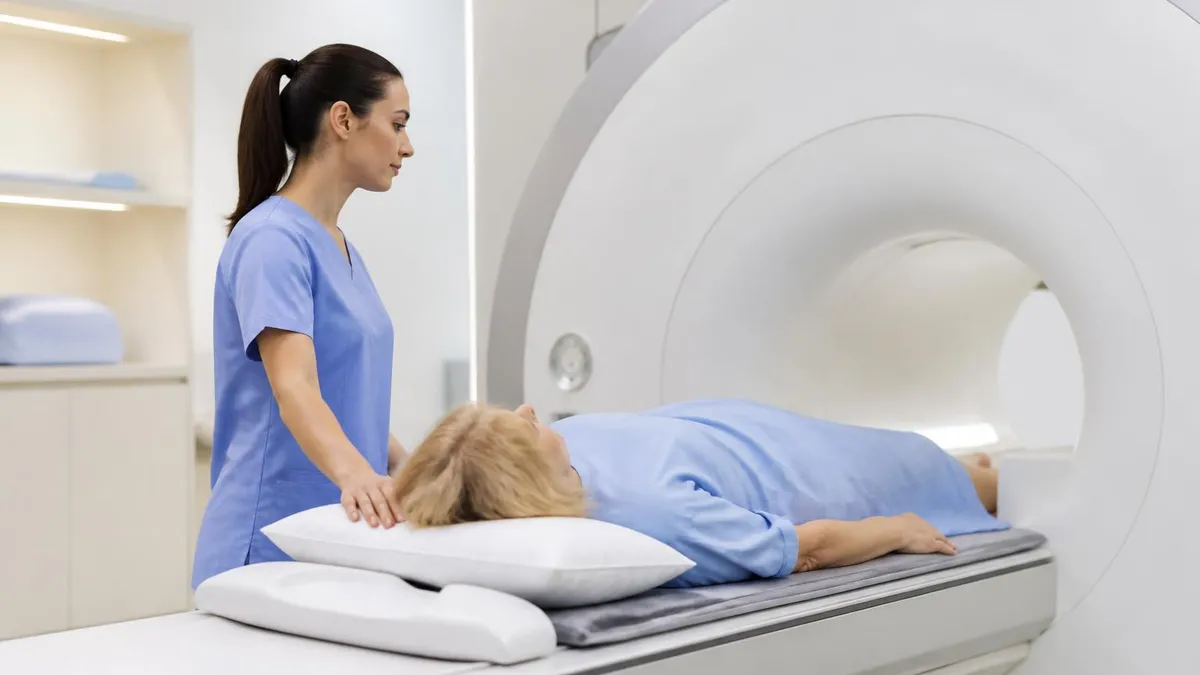
If you wear an implant-retained overdenture with magnetic attachments (common with locator-style or magnet-style retention), the magnets WILL demagnetize during MRI and your denture will no longer hold in place. This is permanent and requires replacement. Always remove magnet-retained dentures before the scan and disclose this hardware on your screening form.
For patients preparing for an MRI with titanium dental implants, the practical workflow is straightforward and worth rehearsing mentally before the appointment. Arrive thirty minutes early, bring photo identification along with any implant documentation, and expect to complete a two-page metal screening questionnaire. The form asks about surgical history, prosthetic devices, occupational metal exposure, and pregnancy status. Answer thoroughly — incomplete forms create delays far longer than the few extra minutes thorough answers take.
If you do not have your implant documentation, contact your dental office before the appointment. Most offices can email implant records, surgical notes, or a copy of your implant card the same day. Some patients carry a wallet-sized implant ID card provided by the surgeon at placement; this lists brand, model, length, and lot number. With this information, the MRI center can confirm conditional safety labeling within seconds using databases like MRIsafety.com or the manufacturer's online portal.
Communicate your clinical question to the technologist. If your neurologist ordered the MRI to evaluate a possible pituitary lesion, and you have full-arch upper implants, the artifact pattern may impact the lower margin of the pituitary view. Mentioning this allows the technologist to position you optimally and potentially add metal-artifact-reduction sequences. For non-head imaging — knees, shoulders, spine, abdomen — your dental implants are clinically irrelevant and no special handling is needed.
Hydration helps with any MRI experience, particularly contrast-enhanced studies. Drink water normally before the scan unless your appointment includes sedation or abdominal imaging with specific preparation. Avoid heavy meals immediately before lying flat for an extended period. Wear comfortable, metal-free clothing if possible; many centers provide gowns to eliminate the question entirely. Leave jewelry, watches, glasses, and credit cards in a secured locker outside the magnet room.
Ask about the noise. MRI scanners produce sounds reaching 100-110 decibels depending on the sequence — comparable to a chainsaw or rock concert. Ear plugs and headphones are standard, and many centers offer music streaming during the exam. If you have anxiety about enclosed spaces, mention it when scheduling; some centers offer wide-bore scanners or open MRI units that accommodate claustrophobic patients without compromising image quality for most clinical questions.
For technologists and imaging students, the most common mistake with dental implant patients is treating disclosure as a yes/no question. "Do you have implants?" is insufficient. Ask specifically about removable dentures, partial dentures, magnetic attachments, recent orthodontic work, and crown materials. A patient may genuinely not consider their snap-in denture to be "hardware," yet the rare-earth magnets inside it represent the single biggest MRI compatibility issue in modern dentistry. Specific questions yield accurate answers.
Finally, do not let general anxiety about MRI and metal stop you from completing medically necessary imaging. The overwhelming majority of dental implant patients complete MRI scans without incident, with diagnostically adequate images, and without any sensation referable to their implants. The conversation about mri and dental implants titanium has matured to the point where this is genuinely a non-issue for most clinical scenarios — with the well-understood exceptions of magnetic dentures and head-neck-specific imaging that this guide has covered in detail.
Beyond the immediate scan preparation, patients with titanium dental implants benefit from understanding how this information fits into their broader medical record. Keep a central document — paper or digital — listing every implanted device you carry, from dental implants to orthopedic hardware to cochlear devices. When you change physicians, switch insurance, or travel internationally, this document accelerates safe care during emergencies and routine imaging alike. A simple note in your phone health app meets this need for most patients.
Dental professionals can support patients further by providing implant documentation at the time of placement and reinforcing the message that titanium is MRI-compatible. Patients often hear conflicting information from well-meaning friends, outdated online forums, or media coverage of metal-related MRI incidents. A clear conversation at the implant consultation — "Yes, you can still get MRIs. No, your implants will not be a problem. Here is your implant card to bring with you." — resolves years of potential anxiety.
Imaging professionals can improve workflow by maintaining a department reference list of common implant brands and their MRI-conditional parameters. Nobel Biocare, Straumann, Zimmer Biomet, Dentsply Sirona, and BioHorizons collectively account for over 70% of US implant placements. Each publishes MRI labeling documentation in standardized format. Having quick-reference cards or laminated charts at the screening desk turns a potential workflow bottleneck into a thirty-second verification step.
Stay current with evolving guidance. The American College of Radiology Manual on MR Safety is updated periodically and remains the gold-standard reference for technologists and radiologists. The 2024 edition expanded its dental hardware section and reinforced the safety profile of titanium implants at 3T. As 7T scanners gain clinical traction over the next decade, expect updated guidance specifically addressing dental hardware at these higher field strengths — early studies suggest titanium remains safe but with proportionally larger artifact.
For students preparing for MRI registry examinations, mri and dental implants titanium represents a high-yield safety topic. Expect questions distinguishing MRI-safe from MRI-conditional labeling, identifying materials by their magnetic susceptibility behavior, and selecting appropriate sequences to minimize metal artifact. Understanding the underlying physics — paramagnetism, susceptibility, field homogeneity — rather than memorizing brand names produces better exam outcomes and better clinical judgment in practice.
Patients with implants who require frequent MRI monitoring deserve a coordinated care plan. Examples include patients with multiple sclerosis on disease-monitoring protocols, neuro-oncology patients with serial brain imaging, and pituitary adenoma patients with periodic re-imaging. In these cases, a single conversation between the dentist, radiologist, and ordering neurologist can establish optimal protocols up front — preferred field strength, preferred sequences, and any role for complementary CT — saving time and producing better diagnostic images for years to come.
The bottom line for every reader of this guide is the same: titanium dental implants and MRI are compatible. Safety is essentially never the concern. Image quality near the implants requires modest planning and occasional protocol adjustments. Disclosure, documentation, and dialogue between patient, dentist, and imaging team transform what was once a source of considerable anxiety into a routine, well-managed component of modern medical care. Whether you are scheduling your first MRI with implants or your fifteenth, the path forward is clear, evidence-based, and reassuring.
Sample MRI - Magnetic Resonance Imaging Practice Questions
Try these questions from our free MRI - Magnetic Resonance Imaging practice tests. The correct answer and an explanation follow each question.
What is the primary advantage of using a higher-relaxivity GBCA (e.g., gadobenate dimeglumine) compared to a standard-relaxivity agent?
- A. It can be used at a lower dose to achieve comparable enhancement
- B. It is completely renally safe at any dose
- C. It eliminates the need for dynamic imaging
- D. It crosses the blood-brain barrier more readily
Answer: A. It can be used at a lower dose to achieve comparable enhancement
Higher relaxivity means greater T1 shortening per unit concentration, so a lower molar dose can produce equivalent or superior enhancement compared to standard agents.
What is the effect of increasing the number of signal averages (NSA/NEX) on MRI image quality?
- A. SNR decreases proportionally
- B. SNR improves proportionally to the square root of NSA
- C. Spatial resolution increases
- D. Scan time decreases
Answer: B. SNR improves proportionally to the square root of NSA
Averaging multiple acquisitions improves SNR by a factor of √NSA, though it linearly increases scan time.
What is the term for the MRI safety classification that indicates a device has been tested and found safe under specified conditions?
- A. MR Safe
- B. MR Conditional
- C. MR Unsafe
- D. MR Compatible
Answer: B. MR Conditional
MR Conditional means the device poses no known hazards when used within the specific conditions (field strength, SAR, gradient limits) stated by the manufacturer.
A patient reports having a cardiac pacemaker. What is the standard MRI safety classification for most older pacemakers?
- A. MR Safe
- B. MR Conditional
- C. MR Unsafe
- D. MR Compatible
Answer: C. MR Unsafe
Most older pacemakers are classified MR Unsafe because the magnetic field can interfere with device function or cause heating.
Take the full MRI - Magnetic Resonance Imaging practice test
MRI Questions and Answers
MRI Medical Abbreviation: What MRI Stands For and Why It Matters
The History of MRI: From Discovery to Modern Medicine
Knee MRI Images: A Complete Guide to Reading, Understanding, and Interpreting Knee Scans
Noise of MRI Machine: Why MRI Scanners Are So Loud and What to Expect
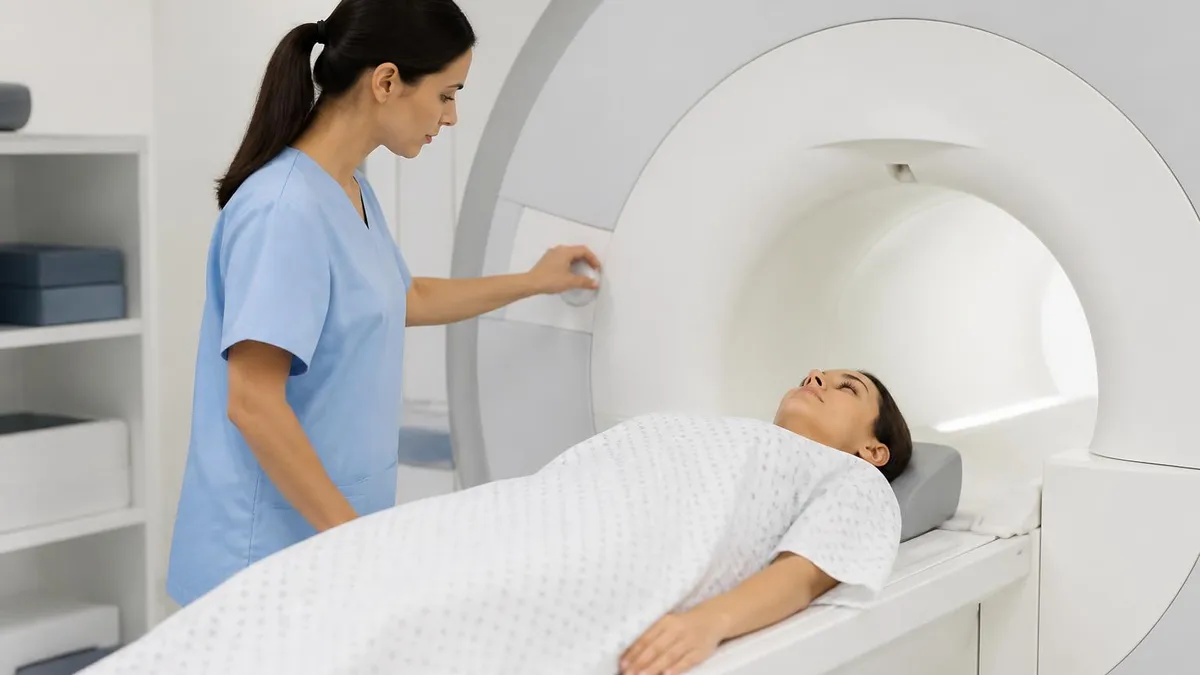
Full Body MRI Cost: What You'll Pay in 2026 and Why
About the Author

Medical Laboratory Scientist & Clinical Certification Expert
Johns Hopkins UniversityDr. Sandra Kim holds a PhD in Clinical Laboratory Science from Johns Hopkins University and is certified as a Medical Technologist (MT) and Medical Laboratory Scientist (MLS) through ASCP. With 16 years of clinical laboratory experience spanning hematology, microbiology, and molecular diagnostics, she prepares candidates for ASCP board exams, MLT, MLS, and specialist certification tests.
Join the Discussion
Connect with other students preparing for this exam. Share tips, ask questions, and get advice from people who have been there.
View discussion (8 replies)