
How Long for MRI Results: Timelines, Process, What Affects Speed, and How to Get Faster Reports
🔎 How long for MRI results? Typical 1-7 days. Factors affecting speed, the radiologist reading process, how to get faster results, and what to do while
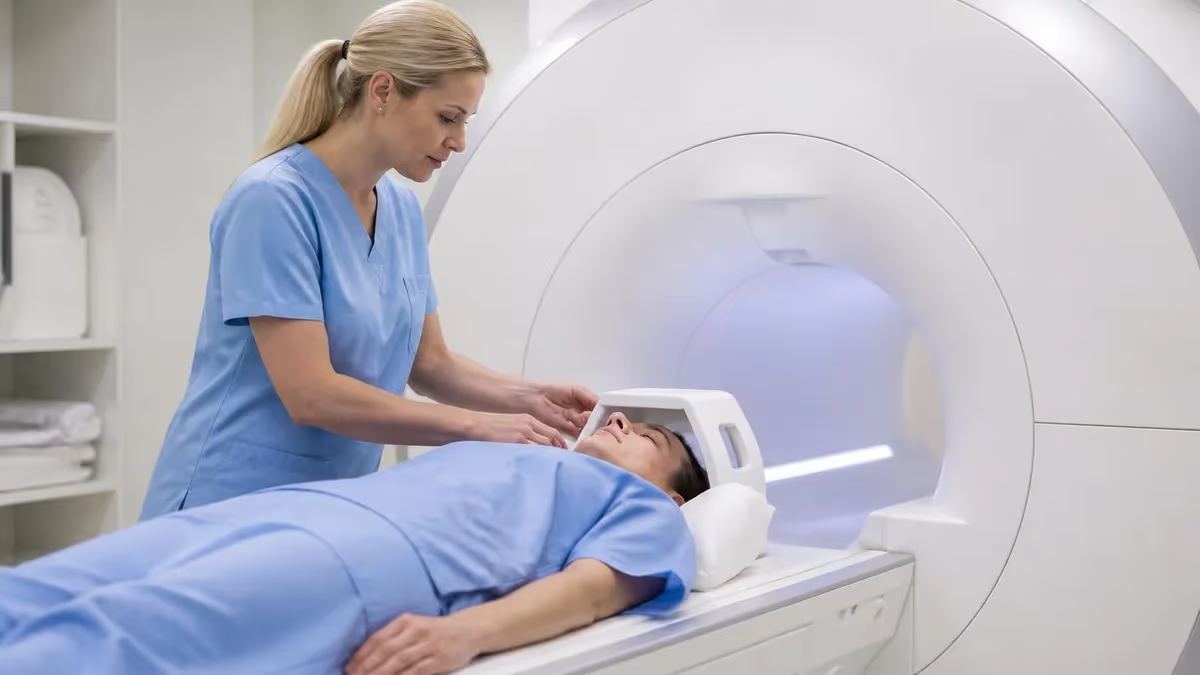
Most patients receive MRI results within 1-7 days of their scan, though the timeline varies dramatically by setting, urgency, and how results reach you. Emergency department MRIs are typically read within hours. Outpatient scans usually take 1-3 business days for the radiologist report, then another 1-7 days for your doctor to discuss results with you. Some hospitals deliver results to patients via portal within 24 hours; others take a week or more.
Why the wait. MRI generates hundreds of images that must be read by a radiologist — a physician specially trained in interpreting medical imaging. The radiologist analyzes the scan, compares to prior imaging if available, dictates a detailed report, and signs it. Your treating doctor then reviews the report, often correlates with your clinical picture, and contacts you with results.
What affects speed. Setting (ED vs outpatient vs urgent care). Urgency of clinical question. Radiologist workload. Time of day and day of week. Complexity of the scan. Whether the scan was contrasted or required additional sequences. Whether prior imaging is available for comparison. How your doctor's office handles results delivery.
What patients want to know. When will I see my results? How do I access them? What if I see something concerning? When should I follow up with my doctor? How do I get faster results if I'm worried?
This guide covers realistic timelines for different MRI scenarios, the radiology reading process, factors that affect speed, how to access your results, and what to do while you wait.
What to Expect
- Emergency MRI: 1-4 hours typically (often stat reads)
- Inpatient MRI: Same day or next day report
- Urgent outpatient: 24-48 hours for report
- Routine outpatient: 2-5 business days typical
- Patient portal access: 24-72 hours after scan (varies)
- Doctor follow-up: Often 3-10 days after scan
- Weekends/holidays: Can add 1-3 days
- Comparison with prior imaging: Adds 24-48 hours
- Complex/specialty scans: May add 2-3 days for specialty radiologist read
- Second-opinion requests: Can add 1-2 weeks
What happens to your MRI between scan and results. The journey explains the timeline.
Step 1: Scan acquisition. Your MRI takes 30-90 minutes typically. The technologist captures images according to a specific protocol matching your clinical question. After the scan, the technologist quickly reviews images for quality and may add sequences if anything is unclear.
Step 2: Image transmission. Images upload from the scanner to PACS (Picture Archiving and Communication System) — typically within 15-30 minutes of scan completion. From PACS, they're accessible to radiologists wherever they're working (in the building, at home, or in another city for some practices).
Step 3: Radiologist read. The radiologist reviews your images, compares to prior imaging if available, considers your clinical history (often visible in the order). For routine scans, this takes 15-45 minutes per study. For complex scans or unusual findings, longer.
Step 4: Report dictation. Radiologist dictates findings using voice recognition software. Report structure: clinical history, technique, comparison studies, findings (organ by organ), impression (summary and recommendations). Reports range from a few sentences to several pages.
Step 5: Quality check and signing. Some practices have second radiologist review for difficult cases. Final report is signed and uploaded to your medical record. Some radiologists call ordering doctors directly for urgent findings.
Step 6: Your doctor reviews. The ordering doctor receives the report, often via email notification or EMR. They review it, may compare to clinical picture, and decide on next steps.
Step 7: Communication to you. Your doctor calls, messages via portal, or you see results at next appointment. Some practices auto-release results to patients via portal at 24-72 hours.
Total time. Best case (urgent inpatient): 4-8 hours from scan to communication. Typical outpatient: 3-7 days from scan to your doctor calling you. Routine non-urgent: up to 2 weeks in some practices.
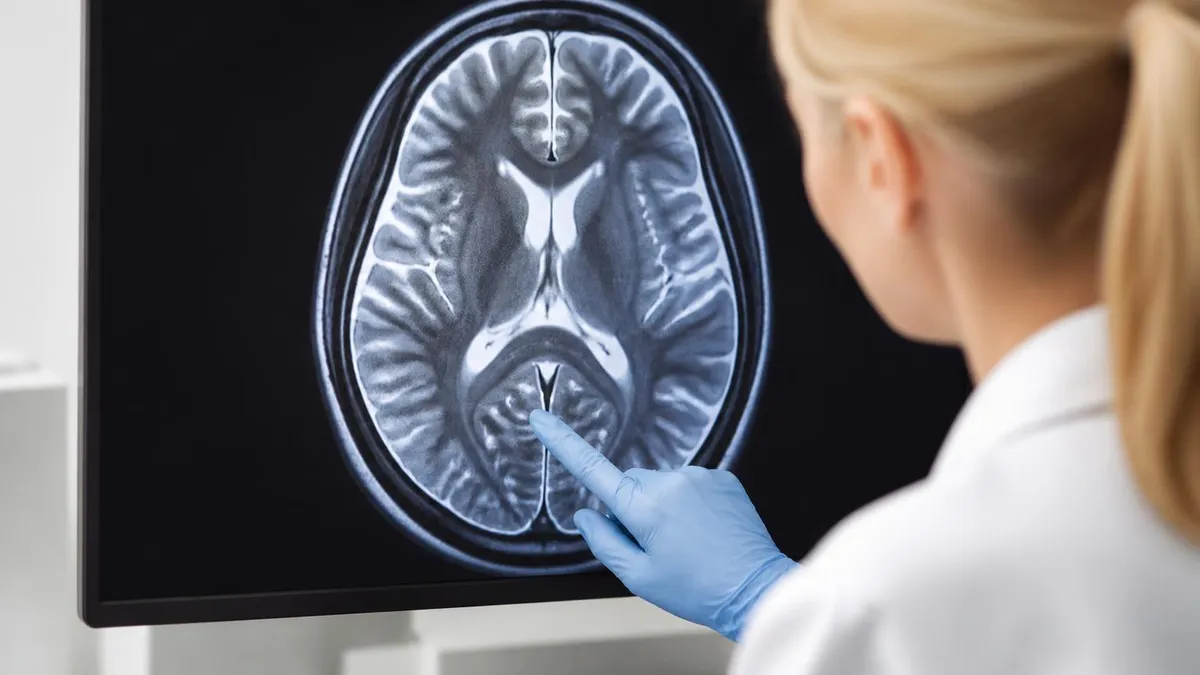
Process Steps
Images uploaded to PACS 15-30 min after scan.
Reviews images, compares prior. 15-45 min per study.
Voice-to-text. Findings + impression. Final review.
Quality-checked and uploaded to EMR.
Ordering MD receives notification, reviews, plans.
Call, portal, or appointment. Most common: 3-7 days.
Timelines by setting. Different settings, different speeds.
Emergency department MRI. Urgency is highest. Radiologist often reads in real-time (stat read). Common scenarios: stroke evaluation, spinal cord compression, suspected appendicitis. Results: 1-4 hours typical. Some EDs have dedicated emergency radiologists 24/7 — even faster.
Inpatient hospital MRI. Patient already admitted. Stat or routine read depending on situation. Stat scans for changing clinical status (suspected stroke, change in neuro exam) read within 1-2 hours. Routine inpatient (e.g., MRI for non-urgent follow-up): 4-24 hours.
Urgent outpatient MRI. For symptoms requiring quick answers (suspected cancer, severe pain, neurological deficit). Many radiology practices prioritize these. Report typically within 24-48 hours. Doctor often calls patient same day or next.
Routine outpatient MRI. Most common scenario. Scan and report turnaround: 2-5 business days. Doctor communication to patient: 3-10 days. Imaging center reports may post to patient portal in 24-72 hours, sometimes before doctor reviews.
Specialty imaging center. Some centers (e.g., dedicated breast MRI, cardiac MRI, neuroradiology) have specialty radiologists. Read time can be 1-7 days depending on case complexity. Specialty reports more detailed.
Teleradiology. Some hospitals contract with off-site reading services. Reads can be very fast (often 1-3 hours) for routine cases. Less personal interaction with reading radiologist.
Academic medical centers. Reads often slower due to teaching cases, more thorough analysis, and second-reviewer system. 2-5 days typical for non-urgent. Quality often higher; second opinions easier to obtain.
Veterinary MRI. Often faster than human (less regulatory burden). Same-day or next-day reads common.
Timeline by Setting
Stat read within 1-4 hours typically. Often used for stroke, spinal cord compression, severe headache, acute abdominal issues. Some EDs have 24/7 emergency radiologists. Communicated to ED team immediately; patient often informed before discharge.
Factors affecting MRI result speed.
Day and time of scan. Monday-Thursday morning: fastest reads. Friday afternoon scans often roll to Monday for non-urgent reads. Weekend scans: limited radiologist coverage, often non-urgent reads delayed until Monday. Holidays add 1-3 days typically.
Urgency designation. Stat (immediate): radiologist drops everything. Reads within 1-2 hours. Urgent (priority): read within 24 hours. Routine: read in queue order, typically 1-3 days. Communication of urgency to radiology critical.
Clinical question complexity. Simple question (rule out fracture, simple disc disease): faster read. Complex question (subtle tumor, multi-organ disease, follow-up of treatment): slower read.
Number of sequences and images. Brain MRI: 5-15 sequences, 500+ images. Body MRI: 10-25 sequences, 1000+ images. More to review = longer read time.
Comparison studies. Reading without comparison: faster. Reading with multiple prior studies: thorough analysis can add hours. Worth waiting for in most cases — comparison adds enormous diagnostic value.
Contrast administration. Contrast MRIs may take longer to read due to additional sequences and analyses. Adds 15-30 minutes to scan time and similar to read time.
Subspecialty requirements. Brain tumor case: neuroradiologist preferred. Breast case: breast imaging specialist. Cardiac: cardiac imaging specialist. Subspecialty reads may take longer due to specialist availability and more thorough analysis.
Doctor's office practices. Some doctors review reports daily; others batch. Some auto-call patients with normal results; others wait for office visit. Patient communication often the bottleneck.
Patient portal release. Most institutions release results to patient portals within 1-7 days. Some have hold periods (e.g., 24-48 hours before patient access to allow doctor preview).
Second opinions. If your doctor wants second opinion, add 3-7 days for additional review.
MRI Result Stats
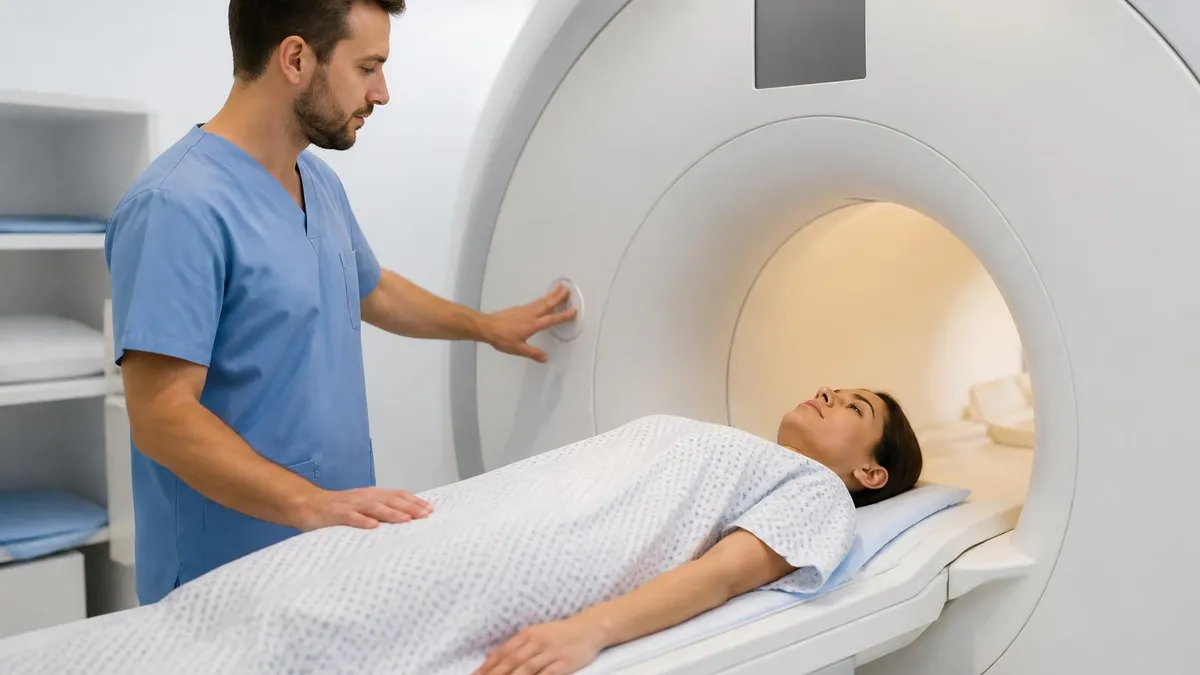
How to get faster MRI results.
Ask your doctor's office to communicate urgency. If urgent symptoms, ensure your doctor's office marks the scan order as 'urgent' or 'stat.' This bumps you up the priority queue.
Schedule strategically. Monday morning scans typically have fastest turnaround. Avoid Friday afternoons if possible. Avoid weekends if non-urgent.
Choose an imaging center with fast reporting. Many imaging centers advertise 24-48 hour reports. Hospital-based imaging often takes longer due to volume. Consider a freestanding imaging center if speed matters.
Use patient portals proactively. Many systems release results to your portal within 24-72 hours, often before your doctor calls. Login periodically to check.
Bring prior imaging if available. Bringing prior scans (or having them digitally transferred) speeds up comparison reading. Eliminates the radiologist waiting for prior images from other facility.
Provide detailed clinical history. The more context the radiologist has, the more efficiently they can read. Ensure your scan order includes specific clinical question.
Follow up proactively. After 5-7 business days without word, call your doctor's office. Don't wait passively — squeaky wheel gets the grease.
Request a copy of the report. You're entitled to your medical records. Most patients can request a copy at any time. Some facilities email/mail it; others require pickup.
Direct radiologist consultation (rare). If concerned and waiting, you may be able to request consultation with the reading radiologist. Not all practices offer this. Useful for complex cases.
Pay for expedited reading (limited availability). Some imaging centers offer expedited reads for additional fees. Not always available; check pricing first.
Speed-Up Strategies
Ensure doctor's office marks order urgent if appropriate. Bumps priority.
Best turnaround. Avoid Friday afternoon and weekend non-urgent scans.
Freestanding centers often 24-48 hours vs hospital 3-5 days.
Login regularly. Results often appear before doctor calls.
Bring or transfer prior scans for comparison. Speeds read.
Don't wait passively. Call doctor's office at 5-7 days if no word.
Understanding your MRI results when you receive them.
The report structure. Reports typically have: Clinical history (why scan was ordered). Technique (what sequences were performed, whether contrast used). Comparison (prior imaging reviewed). Findings (organ by organ, what's seen). Impression (summary and conclusions, often recommendations).
The impression. Most important section. Summarizes findings and provides diagnostic interpretation. Often includes recommendations for further imaging or clinical correlation.
Common terms. 'No acute findings': nothing urgent or new. 'Stable when compared to prior': unchanged. 'Improved': better than before. 'Worsening': progressed. 'Indeterminate': unclear; may need follow-up imaging. 'Likely benign': probably nothing serious. 'Suspicious': concerning; needs further evaluation. 'Consistent with': fits with given clinical question. 'Cannot rule out': possible but not certain.
Reading your own report. You can read it before your doctor calls. But: medical reports use technical language. Many findings sound scary but are often clinically insignificant. Don't panic at words like 'lesion' (just means abnormality), 'mass' (general term for any tissue), 'enhancement' (normal for many things). Wait for context from your doctor.
When to call your doctor immediately. New severe symptoms (neurological changes, severe pain, fever). Concerning report wording (suspicious for cancer, evidence of bleeding). Inability to function. Don't wait for scheduled appointment if symptoms warrant.
When NOT to panic over portal results. 'Disc bulge' on MRI (extremely common; often asymptomatic). 'Degenerative changes' (normal aging). 'White matter lesions' (usually benign in older adults, can be MS in younger). 'Cysts' (usually benign). 'Subchondral cysts/edema' (often benign). Most findings need clinical context.
Doctor-patient communication. Your doctor's call/portal message should include: clear answer to clinical question, plan for further evaluation if needed, what symptoms to watch for, when to follow up. Ask if anything is unclear.
Good news: You're entitled to your records. Many portals release MRI reports within 24-72 hours. You can read them anytime.
Cautious news: MRI reports use technical language. Many normal findings sound scary. Disc bulges, white matter spots, small cysts, degenerative changes — all common, often clinically insignificant.
Words that often sound worse than they are: 'Lesion' just means any abnormality. 'Enhancement' means contrast uptake, normal for many things. 'Mass' is general for any tissue. 'Cyst' usually benign.
Words that warrant calling your doctor: 'Suspicious for malignancy,' 'concerning,' 'requires further evaluation,' 'urgent,' 'critical findings,' 'consistent with cancer/stroke/major disease.'
Tips: Read the IMPRESSION section first — that's the summary. Don't try to interpret findings in isolation. Wait for your doctor to put findings in clinical context. If immediate concerns, call your doctor's office or go to ED.
Don't: Diagnose yourself from Google searches of report terms. The internet over-emphasizes worst-case scenarios. Trust the radiologist + your doctor's interpretation.
What to do while waiting for MRI results.
Manage anxiety. The waiting is often the hardest part. Strategies: distract with normal activities, exercise, social time. Avoid Google searches of medical terms. Limit social media speculation. Talk to family/friends about non-medical things.
Stay healthy. Continue your normal medications. Follow up on any symptoms that change. Maintain regular sleep. Eat well. Hydrate.
Document symptoms. If symptoms change while waiting, note dates, descriptions, severity. This information helps your doctor at follow-up.
Prepare questions for the follow-up. What does the report show? Are findings concerning? What does this mean for me? Are further tests needed? When and how? What symptoms should I watch for? When should we re-image? Are there treatments? Is referral needed?
Bring a support person to the follow-up. Two sets of ears better than one. Easier to absorb information when stressed.
If you don't hear back. Call your doctor's office at day 5-7. 'I had my MRI on [date]. Have my results come back?' Most offices will check.
Mental health considerations. Waiting for medical results is stress-inducing. If anxiety is significant, talk to your primary care doctor or a mental health professional. Brief therapy or anti-anxiety medication can help during particularly difficult waits.
Worst-case-but-rare scenarios. Most MRI results don't reveal major disease. Even when they show something concerning, modern medicine has many options. Try to keep perspective: most findings are benign or treatable.
Common Results Scenarios
'No acute findings.' 'Unremarkable study.' 'Within normal limits.' Most reassuring. Doesn't always mean nothing is wrong (some conditions don't show on MRI) but rules out major imaging-detectable disease. Discuss with your doctor what next steps are.
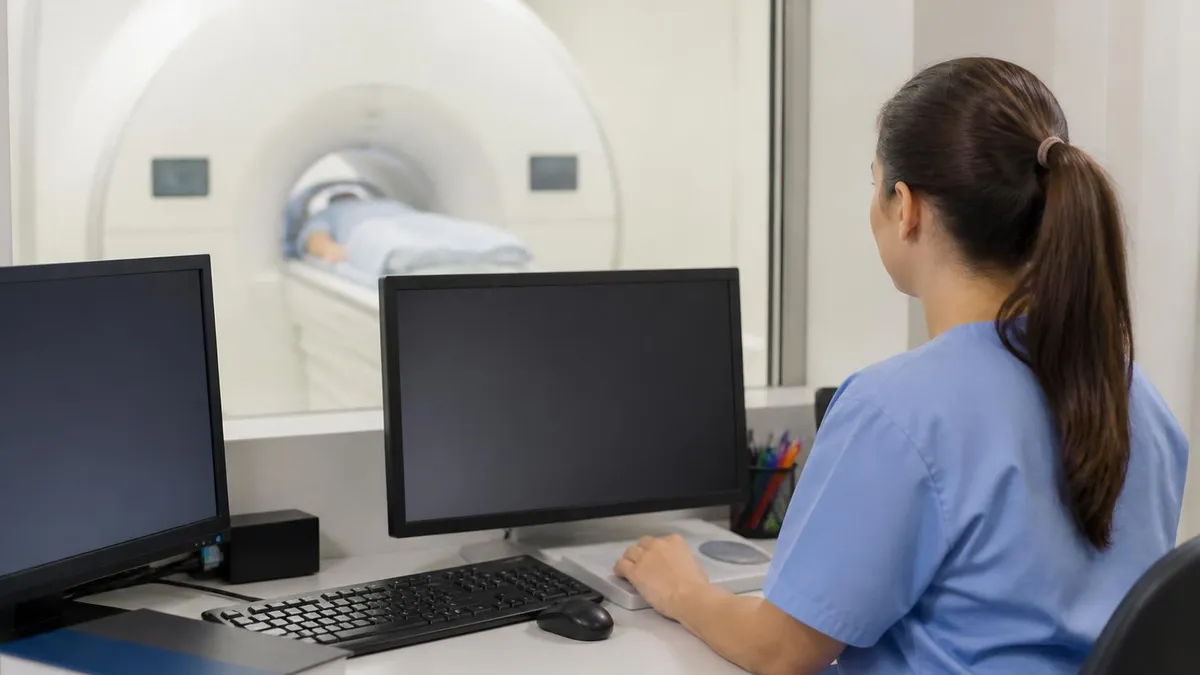
Special situations.
Pediatric MRI results. Often involve specialty pediatric radiology. Communication tends to be quicker and more personal (parents involved). Pediatric scans often more limited findings than adult — fewer comorbidities mean clearer normal pattern.
Cancer-related MRI. Often performed at cancer centers. Specialist radiologists with deep expertise. Reports detailed and include tumor measurements, treatment response criteria. Discussed in multidisciplinary tumor boards. Communication often includes oncologist call.
Multiple sclerosis monitoring. Sequential brain MRIs (annual or semi-annual). Reports specifically address new vs old lesions, enhancement patterns. Often read by MS specialists.
Pre-surgical planning. MRI for surgical planning often reviewed by both radiologist and surgeon. May involve specialty reviews. Reports detailed for surgical decision-making.
Second opinions. If concerned about results, requesting second opinion is reasonable. Process: get copy of images and report; transfer to another imaging center or specialist for review. Cost: $200-500 typically; insurance may cover. Time: 1-3 weeks.
Medicolegal cases. MRI results in legal context (personal injury, disability claims). Often involve additional radiologist reviews. Reports more detailed. Timing slower due to legal requirements.
Research scans. Research MRIs (e.g., as part of clinical trial) often have specific protocols and longer reading times. Results may not be reported to participants. Clinical findings reported per IRB protocol.
International medical tourism. MRI scans performed abroad. Results timeline depends on country. Reports may need translation. Comparison to U.S. care varies.
Communication Tips
Write down what doctor says. Stressed = hard to remember details later.
What does this mean? What's next? When? Implications? Treatment options?
Ask for written summary or full report. Easier to review later.
For in-person follow-ups, bring family member. Two ears better than one.
Make next appointment before leaving. Plan continuity of care.
Give yourself time to absorb information. Reach out with questions later if needed.
Common myths and reality about MRI results.
Myth: 'No news is good news.' Wait, that might mean your doctor forgot. Always follow up if you don't hear back at 5-7 days. The administrative system isn't always perfect.
Reality: Active follow-up matters. Many cases get delayed not because of bad news but because of administrative oversight. Patient advocacy works.
Myth: 'The radiologist makes the diagnosis.' Partially true — the radiologist describes what they see and makes interpretations, but final diagnosis often requires correlation with clinical exam, blood work, biopsy, etc.
Reality: Diagnosis is multifactorial. Radiology is one piece. Your doctor synthesizes the whole picture.
Myth: 'A long delay means something is wrong.' False. Delays are usually administrative, not medical. Radiologists often read normal scans in 15 minutes; complex scans take longer. Communication delays are typically due to office workflow, not findings.
Reality: Don't read into delays. Call to check if worried; usually you'll find your results are ready and just need delivery.
Myth: 'I should be told everything on the report.' Sometimes incidental findings (small cysts, benign variations) aren't discussed in detail because they're not clinically significant. Doesn't mean they're being hidden.
Reality: Ask specific questions if curious. Most doctors will explain.
Myth: 'MRI catches everything.' MRI is excellent for many conditions but not for all. Some cancers, especially early stage, are not detectable on MRI. Some heart conditions need other tests. Some musculoskeletal injuries clearer on different imaging.
Reality: MRI is one tool. Negative MRI doesn't always mean nothing is wrong; other tests may be needed.
Myth: 'I can get faster results if I push hard.' Sometimes yes, sometimes no. Some delays are medical/technical (truly waiting for radiologist), some administrative (yes, calling helps).
Reality: Polite persistence helps. Be respectful — radiologists and doctors are juggling many cases.
MRI Pros and Cons
- +MRI has a publicly available content blueprint — you know exactly what to prepare for
- +Multiple preparation pathways accommodate different schedules and budgets
- +Clear score reporting shows specific strengths and weaknesses
- +Study communities share current insights from recent test-takers
- +Retake policies allow recovery from a difficult first attempt
- −Tested content scope requires substantial preparation time
- −No single resource covers everything optimally
- −Exam-day performance can differ from practice test performance
- −Registration, prep, and retake costs accumulate significantly
- −Content changes between versions can make older materials less reliable
Pros and Cons at a Glance
| Pros | Cons |
|---|---|
| MRI has a publicly available content blueprint — you know exactly what to prepare for | Tested content scope requires substantial preparation time |
| Multiple preparation pathways accommodate different schedules and budgets | No single resource covers everything optimally |
| Clear score reporting shows specific strengths and weaknesses | Exam-day performance can differ from practice test performance |
| Study communities share current insights from recent test-takers | Registration, prep, and retake costs accumulate significantly |
| Retake policies allow recovery from a difficult first attempt | Content changes between versions can make older materials less reliable |
Sample MRI - Magnetic Resonance Imaging Practice Questions
Try these questions from our free MRI - Magnetic Resonance Imaging practice tests. The correct answer and an explanation follow each question.
The range of frequencies sampled during the process is represented by the receiver bandwidth.
- A. gradient of frequency encoding
- B. gradient coils
- C. phase difference
- D. gradient for slice selection
Answer: A. gradient of frequency encoding
The receiver bandwidth in MRI represents the range of frequencies sampled during the signal acquisition process. This range of frequencies is directly linked to the frequency encoding gradient, which spatially encodes information along one dimension of the image. A wider bandwidth allows for faster acquisition but can lead to a reduction in signal-to-noise ratio (SNR).
What term describes an object becoming a high-speed projectile when brought near a strong MRI magnetic field?
- A. Quenching effect
- B. Missile effect
- C. Gradient artifact
- D. Susceptibility effect
Answer: B. Missile effect
The missile effect (or projectile effect) occurs when ferromagnetic objects are rapidly accelerated toward the bore by the strong static magnetic field.
FLAIR (Fluid-Attenuated Inversion Recovery) suppresses which signal and is most useful for detecting:
- A. Fat signal; bone marrow edema
- B. CSF signal; periventricular and cortical lesions
- C. Blood signal; hemorrhage
- D. Muscle signal; soft tissue tumors
Answer: B. CSF signal; periventricular and cortical lesions
FLAIR uses an inversion pulse timed to null CSF, making periventricular lesions and cortical pathology (MS plaques, subarachnoid hemorrhage) visible against suppressed fluid.
Which portion of k-space primarily determines image contrast?
- A. The center (low spatial frequencies)
- B. The periphery (high spatial frequencies)
- C. The edges equally with the center
- D. The corners of k-space only
Answer: A. The center (low spatial frequencies)
The center of k-space contains low spatial frequency data, which encodes the bulk signal intensity and contrast of the image.
Take the full MRI - Magnetic Resonance Imaging practice test
MRI Questions and Answers
Final thoughts. Waiting for MRI results is anxiety-provoking, but understanding the process can ease that wait. The typical timeline of 2-7 days reflects the careful, multi-step nature of medical imaging — not bureaucratic delay or hidden findings.
If speed is critical, take action: ensure urgency is marked on the order, choose a fast-reporting imaging center, use patient portals proactively, and don't hesitate to follow up at day 5-7 if you haven't heard. Communication can be the bottleneck more often than the reading itself.
When results arrive, take time to process. Most findings have clinical context that affects their significance. Don't try to interpret reports alone — wait for your doctor to put findings together with your clinical picture. The radiologist describes what's seen; your doctor synthesizes what it means for you.
The wait itself is part of healthcare. Use the time well: maintain your routine, document any symptom changes, prepare questions for your follow-up. When you do hear results — whatever they are — you'll be better positioned to engage with your care team and make informed decisions about next steps.
Most MRI results don't reveal major disease. Even when they do, modern medicine has many tools to help. The waiting feels endless; the answers usually come faster than expected. Stay calm, stay engaged with your healthcare team, and trust the process.
About the Author

Medical Laboratory Scientist & Clinical Certification Expert
Johns Hopkins UniversityDr. Sandra Kim holds a PhD in Clinical Laboratory Science from Johns Hopkins University and is certified as a Medical Technologist (MT) and Medical Laboratory Scientist (MLS) through ASCP. With 16 years of clinical laboratory experience spanning hematology, microbiology, and molecular diagnostics, she prepares candidates for ASCP board exams, MLT, MLS, and specialist certification tests.
Join the Discussion
Connect with other students preparing for this exam. Share tips, ask questions, and get advice from people who have been there.
View discussion (8 replies)