
MoCA Test in Spanish: Complete Guide to the MoCA em Espanhol Assessment 2026
Learn everything about the MoCA em espanhol — who needs it, how it works, and how to prepare. 🎯 Free practice questions included.

The MoCA em espanhol — the Montreal Cognitive Assessment administered in Spanish — is one of the most important tools available for detecting early cognitive decline in Spanish-speaking patients across the United States. Unlike the broader cultural conversation around loco moco or the art world's fascination with the moca los angeles, this MoCA is a clinically rigorous screening instrument used by neurologists, geriatricians, and primary care physicians to evaluate memory, attention, language, and executive function in patients who are most comfortable communicating in Spanish. Practice with the free Montreal Cognitive Assessment practice test on PracticeTestGeeks (25 questions with answer explanations).
Approximately 42 million people in the United States speak Spanish as their primary language at home, and millions more are Spanish-dominant seniors who may struggle to demonstrate their true cognitive abilities when tested in English. When cognitive screening is conducted in a patient's non-dominant language, scores can be artificially depressed — a phenomenon that leads to misdiagnosis, unnecessary anxiety, and inappropriate referrals. The Spanish-language MoCA corrects this problem by delivering a validated, culturally adapted version of the same assessment that clinicians rely on worldwide.
The standard MoCA was developed by Dr. Ziad Nasreddine and has been translated and validated in over 100 languages and dialects. The Spanish version maintains the same 30-point scoring structure, covering eight cognitive domains: visuospatial and executive function, naming, memory, attention, language, abstraction, delayed recall, and orientation. Clinicians who understand the geffen contemporary at moca scoring methodology know that a score of 26 or above is generally considered normal, while scores below that threshold may warrant further evaluation.
For patients, families, and caregivers navigating the cognitive assessment process, understanding the Spanish version of the MoCA can reduce test-day anxiety and improve the reliability of results. When patients know what to expect — the types of questions asked, the drawing tasks involved, and the memory components included — they are better positioned to perform at their true cognitive level. This guide walks through every aspect of the MoCA em espanhol, from its development and validation to practical preparation strategies for patients and their families.
It is worth noting that the MoCA is frequently compared to the mini mental status exam, another widely used cognitive screening tool. While both instruments assess similar domains, the MoCA is generally considered more sensitive for detecting mild cognitive impairment, which is the earliest clinically meaningful stage of cognitive decline. Research has consistently shown that the MoCA catches more cases of MCI than the older MMSE, making it the preferred instrument in modern clinical practice — in any language.
Caregivers supporting Spanish-speaking seniors often ask whether the Spanish MoCA is identical to the English version or whether cultural adaptations change the nature of the tasks. The answer is nuanced: the core cognitive tasks remain structurally equivalent, but certain verbal fluency and language-specific items are adapted to reflect natural Spanish usage patterns. Normative data for Spanish-speaking populations in the US also account for education level, since research shows that years of formal schooling significantly influence MoCA performance independent of actual cognitive status.
Whether you are a clinician preparing to administer the assessment, a patient scheduled for evaluation, or a family member helping a loved one understand what lies ahead, this comprehensive guide to the MoCA em espanhol will provide the detailed, accurate information you need to navigate the process with confidence. From scoring benchmarks to preparation checklists, we cover every dimension of this essential cognitive screening tool.
Free Montreal Cognitive Assessment Study Tools
Interactive Montreal Cognitive Assessment resources on PracticeTestGeeks, free to start:
- MoCA Practice Test: Video 1 Answers (25 Questions) — 25 questions with instant scoring and answer explanations
- Montreal Cognitive Assessment flashcards — review key terms and concepts card by card
- Montreal Cognitive Assessment study guide — topic-by-topic overview of what the exam covers
- Montreal Cognitive Assessment cheat sheet — one-page printable summary for last-minute review
- MoCA Blind / Telephone is scored out of 22 points and takes approximately 10 minutes to administer.[1]
- The MoCA FAQ gives a normal cutoff of at least 19 out of 22 for the telephone assessment without visual elements.[2]
- MoCA should be provided to patients without a separate test charge, although healthcare service fees may apply.[3]
- MoCA Cognition recommends renewing MoCA certification every two years.[4]
All verified MoCA facts and sources
Numbers in brackets link to the official sources listed under Sources & last verified. Dates that have passed are removed automatically.
MoCA em Espanhol by the Numbers

The Eight Cognitive Domains of the Spanish MoCA
Patients copy a cube drawing, complete a clock-drawing task, and perform a trail-making exercise adapted for Spanish speakers. These tasks assess spatial planning and the ability to organize complex sequences — skills often impaired in early dementia.
Three animal illustrations — typically a lion, rhinoceros, and camel — are presented for the patient to name in Spanish. This task evaluates confrontational naming ability and language access, domains commonly affected by Alzheimer's disease.
The examiner reads five words aloud in Spanish. Patients attempt immediate recall, then are retested after approximately 5 minutes of intervening tasks. Delayed recall is one of the most diagnostically sensitive domains for Alzheimer's-type impairment.
Digit span forward and backward, a letter-tapping vigilance task, serial subtraction, sentence repetition, verbal fluency, and abstraction similarities round out the assessment, covering executive attention and language comprehension in Spanish.
Understanding how the Spanish MoCA differs from the standard English version requires appreciating both the linguistic adaptations and the normative adjustments that researchers have made over the past two decades. The verbal fluency component, for example, asks patients to generate as many words as possible beginning with a specific letter within one minute. In English, the letter F is commonly used. In validated Spanish adaptations, the letter P is often substituted because it generates a more comparable number of responses in Spanish-speaking adults, preserving the statistical equivalence of the task across languages.
The sentence repetition items are also adapted for natural Spanish syntax. Rather than translating English sentences word-for-word — which can produce grammatically awkward or culturally foreign constructions — validated Spanish MoCA editions use sentences drawn from natural Spanish speech patterns. This distinction matters clinically because patients who stumble on unnatural phrasing may be penalized for linguistic quirks rather than genuine cognitive deficits, inflating false-positive rates for cognitive impairment.
One of the most important adaptations involves education-level correction. Research conducted specifically on Spanish-speaking populations in the United States has demonstrated that education is a particularly powerful predictor of MoCA performance in this group, even more so than in English-speaking populations. Clinicians are advised to add one bonus point to the total score for patients who have completed 12 or fewer years of formal education — a correction that applies to all standard MoCA versions but carries special weight when assessing older immigrants who may have had limited access to formal schooling.
Patients sometimes ask whether taking the MoCA in Spanish versus English will produce different scores even if they are bilingual. Research suggests the answer is yes: bilingual individuals typically perform slightly better in their dominant language, with differences of 1 to 3 points observed in some studies. For patients who are genuinely bilingual and comfortable in both languages, clinicians should document which language was used and consider this factor during interpretation. The mmse test comparison literature similarly notes that language of administration affects screening sensitivity.
The moca adapter concept — which in the cognitive assessment world refers to validated cultural and linguistic modifications — is central to understanding why a direct translation is insufficient. True adaptation requires piloting items with native speakers, verifying that difficulty levels are preserved, collecting normative data from representative samples, and publishing psychometric validation studies. The Spanish MoCA has undergone this rigorous process in multiple countries, including Spain, Mexico, Argentina, and the United States, yielding slightly different validated versions for different dialect regions.
For US clinicians, the most relevant validation studies are those conducted with Spanish-speaking populations living in the United States, who include Mexican-Americans, Puerto Ricans, Cuban-Americans, and Central and South American immigrants. Each community brings distinct educational histories, dialect patterns, and healthcare engagement levels that can influence assessment outcomes. Major academic medical centers in cities like Los Angeles — home to institutions like the moca los angeles cultural district — have contributed significantly to Spanish MoCA validation research, leveraging their large Spanish-speaking patient populations.
Importantly, the administration protocol for the Spanish MoCA is identical in structure to the English version. The same 30-point scale applies, the same eight domains are tested in the same order, and the same time limits govern each task. What changes is the language of instruction, the specific words and sentences used in verbal tasks, and the normative benchmarks against which individual scores are compared. Clinicians who have already trained on the standard MoCA will find the Spanish version straightforward to learn, provided they have sufficient proficiency in Spanish to administer the items fluently and to evaluate patient responses accurately.
If you want more targeted practice, the moca score interpretation page covers the same material with additional questions and explanations.
If you want more targeted practice, the moca exam page covers the same material with additional questions and explanations.
If you want more targeted practice, the moca cognitive test page covers the same material with additional questions and explanations.
Mini Mental Health Status Examination vs. MoCA: Key Comparisons
The mini mental status exam, commonly called the MMSE, has been the gold standard for cognitive screening since its introduction in 1975. However, decades of research have demonstrated that it misses a substantial proportion of patients with mild cognitive impairment — the stage between normal aging and dementia. Studies comparing the two instruments consistently find that the MoCA detects MCI with sensitivity above 90 percent, while the MMSE typically achieves only 18 to 31 percent sensitivity at standard cutoff points.
This gap in sensitivity has major clinical consequences. Patients who are in the early, still-treatable stages of cognitive decline may receive a false reassurance from a normal MMSE score, delaying interventions that could meaningfully slow progression. For Spanish-speaking patients, the validated Spanish MoCA provides this superior sensitivity in their native language, ensuring that early warning signs are not obscured by the dual challenges of language barriers and instrument insensitivity working together.

Benefits and Limitations of the Spanish MoCA
- +Validated in multiple Spanish-speaking populations for accurate, culturally appropriate results
- +Same 30-point structure as English MoCA allows direct comparison and familiar clinical interpretation
- +Significantly more sensitive for mild cognitive impairment than the traditional MMSE
- +Education-level correction is built into scoring guidelines to reduce false positives in less-educated patients
- +Available free of charge through official MoCA channels after basic certification training
- +Reduces language-related score suppression in Spanish-dominant patients, improving diagnostic accuracy
- −Requires clinician fluency in Spanish or a trained interpreter, limiting availability in some settings
- −Multiple regional Spanish variants exist, and not all have equal psychometric validation for US populations
- −Normative data for specific US Latino subgroups (Puerto Rican, Cuban, Central American) remain limited
- −Bilingual patients may need separate assessments in both languages to fully characterize cognitive status
- −Educational correction adds complexity to scoring and interpretation for less experienced administrators
- −The assessment still carries some cultural loading in domains like letter fluency and abstract reasoning
Pros and Cons at a Glance
| Pros | Cons |
|---|---|
| Validated in multiple Spanish-speaking populations for accurate, culturally appropriate results | Requires clinician fluency in Spanish or a trained interpreter, limiting availability in some settings |
| Significantly more sensitive for mild cognitive impairment than the traditional MMSE | Multiple regional Spanish variants exist, and not all have equal psychometric validation for US populations |
| Education-level correction is built into scoring guidelines to reduce false positives in less-educated patients | Normative data for specific US Latino subgroups (Puerto Rican, Cuban, Central American) remain limited |
| Available free of charge through official MoCA channels after basic certification training | Bilingual patients may need separate assessments in both languages to fully characterize cognitive status |
| Reduces language-related score suppression in Spanish-dominant patients, improving diagnostic accuracy | Educational correction adds complexity to scoring and interpretation for less experienced administrators |
Preparation Checklist for Spanish MoCA Patients and Caregivers
- ✓Confirm with your clinician that the Spanish-language version will be used before the appointment date.
- ✓Get a full night of sleep the night before your assessment — fatigue significantly impairs cognitive test performance.
- ✓Bring your reading glasses if you normally use them, since the trail-making and clock tasks require clear near vision.
- ✓Eat a nutritious meal before the appointment to ensure stable blood sugar during the assessment.
- ✓Inform the clinician of all current medications, including sedatives, sleep aids, or anxiety medications that may affect alertness.
- ✓Practice counting backward from 100 by 7s (93, 86, 79...) as a low-stakes warm-up for the serial subtraction task.
- ✓Review the names of common animals in Spanish, including less common zoo animals, to prepare for the naming task.
- ✓Ask the clinician to confirm how many years of formal schooling you completed so the education correction can be applied accurately.
- ✓Arrive at least 15 minutes early to settle in and reduce anxiety before testing begins.
- ✓Bring a trusted family member or caregiver who can provide collateral history about any noticed cognitive changes.
The Education Correction Is Not Optional
Research consistently shows that Spanish-speaking patients in the United States who completed fewer than 12 years of formal education score an average of 1.5 to 2 points lower on the MoCA than equally cognitively intact peers with more schooling. Clinicians must add the one-point education correction and document it in the record — failing to do so disproportionately leads to false-positive dementia diagnoses in older Latino immigrants who had limited access to formal education.
Scoring and interpreting the Spanish MoCA follows the same framework as the standard English version, but several nuances are worth understanding in depth. A score of 26 or above out of 30 is considered within normal limits. Scores between 18 and 25 suggest mild cognitive impairment, scores between 10 and 17 indicate moderate cognitive impairment, and scores below 10 point toward severe cognitive impairment. These thresholds were established through large-scale validation studies comparing MoCA performance with more extensive neuropsychological test batteries and, in some studies, biomarker data including cerebrospinal fluid amyloid and tau measurements.
The one-point education correction for patients with 12 or fewer years of schooling should be applied after calculating the raw score. If a patient scores 25 but has only 8 years of formal education, the corrected score of 26 would fall within the normal range. This distinction can mean the difference between a reassuring result and an unnecessary referral to a dementia specialist, so accurate education documentation before testing begins is essential clinical practice.
Domain-level analysis provides richer information than the total score alone. A patient who scores 25 overall but misses 4 of the 5 delayed recall points is clinically very different from a patient who scores 25 with deficits spread across attention and executive function domains. Memory-predominant impairment patterns raise concern for Alzheimer's disease pathology, while executive function deficits may suggest vascular cognitive impairment or frontotemporal pathology. Understanding these patterns requires that clinicians record individual domain scores rather than simply reporting the total.
Longitudinal tracking is another critical use of the Spanish MoCA. A single assessment provides a snapshot, but serial assessments conducted at 6- to 12-month intervals allow clinicians to distinguish stable mild impairment from progressive decline. A decrease of 2 or more points over 12 months is considered clinically meaningful and warrants accelerated diagnostic evaluation, including neuroimaging and laboratory workup. For Spanish-speaking patients who see the same primary care physician long-term, the MoCA em espanhol can serve as an annual cognitive vital sign.
It is also important to understand that the MoCA is a screening tool, not a diagnostic test. A low score does not diagnose Alzheimer's disease, vascular dementia, or any other specific condition. Rather, it identifies patients who warrant further evaluation. Conversely, a normal score does not exclude all forms of cognitive impairment, particularly in highly educated patients who may have sufficient cognitive reserve to compensate for early pathological changes. Clinicians who want to explore a moca adapters framework for understanding score implications will find detailed guidance in specialized neuropsychology resources.
For family members accompanying patients to their MoCA appointments, it can be helpful to know that emotional support before and during the assessment is valuable, but coaching or prompting during the test is not permitted and would invalidate the results. The presence of a calm, familiar person in the room can reduce patient anxiety without interfering with the assessment process, provided that person refrains from providing answers or cues. Many clinicians invite family members to wait in an adjacent area and then meet with them immediately after scoring is complete to discuss results and next steps.
Research into cognitive reserve — the brain's resilience to pathological changes based on lifetime intellectual engagement — has particular relevance for Spanish-speaking populations. Factors such as bilingualism, social engagement, and late-life mental activity appear to delay the clinical expression of dementia even when underlying brain pathology is present. This means that some bilingual Spanish-English speakers may achieve normal MoCA scores even in the presence of early neurodegeneration, underscoring the importance of combining MoCA screening with clinical history, functional assessment, and caregiver input for a complete picture of cognitive health.
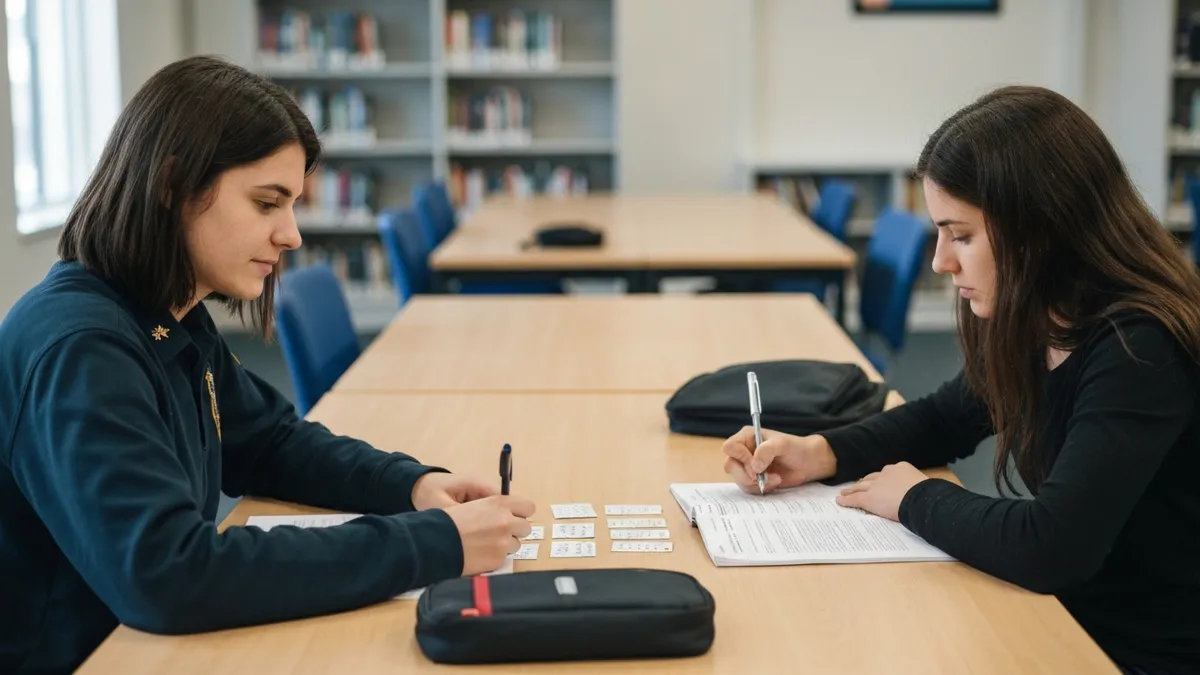
Using a Google-translated version of the English MoCA or an uncertified Spanish adaptation found online is a serious clinical error. Unvalidated translations may have incorrect difficulty levels, culturally inappropriate items, or non-equivalent normative standards — all of which can produce misleading scores. Always use the officially validated Spanish MoCA version available through the MoCA Cognition website, where trained clinicians can access certified materials at no cost after completing the required brief training.
For clinicians preparing to administer the Spanish MoCA for the first time, practical preparation makes a significant difference in assessment quality. Before the patient arrives, confirm that you have the correct validated Spanish MoCA form — not a translation of the English form you already use. The official MoCA organization maintains separate validated versions for different Spanish-speaking populations, and selecting the most appropriate version for your patient's regional background is a meaningful clinical consideration, particularly when dialect-specific verbal items are involved.
Practice reading the standardized instructions aloud in Spanish before your first administration. The instructions for each task must be delivered verbatim without paraphrasing, and they must be delivered fluently to avoid signaling hesitation or uncertainty to the patient. If your spoken Spanish is not sufficiently proficient for natural, confident delivery, arrange for a trained bilingual staff member or certified medical interpreter to administer the verbal components while you score the responses. Using a telephone interpreter who is not trained in cognitive assessment administration is generally insufficient for this purpose.
The clock-drawing task deserves special attention during administration preparation. Patients are given a blank circle and asked to draw a clock showing a specific time — typically 11:10 or a similar time that tests both the clock structure and hand placement. In the Spanish MoCA, the time is stated verbally in Spanish, and some dialects express clock times differently. Confirming that the time you state aligns with how your patient's dialect typically expresses clock times avoids unnecessary confusion during what should be a straightforward task.
Clinicians should also familiarize themselves with the scoring criteria for the verbal fluency and abstraction tasks, as these require judgment calls about acceptable responses. For verbal fluency, proper nouns are generally not counted, and repeated words are scored only once. For abstraction — the task where patients explain what a banana and an orange have in common, for example — only responses that identify a superordinate category (fruits, food) earn full credit, while surface-level similarities (both are round, both are yellow) do not. Understanding these distinctions before administering the test ensures consistent, accurate scoring.
A practical printable version of the MoCA for reference during training can be found via hotel moca nyc resources, which provide downloadable practice forms for clinician education purposes. These materials are intended for training and familiarization, not for clinical administration — actual patient assessments must use the official certified forms obtained through proper channels to ensure validity and legal defensibility of results.
Post-assessment documentation should include the patient's name, date of birth, date of assessment, total score, education-corrected score if applicable, language of administration, whether an interpreter was used, and domain-level subscores for all eight cognitive areas. This documentation standard ensures that future clinicians reviewing the record have complete context for interpreting the assessment, and it enables meaningful comparison if the assessment is repeated at a later date to track cognitive trajectory over time.
Clinicians who administer the Spanish MoCA regularly should also maintain awareness of emerging research on normative data for specific US Latino populations. The field is evolving rapidly, and normative standards developed in Spain or Latin America may not apply with equal precision to Mexican-Americans in Texas or Cuban-Americans in Florida. Participating in continuing education through geriatric medicine or neuropsychology professional societies is the most reliable way to stay current with best practices for cognitive assessment in diverse Spanish-speaking communities.
For patients and families approaching a Spanish MoCA appointment, one of the most effective preparation strategies is simply understanding what the assessment involves and why each task is included. Cognitive test anxiety is real and measurable — studies have documented that performance anxiety can suppress MoCA scores by 1 to 3 points, particularly on timed tasks and the serial subtraction component. Knowing in advance that you will be asked to count backward by 7s, to recall five words after a delay, and to copy a simple three-dimensional cube can transform an intimidating unknown into a manageable series of familiar tasks.
Patients with controlled medical conditions such as diabetes, hypertension, or thyroid disorders should confirm with their physician that these conditions are optimally managed before their assessment date. Poorly controlled blood sugar, significantly elevated blood pressure, or undertreated hypothyroidism can each independently impair cognitive test performance without reflecting underlying neurodegenerative pathology. Ensuring optimal management of chronic conditions in the weeks before a MoCA assessment is a clinically sound strategy for maximizing the validity of results.
Sleep quality in the days before the assessment matters more than most patients realize. Research on sleep and cognition consistently demonstrates that both acute sleep deprivation and chronic poor sleep quality impair memory consolidation, attention, and executive function — precisely the domains the MoCA is designed to measure. Patients who typically experience poor sleep should discuss this with their physician before their assessment, since treating sleep problems before the MoCA may yield a more accurate reflection of baseline cognitive capacity.
Social engagement and mental stimulation in the weeks preceding the assessment can also support optimal performance. Activities such as reading in Spanish, engaging in conversation, playing word games, or working on puzzles maintain the cognitive systems that the MoCA evaluates. This is not about cramming for a test in the traditional sense — rather, it is about ensuring that the patient is functioning at their typical cognitive level rather than being penalized for a period of unusual social isolation or mental inactivity.
Family members who have noticed cognitive changes in their loved one should document specific observations before the appointment rather than relying on memory during the post-assessment discussion. Note the types of errors — difficulty finding words, repeating stories, getting lost in familiar places, struggling with financial tasks — and the timeline over which these changes have emerged. This collateral history complements the MoCA score and is often the decisive factor in determining whether further diagnostic workup is warranted, since family members observe behavior across a range of real-world situations that no 15-minute office assessment can capture.
It is also worth knowing that a single below-average MoCA score does not necessarily indicate dementia or even mild cognitive impairment when considered in isolation. Many factors can temporarily suppress performance, including delirium, depression, anxiety, pain, medication effects, and simple fatigue.
Clinicians who follow best practices will always interpret MoCA results in the context of the full clinical picture, including medical history, mood assessment, and functional status. If you or a family member is concerned about a low score, ask the clinician to explain specifically which domains were affected and what the score means in the context of your complete health history.
Finally, remember that the purpose of the MoCA em espanhol is to provide help, not to deliver a verdict. Early identification of cognitive changes opens doors to interventions, lifestyle modifications, caregiver support, legal and financial planning, and participation in clinical research that can genuinely improve quality of life. Patients and families who engage proactively with cognitive screening — in whatever language is most comfortable — are taking a meaningful step toward informed, empowered healthcare decision-making for the years ahead.
Sample Montreal Cognitive Assessment Practice Questions
Try these questions from our free Montreal Cognitive Assessment practice tests. The correct answer and an explanation follow each question.
A bilingual patient names the rhinoceros correctly in Spanish but not in English during an English-language MoCA. How should the clinician handle this?
- A. Score it as incorrect with no notation
- B. Consider accepting the response and noting it, or administer a validated version in the patient's dominant language
- C. Award half a point for the Spanish response
- D. Repeat the test entirely in Spanish before scoring
Answer: B. Consider accepting the response and noting it, or administer a validated version in the patient's dominant language
Best practice is to administer the MoCA in the patient's dominant language; cross-language correct responses should be noted and interpreted cautiously.
For MoCA standardized administration, how long after the initial learning phase should delayed recall be tested?
- A. 1 minute
- B. 5 minutes
- C. 10 minutes
- D. 30 minutes
Answer: B. 5 minutes
The MoCA protocol specifies a minimum 5-minute delay filled with other subtests before word recall is tested.
What is the minimum number of words beginning with 'F' an examinee must produce in 60 seconds to earn the point on the MoCA verbal fluency task?
- A. 7 words
- B. 9 words
- C. 11 words
- D. 15 words
Answer: C. 11 words
The cutoff for earning 1 point on the MoCA verbal fluency task is generating 11 or more words beginning with 'F' within 60 seconds. This threshold was established in the original MoCA normative study.
Which condition most commonly causes difficulty on the MoCA naming subtest due to progressive loss of object knowledge?
- A. Semantic dementia
- B. Alzheimer's disease (early stage)
- C. Vascular dementia
- D. Depression
Answer: A. Semantic dementia
Semantic dementia involves progressive degradation of semantic memory, leading to profound naming failures even for common objects and animals.
MoCA Questions and Answers
Sources & last verified
- MoCA Test Inc., operating as MoCA Cognition — time limit (official source). “Scored on 22 points and administered in approximately 10 minutes.” Verified Oct 15, 2026.
- MoCA Test Inc., operating as MoCA Cognition — passing score (official source). “MoCA without the visual elements, scored out of 22. Cut-off: N ≥ 19.” Verified Oct 15, 2026.
- MoCA Test Inc., operating as MoCA Cognition — exam fee (official source). “The test should be made available free of charge to patients.” Verified Oct 15, 2026.
- MoCA Test Inc., operating as MoCA Cognition — renewal (official source). “MoCA Cognition recommends renewal of certification every two years.” Verified Oct 15, 2026.
How we verify: editorial & fact-checking policy. Report an error: contact us.

MoCA Test Interpretation: Complete Guide to Understanding Scores and Results

MoCA Nasreddine: The Complete Guide to the Montreal Cognitive Assessment and Its Creator

Low MoCA Score: What It Means, Causes, and What to Do Next

MoCA Test Printable: Free Practice Guide for the Montreal Cognitive Assessment

MoCA PDF: Download and Use the Montreal Cognitive Assessment Form
How this page was made: written with AI tools and published by Nathan Beja, founder of Practice Test Geeks, who is responsible for its content. Exam facts are checked against the official sources listed below. Not reviewed by a subject-matter expert. Editorial policy
Sources & references
Exam facts on this page (fees, format, dates, passing scores) are checked against these official sources; the date is our last check. Editorial policy
- mocacognition.com — Fees, eligibility, renewal, passing score, test delivery, time limit, exam information · verified Oct 2026