
TMC Exam Review: What Is LTO, What Does LTO Stand For, and How to Pass Your Driver's License Test
Complete TMC exam review guide. What is LTO, what does LTO stand for, and how to ace your driver's license test. ✅ Free practice questions inside.
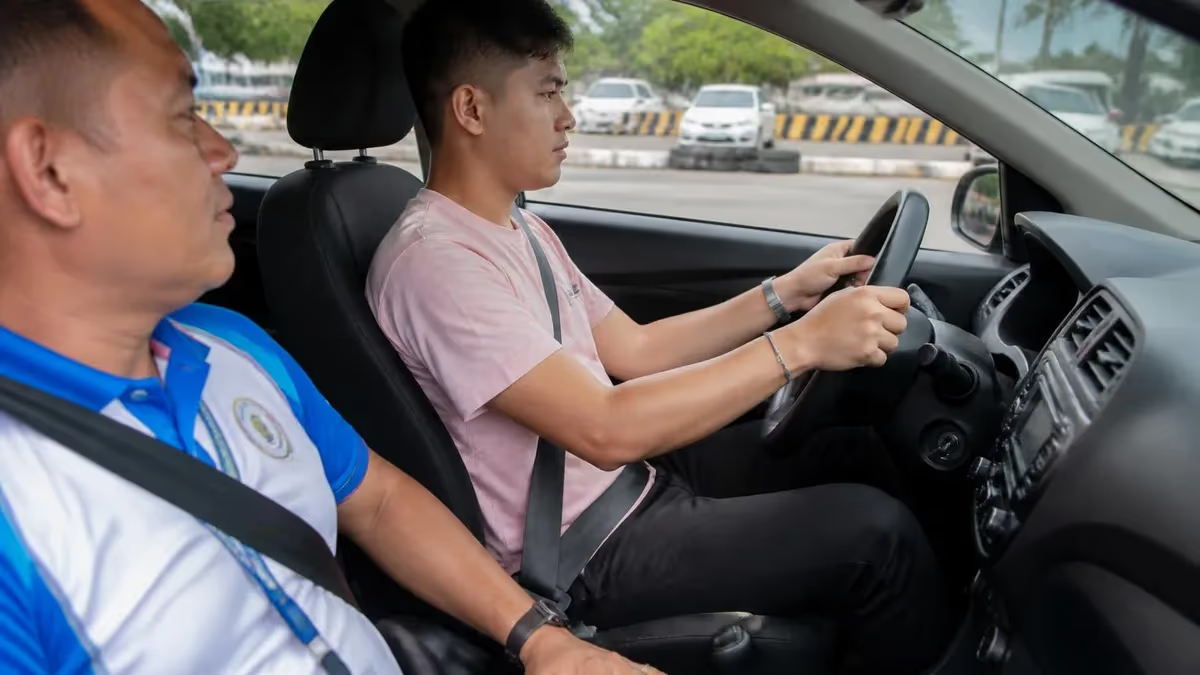
If you are preparing for your TMC exam review, understanding what the Land Transportation Office (LTO) expects from every applicant is the single most important step you can take before test day. The LTO is the Philippine government agency responsible for registering motor vehicles, licensing drivers, and enforcing traffic rules across the country. The TMC — or Theoretical Motor Vehicle Course — is the written examination every new driver must pass to obtain a non-professional or professional driver's license. Thousands of Filipinos sit for this exam every month, yet many are caught off-guard by the scope of its content.
So what is LTO, exactly, and why does this agency hold so much weight in your daily life as a driver? The Land Transportation Office operates under the Department of Transportation (DOTr) and functions as the central authority for all land vehicle matters in the Philippines. When people ask what does LTO stand for, the answer is straightforward: Land Transportation Office. But the functions of the LTO go far beyond issuing license cards. The agency sets road safety standards, adjudicates traffic violations, imposes penalties, and maintains the national database of registered vehicles and licensed drivers.
What does LTO mean in a practical sense for the ordinary Filipino? It means that every car, motorcycle, tricycle, and truck you see on public roads has been registered through the LTO's systems. Every driver holding a valid license has demonstrated — at least at one point in time — that they understand traffic laws, road signs, and safe driving principles through the TMC written exam. Passing this test is not merely a bureaucratic hurdle; it is a public safety requirement designed to reduce accidents and fatalities on Philippine roads.
Many first-time examinees wonder whether the TMC exam is difficult. The honest answer is that it depends entirely on how well you prepare. The exam covers a broad range of topics including traffic signs, road markings, traffic rules and regulations, driver responsibilities, and the consequences of traffic violations. If you walk in without reviewing the official LTO reviewer materials, you are likely to struggle. However, with the right TMC exam review strategy, most diligent applicants can pass on their first attempt.
This comprehensive guide is designed to walk you through everything you need to know about the TMC exam — from the structure of the test itself to the specific topics covered, study strategies that actually work, and common mistakes to avoid. Whether you are a brand-new applicant applying for your student permit or a seasoned driver upgrading from a non-professional to a professional license, this review will give you the foundation you need to walk into the LTO testing room with confidence.
One of the most common questions we receive is is princeton review harder than real ap exam — and while that comparison applies to a different context, the principle holds true for the TMC exam as well: official practice materials tend to mirror the real exam most closely, while third-party reviewers may emphasize topics differently. That is why we strongly recommend using the official LTO reviewer as your primary source, supplemented by targeted practice tests on platforms like PracticeTestGeeks.com.
Throughout this article, you will find study schedules, exam format breakdowns, checklists, and actionable tips that have helped thousands of drivers pass their TMC exam review on the first try. Read every section carefully, take the free practice quizzes embedded in this page, and approach your preparation with the same seriousness you would bring to any important professional certification. The roads you will drive on are shared by millions of Filipinos, and earning your license the right way — by genuinely understanding the rules — is a responsibility that matters far beyond the test itself.
LTO TMC Exam by the Numbers
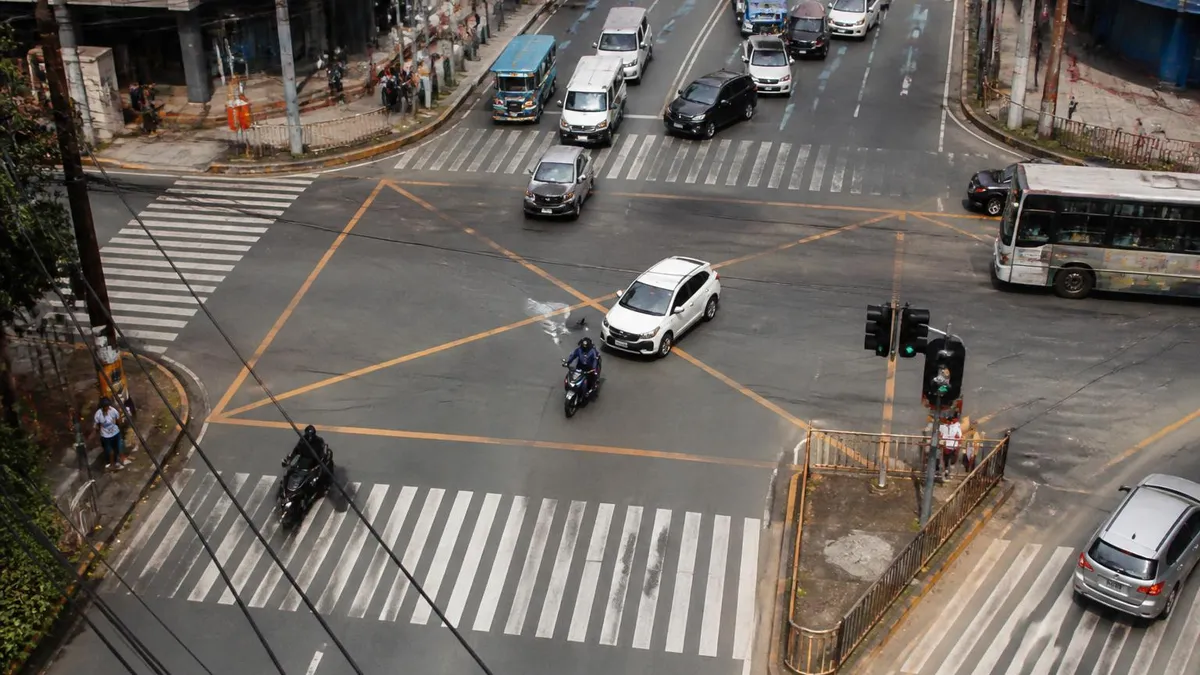
TMC Exam Format
| Section | Questions | Time | Weight | Notes |
|---|---|---|---|---|
| Road Signs and Pavement Markings | 10 | ~15 min | 25% | Regulatory, warning, and informatory signs |
| Traffic Rules and Regulations | 10 | ~15 min | 25% | RA 4136 and related ordinances |
| Driver Duties and Responsibilities | 8 | ~12 min | 20% | Defensive driving, right-of-way, courtesy |
| Traffic Safety and Defensive Driving | 7 | ~10 min | 17.5% | Hazard recognition and accident prevention |
| Traffic Violations and Penalties | 5 | ~8 min | 12.5% | Fines under RA 4136 and LTO memoranda |
| Total | 40 | 1 hour | 100% |
Understanding what the LTO tests you on during the TMC exam is the cornerstone of any effective review strategy. The exam is not designed to trick you — it is designed to verify that you understand the foundational laws and safety principles that govern Philippine roads.
The five core subject areas covered in the exam map directly to the chapters of the official LTO Driver's Manual, which every applicant can download from the LTO website or obtain at any LTO office. If you have not read this manual in full, that is your first action item before any other review activity.
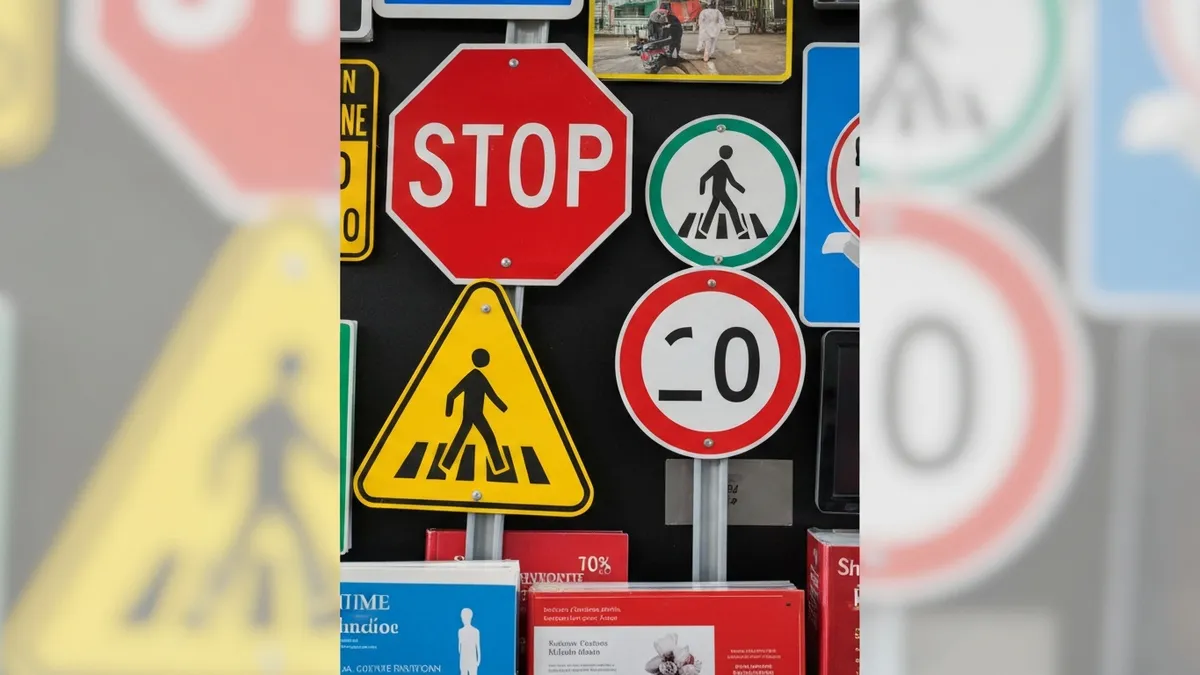
Road signs and pavement markings account for 25% of the TMC exam, making them the single largest topic area. Philippine road signs follow international conventions and are divided into three main categories: regulatory signs (which prescribe or prohibit specific actions), warning signs (which alert drivers to hazards ahead), and informatory signs (which provide directional or facility information). Examinees are expected to recognize each sign by shape, color, and symbol — and to know what action is required when they encounter one.
Common exam questions include identifying a yield sign, explaining the meaning of double yellow lines, and understanding pedestrian crossing rules.
Traffic rules and regulations under Republic Act 4136, the Land Transportation and Traffic Code, form another 25% of the exam. This law defines speed limits, lane discipline, right-of-way rules, vehicle registration requirements, and the conditions under which a driver may be stopped and cited. Examinees should be especially familiar with maximum speed limits in urban areas (60 kph for most passenger vehicles), expressway speed limits, and rules governing overtaking on two-lane roads. Questions in this section are often scenario-based, asking what the correct action is at an uncontrolled intersection or when following an emergency vehicle.
Driver duties and responsibilities make up 20% of the exam and cover concepts that experienced drivers sometimes take for granted. Topics include proper use of mirrors before lane changes, rules for yielding to pedestrians at zebra crossings, the obligation to stop after an accident, requirements for carrying vehicle registration documents, and standards for vehicle lighting at night. One frequently tested concept is the three-second following distance rule — the minimum safe gap between your vehicle and the one ahead under normal driving conditions. In wet weather, that gap should double to six seconds or more.
Traffic safety and defensive driving contribute 17.5% of the exam. This section moves beyond rules into proactive driving philosophy. Defensive driving means anticipating the mistakes of other road users and adjusting your own behavior to reduce risk.
The exam may ask you to identify the most dangerous time of day to drive (dawn and dusk, when visibility is compromised and glare is worst), or the correct procedure when your brakes fade on a long downhill. You may also be tested on blood alcohol content (BAC) limits — currently 0.05% for private vehicle drivers — and the effects of fatigue on reaction time.
Traffic violations and penalties round out the final 12.5% of the exam. This section tests your knowledge of specific fines and license suspension periods for common infractions such as illegal overtaking, reckless driving, driving without a license, and using a mobile phone while driving.
Knowing exact peso amounts for fines is less important than understanding the hierarchy of violations — which infractions lead to immediate license confiscation versus which result in a ticket and a 72-hour grace period to settle the fine. For a deeper dive into this topic, consider reviewing how to review nbme exams alongside your standard LTO reviewer to build a more complete picture of enforcement procedures.
One practical tip for absorbing all five subject areas efficiently is to study them in order of weight — start with road signs, then traffic rules, then driver responsibilities, then safety, and finish with violations. This way, if you run short on study time, you have already covered the highest-value topics.
Use flashcards for road signs (visual recognition is best reinforced through repeated exposure), scenario questions for traffic rules, and audio summaries or mnemonics for penalties and fine amounts. The goal is not to memorize isolated facts but to build a mental model of how Philippine traffic law works as an interconnected system.
LTO Exam Study Strategies by Topic
Road signs are the most visual component of the LTO TMC exam, which means rote reading is far less effective than image-based practice. Create a set of digital or physical flashcards with the sign image on one side and its name, category, and required action on the other. Review at least 10 new signs per day during the two weeks before your exam, focusing first on the 20 most commonly tested regulatory signs such as Stop, No Entry, Speed Limit, and No Overtaking. Repetition through visual recall — not just text description — builds the instant recognition the exam demands.
Once you have memorized individual signs, practice grouping them by color and shape to accelerate identification during the actual test. Red octagonal signs always mean Stop; red circular signs with a diagonal slash are prohibitory; yellow diamond signs are warnings; blue rectangular signs are informatory. This color-shape logic lets you narrow down an answer even when you are unsure of the specific symbol. Spend the last three days before your exam running timed drills where you identify 20 signs in under 90 seconds — this builds the fluency you need to avoid running out of time on the computerized exam.
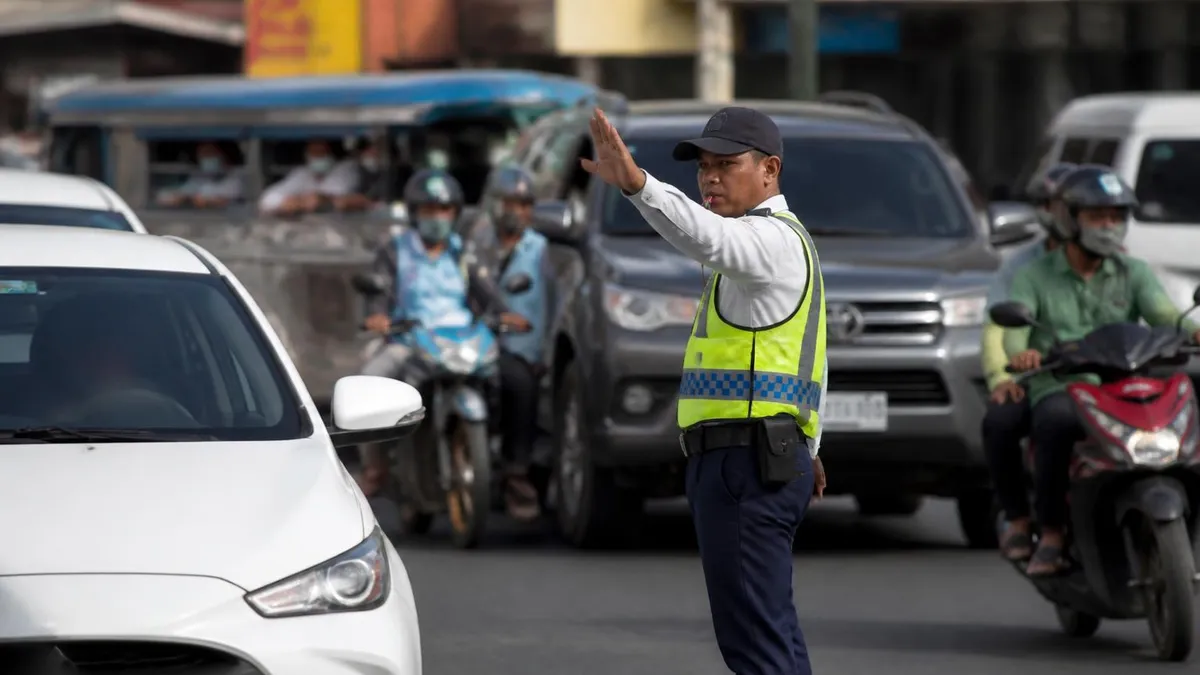
Self-Study vs. LTO Review Class: Which Works Better?
- +Self-study lets you set your own pace and focus on weak areas without time pressure
- +Free practice tests on PracticeTestGeeks.com simulate the real exam format at no cost
- +Official LTO Driver's Manual is available for free download — the most accurate source
- +Flexible scheduling allows you to study during commutes, lunch breaks, or evenings
- +Online video explanations for road signs are often clearer than printed text alone
- +Spaced repetition apps let you review 10-15 questions daily and build long-term retention
- −Self-study requires discipline — without accountability, many applicants procrastinate
- −Third-party reviewers sometimes contain outdated fine amounts or superseded regulations
- −No instructor to clarify confusing scenarios or resolve conflicting answers between sources
- −Without structure, students often over-study familiar topics and neglect weaker areas
- −Some LTO branches use slightly different question pools — review classes may have inside knowledge of local patterns
- −Anxiety management is harder without a classroom setting and peer support during practice exams
TMC Exam Preparation Checklist
- ✓Download and read the official LTO Driver's Manual from end to end at least once before exam day.
- ✓Complete at least 200 practice questions across all five TMC exam topic areas.
- ✓Memorize the three categories of road signs (regulatory, warning, informatory) and their color-shape codes.
- ✓Review Republic Act 4136 speed limits for urban roads, school zones, and national highways.
- ✓Study right-of-way rules for uncontrolled intersections, pedestrian crossings, and roundabouts.
- ✓Learn the specific fine amounts and license consequences for the top 10 most-tested traffic violations.
- ✓Practice the defensive driving principle of maintaining a three-second following distance in all drills.
- ✓Complete at least two full 40-question timed mock exams under real conditions (one hour, no notes).
- ✓Verify the exact requirements and documents needed at your specific LTO branch before exam day.
- ✓Get a full night of sleep the night before — fatigue measurably reduces reading comprehension and recall speed.

75% Is the Magic Number — and It Is Very Achievable
You need to answer 30 out of 40 questions correctly to pass the TMC exam. That means you can miss up to 10 questions and still walk out with a passing score. Focus your energy on the highest-weight topics — road signs and traffic rules together account for 50% of the exam. Master those two areas thoroughly and you are already halfway to passing before you even open the violations chapter.
Common mistakes during TMC exam preparation fall into predictable patterns, and recognizing them in advance can save you from repeating the same errors that trip up thousands of applicants every year. The most frequent mistake is relying exclusively on informal online reviewer lists without cross-checking them against the official LTO Driver's Manual. These third-party lists circulate widely on social media and messaging apps, but they often contain outdated fine amounts, incorrect sign descriptions, or rules from superseded memoranda. Always verify any fact you read in a social media post against the official source before committing it to memory.
A second common error is passive review — reading through material once and assuming familiarity equals readiness. Research on learning science consistently shows that active recall (testing yourself on material without looking at the answer) produces far stronger long-term retention than rereading the same notes. Every hour you spend passively rereading the LTO manual would be better spent answering practice questions on the same material. The discomfort of struggling to retrieve an answer is exactly what cements the information in memory for the real exam.
Overconfidence among experienced drivers is another significant trap. Many applicants who have been driving informally for years assume that their road experience will carry them through the written test. It frequently does not. The TMC exam tests specific legal knowledge — exact speed limits, specific sign shapes, precise fine amounts — not general driving skill. An experienced but unlicensed driver may know intuitively that you should slow down in a school zone but may not know the specific legal limit of 20 kph. These gaps in formal knowledge are exactly what the exam is designed to surface.
Time management during the actual exam is an underappreciated skill. The computerized TMC exam gives you 60 minutes for 40 questions — that works out to 90 seconds per question. Most questions are straightforward if you have prepared well, but a few will require more thought.
The right strategy is to answer every question you are confident about first, flag uncertain ones for review, and then return to flagged items with the remaining time. Never leave a question blank — there is no penalty for guessing, and a thoughtful guess based on eliminating wrong answers gives you a real chance of getting partial credit on items you were unsure about.
Another mistake is neglecting the vehicle safety and mechanical knowledge questions that occasionally appear in the TMC exam. While the majority of questions focus on traffic law and signs, some exams include questions about basic vehicle maintenance — such as checking tire pressure, understanding dashboard warning lights, or knowing when to use hazard lights. These questions draw on practical knowledge rather than legal memorization, and they catch underprepared applicants off guard. A quick review of the vehicle safety chapter in the LTO Driver's Manual will cover everything you need for these items.
Mental preparation matters more than most applicants realize. Test anxiety is a genuine phenomenon that can cause well-prepared examinees to blank on answers they have reviewed dozens of times.
Managing anxiety starts well before exam day: establish a consistent study schedule so that you go into the exam feeling thoroughly prepared rather than cramming the night before, get physical exercise in the days leading up to the test, and practice deep breathing techniques to use if you feel panicked during the exam itself. Arriving at the LTO office early — at least 30 minutes before your scheduled exam time — also reduces the stress of rushing and gives you time to settle in before the clock starts.
Finally, make sure your documents are complete before you arrive for the TMC exam. Missing a single required document can result in being turned away and having to reschedule, which is both frustrating and disruptive to your study momentum.
The standard document requirements for a new non-professional license application include a completed LTO application form, valid government-issued ID, medical certificate from an accredited physician, and the applicable fees. Requirements can vary slightly by branch and license type, so call your specific LTO office or check their official announcements a few days before your appointment to confirm exactly what you need to bring.
LTO examination procedures, required documents, and fee schedules are updated periodically through administrative orders and memoranda. Information that was accurate six months ago may no longer apply. Always verify current requirements directly with your target LTO branch or through the official LTO website before your exam appointment. Third-party websites — including this one — may not reflect the most recent changes to fees or document requirements.
Day-of exam tips can make the difference between a confident performance and an avoidable failure, and most of them have nothing to do with the content of the test itself. The first and most important tip is to arrive early. LTO offices open at 8:00 AM on weekdays, and examination slots often fill up quickly.
If you are applying for a student permit or a new non-professional license, arriving before 7:30 AM ensures you get an early slot and avoid the afternoon rush when fatigue and crowding can affect your concentration. Bring a printed copy of your appointment confirmation if your LTO branch uses an online scheduling system.
Eat a light, nutritious breakfast before your exam. Cognitive performance is measurably affected by blood sugar levels, and arriving hungry or having consumed a heavy, carbohydrate-dense meal can both impair your ability to focus. A meal with moderate protein, healthy fats, and complex carbohydrates — eggs and whole-grain bread, for example — sustains energy more effectively than a fast-food breakfast or no breakfast at all. Avoid excessive caffeine if you are not a regular coffee drinker, as it can increase anxiety and cause difficulty concentrating on longer passages in the exam.
During the exam itself, read every question fully before selecting an answer. A significant portion of wrong answers on the TMC exam come from misreading questions — particularly questions that include negatives like "which of the following is NOT allowed" or conditionals like "a driver may overtake ONLY when." Taking two seconds to underline the key word in each question (mentally, since the exam is computerized) prevents this very common error.
If the exam interface allows you to flag questions for review, use this feature liberally — it costs you nothing and gives you a structured way to revisit uncertain items.
After finishing all questions, use your remaining time to review flagged items. Research shows that test-takers who change answers on review questions improve their scores more often than they hurt them — the popular belief that your first instinct is always right is a myth. If you re-read a question and a different answer now seems clearly better, trust your considered judgment over your initial gut reaction. However, if you are genuinely unsure after reviewing, stick with your original answer to avoid second-guessing yourself into the wrong choice.
One topic that many applicants want to understand better before their exam is how the LTO's enforcement ecosystem connects to the licensing process. For example, if your license is listed as delinquent due to unpaid traffic violation fees, you may not be able to renew it — and in some branches, even a new application could be flagged.
This is why settling all outstanding violations before your exam appointment is wise. You can check your violation records through LTO's online portal or authorized third-party services, and resources like haven life no medical exam life insurance reviews can help you navigate the digital tools available for tracking your LTO records.
After passing the TMC exam, the process continues with a practical driving test if you are applying for a non-professional or professional license beyond a student permit. The practical test evaluates your ability to execute basic maneuvers — forward parking, reverse parking, three-point turns, and driving in mixed traffic — to the standard required by the LTO examiner.
Prepare for the practical test by practicing these specific maneuvers in a vehicle similar to the one you will use on test day. Many applicants pass the written TMC exam with high scores but are caught off-guard by the practical component, so treat them as equally important stages of the licensing process.
Understanding resources like what does exam review not performed mean can also clarify what happens when a testing irregularity or system error occurs during your exam session, ensuring you know your rights as an applicant. The LTO has established procedures for handling disputed exam results, incomplete testing sessions due to technical issues, and cases where examinees believe questions were ambiguous or incorrectly scored. Knowing these procedures in advance means you will not be caught off-guard if an administrative issue arises during your visit.
Practical tips for your final week of TMC exam preparation can sharpen your readiness without the burnout that comes from last-minute cramming. The most effective approach in the seven days before your exam is to switch from learning new material to consolidating what you already know. Run one full 40-question timed mock exam each day, review every question you got wrong immediately afterward, and spend no more than 30 minutes per session on targeted review of weak areas. This consolidation phase reinforces correct answers and systematically closes the gaps that practice tests reveal.
Create a personal error log during your mock exams — a simple list of every question you answered incorrectly, the correct answer, and the rule or principle behind it. By exam day, most applicants find they are making the same three to five types of errors repeatedly. Identifying and addressing these specific patterns is far more valuable than generic review. For example, if you consistently miss questions about overtaking distances, spend an extra session focused exclusively on proximity-based traffic rules rather than reviewing all of RA 4136 from scratch.
Use the final 48 hours before your exam for light review only. Avoid introducing any new material in the last two days — your brain needs consolidation time, and new information introduced too close to the exam can actually interfere with previously learned material through a process psychologists call interference. Instead, spend this time reviewing your error log, doing a quick visual pass through road sign flashcards, and confirming your exam day logistics — appointment time, document checklist, route to the LTO office, and parking or commute options.
Sleep is the most undervalued performance enhancer available to any test-taker. During sleep, the brain consolidates memories formed during waking hours, transferring them from short-term to long-term storage. Pulling an all-nighter or sleeping fewer than six hours before the exam directly impairs this consolidation process and reduces your ability to retrieve information under pressure. Aim for seven to eight hours of sleep the night before your exam, and if anxiety makes it hard to fall asleep, try a consistent bedtime routine — light reading, no screens for 30 minutes before bed, and a cool, dark room.
On the morning of your exam, do a brief 15-minute warm-up review rather than intensive studying. Answer 10 to 15 practice questions to get your brain into exam mode without inducing anxiety. This mental warm-up is similar to a physical warm-up before exercise — it activates the relevant neural pathways and reduces the cognitive shock of transitioning from relaxed morning mode to focused test-taking mode. Choose questions from topics you know well for the warm-up so that you start your exam day feeling capable rather than anxious about gaps.
After your exam, regardless of the outcome, reflect on what went well and what you would do differently. If you pass, note which study strategies were most effective and share them with friends or family who are preparing for their own TMC exam.
If you do not pass on the first attempt, remember that the LTO allows re-examination and that a second sitting gives you the opportunity to focus your preparation on the specific topics where you lost points. Many successful drivers did not pass on the first try — what matters is that you continue preparing systematically and return to the exam with a clear improvement plan.
The broader purpose of the TMC exam and the LTO licensing process is worth keeping in mind as you prepare. The Philippines loses thousands of lives to road accidents every year, and a significant proportion of these accidents involve unlicensed or undertrained drivers.
Every person who passes the TMC exam with genuine understanding of traffic law and safe driving principles is a safer presence on the road — not just for themselves, but for every pedestrian, cyclist, and passenger they share the road with. Approaching your TMC exam review as a civic responsibility, not just a bureaucratic requirement, gives the process the weight it deserves and often produces better learning outcomes as well.
LTO Questions and Answers

LTO License Renewal Guide Philippines 2026 — Requirements and Process
LTO Traffic Violations Philippines 2026 — Fines and Penalties Guide

LTO Plate Number Tracker: What Is LTO, What Does LTO Stand For, and How to Track Your Vehicle Registration in 2026
RDA Exam Review: What Is LTO, What Does LTO Stand For, and How to Pass Your Driver's License Test

LTO Dress Code and What Is LTO: Complete Guide to the Philippines Land Transportation Office
About the Author

Educational Psychologist & Academic Test Preparation Expert
Columbia University Teachers CollegeDr. Lisa Patel holds a Doctorate in Education from Columbia University Teachers College and has spent 17 years researching standardized test design and academic assessment. She has developed preparation programs for SAT, ACT, GRE, LSAT, UCAT, and numerous professional licensing exams, helping students of all backgrounds achieve their target scores.
Join the Discussion
Connect with other students preparing for this exam. Share tips, ask questions, and get advice from people who have been there.
View discussion (8 replies)