
LTO Hours and Holidays: What Is LTO, What Does LTO Stand For, and When Is the LTO Open in 2026
What is LTO? Learn LTO hours, holiday schedules, exam tips & license renewal info. Plan your visit and pass your LTO exam in 2026. ✅
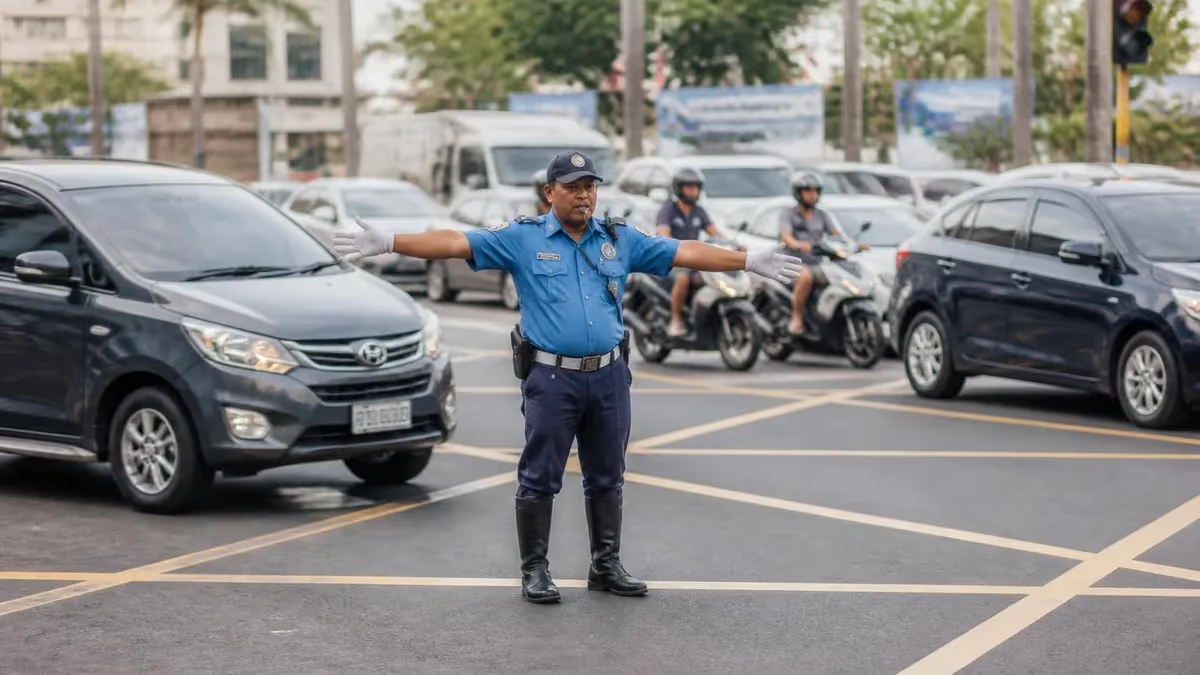
If you have ever asked what is LTO or searched for whether your local office is open on an LTO holiday, you are not alone. The Land Transportation Office — commonly abbreviated as LTO — is the Philippine government agency responsible for registering motor vehicles, issuing driver's licenses, enforcing traffic laws, and administering the LTO exam that every aspiring driver must pass before legally operating a vehicle on public roads. Understanding the agency's schedule, especially around holidays and special non-working days, can save you hours of wasted travel and frustration.
So what does LTO stand for? LTO stands for the Land Transportation Office, a bureau operating under the Department of Transportation (DOTr) of the Philippines. It is roughly analogous to the Department of Motor Vehicles (DMV) in the United States, handling everything from the initial student permit application to professional driver's license renewals and motor vehicle registration. For millions of Filipinos and residents alike, the LTO is an unavoidable part of life the moment they decide to drive or own a vehicle.
Many people outside the Philippines encounter the abbreviation LTO in a completely different context — food service. In the restaurant industry, what is LTO food? An LTO in food stands for Limited Time Offer, a promotional item on a menu available only for a restricted period.
So if someone asks what is LTO on a burger, they are referring to a burger that is only available temporarily, such as a seasonal special. This dual meaning often confuses people searching online, so it is worth clarifying from the outset: in the context of this article, LTO always refers to the Land Transportation Office.
When it comes to planning a trip to any LTO district office, branch office, or licensing center, knowing the LTO holiday schedule is critical. Philippine government offices — including the LTO — follow the official Proclamation on regular and special non-working holidays issued annually by the Office of the President. On declared regular holidays, LTO offices are generally closed. On special non-working days, skeletal or reduced operations may apply depending on the regional director's directive. Checking in advance means the difference between a productive day and a wasted commute.
The LTO exam itself is a major milestone for any prospective driver. It consists of a written theoretical test covering traffic rules, road signs, pavement markings, driver responsibilities, and safety protocols. The exam is administered on regular working days at authorized LTO testing centers, so scheduling your exam on or near a holiday can result in rescheduling penalties or extended wait times. Knowing which days are off-limits is just as important as knowing the exam content itself.
For US-based readers researching what does LTO mean in an international licensing context, the Philippine LTO operates similarly to state-level DMV agencies but with national jurisdiction. It centralizes all vehicle-related transactions across thousands of offices nationwide. Whether you are a US citizen living in the Philippines, an overseas worker returning home, or someone helping a family member navigate the system remotely, understanding what is an LTO and how it schedules operations is essential practical knowledge. For more details on planning your appointment around office closures, refer to our comprehensive guide on lto hours and holidays.
This article breaks down everything you need to know: the official LTO office hours, the complete list of holidays when LTO is closed or operating at reduced capacity, how the LTO exam is structured and scheduled, and practical tips to ensure your visit — whether for a license renewal, a vehicle registration, or an exam appointment — goes smoothly. Read on for the most up-to-date, reader-friendly breakdown of LTO operations in 2026.
LTO by the Numbers
LTO Office Hours: What to Expect at Every Visit
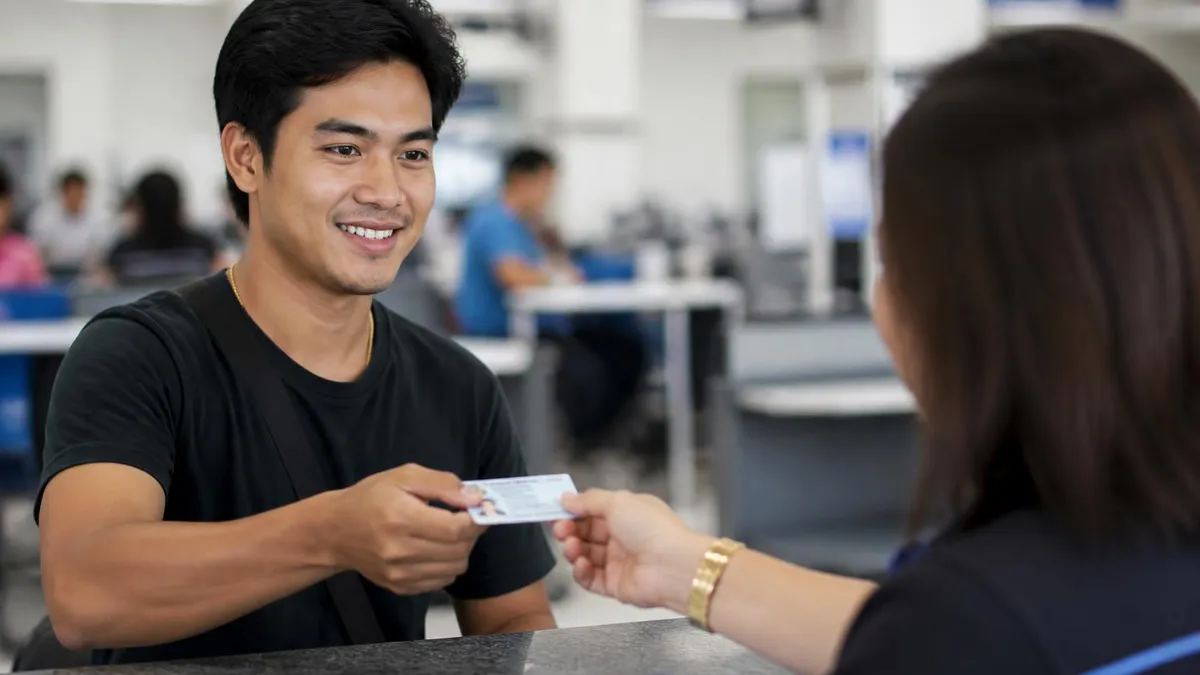
LTO offices operate Monday through Friday, 8:00 AM to 5:00 PM, with a lunch break typically from 12:00 PM to 1:00 PM. Transactions are usually cut off by 4:00 PM to allow processing time. Arriving early — ideally before 9:00 AM — significantly reduces your wait.
Most LTO district offices are closed on Saturdays and Sundays. Some licensing centers in major metropolitan areas like Metro Manila operate on select Saturdays for specific transactions such as driver's license renewal. Always call your target office ahead to confirm weekend availability.
On regular holidays declared by the President, LTO offices are fully closed. On special non-working holidays, individual regional offices may implement skeletal workforce arrangements. The LTO publishes official advisories on its website and social media channels before major holiday periods.
The theoretical driver's license exam is conducted on regular working days only. Walk-in testing is accepted at many centers, but online appointment booking through the LTO portal is strongly recommended to avoid long queues and potential closure surprises on semi-holidays.
During license renewal amnesty periods or nationwide registration deadlines, select LTO offices extend hours until 7:00 PM or open on Saturdays. These special schedules are announced via LTO official channels and may vary by region, so monitor the official LTO Facebook page regularly.
Understanding when an LTO holiday affects your plans requires knowing the difference between regular holidays and special non-working days under Philippine law. A regular holiday — such as New Year's Day (January 1), Independence Day (June 12), or Christmas Day (December 25) — mandates full closure of government offices including all LTO branches. These are non-negotiable rest days, and no transactions, including the LTO exam, are conducted. Planning any LTO visit around these dates means selecting the working day immediately before or after, which tends to be extraordinarily busy.
Special non-working holidays — such as Ninoy Aquino Day (August 21), All Saints' Day (November 1), and the Chinese New Year — present a more complicated picture. The LTO central office typically releases a memorandum circular clarifying whether full closure, skeletal operations, or normal operations apply. Skeletal operations usually mean that only a reduced number of counters are open, queues are longer, and certain transactions like vehicle registration may be unavailable. Calling your specific district office the day before is the most reliable way to confirm status during these periods.
In 2026, the Philippine government has declared the following as regular holidays relevant to LTO scheduling: New Year's Day (January 1), the Day of Valor/Araw ng Kagitingan (April 9), Maundy Thursday and Good Friday (dates vary by year), Labor Day (May 1), Independence Day (June 12), National Heroes Day (last Monday of August), Bonifacio Day (November 30), Christmas Day (December 25), and Rizal Day (December 30). Each of these dates represents a full LTO closure. If your license renewal, registration, or exam appointment falls on one of these days, reschedule immediately to avoid late fees or forfeiture of your slot.
Local holidays add another layer of complexity. Each city and municipality in the Philippines may declare local non-working holidays for city fiestas, commemorative events, or calamity situations. An LTO extension office located within a municipality celebrating its patron saint's feast day may be closed even when the national schedule shows a working day. This is particularly relevant for provincial offices outside major urban centers. When in doubt, the LTO regional director's office in your area can provide definitive guidance.
The impact of an LTO holiday on the LTO exam schedule deserves special attention. Exams are administered only on working days, and the computer-based testing system at licensing centers is shut down on declared non-working holidays. If you have an online appointment that falls on a surprise declared holiday — as sometimes happens when the President issues last-minute proclamations — the LTO will typically allow rescheduling at no additional cost, but you must act quickly to secure a new slot before the system fills up.
For vehicle registration renewals specifically, missing the annual deadline due to a cluster of holidays can result in significant penalties. Philippine law prescribes a penalty for each month of delayed registration, so a vehicle that was due for renewal in October but missed the window due to a string of holidays in late October and early November could accumulate fees quickly. Proactive scheduling — at least three to four weeks before the actual deadline — provides enough buffer to accommodate unexpected holiday closures and peak queuing periods.
Planning a renewal or exam visit? A practical resource that consolidates all the scheduling considerations — including which holidays fall on which days, which offices have extended hours, and what documents to bring — can be found in our detailed breakdown of lto hours and holidays. Cross-referencing that guide with your personal calendar before committing to an appointment date is one of the most effective ways to avoid wasted trips and unnecessary stress.
What Does LTO Stand For: Three Contexts Explained
In the Philippines, LTO stands for the Land Transportation Office, a national government agency under the Department of Transportation. It is responsible for registering all motor vehicles, issuing and renewing driver's licenses at every classification level, conducting the mandatory theoretical and practical driving exams, and enforcing road safety regulations through deputized traffic enforcement units across the country.
The LTO also maintains the central database of all registered vehicles and licensed drivers, which law enforcement agencies use to verify ownership and driving status during traffic stops. Its network spans over 600 offices nationwide, making it one of the most visited government agencies in the country, processing millions of transactions annually from student permits to professional driver's license renewals.
Visiting LTO In Person vs. Using Online Services
- +Immediate resolution of complex transactions that require physical document verification
- +On-site biometrics capture for new licenses and renewals ensures data accuracy
- +Direct access to LTO staff for clarifying confusing requirements or special cases
- +Ability to pay fees in cash at the cashier window without online payment issues
- +Same-day release of certain documents like the official receipt for registration
- +Opportunity to submit supporting documents and get real-time feedback on completeness
- −Long queues, especially on days immediately before or after an LTO holiday closure
- −Risk of wasted trip if the office is unexpectedly closed due to local holidays or calamities
- −Limited parking and crowded waiting areas at most district and extension offices
- −Transactions may be cut off early if daily quota is reached before closing time
- −Travel costs and time lost commuting, particularly for offices in urban centers
- −Exposure to communicable illnesses in crowded government office environments
LTO Visit Checklist: What to Do Before You Go
- ✓Check the official LTO website or Facebook page for any holiday advisory or office closure notice before your visit.
- ✓Verify whether your target office has a local holiday that differs from the national schedule.
- ✓Book your appointment online through the LTO portal at least one week in advance to secure your preferred time slot.
- ✓Download and print the required application forms from the LTO website to avoid filling out forms on-site.
- ✓Prepare two valid government-issued IDs, as the LTO requires primary and secondary identification for most transactions.
- ✓Bring the original and a photocopy of all supporting documents including your medical certificate for license applications.
- ✓Arrive at the office at least 30 minutes before your appointment time to complete biometrics and initial screening.
- ✓Prepare the exact transaction fees in cash, as not all LTO offices accept electronic payments or GCash.
- ✓Set a reminder on your phone for your appointment date and note the office address, floor, and counter number.
- ✓Confirm with the LTO hotline (1342) whether your specific transaction is available on your chosen visit date.
Schedule Your LTO Exam at Least 2 Weeks Before Any Holiday Cluster
Back-to-back Philippine holidays — such as the All Saints' Day and All Souls' Day window in late October and early November — create sudden surges in demand for LTO exam slots. Testing centers often fill up days in advance, and walk-in slots disappear before 9 AM. Booking online at least two weeks early gives you the best selection of dates and avoids the post-holiday rush that follows any extended closure period.
Preparing for the LTO exam requires a clear understanding of what the test actually covers and how it is structured. The written theoretical examination consists of 60 multiple-choice questions drawn from a standardized question bank maintained by the LTO. To pass, you must answer at least 48 questions correctly, representing an 80% passing threshold. The exam is administered via computer-based testing terminals at authorized licensing centers, and results are released immediately upon submission. There is no partial scoring — each question is either correct or incorrect.
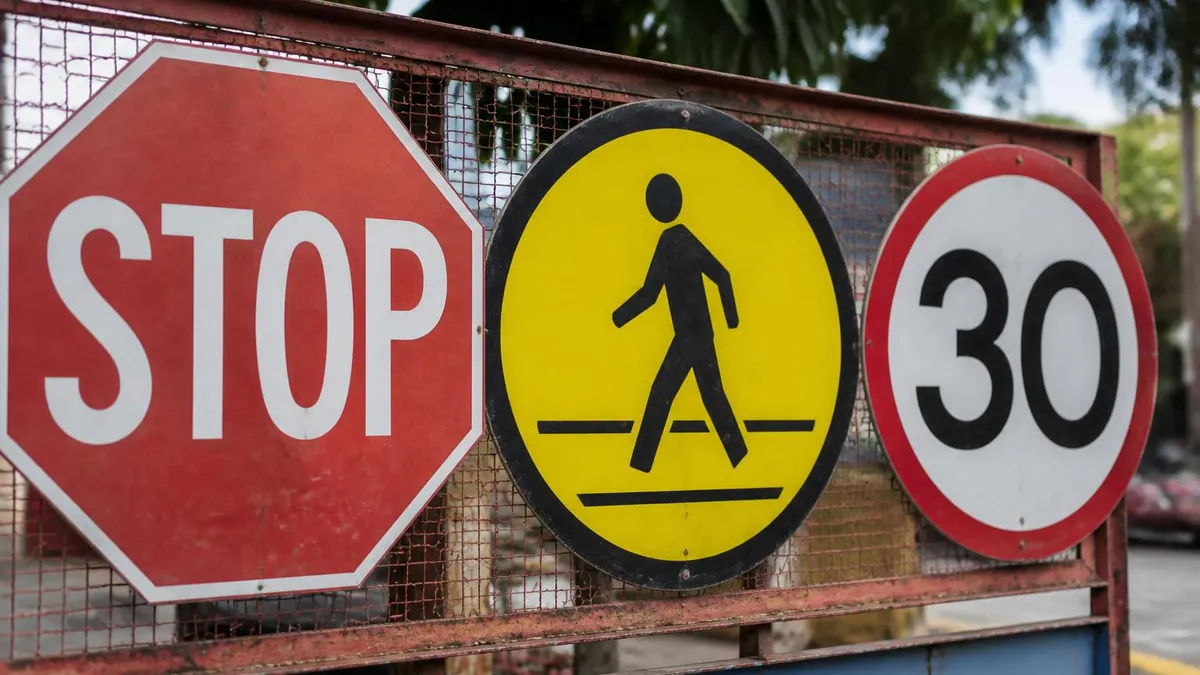
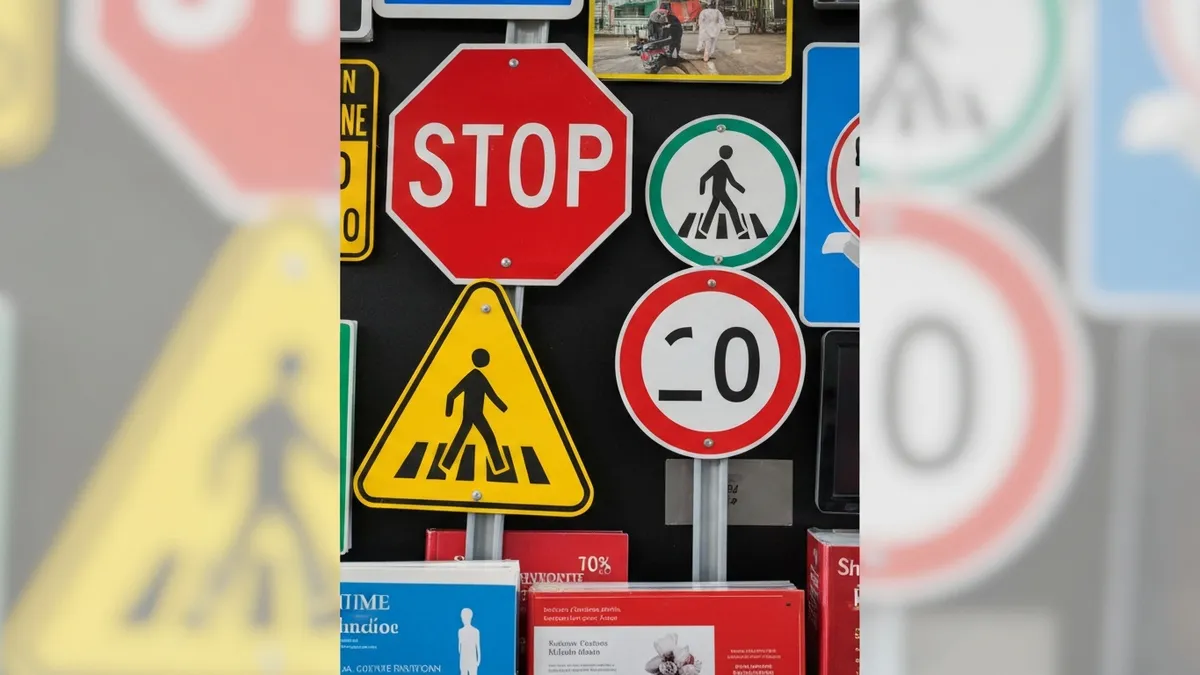
The subject matter of the LTO exam spans five broad areas: road signs and pavement markings, traffic rules and regulations, driver's duties and responsibilities, defensive driving principles, and penalties for traffic violations. Road signs alone account for a significant portion of the exam, with both regulatory signs (stop, yield, speed limits), warning signs (curves, school zones, pedestrian crossings), and informational signs (direction markers, service signs) all fair game. Many first-time takers underestimate the specificity of road sign questions and are surprised to find that minor visual differences between similar signs are tested directly.
Traffic rules and regulations questions test your knowledge of right-of-way rules at intersections, overtaking and passing restrictions, proper lane usage on multi-lane highways, speed limits in different zones (residential, school, expressway), and the proper procedures at railroad crossings and pedestrian lanes. These questions often involve scenario-based prompts where you must identify the correct driver action given a specific road situation. The ability to apply rules to real-world scenarios rather than simply reciting definitions is what separates passing candidates from those who need to retake.
Driver's duties and responsibilities cover the legal obligations of a licensed driver under the Land Transportation and Traffic Code (Republic Act 4136) and subsequent amendments. This includes the duty to carry your license at all times, the prohibition on driving under the influence of alcohol or drugs, the requirement to stop and render assistance after an accident, and the obligation to comply with lawful orders from authorized traffic enforcers.
Questions in this category are often phrased as situational ethics problems — what should you do if you witness an accident while driving? What is your legal obligation if your vehicle breaks down on the highway?
Defensive driving principles tested on the LTO exam focus on anticipation, hazard perception, and managing space around your vehicle. The Smith System — a widely taught defensive driving framework — emphasizes concepts like aiming high in steering, keeping your eyes moving, getting the big picture, making sure others can see you, and leaving yourself an out. While the LTO exam does not explicitly name the Smith System, its principles underpin many of the correct answers to defensive driving questions. Candidates who study these concepts in context rather than memorizing isolated facts perform significantly better.
Many test-takers wonder how the LTO exam compares in difficulty to standardized exams from review materials. The question of whether practice materials are harder than the actual exam is common across many testing environments. In the LTO context, many candidates report that well-designed practice question banks — particularly those focused on road signs and pavement markings — are calibrated to be slightly more challenging than the actual exam to ensure thorough preparation. The strategy of practicing with harder material than you expect to encounter is a proven technique for building confidence and reducing test-day anxiety.
One underappreciated aspect of LTO exam preparation is reviewing previously missed questions in practice sessions. When you miss a question on a practice exam, the correct response is not simply to note the right answer and move on. Instead, read the full explanation behind why that answer is correct, trace it back to the relevant article of the traffic code or the specific road sign standard, and create a mental connection between the rule and its real-world application.
This active recall technique dramatically improves retention compared to passive re-reading of the same material and has been shown in educational research to increase test performance by up to 50% compared to passive study methods.
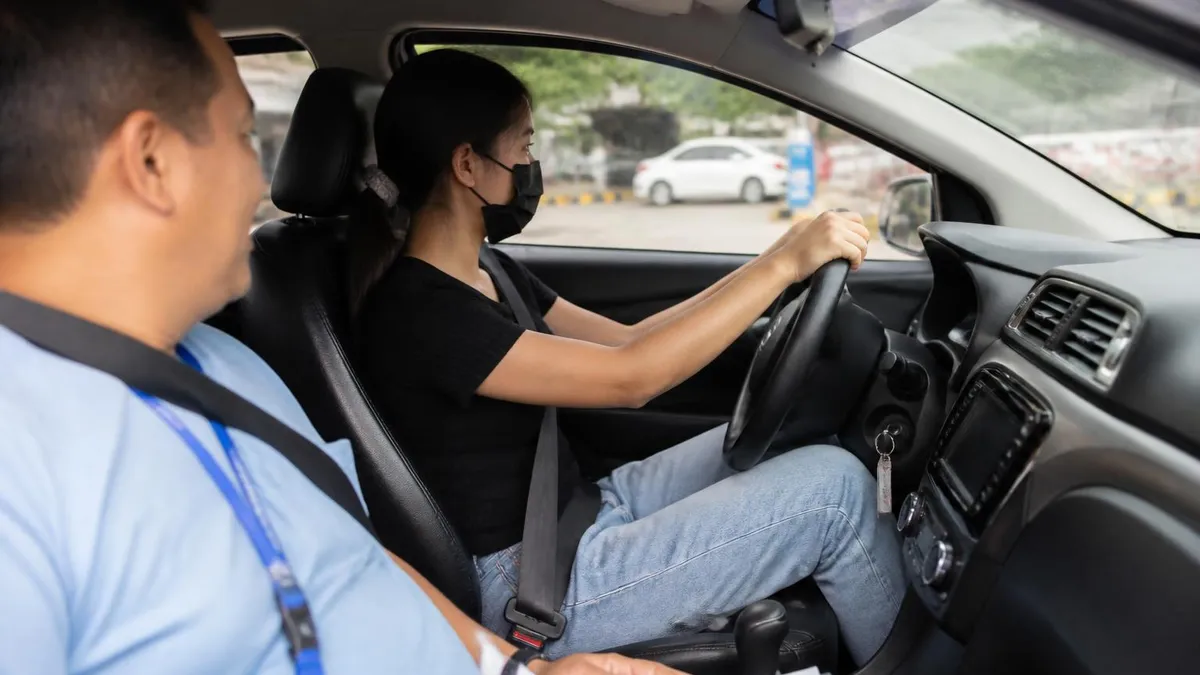
If your driver's license expiration date falls during a holiday period when LTO offices are closed, your renewal window may be tighter than you expect. Philippine law provides a grace period for renewal, but this does not exempt you from the late penalty fees that begin accruing after the expiration date. Do not wait until the last week before expiry — start your renewal process at least 30 days in advance to avoid holiday-related delays and accumulated penalties.
Beyond the written theoretical exam, understanding the full LTO licensing process helps you plan each step without being blindsided by procedural requirements. The path to a non-professional driver's license begins with the Student Permit (SP), which requires a medical certificate from an accredited clinic, a passing score on the theoretical exam, and payment of the SP fee. The student permit is valid for one year and allows you to drive a motor vehicle only under the direct supervision of a licensed driver seated beside you in the front passenger seat at all times.
After holding a valid student permit for at least one month, you become eligible to apply for a Non-Professional Driver's License (NPDL). This application requires a practical driving test administered by an LTO examiner at a designated testing area — not on public roads. The driving test evaluates your ability to perform basic vehicle maneuvers including figure-eight, alley docking, parking, and proper signal use. Passing both the theoretical and practical components is required before the actual license card is issued, which may take several weeks to arrive via mail through the Philippine Postal Corporation.
For those seeking a Professional Driver's License (PDL), the requirements are more stringent. You must hold a valid NPDL for at least two years before applying for the professional classification. The professional exam covers additional material related to commercial driving, vehicle maintenance, cargo handling, and passenger safety obligations. Professional licenses are required to operate taxis, buses, trucks, and other commercial vehicles, and they come with stricter renewal requirements including continuing education seminars.
License renewal at the LTO follows a five-year cycle for most license types. During renewal, you must submit a new medical certificate from an LTO-accredited physician, pay the renewal fee (which includes a drug test fee component), have your biometrics (photo, fingerprint, signature) updated, and in some cases complete a refresher on road safety regulations. If your license has been expired for more than a year, additional requirements and higher penalty fees apply, and in some cases you may need to retake portions of the written exam.
Motor vehicle registration renewal is a separate but equally critical transaction at the LTO. Every registered vehicle in the Philippines must undergo annual renewal, which includes a Motor Vehicle Inspection System (MVIS) check at an accredited inspection center, payment of registration fees and road user tax, and submission of a valid insurance certificate from a licensed insurer. The LTO staggers registration renewal deadlines by vehicle type and plate number series to prevent a single-day avalanche of transactions, but the weeks immediately before each deadline still see massive queues at all offices.
For US-based individuals helping a family member navigate the Philippine LTO system remotely, it is worth noting that the LTO has significantly expanded its digital capabilities in recent years. The LTO-i (integrated) system allows appointment booking, status checking, and some payment functions online. The agency's official mobile app and web portal provide real-time information on office hours, holiday schedules, and service availability. However, the core transactions — biometrics, document submission, exam taking — still require physical presence at a licensed LTO facility.
Whether you are preparing for your first LTO exam, planning a license renewal, or simply trying to figure out whether the LTO will be open on an upcoming holiday, preparation and planning are your best tools. Check our regularly updated resource on lto hours and holidays for the most current schedule information, and use the practice quizzes throughout this page to sharpen your knowledge before exam day arrives.
Passing the LTO exam on your first attempt is an achievable goal with the right preparation strategy. The most successful candidates treat the theoretical exam not as a memorization exercise but as an applied knowledge assessment. That distinction matters enormously because the exam question bank contains thousands of possible questions, and rote memorization of individual items without understanding the underlying rules will leave you unprepared for the specific phrasing variations and scenario twists the actual exam uses. Build conceptual understanding first, then reinforce it with extensive practice testing.
Time management during the exam is rarely a problem — most candidates finish well within the allotted time — but answer review strategy matters. After completing all 60 questions, use any remaining time to revisit items you marked as uncertain. Research on test-taking behavior consistently shows that the first instinct is correct more often than not, so be cautious about changing answers without a specific, articulable reason. If you genuinely recall a rule or sign detail that contradicts your initial answer, change it. Otherwise, trust your preparation and submit.
Road sign questions are the most visually distinctive part of the LTO exam. Philippine road signs follow international standards with color coding that conveys category at a glance: red borders indicate regulatory signs (prohibitions and requirements), yellow or orange backgrounds signal warning signs (hazards ahead), green backgrounds denote guide and informational signs (directions, distances), and blue backgrounds indicate service signs (rest areas, hospitals, fuel stations). Learning this color framework before drilling individual signs dramatically reduces the cognitive load of sign identification questions.
Penalty and fine questions on the LTO exam draw from the Republic Act 4136 (Land Transportation and Traffic Code) and its IRR (Implementing Rules and Regulations), as well as the Anti-Drunk and Drugged Driving Act (RA 10586) and the Child Safety in Motor Vehicles Act (RA 11229). These laws specify exact fine amounts, license suspension periods, and imprisonment terms for specific violations. Memorizing the key penalty brackets — first offense versus subsequent offense, administrative versus criminal liability — gives you the framework to answer penalty questions even when the exact figure is not something you have seen before in practice.
The days leading up to your LTO exam appointment should be spent on active recall rather than reading. Close the book, look at a road sign, and try to name it and state its meaning from memory before checking. Work through full 60-question practice exams under timed conditions to simulate the actual testing environment.
Review every wrong answer thoroughly, and revisit those topics 24 hours later to test retention. Sleep adequately the night before — research in cognitive science consistently demonstrates that sleep plays a critical role in memory consolidation, and pulling an all-night review session immediately before an exam undermines the retention of everything you studied earlier in the week.
On exam day itself, bring all required documents including your completed application form, valid medical certificate, two valid IDs, and the official receipt for your application fee payment. Arrive at the licensing center 30 minutes before your scheduled slot, as late arrivals may forfeit their appointment and need to rebook.
The computer-based exam interface is user-friendly, but take a moment at the start to familiarize yourself with the navigation controls — moving between questions, flagging items for review, and submitting the final exam. The examiner at the testing center will provide brief instructions, but a quick self-orientation prevents unnecessary confusion during the test itself.
After passing the exam, your student permit or license card will be processed. Processing times vary by office and current transaction volume, but the card itself is printed and mailed separately from the official receipt. Keep your official receipt safe — it serves as proof of your valid license while the physical card is in transit.
Present it along with a valid ID whenever your license is requested during traffic stops or vehicle inspections. Congratulations on taking this step; the LTO license is more than a government document — it is the legal foundation of your privilege and responsibility as a driver on Philippine roads.
LTO Questions and Answers

LTO License Renewal Guide Philippines 2026 — Requirements and Process
LTO Traffic Violations Philippines 2026 — Fines and Penalties Guide

LTO Plate Number Tracker: What Is LTO, What Does LTO Stand For, and How to Track Your Vehicle Registration in 2026
RDA Exam Review: What Is LTO, What Does LTO Stand For, and How to Pass Your Driver's License Test

LTO Dress Code and What Is LTO: Complete Guide to the Philippines Land Transportation Office
How this page was made: written with AI tools. Exam facts are checked against the official sources listed below. Not reviewed by a subject-matter expert. Editorial policy
Sources & references
Exam facts on this page (fees, format, dates, passing scores) are checked against these official sources; the date is our last check. Editorial policy
- portal.lto.gov.ph — Test delivery, exam format, passing score, time limit · verified Oct 2026
- elibrary.judiciary.gov.ph — Exam format, passing score · verified Oct 2026