
VEEB LPN Program: Your Complete Guide to Virginia's Workforce Training Pathway
Explore the VEEB LPN program — costs, eligibility, NCLEX prep, and career outcomes for Virginia practical nursing students. ✅
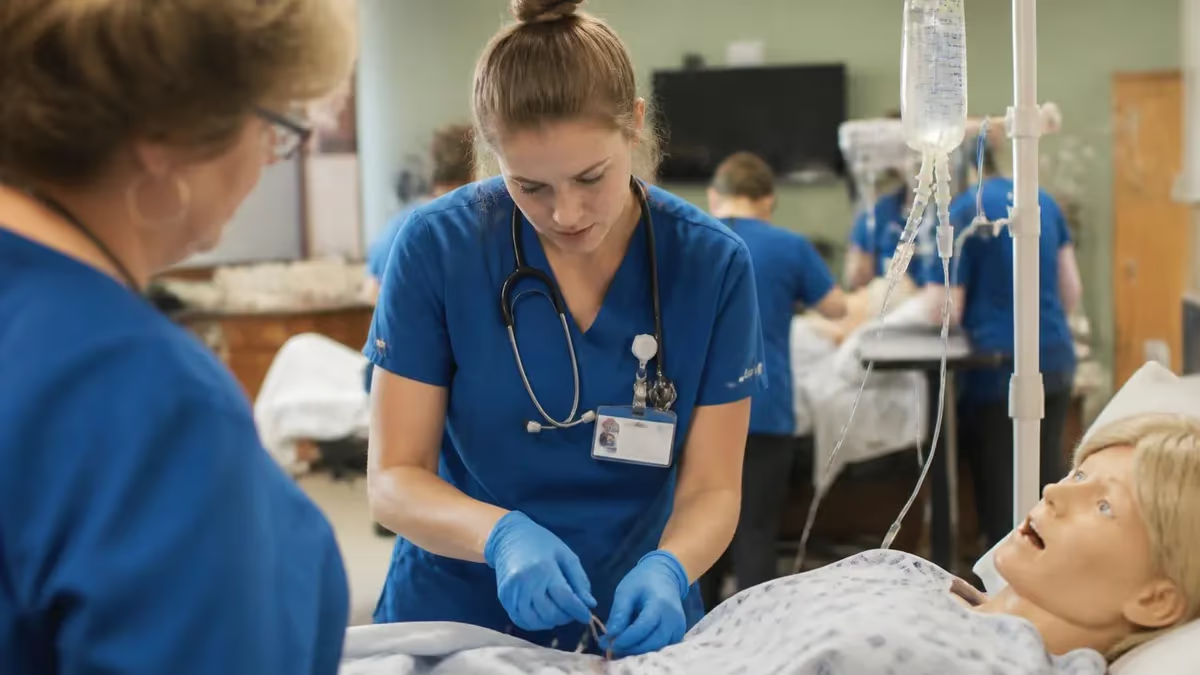
The veeb lpn program — offered through the Virginia Employment and Education Bureau (VEEB) — is one of the most accessible pathways to a nursing career in the mid-Atlantic region. Designed specifically to serve adult learners, career changers, and workforce development participants, this program combines classroom theory with supervised clinical experience to prepare graduates for the NCLEX-PN licensure examination. Whether you are entering healthcare for the first time or transitioning from another field, VEEB's structured curriculum can get you credentialed in roughly twelve months.
Virginia's healthcare industry has seen sustained demand for Licensed Practical Nurses over the last decade, and that trend shows no sign of slowing. Hospitals, long-term care facilities, home health agencies, and outpatient clinics all rely heavily on LPNs to deliver direct patient care under RN or physician supervision. VEEB recognized this workforce gap early and built a program that feeds directly into the regional job pipeline, partnering with local employers who often recruit graduates before they even sit for the NCLEX-PN.
What sets the VEEB LPN program apart from community college alternatives is its workforce-focused design. Courses are scheduled with working adults in mind — evening and weekend cohorts are common — and the program frequently qualifies for Workforce Innovation and Opportunity Act (WIOA) funding, which can significantly reduce out-of-pocket tuition costs. Eligibility assessments, financial aid navigation, and career placement support are bundled into the program rather than treated as afterthoughts.
The curriculum itself mirrors the content domains tested on the NCLEX-PN, covering fundamentals of nursing, pharmacology, medical-surgical care, maternal-newborn concepts, pediatric nursing, and mental health. Practical skills labs allow students to practice venipuncture, catheter insertion, wound care, and medication administration before they ever set foot in a clinical setting. This dual-track approach — theory plus hands-on simulation — produces graduates who are genuinely ready to perform on day one of employment.
Clinical rotations are a mandatory component and typically span 200 to 300 hours depending on the cohort. Sites include skilled nursing facilities, acute care hospitals, community health clinics, and rehabilitation centers across the Northern Virginia and greater DC metro area. Each rotation is supervised by licensed clinical instructors who evaluate student performance against nationally recognized nursing competency standards, ensuring that every VEEB LPN graduate meets the bar required for safe, entry-level practice.
Admission requirements are straightforward but must be met before enrollment. Applicants generally need a high school diploma or GED, a passing score on a pre-admission reading and math assessment, a current physical examination, proof of required immunizations, and a clear criminal background check. Some cohorts also require a CNA certification or documented patient-care experience, so prospective students should confirm current intake requirements directly with the VEEB admissions office before applying.
This guide walks you through every dimension of the VEEB LPN program: program structure, costs, clinical requirements, NCLEX preparation strategies, career outcomes, and pro tips for succeeding from day one. By the time you finish reading, you will have a clear picture of whether this program is the right fit for your goals and exactly what steps to take next to get started on your nursing career.
VEEB LPN Program by the Numbers
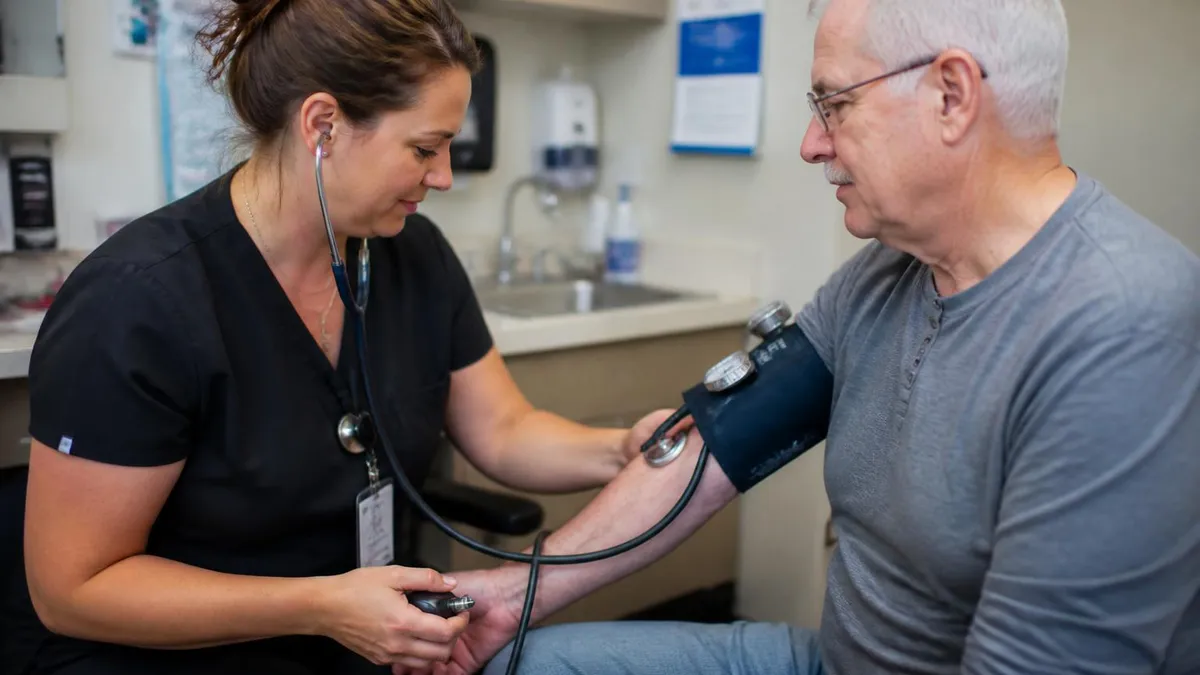
VEEB LPN Program Structure: What to Expect Each Phase
Covers anatomy, physiology, medical terminology, nursing theory, and vital signs. Students spend time in the skills lab learning infection control, patient positioning, and documentation. A written and practical competency exam closes out the phase before clinical eligibility is granted.
The largest content block covers adult health conditions across body systems alongside drug classifications, dosage calculations, and medication safety. Classroom lectures alternate with simulation lab sessions where students practice IV preparation, wound dressing, and urinary catheterization under instructor supervision.
Students rotate through maternal-newborn, pediatric, and mental health settings. Each specialty rotation lasts two to four weeks and includes pre-conference, post-conference, and written assignments that connect clinical observations back to the NCLEX-PN content blueprint and safe patient care principles.
The final phase intensifies test preparation using computer-adaptive practice engines, ATI or HESI predictor exams, and instructor-led review sessions targeting weak content areas. Students also complete employment preparation workshops covering résumé writing, mock interviews, and Virginia Board of Nursing licensure application requirements.
One of the most frequently asked questions prospective students have about any LPN program is cost — and understandably so. The VEEB LPN program's tuition typically falls between $8,000 and $14,000 for the full program cycle, depending on cohort scheduling, included materials, and any additional clinical fees. While that range is significantly lower than many private vocational schools or community college programs, it still represents a meaningful investment that most students will need to plan carefully for.
The good news is that VEEB actively connects students with multiple funding streams. The Workforce Innovation and Opportunity Act (WIOA) is the single largest source of financial assistance available to eligible students. Administered through local Virginia Employment Commission (VEC) offices and American Job Centers, WIOA grants can cover partial or full tuition for qualifying individuals who meet income thresholds and career pathway criteria. Healthcare is considered a high-priority sector under WIOA guidelines, which means LPN training consistently qualifies for funding consideration.
Trade Adjustment Assistance (TAA) is another federal program worth investigating if you were previously employed in an industry affected by foreign trade competition. TAA can fund approved training programs — including LPN certificate programs — and may also provide income support, travel allowances, and job search assistance during your training period. Your local American Job Center can help you determine whether you qualify and walk you through the application process, which can take several weeks so plan ahead.
Virginia also administers its own state workforce development funding through the Virginia Workforce Development Board and regional consortia. These state-level grants sometimes fill the gap when federal WIOA funding is capped or waitlisted. VEEB staff are generally experienced at layering multiple funding sources — federal, state, and sometimes employer-sponsored tuition assistance — to minimize what students pay out of pocket, so always schedule a financial aid consultation before assuming you will need to self-pay.
For students who do need to self-pay a portion of costs, VEEB often works with third-party financing partners that offer low-interest installment plans without the complexities of traditional federal student loans. Because VEEB operates as a workforce development entity rather than a traditional degree-granting institution, some standard Title IV federal financial aid programs (like Pell Grants) may not apply, though this varies by program iteration so confirm current eligibility with admissions staff.
Beyond tuition, budget for additional costs that are easy to overlook: nursing scrubs ($100–$200), clinical shoes ($60–$120), a stethoscope and blood pressure cuff ($80–$150), liability insurance ($30–$50 per year), CPR certification ($50–$80), immunization documentation and TB testing ($50–$150), and the NCLEX-PN registration fee ($200). These ancillary costs add up to roughly $600–$900 and should be factored into your total program budget from the start so there are no surprises mid-program.
After graduation and NCLEX passage, the financial picture changes dramatically in your favor. Entry-level LPNs in Northern Virginia and the DC metro area frequently earn starting salaries between $48,000 and $58,000 annually, with experienced LPNs in specialized settings earning $62,000 or more. At that income level, most graduates recoup their total program investment within the first year of employment, making the VEEB LPN program one of the highest return-on-investment healthcare credentials available in the region.
Clinical Training in the VEEB LPN Program
VEEB maintains affiliation agreements with a network of clinical partners across Northern Virginia, Maryland, and the DC metro area. Rotation sites typically include skilled nursing and long-term care facilities, acute care hospitals, outpatient clinics, community health centers, and rehabilitation facilities. Students are assigned to sites based on geographic accessibility and rotation availability, and most cohorts rotate through at least three distinct site types over the course of the program to build breadth of experience.
Clinical assignments are non-negotiable in terms of attendance — missing a clinical day without an approved medical excuse generally requires a make-up session, and excessive absences can result in program dismissal. Students should arrange reliable transportation to their assigned sites before the rotation block begins, as VEEB clinical sites are spread across a wide geographic area and public transit coverage varies significantly by location. Having a backup transportation plan is not optional; it is a practical necessity for clinical success.
VEEB LPN Program: Advantages and Challenges
- +Shorter time investment than an RN program — credential in as little as 12 months
- +Workforce development funding (WIOA) frequently available to reduce tuition burden
- +Flexible scheduling with evening and weekend cohorts designed for working adults
- +Strong employer partnerships accelerate post-graduation job placement
- +Curriculum directly aligned with NCLEX-PN content blueprint from day one
- +Career counseling and licensure application support included in the program
- −Tuition is not always covered by traditional federal financial aid (Pell Grant eligibility varies)
- −Competitive admission — cohort sizes are limited and waitlists can be long
- −Mandatory clinical attendance requirements leave little flexibility for personal emergencies
- −Transportation to dispersed clinical sites can be a significant logistical burden
- −LPN scope of practice is more limited than RN, which can affect long-term earning potential
- −Some hospitals prefer to hire RNs over LPNs, limiting acute-care job options in some markets
NCLEX-PN Prep Checklist for VEEB LPN Graduates
- ✓Register with the Virginia Board of Nursing for NCLEX-PN authorization to test (ATT) at least 6 weeks before your target exam date.
- ✓Complete a full-length HESI or ATI predictor exam to identify your weakest content domains before intensive review begins.
- ✓Use a computer-adaptive practice engine (such as UWorld or Kaplan) to simulate real NCLEX-PN question formats and difficulty scaling.
- ✓Review the official NCLEX-PN Test Plan published by NCSBN and allocate study time proportionally to each content category's weighting.
- ✓Complete at least 2,000 practice questions in total across all content domains before your exam date.
- ✓Focus extra study time on pharmacology — drug categories, common side effects, and nursing implications — as it appears throughout all NCLEX-PN sections.
- ✓Practice dosage calculation problems daily using dimensional analysis to build speed and accuracy under timed conditions.
- ✓Join or form a study group with fellow VEEB graduates to review difficult concepts, quiz each other, and maintain accountability.
- ✓Prioritize sleep, nutrition, and moderate exercise during the final two weeks before your exam to optimize cognitive performance on test day.
- ✓Arrive at the Pearson VUE testing center at least 30 minutes early with two valid forms of ID and your ATT confirmation number.
First-Time NCLEX-PN Pass Rate Hinges on Practice Volume
Research consistently shows that candidates who complete 2,000 or more practice questions before their exam date pass the NCLEX-PN on the first attempt at significantly higher rates than those who rely primarily on content review. Quality matters too — prioritize questions that explain the rationale for both correct and incorrect answer choices, since understanding the reasoning behind each answer is what actually builds clinical judgment rather than rote memorization.
The career outcomes for VEEB LPN graduates are among the strongest of any workforce credentialing program in the Northern Virginia region. Entry-level positions open to LPNs immediately after licensure span a remarkably wide range of healthcare settings, and the Northern Virginia and DC metro job market is robust enough that most graduates receive their first job offer within 60 to 90 days of passing the NCLEX-PN. Some employer partners begin the interview process while students are still in the final phase of the program, which means a signed offer letter is sometimes in hand before the graduation ceremony.
Long-term care and skilled nursing facilities remain the largest single employer of LPNs nationally and in Virginia specifically. These settings offer consistent hours, clear professional hierarchies, and significant overtime opportunities — factors that appeal to many new graduates who want to consolidate their clinical skills in a structured environment before exploring other sectors. Many LPNs who begin in long-term care transition to home health or clinic settings within two to three years as they build confidence and accumulate experience on their résumés.
Home health nursing is the fastest-growing employment sector for LPNs in Virginia, driven by an aging population that increasingly prefers to receive care at home rather than in institutional settings. Home health LPN positions typically offer higher hourly wages than facility-based roles, flexible scheduling, and the satisfaction of developing long-term relationships with individual patients. The tradeoff is that home health requires stronger independent judgment since you are often the only clinician in the environment, which is why most employers prefer candidates with at least six to twelve months of prior facility experience.
Outpatient clinic and physician office settings represent another strong pathway for VEEB graduates. These positions generally feature predictable daytime hours, lower physical demands than acute care, and a focus on chronic disease management, preventive care, and patient education — skills that are heavily emphasized in the VEEB curriculum. Primary care clinics, specialty practices, urgent care centers, and federally qualified health centers all actively recruit LPNs for positions that include rooming patients, administering immunizations, managing medication refills, and coordinating referrals.
Salary trajectories for Virginia LPNs are favorable. According to Bureau of Labor Statistics data, the mean annual wage for LPNs in the Washington-Arlington-Alexandria metropolitan area consistently ranks among the top five in the nation, reflecting the area's high cost of living and intense competition among healthcare employers for qualified nursing staff. Entry-level LPNs in this market can expect to earn $50,000 to $56,000 annually, with three to five years of experience pushing compensation into the $60,000 to $68,000 range, particularly in specialized settings like oncology clinics, dialysis centers, or correctional health facilities.
Career ladder opportunities are also worth understanding. Virginia is one of many states where LPN-to-RN bridge programs are widely available, and the practical nursing credential serves as a recognized stepping stone toward associate or bachelor's-level RN programs. Several Northern Virginia community colleges offer articulated pathways that award LPNs advanced standing credit, reducing the time to RN licensure by one to two semesters. Many VEEB graduates eventually pursue this bridge pathway, motivated by the salary differential — RNs in the DC metro area earn a mean annual wage of approximately $90,000 — and expanded scope of practice.
Long-term career diversification options for LPNs include IV therapy certification, wound care certification, gerontological nursing credentials, and supervisory roles in long-term care facilities where federal regulations permit LPN charge nurse positions. Each of these specializations commands a wage premium and broadens your professional options. The foundational clinical competencies built during the VEEB LPN program provide a solid platform for all of these advanced credentials, making the initial twelve-month investment in the program pay dividends across an entire nursing career.

Virginia requires all NCLEX-PN applicants to disclose any prior criminal convictions, including misdemeanors, on their licensure application. Certain offenses may trigger a review by the Board of Nursing, which can delay or deny licensure even after you have successfully completed the VEEB LPN program and passed the NCLEX-PN. If you have any prior legal history, consult with VEEB admissions staff and consider requesting a pre-application advisory opinion from the Virginia Board of Nursing before enrolling to avoid investing in a program you may not be able to complete toward licensure.
Succeeding in the VEEB LPN program requires more than academic aptitude — it demands organizational discipline, physical stamina, and the kind of emotional resilience that healthcare work consistently tests. Students who thrive are almost always the ones who treat the program like a full-time professional commitment from day one, even if they are attending evening or weekend cohorts alongside other obligations. Showing up consistently, prepared, and engaged is the single most reliable predictor of program completion and NCLEX-PN success.
Time management is the practical skill that separates students who complete the program from those who struggle. The VEEB LPN curriculum is dense by design — covering in twelve months what some community college programs spread across eighteen to twenty-four months — which means the pace of new material is relentless. Creating a weekly study schedule at the start of each module, blocking specific hours for reading and practice questions, and protecting those blocks from social and family interruptions is not excessive discipline; it is the baseline level of commitment the program genuinely requires.
Building relationships with your clinical instructors early pays significant dividends throughout the program. Instructors have discretion in how they evaluate ambiguous clinical situations, and students who demonstrate genuine engagement — asking thoughtful questions during post-conference, following up on feedback from previous rotations, and showing initiative during clinical assignments — consistently receive more detailed formative feedback that accelerates their skill development. This is not about being performatively enthusiastic; it is about creating the kind of professional relationship where instructors invest in your growth.
Peer collaboration is another underutilized resource in LPN programs. Your cohort members will become your professional network and, in many cases, your co-workers within the first year after graduation — Northern Virginia's healthcare community is smaller and more interconnected than it appears. Study groups, shared clinical preparation strategies, and mutual moral support during high-stress exam periods are all documented to improve individual outcomes. Cohorts that develop strong internal community consistently outperform those where students study in isolation.
Physical self-care deserves specific mention because it is the area most students neglect until they are already in crisis. Nursing programs are physically demanding — long lab sessions, clinical shifts on your feet for eight to ten hours, and the cognitive load of processing large volumes of complex medical information simultaneously. Students who maintain regular sleep schedules, eat balanced meals, and incorporate even minimal physical exercise into their week consistently demonstrate better information retention, faster clinical skill development, and lower rates of program attrition than those who sacrifice self-care in pursuit of more study hours.
When you encounter a concept you do not understand — a pharmacology mechanism, a pathophysiology cascade, a clinical decision framework — address it immediately rather than moving on and hoping it resolves itself. Nursing knowledge is cumulative and hierarchical; gaps in foundational understanding compound rapidly as new content builds on prior concepts. VEEB instructors hold office hours and most programs also offer peer tutoring resources. Using these supports proactively, rather than reactively when you are already failing assessments, is one of the highest-leverage study habits you can develop.
Finally, begin your NCLEX-PN preparation on day one of the program, not after graduation. This means using NCLEX-formatted practice questions as a learning tool alongside your course materials from the very first week, not just during the formal review phase at the end. Students who integrate practice question review throughout the program arrive at the final NCLEX prep phase with a baseline of familiarity and experience that dramatically accelerates the last four to six weeks of concentrated review — and that translates directly into higher first-attempt pass rates and faster transition to employment.
Preparing for the NCLEX-PN while simultaneously managing the demands of the VEEB LPN program requires a strategic rather than reactive approach. Many students make the mistake of treating NCLEX preparation as a separate, post-graduation task when the most effective approach is to integrate exam-aligned thinking into every phase of the program. When you read about a medication in pharmacology class, ask yourself how the NCLEX would present that drug in a clinical scenario question. When you complete a clinical rotation, reflect on how the patient situations you encountered map onto the content categories in the official NCLEX-PN Test Plan.
The NCLEX-PN uses a computer-adaptive testing (CAT) format, which means the difficulty of questions adjusts in real time based on your performance. The exam terminates when the computer has sufficient statistical confidence that you are either above or below the passing standard — typically between 85 and 205 questions. Students who understand this mechanism are less likely to panic if the exam continues past 85 questions, which is a common but completely normal occurrence. A longer exam is not inherently a sign of poor performance; it simply means the algorithm needed more data points to make its determination.
Content weighting on the NCLEX-PN is not uniform across the four major client needs categories. Physiological Integrity — which includes Basic Care and Comfort, Pharmacological Therapies, Reduction of Risk Potential, and Physiological Adaptation — makes up approximately 38% to 62% of the exam. Safe and Effective Care Environment accounts for 18% to 33%, Psychosocial Integrity for 6% to 12%, and Health Promotion and Maintenance for 6% to 12%. Knowing these distributions allows you to allocate your final preparation hours proportionally rather than spending equal time on all domains regardless of their exam weight.
Pharmacology deserves particular emphasis because it appears not just in the dedicated Pharmacological Therapies category but embedded within questions across all other content areas. An NCLEX-PN question about a patient with heart failure will frequently require you to apply your knowledge of diuretics, ACE inhibitors, and beta-blockers to answer correctly. A question framed as a health promotion scenario may hinge on understanding a vaccine's contraindications. Building genuine pharmacological knowledge — not just memorized drug lists — is the single most high-leverage study investment a VEEB LPN student can make in the final months of preparation.
Time management during the actual NCLEX-PN exam is another skill that benefits from deliberate practice. The exam allows five hours for completion, and most candidates finish well within that window, but students who have never practiced timed question sets occasionally find themselves rushing or second-guessing answers when they are aware of a time constraint. Practicing full-length timed simulation exams during the final four weeks before your scheduled date builds the mental stamina and pacing awareness needed to perform consistently from the first question to the last.
After passing the NCLEX-PN, the transition from student to practicing LPN involves a few additional administrative steps that VEEB graduates should be prepared for. Virginia Board of Nursing licensure verification through the Nursys database, obtaining your official license number, and registering for mandatory continuing education tracking are all part of the professional activation process. Employers will confirm your license status before your first day of work, so completing these steps promptly after receiving your passing notification minimizes any delay in starting your new position.
The VEEB LPN program represents a genuine investment of time, money, and personal effort — but for motivated students who meet the admission requirements and commit fully to the program's demands, the return on that investment is substantial. Virginia's healthcare market continues to absorb new LPN graduates at a healthy rate, and the combination of workforce development funding, employer partnerships, and focused NCLEX preparation that VEEB offers makes it one of the most practical and cost-effective pathways to a nursing career available in the region today.
LPN Questions and Answers

LPN Requirements 2026: Complete Guide to Becoming a Licensed Practical Nurse

LPN IV Certification: Complete 2026 Guide to Training, Requirements & Cost

LPN Programs in Florida: Complete 2026 Guide to Accredited Schools, Costs, Requirements & Licensure

LPN Salary Wisconsin 2026: Average Pay, Top Cities, and How to Earn More
LPN Duties: Complete Guide to Daily Responsibilities and Scope of Practice
About the Author

Registered Nurse & Healthcare Educator
Johns Hopkins University School of NursingDr. Sarah Mitchell is a board-certified registered nurse with over 15 years of clinical and academic experience. She completed her PhD in Nursing Science at Johns Hopkins University and has taught NCLEX preparation and clinical skills courses for nursing students across the United States. Her research focuses on evidence-based exam preparation strategies for healthcare certification candidates.
Join the Discussion
Connect with other students preparing for this exam. Share tips, ask questions, and get advice from people who have been there.
View discussion (7 replies)