
Penn State LPN Program: Complete Training Guide, Requirements & NCLEX Prep
Penn state lpn program guide: admission requirements, costs, curriculum & NCLEX prep tips. Everything you need to become a licensed practical nurse. ✅

The penn state lpn program represents one of the most respected pathways into practical nursing in Pennsylvania, offering students a structured, clinically grounded education that prepares them for immediate entry into the healthcare workforce. Penn State's network of campuses and affiliated community colleges provides multiple access points for aspiring LPNs across the state, making quality nursing education accessible regardless of where you live. Whether you are looking to launch a new career or transition from a healthcare support role, understanding the program's structure is your first critical step toward licensure.
Pennsylvania's demand for licensed practical nurses continues to grow steadily, driven by an aging population, expanding outpatient care settings, and a nationwide push to increase the healthcare workforce pipeline. The Bureau of Labor Statistics projects employment of LPNs and licensed vocational nurses to grow 5 percent through 2032, with Pennsylvania consistently ranking among the states with the highest absolute numbers of LPN job openings each year. Graduates of accredited programs like those affiliated with Penn State enter a market where they can find positions in hospitals, long-term care, home health, and physician offices within weeks of passing the NCLEX-PN.
Penn State's practical nursing curriculum is built around the concept of progressive clinical competency. Students begin with foundational sciences — anatomy, physiology, and microbiology — before moving into core nursing courses covering pharmacology, medical-surgical nursing, maternal-newborn care, and mental health. Clinical rotations are embedded throughout the program rather than front-loaded at the end, which means students are applying knowledge in real patient-care environments from early in their first semester. This integrated approach produces graduates who are confident and competent on day one of employment.
Admission to the penn state lpn program typically requires a high school diploma or GED, a minimum GPA (often 2.5 or higher on prerequisite coursework), current CPR certification, and a satisfactory background check. Some campus locations also require candidates to complete a healthcare orientation or shadow experience before submitting a formal application. Because seats are competitive, early preparation — including completing all prerequisite science courses and obtaining strong recommendation letters — significantly improves your chances of acceptance into the next available cohort.
Program length for most LPN tracks affiliated with Penn State runs approximately 12 months for full-time students, though part-time options stretching to 18–24 months exist at select campuses. Coursework is measured in credit hours, with most programs requiring between 42 and 54 credits to complete. Tuition varies by campus and residency status, but students can expect costs ranging from $8,000 to $15,000 for the full program, excluding books, uniforms, lab fees, and required clinical supplies. Financial aid, including federal Pell Grants and Pennsylvania state grants, is available to eligible students enrolled in accredited programs.
After completing coursework and clinical hours, graduates must pass the NCLEX-PN to earn their Pennsylvania LPN license. The NCLEX-PN is a computer-adaptive test covering client needs categories including basic care and comfort, pharmacological therapies, physiological adaptation, and psychosocial integrity. The Pennsylvania State Board of Nursing issues the license after successful examination, and most graduates receive their results within 48 hours through the Quick Results service. For a full overview of statewide licensing standards, review the penn state lpn program requirements guide on this site.
This article walks you through every aspect of the Penn State-affiliated LPN pathway — from admission prerequisites and program costs, to curriculum details, clinical expectations, and NCLEX-PN preparation strategies. Whether you are researching programs for the first time or actively preparing your application, you will find practical, actionable information here that helps you move forward with confidence toward your nursing career.
Penn State LPN Program by the Numbers
Penn State LPN Program: Step-by-Step Path to Licensure
Complete Prerequisites
Submit Your Application
Secure Funding & Enrollment
Complete Didactic Coursework
Fulfill Clinical Rotation Hours
Pass NCLEX-PN & Apply for License
Understanding the admission requirements for a Penn State affiliated LPN program is essential for planning your timeline and building a competitive application. Each campus or partner community college may have slightly different threshold requirements, but the core expectations are consistent across the system. Applicants must hold a high school diploma or GED equivalent, and many programs require a minimum cumulative GPA of 2.5 on a 4.0 scale, with science prerequisite courses often requiring a C or better. Some locations set the prerequisite GPA bar higher at 3.0, especially when program seats are limited and applicant pools are competitive.
Beyond academic credentials, health and safety documentation is mandatory before clinical rotations begin. Students must provide proof of immunizations including hepatitis B, MMR, varicella, influenza, and tuberculosis screening results. A clean criminal background check is required by most clinical partner facilities, and students with certain conviction types may be ineligible for placement. Drug screening is standard at many affiliated programs, and results must be submitted before the clinical phase begins. These health and safety requirements are not optional — they are non-negotiable conditions of continued enrollment.
CPR certification at the Basic Life Support (BLS) level from the American Heart Association is required before starting clinical rotations at virtually every Penn State affiliated LPN program. Students who allow their BLS certification to lapse during the program must renew it immediately, as an expired card disqualifies them from attending clinical shifts. Many programs host on-campus BLS renewal sessions at the start of each semester to make compliance convenient for all enrolled students.
Personal statement quality matters more than many applicants realize. Admissions committees use personal statements to assess communication skills, professionalism, and genuine motivation for pursuing nursing. A strong personal statement explains why you specifically chose practical nursing, references relevant healthcare exposure you have had, and articulates your career goals with specificity. Vague statements about wanting to help people rarely distinguish candidates in a competitive pool — concrete anecdotes about patient care experiences you have witnessed or participated in carry significantly more weight.
Letters of recommendation should ideally come from healthcare professionals, science instructors, or supervisors who can speak to both your academic capabilities and your interpersonal qualities. Personal references from family members or friends are typically not accepted. Give your recommenders at least four weeks advance notice, provide them with your personal statement and program details, and follow up politely to confirm submission before the application deadline. A strong recommendation letter addresses your reliability, empathy, work ethic, and ability to perform under pressure — all qualities that nursing faculty know predict success in clinical settings.
Healthcare experience, while often listed as preferred rather than required, can be a decisive factor when an admissions committee is choosing between equally qualified candidates. Working as a certified nursing assistant (CNA), medical assistant, home health aide, or emergency medical technician demonstrates hands-on exposure to patient care environments and suggests you have already self-selected for a healthcare career with real understanding of what the work involves. Even volunteer experience in hospitals, hospice organizations, or community health events adds meaningful context to your application and signals genuine commitment to the field.
Transfer students and those with prior college credits should request a transcript evaluation early in the process to determine which completed coursework may satisfy prerequisite requirements. Many Penn State affiliated programs accept transfer credits for general education requirements like English or psychology, reducing the overall credit load and potentially shortening time to completion. However, nursing-specific courses — pharmacology, medical-surgical nursing, fundamentals — typically must be completed through the specific program and cannot be transferred in, even from other accredited nursing programs, without formal equivalency review.
LPN Program Costs, Curriculum, and Career Outcomes at Penn State
Tuition for Penn State affiliated LPN programs ranges from approximately $8,000 to $15,000 for Pennsylvania residents, depending on the specific campus and program track. This figure covers credit-hour tuition but excludes additional expenses including textbooks ($500–$900), nursing uniforms and shoes ($150–$300), stethoscope and clinical kit ($200–$400), background check and drug screen fees ($75–$150), liability insurance, CPR certification, and the NCLEX-PN registration fee of approximately $200. Students should budget a total program cost of $10,000 to $18,000 including all direct and indirect expenses.
Financial aid options include federal Pell Grants for eligible students, Pennsylvania Higher Education Assistance Agency (PHEAA) grants, institutional scholarships offered through individual campus financial aid offices, and workforce development grants available through Pennsylvania's Department of Labor and Industry for students entering high-demand healthcare occupations. Many students also use employer tuition reimbursement programs if they are currently employed at healthcare facilities, and some hospitals offer tuition-for-service agreements where they cover program costs in exchange for a one- to two-year post-graduation employment commitment.
Pros and Cons of Choosing a Penn State Affiliated LPN Program
- +Penn State's brand recognition and accreditation signals credibility to Pennsylvania employers and hiring managers statewide
- +Multiple campus locations across Pennsylvania provide geographic accessibility for students in rural and suburban areas
- +Integrated clinical rotations throughout the program build hands-on confidence earlier than programs that delay clinical placement
- +Clear LPN-to-RN bridge pathways through Penn State articulation agreements support long-term career advancement without repeating coursework
- +Strong relationships with healthcare facility partners generate robust clinical placement options and post-graduation employment networks
- +Standardized HESI or ATI assessments throughout the program provide ongoing NCLEX-PN readiness data so students can target weak areas proactively
- −Program seats are limited and competitive, meaning qualified applicants may face waitlists of six months to a year or longer
- −Tuition costs at Penn State affiliated campuses can be higher than some independent community college LPN programs in the same region
- −Full-time program schedule demands are intense — most students cannot maintain more than 20 hours per week of outside employment
- −Criminal background issues, even minor or old offenses, can complicate or prevent clinical placement, impacting program completion
- −Not all Penn State campus locations offer LPN programs — students in some regions must commute significant distances or relocate
- −Technology and simulation lab resources vary across campuses, meaning student experience with high-fidelity simulation may differ substantially by location
NCLEX-PN Readiness Checklist for Penn State LPN Graduates
- ✓Complete all program coursework and achieve the minimum passing grade in every clinical nursing course before applying for your ATT.
- ✓Submit your Pennsylvania Board of Nursing licensure application and pay the required fee as soon as your program director certifies your graduation.
- ✓Register with Pearson VUE and schedule your NCLEX-PN test date within 30 days of receiving your Authorization to Test (ATT).
- ✓Complete at least 2,500 NCLEX-style practice questions using a reputable question bank covering all client needs categories.
- ✓Score 55% or higher consistently on timed practice exams before sitting for the real NCLEX-PN test.
- ✓Review your ATI or HESI program exit exam reports to identify your three weakest content areas and allocate extra study time to those topics.
- ✓Study the NCLEX-PN test plan from the NCSBN website to understand exact category weights and sub-topic distribution.
- ✓Practice answering select-all-that-apply, drag-and-drop, and hot-spot question formats, which appear on the current computer-adaptive NCLEX-PN.
- ✓Arrange your test-day logistics — photo ID, testing center location, parking, and arrival time — at least one week before your scheduled exam.
- ✓Use the 48-hour Quick Results service through Pearson VUE to confirm your pass or fail result before official notification arrives.
Start NCLEX-PN Practice Early — Not Just at Graduation
Students who integrate NCLEX-style practice questions into their weekly study routine throughout the program — not just during the final weeks before testing — consistently outperform peers who treat the NCLEX-PN as a separate, post-graduation event. Aim for at least 50 practice questions per week starting in your first clinical nursing course. This builds test-taking stamina, reinforces content retention, and surfaces knowledge gaps while you still have faculty support available to address them.
Clinical training is the defining component of any LPN program, and Penn State affiliated programs place exceptional emphasis on the quality and breadth of clinical rotation experiences. Rather than limiting students to a single hospital or facility type, most program curricula rotate students through a minimum of three to five distinct care settings across the program year. This exposure ensures graduates understand the differences between acute care, long-term care, and community health nursing before they accept their first job offer, which ultimately leads to better early career job satisfaction and retention.
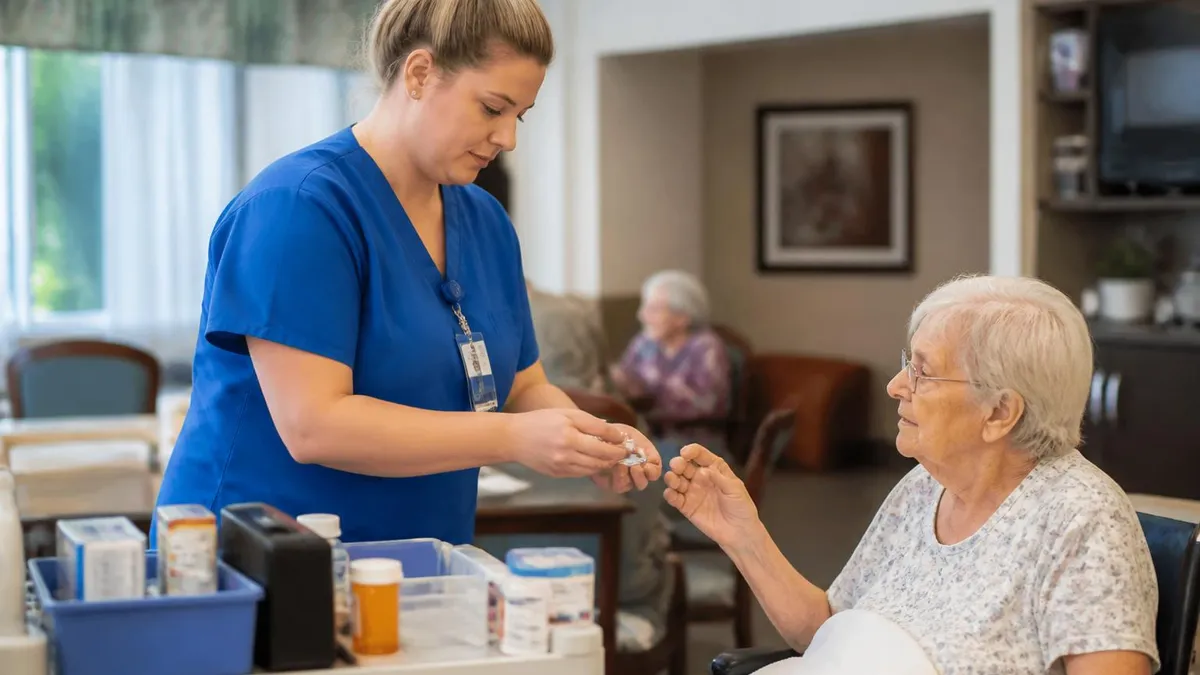
Long-term care facilities represent the most common primary clinical placement for LPN students, and with good reason — skilled nursing facilities provide dense, repetitive skill-building opportunities in medication administration, wound care, catheter management, and restorative nursing. Students assigned to long-term care rotations often administer medications to 15 to 25 residents per shift under instructor supervision, building the speed and accuracy that safe medication practice demands. The pace of long-term care also teaches students to organize their work efficiently and prioritize multiple competing patient needs simultaneously, a competency directly tested on the NCLEX-PN.
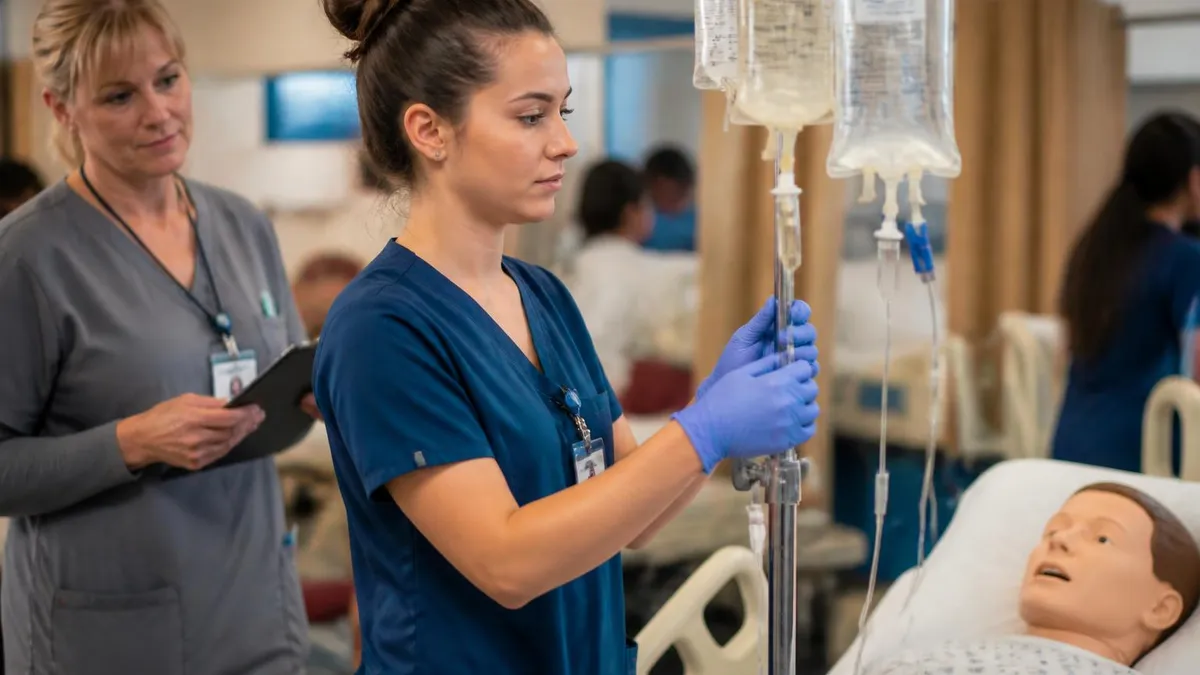
Acute care medical-surgical rotations introduce students to higher-acuity patients, electronic health record documentation, and the fast-paced culture of hospital nursing. In these settings, LPN students work under the supervision of registered nurses, observing and participating in post-operative care, IV management, telemetry monitoring, and discharge planning. The collaborative dynamic between LPNs and RNs in acute care is important to experience firsthand — understanding scope of practice boundaries in real clinical environments helps students navigate their future roles with confidence and professionalism.
Maternal-newborn and pediatric rotations, though typically shorter in duration, expose students to some of the most emotionally demanding and technically precise areas of nursing practice. Newborn assessment, postpartum care, breastfeeding support, and pediatric developmental screening all require communication approaches that differ substantially from adult medical-surgical nursing. Students who struggle with these rotations are encouraged to reflect on their communication style and seek additional practice with age-appropriate patient interaction techniques, as these skills are transferable to geriatric and family-centered care across all practice settings.
Mental health nursing rotations challenge students in a different dimension — therapeutic communication, behavioral observation, de-escalation techniques, and medication monitoring for psychiatric conditions all require a different skill set than physical care delivery. Penn State affiliated programs typically place students in inpatient psychiatric units or community mental health centers for this rotation. Students often report that mental health rotations initially feel less familiar and more uncomfortable than medical-surgical placements, but most leave the experience with significantly improved interpersonal communication skills and a deeper understanding of the biopsychosocial model of care.
Clinical instructors play an enormous role in shaping the rotation experience. Faculty at Penn State affiliated programs use structured evaluation tools — clinical competency checklists, direct observation assessments, and written clinical reflections — to document each student's skill progression across the program year. Students who receive critical feedback during clinical evaluations benefit most when they approach that feedback as professional development rather than personal criticism. Asking instructors for specific improvement strategies and then demonstrating those improvements at the next clinical opportunity is the fastest route to building the competency record needed for program completion and NCLEX-PN eligibility.
Simulation lab sessions complement real clinical rotations by allowing students to practice complex, high-stakes scenarios in a safe, controlled environment. High-fidelity patient simulators enable practice in situations that may not arise during scheduled clinical shifts — rapid deterioration responses, anaphylaxis management, and obstetric emergencies, for example. Programs that invest in robust simulation technology give students an important experiential advantage, particularly for scenarios that are too high-risk to practice initially on real patients. Ask about simulation lab resources and the ratio of simulation hours to real clinical hours when evaluating specific campus programs.
Many students discover too late that background check processing, appeals, or clarifications from the Pennsylvania State Board of Nursing can take four to eight weeks. Submit your licensure application and background check documentation immediately after program completion — do not wait until your NCLEX date is scheduled. Delays in Board processing can push your license issuance weeks beyond your exam pass date, delaying your first nursing paycheck and complicating employer onboarding timelines.
Career outcomes for graduates of Penn State affiliated LPN programs are strong across Pennsylvania's diverse healthcare landscape. The state's robust hospital systems, expanding network of outpatient clinics, and large long-term care sector collectively generate thousands of LPN job openings annually, and employers actively recruit new graduates from accredited programs. Average starting salaries for new LPN graduates in Pennsylvania range from $48,000 to $56,000 annually, with wages climbing to $60,000–$68,000 for experienced nurses with specialty certifications or supervisory responsibilities. Hourly rates in high-demand settings like home health and correctional facilities often carry premium pay differentials.
Geographic variation in LPN compensation across Pennsylvania is significant. Philadelphia and its suburbs — including Montgomery, Chester, and Delaware counties — offer the highest average wages in the state, reflecting the high cost of living and intense competition for healthcare workers in the region. Pittsburgh, the Lehigh Valley, and Harrisburg also support above-average LPN salaries due to concentration of major health systems and medical centers. Rural Pennsylvania counties typically offer lower base wages but may compensate with signing bonuses, relocation assistance, or enhanced benefit packages to attract nurses to underserved areas.
Specialty practice areas offer LPNs opportunities to earn more and develop deeper clinical expertise. IV therapy certification, wound care certification, and gerontological nursing certifications are among the most commonly pursued credentials by Pennsylvania LPNs. Each certification typically requires a combination of clinical experience hours and a passing score on a specialty examination, and many employers will reimburse certification costs for nurses who commit to a defined tenure of employment. Specialty-certified LPNs frequently command pay differentials of $2 to $5 per hour above colleagues without certification, representing meaningful annual income increases that compound significantly over a career.
The LPN-to-RN bridge pathway remains the most popular long-term career advancement route for Penn State LPN graduates. Penn State's associate degree nursing programs accept qualified LPN applicants into advanced placement tracks, allowing them to leverage existing practical nursing knowledge and clinical hours to accelerate their RN education. Depending on the program and the individual student's transfer credit situation, LPN-to-ADN bridge completion can take as little as 12 to 18 months of additional study. Graduates of the ADN program are eligible to sit for the NCLEX-RN, and many continue through Penn State's online RN-to-BSN program while working full-time as registered nurses.
Home health nursing is a particularly fast-growing employment sector for Pennsylvania LPNs. The combination of an aging baby boomer population, a national preference for aging in place, and expanded Medicare and Medicaid reimbursement for home-based care has driven explosive demand for LPNs willing to work in home settings. Home health LPN positions often offer more flexible scheduling than facility-based roles, greater autonomy in day-to-day practice, and the opportunity to build meaningful long-term relationships with patients and families. The trade-off is reduced access to immediate peer support and greater responsibility for independent clinical judgment within LPN scope of practice.
Correctional nursing offers another high-demand, well-compensated specialty for Pennsylvania LPNs. The Pennsylvania Department of Corrections employs LPNs across its network of state correctional institutions, offering competitive state employee salaries, generous benefits packages, and defined retirement plans. Correctional LPNs manage chronic disease, conduct intake health screenings, administer medications, and coordinate specialty care referrals for incarcerated individuals. The work environment is unique and requires strong boundary-setting skills and comfort working alongside correctional officers, but for nurses who thrive in structured, security-conscious environments, correctional nursing provides exceptional job stability and financial security.
School nursing represents a niche but meaningful employment pathway for LPNs interested in pediatric and community health work. Pennsylvania school districts employ LPNs — typically under the supervision of a registered school nurse — to manage student health records, administer daily medications, assess minor injuries, and support students with chronic health conditions.
School nursing schedules align with the academic calendar, making it attractive to parents or caregivers who value summers and holidays off. Salaries in school nursing are modest compared to clinical settings, but the lifestyle alignment and low-acuity work environment make it a popular choice for nurses seeking reduced physical and emotional intensity in their daily practice.
Practical preparation for the NCLEX-PN begins long before your exam registration date, and the students who pass on their first attempt are almost always those who treated NCLEX prep as an ongoing process throughout their clinical nursing courses rather than a last-minute sprint. The most effective study strategy combines content review with high-volume question practice — not one or the other in isolation.
Content review anchors knowledge; practice questions build the test-taking reasoning skills and pattern recognition that the NCLEX-PN's computer-adaptive format rewards. Aim to spend roughly equal time on each approach, adjusting the ratio toward more questions as your exam date approaches.
Content mastery across all NCLEX-PN client needs categories is non-negotiable. The four major categories — Safe and Effective Care Environment (including coordinated care and safety), Health Promotion and Maintenance, Psychosocial Integrity, and Physiological Integrity — each carry defined percentage weights in the test plan. Pharmacological and Parenteral Therapies alone accounts for 10–16% of scored questions, making pharmacology one of the highest-yield content areas for focused review. Use the current NCSBN NCLEX-PN test plan document, available free on the NCSBN website, as your master study guide to ensure you are covering all tested content rather than guessing at what to prioritize.
Practice question strategy matters as much as the number of questions you complete. After answering each question, read the full rationale for both the correct and incorrect answer choices — understanding why each distractor is wrong reinforces the clinical reasoning pattern the question is testing. Students who skip rationale review and simply note their score percentage are wasting most of the learning value of each practice session. Over time, systematically reviewing rationales builds the ability to recognize similar question structures and apply consistent reasoning frameworks under exam-day time pressure.
Time management during the NCLEX-PN is a skill that requires deliberate practice. The computer-adaptive test presents a minimum of 85 questions and a maximum of 150, with a 5-hour time limit. Students have, on average, about two minutes per question across the full exam. Train yourself to maintain this pace by completing timed practice sessions under realistic conditions — no phone, no music, no interruptions.
If you find yourself consistently spending more than three minutes on individual questions during practice, use that as a signal to review time-management strategies and practice the habit of making a best-informed decision and moving forward rather than dwelling indefinitely on uncertain items.
Select-all-that-apply (SATA) questions are the format most feared by NCLEX-PN candidates, but they become predictable with practice. SATA questions require you to identify every correct option and receive no partial credit — you must select all correct choices and no incorrect ones.
The key reasoning approach is to evaluate each option independently on its clinical merits rather than looking for a pattern or trying to narrow down to a single best answer. Practice with at least 500 dedicated SATA questions before your exam date, and you will find that the format becomes far less intimidating than it appears at first encounter.
The week before your NCLEX-PN, shift your preparation from intensive content review toward light practice question sessions and deliberate relaxation. Overloading new information in the final days before the exam creates cognitive interference rather than advantage.
Review your personal weakness areas briefly, complete 50–75 practice questions daily to stay sharp without burning out, get seven to eight hours of sleep each night, maintain regular exercise and nutrition, and trust that the training your Penn State LPN program provided has built the foundational competency the exam is designed to assess. Anxiety reduction and mental clarity on exam day are genuine performance factors — treat them with the same seriousness as content knowledge.
After passing the NCLEX-PN and receiving your Pennsylvania LPN license, your first 90 days of employment represent another critical learning phase. New graduate LPNs should proactively seek mentorship from experienced nurses, ask questions freely and without embarrassment, and focus on building safe, efficient routines for medication administration and documentation before attempting to add speed or complexity.
The transition from student to licensed professional is significant, and the habits you establish in your first few months of practice will shape your clinical identity for years to come. Approach your early career with the same diligence and curiosity that carried you through your Penn State LPN program, and the transition will be both successful and professionally fulfilling.
LPN Questions and Answers

LPN Requirements 2026: Complete Guide to Becoming a Licensed Practical Nurse

LPN IV Certification: Complete 2026 Guide to Training, Requirements & Cost

LPN Programs in Florida: Complete 2026 Guide to Accredited Schools, Costs, Requirements & Licensure

LPN Salary Wisconsin 2026: Average Pay, Top Cities, and How to Earn More
LPN Duties: Complete Guide to Daily Responsibilities and Scope of Practice
About the Author

Registered Nurse & Healthcare Educator
Johns Hopkins University School of NursingDr. Sarah Mitchell is a board-certified registered nurse with over 15 years of clinical and academic experience. She completed her PhD in Nursing Science at Johns Hopkins University and has taught NCLEX preparation and clinical skills courses for nursing students across the United States. Her research focuses on evidence-based exam preparation strategies for healthcare certification candidates.
Join the Discussion
Connect with other students preparing for this exam. Share tips, ask questions, and get advice from people who have been there.
View discussion (7 replies)