
LPN/LVN Online Programs 2026 October: Complete Guide to Hybrid Practical Nursing Schools
LPN LVN online programs 2026 October: accredited hybrid schools, costs, NCLEX-PN prep, clinical rotations, admissions and licensure requirements explained. 🏆
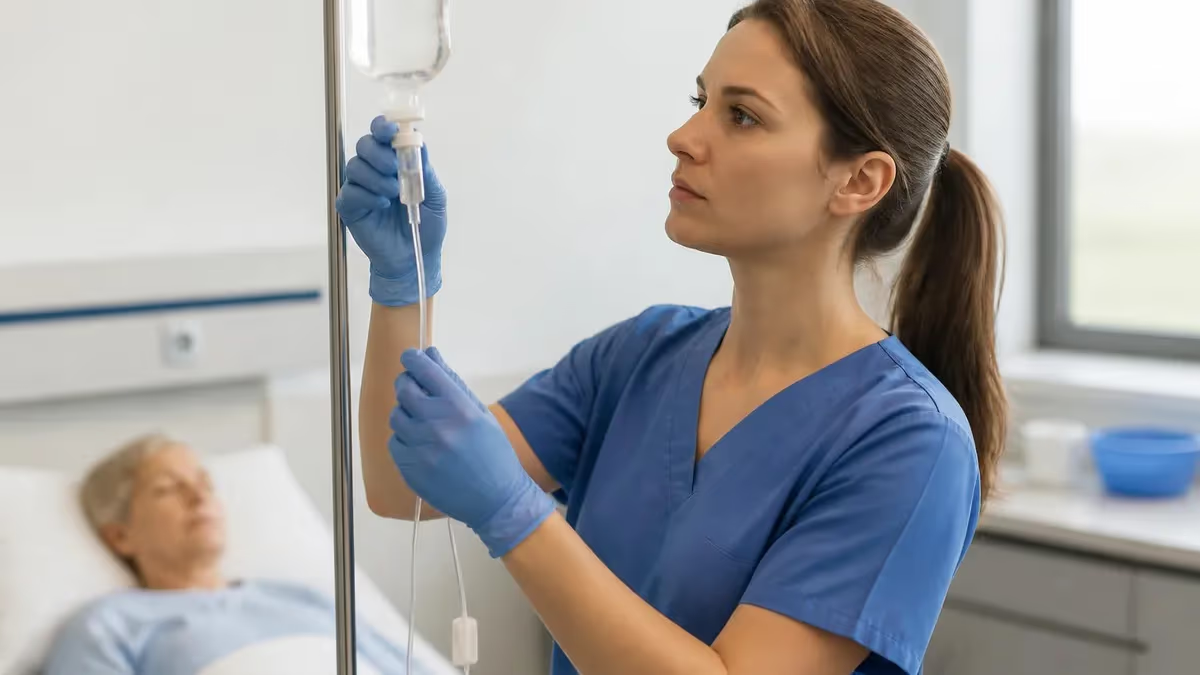
LPN LVN online programs have become one of the most searched pathways into healthcare for 2026, and for good reason. Hybrid practical nursing schools combine flexible, self-paced theory coursework delivered through learning management systems with in-person clinical rotations at partnered hospitals, long-term care facilities, and outpatient clinics. This blended model lets working adults, caregivers, and career changers earn a Practical Nursing diploma in roughly 12 to 18 months while keeping a paycheck, which is why enrollment in distance-friendly LPN tracks has climbed sharply since 2022.
It is important to understand from the outset that no Licensed Practical Nurse or Licensed Vocational Nurse program is 100% online. State boards of nursing require a minimum number of supervised clinical hours, usually 400 to 700, before you can sit for the NCLEX-PN. What schools mean by online is that lectures, anatomy modules, pharmacology drills, and exams are delivered virtually, while skills labs and bedside rotations happen on a regional campus or at a clinical affiliate near your zip code.
This guide walks you through accredited hybrid options, real tuition ranges, admissions requirements, the structure of an online curriculum, and the licensure pathway that turns coursework into a paycheck. We will compare in-state community college tracks against career colleges and proprietary chains like Hondros and Stratford Career Institute, and we will look at how states such as Texas, California, Florida, and Ohio handle online theory hours differently. If you are still weighing whether nursing is the right move, our LPN career guide covers the role, scope of practice, and salary outlook in detail.
You will also see how to validate accreditation through the state board of nursing and the Accreditation Commission for Education in Nursing (ACEN), because an unaccredited program is the single fastest way to waste $15,000 and 18 months. We cite NCLEX-PN pass rates published by the NCSBN, employment projections from the U.S. Bureau of Labor Statistics, and tuition data pulled from the National Center for Education Statistics IPEDS database, so the numbers you see here are sourced rather than guessed.
By the time you finish this article you will know which online LPN programs are legitimate, what the application timeline looks like, how much you should budget for uniforms, textbooks, and the NCLEX-PN exam fee, and where the common deal-breakers hide in fine print. You will also see how the LPN role is evolving as states expand scope of practice in 2026 to address registered nurse shortages, and what that means for your earning potential in the first three years after licensure.
Finally, we will give you a realistic study plan, a checklist to vet any program before you sign an enrollment agreement, and answers to the questions prospective students ask us most often. Whether you are in a rural county where the nearest community college is 90 minutes away or a busy parent in Houston juggling two kids and a part-time job, a well-chosen hybrid LPN program can absolutely work, you just need to start with accurate information.
LPN Online Programs by the Numbers
How Hybrid LPN Programs Are Structured
Recorded lectures, reading assignments, narrated PowerPoints, and discussion boards in Canvas, Blackboard, or Moodle. You log in on your own schedule, usually 20-25 hours per week, and complete unit quizzes by weekly deadlines.
Live Zoom or Teams classes once or twice weekly for case studies, NCLEX-PN style question review, and instructor Q&A. Attendance is typically mandatory and counts toward your participation grade.
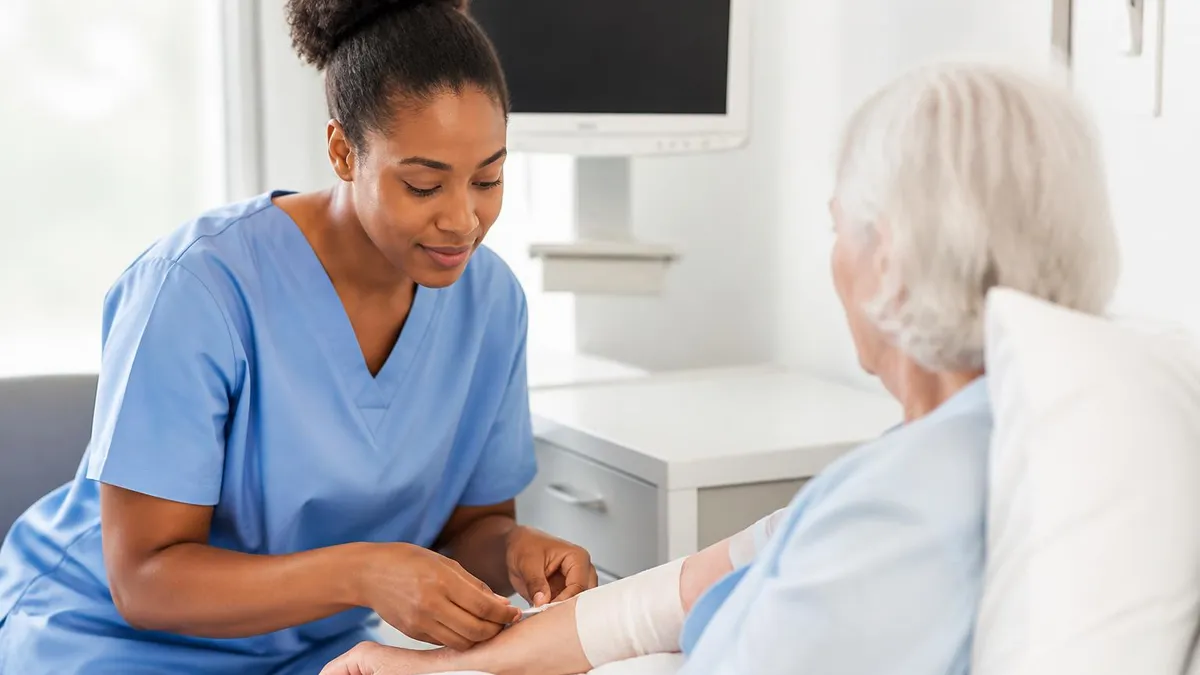
Two to four on-campus weekends per term where you practice injections, catheterization, wound care, and vital signs on manikins. Some schools offer regional lab partnerships so you do not drive to the main campus.
Supervised hands-on shifts at hospitals, nursing homes, and clinics within commuting distance of your home. Expect 16-32 hours per week during clinical terms, scheduled by the school with a clinical coordinator.
Final term focuses on a preceptorship, comprehensive predictor exams like HESI or ATI, and structured NCLEX-PN review. Many schools require an exit exam score before clearing you for the licensing exam.
Admissions requirements for online LPN programs are stricter than many applicants expect, largely because clinical placements are limited and schools want students who will finish. Most accredited hybrid programs require a high school diploma or GED, a minimum cumulative GPA of 2.5, and passing scores on either the TEAS (Test of Essential Academic Skills), HESI A2, or Kaplan Nursing Entrance Exam. A composite TEAS score of 60 or higher is the typical floor, though competitive community college programs in California and Massachusetts routinely admit students with scores in the high 70s.
Before clinicals begin you will need to clear a criminal background check, a 10-panel drug screen, a physical exam with proof of immunizations including hepatitis B, MMR, varicella, Tdap, and annual flu, plus a current BLS for Healthcare Providers card from the American Heart Association. Some states, including Florida and Texas, require fingerprinting through the state board of nursing as part of the licensure application, which costs an additional $75 to $100 and should be scheduled in your first term to avoid clinical placement delays.
Prerequisites vary widely. Community college LPN tracks often require Anatomy and Physiology I, Medical Terminology, English Composition, and sometimes Introduction to Psychology before you can apply to the nursing core. Private career colleges like Hondros, Carrington, and Pima Medical Institute typically bundle prerequisites into the program itself, which speeds completion but raises total cost. If you already hold an associate degree in any field, ask whether prior credits transfer, because schools differ on this point and you may shave a full term off your timeline.
Reference letters, a personal essay, and an admissions interview are common at selective programs. The essay is your chance to explain why practical nursing fits your life and career goals, and admissions committees look for evidence of patient-care exposure, even informal experience like working as a home health aide, CNA, or medical assistant. If you have a CNA certification, several states allow you to bridge into LPN training with advanced placement, sometimes skipping the first nursing fundamentals course entirely.
Technology requirements matter too. You will need a reliable laptop with a webcam, broadband internet of at least 25 Mbps, and access to a quiet space for proctored exams using ExamSoft, Honorlock, or Respondus Monitor. Chromebooks often fail proctoring software requirements, so budget for a Windows or Mac machine if you do not already have one. Many schools also require students to purchase digital textbooks and access codes for adaptive learning platforms like ATI Nursing Education or Elsevier Evolve, adding $600 to $1,200 per program.
Finally, plan for the geographic reality of clinical placements. A program may be marketed as online, but if its clinical affiliates only operate in three counties, you must live within reasonable driving distance. Always ask admissions for a list of clinical sites near your zip code before you enroll, and confirm in writing that placement is guaranteed. To compare specific schools in your state, see our LPN programs near me roundup which lists accredited options by region with current tuition and seat availability.
LPN Practice Test Questions
Prepare for the LPN - Certified Practical Nurse exam with our free practice test modules. Each quiz covers key topics to help you pass on your first try.
LPN - Certified Practical Nurse Basic Care...
LPN Exam Questions covering - Certified Practical Nurse Basic Care and Comfort. Master LPN Test concepts for certification prep.
LPN - Certified Practical Nurse Coordinate...
Free LPN Practice Test featuring - Certified Practical Nurse Coordinated Care. Improve your LPN Exam score with mock test prep.
LPN - Certified Practical Nurse Health Pro...
LPN Mock Exam on - Certified Practical Nurse Health Promotion and Maintenance. LPN Study Guide questions to pass on your first try.
LPN - Certified Practical Nurse Pharmacolo...
LPN Test Prep for - Certified Practical Nurse Pharmacological Therapies. Practice LPN Quiz questions and boost your score.
LPN - Certified Practical Nurse Physiologi...
LPN Questions and Answers on - Certified Practical Nurse Physiological Adaptation. Free LPN practice for exam readiness.
LPN - Certified Practical Nurse Psychosoci...
LPN Mock Test covering - Certified Practical Nurse Psychosocial Integrity. Online LPN Test practice with instant feedback.
LPN - Certified Practical Nurse Reduction ...
Free LPN Quiz on - Certified Practical Nurse Reduction of Risk Potential. LPN Exam prep questions with detailed explanations.
LPN - Certified Practical Nurse Safety and...
LPN Practice Questions for - Certified Practical Nurse Safety and Infection Control. Build confidence for your LPN certification exam.
LPN Ethical, Legal & Professional Standards
LPN Test Online for Ethical, Legal & Professional Standards. Free practice with instant results and feedback.
LPN Health Evaluation & Monitoring
LPN Study Material on Health Evaluation & Monitoring. Prepare effectively with real exam-style questions.
Online LPN Curriculum Breakdown
The opening term lays the scientific and ethical foundation for everything that follows. You will study anatomy and physiology, basic pharmacology principles, infection control, medical terminology, and nursing ethics. Most programs introduce documentation in electronic health records using simulated platforms like SimChart or DocuCare, and you will learn the SOAP and SBAR formats used at the bedside every day.
Skills lab in term one usually focuses on hand hygiene, vital signs, bed making, patient transfers, and basic assessment of breath, heart, and bowel sounds. Expect frequent low-stakes quizzes designed to build NCLEX-PN style reasoning. Many students underestimate how much memorization is required in this term, particularly for medical abbreviations and electrolyte values, so build a daily review habit from day one.
Are Online LPN Programs Worth It?
- +Theory coursework fits around work and family schedules through asynchronous learning
- +Total cost is often 20-40% lower than traditional on-campus practical nursing tracks
- +Recorded lectures let you re-watch complex pharmacology and pathophysiology content
- +Clinical rotations still happen locally, building real bedside skills and references
- +Pace can be accelerated through self-directed study for highly motivated learners
- +Geographic flexibility opens accredited programs to rural and underserved areas
- +Strong digital documentation skills transfer directly to modern EHR workplaces
- −No program is fully online — clinical hours and skills labs remain mandatory
- −Self-discipline is essential; drop rates exceed 30% at some career colleges
- −Hands-on skills development relies heavily on home practice between lab weekends
- −Clinical placements may be limited in rural zip codes, forcing long commutes
- −Some employers still prefer graduates from traditional on-campus programs
- −Technology costs, proctoring fees, and digital textbooks add hidden expenses
- −Financial aid options can be narrower at non-Title IV career colleges
Pros and Cons at a Glance
| Pros | Cons |
|---|---|
| Theory coursework fits around work and family schedules through asynchronous learning | No program is fully online — clinical hours and skills labs remain mandatory |
| Recorded lectures let you re-watch complex pharmacology and pathophysiology content | Hands-on skills development relies heavily on home practice between lab weekends |
| Clinical rotations still happen locally, building real bedside skills and references | Clinical placements may be limited in rural zip codes, forcing long commutes |
| Pace can be accelerated through self-directed study for highly motivated learners | Some employers still prefer graduates from traditional on-campus programs |
| Geographic flexibility opens accredited programs to rural and underserved areas | Technology costs, proctoring fees, and digital textbooks add hidden expenses |
| Strong digital documentation skills transfer directly to modern EHR workplaces | Financial aid options can be narrower at non-Title IV career colleges |
How to Vet Any Online LPN Program Before Enrolling
- ✓Confirm program approval on your state board of nursing's official website
- ✓Verify institutional accreditation by ACEN, ABHES, or a recognized regional accreditor
- ✓Check the most recent first-time NCLEX-PN pass rate, target 80% or higher
- ✓Request a written list of clinical affiliate sites within 30 miles of your home
- ✓Ask whether clinical placement is guaranteed or whether students self-arrange sites
- ✓Get total cost in writing including books, uniforms, lab fees, and proctoring
- ✓Confirm Title IV eligibility if you plan to use federal Pell Grants or student loans
- ✓Review the school's graduation and job placement rates over the last three reporting years
- ✓Read the enrollment agreement's refund and withdrawal policy line by line
- ✓Speak with two or three current students or recent graduates by phone or email
- ✓Check Better Business Bureau, state attorney general, and Department of Education complaints
- ✓Ensure the curriculum maps to NCSBN's NCLEX-PN test plan categories
Only state-board-approved programs qualify you for the NCLEX-PN
An attractive website, low tuition, and a fast 9-month timeline mean nothing if the program is not approved by your state board of nursing. Without approval you cannot sit for the NCLEX-PN, and many states refuse to recognize credits from non-approved schools. Always cross-check the school's claim against the official board of nursing website before paying any deposit or signing a financial aid promissory note.
Tuition for LPN LVN online programs spans a wide range depending on the school type, state residency, and whether prerequisites are bundled. Community college hybrid tracks remain the most affordable, with in-state tuition typically running $6,000 to $12,000 for the full diploma. Schools like Lone Star College in Texas, Indian River State College in Florida, and Lakeshore Technical College in Wisconsin publish transparent program costs and often offer evening and weekend cohort options designed for working adults.
Private career colleges sit at the higher end. Hondros College of Nursing, Pima Medical Institute, and Stratford Career Institute charge between $18,000 and $32,000 for an online-blended practical nursing diploma. The premium pays for smaller cohorts, evening clinicals, accelerated 11 to 13 month pacing, and integrated NCLEX-PN review. Whether that premium is worth it depends on how quickly you need to start earning a nursing wage and whether you qualify for institutional scholarships that can reduce the sticker price by 15% to 25%.
Financial aid options include federal Pell Grants up to $7,395 for the 2025-2026 award year, Direct Subsidized and Unsubsidized loans, state nursing scholarships, and employer tuition reimbursement through hospital systems offering nursing pipeline programs. The Health Resources and Services Administration's Nurse Corps Scholarship Program is competitive but pays full tuition plus a monthly stipend in exchange for a two-year service commitment at a Critical Shortage Facility after graduation. WIOA workforce funds also cover LPN training in many states for displaced workers.
Hidden costs add up quickly. Plan for $400 to $700 in uniforms and a quality stethoscope, $600 to $1,200 for textbooks and ATI or HESI access codes, $150 to $250 for background checks and drug screens, $90 to $120 for BLS certification, $200 in clinical site parking and gas over the program, $200 for the NCLEX-PN exam, and $50 to $300 for your initial state license. A realistic total cost of attendance is therefore 10% to 15% above the published tuition number, and you should plan accordingly.
Return on investment is generally favorable. The U.S. Bureau of Labor Statistics reported a median LPN annual wage of $59,730 in May 2023, with the top 10% earning over $77,870, and projected 3% employment growth through 2033 with roughly 54,000 openings each year. Long-term care, home health, correctional nursing, and outpatient clinics drive most LPN hiring. In high-demand metros like Boston, San Francisco, and Seattle, new graduates can negotiate sign-on bonuses of $3,000 to $7,500 with two-year commitments.
If cost is your primary concern, compare community college and career college pricing in detail before deciding. Our LPN program cost guide breaks down public versus private tuition, financial aid eligibility, and total cost of attendance in 12 states, with worked examples for full-time and part-time enrollment. The right financial choice is the one that minimizes debt while still putting you in front of patients on a schedule you can actually sustain.

Several websites marketing fully online LPN programs are not approved by any state board of nursing and do not lead to NCLEX-PN eligibility. If a school promises licensure without any in-person clinical hours, it is almost certainly a scam. Always verify approval directly on your state board of nursing website and call the school's clinical coordinator before paying any deposit, especially for programs advertised on social media.
Licensure is the final, mandatory step that converts your diploma into earning power. After completing an approved program, you apply to your state board of nursing for authorization to test, pay the NCLEX-PN exam fee of $200 to Pearson VUE, and schedule your computer-adaptive exam at an approved testing center. The NCLEX-PN delivers between 85 and 150 questions and runs up to five hours, terminating when the algorithm determines with 95% confidence whether you have passed.
The exam tests four major client need categories aligned with the NCSBN test plan: Safe and Effective Care Environment, Health Promotion and Maintenance, Psychosocial Integrity, and Physiological Integrity. Pharmacological therapies and reduction of risk potential are heavily weighted subcategories within physiological integrity. According to NCSBN data, the 2024 first-time pass rate for U.S.-educated LPN candidates was approximately 83%, with significant variation among programs ranging from below 50% to above 95%.
State-specific quirks matter. Texas requires fingerprinting through the Department of Public Safety and a jurisprudence exam covering Texas-specific nursing law. California separates eligibility, fingerprinting, and exam scheduling into three distinct steps and uses the Vocational Nursing title (LVN) rather than LPN. Florida requires fingerprinting through L1 Enrollment Services and a 2-hour Florida Laws and Rules course. Compact states honor the Nurse Licensure Compact for LPNs once you hold a multistate license from your primary state of residence.
Once licensed, the typical first job market is long-term care, where new graduates can expect $25 to $32 per hour depending on region, shift differentials, and weekend premiums. Home health agencies offer comparable pay with more autonomy and often pay per visit, which can be lucrative for organized nurses. Acute care hospitals hire LPNs primarily on medical-surgical floors, rehabilitation units, and outpatient clinics, though hospital LPN roles have contracted somewhat in metro areas favoring RN-only models since 2020.
Career mobility is a key reason LPN remains an attractive entry point. LPN-to-RN bridge programs at community colleges and online universities like Excelsior, Western Governors, and Achieve Test Prep allow working LPNs to earn an Associate Degree in Nursing in 12 to 24 months. Some hospital systems pay full tuition for employees pursuing the RN, making the LPN role a paid pathway into bachelor's-level nursing without taking on additional debt. This stair-step approach is increasingly common in states facing acute RN shortages.
Continuing education obligations vary. Most states require 20 to 30 contact hours of continuing education every two years for license renewal, plus mandatory courses on topics like opioid prescribing, child abuse recognition, and HIV/AIDS care. Online CE platforms like Nurse.com and Wild Iris Medical Education provide cost-effective options, often bundled at $30 to $80 per renewal cycle. Stay organized with renewal dates because lapsed licenses interrupt employment and may require remediation or reapplication.
Succeeding in an online LPN program requires a different study discipline than a traditional classroom track, and the students who thrive treat the program like a full-time job even when the calendar shows flexibility. Block consistent daily hours, ideally 9 to 11 AM or 7 to 10 PM, and protect that time from family interruptions. Use a paper planner or a digital tool like Notion to track every weekly deadline at the start of each term, because online courses penalize late submissions automatically without instructor leniency.
Active recall and spaced repetition outperform passive re-reading by wide margins on NCLEX-PN style content. Create Anki flashcards for pharmacology drug classes, lab value ranges, and disease process pathophysiology, and review them on a 1-3-7-14 day schedule. Many successful students dedicate 30 to 60 minutes daily to NCLEX-PN style questions from day one, even before the content has been formally covered, because the question-first approach exposes weaknesses early when there is still time to address them.
Clinical preparation deserves equal attention. Arrive 15 minutes early, review your assigned patients in the EHR before report, write down expected medications and lab values, and identify two learning goals for each shift. Treat every clinical instructor and staff nurse as a potential reference, because LPN hiring still depends heavily on word-of-mouth and clinical placement performance. Many new graduate offers come directly from the facility where the student rotated, sometimes weeks before graduation.
Build a small study group of three to five committed peers using a private Discord server, WhatsApp chat, or weekly Zoom call. Pure isolation is the single biggest failure factor in online programs. Even one accountability partner who reviews care plans with you and quizzes you on dosage calculations dramatically improves retention. If your program offers peer tutoring or supplemental instruction, sign up immediately, because these resources are typically free and underused.
Take care of your physical and mental health like a clinical asset, not an afterthought. Sleep deprivation destroys clinical judgment and memory consolidation, and the temptation to study until 2 AM should be resisted. Schedule one full day off weekly, even during the final NCLEX-PN crunch, and use it for exercise, family time, or rest. Burnout is the leading reason students drop out in the second half of LPN programs, and it is largely preventable with disciplined recovery time.
Finally, prepare for the NCLEX-PN with a structured 4 to 8 week review after graduation. Use one comprehensive Q-bank like UWorld or Kaplan and complete a minimum of 2,500 to 3,000 practice questions before testing, reviewing the rationales for every item including the ones you answer correctly. For free printable test material to supplement your review, see our LPN practice test PDF with answer rationales aligned to the NCSBN test plan. Treat the licensing exam as the final term project that makes everything before it count.
Sample Certified Practical Nurse Practice Questions
Try these questions from our free Certified Practical Nurse practice tests. The correct answer and an explanation follow each question.
What is the purpose of monitoring vital signs in nursing?
- A. To evaluate emotional status
- B. To assess health and detect problems
- C. To determine medication doses
- D. To track weight changes
Answer: B. To assess health and detect problems
Monitoring vital signs—temperature, pulse, respiration, blood pressure, and oxygen saturation—provides objective data about a patient's physiological status. These measurements are crucial for establishing a baseline, detecting subtle changes that may indicate a developing health problem, and evaluating the effectiveness of nursing interventions. They serve as key indicators of a patient's overall health and stability.
A newborn's APGAR score at 1 minute is 5. What is the most appropriate nursing action?
- A. Continue routine newborn care and reassess at 5 minutes
- B. Begin chest compressions immediately
- C. Provide stimulation and supplemental oxygen, then reassess at 5 minutes
- D. Administer epinephrine per NRP protocol
Answer: C. Provide stimulation and supplemental oxygen, then reassess at 5 minutes
An APGAR score of 4–6 indicates moderate depression requiring stimulation and supplemental oxygen, with reassessment at 5 minutes.
A pregnant client at 20 weeks gestation is scheduled for an amniocentesis. Which nursing action is most important after the procedure?
- A. Encourage increased oral fluid intake for the next week
- B. Monitor for uterine contractions, leaking fluid, and report decreased fetal movement
- C. Keep the client in supine position for 8 hours post-procedure
- D. Perform a sterile vaginal examination to assess cervical dilation
Answer: B. Monitor for uterine contractions, leaking fluid, and report decreased fetal movement
Post-amniocentesis complications include preterm labor and membrane rupture. The client must be taught to monitor for contractions, fluid leaking from the vagina, fever, and decreased fetal movement.
Why is health assessment important in nursing?
- A. To provide medication
- B. To gather information that guides care planning
- C. To monitor vital signs only
- D. To offer treatment recommendations
Answer: B. To gather information that guides care planning
Health assessment is the foundational step in the nursing process, serving to systematically gather comprehensive information about a patient's health status. This data, both subjective and objective, is critical for identifying actual and potential health problems. The insights gained directly guide the development of individualized and effective care plans, ensuring patient-centered interventions.
LPN Questions and Answers

About the Author

Registered Nurse & Healthcare Educator
Johns Hopkins University School of NursingDr. Sarah Mitchell is a board-certified registered nurse with over 15 years of clinical and academic experience. She completed her PhD in Nursing Science at Johns Hopkins University and has taught NCLEX preparation and clinical skills courses for nursing students across the United States. Her research focuses on evidence-based exam preparation strategies for healthcare certification candidates.
Join the Discussion
Connect with other students preparing for this exam. Share tips, ask questions, and get advice from people who have been there.
View discussion (7 replies)