
LPN Jobs in Arkansas: Complete 2026 September Guide to Salaries, Employers, and Career Growth
Explore LPN jobs in Arkansas — average salaries, top hiring cities, employer types, and career tips for 2026 September. 🏆 Updated guide.

If you are searching for LPN jobs in Arkansas, you have entered one of the most stable and rewarding healthcare labor markets in the mid-South region. Licensed Practical Nurses are in consistent demand across the Natural State, driven by an aging rural population, expanding long-term care facilities, and a network of regional medical centers that serve communities from the Ozark highlands to the Mississippi Delta. Whether you are a recent graduate or an experienced LPN considering relocation, Arkansas offers a compelling mix of affordability, job availability, and professional growth potential that is hard to match in larger, higher-cost states.
Arkansas employs roughly 11,000 LPNs according to recent Bureau of Labor Statistics occupational estimates, and that number is projected to grow faster than the national average over the next decade. The state's rural geography means that LPNs frequently serve as the primary point of nursing contact in small clinics, home health agencies, and critical-access hospitals — roles that carry real responsibility and offer genuine opportunities to advance your career. The breadth of settings where LPNs are employed in Arkansas is remarkable, ranging from physician offices and school nursing programs to correctional facilities and Veterans Affairs outpatient clinics.
Compensation for Arkansas LPNs has improved meaningfully over the past five years, partly because healthcare systems across the South have competed aggressively for qualified nursing staff following workforce shortages accelerated by the COVID-19 pandemic. The statewide median hourly wage for LPNs now sits in the mid-to-upper range of neighboring states like Mississippi and Oklahoma, while the cost of living in Little Rock, Fayetteville, and Fort Smith remains substantially lower than in metros like Nashville or Dallas. That combination — solid wages against modest living costs — produces purchasing power that often surprises nurses who relocate from higher-cost regions.
Understanding the full landscape of lpn jobs arkansas requires looking beyond salary figures alone. Shift differentials, benefits packages, tuition reimbursement programs, and career ladder opportunities all vary considerably between employer types. A hospital system in the River Valley may offer night-shift premiums of $4–$6 per hour, while a private physician practice might compensate with predictable daytime hours and a richer paid-time-off policy. Knowing how to evaluate these trade-offs is just as important as knowing which zip codes have the most open positions.
Geographic distribution matters too. Pulaski County, home to Little Rock and the University of Arkansas for Medical Sciences (UAMS) health system, consistently accounts for the largest share of LPN job postings in the state. However, Benton and Washington counties in Northwest Arkansas — anchored by the economic engine of Walmart's corporate headquarters and a rapidly growing population — have seen healthcare employment explode in recent years. Washington Regional Medical System and Mercy Hospital Northwest Arkansas are among the fastest-growing employers of nursing staff in that corridor.
Specialty areas are also expanding. Home health and hospice agencies have proliferated as Arkansas's older adult population seeks care outside institutional settings, and correctional health — administered by contractors like Centurion Health inside state prison facilities — maintains a steady demand for LPNs comfortable working in structured security environments. Telehealth support roles, where LPNs triage patients and coordinate care via phone or video platform, represent an emerging niche that offers fully remote scheduling flexibility.
This guide walks you through everything you need to navigate the Arkansas LPN job market in 2026: average salaries by city and employer type, the top healthcare systems hiring right now, practical tips for landing your first or next position, and how continuing education and specialty certifications can boost your earning power significantly. Whether you are sitting for the NCLEX-PN for the first time or looking to negotiate a raise at your current employer, the information here will help you make confident, well-informed career decisions.
LPN Jobs in Arkansas by the Numbers

LPN Salary Ranges Across Arkansas
New graduates in Arkansas typically earn $38,000–$44,000 annually. Starting pay is strongest in Little Rock hospital systems and Northwest Arkansas medical centers, where signing bonuses of $2,000–$5,000 are common for full-time positions.
With three to seven years of experience, Arkansas LPNs earn $44,000–$54,000 per year. Specialty areas like oncology, ICU step-down, and long-term acute care command the upper end of this range, especially in larger metro facilities.
Senior LPNs with eight or more years of experience, specialty certifications, or charge nurse responsibilities can earn $54,000–$62,000 annually. Travel LPN contracts in high-demand rural Arkansas counties may push hourly rates even higher.
Travel nurses working 13-week contracts in Arkansas rural critical-access hospitals frequently earn $28–$38 per hour before stipends. Housing and meal allowances can add $800–$1,400 per week in tax-advantaged compensation on top of base pay.
The largest concentration of LPN jobs in Arkansas clusters around three primary metropolitan corridors: Greater Little Rock (Pulaski, Saline, and Lonoke counties), the Fayetteville-Springdale-Rogers metro in Northwest Arkansas, and the Fort Smith metro straddling the Arkansas-Oklahoma border. Each of these labor markets has distinct characteristics that affect both the types of positions available and the compensation structures that employers use to attract and retain qualified nursing staff.
In Greater Little Rock, the dominant employer is the University of Arkansas for Medical Sciences (UAMS), the state's only academic medical center. UAMS operates a 600-plus-bed hospital along with extensive outpatient clinics, and its nursing workforce numbers in the thousands. Baptist Health, the largest not-for-profit health system in Arkansas, operates seven hospitals across the central and eastern parts of the state and is consistently among the top five employers of LPNs statewide. CHI St. Vincent, now part of the CommonSpirit Health network, adds additional capacity in the Little Rock and Hot Springs markets.
Northwest Arkansas has experienced population growth that outpaces almost every other region in the country over the last decade, driven by tech sector expansion, Walmart supplier migration, and a thriving arts and outdoor recreation economy. That growth has strained healthcare capacity and created acute demand for nursing staff at every level. Mercy Hospital Northwest Arkansas in Rogers, Washington Regional Medical Center in Fayetteville, and Northwest Medical Center in Springdale collectively employ hundreds of LPNs and regularly advertise open positions with competitive starting wages and robust benefits packages that include student loan repayment assistance.
Fort Smith, Arkansas's second-largest city, is anchored by Mercy Hospital Fort Smith and Baptist Health — Fort Smith, both of which operate full-service acute care facilities. The River Valley region surrounding Fort Smith also has a strong network of long-term care facilities, home health agencies, and federally qualified health centers that serve a predominantly rural, lower-income population with complex chronic disease burdens. LPNs in this market often find that their scope of practice is broader in practice than in larger urban facilities, because they function more independently when physician oversight is less immediately available.
Outside the major metros, rural Arkansas presents a compelling case for LPNs willing to embrace smaller communities. The Arkansas Rural Health Partnership and the state's Office of Rural Health and Primary Care have invested in incentive programs designed to attract and retain healthcare workers in medically underserved areas. Some federally designated Health Professional Shortage Areas in the Delta and Ozark regions offer loan repayment grants of $20,000–$30,000 for nurses who commit to two-year service agreements — a significant financial benefit on top of regular compensation.
Long-term care facilities — nursing homes, skilled nursing facilities, and assisted living communities — represent the single largest employment sector for Arkansas LPNs, absorbing roughly 35–40 percent of the total LPN workforce. Major operators including Beverly Healthcare, SavaSeniorCare, and numerous independently owned facilities are distributed across all 75 Arkansas counties. These settings often offer more predictable scheduling than acute care hospitals and may be more accommodating of part-time or weekend-only arrangements, which is attractive to LPNs managing family obligations or pursuing additional education.
Home health and hospice agencies are the second-fastest-growing employer category for Arkansas LPNs, after outpatient clinics. Companies like LHC Group (headquartered in Lafayette, Louisiana, but deeply embedded in the Arkansas market), Encompass Health, and dozens of smaller regional operators have expanded aggressively in response to rising demand from Medicare-eligible patients who prefer to age in place. Home health LPN roles typically involve managing a caseload of patients, performing skilled nursing visits, and coordinating with physical therapists, social workers, and physicians — a richly varied workday that many experienced nurses find more satisfying than hospital floor nursing.
Work Settings for LPN Jobs in Arkansas
Arkansas hospitals range from the 800-bed academic powerhouse of UAMS in Little Rock to 25-bed critical-access hospitals serving remote Delta and Ozark communities. In larger facilities, LPNs typically work on medical-surgical, long-term care, or rehabilitation units under the supervision of RNs. Hospital-based LPN positions generally offer the strongest benefits packages, including health insurance, retirement matching, and tuition assistance, along with shift differential pay that can add $3–$7 per hour for evening, night, and weekend shifts.
Critical-access hospitals in rural Arkansas often grant LPNs a broader practical scope because staffing resources are limited and the LPN may be the most available clinical nurse on shift. These settings demand strong clinical judgment and comfort with autonomous decision-making. Nurses in these environments frequently describe faster skill development and deeper community relationships as major advantages, even when the base pay is slightly lower than in urban hospital systems. Call-back and overtime opportunities are also common, which can substantially boost annual earnings.

Pros and Cons of Working as an LPN in Arkansas
- +Low cost of living stretches your LPN salary further than in most US states
- +Strong rural demand means job availability even in smaller, less-competitive markets
- +Broad practical scope in critical-access hospitals accelerates clinical skill development
- +Loan repayment grants available in federally designated shortage areas
- +Travel LPN contracts in rural counties offer high hourly rates plus stipends
- +Genuine community impact in underserved Delta and Ozark regions
- −Base salaries are below those in higher-cost states like California or New York
- −Rural assignments may require long daily commutes across sparse highway networks
- −Some smaller facilities have limited advancement pathways without further education
- −Overtime reliance is common in understaffed long-term care facilities
- −Limited telehealth infrastructure in very remote areas restricts some practice models
- −Extreme summer heat affects home health nurses making outdoor patient visits
How to Land an LPN Job in Arkansas
- ✓Obtain your Arkansas LPN license through the Arkansas State Board of Nursing before applying to positions.
- ✓Create a targeted resume highlighting clinical rotations, specialty skills, and any certifications like BLS or ACLS.
- ✓Register on the Arkansas Hospital Association's job board alongside major sites like Indeed and Health eCareers.
- ✓Contact nursing recruiters at Baptist Health, UAMS, and Mercy who specialize in LPN placements across the state.
- ✓Research federal loan repayment programs through HRSA for positions in Health Professional Shortage Areas.
- ✓Attend the Arkansas Nurses Association annual conference to network with hiring managers and fellow nurses.
- ✓Prepare for behavioral interviews by rehearsing STAR-method answers about patient safety scenarios.
- ✓Negotiate your start date and sign-on bonus in writing before accepting any employment offer.
- ✓Verify that your license is in active status on the ASBN verification portal before your first day.
- ✓Ask about tuition reimbursement policies if you plan to pursue your RN degree while working.
Rural Arkansas LPNs Earn Up to 18% More in Total Compensation
When you factor in federal loan repayment grants, housing stipends for rural assignments, and higher shift differentials offered by critical-access hospitals competing for scarce nursing staff, LPNs working in medically underserved Arkansas counties can achieve total annual compensation that exceeds their urban counterparts by 15–18 percent — despite lower base hourly wages. Do the full math before ruling out rural positions.
Career advancement is a realistic goal for Arkansas LPNs, and the pathways are more varied than many nurses initially realize. The most direct route is the LPN-to-RN bridge program, which allows working LPNs to complete an Associate Degree in Nursing (ADN) in as little as 12–18 months by receiving academic credit for prior licensed nursing experience. Several Arkansas community colleges — including National Park College, Arkansas State University-Newport, and South Arkansas Community College — offer LPN-to-RN bridge tracks specifically designed around the schedules of working healthcare professionals.
UAMS operates one of the South's most respected nursing schools and offers an LPN-to-BSN accelerated pathway for nurses who want to pursue a Bachelor of Science in Nursing. The BSN opens doors to clinical nurse specialist roles, case management positions, and hospital supervisory tracks that are typically reserved for bachelor's-prepared nurses. Many Arkansas hospital systems, including Baptist Health and Mercy, have adopted BSN-preferred hiring policies for certain inpatient units, making the degree increasingly valuable in the local labor market even for nurses who are not seeking management roles.
Beyond the degree ladder, specialty certifications add measurable value to an LPN's resume and often translate directly into pay increases. The American Association of Post-Acute Care Nursing (AAPACN) offers the Certified Director of Nursing Services-Long Term Care (CDNS-LTC) and the Restorative Nursing Assistant Coordinator Certificate, both of which are relevant to the large long-term care sector in Arkansas. The National Association for Practical Nurse Education and Service (NAPNES) administers pharmacology and IV therapy certifications that are recognized by Arkansas employers and may be required for home health LPN positions.
IV therapy certification deserves special attention in the Arkansas context. While the Arkansas State Board of Nursing permits LPNs to perform IV therapy under specific educational and supervisory conditions, employers vary in whether they require a separate IV certification or provide on-the-job IV training.
Home health agencies almost universally expect IV-competent LPNs, because IV hydration and antibiotic infusion are core skilled nursing services that trigger Medicare reimbursement. Completing a structured IV certification course — typically 8–16 hours of didactic plus clinical practicum — before beginning your job search can make you significantly more competitive for the highest-paying home health and infusion clinic positions.
Wound care is another specialty area with strong return on investment for Arkansas LPNs. The Wound, Ostomy and Continence Nursing Certification Board (WOCNCB) offers a Certified Wound Care Associate (CWCA) credential that is accessible to LPNs and recognized by long-term care facilities, home health agencies, and wound care clinics throughout the state. Nurses with wound care credentials frequently command a $1–$3 per hour premium over uncertified peers in similar settings, and the credential often unlocks charge nurse or wound care coordinator roles that carry additional leadership compensation.
Gerontology certification through the American Nurses Credentialing Center (ANCC) and dementia care specialist training through organizations like the Alzheimer's Association are particularly well-suited to the Arkansas LPN workforce, given that the state's elderly population is growing rapidly and that dementia prevalence is high in rural communities with limited access to specialist physicians. LPNs who can demonstrate expertise in dementia-inclusive care practices are in strong demand at memory care units and specialized assisted living facilities across the state.
Leadership development is available through the Arkansas Foundation for Medical Care and the Arkansas Department of Health's nursing workforce initiatives. Charge nurse mentorship programs at larger facilities like UAMS and Baptist Health are designed to identify high-potential LPNs and prepare them for supervisory responsibilities. Taking on a charge nurse role — even part-time or on a rotating basis — builds the management experience that graduate nursing programs and hospital administrators look for when evaluating candidates for promotion, and it typically comes with immediate compensation recognition of $1–$3 per hour above staff nurse rates.
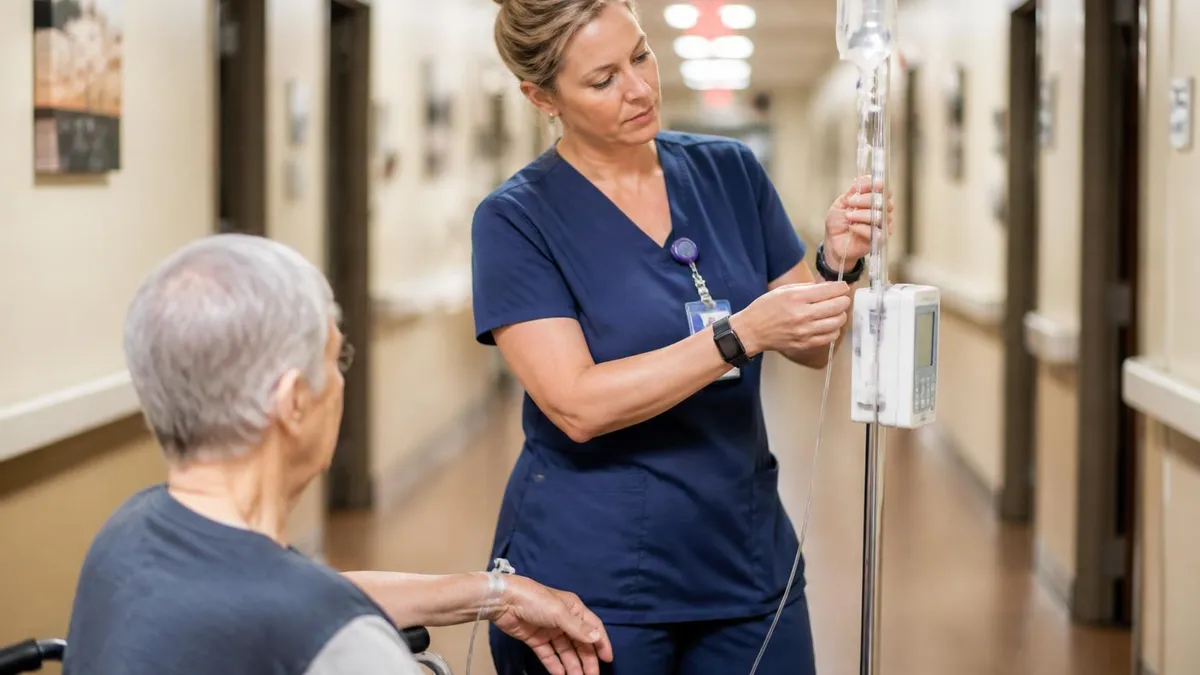
After completing your practical nursing program, you must submit an application to the Arkansas State Board of Nursing, which typically processes initial licensure applications within 4–6 weeks when all documents are received. Pearson VUE administers the NCLEX-PN at testing centers in Little Rock, Fayetteville, Fort Smith, and Jonesboro — scheduling is usually available within 1–2 weeks of authorization receipt. Plan your job search timeline accordingly so your license is active before your target start date.
Preparing thoroughly for the NCLEX-PN is the foundation of your Arkansas LPN career, because your license is the non-negotiable credential that unlocks every opportunity discussed in this guide. The NCLEX-PN uses a computerized adaptive testing format that adjusts question difficulty based on your performance in real time. The exam covers eight client needs categories, with the heaviest weighting on pharmacological therapies, physiological adaptation, and coordinated care — exactly the areas where many nursing students feel least prepared after clinical rotations.
Building a structured study plan that mirrors the NCLEX-PN test blueprint is essential. The National Council of State Boards of Nursing publishes an updated NCLEX-PN Test Plan that specifies the percentage of questions from each content area, and your study time allocation should reflect those weights. Spending equal time on every topic is inefficient; spending 25–30 percent of your study hours on pharmacology and medication safety, which accounts for the largest single content chunk on the exam, is a far more strategic approach that tends to produce better outcomes on test day.
Practice questions are the highest-leverage preparation tool available to NCLEX-PN candidates. Research consistently shows that nurses who complete 1,500–2,500 practice questions across all content domains perform significantly better than those who rely primarily on content review. The key is not just answering questions but deeply analyzing each rationale — understanding why the correct answer is right and why each distractor is wrong trains the clinical reasoning muscle that the adaptive NCLEX-PN algorithm is specifically designed to assess. This is where platforms like PracticeTestGeeks become genuinely valuable.
Time management during the actual exam requires as much practice as content mastery. The NCLEX-PN allows up to five hours to complete between 85 and 150 questions, but the adaptive algorithm means most candidates finish between 85 and 100 questions. Practicing under timed conditions — targeting roughly 60–90 seconds per question — prevents the anxiety-driven time pressure that causes many otherwise-prepared candidates to second-guess their initial instincts. Your first answer choice is correct more often than you think; changing answers without a clear clinical reason reduces performance on average.
Pharmacology deserves its own dedicated study block. Arkansas LPN employers in every setting — from hospital floors to home health to long-term care — will expect you to demonstrate safe medication administration knowledge from day one. Focus on high-alert medications: anticoagulants, insulin, opioids, cardiac glycosides, and electrolyte replacements. Learn the nursing implications, not just the drug names and classifications. Understanding why you hold metoprolol when a patient's heart rate is below 60, or why you monitor potassium levels when a patient is on furosemide, reflects the kind of integrated thinking that both the NCLEX-PN and Arkansas employers are evaluating.
Test anxiety is a real phenomenon that affects a meaningful percentage of nursing candidates, including many who are clinically excellent and academically prepared. Developing a pre-exam routine that includes adequate sleep the night before, a nutritious meal, and a brief mindfulness or relaxation practice can measurably reduce cortisol levels and improve working memory during the exam. The Pearson VUE testing centers in Arkansas are professional, quiet environments, but bring earplugs if you are sensitive to ambient noise — you are permitted to use them.
After passing the NCLEX-PN and receiving your Arkansas license, maintaining it through continuing education and timely renewal is straightforward but requires attention to detail. The Arkansas State Board of Nursing requires LPNs to complete continuing education as part of the biennial renewal process. Keeping organized records of your CE credits and storing renewal confirmation emails ensures that you never inadvertently practice on an expired license — an error that can trigger disciplinary proceedings and interrupt your employment. Set a calendar reminder six months before your renewal date as a best practice.
Networking is one of the most underutilized tools in the Arkansas LPN job search, yet it consistently produces results that online applications alone cannot replicate. The nursing community in Arkansas is relatively tight-knit, particularly in smaller regional markets where the same hiring managers and clinical directors appear at multiple facilities over their careers. A personal introduction from a current employee — even a CNA or unit secretary — can move your application from the stack to the top of the review queue within hours. Prioritize building genuine professional relationships, not just transactional LinkedIn connections.
Clinical externship and internship programs at Arkansas hospitals offer a dual benefit: you gain supervised exposure to a specific specialty area, and you position yourself as an internal candidate when a permanent position opens. Baptist Health's LPN clinical transition programs and UAMS's nursing externship opportunities are competitive but well worth applying for, particularly if you are a new graduate without a strong specialty preference and want to explore your options in a structured environment before committing to a specific unit or setting.
Social media and online communities play an increasingly important role in Arkansas healthcare hiring. The Arkansas Nurses Association maintains an active social presence, and local Facebook groups like Arkansas LPN/RN Job Board and regional hospital employee groups regularly post positions before they appear on official job boards. Following these channels and engaging authentically — asking thoughtful questions, sharing relevant resources — builds visibility with local healthcare decision-makers in a way that passive job board browsing cannot.
Salary negotiation is a skill that many nurses — particularly those entering their first professional role — underuse to their significant financial disadvantage. Most Arkansas healthcare employers build negotiation room into their initial offers, particularly for experienced LPNs or candidates with specialty credentials. Researching market rates using resources like the Bureau of Labor Statistics Occupational Employment and Wage Statistics database, the Arkansas Department of Workforce Services labor market information portal, and nursing salary surveys from the American Nurses Association gives you the data backbone to negotiate from a position of informed confidence rather than guesswork.
Shift selection strategy also deserves consideration. In Arkansas hospital systems, night shift and weekend positions typically carry the highest differential pay and often have lower competition for open slots because many nurses prefer daytime hours. If your personal circumstances allow flexibility in scheduling, starting on a less-desirable shift can accelerate your income growth substantially in the first two to three years of your career — and shift-change requests become easier to grant once you have demonstrated reliability and clinical competence to your management team.
Professional development investments pay compounding returns throughout an LPN career. Every certification you earn, every workshop you attend, every journal article you read makes the next skill acquisition easier by building a richer mental model of nursing science. Arkansas LPNs who pursue continuing education proactively — rather than scrambling to meet minimum renewal requirements — consistently report higher job satisfaction, faster promotion timelines, and greater confidence in clinical decision-making. The investment of time is real, but the professional and financial returns are even more so.
Finally, consider the long arc of your Arkansas LPN career as you make near-term decisions. The nurses who build the most satisfying and lucrative careers in this state are typically those who combine clinical excellence with intentional networking, strategic credential-building, and a willingness to advocate for their own compensation and working conditions. The Arkansas healthcare market rewards nurses who invest in themselves — and with the demand for qualified LPNs projected to grow steadily through the 2030s, the conditions for building a strong nursing career in the Natural State have never been more favorable.
LPN Questions and Answers

LPN Requirements 2026: Complete Guide to Becoming a Licensed Practical Nurse

LPN IV Certification: Complete 2026 Guide to Training, Requirements & Cost

LPN Programs in Florida: Complete 2026 Guide to Accredited Schools, Costs, Requirements & Licensure

LPN Salary Wisconsin 2026: Average Pay, Top Cities, and How to Earn More

LPN Duties: Complete Guide to Daily Responsibilities and Scope of Practice
About the Author

Registered Nurse & Healthcare Educator
Johns Hopkins University School of NursingDr. Sarah Mitchell is a board-certified registered nurse with over 15 years of clinical and academic experience. She completed her PhD in Nursing Science at Johns Hopkins University and has taught NCLEX preparation and clinical skills courses for nursing students across the United States. Her research focuses on evidence-based exam preparation strategies for healthcare certification candidates.
Join the Discussion
Connect with other students preparing for this exam. Share tips, ask questions, and get advice from people who have been there.
View discussion (7 replies)