
LPN Home Health Jobs: Complete 2026 September Career Guide to Salary, Duties & Hiring
LPN home health jobs guide: 2026 September salary ranges, daily duties, top agencies hiring, requirements, pros and cons, and how to land your first role. 🆕
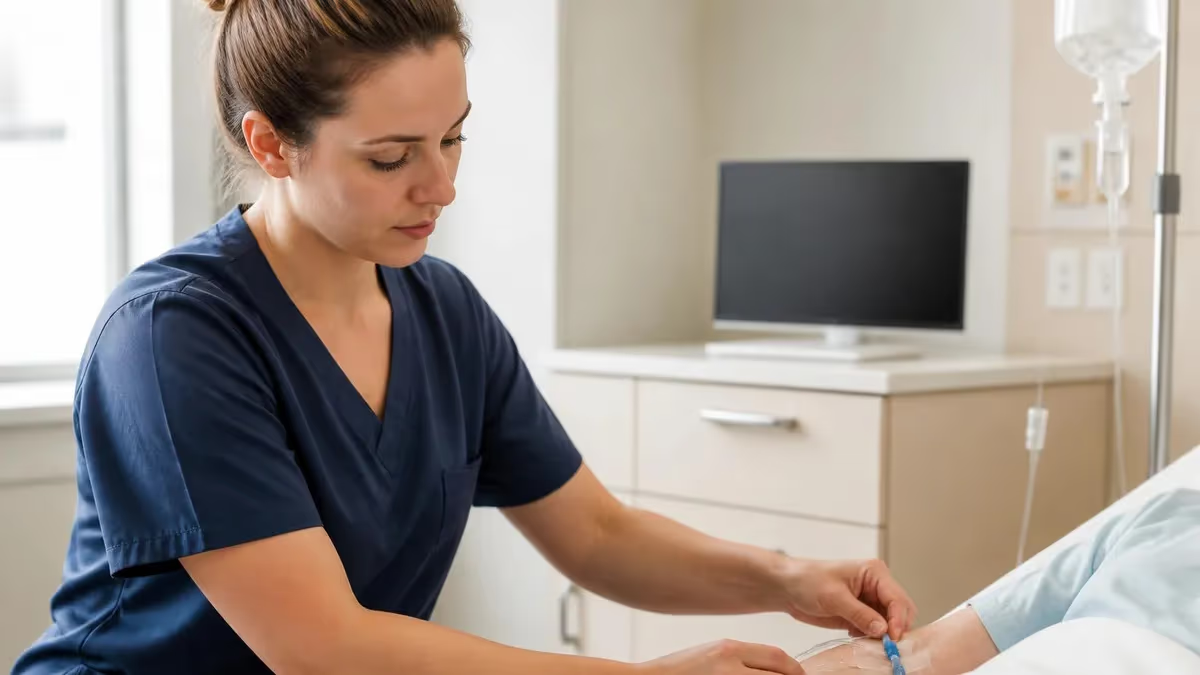
LPN home health jobs have become one of the fastest-growing employment categories for licensed practical nurses, with the Bureau of Labor Statistics projecting roughly 15 percent growth in home-based nursing roles through 2032. If you are a licensed practical nurse who values one-on-one patient relationships, predictable visit schedules, and the freedom to work outside a fluorescent-lit facility, this career path deserves serious consideration. Home health blends clinical skill with independent decision making, and demand has never been stronger as the baby boomer generation ages in place.
Unlike skilled nursing facilities or hospitals, home health visits typically last between 45 and 75 minutes, allowing LPNs to deliver focused care without the chaos of a 20-patient med-pass. You drive to a patient's home, perform wound care, administer medications, draw labs, complete documentation, and move on to the next stop. Agencies such as Bayada, Amedisys, Encompass Health, BrightStar Care, and Interim HealthCare actively recruit LPNs across all 50 states, often offering sign-on bonuses ranging from $2,500 to $7,500 for full-time hires.
The financial picture is solid. The average LPN home health salary in 2026 sits between $54,000 and $68,000 annually, with per-visit pay structures allowing motivated nurses to clear $75,000 or more in high-cost-of-living markets like California, Massachusetts, and Washington. Pediatric home health and ventilator-dependent cases tend to pay premium rates because they require advanced skills and shift-based coverage rather than intermittent visits.
To qualify for most home health positions, you need an active LPN license, at least one year of bedside experience (usually long-term care, med-surg, or sub-acute), a reliable vehicle, valid auto insurance, current CPR certification, and the ability to pass a background check and drug screen. Some agencies waive the experience requirement for new graduates who completed strong clinical rotations, especially in markets with severe nursing shortages.
This guide walks through everything you need to evaluate whether home health is the right move for your career. We cover daily responsibilities, salary by state and visit type, the application process, required documentation, common interview questions, OASIS basics for LPNs supporting RNs, and the soft skills that separate top performers from nurses who burn out within six months. By the end, you'll know exactly what to expect on day one and how to negotiate the strongest possible offer.
Whether you are transitioning from a nursing home, escaping hospital staffing ratios, or returning to nursing after a break, home health offers flexibility that few other clinical settings can match. You'll trade the predictability of a unit assignment for windshield time and weather delays, but in exchange you gain autonomy, schedule control, and meaningful long-term relationships with patients and their families. Let's dig into the specifics.
Before diving in, it's worth understanding that home health is regulated differently in every state. Some states allow LPNs broad scope under RN supervision, while others restrict tasks like central line care or IV push medications. Always cross-reference your state board of nursing's scope of practice document before accepting a role, and ask your prospective employer for their written delegation policy in writing.
LPN Home Health Jobs by the Numbers
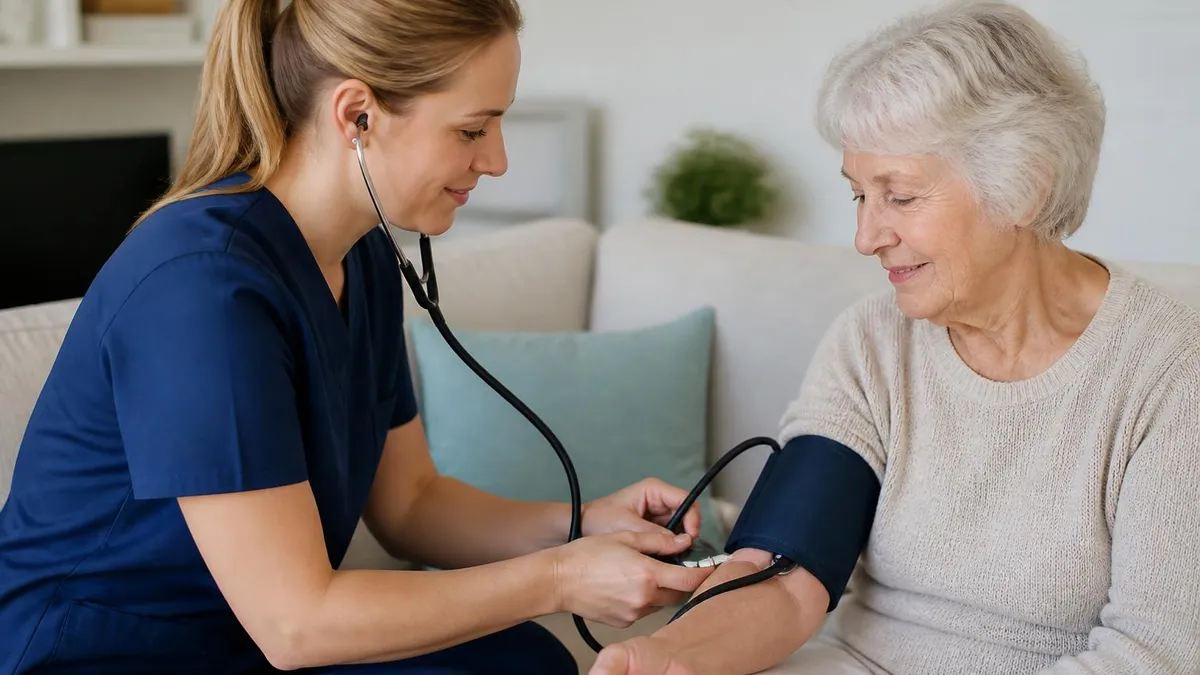
Daily Duties and Common Visit Types in LPN Home Health Jobs
Intermittent 45-60 minute visits for wound care, medication management, catheter changes, ostomy care, and patient teaching. The bread and butter of home health, billed under Medicare Part A for homebound patients.
8 to 12-hour shifts caring for one medically complex patient, often pediatric trach/vent cases or adults with ALS. Pays hourly, frequently $28-$42/hr depending on acuity and market.
End-of-life comfort care including pain management, symptom control, and emotional support for families. Requires emotional resilience but offers deeply meaningful nurse-patient relationships.
Specialized visits for home antibiotic therapy, TPN, hydration, or chemotherapy administration. Requires IV certification and often pays $5-$10 per visit premium over standard skilled visits.
Short-term episodes (typically 30-60 days) supporting joint replacement, cardiac, or abdominal surgery patients with wound monitoring, mobility assessment, and medication reconciliation.
Compensation in LPN home health jobs varies more than almost any other nursing setting because agencies use three distinct pay models: hourly, salary, and per-visit. Understanding each model is essential before you sign an offer letter, since two nurses with identical credentials can earn wildly different annual totals depending on which structure their employer uses. Most agencies disclose their model during the first interview, but you should always request a sample pay stub and a copy of the visit-rate sheet before accepting any position.
Hourly pay typically ranges from $24 to $36 per hour for LPNs in private duty cases, with premium rates of $38 to $48 for vent-dependent pediatric clients or complex adult cases requiring trach suctioning every two hours. Hourly roles include drive time between patients in some states (notably California and Oregon under wage-and-hour law) but exclude it in most others, so always clarify whether your commute between cases is paid or unpaid.
Per-visit pay is the most lucrative model for fast, efficient nurses. Agencies pay a flat rate per completed visit, usually $35 to $55 for standard skilled nursing visits, $55 to $85 for admission visits (because of OASIS-related paperwork support), and $25 to $35 for routine recertification visits. An LPN who completes 30 visits weekly at an average of $45 per visit grosses $70,200 annually before incentives, mileage reimbursement, and on-call differential.
Salaried positions typically pay $58,000 to $72,000 with a minimum daily visit expectation (usually five to seven visits) and overflow bonuses for exceeding the threshold. Salary feels safer but can become a trap if your agency consistently schedules you below productivity targets — you earn the same paycheck while your per-visit colleagues earn more on busy weeks. Negotiate a guaranteed visit floor and a bonus per visit above target.
Geography matters enormously. California LPNs (called LVNs) earn an average of $68,500 in home health, while Texas LPNs average $52,100 and Mississippi LPNs average $43,800. However, cost-of-living adjustments often flip the picture — a Texas LPN with no state income tax and lower housing costs may have more disposable income than her California counterpart. Use a real take-home calculator before relocating purely for nominal salary.
Mileage reimbursement is non-negotiable and federally suggested at the 2026 IRS rate of $0.70 per business mile. Agencies that reimburse below this rate are essentially cutting your effective pay, since you bear the gas, maintenance, depreciation, and insurance costs of driving your personal vehicle 200-400 miles weekly. Ask specifically about the per-mile rate, whether mileage between your home and first visit counts, and how mileage logs are submitted.
Finally, look beyond base pay for sign-on bonuses (currently $2,500-$7,500 for full-time hires), retention bonuses paid at 6 and 12 months, on-call differential (typically $2-$5 per hour for after-hours phone coverage), weekend premiums (often time-and-a-half), and tuition reimbursement programs that can fund your eventual LPN-to-RN bridge if you decide to climb further. The headline number is rarely the real number — total compensation is what counts.
LPN Practice Test Questions
Prepare for the LPN - Certified Practical Nurse exam with our free practice test modules. Each quiz covers key topics to help you pass on your first try.
LPN - Certified Practical Nurse Basic Care...
LPN Exam Questions covering - Certified Practical Nurse Basic Care and Comfort. Master LPN Test concepts for certification prep.
LPN - Certified Practical Nurse Coordinate...
Free LPN Practice Test featuring - Certified Practical Nurse Coordinated Care. Improve your LPN Exam score with mock test prep.
LPN - Certified Practical Nurse Health Pro...
LPN Mock Exam on - Certified Practical Nurse Health Promotion and Maintenance. LPN Study Guide questions to pass on your first try.
LPN - Certified Practical Nurse Pharmacolo...
LPN Test Prep for - Certified Practical Nurse Pharmacological Therapies. Practice LPN Quiz questions and boost your score.
LPN - Certified Practical Nurse Physiologi...
LPN Questions and Answers on - Certified Practical Nurse Physiological Adaptation. Free LPN practice for exam readiness.
LPN - Certified Practical Nurse Psychosoci...
LPN Mock Test covering - Certified Practical Nurse Psychosocial Integrity. Online LPN Test practice with instant feedback.
LPN - Certified Practical Nurse Reduction ...
Free LPN Quiz on - Certified Practical Nurse Reduction of Risk Potential. LPN Exam prep questions with detailed explanations.
LPN - Certified Practical Nurse Safety and...
LPN Practice Questions for - Certified Practical Nurse Safety and Infection Control. Build confidence for your LPN certification exam.
LPN Ethical, Legal & Professional Standards
LPN Test Online for Ethical, Legal & Professional Standards. Free practice with instant results and feedback.
LPN Health Evaluation & Monitoring
LPN Study Material on Health Evaluation & Monitoring. Prepare effectively with real exam-style questions.
Top Agencies Hiring LPN Home Health Jobs in 2026
Bayada Home Health Care, Amedisys, Encompass Health, BrightStar Care, and Interim HealthCare are the five largest national employers of LPNs in home health. Bayada is widely respected for its strong pediatric and adult home care divisions, robust orientation programs, and consistent benefits package including health insurance, 401(k) matching, and paid time off accruing from day one. They typically post hundreds of LPN openings monthly on their career portal.
Amedisys and Encompass Health operate as publicly traded Medicare-certified home health agencies, which means their documentation expectations are rigorous but their pay tends to be competitive. Both companies invest heavily in EMR training (typically HCHB or Homecare Homebase) and offer clear advancement tracks for LPNs interested in case management coordinator roles or transitioning to home health RN positions after completing an LPN-to-RN bridge program.
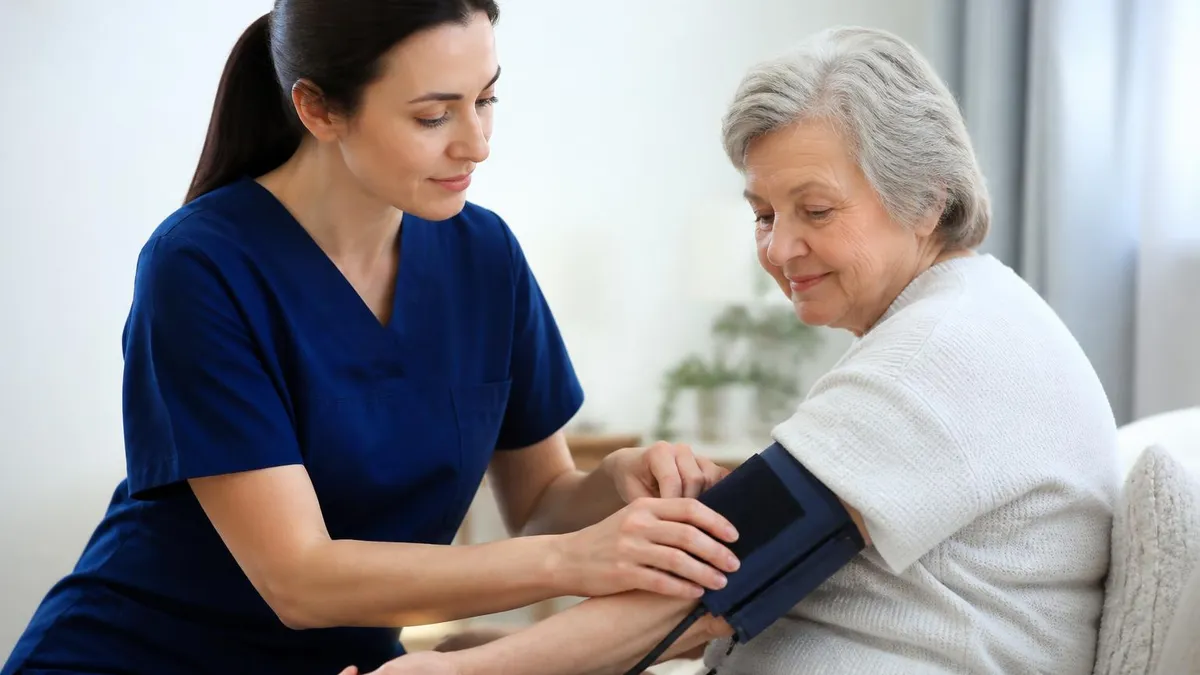
Is Home Health Right for You? Pros and Cons
- +Autonomy and independent decision-making without constant unit supervision
- +Predictable Monday-Friday daytime schedule in most skilled visit roles
- +Meaningful long-term relationships with patients and families across weeks or months
- +One patient at a time — no 20-patient med-pass or critical-care chaos
- +Mileage reimbursement on top of base pay (often $300-$600 monthly)
- +Strong sign-on bonuses ranging $2,500 to $7,500 in current hiring market
- +Career growth into case manager, clinical educator, or LPN-to-RN pathways
- −Significant windshield time — 1-3 hours of driving daily depending on territory
- −Personal vehicle wear, gas costs, and auto insurance premiums you absorb
- −Working alone in unpredictable environments (pets, family conflict, hoarding)
- −Documentation often spills into evenings — 60-90 min of charting after last visit
- −Weather delays, missed visits, and unpaid no-show appointments cut productivity
- −Limited peer support and team camaraderie compared to a unit setting
- −On-call rotation requirements during nights, weekends, or holidays in most agencies
Application Checklist for LPN Home Health Jobs
- ✓Active, unencumbered LPN/LVN license in the state where you'll practice
- ✓Minimum 1 year of bedside experience (long-term care, med-surg, or sub-acute preferred)
- ✓Current BLS/CPR certification through American Heart Association or Red Cross
- ✓Reliable personal vehicle with current registration and at least liability insurance
- ✓Updated driver's license matching the state where you're applying
- ✓Negative TB test or chest x-ray within the past 12 months
- ✓Current physical exam, MMR, Hep B, Tdap, and seasonal flu vaccination records
- ✓Background check clearance — no felonies, abuse findings, or board sanctions
- ✓Pre-employment drug screen (urine 10-panel, including THC in most states)
- ✓Two to three professional references including a recent nursing supervisor
- ✓Resume formatted with bullet-point skills (wound care, IV, trach, foley, etc.)
- ✓Smartphone capable of running the agency's point-of-care EMR application
Negotiate the per-visit rate sheet, not just the base salary
Agencies almost always negotiate visit rates and mileage reimbursement, even when they claim the base salary is fixed. Ask specifically about premium rates for admissions, recertifications, IV visits, and weekend coverage. A nurse who negotiates a $5 bump per admission visit and an extra $0.05 per mile typically earns $3,000-$5,000 more annually with zero additional hours worked.
A realistic day in LPN home health starts between 7:30 and 8:30 a.m. when you receive your scheduled visit list either through the agency's mobile EMR app or via a brief telephonic huddle with your case manager. Most agencies use geographic routing software that clusters visits to minimize windshield time, but you'll still drive between 80 and 200 miles on a typical full day depending on whether you cover dense urban routes or rural territory.
Your first visit might be a 65-year-old post-CABG patient needing sternal incision assessment, vital signs, medication reconciliation, and teaching on activity restrictions. You spend about 50 minutes on direct patient care, 10-15 minutes charting in the home (or in your car immediately after to keep the patient's living room private), and then drive 20-30 minutes to the next stop. Documentation accuracy matters enormously — your visit note triggers Medicare reimbursement and supports the OASIS data your RN colleagues complete at start-of-care.
Mid-morning visits often include wound care patients. You arrive with your sterile supplies, perform hand hygiene at the patient's sink, set up a clean field on a TV tray, remove the old dressing, measure and photograph the wound (most agencies require digital wound documentation), apply the prescribed dressing per the physician order, and educate the patient or caregiver on signs of infection. Wound visits typically run 60-75 minutes including teaching, which is why agencies pay a small premium for them.
Lunch happens between visits, usually in your car or at a fast-casual restaurant near your next stop. Experienced LPNs pack a cooler with lunch and snacks because rural territories often lack convenient food options. You also keep a hand sanitizer dispenser mounted in your car, shoe covers for hoarding situations, and an extra change of clothes in the trunk for the unfortunate days when you encounter bodily fluids or unusual home environments.
Afternoon visits often include diabetic teaching, foley catheter changes, B12 or anticoagulant injections, and routine assessment visits for patients on long-term home health certification periods. You communicate with the supervising RN by phone or secure messaging whenever you notice clinical changes — new wound deterioration, blood pressure outside parameters, signs of decompensation — so the RN can adjust the care plan and notify the physician.
You typically wrap field visits between 4:00 and 5:30 p.m., then complete any remaining documentation at home that evening. Some nurses chart in real time at each visit to avoid evening work, while others batch documentation at day's end. Either approach is valid, but agencies increasingly require visits to be locked within 24 hours of completion to comply with Medicare conditions of participation, so chronic late documentation can become a performance issue.
Weather, traffic, and unexpected patient situations regularly disrupt schedules. A patient may be hospitalized overnight, requiring you to cancel the visit and pick up a colleague's missed visit instead. A snowstorm may collapse the entire day's productivity. Experienced home health LPNs build buffer time into their routes and maintain flexible communication with the scheduling team, which is one of the soft skills that separates thriving nurses from those who burn out quickly.
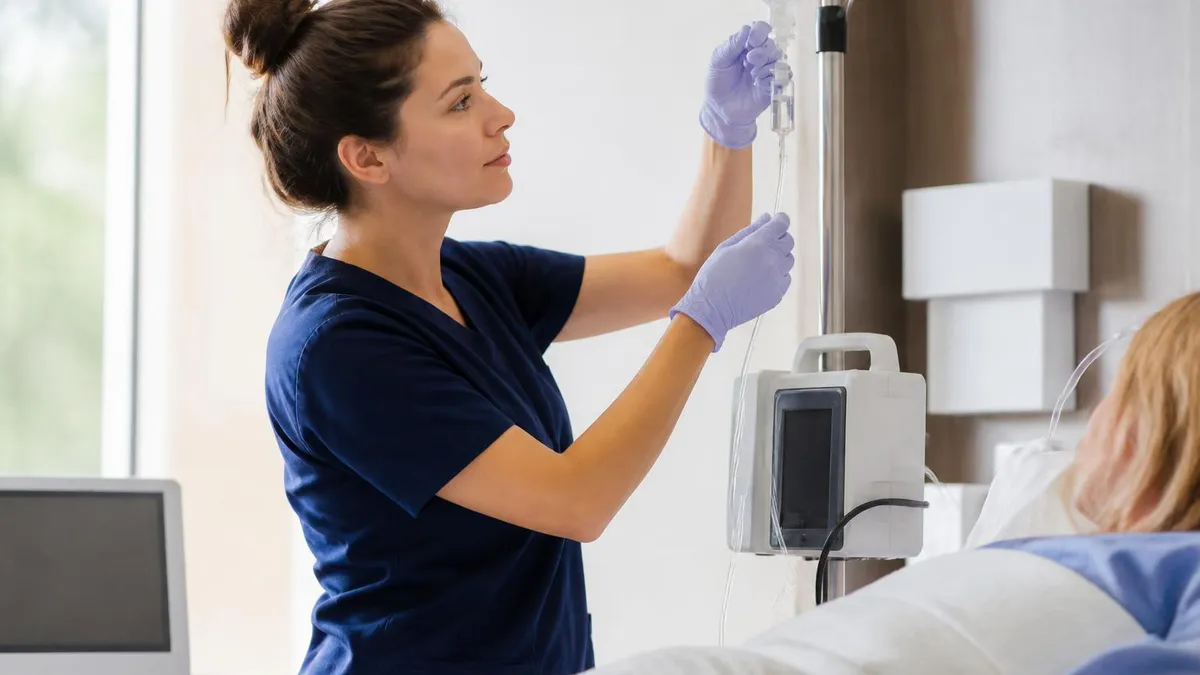
Some smaller home health agencies attempt to classify LPNs as 1099 independent contractors to avoid paying employment taxes, benefits, and overtime. Under IRS and Department of Labor rules, if the agency controls your schedule, assigns specific patients, requires their EMR, and dictates documentation standards, you are almost certainly a W-2 employee — not a contractor. Misclassification can cost you thousands in self-employment taxes and lost benefits. Consult an employment attorney before signing any 1099 home health agreement.
Landing your first LPN home health job starts with a targeted resume that highlights transferable skills home health managers actually look for. Lead with bullet points showcasing wound care experience (specify VAC therapy, complex pressure injuries, surgical incisions), IV therapy and PICC line care, trach and ostomy management, glucometer competency, foley catheter insertion, and any experience documenting in electronic health records like PointClickCare, MatrixCare, or Epic. Hiring managers scan resumes in 6-8 seconds, so put your strongest clinical skills in the top third.
Tailor your cover letter to emphasize independence, time management, and prior experience with the patient population the agency serves. If you're applying to a pediatric home health agency, mention any time spent in school nursing, pediatric clinic settings, or family caregiving experience. If applying to a Medicare-certified adult agency, highlight long-term care experience because the documentation expectations and patient acuity translate directly.
Apply to at least five to seven agencies simultaneously rather than waiting for one to respond before applying to the next. Home health hiring moves fast in tight labor markets — you may receive two or three offers within a 10-day window, which gives you negotiating leverage on signing bonus, per-visit rates, mileage reimbursement, and start date. Use competing offers professionally; share them in writing and ask each agency for their best-and-final.
Prepare for the interview by researching the agency's Medicare star rating on the CMS Home Health Compare website. Star ratings reveal quality, patient satisfaction, and rehospitalization performance. A four or five-star agency typically invests in clinical education and reasonable nurse-patient ratios, while one or two-star agencies often suffer from chronic understaffing and pressured productivity expectations. Avoid the latter unless you're highly experienced and confident in your boundaries.
Expect interview questions about a time you managed a difficult patient or family situation, how you prioritize when running behind schedule, your approach to declining a clinical task outside your scope, and how you'd handle finding a patient in an unexpected condition such as confusion, falls, or signs of abuse. Prepare 30-60 second answers using the STAR format (Situation, Task, Action, Result) and rehearse out loud — fluency matters more than perfection.
Ask the interviewer specific questions: average daily visit count, productivity expectation, EMR system, on-call rotation frequency, mileage rate, sign-on bonus, retention bonus schedule, orientation length, ratio of new admissions to recertifications, and what their nurse turnover rate has been over the past 12 months. The answers reveal organizational health better than any marketing brochure. A confident interviewer will share these numbers freely; an evasive one is a red flag.
Finally, request a ride-along with a current LPN before accepting the offer. Most reputable agencies welcome this because it reduces 90-day turnover. You'll observe a real day in the field, talk candidly with a current nurse about culture and pay, and confirm the work matches the recruiter's pitch. A two-hour ride-along investment can save you from a six-month hiring mistake — and the experienced LPN you shadow often becomes your first informal mentor once you start.
Once you've accepted the offer, the work of becoming a strong home health LPN really begins. The first 90 days are the steepest learning curve in your nursing career outside of new graduate orientation, because you're simultaneously learning a new EMR, a new patient population, new geography, new documentation requirements (OASIS support, 485 plans of care, physician orders by phone), and the rhythm of working alone without a charge nurse three steps away. Expect mental fatigue and give yourself grace.
Invest immediately in three pieces of gear that pay for themselves within a month: a high-quality waterproof clinical bag with separate compartments for clean and dirty supplies, a phone car mount with wireless charging so you can navigate hands-free between visits, and a slim waterproof binder or tablet sleeve for any paper documents your agency still uses. Spending $150-$200 on quality tools beats fighting cheap equipment every day for a year.
Build relationships intentionally with your case manager (the supervising RN), the scheduler, the medical records team, and your fellow LPN field nurses. Home health succeeds or fails on communication — the scheduler who knows you'll cover an extra visit in a pinch will reciprocate when you need a lighter day for a family event. The RN case manager who trusts your assessments will give you more autonomy and back you up when physician orders are unclear.
Master your documentation early. Sloppy notes trigger audits, denied Medicare claims, and quality-of-documentation coaching that consumes time better spent on patients. Learn the agency's required language for skilled need justification, homebound status documentation, and teaching reinforcement. Most agencies have template phrases and exemplar notes available in their EMR's help section — read at least 20 strong examples in your first week to anchor your style.
Protect your physical health. Home health LPNs report higher back, knee, and shoulder injury rates than nursing-home counterparts because of repeated transfers in non-ergonomic home environments, climbing stairs in older houses, and carrying heavy supply bags. Use proper body mechanics, request a Hoyer or gait belt when transfers exceed safe limits, and report unsafe home environments to your case manager rather than risking your career on a heroic single-handed transfer.
Plan your career trajectory deliberately. Home health offers clear pathways: clinical specialist (wound, ostomy, IV), case management coordinator, clinical educator, branch operations manager, and the increasingly popular LPN-to-RN online bridge programs that allow you to keep working full time while completing nursing school in 18-24 months. Many home health agencies offer $5,000-$15,000 annual tuition reimbursement to retain ambitious LPNs and convert them into home health RNs.
Finally, take care of your mental health. Caring for chronically ill, terminally ill, and isolated patients in their homes creates emotional weight that hospital nurses can compartmentalize when they walk out at shift change. Build decompression rituals — a podcast for the drive home, a hard stop on charting at 8 p.m., a weekly call with a nurse friend who understands. The most sustainable home health LPNs treat self-care as a clinical competency, not a luxury.
LPN Questions and Answers

LPN Practice Test PDF (Free Printable 2026)
Wound Care Certification for LPN: 2026 Complete Guide to WCC, CWCA & Specialty Credentials
LPN Program Cost: Complete 2026 Tuition & Fees Guide
LPN Programs Near Me 2026: Find Accredited Schools & Costs
LPN Programs Houston 2026: Best Schools, Costs & Requirements
About the Author

Registered Nurse & Healthcare Educator
Johns Hopkins University School of NursingDr. Sarah Mitchell is a board-certified registered nurse with over 15 years of clinical and academic experience. She completed her PhD in Nursing Science at Johns Hopkins University and has taught NCLEX preparation and clinical skills courses for nursing students across the United States. Her research focuses on evidence-based exam preparation strategies for healthcare certification candidates.
Join the Discussion
Connect with other students preparing for this exam. Share tips, ask questions, and get advice from people who have been there.
View discussion (7 replies)