
LPN Classes Near Me: How to Find the Best Practical Nursing Programs in 2026 July
🎯 LPN classes near me: compare local practical nursing programs, costs, length, accreditation, admission steps, and how to choose the right school in 2026 July.

Searching for lpn classes near me is the first concrete step thousands of aspiring nurses take every month, and the choices can feel overwhelming once you start scrolling through community colleges, vocational schools, and hospital-based diploma programs. The good news is that finding a quality Licensed Practical Nurse program in your area is far more manageable when you know exactly what to look for, what questions to ask, and which red flags should make you walk away from a school that promises fast credentials but cannot deliver real outcomes.
Local LPN programs come in many shapes. Community colleges typically run 11 to 18 month tracks that combine classroom science with clinical rotations in nearby hospitals and long-term care facilities. Career and technical schools sometimes compress training into 12 months of full-time study, while a smaller number of high schools partner with regional vocational centers to offer LPN tracks for adult learners. Each pathway leads to the same finish line: eligibility to sit for the NCLEX-PN licensure exam.
Choosing well matters because the program you pick determines your tuition cost, your clinical experience, your first-time NCLEX-PN pass rate odds, and even the hospitals willing to interview you after graduation. A school with a 92 percent pass rate and rotations through a major regional medical center will open doors that a 58 percent pass-rate program never will, regardless of marketing claims or glossy brochures showcasing simulation labs.
Geography is a bigger factor than most prospective students realize. State boards of nursing approve LPN curricula on a state-by-state basis, and the program in the next town over may train you for a different scope of practice than one across a state line. If you plan to live and work where you train, choosing in-state simplifies licensing, financial aid, and clinical placement. If you might relocate, look at programs whose graduates routinely test in multiple states.
Cost ranges widely from roughly $4,000 at a community college to $30,000 at a for-profit institution, and that gap is rarely justified by outcomes. Public programs often have waiting lists of six to twelve months, while private schools start cohorts every two months but charge significantly more. Knowing the trade-off between affordability and start date is critical when you weigh local options against your personal timeline.
This guide walks you through every decision point: how to evaluate accreditation, what NCLEX-PN pass rates really tell you, which prerequisites you should knock out now, how clinical placements affect your future job prospects, and how to budget realistically. By the end you will know how to compare any two nearby programs side by side and pick the one that actually fits your life.
One last note before we dig in: the cheapest program is not always the best value, and the closest program is not always the smartest commute. Treat your LPN school selection like a career investment, because that is exactly what it is. The next twelve to eighteen months will determine whether you launch a nursing career with momentum or stall at the starting line.
LPN Programs by the Numbers
Types of LPN Programs You Will Find Locally
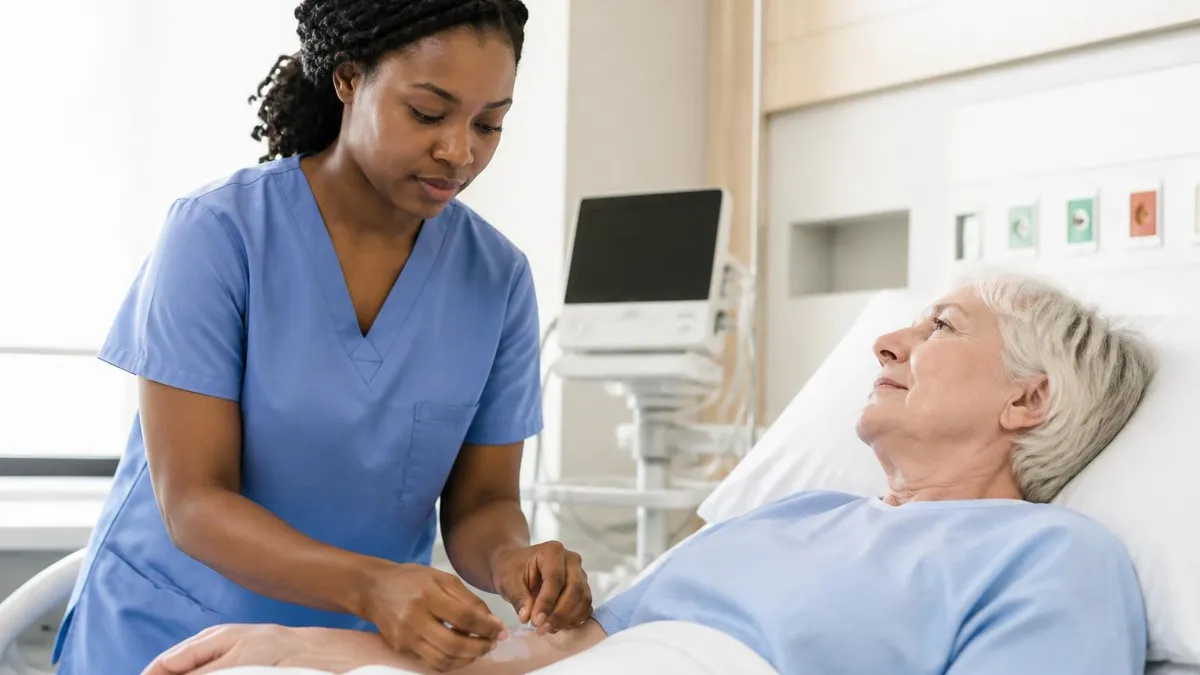
Public two-year colleges offer the most affordable LPN training, typically $4,000 to $9,000 total. Cohorts start once or twice per year and rotations occur at partnered hospitals. Expect a competitive application and a possible waiting list of six to twelve months.
Career-focused schools run 11 to 14 month accelerated programs with multiple start dates per year. Tuition ranges from $15,000 to $25,000 but enrollment is faster. Verify state board approval and check NCLEX-PN pass rates before committing.
A small number of hospitals run their own LPN diploma tracks tied to employment pipelines. Tuition may be partially reimbursed if you commit to working at the host facility post-graduation. Clinical experience is exceptional but seats are limited.
Some accredited schools deliver lecture content online while requiring weekly in-person labs and full clinical rotations at local sites. Ideal for working adults, but verify that residency requirements and clinical placements match your zip code before enrolling.
Admission to local LPN programs is more selective than most applicants expect. Even open-enrollment community colleges typically rank applicants by GPA, entrance exam scores, prerequisite grades, and sometimes interviews. A high school diploma or GED is the universal floor, but competitive seats usually go to candidates with a 2.7 GPA or higher and strong scores on the TEAS or HESI entrance exam. Submitting an application is easy. Earning a seat is not.
Most nearby programs require specific prerequisite courses completed within the past five to seven years. Anatomy and physiology, basic mathematics, English composition, and introductory psychology appear on nearly every requirement sheet. Some schools let you take these courses concurrently with the LPN curriculum, while others require completion before the application deadline. Skipping a prerequisite or assuming a high school course will substitute is one of the most common reasons applications get rejected.
Background checks and drug screenings are non-negotiable. Clinical sites are bound by federal and state regulations that bar students with certain criminal convictions from patient care areas, regardless of the offense's age. If you have anything in your history that might surface, talk to the program director before you apply. Most directors will tell you honestly whether your record will create insurmountable barriers at their partner facilities.
Immunization and health requirements add another layer. Expect to provide proof of MMR, hepatitis B, varicella, tetanus, annual influenza, and current TB testing. CPR certification at the Basic Life Support provider level is mandatory before clinicals start. Some schools also require COVID-19 vaccination depending on partner facility policies. Plan to spend $400 to $700 covering vaccines, physicals, drug screens, and background checks before your first class.
If you eventually plan to advance your career, look at the LPN to BSN pathway now and confirm that credits from your prospective program transfer to nearby universities. Some community colleges have articulation agreements that let LPN graduates skip up to a full semester of RN coursework. That single decision can save you a year and several thousand dollars when you decide to advance.
Entrance exam preparation deserves real attention. The TEAS measures reading comprehension, mathematics, science, and English usage. Competitive programs publish minimum scores ranging from 58 to 75 on the composite. Spending six to ten weeks with a TEAS study guide and practice tests can move you from rejected to accepted at the same school. Treat the entrance exam like the gateway it is, not a formality.
Application timelines matter more than people expect. Community college LPN programs often close applications six to nine months before the cohort start date. Vocational schools take rolling admissions but fill seats quickly for popular start months. Build your timeline backward from your desired start date and gather transcripts, references, essays, and exam scores at least three months before the deadline.
LPN Practice Test Questions
Prepare for the LPN - Certified Practical Nurse exam with our free practice test modules. Each quiz covers key topics to help you pass on your first try.
LPN - Certified Practical Nurse Basic Care...
LPN Exam Questions covering - Certified Practical Nurse Basic Care and Comfort. Master LPN Test concepts for certification prep.
LPN - Certified Practical Nurse Coordinate...
Free LPN Practice Test featuring - Certified Practical Nurse Coordinated Care. Improve your LPN Exam score with mock test prep.
LPN - Certified Practical Nurse Health Pro...
LPN Mock Exam on - Certified Practical Nurse Health Promotion and Maintenance. LPN Study Guide questions to pass on your first try.
LPN - Certified Practical Nurse Pharmacolo...
LPN Test Prep for - Certified Practical Nurse Pharmacological Therapies. Practice LPN Quiz questions and boost your score.
LPN - Certified Practical Nurse Physiologi...
LPN Questions and Answers on - Certified Practical Nurse Physiological Adaptation. Free LPN practice for exam readiness.
LPN - Certified Practical Nurse Psychosoci...
LPN Mock Test covering - Certified Practical Nurse Psychosocial Integrity. Online LPN Test practice with instant feedback.
LPN - Certified Practical Nurse Reduction ...
Free LPN Quiz on - Certified Practical Nurse Reduction of Risk Potential. LPN Exam prep questions with detailed explanations.
LPN - Certified Practical Nurse Safety and...
LPN Practice Questions for - Certified Practical Nurse Safety and Infection Control. Build confidence for your LPN certification exam.
LPN Ethical, Legal & Professional Standards
LPN Test Online for Ethical, Legal & Professional Standards. Free practice with instant results and feedback.
LPN Health Evaluation & Monitoring
LPN Study Material on Health Evaluation & Monitoring. Prepare effectively with real exam-style questions.
LPN Program Tuition, Fees & Financial Aid Near You
Total tuition for local LPN programs varies dramatically. Community colleges in most states charge $4,000 to $9,000 for the full program when you qualify for in-district rates. Out-of-district students at the same school may pay double. Vocational and proprietary schools commonly bill $15,000 to $30,000, packaging tuition with fees and books into a single sticker price that can include or exclude clinical supplies.
Beyond tuition expect to pay for uniforms, a stethoscope, watch, name badge, textbooks, lab kits, malpractice insurance, NCLEX-PN review courses, and the licensure application itself. These extras typically total $1,500 to $3,000 across the program. Ask each school for an itemized cost of attendance covering every required purchase before you sign anything or accept a financial aid offer.
Local LPN Programs: Advantages and Trade-offs
- +Short timeline to licensure — typically 12 to 18 months versus 2 to 4 years for RN tracks
- +Lower total tuition than associate or bachelor's nursing degrees
- +Strong job demand in long-term care, home health, and outpatient clinics nationwide
- +Hands-on clinical hours start within the first semester at most schools
- +Direct pathway to LPN-to-RN or LPN-to-BSN bridge programs at many colleges
- +Earning potential of $48,000 to $63,000 begins almost immediately after passing NCLEX-PN
- −Limited scope of practice compared to registered nurses in most states
- −Hospital employment opportunities for LPNs have shrunk in many urban markets
- −Competitive admission with waiting lists at the most affordable public programs
- −Demanding 40 to 50 hour weeks combining classroom, lab, and clinical schedules
- −Background check or health history issues can disqualify otherwise strong applicants
- −Career ceiling without advancing to RN, BSN, or specialized certifications
How to Evaluate LPN Classes Near Me: A Step-by-Step Checklist
- ✓Confirm the program is approved by your state board of nursing — verify on the board's website directly
- ✓Check national accreditation through ACEN or another federally recognized accrediting body
- ✓Review the program's most recent three-year NCLEX-PN first-time pass rate — aim for 80 percent or higher
- ✓Ask about graduation and on-time completion rates — strong programs report 70 percent or higher
- ✓Tour the campus, simulation lab, and at least one clinical rotation site before committing
- ✓Request the names of partner hospitals and long-term care facilities used for clinicals
- ✓Confirm transfer agreements with nearby RN or BSN programs if you plan to bridge later
- ✓Calculate the total cost of attendance including uniforms, books, NCLEX review, and licensure fees
- ✓Interview at least two recent graduates about workload, instructor quality, and job placement
- ✓Verify the program runs criminal background and drug screening processes that match local employer requirements
Clinical placements predict your first job
The hospitals and long-term care facilities where you complete clinical rotations are often the same employers who hire you after graduation. Programs with strong relationships at top regional employers place graduates faster and at higher starting wages. Always ask for a list of clinical sites before enrolling — it tells you exactly where you can realistically expect to interview.
The LPN curriculum looks similar everywhere because state boards mandate core competencies, but the depth and quality of instruction varies enormously. A typical program splits roughly evenly between classroom theory and hands-on clinical practice. Expect three to four semesters covering anatomy, pharmacology, medical-surgical nursing, maternal-child health, mental health, gerontology, and fundamentals of patient care. Each course pairs lectures with skills lab sessions where you practice procedures on mannequins before performing them on real patients.
Clinical rotations are the heart of LPN training and where local geography matters most. State boards require between 400 and 700 supervised clinical hours depending on jurisdiction, and your program will place you in hospitals, skilled nursing facilities, home health agencies, pediatric clinics, and behavioral health units. Strong programs rotate students through a wide variety of settings so you graduate knowing where you actually want to work, not just where you randomly landed.
Skills checkoffs punctuate every semester. You will be tested on sterile technique, medication administration, wound care, urinary catheterization, IV maintenance, vital sign assessment, patient transfers, oxygen therapy, and dozens of other procedures. Faculty observe each demonstration and require remediation if you miss any step. These checkoffs are where weak programs sometimes pass students they should fail, which is why NCLEX-PN pass rates are such a meaningful program quality indicator.
Pharmacology deserves special attention because medication errors are the most common reason new LPNs face disciplinary action. Quality programs front-load drug calculations and require students to demonstrate medication administration under direct supervision dozens of times before clinicals end. If a program glosses over pharmacology or treats math as optional, walk away. Patient safety begins with the rigor of your training.
Simulation labs have transformed LPN education in the past decade. High-fidelity mannequins now mimic breathing, pulse, blood pressure, and even speech, allowing students to manage codes, sepsis scenarios, and patient deterioration without risk to real people. When you tour programs, look at the simulation lab carefully. Old, broken, or rarely used equipment signals an underinvestment that flows directly into weaker graduates.
Many students benefit from supplementing classroom material with focused practice. Working through the LPN Nursing Care & Clinical Skills Practice Test alongside your coursework reinforces critical procedures and exposes weak spots well before final exams arrive. Treat practice testing as a weekly habit rather than a cram tool, and your NCLEX-PN preparation will feel far less daunting.
Instructor quality is the single biggest variable students cannot easily measure in advance. Ask program coordinators about faculty credentials, average tenure, and student-to-instructor ratios in skills labs and clinicals. Programs with ratios above ten students per clinical instructor often deliver weaker hands-on supervision. Talk to current students at any open house or information session. Their candid impressions reveal more than any glossy recruitment material.

Several diploma mills market themselves as LPN programs but lack state board approval. Graduates of unapproved programs cannot sit for NCLEX-PN regardless of how much they paid. Always verify approval on your state board of nursing's official website before enrolling, signing loan paperwork, or paying a deposit. If a recruiter pressures you to commit before you can verify, walk away immediately.
Passing NCLEX-PN is the final hurdle between you and licensure, and it is the moment your program's quality becomes visible. The exam is a computer-adaptive test of 85 to 150 questions covering safe and effective care, health promotion, psychosocial integrity, and physiological integrity. National first-time pass rates hover around 83 percent, but individual programs range from below 50 percent to above 95 percent. Your school's three-year pass rate is the single most predictive number you will see during your search.
Begin NCLEX-PN preparation during your final semester, not after graduation. Most successful candidates spend 200 to 400 hours reviewing content, working practice questions, and analyzing rationales over six to ten weeks. Investing in a structured review course like Kaplan, UWorld, or ATI's comprehensive predictor pays for itself many times over when you avoid a $200 retake fee and weeks of lost income while waiting to test again.
Once you pass, applying for your LPN license is a state-specific process involving fingerprints, background checks, application fees, and sometimes a state-specific jurisprudence exam. Processing times range from a few days to several weeks. Many graduates start working as graduate practical nurses in interim roles while waiting for permanent license issuance, which is one more reason to confirm that nearby employers offer GPN positions.
Job hunting begins long before graduation at the strongest schools. Career services should help you build a resume, practice interviews, and connect with hiring managers at clinical partner sites months before you finish coursework. If your school does not offer placement assistance, take initiative by networking with every preceptor, charge nurse, and director you encounter during rotations. Personal referrals account for a significant share of LPN hires.
Salary expectations should be realistic but optimistic. The national median LPN wage is around $59,000, with experienced LPNs in high-demand specialties earning $70,000 or more. To benchmark local compensation, study the LPN Salary 2026: What Licensed Practical Nurses Earn guide before negotiating your first offer. Geographic location, employer type, shift differentials, and union representation all influence the final number on your offer letter.
Long-term career growth requires deliberate planning. Many LPNs bridge to RN within two to four years through community college ladder programs that grant credit for prior LPN coursework and experience. Others specialize in IV therapy, wound care, dialysis, or hospice. A small but growing number pursue advanced certifications in geriatrics, pediatrics, or rehabilitation that command premium wages and broader scope of practice in select states.
Your first LPN job sets the trajectory for everything that follows. Take a position that exposes you to a variety of conditions, gives you access to experienced mentors, and offers tuition assistance for further education. Avoid jobs that promise high pay but limit you to repetitive tasks with no upward mobility. The skills and connections you build in your first 18 months as a licensed nurse will shape your entire career.
Practical tips can shorten your search and protect you from costly mistakes. Start by listing every LPN program within a reasonable commute. Plot them on a map with their tuition, length, start dates, NCLEX-PN pass rate, and any waitlist information. Seeing the data side by side often reveals that a slightly farther school is dramatically better value than the closest option. Twenty extra miles each way for a year is a trivial cost compared to an extra $15,000 in tuition or a 30-percentage-point gap in pass rates.
Schedule tours and information sessions at your top three picks. Walk the campus, sit in on a class if possible, and ask to see the simulation lab and one clinical site. Bring a written list of questions covering instructor ratios, clinical placement variety, NCLEX preparation support, job placement assistance, and any tuition lock-in policy. Trust your instincts — programs that dodge specific questions, rush you through tours, or pressure you to enroll the same day rarely deliver strong outcomes.
Apply early and apply to multiple programs. The competitive nature of community college LPN admissions means strong candidates routinely get rejected from their first choice because of waitlist length, not weak credentials. Submitting parallel applications to three or four schools across a fifty-mile radius gives you negotiating leverage, scheduling flexibility, and a fallback if your top choice asks you to wait a full year for the next cohort.
Stack your prerequisites carefully. If a program requires anatomy and physiology, taking it at a low-cost community college over the summer can save you both money and admissions stress. Strong prerequisite grades also boost your competitiveness — a 4.0 in A&P signals you can handle the demanding LPN curriculum more credibly than a borderline high school transcript ever could. Treat every prerequisite course as an audition for the program you really want.
Talk to working LPNs in your area before you commit. Ask which programs they would recommend, which hospitals hire from which schools, and what they wish they had known before enrolling. A fifteen-minute conversation with a charge nurse at a local skilled nursing facility can save you months of wasted research and steer you toward programs with the strongest local reputation. LinkedIn searches, neighborhood Facebook groups, and hospital tours all produce these conversations.
Budget realistically for the entire period of training, not just tuition. Most students reduce work hours significantly during clinical-heavy semesters. Estimate twelve to eighteen months of partial income, add tuition and fees, and identify how you will cover rent, food, transportation, and childcare. Many students underestimate this gap and drop out mid-program due to financial pressure. A clear written budget before day one prevents that outcome.
Finally, prepare your support system. Tell family, friends, employers, and childcare providers exactly when you will be in class, lab, and clinicals. Negotiate scheduling flexibility at your current job months in advance if possible. LPN students who go into the program with explicit agreements at home and at work finish at much higher rates than those who try to figure it out week by week. Setting expectations before classes start is the single most underrated success habit in nursing school.
LPN Questions and Answers



About the Author

Registered Nurse & Healthcare Educator
Johns Hopkins University School of NursingDr. Sarah Mitchell is a board-certified registered nurse with over 15 years of clinical and academic experience. She completed her PhD in Nursing Science at Johns Hopkins University and has taught NCLEX preparation and clinical skills courses for nursing students across the United States. Her research focuses on evidence-based exam preparation strategies for healthcare certification candidates.
Join the Discussion
Connect with other students preparing for this exam. Share tips, ask questions, and get advice from people who have been there.
View discussion (7 replies)