
LPN Bridge Programs: Your Complete Guide to Advancing Your Nursing Career
LPN bridge programs explained: RN pathways, ADN/BSN options, costs, timelines & top schools. 🎯 Everything you need to level up your nursing career.
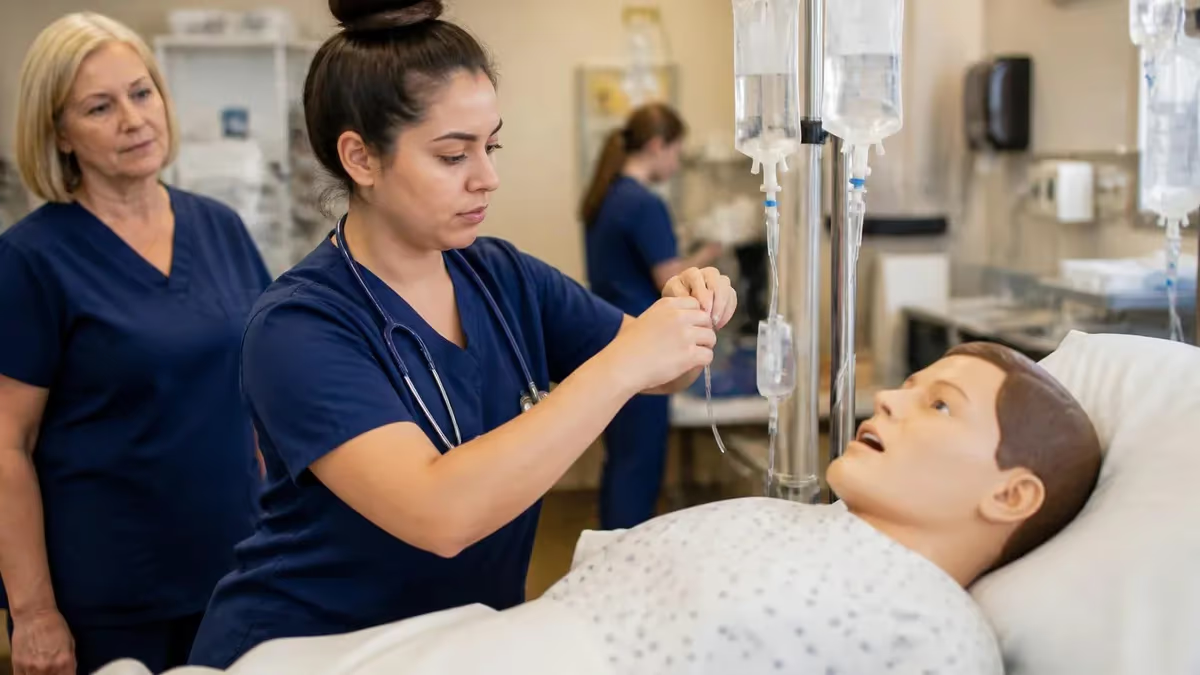
LPN bridge programs are specialized academic pathways designed to help Licensed Practical Nurses advance their credentials without starting from scratch. These programs recognize the clinical experience and knowledge that working LPNs already possess, allowing them to transition into roles as Registered Nurses or even Bachelor of Science in Nursing holders in a compressed timeframe. For thousands of nurses across the country, these programs represent the single most efficient route to higher pay, greater autonomy, and expanded career options. If you have been wondering how to move forward in your nursing career, understanding lpn bridge programs is an essential first step.
The demand for RNs continues to outpace supply across nearly every U.S. state. The Bureau of Labor Statistics projects registered nursing employment to grow by approximately 6 percent through 2033, adding nearly 193,000 new jobs annually. At the same time, healthcare systems are actively recruiting experienced LPNs to fill those gaps through accelerated bridge tracks. This creates a rare window where your existing licensure and bedside experience are genuine competitive advantages that shorten your path to advanced credentials considerably.
Most LPN bridge programs fall into two broad categories. The LPN-to-ADN track leads to an Associate Degree in Nursing and qualifies you to sit for the NCLEX-RN exam. The LPN-to-BSN track offers a more ambitious pathway directly to a Bachelor of Science in Nursing, which many hospital systems now list as a preferred or minimum qualification for hiring or promotion. Understanding which track fits your goals, schedule, and financial situation is the starting point for making a smart decision about your nursing future.
Eligibility requirements vary by program but almost always include an active, unencumbered LPN license, a minimum number of months of clinical work experience (often 12 months), and a competitive GPA from your original practical nursing coursework. Some programs also require prerequisite courses in anatomy, physiology, microbiology, and statistics before full admission. Community colleges and universities increasingly offer hybrid and online formats to accommodate nurses who work full-time while pursuing their degree, making access easier than ever before.
Cost is a major factor for most working nurses. Tuition for LPN-to-ADN programs at community colleges typically ranges from $5,000 to $15,000 for in-state students, while LPN-to-BSN programs at four-year institutions can range from $20,000 to $60,000 or more depending on whether you attend a public or private school. Many employers, particularly large hospital systems and long-term care corporations, offer tuition reimbursement programs that can offset a significant portion of these costs. Federal financial aid, scholarships from nursing organizations, and state workforce development grants are also widely available.
Timeline expectations are equally important to set correctly before you enroll. An LPN-to-ADN program typically takes 12 to 18 months for a full-time student who has completed prerequisites, while an LPN-to-BSN can range from 18 months to 36 months depending on prior credit acceptance and course load. Part-time tracks extend these timelines but allow nurses to maintain their income and benefits throughout the process. Online and hybrid programs have made part-time completion far more manageable, with many nurses successfully balancing 30-hour work weeks alongside coursework.
Making the decision to enroll in a bridge program is a significant personal and professional commitment, but the return on investment is well documented. RNs earn a national median wage of approximately $86,000 per year compared to roughly $54,000 for LPNs, meaning the earning premium alone often recoups tuition costs within two to three years. Beyond salary, RN credentials open doors to specializations in intensive care, emergency nursing, nurse management, and ultimately advanced practice roles that are simply unavailable to LPN-licensed professionals.
LPN Bridge Programs by the Numbers
How LPN Bridge Programs Work: Step-by-Step
Verify Eligibility & Gather Documents
Research & Select Your Program
Complete Prerequisites & Apply
Enroll, Attend Clinicals & Complete Coursework
Graduate & Apply for NCLEX-RN Authorization
Pass NCLEX-RN & Begin Your RN Career
Understanding the admission requirements for LPN bridge programs is critical because many applicants are surprised to discover that a current LPN license alone is not sufficient for guaranteed entry. Most programs maintain competitive admissions processes, and meeting the minimum requirements does not guarantee a seat. Accredited nursing schools receive far more qualified applications than available clinical slots, so your academic record, experience, and application materials all matter significantly when admissions committees review your file.
The most universal requirement across all LPN bridge programs is an active, unencumbered LPN or LVN license in the state where you plan to complete clinical rotations. Any disciplinary actions, probationary conditions, or restrictions on your license must be disclosed during the application process. Programs are legally prohibited from placing students with restricted licenses in clinical settings, which means even a minor board action could delay or prevent your admission until the matter is resolved. Always check your license status on your state board's verification portal before applying.
Work experience requirements vary considerably by program. Some community college programs accept applicants who have just passed the NCLEX-PN, while university-based BSN tracks often require a minimum of one to two years of clinical LPN experience in an acute care or post-acute setting. Longer experience requirements exist partly because bridge curricula move quickly through content that assumes clinical familiarity, and partly because admissions committees want evidence of professional commitment. Keep a detailed log of your employment history, including facility names, unit types, and supervisor contact information, since many programs verify experience claims directly.
Prerequisite coursework is another area where working nurses frequently encounter unexpected delays. Most bridge programs require completed college-level courses in human anatomy and physiology (often a two-semester sequence), microbiology, statistics, and English composition before you can begin nursing coursework. If you completed these as part of your original LPN training, check carefully whether the program will accept them or requires more recent coursework, as some schools impose a five or ten-year rule on science prerequisites. Community colleges offer inexpensive options for completing or refreshing these courses, often in online or evening formats that suit working nurses.
GPA thresholds for admission typically fall between 2.5 and 3.0 on a 4.0 scale, with competitive programs at well-regarded universities expecting 3.0 or higher from accepted applicants. If your GPA from practical nursing school falls below the cutoff, some programs allow you to submit prerequisite course grades as evidence of your current academic ability. Retaking courses in which you earned a low grade and demonstrating improvement over time can strengthen an otherwise borderline application considerably, so do not assume a past grade automatically disqualifies you from applying to your target program.
Recommendation letters are required by the majority of bridge programs and should come from nursing supervisors, charge nurses, or instructors who can speak specifically to your clinical competence and professional reliability. Generic character references from non-nursing contacts add little value to your application. Request recommendations from individuals who have observed you performing hands-on patient care, administering medications, or managing complex care scenarios. Give recommenders at least four to six weeks of advance notice and provide them with your personal statement and program requirements so they can tailor their letters accordingly.
Personal statements and interviews give you the opportunity to explain why you are pursuing an RN credential, what clinical experiences have shaped your goals, and how you plan to contribute to the nursing profession at a higher level. Admissions committees are looking for nurses who can articulate a clear professional vision rather than simply stating they want to earn more money.
Mention specific patient populations you are passionate about, clinical challenges that motivated you to pursue advanced knowledge, and concrete plans for how your RN credential will enable you to provide better care. Authenticity and specificity are far more persuasive than generic statements about caring for others.
LPN Bridge Program Formats: Online, Hybrid, and On-Campus
Fully online LPN bridge programs deliver all didactic coursework — nursing theory, pharmacology, pathophysiology, and health assessment — through a learning management system that you access on your own schedule. This format is ideal for nurses working full-time night shifts or those living in rural areas far from nursing schools. Programs like those offered through Western Governors University and various state university systems have pioneered rigorous online nursing education with asynchronous lectures, virtual simulations, and proctored remote exams.
However, even fully online programs require in-person clinical rotations, which you arrange in coordination with your program's clinical placement office at healthcare sites near your home. Students are responsible for meeting OSHA compliance, background check requirements, and skills lab attendance for competency validations. The flexibility of online theory coursework combined with locally arranged clinicals has made fully online bridge programs the fastest-growing format in the past five years, with enrollment numbers doubling at several major programs since 2020.
Pros and Cons of Pursuing an LPN Bridge Program
- +Earn up to $32,000 more per year as an RN compared to your current LPN salary
- +Shorter time to completion than starting a nursing program from scratch — typically 12 to 24 months
- +Existing clinical experience gives you a practical advantage over new RN students in clinical rotations
- +Access to specialized nursing roles including ICU, ER, labor and delivery, and case management
- +Many employers offer tuition reimbursement specifically targeting LPN-to-RN bridge candidates
- +Online and hybrid formats let you continue working full-time while earning your degree
- −Upfront tuition costs of $5,000 to $60,000 depending on program type and institution
- −Prerequisite science courses may require 6 to 12 additional months before program admission
- −Clinical rotation scheduling can conflict with current work commitments and shift obligations
- −Competitive admissions mean no guarantee of acceptance even for well-qualified applicants
- −NCLEX-RN is a separate high-stakes exam with a national first-attempt pass rate around 83 percent
- −Part-time programs extend timelines to three or more years, delaying the salary and career benefits
Pros and Cons at a Glance
| Pros | Cons |
|---|---|
| Existing clinical experience gives you a practical advantage over new RN students in clinical rotations | Clinical rotation scheduling can conflict with current work commitments and shift obligations |
| Access to specialized nursing roles including ICU, ER, labor and delivery, and case management | Competitive admissions mean no guarantee of acceptance even for well-qualified applicants |
| Many employers offer tuition reimbursement specifically targeting LPN-to-RN bridge candidates | Part-time programs extend timelines to three or more years, delaying the salary and career benefits |
LPN Bridge Program Application Checklist
- ✓Verify your LPN/LVN license is active, current, and free of disciplinary restrictions.
- ✓Request official transcripts from your nursing school and any college prerequisite courses.
- ✓Complete missing prerequisite courses in anatomy, physiology, microbiology, and statistics.
- ✓Document at least 12 months of clinical work experience with employer contact information.
- ✓Research at least three ACEN- or CCNE-accredited programs that match your schedule and budget.
- ✓Request recommendation letters from two nursing supervisors or clinical instructors.
- ✓Write a focused personal statement outlining your clinical background and career goals.
- ✓Submit your FAFSA and research employer tuition reimbursement benefits before applying.
- ✓Confirm CPR certification is current (BLS for Healthcare Providers, AHA or ARC).
- ✓Schedule any required entrance exams such as the TEAS or HESI A2 at least 60 days in advance.
NCLEX-RN Pass Rates Vary Widely by Program — Always Check Before You Enroll
State boards of nursing publish first-attempt NCLEX-RN pass rates for every approved nursing program annually. Before committing to any LPN bridge program, look up its pass rate through your state board's website. Programs with first-attempt pass rates below 80 percent may signal weaker preparation, curriculum gaps, or inadequate NCLEX review support — and a failed NCLEX attempt costs time, money, and momentum at a critical career transition point.
The financial side of LPN bridge programs deserves careful analysis before you commit to a specific pathway. Tuition is the most visible cost, but it represents only one portion of the total financial picture. Books and clinical supplies typically add $500 to $2,000 per year, liability insurance is required for clinical rotations and costs roughly $50 to $100 annually, and clinical uniform and equipment costs (stethoscope, blood pressure cuff, clinical shoes) can add another $200 to $500 to your first-year expenses. Budget for all of these items from the start rather than encountering surprise costs mid-program.
Federal financial aid through FAFSA is available to students enrolled at least half-time in accredited degree programs. Eligible students may qualify for Pell Grants (which do not require repayment) of up to $7,395 per academic year based on financial need, as well as subsidized and unsubsidized Stafford loans at relatively low interest rates compared to private lenders. Completing the FAFSA as early as possible — the window opens October 1 each year — maximizes your eligibility for grants before the most limited funds are awarded to other applicants.
Employer tuition reimbursement is one of the most underutilized financial resources available to working LPNs. Major hospital systems including HCA Healthcare, CommonSpirit Health, Ascension, and Tenet Healthcare all offer tuition reimbursement programs ranging from $2,500 to $10,000 per calendar year for employees pursuing RN credentials. Long-term care operators like Kindred Healthcare and Genesis Healthcare have similar programs. Even if your current employer does not have a formal tuition program, it is worth requesting a meeting with HR to ask about educational assistance options, since informal arrangements can sometimes be negotiated especially when the employer benefits from your credential upgrade.
State workforce development agencies and nursing shortage grants represent another funding source that many nurses overlook. States with documented nursing shortages — including California, Texas, Florida, New York, and Pennsylvania — allocate federal workforce development funds specifically to support nursing education pipelines. Your state's nursing association website, workforce investment board, or department of labor can direct you to current grant opportunities. The Health Resources and Services Administration (HRSA) also administers nursing scholarship and loan repayment programs at the federal level that are specifically targeted to nurses committed to working in underserved communities or shortage areas.
Scholarships from professional nursing organizations provide additional support that does not require repayment and does not affect your financial aid eligibility. The National Student Nurses Association, the American Association of Colleges of Nursing, the National Black Nurses Association, and dozens of state and specialty nursing organizations award annual scholarships ranging from $1,000 to $10,000 to nursing students including those in bridge programs.
Many of these scholarships have relatively low competition because nurses are simply not aware they exist or do not take the time to complete applications, meaning a motivated applicant who applies strategically can capture multiple awards in a single application cycle.
Return-on-investment calculations consistently favor completing a bridge program even when accounting for the full cost of tuition, fees, supplies, and any income reduction during the program. The average LPN earns approximately $54,000 per year nationally, while the average RN earns approximately $86,000 — a difference of $32,000 annually. Even a program costing $30,000 out of pocket pays for itself within 11 to 12 months of earning your first RN paycheck, assuming no salary increase at your current employer. In reality, most nurses see both a credential-based raise and access to higher-paying specialties and settings, compressing the payback period even further.
One financial strategy worth considering is the LPN-to-BSN direct pathway at institutions that offer articulation agreements with your existing LPN credits. These agreements, common between community college nursing programs and four-year state universities, allow you to transfer a set number of credits directly into a BSN program, reducing both the time and cost compared to completing an associate degree first and then bridging again to a bachelor's degree. Always ask prospective programs specifically what LPN credits they accept and how those credits are applied toward your degree requirements before making a final enrollment decision.
Only enroll in LPN bridge programs accredited by the Accreditation Commission for Education in Nursing (ACEN) or the Commission on Collegiate Nursing Education (CCNE). Graduating from a non-accredited program may prevent you from sitting for the NCLEX-RN in some states, limit your eligibility for federal financial aid, and block admission to graduate nursing programs later in your career. Verify accreditation status directly on the ACEN or CCNE websites — never rely solely on a school's marketing materials.
The career outcomes for nurses who complete LPN bridge programs are consistently positive across virtually every metric that matters: salary, job security, career mobility, and job satisfaction. Understanding these outcomes in concrete terms can help you evaluate whether the investment of time and money is right for your specific situation and goals. The nursing profession offers an unusually wide range of specialization opportunities for credentialed RNs, and a bridge program is the gateway that makes all of those options accessible to you as a working practical nurse.
Salary improvement is typically the most immediate and measurable outcome of completing a bridge program. RNs working in hospitals earn a national median of approximately $86,000 per year according to the Bureau of Labor Statistics, compared to $54,000 for LPNs in similar geographic areas. However, specialized RN roles command considerably higher salaries.
Intensive care unit nurses average $90,000 to $110,000 nationally, while travel nurses often earn $90,000 to $150,000 or more depending on specialty and assignment location. Nurse managers and supervisors, another pathway that requires RN credentials, average $95,000 to $120,000. The salary ceiling for LPNs is structurally lower than for RNs, making credential advancement a financially compelling decision at almost any career stage.
Job security and employment flexibility expand dramatically with RN credentials. While LPN positions have been declining in hospital settings over the past decade as facilities shift toward all-RN models, RN employment has grown consistently across all care settings. RNs are employed in hospitals, outpatient clinics, schools, correctional facilities, home health agencies, insurance companies, pharmaceutical firms, and dozens of other settings that rarely hire LPNs. This geographic and setting flexibility gives RNs far more control over work-life balance, scheduling, and the ability to relocate for personal or professional reasons without significant career disruption.
Advanced practice pathways open up exclusively after earning an RN credential, and for many nurses these represent the ultimate career destination. Nurse practitioners, certified registered nurse anesthetists, certified nurse-midwives, and clinical nurse specialists all require a minimum of a Bachelor of Science in Nursing as a foundation, followed by a master's or doctoral degree in their specialty.
These advanced practice roles earn median salaries ranging from $115,000 for nurse practitioners to $214,000 for CRNAs. The LPN-to-BSN bridge program is therefore not just a one-step credential upgrade but the foundational move in a longer career trajectory that could ultimately lead to full clinical autonomy and physician-level compensation.
Specialty certifications become accessible and valuable after earning your RN license, and many of them build directly on the clinical skills you developed as an LPN. Certifications in critical care (CCRN), emergency nursing (CEN), medical-surgical nursing (CMSRN), and oncology nursing (OCN) are all available to RNs and signal specialized expertise that commands both higher salaries and greater professional respect. The clinical experience you accumulated as an LPN gives you a head start in understanding the practical realities of these specialties compared to new graduate RNs who enter these roles directly from school without equivalent hands-on patient care hours.
Leadership and management roles in nursing are almost exclusively reserved for RNs, and most require significant clinical experience in addition to a bachelor's degree. Charge nurse, nurse supervisor, assistant director of nursing, and director of nursing positions all typically require at least an ADN and preference for BSN or higher.
These roles offer higher base salaries, weekday schedules, and strategic influence over care delivery that many experienced nurses find deeply rewarding after years of direct patient care. Your combination of practical nursing experience and bridge program credentials positions you competitively for these roles within a few years of completing your degree.
Geographic and institutional flexibility is a real-world benefit that deserves emphasis. Nurses with RN credentials and BSN degrees in particular find that virtually every type of healthcare employer — from elite academic medical centers to rural critical access hospitals to international travel assignments — has a place for them.
Magnet-designated hospitals, which represent the gold standard of nursing work environments and consistently rank among the best places to work in nursing surveys, generally require a BSN for permanent staff positions. Completing a bridge program literally opens the doors to employment options that are structurally closed to LPN-licensed nurses regardless of experience level.
Succeeding in an LPN bridge program requires more than strong clinical instincts — it demands deliberate academic preparation, time management, and a proactive approach to the challenges that working nurses uniquely face. Most nurses who struggle in bridge programs do so not because of a lack of clinical knowledge but because they underestimate the volume and rigor of coursework while simultaneously managing demanding work schedules, family responsibilities, and financial pressures. Planning for these challenges before you enroll gives you a significant advantage over peers who approach the program without a clear strategy.
Time management is the single most cited challenge among bridge program students who complete surveys about their experience. Nursing courses at the RN level involve dense textbook readings, online module completion, written care plans, pharmacology calculations, and preparation for clinical rotations, all of which require far more dedicated study time than most LPN programs demanded.
A realistic estimate is 15 to 20 hours of study and coursework per week in addition to your clinical rotation hours. Creating a detailed weekly schedule at the start of each semester that blocks specific study times — and protecting those blocks from work schedule creep — is essential for staying on track.
Study groups with fellow bridge students are consistently identified as one of the most effective academic support strategies available. Bridge cohorts bring together nurses with diverse clinical backgrounds — some from long-term care, others from home health, some from acute care — and that diversity becomes a learning asset when students share patient case experiences, challenge each other's reasoning on practice questions, and divide the responsibility for summarizing complex reading assignments.
Many programs structure bridge cohorts deliberately to help peer learning, but even in programs where this is not formalized, building your own study network early in the first semester pays dividends throughout the program.
NCLEX-RN preparation should begin well before your final semester, not in the weeks immediately before you sit for the exam. Bridge program students who consistently perform practice questions throughout their coursework — aiming for 50 to 100 practice questions per week starting in the first semester — arrive at the end of the program with a strong foundation of test-taking strategy and content mastery.
Resources like UWorld, Kaplan NCLEX Review, and the official NCSBN Learning Extension provide large banks of NCLEX-style questions with detailed rationale explanations that help you understand not just the correct answer but the clinical reasoning behind it.
Clinical rotation performance is evaluated differently in RN programs than in LPN programs. Instructors in bridge programs expect students to demonstrate not just procedural competence but clinical judgment — the ability to synthesize assessment data, prioritize nursing problems, anticipate complications, and communicate effectively with the interdisciplinary team. Bringing this systems-level thinking to every clinical interaction, rather than defaulting to task-focused execution, is what separates students who impress their preceptors from those who merely complete their required hours. Actively asking your clinical instructor to observe your assessments and provide structured feedback accelerates your development faster than any other single strategy.
Managing the emotional and psychological demands of bridging while working is equally important and often underacknowledged. Bridge students frequently report feelings of imposter syndrome — a sense that they are not as academically capable as traditional nursing students — particularly when they encounter content in pediatric nursing, obstetrics, or research methods that extends beyond their LPN clinical experience.
Recognizing this experience as normal and temporary, using your program's academic support services, and maintaining perspective on how much you already know from years of clinical practice are all protective factors against burnout and dropout during the most demanding periods of the program.
Finally, maintain open communication with your employer throughout your bridge program enrollment. Many nurse managers are enthusiastic supporters of staff pursuing RN credentials and can accommodate schedule adjustments, clinical placement assistance, or temporary shift reductions during particularly demanding academic periods.
Employers who know you are in a bridge program are also more likely to flag internal RN position openings before they are publicly posted, giving you a first-mover advantage for the role you are preparing to step into. Transparency with your employer about your educational goals tends to strengthen your professional relationship and positions you as a long-term investment rather than a flight risk.
Sample Certified Practical Nurse Practice Questions
Try these questions from our free Certified Practical Nurse practice tests. The correct answer and an explanation follow each question.
When caring for a client post-cardiac catheterization via the right femoral artery, which nursing action is the priority?
- A. Encourage ambulation within 1 hour
- B. Keep the right leg straight and assess the puncture site
- C. Apply ice packs to the groin every 2 hours
- D. Restrict fluids to prevent fluid overload
Answer: B. Keep the right leg straight and assess the puncture site
After femoral artery catheterization, the priority is to maintain leg immobility and frequently assess the puncture site for bleeding, hematoma, or signs of arterial compromise.
What does patient confidentiality mean in nursing?
- A. To share with anyone in the hospital
- B. To keep patient information private and share it with authorized personnel
- C. To tell the patient’s family
- D. To share information with colleagues freely
Answer: B. To keep patient information private and share it with authorized personnel
Patient confidentiality in nursing means strictly keeping all patient information private and only sharing it with authorized personnel who have a legitimate need to know for the patient's care. This ethical and legal obligation protects sensitive health data, builds trust between patients and healthcare providers, and respects patient autonomy. Adhering to confidentiality guidelines, such as HIPAA, is fundamental to professional nursing practice.
Which of the following actions by an LPN best exemplifies effective coordination of care for a client being transferred to a skilled nursing facility?
- A. Providing a detailed, written, and verbal report to the receiving nurse using a standardized format.
- B. Wishing the client well as they leave the unit.
- C. Telling the client's family to call the new facility with any questions.
- D. Personally packing all of the client's belongings.
Answer: A. Providing a detailed, written, and verbal report to the receiving nurse using a standardized format.
A structured and comprehensive hand-off report is crucial for ensuring continuity of care. It provides the receiving facility with all necessary information about the client's current status, needs, medications, and plan of care, preventing errors and gaps in treatment. The other options are either insufficient or not the primary responsibility for care coordination.
What is the significance of documentation in nursing?
- A. To track payments
- B. To maintain a legal record and track progress
- C. To monitor medications only
- D. To update patient contact information
Answer: B. To maintain a legal record and track progress
Documentation in nursing is essential for maintaining a legal record of all care provided, interventions performed, and patient responses. This accurate record protects both the patient and the healthcare provider. It also allows the healthcare team to track the patient's progress over time, ensuring continuity of care and facilitating effective communication among providers.
LPN Questions and Answers

LPN Requirements 2026: Complete Guide to Becoming a Licensed Practical Nurse
LPN IV Certification: Complete 2026 Guide to Training, Requirements & Cost

LPN Programs in Florida: Complete 2026 Guide to Accredited Schools, Costs, Requirements & Licensure

LPN Salary Wisconsin 2026: Average Pay, Top Cities, and How to Earn More
LPN Duties: Complete Guide to Daily Responsibilities and Scope of Practice
About the Author

Registered Nurse & Healthcare Educator
Johns Hopkins University School of NursingDr. Sarah Mitchell is a board-certified registered nurse with over 15 years of clinical and academic experience. She completed her PhD in Nursing Science at Johns Hopkins University and has taught NCLEX preparation and clinical skills courses for nursing students across the United States. Her research focuses on evidence-based exam preparation strategies for healthcare certification candidates.
Join the Discussion
Connect with other students preparing for this exam. Share tips, ask questions, and get advice from people who have been there.
View discussion (7 replies)