
Bryant and Stratton LPN Program: 2026 October Guide to Admission, Curriculum, Costs, and NCLEX-PN Prep
🎓 Explore the Bryant and Stratton LPN program: admission steps, curriculum, clinicals, costs, NCLEX-PN prep, and tips to decide if it fits you.
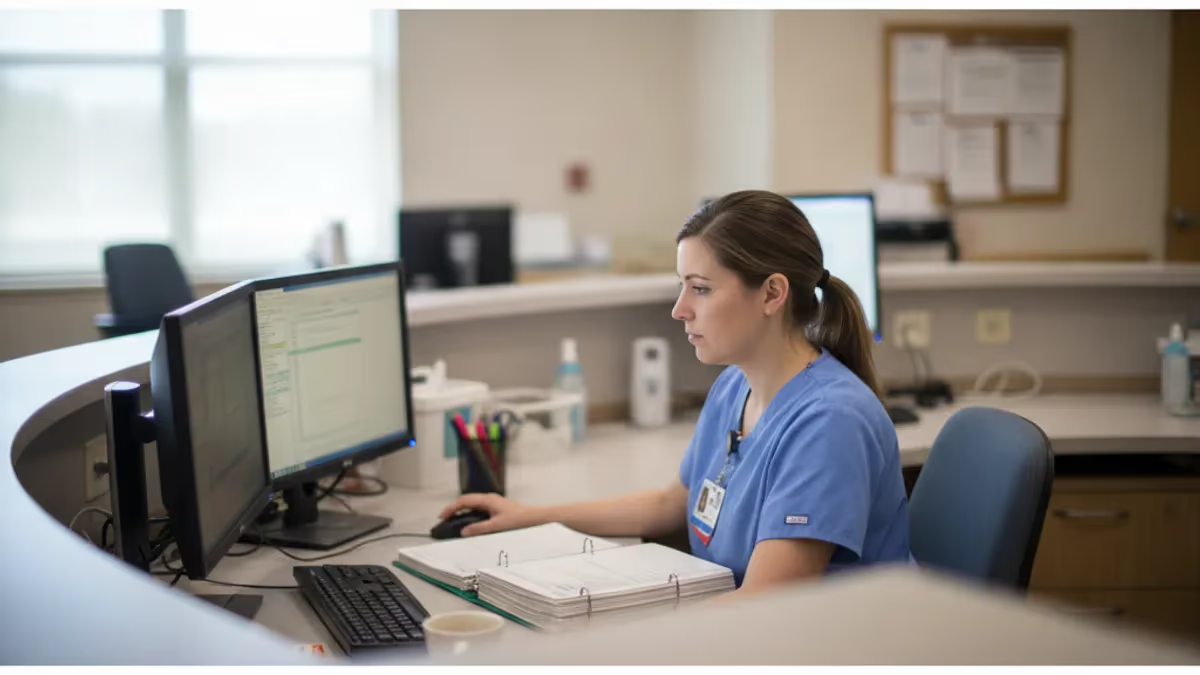
Choosing a practical nursing school is one of the biggest financial and career decisions you will make, and the bryant and stratton lpn program draws attention from career changers, recent high school graduates, and working healthcare aides who want a faster route into licensed nursing. This guide explains how the program is structured, what you need to apply, what you will study, and how graduates move on to the NCLEX-PN licensing exam.
Bryant & Stratton College is a private, career-focused institution with campuses across several states, including New York, Ohio, Wisconsin, and Virginia. Its practical nursing offering is typically delivered as a diploma that prepares students to sit for the NCLEX-PN. Because offerings differ by campus, confirm that your nearest location currently enrolls practical nursing students, which start dates are open, and whether the schedule is day, evening, or a hybrid of classroom and clinical hours.
A licensed practical nurse, called a licensed vocational nurse in California and Texas, provides basic bedside care under the direction of registered nurses and physicians. Typical duties include taking vital signs, changing dressings, administering oral and injectable medications, collecting specimens, and documenting patient changes. The Bureau of Labor Statistics reports a median LPN wage near $60,000 per year, and demand stays steady because aging populations need long-term care, home health, and rehabilitation services nationwide.
Practical nursing diplomas are attractive because they are shorter than associate or bachelor's degrees. Most full-time students finish in roughly twelve to eighteen months, compared with about two years for an ADN and four for a BSN. That shorter timeline means you start earning sooner, and many graduates later use an LPN-to-RN or LPN-to-BSN bridge to keep advancing while working. The tradeoff is an intense schedule that leaves little room for long breaks or heavy outside employment.
Before comparing any school, check three things: state board approval, accreditation, and NCLEX-PN pass rates. Your state board of nursing must approve the program for you to qualify for licensure testing, and accreditation affects credit transfer and financial aid eligibility. Pass rates show how well a school prepares students for the licensing exam. Ask admissions for the most recent three years of results rather than one flattering number, and verify them on the state board website.
Cost deserves the same scrutiny. Private colleges often charge more per credit than community colleges, so compare the total price of the program, including tuition, fees, uniforms, textbooks, clinical supplies, background checks, and exam fees. Ask about scholarships, payment plans, employer tuition assistance, and federal aid through the FAFSA. A realistic budget prevents surprises in the middle of the program, when dropping out can leave you with debt but no credential.
This article walks through admission steps, curriculum, clinical expectations, the pros and cons, licensing, and practical study tips. Treat the figures here as planning guidance rather than guarantees, since tuition, prerequisites, and schedules change each term. Use the free practice quizzes linked throughout to test your readiness for the fundamentals that nursing instructors, and later the NCLEX-PN, expect you to know cold, such as comfort measures, safety, and infection control.
Practical Nursing by the Numbers
Key Facts at a Glance
| Item | Value | Details |
|---|---|---|
| Typical Diploma Length | 12–18 mo | Varies by campus and schedule |
| NCLEX-PN Questions | 85–150 | Computer adaptive format |
| Maximum Exam Time | 5 hrs | Includes breaks |
| NCLEX Registration Fee | $200 | State licensure fee is separate |
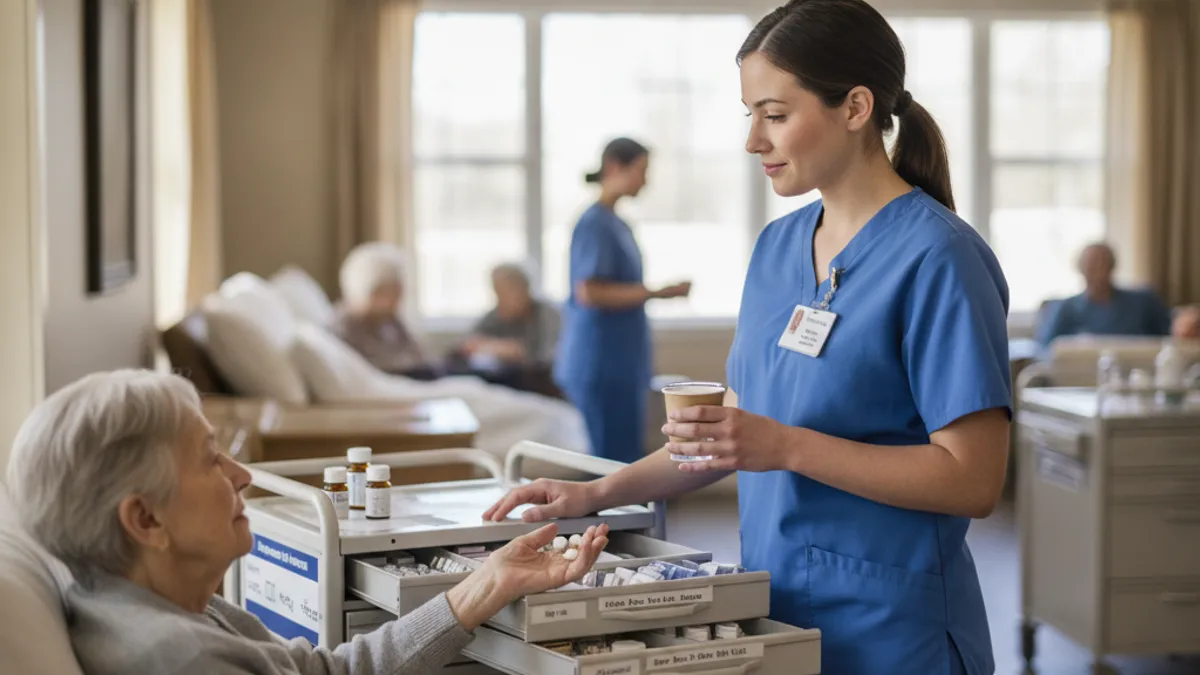
How to Enroll in the Bryant and Stratton LPN Program
Research Your Campus
Meet With Admissions
Complete Entrance Requirements
Secure Funding
Start Classes and Clinicals
Admission Requirements for the Bryant and Stratton Practical Nursing Diploma
Admission to a practical nursing diploma usually starts with a high school diploma or GED, and applicants must typically be at least eighteen. Bryant & Stratton campuses generally ask for an application, official transcripts, and an admissions interview or advising session. Because nursing seats are limited, expect a prerequisite screening step and possibly an entrance assessment. Requirements vary by campus and state, so request the current written checklist from your admissions representative before paying any fees.
Many practical nursing programs use an entrance exam such as the TEAS or a school-created placement test covering reading, math, science, and English. A strong score improves your chance of a seat, and some schools allow one or two retakes after a waiting period. Spend two to four weeks reviewing fractions, ratios, percentages, unit conversions, and basic anatomy beforehand. These same skills reappear in dosage calculations, so the preparation pays off later in the program.
Health and safety requirements come next. Expect a criminal background check, drug screening, proof of immunizations such as MMR, varicella, hepatitis B, and Tdap, a recent tuberculosis test, and often a current CPR card at the healthcare provider level. Clinical sites set these rules, not the college, so exceptions are rare. Start collecting vaccination records early, since titers and multi-dose series can take several weeks to complete before your first clinical day.
Your background check matters more than many applicants realize. State boards of nursing can deny or restrict licenses for certain felonies, some misdemeanors, and unresolved substance-related offenses, even if the school admits you. If you have any record, contact your state board before enrolling and ask for an eligibility determination. Completing a program only to learn you cannot test for the NCLEX-PN is a costly mistake that a single phone call can prevent.
Transfer credit and prior learning can shorten your path. If you have earned college credit in anatomy and physiology, psychology, or English, ask whether the campus accepts it and how recent it must be. Certified nursing assistants sometimes receive advising help or schedule flexibility because they already know basic care. Submit official transcripts early, since evaluation can take several weeks and may affect which cohort start date you can realistically join.
Technical and time requirements are also worth reviewing. Many programs include hybrid coursework with online lectures, so you need reliable internet and a computer capable of proctored testing. Clinical rotations can occur on days, evenings, or weekends and may require travel to partner facilities. Plan childcare, transportation, and work hours before day one. Students who map their weekly schedule in advance are far less likely to fall behind during the heaviest clinical terms.
Finally, learn the academic standards. Practical nursing courses often require a minimum grade of C or higher, sometimes 75 percent or more, in every nursing course, along with passing skills check-offs and dosage calculation exams. Failing a single course can delay graduation by a full term. Ask what remediation, tutoring, and readmission policies exist, and read the student handbook closely. Knowing the rules up front lets you protect your seat and your financial aid.
Bryant and Stratton Practical Nursing Curriculum: What You Will Study
Coursework builds the knowledge base that supports safe practice. Expect classes in anatomy and physiology, fundamentals of nursing, pharmacology, medical-surgical nursing, maternal and child health, mental health, and gerontology. Instructors emphasize the nursing process and clinical judgment, teaching you to recognize changes in a patient's condition and report them promptly. Exams use NCLEX-style questions so you become familiar with the format from the first term.
Nutrition, growth and development, and professional topics such as legal responsibilities, ethics, and delegation are usually included as well. Many campuses deliver lectures in a hybrid format, mixing on-campus sessions with online modules and quizzes. Plan to read assigned chapters before class and bring questions. Courses build on one another, so mastering fundamentals early makes later subjects like pharmacology and medical-surgical nursing far easier to understand.
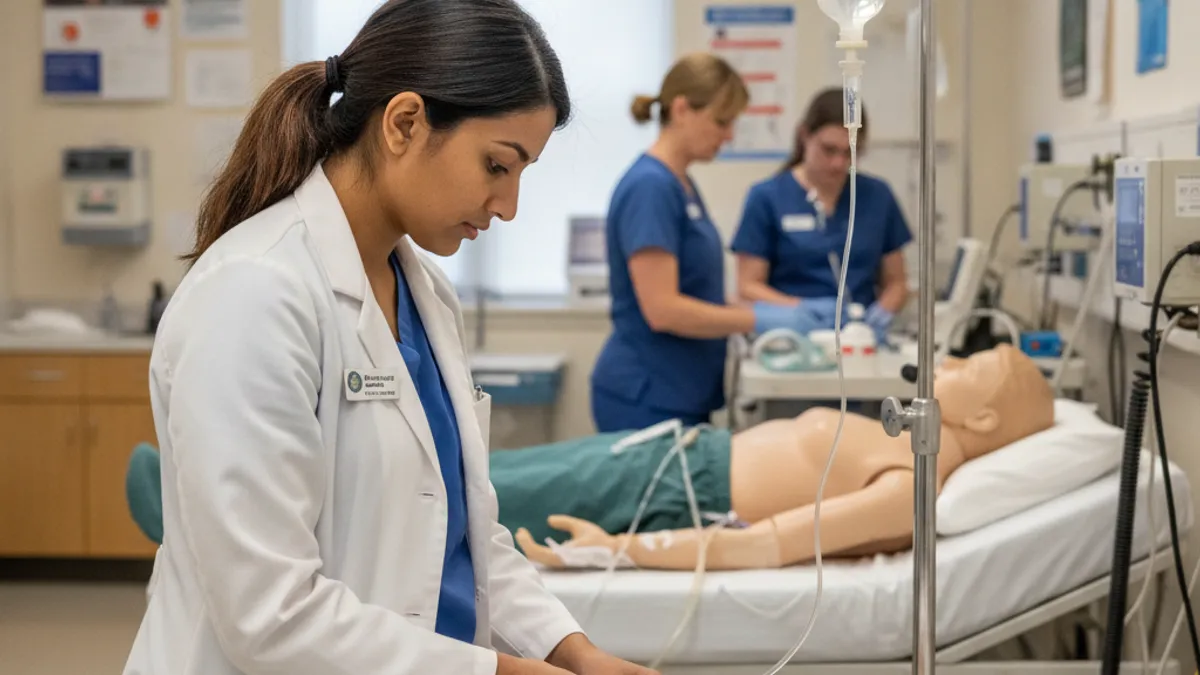
Is the Bryant and Stratton LPN Program Right for You?
- +Short diploma path lets you reach licensure in roughly a year to eighteen months
- +Career-focused campuses typically offer advising and student support services
- +Flexible day, evening, or hybrid scheduling may be available at some locations
- +Skills labs let you practice procedures before real patient contact
- +Graduates qualify to sit for the NCLEX-PN and enter a steady job market
- +Credits and experience may help later when bridging to an RN or BSN
- −Private college tuition is often higher than community college options
- −Practical nursing availability differs by campus, so not every location offers it
- −Seats are limited and entrance testing can be competitive
- −Full-time clinical schedules make working a regular job difficult
- −Credit transferability to other schools is not guaranteed
- −LPN scope of practice and pay are lower than those of registered nurses
Bryant and Stratton LPN Program Application Checklist
- ✓Confirm your campus currently enrolls practical nursing students.
- ✓Verify state board of nursing approval and accreditation status.
- ✓Request the latest three years of NCLEX-PN pass rates.
- ✓Gather official high school and college transcripts.
- ✓Schedule and prepare for the entrance or placement exam.
- ✓Collect immunization records and arrange any missing vaccines.
- ✓Complete the background check and drug screening on time.
- ✓Obtain a healthcare provider level CPR certification.
- ✓File the FAFSA and apply for scholarships or employer aid.
- ✓Get the full cost breakdown and schedule in writing before enrolling.
Verify Board Approval Before You Pay
Only graduates of state-approved practical nursing programs can sit for the NCLEX-PN. Check your state board of nursing website to confirm the specific campus and program are approved, and ask admissions to show this in writing before you submit a deposit.
Clinical Experience, NCLEX-PN, and Licensing After Graduation
Clinical experience is where classroom knowledge becomes practical skill. Practical nursing students typically complete supervised hours in long-term care, hospitals, rehabilitation centers, and community settings, working with an instructor who evaluates each task. Hours and placements depend on your state board's rules and the campus's partner facilities. Expect early rotations to focus on hygiene, mobility, and vital signs, while later ones add medication passes, wound care, and documentation under close supervision.
Preparing for clinical days takes discipline. Arrive early, wear the required uniform, bring your equipment, and review each assigned patient's diagnosis, medications, and precautions the night before. Instructors notice students who ask thoughtful questions and admit uncertainty, and they penalize unsafe guessing. Keep a small notebook of normal ranges, abbreviations, and routines. A student who can explain why a task is done, not only how, advances faster and earns stronger evaluations.
After graduation, you apply to your state board of nursing for authorization to test and register with Pearson VUE for the NCLEX-PN. The registration fee is about $200, and your state charges a separate licensure fee. Once the board confirms eligibility, you receive an Authorization to Test and typically have a limited window, often ninety days, to schedule. Plan your test date while the material is fresh, usually within four to eight weeks of graduating.
The NCLEX-PN is a computer adaptive test. You answer between 85 and 150 questions within a five-hour limit, and the exam stops when it is statistically certain whether you are above or below the passing standard. Question types include multiple choice, select-all-that-apply, ordered response, fill-in-the-blank calculations, and newer case-style items. Receiving 85 questions is not a bad sign; length varies with your performance and does not predict your result.
Content on the exam is organized into client needs categories: safe and effective care environment, health promotion and maintenance, psychosocial integrity, and physiological integrity. Basic care and comfort, pharmacology, and reduction of risk potential make up large shares of the physiological portion. Because comfort, hygiene, nutrition, and mobility questions are so common, regular practice with basic care and comfort items is one of the most efficient ways to raise your score.
National pass rates give useful context. In recent years, first-time US-educated LPN candidates have passed at roughly 85 to 90 percent, though rates fluctuate from year to year. Individual school results differ widely, so compare Bryant & Stratton's campus-level numbers with state averages on your board's website. If a campus falls well below the state average, ask what changes the faculty has made, such as added review courses or standardized predictor exams.
If you do not pass, you can retake the exam after a waiting period, commonly forty-five days, with a limit on yearly attempts that varies by jurisdiction. Review your candidate performance report, identify weak content areas, and build a focused plan instead of rereading everything. Many repeat testers pass after targeted practice on pharmacology and prioritization. Treat a failed attempt as diagnostic information, not a verdict on your ability to become a competent nurse.
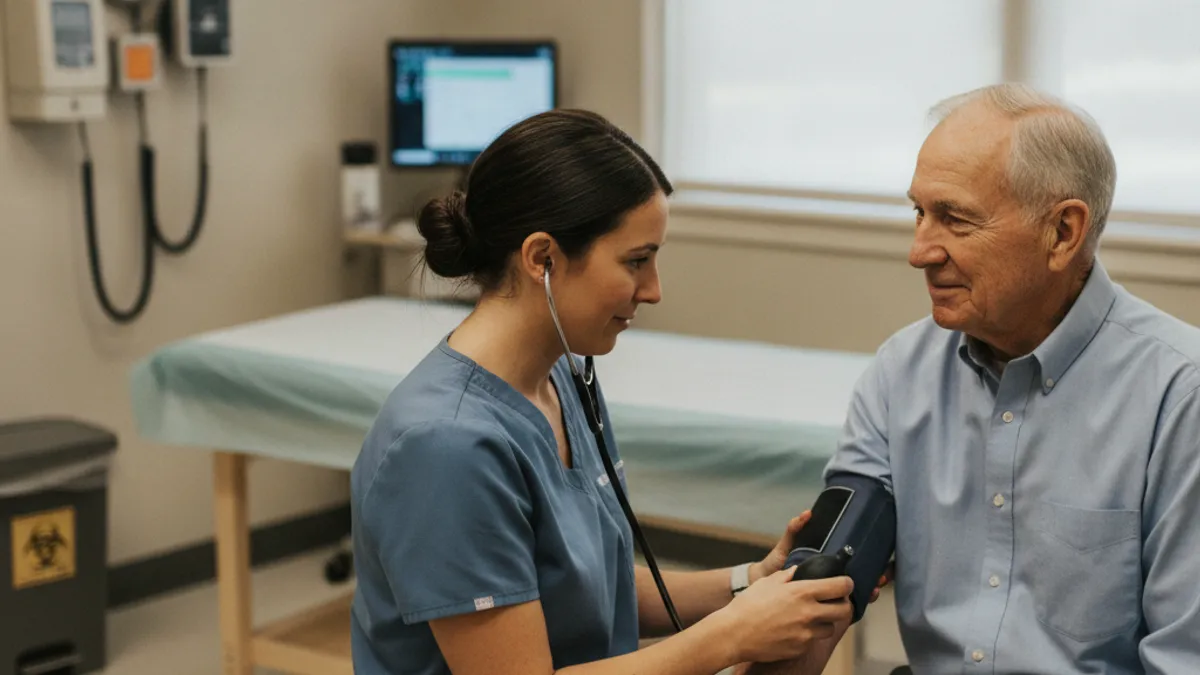
Tuition, prerequisites, campus availability, and start dates for practical nursing can change without notice. Always confirm current details directly with Bryant & Stratton admissions and your state board of nursing before making financial commitments.
Costs, Financial Aid, and Career Paths for LPN Graduates
Tuition for private career colleges varies by campus and changes annually, so use any number you read online as a rough guide only. Practical nursing diplomas at private institutions can run well into five figures once fees, books, and supplies are included, while community college options may cost noticeably less. Request a written cost breakdown from Bryant & Stratton that lists tuition per credit, technology fees, lab fees, and every expected out-of-pocket purchase before you sign an enrollment agreement.
Financial aid can reduce what you pay. Complete the FAFSA to learn whether you qualify for Pell Grants, federal loans, or work-study, and ask the college about institutional scholarships and payment plans. Check whether your employer offers tuition assistance, which is common among hospitals and nursing homes eager to hire LPNs. Also research state workforce grants and the Workforce Innovation and Opportunity Act, which sometimes funds training for in-demand healthcare careers.
Think about total return on investment, not only the sticker price. With a median pay of roughly $60,000, a graduate who borrows heavily can still manage payments, but interest accumulates quickly on private loans. Borrow only what you need, prefer federal loans to private ones, and build a budget that includes the months between graduation and your first paycheck, since licensure testing and credentialing can take several weeks to finish.
Job opportunities for new LPNs are broad. Skilled nursing and long-term care facilities hire the largest share, followed by hospitals, physician offices, home health agencies, correctional facilities, and rehabilitation centers. Hospital roles differ widely by state, and some systems limit LPN duties. Starting wages vary by region, with urban areas and states such as California, Massachusetts, and Alaska generally paying more, while shift differentials and overtime can add several dollars per hour.
Many LPNs treat the credential as a stepping stone. Bridge programs let you earn an RN license through an ADN or a BSN while continuing to work, and schools often grant credit for your LPN coursework and experience. Online bridge options can lower scheduling pressure, and employers with tuition reimbursement may help pay. Think about this future path when choosing a school, because credit transferability is what determines how much time you actually save.
Specializing can raise income too. LPNs can pursue certifications in areas such as gerontology, IV therapy where permitted, wound care, and long-term care. Scope of practice differs by state, so check what your board allows, particularly for IV starts, medication administration, and supervising nursing assistants. Documenting additional competencies and keeping your CPR and continuing education current makes you a stronger candidate for charge roles and higher-paying positions.
To decide whether this program fits you, compare at least two other options, such as a local community college and another private school, on cost, schedule, NCLEX-PN results, and support services. Visit campuses, tour the skills lab, and talk to current students. A choice grounded in verified numbers and honest conversations protects both your wallet and your career, and it helps you start nursing with confidence instead of regret.
Practical Study Tips to Succeed in Your LPN Program
Success in practical nursing begins with a weekly routine. Treat the program like a full-time job: block study sessions, clinical prep, and rest on a calendar, and protect them. Aim for about two hours of study for each hour of lecture, and review notes within twenty-four hours of class. Short, frequent sessions beat marathon cramming because they strengthen memory and make dense topics like pharmacology feel manageable.
Master the basics first. Learn normal vital sign ranges, common lab values, medical abbreviations, and the nursing process of assessment, diagnosis, planning, implementation, and evaluation. Then practice prioritization using frameworks like airway, breathing, circulation and Maslow's hierarchy. These tools help on every exam and every shift. Build flashcards for drug classes and key side effects, and quiz yourself aloud, since recalling information is more effective than rereading it.
Dosage calculations deserve special attention because many programs require near-perfect scores. Practice dimensional analysis daily until unit conversions become automatic. Work examples such as converting 0.25 mg to micrograms, or calculating a rate of 125 mL per hour for a 1,000 mL bag. Always estimate whether an answer is reasonable, and check decimals and units twice. Safe medication math is a core professional habit, not only an exam skill.
Use practice questions strategically. After each unit, complete a set of questions on that content, then read every rationale, including those for correct answers. Track missed questions by topic so you can see patterns. Basic care and comfort quizzes are a good place to start, since hygiene, nutrition, mobility, and elimination appear constantly in both coursework and the NCLEX-PN. Retake missed sets after a few days to confirm retention.
Form a small study group of two to four serious classmates. Teach each other difficult topics, quiz one another on skills, and rehearse check-offs with a timer. Explaining a concept is one of the best ways to find gaps in your own understanding. Keep sessions focused, with a clear agenda, and avoid groups that turn into social time. Also use instructor office hours early rather than waiting until you are struggling.
Protect your health and finances during the program. Sleep seven to eight hours, eat regular meals, and schedule exercise or time outdoors to manage stress. Talk to advisors immediately if work, family, or money issues threaten your attendance, because many schools offer emergency assistance, flexible plans, or referrals. Small problems become withdrawals when ignored. Asking for help early is a professional skill that nurses use daily when advocating for patients.
In the final months, shift toward NCLEX-PN style preparation. Take a full-length adaptive practice test, review weak areas, and complete 50 to 100 mixed questions daily. Simulate exam day by practicing in a quiet space for several hours. The night before, rest rather than cram. Walk into the test center with confidence built from consistent practice, because steady preparation across the whole program matters far more than any last-minute effort.
Sample Certified Practical Nurse Practice Questions
Try these questions from our free Certified Practical Nurse practice tests. The correct answer and an explanation follow each question.
A newborn is born at 32 weeks gestation and requires admission to the NICU. Which nursing action is the most important to support parental bonding?
- A. Limit parental visitation to designated hours to prevent infection risk
- B. Encourage skin-to-skin (kangaroo) care as soon as medically stable
- C. Discourage parents from touching the infant until the infant is stable
- D. Maintain parents outside the NICU during procedures
Answer: B. Encourage skin-to-skin (kangaroo) care as soon as medically stable
Skin-to-skin (kangaroo) care promotes bonding, stabilizes neonatal temperature, heart rate, and oxygenation, and supports breastfeeding and parental confidence.
A client is scheduled for a colonoscopy and asks why they need to complete a bowel prep. What is the best response by the LPN?
- A. It reduces the risk of bleeding during the procedure
- B. It helps the physician see the bowel lining clearly and reduces infection risk
- C. It prevents constipation after the procedure
- D. It lowers your blood pressure so you tolerate sedation better
Answer: B. It helps the physician see the bowel lining clearly and reduces infection risk
Bowel prep clears stool from the colon to allow clear visualization and reduces the risk of contamination if bowel perforation occurs.
A 3-year-old child is in Bryant's traction for a fractured femur. The LPN should assess for which complication specific to this traction type?
- A. Hyperextension of the hip joint
- B. Impaired circulation to the buttocks and perineum
- C. Pressure ulcers only on the heels
- D. Contracture of the knee joint
Answer: B. Impaired circulation to the buttocks and perineum
Bryant's traction suspends both legs vertically at 90 degrees, which can impair blood flow to the buttocks, perineum, and lower extremities, risking ischemia.
An LPN is caring for a client who is scheduled for a colonoscopy. The client's preparation includes a polyethylene glycol solution. The LPN should monitor the client for which potential complication related to this bowel prep?
- A. Hypertension and fluid overload.
- B. Electrolyte imbalances and dehydration.
- C. Hyperglycemia and increased urine output.
- D. Constipation and abdominal cramping.
Answer: B. Electrolyte imbalances and dehydration.
Polyethylene glycol solutions are osmotic laxatives that cause a large volume of liquid stool to clean the colon. This can lead to significant fluid and electrolyte losses, putting the client at risk for dehydration, hyponatremia, and hypokalemia. The LPN's role includes monitoring for signs of these imbalances, such as weakness, confusion, or cardiac dysrhythmias.
LPN Questions and Answers
LPN Requirements 2026: Complete Guide to Becoming a Licensed Practical Nurse

LPN Hospital Jobs: Complete 2026 Guide to Working as an LPN in a Hospital Setting
LPN Salary Ohio: Average Pay, Hourly Rate, and Top Cities in 2026

LPN Salary Wisconsin 2026: Average Pay, Top Cities, and How to Earn More
LPN to BSN Online: 2026 Guide to Bridge Programs, Cost & Timeline
About the Author

Registered Nurse & Healthcare Educator
Johns Hopkins University School of NursingDr. Sarah Mitchell is a board-certified registered nurse with over 15 years of clinical and academic experience. She completed her PhD in Nursing Science at Johns Hopkins University and has taught NCLEX preparation and clinical skills courses for nursing students across the United States. Her research focuses on evidence-based exam preparation strategies for healthcare certification candidates.
Join the Discussion
Connect with other students preparing for this exam. Share tips, ask questions, and get advice from people who have been there.
View discussion (7 replies)