
LAPD Cars: Complete Guide to Los Angeles Police Department Vehicles, Fleet History, and Modern Patrol Units
Explore LAPD cars, from black-and-white Crown Vics to modern Ford Explorers. Fleet history, specs, K9 units, and how patrol vehicles support LAPD ✍🏼

LAPD cars are some of the most recognizable police vehicles on the planet, immortalized in decades of Hollywood films, television shows, and real-world news coverage from the streets of Los Angeles. The iconic black-and-white paint scheme, the distinctive door shield, and the unmistakable silhouette of a Crown Victoria or Ford Explorer Interceptor are instantly identifiable. For aspiring officers, transportation enthusiasts, and curious citizens alike, understanding the LAPD fleet means understanding how one of America's largest municipal police agencies actually operates day to day across 470 square miles of urban terrain.
The Los Angeles Police Department operates one of the largest municipal vehicle fleets in the United States, with thousands of patrol cars, motorcycles, specialized SWAT vehicles, K9 transport units, traffic enforcement bikes, command posts, and undercover vehicles. Every car you see rolling through Hollywood Boulevard or cruising along Pacific Coast Highway represents a carefully selected, modified, and maintained piece of equipment built to handle 24/7 patrol duty in one of the most demanding policing environments anywhere in the country.
This comprehensive guide examines the entire history of LAPD vehicles from the early Ford and Chevrolet sedans of the 1940s through the legendary Plymouth Furys of the 1970s, the long-running Ford Crown Victoria Police Interceptor era, and into today's modern fleet of Ford Police Interceptor Utility SUVs, Dodge Chargers, and emerging electric vehicles. We will also cover specialty fleets including motorcycles, undercover vehicles, BearCat armored carriers, and command vehicles used during major incidents.
For anyone considering a career with the department, vehicle familiarity is part of the job from day one at the academy. Recruits learn EVOC (Emergency Vehicle Operations Course) driving, proper radio procedure, and how to handle high-speed pursuits and tactical positioning. If you are researching salary, benefits, and the path to becoming an officer, our guide on lapd salary details how compensation scales with rank, time in service, and specialty assignments like SWAT, K9, or Air Support.
The visual identity of LAPD cars matters far beyond aesthetics. The black-and-white paint scheme creates instant recognition that supports community visibility, deters crime, and reinforces accountability. Door shields display the badge number of the assigned officer, the division letter, and the shop number, creating a transparent identification system that members of the public can use when filing commendations or complaints. Light bars, push bumpers, spotlights, and rear cage configurations all serve practical operational purposes.
Modern LAPD patrol vehicles also serve as mobile offices and miniature command centers. Each car carries a mobile data computer, dash camera, license plate reader, radar gun, less-lethal launcher, patrol rifle, shotgun, first-aid trauma kit, AED defibrillator, road flares, traffic cones, evidence bags, and specialized tools for vehicle entries. The car is essentially a 4,500-pound toolbox that must function flawlessly across hot summer days, rare rainstorms, freeway pursuits, and quiet residential foot patrols.
Whether you are studying for a recruit exam, writing a screenplay, restoring a vintage cruiser, or simply curious about what makes the LAPD fleet tick, this guide pulls together fleet specifications, historical context, operational details, and behind-the-scenes facts that even longtime Angelenos rarely know. By the end you will recognize divisions by their shop numbers, understand why certain models were retired, and appreciate just how much engineering goes into a single black-and-white.
LAPD Fleet by the Numbers

Current LAPD Fleet Lineup
The Explorer-based SUV is now the backbone of LAPD patrol. AWD, hybrid powertrain options, and a roomy cabin make it ideal for officers wearing duty belts, vests, and carrying long guns in the cage.
The Hemi-powered Charger remains a favorite for freeway enforcement and specialized traffic units. Its V8 punch and rear-wheel-drive dynamics handle Los Angeles freeway pursuits exceptionally well.
While production ended in 2011, a handful of refurbished Crown Vics still serve in administrative and training roles. The model defined LAPD's image for nearly two decades of patrol.
Used by Traffic and motorcade details, these BMWs replaced many older Kawasakis. They offer ABS, traction control, and superior comfort for officers riding eight-hour shifts.
The Tahoe Police Pursuit Vehicle serves supervisors, K9 handlers, and command staff. Its size accommodates equipment, K9 inserts, and additional electronics needed for sergeants and lieutenants.
The history of LAPD patrol cars mirrors the evolution of American automotive design and policing philosophy itself. In the 1920s and 1930s, the department used a mix of Fords, Chevrolets, and Buicks, often painted solid black with simple gold lettering on the doors. These early cars lacked radios, sirens, and most modern equipment we take for granted today. Officers communicated using callboxes mounted on telephone poles, and pursuits relied more on local knowledge than horsepower or technology.
The classic black-and-white paint scheme emerged in the late 1940s, and it remained the visual identity of Los Angeles policing ever since. Early postwar fleets featured Plymouth, Dodge, and Ford sedans with rooftop bubble lights, mechanical sirens, and modest V8 engines. By the 1960s, the Plymouth Belvedere and Dodge Polara dominated patrol service, often equipped with police-package 383 and 440 cubic inch big-block engines capable of triple-digit speeds on the wide streets of postwar Los Angeles.
The 1970s introduced the legendary Plymouth Fury and Dodge Monaco, cars made famous through television shows like Adam-12 and Dragnet. These full-size sedans defined the look of American policing during a turbulent era of rising crime, civil unrest, and changing community relations. Their massive trunks, comfortable bench seats, and rugged drivetrains made them workhorses that frequently logged over 100,000 hard miles before retirement to auction.
The 1980s brought the Chevrolet Caprice 9C1 and Ford Crown Victoria Police Interceptor into the fleet. Both cars were body-on-frame, rear-wheel-drive sedans engineered specifically for police duty cycles. The Caprice offered superior performance, while the Crown Vic provided unmatched durability. After General Motors discontinued the Caprice in 1996, the Crown Vic became the dominant choice across nearly every American police agency, including LAPD, where it ruled the streets until 2011.
Want to know what it takes to drive these vehicles for a living? Read our complete guide on lapd news covering current hiring updates, academy schedules, and recruit testing dates. The path to behind-the-wheel duty includes background investigation, polygraph, medical exam, psychological evaluation, and successful completion of the rigorous six-month academy where EVOC driving forms a major component of training.
The transition from Crown Victoria to modern SUVs and sedans took several years. Ford ended Crown Vic production in 2011 and introduced the Police Interceptor Utility based on the Explorer platform along with the Police Interceptor Sedan based on the Taurus. LAPD adopted both platforms, eventually phasing out the Taurus-based sedans in favor of the more practical Utility SUVs that now make up the majority of front-line patrol assignments throughout the city.
Today the fleet includes hybrid versions of the Ford Police Interceptor Utility, which dramatically improves fuel economy during the countless hours patrol cars spend idling. Idling consumes fuel for air conditioning, electronics, computers, and emergency lighting during traffic stops, paperwork, and stakeouts. Hybrid technology allows the gasoline engine to shut off while the battery powers essential systems, saving the department millions in fuel costs while reducing emissions across Los Angeles neighborhoods.

LAPD Practice Test Questions
Prepare for the LAPD - Los Angeles Police Department exam with our free practice test modules. Each quiz covers key topics to help you pass on your first try.
LAPD - Los Angeles Police Department Backg...
Free LAPD Practice Test featuring - Los Angeles Police Department Background Investigation Standards. Improve your LAPD Exam score with mock test prep.
LAPD - Los Angeles Police Department Basic...
LAPD Mock Exam on - Los Angeles Police Department Basic Police Terminology. LAPD Study Guide questions to pass on your first try.
LAPD - Los Angeles Police Department Depar...
LAPD Test Prep for - Los Angeles Police Department Department Interview Procedures. Practice LAPD Quiz questions and boost your score.
LAPD - Los Angeles Police Department Logic...
LAPD Questions and Answers on - Los Angeles Police Department Logical and Deductive Reasoning. Free LAPD practice for exam readiness.
LAPD - Los Angeles Police Department Obser...
LAPD Mock Test covering - Los Angeles Police Department Observation and Memory Recall. Online LAPD Test practice with instant feedback.
LAPD - Los Angeles Police Department Physi...
Free LAPD Quiz on - Los Angeles Police Department Physical Fitness Qualifier. LAPD Exam prep questions with detailed explanations.
LAPD - Los Angeles Police Department Readi...
LAPD Practice Questions for - Los Angeles Police Department Reading Comprehension Skills. Build confidence for your LAPD certification exam.
LAPD - Los Angeles Police Department Situa...
LAPD Test Online for - Los Angeles Police Department Situational Judgment and Ethics. Free practice with instant results and feedback.
Specialty LAPD Vehicles, Gear, and SWAT Fleet
The LAPD SWAT unit, also known as Metropolitan Division D Platoon, operates a fleet of specialized tactical vehicles unlike anything assigned to regular patrol. The flagship of the lapd swat fleet is the Lenco BearCat armored personnel carrier, a multi-ton vehicle built on a Ford F-550 chassis with ballistic steel armor, run-flat tires, gun ports, roof hatches, and a powerful diesel engine capable of pushing through barricades or evacuating wounded officers and civilians during high-risk operations across the city.
Beyond the BearCat, SWAT operators also use unmarked Suburbans, Tahoes, and specially modified vans configured for rapid deployment. These vehicles carry breaching tools, sniper rifles, ballistic shields, distraction devices, gas masks, robots, drones, and the lapd gear that officers depend on during barricades, hostage rescues, and high-risk warrant service operations executed citywide throughout every patrol division.
Ford Police Interceptor Utility vs Dodge Charger Pursuit
- +Ford Explorer-based SUV offers all-wheel drive for better traction
- +Larger cabin accommodates equipment, computers, and officer gear
- +Hybrid powertrain dramatically reduces fuel and emissions
- +Higher seating position improves officer visibility on patrol
- +Better cargo space for evidence, K9 inserts, and long guns
- +Modern safety tech including blind spot and forward collision alerts
- −Higher purchase price than traditional sedan platforms
- −Worse top-end speed compared to Hemi-powered Chargers
- −SUV handling less nimble during tight urban pursuits
- −Greater curb weight affects acceleration and braking distance
- −Hybrid components add maintenance complexity over time
- −Larger size restricts maneuverability in narrow alleys downtown
Pros and Cons at a Glance
| Pros | Cons |
|---|---|
| Ford Explorer-based SUV offers all-wheel drive for better traction | Higher purchase price than traditional sedan platforms |
| Larger cabin accommodates equipment, computers, and officer gear | Worse top-end speed compared to Hemi-powered Chargers |
| Hybrid powertrain dramatically reduces fuel and emissions | SUV handling less nimble during tight urban pursuits |
| Higher seating position improves officer visibility on patrol | Greater curb weight affects acceleration and braking distance |
| Modern safety tech including blind spot and forward collision alerts | Hybrid components add maintenance complexity over time |

What Every LAPD Patrol Car Carries
- ✓Mobile Data Computer with CAD dispatch integration
- ✓Dash-mounted and rear-facing digital camera systems
- ✓Patrol rifle and shotgun secured in electronic gun lock
- ✓Less-lethal 40mm launcher with sponge round munitions
- ✓Trauma medical kit with tourniquets and chest seals
- ✓Automated External Defibrillator (AED) for cardiac emergencies
- ✓Road flares, reflective triangles, and traffic cones
- ✓License Plate Reader (LPR) camera system
- ✓Two portable radios with multiple channel capability
- ✓First aid kit, evidence bags, and biohazard supplies
- ✓Spike strips for terminating vehicle pursuits safely
- ✓Push bumper, spotlights, and rear prisoner cage
Decode Any LAPD Car in Seconds
Every LAPD vehicle wears a four-digit shop number painted on the trunk, roof, and front fenders. The first digit usually identifies the assigned division, while the remaining digits track that specific car within the fleet. Officers, dispatchers, and citizens can use these numbers to identify units during incidents, complaints, or commendations across the city.
The LAPD black-and-white paint scheme is one of the most studied police liveries in American history. Adopted in 1949 under Chief William Worton, the design was intended to make cars instantly recognizable while reinforcing public trust through visible accountability. The split scheme features a black roof and black doors with white fenders, hood, and trunk. Door shields display the city seal, the words Los Angeles Police, the division letter, and the shop number assigned to that specific vehicle in the fleet.
Over the decades, several attempts were made to change or modernize the scheme. In the 1970s and 1990s, the department experimented with all-white cars and various blue accent stripes, but each time the classic black-and-white returned by overwhelming public and officer demand. Angelenos consider the scheme a piece of cultural heritage, instantly evoking everything from the original Adam-12 television series to modern blockbuster films set in the city.
The lapd headquarters at 100 West 1st Street, also known as the LAPD Administration Building, houses the fleet management division responsible for procurement, maintenance scheduling, and decommissioning of all department vehicles. From there, cars are dispatched to motor pools at each of the 21 geographic divisions where mechanics handle daily inspections, oil changes, brake jobs, and the constant work required to keep patrol units running 24 hours per day across rotating shifts and high-mileage assignments. Visit our guide to lapd headquarters for more details on the building, history, and divisional layout.
Decommissioned LAPD cars go through a careful process before they ever leave department control. All emergency equipment including light bars, sirens, radios, computers, push bumpers, cages, and gun mounts must be removed. Door shields are sanded off, repainted, or replaced entirely. The vehicles are then auctioned through approved channels, often selling to private buyers, movie productions, or smaller police agencies that purchase them as low-cost training or reserve units for their own departments.
Hollywood maintains a long and close relationship with LAPD vehicles. Production companies routinely lease retired cruisers or build authentic replicas for movies and television series filmed in Los Angeles. Anyone watching a major American action film made in the past 50 years has almost certainly seen LAPD cars on screen, sometimes in their actual deployed configuration, other times as cinematic stand-ins for fictional departments. Few municipal fleets enjoy this level of global cultural exposure or pop culture saturation.
The shop number system itself deserves attention. A four-digit number is painted in large white text on the rear trunk lid and roof for aerial identification by helicopter units. The roof number is especially important during pursuits and tactical operations when air support needs to coordinate with ground units in real time. This dual identification system is one of the LAPD innovations that other departments around the country have copied for their own fleet management and air-to-ground coordination efforts.
For officers behind the wheel, the car becomes an extension of identity. Many veteran patrol officers can recall specific shop numbers they were assigned over the years, the quirks of each car, and the memorable calls they handled while driving them. Patrol partners often request to keep the same shop number across shifts, a small ritual that creates familiarity in a job where stability and routine help officers manage the unpredictability of street work every single day across an enormous city.
While decommissioned LAPD cars are sometimes auctioned, all emergency equipment must be removed before transfer. Operating a vehicle with functional red and blue lights, sirens, or unauthorized LAPD markings is a misdemeanor under California Vehicle Code 27007 and may also violate impersonation statutes. Collectors should consult legal counsel before purchasing or restoring any former police vehicle.
The future of LAPD cars is electric, autonomous-assisted, and increasingly data-driven. The department has already piloted Tesla Model S, Model Y, and BMW i3 vehicles in administrative and detective roles. While full electrification of patrol units faces real challenges, including charging infrastructure and the need for vehicles to operate continuously across 12-hour shifts, hybrid technology is rapidly becoming the standard for new procurement contracts approved by the Los Angeles City Council and Police Commission.
Modern lapd ranks of vehicles increasingly carry advanced technology that earlier officers could not have imagined. License plate readers automatically scan thousands of plates per shift, flagging stolen vehicles and Amber Alerts. In-car video systems record every traffic stop and pursuit. Body-worn cameras sync wirelessly with car-mounted servers. Real-time crime center connectivity lets dispatch push photographs, suspect descriptions, and tactical information directly to the mobile data computer mounted between the front seats.
The lapd chief and city leadership have committed to converting at least half of the department fleet to hybrid or fully electric vehicles by the end of the decade. This goal aligns with broader Los Angeles climate initiatives and California state mandates targeting reduced municipal emissions. Charging stations are being installed at division parking lots, with priority given to administrative vehicles, motor pool reserves, and specialized units that can return to base between calls for service throughout each operational shift.
Communication is also evolving inside the modern patrol car. The legendary lapd phonetic alphabet, used for decades over the radio to spell names, license plates, and addresses, is still essential training for every recruit. Adam, Boy, Charles, David, and so on remain the standard for clear voice communication. Learn the official codes and study tools through our guide on lapd phonetic alphabet which breaks down every letter, number, and common radio code used by Los Angeles officers daily.
Cybersecurity and data protection are now major concerns for fleet management. Each patrol vehicle is essentially a rolling computer network, with multiple radios, cameras, license plate readers, and dispatch terminals all connected to department servers. Protecting that data from interception, tampering, or unauthorized access requires constant updates, secure communications protocols, and ongoing training for officers who use the systems during high-pressure incidents where mistakes can have serious consequences for cases, suspects, and victims.
Autonomous and driver-assist technology is also entering the fleet conversation, though full self-driving police vehicles remain far off. Current generation Police Interceptors include lane departure warnings, automatic emergency braking, blind spot monitoring, and adaptive cruise control. These features help reduce the rate of officer-involved traffic collisions, which historically rank among the leading causes of line-of-duty injuries for patrol officers across major American police departments including LAPD itself.
Looking ahead 10 to 20 years, expect LAPD cars to integrate even more deeply with smart city infrastructure. Connected traffic signals could clear paths for responding units. Drones launched from car-mounted ports could provide instant aerial views. Predictive analytics could route units proactively to high-risk areas. The black-and-white paint scheme will almost certainly remain, but what hides beneath that classic livery will look more like a high-tech mobile command center than the simple Plymouth Fury of decades past.
For anyone seriously considering joining the department, understanding the equipment you will operate, including the cars, is part of preparing for a successful application and academy experience. Recruits spend weeks at the Davis Training Facility learning EVOC, also known as Emergency Vehicle Operations Course. Instructors teach proper steering technique, threshold braking, evasive maneuvers, pursuit tactics, and the legal and ethical framework that governs when officers may engage in code 3 driving with lights and sirens activated.
The academy driving curriculum is not optional or simple. Many recruits arrive thinking they are good drivers, only to discover that police driving requires a completely different skill set. Backing techniques, parallel parking under stress, high-speed cornering, and emergency lane changes all require muscle memory built over many hours of repetition. Recruits who struggle with EVOC may receive remedial training, but persistent failures can lead to academy washout regardless of how strong a candidate performs in other subjects.
Beyond the academy, officers receive ongoing driver training throughout their careers. Specialized assignments like motor patrol, SWAT, or pursuit-rated traffic enforcement require additional certifications and recurring qualification courses. The lapd online report system also depends on officers being able to safely operate vehicles to and from incident scenes, complete documentation while parked, and follow proper procedures for traffic stops, vehicle searches, and impound operations across every neighborhood patrol shift.
For civilians, knowing how LAPD cars operate helps you respond appropriately during traffic stops, pursuits, or emergency situations. If you see a black-and-white with lights and sirens approaching, the legal requirement is to safely pull to the right and stop until the unit passes. During a traffic stop, keep your hands visible on the steering wheel, do not exit the vehicle unless instructed, and provide license, registration, and insurance when asked. Simple compliance keeps everyone safer during routine interactions.
If you find yourself wanting to commend or complain about an officer, the shop number painted on the car is your key piece of information. Combined with the date, time, and location of the encounter, the shop number lets the department identify exactly which officers were involved. The lapd s.w.a.t and patrol divisions both maintain detailed assignment records that link shop numbers to specific officers on specific shifts, ensuring accountability and transparency for every public interaction.
Photography enthusiasts and police vehicle collectors should know that taking pictures of LAPD cars in public is fully legal. Officers cannot lawfully prevent you from photographing them or their vehicles while you stand on public property. However, interfering with active police operations, blocking access, or trespassing onto secure scenes will draw lawful enforcement action. Use common sense, maintain reasonable distance, and respect the work officers are doing during dynamic incidents anywhere in Los Angeles County jurisdiction.
Finally, the LAPD fleet represents not just transportation but a major taxpayer investment. Each new Police Interceptor Utility costs around 50,000 dollars before upfit, with full outfitting including lights, radios, computers, and weapons mounts pushing the total to 75,000 dollars or more per unit. Maintaining roughly 4,200 vehicles is a multi-million-dollar annual operation that requires careful planning, procurement contracts, and lifecycle management overseen by fleet services, the Police Commission, and city budget officials every fiscal year.
Sample Los Angeles Police Department Practice Questions
Try these questions from our free Los Angeles Police Department practice tests. The correct answer and an explanation follow each question.
While on patrol, you observe a vehicle parked illegally. Which detail is MOST important to record for accurate recall later?
- A. The vehicle's color only
- B. License plate number, make, model, color, and any distinguishing features
- C. The approximate age of any occupants
- D. Whether the windows were tinted
Answer: B. License plate number, make, model, color, and any distinguishing features
Comprehensive vehicle identification details — plate, make, model, color, and unique features — are essential for accurate reporting and follow-up.
While on patrol, you are dispatched to a scene. The report states the suspect is the alleged ________ of the crime. Which word correctly identifies the person believed to have committed the offense?
- A. Plaintiff
- B. Coroner
- C. Perpetrator
- D. Deterrent
Answer: C. Perpetrator
A 'perpetrator' is a person who carries out a harmful, illegal, or immoral act. The other options are incorrect: a plaintiff is a person who brings a case against another in a court, a coroner is an official who investigates violent or sudden deaths, and a deterrent is something that discourages someone from doing something.
The history of the transfer of property from one person to another is ____________.
- A. Deadly force
- B. Deadly weapon
- C. Chain of custody
- D. K-9 unit
Answer: C. Chain of custody
Chain of custody is the chronological documentation or paper trail that records the sequence of possession, control, transfer, analysis, and disposition of physical or electronic evidence. Maintaining a strict chain of custody is vital in legal proceedings to ensure the integrity and authenticity of evidence, proving it has not been tampered with or altered.
You witness a suspect fleeing on foot after a purse snatching. Which physical descriptor is most useful for broadcasting to other units?
- A. The suspect's estimated weight
- B. A distinctive tattoo visible on the suspect's neck
- C. The suspect's approximate age
- D. The direction the suspect was running
Answer: B. A distinctive tattoo visible on the suspect's neck
Distinctive permanent features like visible tattoos provide the most reliable identification that persists across time and distances.
🚙 What car makes up most LAPD patrol cars today?
The Ford Police Interceptor Utility, built on the Explorer platform, is the backbone of the modern LAPD fleet. Its all-wheel drive, roomy cabin, and available hybrid powertrain suit officers wearing duty belts and vests while carrying long guns in the cage.
Take the free LAPD practice test🏁 Which LAPD police car is used for freeway pursuits?
The Hemi-powered Dodge Charger Pursuit is a favorite for freeway enforcement and specialized traffic units. Its V8 power and rear-wheel-drive dynamics handle high-speed Los Angeles freeway pursuits far better than a tall SUV can.
Practice LAPD patrol scenarios🚓 Why are LAPD cars painted black and white?
The iconic black-and-white paint scheme emerged in the late 1940s and has been the visual identity of Los Angeles policing ever since. The high-contrast colors make a marked LA police car instantly recognizable on the street and in Hollywood films.
Study more LAPD facts🛡️ What armored vehicle does LAPD SWAT use?
LAPD Metropolitan Division SWAT operates armored BearCat vehicles for high-risk callouts. These armored trucks protect officers during barricaded suspects, active shooters, and hostage rescue, and the fleet includes a small number of these specialized LAPD SWAT vehicles.
Try the LAPD Level 2 test🏍️ What motorcycles do LAPD traffic officers ride?
LAPD Traffic and motorcade details ride BMW R 1250 RT-P police motorcycles, which replaced many older Kawasaki units. They offer ABS, traction control, and comfort for officers riding eight-hour shifts enforcing the law across the city.
Test your LAPD knowledge🚔 How many patrol cars does the LAPD operate?
The LAPD runs one of the largest municipal fleets in the United States, with roughly 1,800 active black-and-white patrol cars and a total fleet of over 4,200 marked and unmarked vehicles. These are spread across the department's 21 geographic divisions.
Take the free LAPD test🚘 What was the LAPD's classic patrol car before SUVs?
The Ford Crown Victoria Police Interceptor defined the LAPD image for nearly two decades. Ford ended Crown Victoria production in 2011, after which LAPD moved to the Explorer-based Police Interceptor Utility and the Dodge Charger for front-line patrol.
Practice LAPD exam questions📺 Which LAPD cars were famous on Adam-12 and Dragnet?
The 1970s Plymouth Fury and Dodge Monaco became famous through TV shows like Adam-12 and Dragnet. These full-size sedans, with big trunks and rugged drivetrains, often logged over 100,000 hard miles before retirement to auction.
Learn more LAPD history🔢 What is the shop number on an LAPD car?
The shop number is the fleet identification number painted on an LAPD vehicle, used by the department to track and maintain each individual car. It is separate from the license plate and helps dispatch and the garage identify the exact unit.
Study LAPD terminology🔋 Are LAPD patrol cars hybrid or electric?
LAPD now fields hybrid versions of the Ford Police Interceptor Utility, which dramatically improves fuel economy during the long hours patrol cars spend idling for air conditioning, computers, and emergency lighting. The hybrid lets the gas engine shut off while electronics keep running.
Take the LAPD Level 2 quizLAPD Questions and Answers
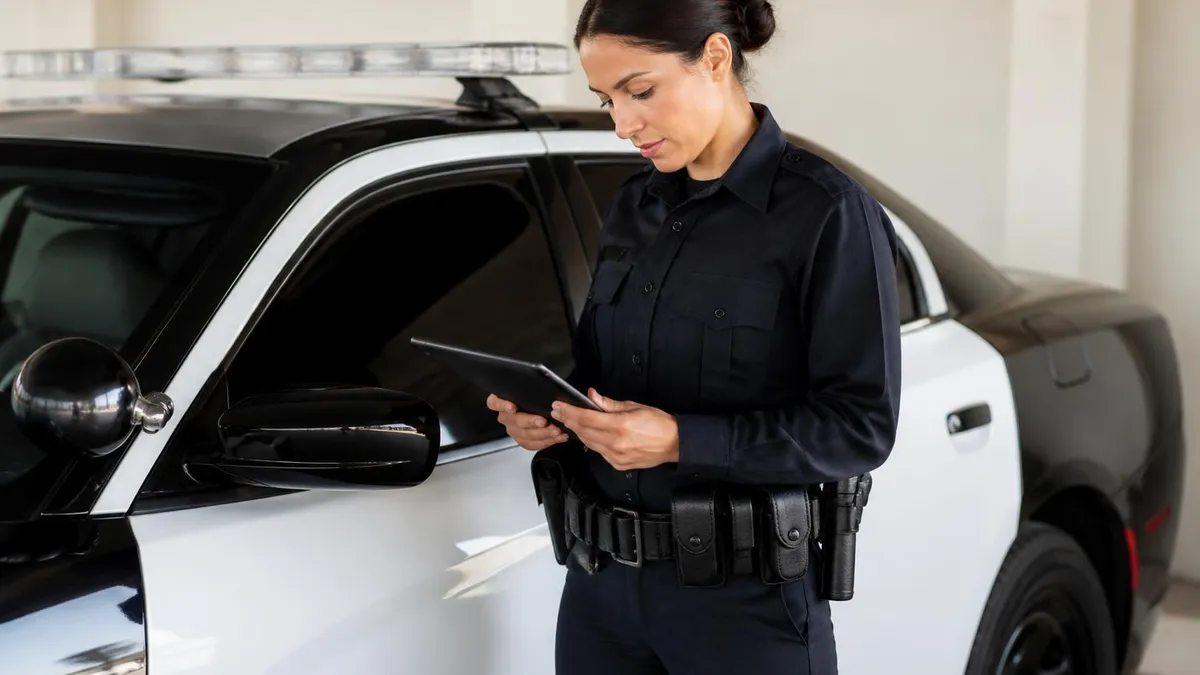
LAPD Police Report Online: How to File for Theft, Vandalism, Lost Property, and Hit-and-Run Incidents
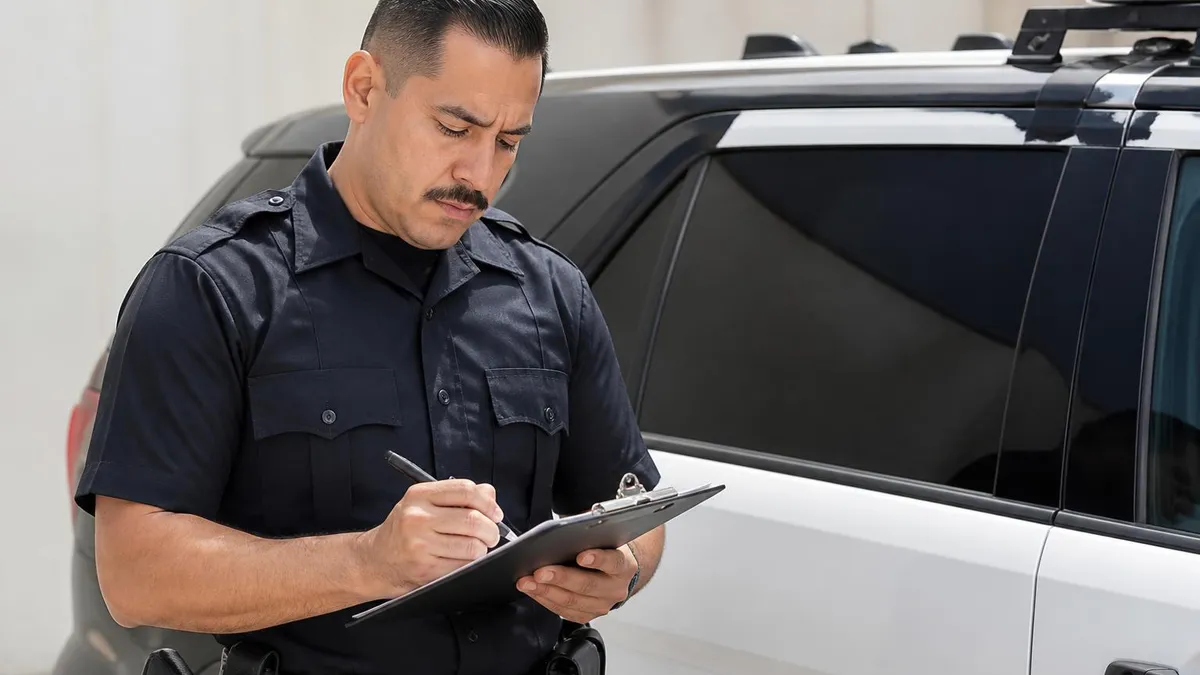
Join LAPD: Complete 2026 Guide to Becoming a Los Angeles Police Officer
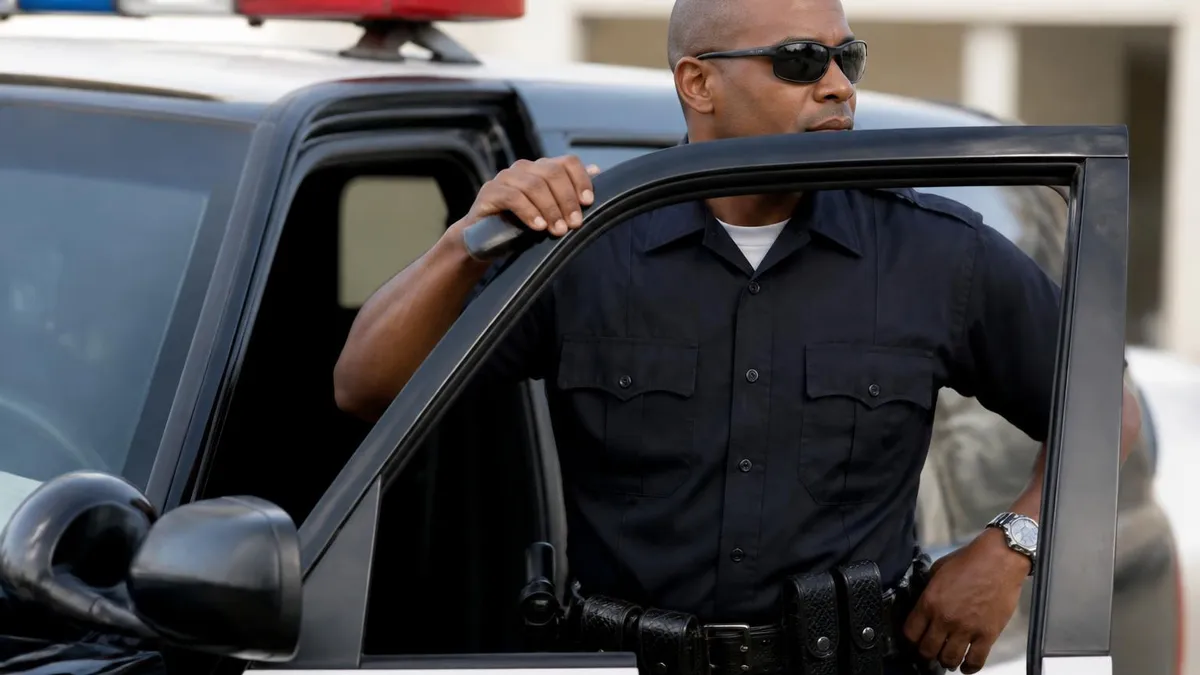
Los Angeles Police Department Divisions and Stations: Every Area Office Mapped
LAPD Practice Test Video Answers
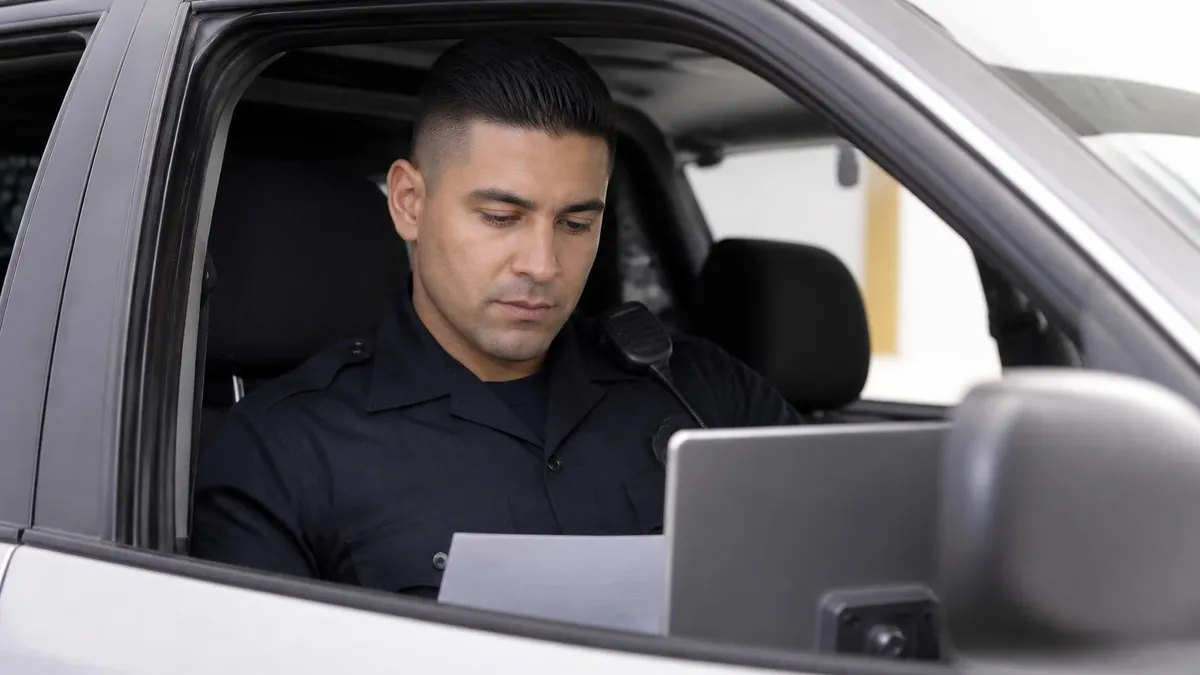
LAPD Scanner: How to Listen to Los Angeles Police Radio in 2026
Official Resources
- Join LAPD is the official Los Angeles Police Department recruitment site with hiring steps, academy details, and the EVOC driver training behind every patrol car.
- LAPD Online is the department's official website covering its divisions, operations, and the fleet of vehicles that serve Los Angeles.
- City of Los Angeles is the official municipal government portal that funds and oversees the LAPD and its vehicle fleet.
About the Author

Law Enforcement Trainer & Civil Service Exam Specialist
John Jay College of Criminal JusticeMarcus B. Thompson earned his Master of Arts in Criminal Justice from John Jay College of Criminal Justice and served 12 years as a law enforcement officer before transitioning to full-time academy instruction. He is a POST-certified instructor who has prepared candidates for police entrance exams, firefighter assessments, and civil service examinations across dozens of agencies.
Join the Discussion
Connect with other students preparing for this exam. Share tips, ask questions, and get advice from people who have been there.
View discussion (9 replies)