
What Is LAPD? A Complete Guide to the Los Angeles Police Department 2026 October
What is LAPD? Explore LAPD news, salary, SWAT, ranks, gear, headquarters & how to file an online report. ✅ Full guide for 2026 October.

What is LAPD? The Los Angeles Police Department is one of the largest, most scrutinized, and most storied law enforcement agencies in the United States. Founded in 1869, the LAPD serves a city of more than four million residents across approximately 503 square miles of dense urban terrain, from Hollywood Hills to South Central and from the Pacific coast to the eastern San Fernando Valley.
With roughly 9,000 sworn officers and thousands of civilian employees, the department operates one of the most complex policing infrastructures in the world, and lapd police report systems, patrol divisions, and specialized bureaus work around the clock to maintain public safety across 21 geographic divisions.
LAPD news regularly makes national headlines because the department operates at the intersection of progressive urban politics, intense civil rights oversight, and some of the country's most challenging crime dynamics. The department has undergone sweeping reforms since the Rampart scandal of the late 1990s and the subsequent federal consent decree that ran from 2001 to 2013. Today, the LAPD is governed by the Los Angeles Board of Police Commissioners, a five-member civilian oversight body appointed by the mayor, which adds a democratic accountability layer that shapes everything from use-of-force policies to department-wide training mandates and budget priorities.
LAPD salary is a major draw for law enforcement candidates across California and beyond. A probationary Police Officer I starts at around $64,000 per year, but that figure climbs steadily through the ranks. A Police Officer III with bonuses, overtime, and specialty pay can earn well over $100,000 annually, and supervisors at the Detective, Sergeant, Lieutenant, and Captain levels command even higher compensation packages.
The city of Los Angeles also offers a defined-benefit pension through the Los Angeles Fire and Police Pension system, making a long-term LAPD career one of the more financially secure paths in public service anywhere in the western United States.
LAPD SWAT — formally known as the Special Weapons and Tactics unit, which operates out of the Metro Division — is among the most elite tactical teams in American policing. Established in 1967 under the leadership of Daryl Gates, LAPD SWAT pioneered many of the protocols and tactics that have since been adopted by police departments across the country and around the world. The unit responds to hostage situations, barricaded suspects, high-risk warrant service, and terrorist incidents, and its members undergo hundreds of additional training hours each year beyond the baseline academy requirements that apply to all LAPD officers.
LAPD headquarters, officially known as Police Administration Building (PAB), is located at 100 West 1st Street in downtown Los Angeles. The 500,000-square-foot facility opened in 2009 and serves as the command center for the entire department, housing the Office of the Chief of Police, the Board of Police Commissioners meeting chambers, specialized investigative units, and administrative functions that support all 21 community-based patrol divisions. Citizens can visit PAB for certain services, though most day-to-day policing functions are handled at the divisional station level spread throughout the city's diverse neighborhoods.
LAPD gear reflects the operational demands of a major metropolitan police force. Standard-issue equipment includes the Glock 17 or Glock 19 sidearm, body armor, and Axon body cameras that record most officer-public interactions. Specialized units carry additional equipment ranging from less-lethal munitions and ballistic shields to armored rescue vehicles and surveillance technology. The LAPD has also deployed drone units, license plate readers, and predictive analytics tools as part of a broader technology modernization effort that has accelerated significantly since 2020, placing the department at the forefront of technology adoption among American law enforcement agencies.
LAPD ranks follow a clearly defined military-style hierarchy that governs authority, pay, and career advancement. The rank structure runs from Police Officer I (probationary) through Detective, Sergeant, Lieutenant, Captain, Commander, Deputy Chief, and ultimately Assistant Chief and Chief of Police. Each promotion requires a combination of time in grade, written examinations, performance evaluations, and, at senior levels, departmental interview panels. Understanding this hierarchy is essential for anyone considering an LAPD career, studying for a related exam, or simply trying to make sense of how decisions flow through one of America's largest urban police organizations.
LAPD by the Numbers

How the LAPD Is Organized
The Chief of Police commands the entire department, sets strategic priorities, interfaces with elected officials, and is accountable to the Board of Police Commissioners. The chief is appointed by the mayor with council confirmation and serves a five-year term.
The LAPD divides the city into four patrol bureaus — Central, South, West, and Valley — each commanded by a Deputy Chief and subdivided into divisions responsible for all patrol, investigative, and community policing functions in that area.
Beyond patrol, the LAPD runs specialized units including Homicide, Robbery-Homicide Division, Major Crimes, Metro Division (including SWAT), Gang and Narcotics, and the Forensic Science Division, each handling targeted investigative or tactical functions.
The Office of Operations oversees all patrol and detective functions citywide, ensuring consistency in policing standards, deployment strategies, and crime response protocols across all 21 community divisions and specialized units.
The five-member Board of Police Commissioners provides civilian oversight, reviewing use-of-force incidents, department policies, and the annual budget. The Inspector General independently audits LAPD practices to ensure compliance with legal and ethical standards.
LAPD salary and career advancement are structured through a formal rank system that rewards both tenure and merit. Entry-level officers begin as Police Officer I during their 18-month probationary period, earning a base salary that starts around $64,000 per year. After probation, officers advance to Police Officer II, and further promotion to Police Officer III — a senior officer classification that carries higher pay and increased leadership responsibility within the patrol setting. At each stage, officers are expected to demonstrate proficiency across a range of enforcement, community interaction, and report-writing tasks that form the foundation of LAPD service.
LAPD ranks above the line-officer level require competitive examinations and departmental review processes. Promotion to Detective is highly sought after and allows officers to move from uniformed patrol into investigative assignments covering everything from property crimes to major felonies. The Detective rank comes with a different pay scale and work schedule, typically involving case-based work rather than shift-based patrol coverage. Many LAPD detectives specialize in areas such as homicide, financial crimes, sexual assault, or juvenile affairs, developing deep expertise over the course of a career that can span two to three decades.
Sergeant is the first supervisory rank in the LAPD hierarchy and requires passing a written promotion examination followed by an oral evaluation. Sergeants directly supervise patrol officers, review arrests and reports, respond to critical incidents, and serve as watch commanders during shifts. A Sergeant II assignment carries additional administrative responsibility. Above Sergeant, the ranks of Lieutenant and Captain require further written exams, sustained performance records, and assessment exercises. Captains command individual patrol divisions and answer directly to bureau-level Deputy Chiefs, making them the operational hub of local policing in their geographic areas.
At the executive tier, Commanders and Deputy Chiefs manage bureaus, oversee major policy initiatives, and advise the Chief of Police on department-wide strategy. These positions are not reached through written examination alone; they require a sustained record of leadership, community engagement, and organizational performance that sets candidates apart over an entire career. The Assistant Chief — the second-highest rank in the department — typically serves as the day-to-day operational lead, freeing the Chief of Police to focus on external relationships, political engagement, and long-term strategic planning across the full scope of what the LAPD does.
For officers interested in specialized career paths, lapd raja jackson and the department's internal transfer system allow movement into units like SWAT, Air Support, Mounted Platoon, Dive Team, and K-9. Each specialty requires a separate application and selection process, and competition is intense because these assignments are prestigious and carry unique compensation and experience benefits. Officers in Metro Division's D Platoon, for example, must complete the full SWAT selection process, which includes physical fitness evaluations, firearms qualification, and scenario-based assessments spread over multiple testing days.
LAPD phonetic alphabet is a critical communication tool used across all radio and dispatch operations. The department uses a modified version of the standard law enforcement phonetic alphabet — Adam, Boy, Charles, David, Edward, Frank, George, Henry, Ida, John, King, Lincoln, Mary, Nora, Ocean, Paul, Queen, Robert, Sam, Tom, Union, Victor, William, X-ray, Young, Zebra — which is distinct from the NATO phonetic alphabet used by the military.
Recruits at the academy are expected to memorize and fluently use this phonetic system because accurate radio communication can be the difference between a coordinated response and a dangerous misunderstanding in the field.
LAPD careers attract candidates from across the country and internationally because of the combination of competitive compensation, pension security, and the professional prestige associated with serving one of the world's most recognized police departments. The application and hiring process is rigorous, encompassing a written examination, physical fitness test, medical and psychological evaluations, an extensive background investigation, and a polygraph examination.
The entire process can take six months to a year to complete, and candidates who invest time in preparation — particularly for the written and physical components — demonstrate substantially higher completion rates throughout the hiring pipeline than those who approach the process without systematic readiness planning.
LAPD SWAT, Gear & Specialized Operations
LAPD SWAT — formally D Platoon of the Metro Division — was the first police SWAT team in the United States, established in 1967 by then-Inspector Daryl Gates. The unit trained intensively before its first major deployment and has since responded to hundreds of high-risk incidents including the 1974 SLA shootout, the 1997 North Hollywood bank robbery, and numerous barricade and hostage situations each year. SWAT officers must already be experienced LAPD officers before applying for selection.
Selection for SWAT is among the most demanding processes in American law enforcement. Candidates undergo multi-day physical and tactical assessments, psychological screening, and rigorous firearms evaluations. Once selected, SWAT operators train several days per week in addition to their regular duty hours, covering vehicle assaults, explosive breaching, precision marksmanship, close-quarters combat, and joint operations with federal agencies including the FBI and ATF. The commitment is total — SWAT is not a part-time designation but a full-time specialized assignment.

Pros and Cons of Pursuing an LAPD Career
- +Competitive starting salary of approximately $64,000 with rapid pay increases through probation and promotion
- +Defined-benefit pension through the LA Fire and Police Pension system ensures retirement income security
- +Extensive training opportunities including specialty units, advanced tactics, and leadership development programs
- +National and international prestige as one of the world's most recognized law enforcement agencies
- +Diverse assignment options spanning patrol, detectives, SWAT, Air Support, Cyber, and community policing roles
- +Strong union representation through the Los Angeles Police Protective League, providing contract protections and legal defense resources
- −Highly competitive hiring process that can take six to twelve months from application to academy start
- −Rigorous background investigation that disqualifies candidates with certain financial, criminal, or conduct histories
- −High cost of living in Los Angeles means starting salary buys less than equivalent pay in other California regions
- −Intense public and media scrutiny that can affect officer morale and departmental decision-making
- −Heavy workload pressures, mandatory overtime, and shift work create significant work-life balance challenges
- −Significant physical fitness requirements at hiring that must be maintained throughout a full career in uniform
Pros and Cons at a Glance
| Pros | Cons |
|---|---|
| Defined-benefit pension through the LA Fire and Police Pension system ensures retirement income security | Highly competitive hiring process that can take six to twelve months from application to academy start |
| Extensive training opportunities including specialty units, advanced tactics, and leadership development programs | Rigorous background investigation that disqualifies candidates with certain financial, criminal, or conduct histories |
| National and international prestige as one of the world's most recognized law enforcement agencies | High cost of living in Los Angeles means starting salary buys less than equivalent pay in other California regions |
| Diverse assignment options spanning patrol, detectives, SWAT, Air Support, Cyber, and community policing roles | Intense public and media scrutiny that can affect officer morale and departmental decision-making |
| Strong union representation through the Los Angeles Police Protective League, providing contract protections and legal defense resources | Heavy workload pressures, mandatory overtime, and shift work create significant work-life balance challenges |
How to File an LAPD Online Report
- ✓Visit the official LAPD online reporting portal at lapdonline.org and select 'File a Police Report Online'
- ✓Confirm your incident qualifies — online reports are accepted for non-emergency crimes where no suspect is present and no injuries occurred
- ✓Select the appropriate crime category such as theft, vandalism, lost property, or vehicle burglary from the dropdown menu
- ✓Enter the exact date, time, and location where the crime occurred as precisely as possible
- ✓Provide a detailed description of the incident, including property taken, damage done, and any witness information you have
- ✓Upload supporting documents or photos if available, such as receipts for stolen items or images of vandalism damage
- ✓Enter your personal contact information so the assigned officer or detective can follow up if needed
- ✓Review all entries for accuracy before submitting — errors can complicate case assignment and follow-up
- ✓Submit the report and save or print the confirmation number provided for insurance or future reference
- ✓Contact the reporting division directly if you do not receive a case number within 24-48 hours of submitting
LAPD Online Report vs. Emergency Call — Know the Difference
An LAPD online report is appropriate only for non-emergency, property-based crimes where the suspect is no longer present. If you witness a crime in progress, observe a suspect nearby, or require immediate assistance, always call 911. Filing a report online for an active emergency wastes critical response time and can jeopardize your safety and the safety of others.
LAPD news in recent years has been shaped by a combination of national policing reform conversations, budget debates, and high-profile incidents that have drawn intense public attention. Following the 2020 social justice protests triggered by the death of George Floyd in Minneapolis, the Los Angeles City Council voted to reduce the LAPD budget by approximately $150 million and redirect those funds toward community programs and social services.
The move sparked intense debate about how best to address crime and community needs in a city as diverse and complex as Los Angeles, and the LAPD has since operated under heightened scrutiny over staffing levels, response times, and officer conduct.
LAPD chief is a position that carries enormous influence over the culture, priorities, and public image of the entire department. In 2021, Michel Moore was serving as Chief of Police, having been appointed in 2018 under Mayor Eric Garcetti. Chief Moore navigated the department through the COVID-19 pandemic, the 2020 protests, and ongoing debates about police reform, de-escalation training, and use-of-force policy. The chief of police sets the tone for how the department approaches community relations, internal discipline, and the allocation of specialized resources like SWAT and investigative divisions.
LAPD swatting — the dangerous practice of making false emergency calls to send SWAT teams to an innocent person's location — is a serious crime that the LAPD investigates aggressively. Perpetrators who engage in lapd swatting can face federal charges, state criminal prosecution, and civil liability if the false call results in injury or death. The LAPD works closely with the FBI's cyber division and prosecutors to identify and prosecute swatting perpetrators, who often operate anonymously using spoofed phone numbers or internet-based calling services that attempt to obscure their true location and identity.
The department's relationship with the communities it serves has been a central theme throughout its history. From the Watts Rebellion of 1965 to the 1992 Los Angeles uprising following the acquittal of officers in the Rodney King beating, the LAPD has repeatedly been at the center of major social upheavals that reshaped public expectations about policing. In response to each crisis, the department has implemented reform measures — some more durable than others — that have cumulatively shifted how officers are trained, supervised, and held accountable for their conduct in the field.
Community policing programs represent one of the LAPD's most sustained efforts to build trust outside of enforcement-driven interactions. Senior Lead Officers (SLOs) are assigned to specific neighborhoods with a mandate to build long-term relationships with residents, businesses, schools, and community organizations. Each of the department's 21 divisions has a dedicated SLO program, and these officers often serve as the primary point of contact for neighborhood councils, homeowner associations, and community groups who want to engage with the LAPD outside the context of a crime report or emergency call.
Technology has become an increasingly central part of how the LAPD gathers intelligence, investigates crime, and deploys resources. The department's Real-Time Analysis and Critical Response (RACR) Division operates a sophisticated fusion center that integrates data from hundreds of networked cameras, license plate readers, shot-detection sensors, and analytical software platforms. The use of these technologies has been controversial, with civil liberties advocates raising concerns about surveillance overreach and data retention, while department leadership argues that technology-assisted policing allows officers to respond faster and solve more crimes with fewer resources than traditional patrol saturation strategies.
LAPD headquarters at 100 West 1st Street in downtown Los Angeles is more than just an administrative building. PAB serves as the visible symbol of the department's institutional authority and is the site where major policy announcements, press conferences following high-profile incidents, and Board of Police Commissioners meetings take place.
The building's design was intended to signal transparency and accessibility — it replaced the old Parker Center facility, which had become associated with the scandals and controversies of earlier eras. For candidates pursuing LAPD careers, understanding how headquarters relates to the divisional structure helps clarify the chain of command they will operate within throughout their careers.

Certain factors can automatically disqualify LAPD applicants, including recent felony convictions, domestic violence misdemeanor convictions, documented gang affiliations, or dishonesty during the background investigation or polygraph. Drug use history is evaluated on a case-by-case basis, but recent or heavy use of controlled substances is typically disqualifying. Candidates with concerns about their background should review LAPD's published disqualifier list before investing time in the multi-month application process.
Preparing for an LAPD career requires a systematic approach that addresses every phase of the multi-step hiring process. The written examination tests reading comprehension, writing ability, logical reasoning, and deductive thinking skills — areas that candidates can improve substantially through targeted practice with real exam-style questions. The physical fitness test requires candidates to demonstrate performance across push-ups, sit-ups, a 1.5-mile run, and other events measured against age- and gender-adjusted standards, which means preparation timelines should be calibrated to each individual's starting fitness level rather than a generic target date.
The background investigation is perhaps the most misunderstood phase of the LAPD hiring process. Investigators will contact former employers, neighbors, friends, family members, and academic institutions to build a comprehensive picture of the candidate's character, honesty, and reliability. Candidates are expected to be fully transparent about any past mistakes, legal issues, or conduct concerns. Attempting to conceal information is almost always discovered and is treated as an automatic disqualifier because it demonstrates dishonesty — a trait fundamentally incompatible with the duties of a sworn peace officer who will be expected to testify truthfully in court proceedings throughout their career.
The psychological evaluation assesses candidates for traits that predict success in law enforcement — including stress tolerance, impulse control, integrity, and cooperative decision-making — as well as traits that predict problematic behavior such as excessive use of force or rule violations. Candidates are typically evaluated by a licensed clinical psychologist contracted by the city, and the evaluation includes both standardized psychological testing instruments and a structured clinical interview. Preparation for this phase is less about studying specific answers and more about understanding your own history and being able to articulate your motivations, stressors, and values clearly and honestly.
The medical examination ensures candidates are physically capable of performing the essential functions of a police officer, which include running, jumping, lifting, and sustaining physical activity under stress for extended periods. Vision, hearing, cardiovascular fitness, and orthopedic integrity are all assessed. Some conditions are automatically disqualifying under California Peace Officer Standards and Training (POST) guidelines, while others may require a waiver or additional medical documentation. Candidates with known medical conditions should research POST medical standards early to avoid investing significant time in a process they may not be eligible to complete.
LAPD lapd careers in specialized divisions require additional selection processes beyond the standard hiring pipeline. The Metro Division, which houses SWAT, K-9, and the Mounted Platoon, is one of the most competitive assignment destinations in the department. Officers typically need a minimum of two to three years of patrol experience before applying for Metro, and selection involves physical fitness benchmarks that significantly exceed standard academy requirements. The competitive nature of these assignments means that officers who are serious about a specialized career path should begin conditioning for those specific requirements well before they become eligible to apply.
The academy itself is an 18-week intensive training program that covers criminal law, arrest and control techniques, firearms proficiency, defensive driving, first aid, report writing, and community policing principles. The physical demands of the academy are sustained throughout the full program — recruits are expected to meet fitness standards not just at entry but consistently across the entire training period.
Academic performance is also evaluated, and recruits who struggle with written testing components may be counseled out or recycled to an earlier class. The overall attrition rate across the LAPD hiring funnel — from initial application to academy graduation — is substantial, which is why targeted preparation at every stage is so important for candidates who are serious about making the department their career.
The oral evaluation and chief's interview phases reward candidates who can communicate clearly, demonstrate self-awareness, and articulate a genuine commitment to public service. Interviewers look for logical reasoning, composure under pressure, and the ability to discuss difficult personal history without becoming defensive. Candidates who approach these interviews with rehearsed scripts rather than authentic reflection often underperform relative to their written test scores. Practice interviews with a trusted mentor, former law enforcement officer, or career counselor can make a measurable difference in how confidently and clearly a candidate presents themselves in these high-stakes conversational settings.
Practical preparation for the LAPD hiring process starts long before a candidate submits an application. Physical training should begin at least six months in advance, with a structured program that addresses the specific demands of the entry-level fitness test — push-ups, sit-ups, and the 1.5-mile run — while also building the overall aerobic base and muscular endurance that will carry recruits through the physically demanding 18-week academy.
Many candidates find it helpful to track their weekly training data and benchmark against published LAPD physical fitness standards to ensure they are on pace to comfortably exceed — not just barely meet — the minimum cutoff scores.
Written exam preparation is most effective when it mirrors the format and content of the actual test. The LAPD entry-level written examination includes reading comprehension passages drawn from law enforcement contexts, grammar and writing mechanics questions, and logical reasoning problems that require candidates to draw valid inferences from sets of facts.
Practice tests that replicate this format help candidates develop both content knowledge and test-taking stamina, particularly the ability to maintain focus and accuracy across a full-length testing session without fatiguing. Candidates who score in the higher percentile ranges on the written exam are advanced more quickly through subsequent evaluation stages.
Time management during the hiring process is an often-overlooked dimension of preparation. Because the LAPD process spans many months and involves multiple sequential phases — each of which can have scheduling delays or wait periods — candidates who apply to multiple agencies simultaneously maximize their options without jeopardizing their LAPD candidacy. It is entirely acceptable to be in process with multiple California law enforcement agencies at once, and doing so actually demonstrates initiative and serious commitment to a law enforcement career rather than raising any conflict-of-interest concerns with LAPD recruiters.
Networking with current and former LAPD officers can provide invaluable insight into the hiring process and day-to-day realities of the job. Many LAPD divisions hold community outreach events, ride-along programs, and recruiting open houses that give prospective candidates direct access to officers willing to share their experiences. Ride-along programs in particular are strongly recommended — they provide a realistic preview of patrol work that helps candidates confirm their commitment before investing months in the application process, and the experience demonstrates genuine interest that can be referenced during oral evaluation interviews.
Financial preparation is another practical dimension that many candidates overlook. The period from initial application to first paycheck as a probationary officer can span twelve months or more, during which candidates may need to reduce work hours to attend testing appointments, complete a polygraph, or participate in the background investigation process. Building a financial buffer before beginning the application process — ideally three to six months of living expenses — removes a significant source of stress and allows candidates to focus their energy on preparation rather than financial pressure during what is already a demanding period.
Mental preparation is equally important and often receives less attention than physical or academic readiness. The LAPD hiring process is designed to be rigorous and, at times, deliberately stressful, because policing itself is a high-stress occupation that requires clear thinking and sound decision-making under adverse conditions. Candidates who develop strong stress management practices — whether through exercise, meditation, journaling, or structured reflection — are better positioned to perform well across all phases of the process and to sustain the mental resilience required for a long and successful career in law enforcement.
Ultimately, the question of what is LAPD can be answered at multiple levels. At its most basic, it is a municipal law enforcement agency responsible for policing the city of Los Angeles. At a deeper level, the LAPD is an institution with a complex history, a demanding professional culture, and a mission that touches the lives of millions of people every day.
For candidates who pursue a career with the department, it represents a professional path defined by public service, continuous learning, physical challenge, and the opportunity to make a tangible difference in one of the most dynamic cities in the world. The work is demanding, the standards are high, and the impact — when the mission is executed with integrity — is genuinely meaningful.
LAPD Questions and Answers

LAPD Organizational Chart: Command Structure, Ranks, Bureaus, and How the Department Works

Los Angeles Police Department Rank Structure: Insignia & Promotion Path

LAPD Hiring: Complete Guide to Requirements, Process, Salary, and Career Path
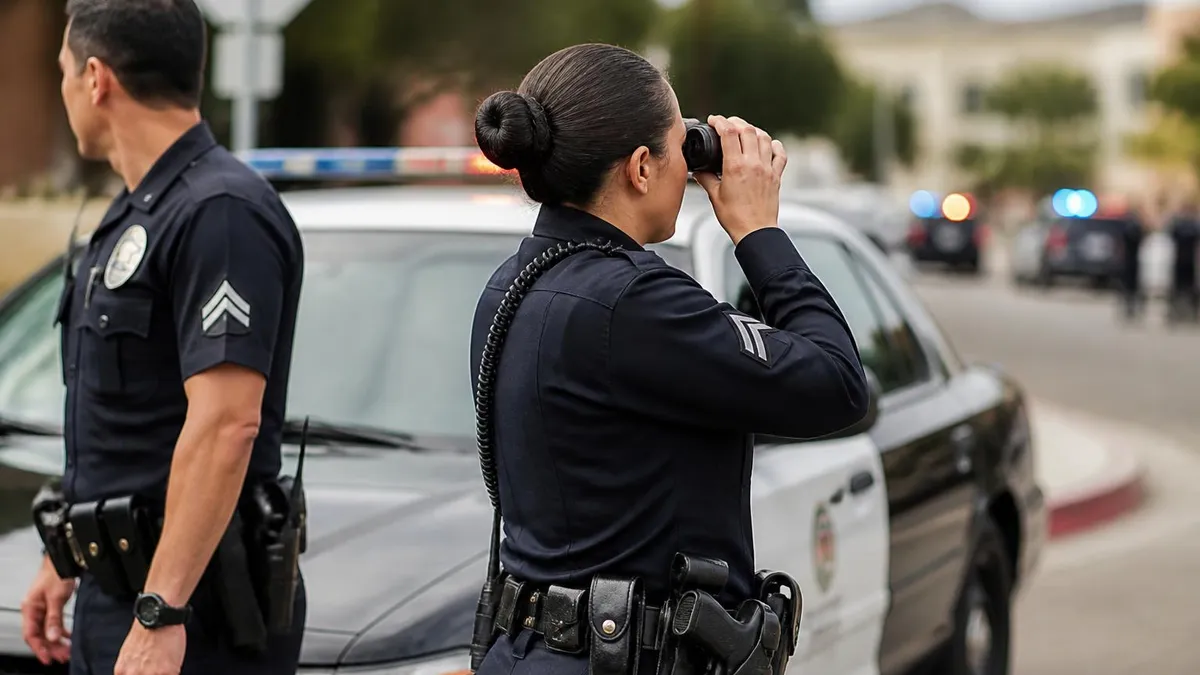
LAPD Metro Division: Inside LA's Elite Tactical Unit — SWAT, Gear, Ranks, and What You Need to Know

LAPD Credit Union: Complete Guide for Officers on Salary, Benefits, and Financial Services
About the Author

Law Enforcement Trainer & Civil Service Exam Specialist
John Jay College of Criminal JusticeMarcus B. Thompson earned his Master of Arts in Criminal Justice from John Jay College of Criminal Justice and served 12 years as a law enforcement officer before transitioning to full-time academy instruction. He is a POST-certified instructor who has prepared candidates for police entrance exams, firefighter assessments, and civil service examinations across dozens of agencies.
Join the Discussion
Connect with other students preparing for this exam. Share tips, ask questions, and get advice from people who have been there.
View discussion (9 replies)