
ITLS Test Video Answers 2026
Pass your ITLS exam on the first attempt. Practice questions with detailed answer explanations, hints, and instant scoring.
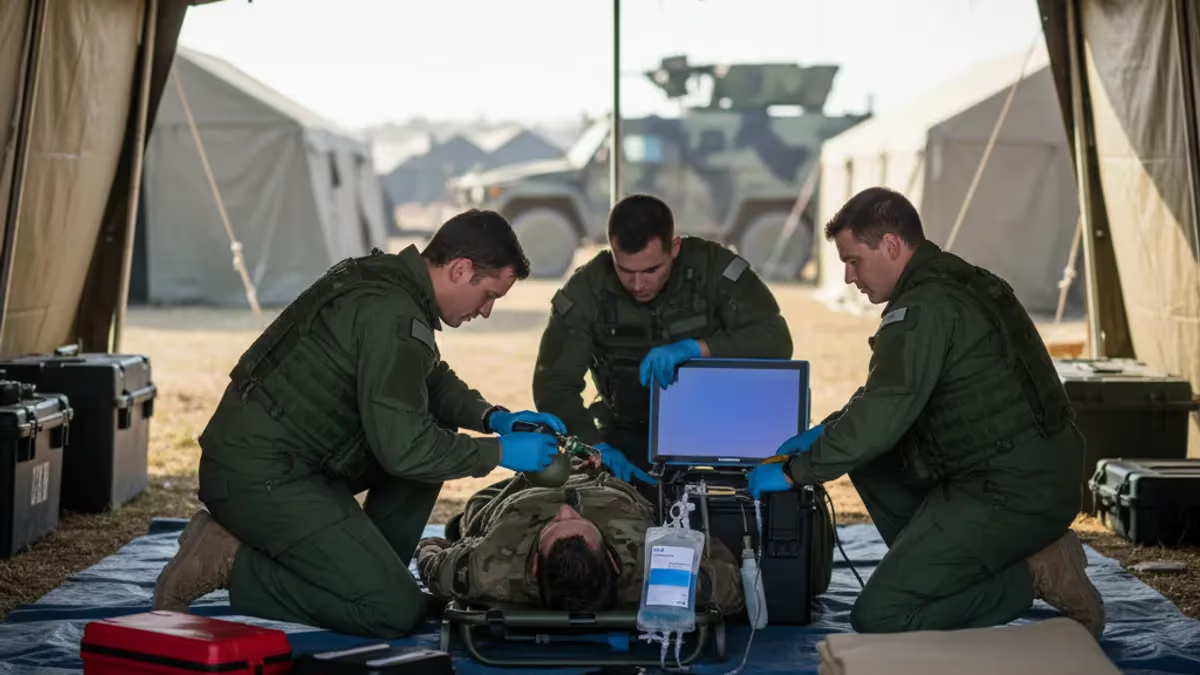
ITLS Test Video Answers
- D
- C
- A
- D
- D
- C
- D
- D
- A
- D
- C
- D
- A
- A
- B
- D
- D
- A
- C
- B
Free ITLS - International Trauma Life Support Study Tools
Interactive ITLS - International Trauma Life Support resources on PracticeTestGeeks, free to start:
- Free ITLS Adult Basic Questions and Answers 1 — 11 questions with instant scoring and answer explanations
- ITLS - International Trauma Life Support flashcards — review key terms and concepts card by card
- ITLS - International Trauma Life Support study guide — topic-by-topic overview of what the exam covers
- ITLS - International Trauma Life Support cheat sheet — one-page printable summary for last-minute review
- The ITLS Provider course written exam consists of 50 questions. (International Trauma Life Support)
- The ITLS written exam allows a maximum of 1 hour. (International Trauma Life Support)
- The ITLS Provider written exam requires a grade of at least 74% to pass, and a chapter or training centre may set a higher score. (International Trauma Life Support)
- ITLS students may not retest to raise a passing grade, a retest is scheduled within 6 weeks, and students who fail both the written and patient assessment tests must repeat the course. (International Trauma Life Support)
- Most ITLS Provider cards are issued for a 3-year certification period. (International Trauma Life Support)
- ITLS Provider recertification students must also take the ITLS written exam as part of the course. (International Trauma Life Support)
- The ITLS Provider course is hands-on and ends with a written exam and a practical patient assessment exam. (International Trauma Life Support)
- The ITLS Basic Provider course is for EMS personnel who cannot perform advanced procedures. (International Trauma Life Support)
Facts verified Oct 20, 2026 against International Trauma Life Support. Dates that have passed are removed automatically.
ITLS Exam at a Glance
| Item | Detail | Official source |
|---|---|---|
| Number of questions | 50 questions | International Trauma Life Support |
| Time limit | 1 hour | International Trauma Life Support |
| Passing score | 74% minimum on the written exam | International Trauma Life Support |
| Retake policy | No retest to raise a grade; a failed patient assessment test is retested within 6 weeks | International Trauma Life Support |
| Validity | Usually 3 years | International Trauma Life Support |
| Renewal | Recertification course including the written exam | International Trauma Life Support |
| Delivery | Hands-on course with written and practical exams | International Trauma Life Support |
| Eligibility (Basic Provider) | EMS personnel who cannot perform advanced procedures | International Trauma Life Support |
Facts verified Oct 20, 2026 against International Trauma Life Support. Dates that have passed are removed automatically.
Pro Tip: Focus your ITLS study time on the areas where you score lowest in practice tests. Most exam questions test application of knowledge, not memorization.
- ✓Review the official ITLS exam content outline
- ✓Take a diagnostic practice test to identify weak areas
- ✓Create a study schedule (4-8 weeks recommended)
- ✓Focus on your weakest domains first
- ✓Complete at least 3 full-length practice exams
- ✓Review all incorrect answers with explanations
- ✓Take a final practice test 1 week before exam day

ITLS Practice Test Questions
Prepare for the ITLS - International Trauma Life Support exam with our free practice test modules. Each quiz covers key topics to help you pass on your first try.
ITLS Adult Advanced
ITLS Exam Questions covering Adult Advanced. Master ITLS Test concepts for certification prep.
ITLS Adult Basic
Free ITLS Practice Test featuring Adult Basic. Improve your ITLS Exam score with mock test prep.
ITLS - International Trauma Life Support A...
ITLS Test Online for - International Trauma Life Support Airway Management and Ventilation. Free practice with instant results and feedback.
ITLS - International Trauma Life Support B...
ITLS Study Material on - International Trauma Life Support Burns and Environmental Trauma. Prepare effectively with real exam-style questions.
ITLS - International Trauma Life Support E...
Free ITLS Test covering - International Trauma Life Support Extremity Trauma Management. Practice and track your ITLS exam readiness.
ITLS - International Trauma Life Support G...
ITLS Exam Questions covering - International Trauma Life Support Geriatric Trauma Considerations. Master ITLS Test concepts for certification prep.
ITLS - International Trauma Life Support H...
Free ITLS Practice Test featuring - International Trauma Life Support Head and Spinal Trauma. Improve your ITLS Exam score with mock test prep.
ITLS - International Trauma Life Support H...
ITLS Mock Exam on - International Trauma Life Support Hemorrhage Control and Shock. ITLS Study Guide questions to pass on your first try.
ITLS - International Trauma Life Support P...
ITLS Test Prep for - International Trauma Life Support Patient Assessment and Management. Practice ITLS Quiz questions and boost your score.
ITLS - International Trauma Life Support P...
ITLS Questions and Answers on - International Trauma Life Support Pediatric Trauma Considerations. Free ITLS practice for exam readiness.
- +Industry-recognized credential boosts your resume
- +Higher earning potential (10-20% salary increase on average)
- +Demonstrates commitment to professional development
- +Opens doors to advanced career opportunities
- −Exam preparation requires significant time investment (4-8 weeks)
- −Certification fees can be $100-$400+
- −May require continuing education to maintain
- −Some employers may not require certification
Sample ITLS - International Trauma Life Support Practice Questions
Try these questions from our free ITLS - International Trauma Life Support practice tests. The correct answer and an explanation follow each question.
At what gestational age does ITLS recommend performing a perimortem cesarean section in a pregnant patient in cardiac arrest, and what is the goal?
- A. Only at full term (40 weeks)
- B. At approximately 23-24 weeks viable gestation, ideally within 4-5 minutes of arrest, to both save the fetus and improve maternal resuscitation by relieving aortocaval compression
- C. Only after 30 minutes of unsuccessful CPR
- D. Perimortem cesarean section is never performed prehospitally
Answer: B. At approximately 23-24 weeks viable gestation, ideally within 4-5 minutes of arrest, to both save the fetus and improve maternal resuscitation by relieving aortocaval compression
Perimortem cesarean section is recommended at ≥23-24 weeks gestational age, with delivery within 4-5 minutes of cardiac arrest. The dual purpose is fetal survival and improvement of maternal hemodynamics by relieving aortocaval compression.
During an ITLS Basic primary survey, you find a patient responsive only to painful stimuli. What is the most appropriate airway maneuver for this patient with a suspected cervical spine injury?
- A. Head-tilt chin-lift
- B. Jaw thrust without head extension
- C. Nasopharyngeal airway insertion only
- D. Immediate oral intubation
Answer: B. Jaw thrust without head extension
The jaw thrust without head extension is the preferred airway maneuver for trauma patients with suspected cervical spine injury, as it opens the airway without moving the neck.
A patient presents with a circumferential full-thickness burn to the right lower leg. Several hours later, the foot becomes pale, cool, and pulseless. What complication has developed?
- A. Deep vein thrombosis
- B. Compartment syndrome from burn eschar
- C. Arterial embolism
- D. Peripheral neuropathy from the burn
Answer: B. Compartment syndrome from burn eschar
Circumferential full-thickness burns create a rigid, non-elastic eschar that acts like a tourniquet as underlying tissue swells, causing compartment syndrome with vascular compromise.
The Pediatric Assessment Triangle (PAT) is a rapid assessment tool used to form a general impression of a sick child. Which of the following are the three components of the PAT?
- A. Airway, Breathing, Circulation
- B. Appearance, Work of Breathing, Circulation to Skin
- C. Level of Consciousness, Motor Response, Pupil Reaction
- D. Heart Rate, Respiratory Rate, Blood Pressure
Answer: B. Appearance, Work of Breathing, Circulation to Skin
The Pediatric Assessment Triangle (PAT) consists of three key observational components: Appearance (evaluating tone, interactiveness, consolability, look/gaze, and speech/cry), Work of Breathing (assessing for abnormal sounds, positioning, and retractions), and Circulation to Skin (checking for pallor, mottling, or cyanosis). This tool allows for a rapid 'from the doorway' evaluation without touching the patient.
Take the full ITLS - International Trauma Life Support practice test
How this page was made: written with AI tools and published by Nathan Beja, founder of Practice Test Geeks, who is responsible for its content. Exam facts are checked against the official sources listed below. Not reviewed by a subject-matter expert. Editorial policy
Sources & references
Exam facts on this page (fees, format, dates, passing scores) are checked against these official sources; the date is our last check. Editorial policy
- itrauma.org — Renewal, score validity, eligibility, test delivery, exam format, retake policy, passing score, time limit · verified Oct 2026