SEO for HVAC: The Complete Guide to Ranking Your Heating and Cooling Business Online
SEO for HVAC explained: keyword research, local search, Google Business Profile, on-page tactics, and content that brings heating and cooling leads 🆕
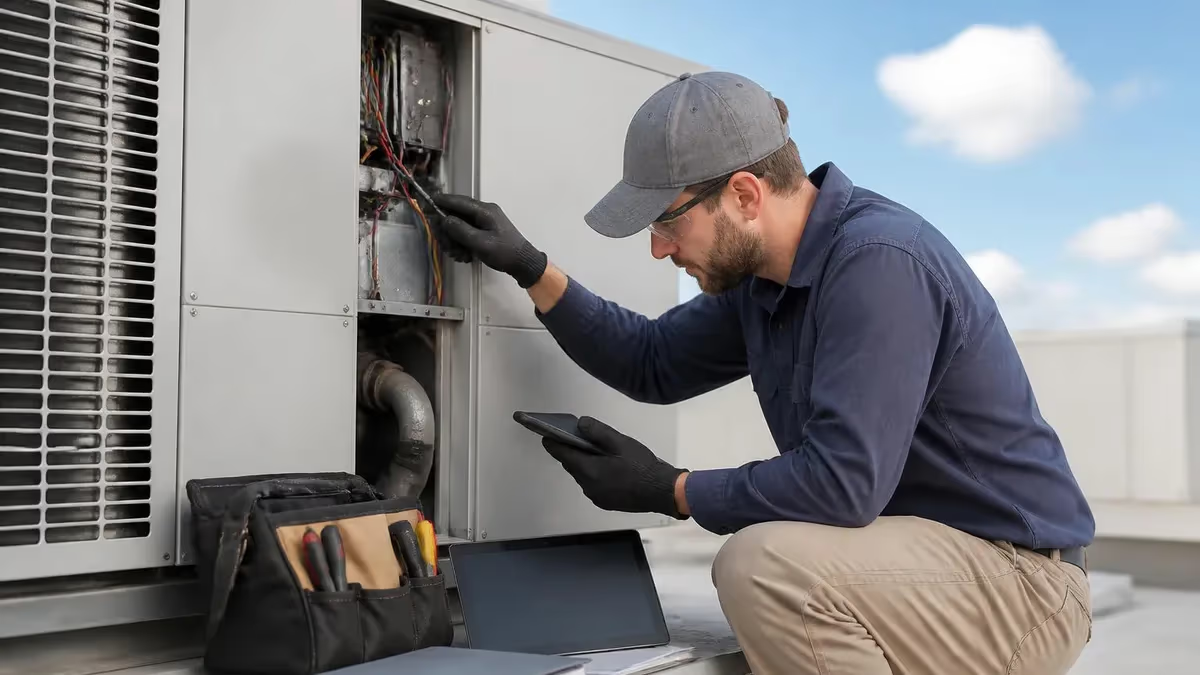
SEO for HVAC is the practice of improving where your heating and cooling business appears in search results when homeowners type phrases like "AC repair near me" or "furnace installation" into Google. Unlike paid advertising that stops the moment your budget runs dry, search engine optimization builds a durable pipeline of organic leads that compounds month after month. For contractors competing in crowded suburban markets, ranking on page one is no longer optional. It is the difference between a packed schedule and a phone that never rings during peak season.
The HVAC industry is uniquely local. When a customer's air conditioner dies in July, they are not browsing national brands. They want a licensed technician who can be at their door within hours, ideally one with strong reviews and a recognizable name in the community. That urgency makes local search the single most valuable channel an HVAC company can master. Most emergency service calls begin with a quick mobile search, and the businesses that surface in the map pack capture the lion's share of those high-intent clicks.
What makes HVAC solutions marketing different from generic small-business SEO is the seasonality, the geographic targeting, and the trust factor. Customers are inviting a stranger into their home and spending thousands of dollars on equipment. Your online presence must signal credibility, licensing, insurance, and genuine expertise before they ever pick up the phone. SEO is how you earn that first impression at the exact moment someone needs you most.
This guide walks through every layer of an effective HVAC search strategy, from keyword research and on-page optimization to Google Business Profile management, content creation, technical health, and link building. Whether you run a one-truck operation or a multi-location franchise, the fundamentals remain the same. You attract the right traffic, convert it into booked appointments, and measure what works so you can do more of it.
It helps to think of SEO as three interlocking systems working together. The first is your website, which must load fast, read well on phones, and clearly communicate the services you offer in each area you serve. The second is your local presence, anchored by your Google Business Profile and citations across the web. The third is your reputation, expressed through reviews, content, and the backlinks other reputable sites send your way. Neglect any one and the whole structure wobbles.
Throughout this article we will use concrete examples and real numbers so you can apply each tactic immediately. You will learn why a furnace company in Minneapolis needs different keywords than an AC specialist in Phoenix, how to structure service pages that actually convert, and what mistakes silently sink otherwise solid websites. By the end you will have a clear, prioritized roadmap you can hand to a marketing team or execute yourself one weekend at a time.
The payoff is substantial. Contractors who commit to a consistent SEO program routinely report cutting their cost per lead in half compared to pay-per-click while doubling their organic call volume within a year. The work is not glamorous and the results are not instant, but the businesses willing to invest early build a moat competitors struggle to cross. Let us start by understanding the landscape you are competing in.
HVAC Search Marketing by the Numbers
The Core Building Blocks of HVAC SEO
A fast, mobile-friendly, crawlable website with clean URLs, HTTPS security, and proper indexing. Search engines must be able to access and understand every page before any ranking is possible.
An optimized Google Business Profile, consistent NAP citations across directories, and location-specific pages. This is where most HVAC leads originate, especially urgent emergency service calls.
Service pages, blog posts, and FAQs built around the exact phrases customers search. Content demonstrates expertise, answers questions, and gives Google reasons to rank you for relevant terms.
Reviews, backlinks from reputable local sites, and brand mentions that tell search engines your business is trustworthy. Authority is the tiebreaker between two otherwise equal competitors.
Keyword research is the compass of any HVAC SEO campaign. Before you write a single page, you need to know exactly what your prospective customers type into search engines and how often. HVAC keywords fall into a few predictable buckets: service terms like "furnace repair" and "AC installation," emergency terms like "24 hour HVAC near me," equipment terms like "heat pump cost," and informational terms like "why is my AC blowing warm air." Each bucket serves a different stage of the customer journey and deserves its own treatment.
Start with seed keywords describing your core services, then expand them using free tools like Google Keyword Planner, Google autocomplete, and the "People Also Ask" boxes. A contractor offering HVAC replacement services might discover dozens of long-tail variations such as "how much to replace a 3 ton AC unit" or "signs you need a new furnace." These longer phrases carry less competition and often higher purchase intent, making them ideal targets for a growing business that cannot yet outrank national aggregators on broad terms.
Geography is the multiplier that turns generic keywords into HVAC gold. The phrase "air conditioner repair" is nearly impossible to rank for nationally, but "air conditioner repair in Plano TX" is achievable for a local shop. Build a keyword map that pairs every service you offer with every city, neighborhood, and zip code you serve. This city-times-service matrix becomes the blueprint for your site architecture, with a dedicated, unique page for each meaningful combination rather than a single thin page trying to rank everywhere.
Search intent matters as much as search volume. A homeowner typing "emergency AC repair" is ready to buy right now, while someone searching "how does a heat pump work" is researching. Both have value, but you optimize them differently. Transactional pages should feature phone numbers, booking forms, service areas, and trust signals above the fold. Informational content should educate thoroughly, build authority, and gently guide readers toward booking when they are ready to act.
Pay attention to seasonality when planning content. Furnace and heating searches spike in October and November as the first cold snaps hit, while air conditioning queries surge from May through August. A smart HVAC marketer publishes heating content in late summer so it has time to rank before demand peaks, then refreshes cooling pages each spring. Google rewards content that is timely and updated, so a quarterly review of your top pages keeps them competitive year after year.
Do not ignore competitor research. Plug the domains of the three HVAC companies currently ranking above you into a tool like Ahrefs or the free Google Search Console alternatives, and study which keywords drive their traffic. You will often uncover lucrative terms you never considered, plus content gaps where their coverage is thin. Filling those gaps with better, more thorough pages is one of the fastest ways to leapfrog established competitors who have grown complacent.
Finally, organize everything into a prioritized spreadsheet ranked by a blend of search volume, competition, and commercial intent. Tackle the high-intent, low-competition keywords first because they deliver leads fastest, then work toward the more competitive head terms as your domain authority grows. This disciplined approach prevents the common mistake of chasing vanity keywords that bring traffic but few actual booked jobs, and it keeps your limited time focused on the phrases that pay the bills.
HVAC Practice Test Questions
Prepare for the HVAC - Heating Ventilation and Air Conditioning exam with our free practice test modules. Each quiz covers key topics to help you pass on your first try.
HVAC Air Conditioning
HVAC Exam Questions covering Air Conditioning. Master HVAC Test concepts for certification prep.
HVAC Code Compliance
Free HVAC Practice Test featuring Code Compliance. Improve your HVAC Exam score with mock test prep.
HVAC Electrical Controls
HVAC Test Prep for Electrical Controls. Practice HVAC Quiz questions and boost your score.
HVAC Energy Efficiency
HVAC Questions and Answers on Energy Efficiency. Free HVAC practice for exam readiness.
HVAC Heating Systems
HVAC Mock Test covering Heating Systems. Online HVAC Test practice with instant feedback.
HVAC Load Calculations
Free HVAC Quiz on HVAC Load Calculations. HVAC Exam prep questions with detailed explanations.
HVAC Tools and Equipment
HVAC Practice Questions for HVAC Tools and Equipment. Build confidence for your HVAC certification exam.
HVAC Refrigeration
HVAC Test Online for Refrigeration. Free practice with instant results and feedback.
HVAC Safety Practices
HVAC Study Material on Safety Practices. Prepare effectively with real exam-style questions.
HVAC System Design
Free HVAC Test covering System Design. Practice and track your HVAC exam readiness.
HVAC Thermodynamics
HVAC Exam Questions covering Thermodynamics. Master HVAC Test concepts for certification prep.
Local Search and the Map Pack for HVAC
Your Google Business Profile is the single most powerful local SEO asset an HVAC company owns. Claim and verify it, then complete every field: business name, primary and secondary categories, service area, hours, phone, website, and a keyword-rich description. Add real photos of your trucks, technicians, and completed jobs to build trust and signal an active, legitimate operation to both Google and prospective customers.
Choose "HVAC contractor" as your primary category and add relevant secondary categories like "air conditioning repair service" and "furnace repair service." Post weekly updates about promotions, seasonal tips, or recent projects. These posts keep your profile fresh, which Google's local algorithm rewards. A fully optimized, actively managed profile routinely outranks neglected competitors even when those competitors have stronger websites.

DIY HVAC SEO vs. Hiring an Agency
- +Full control over strategy and budget allocation
- +Deep knowledge of your own services and service areas
- +No ongoing agency retainer eating into margins
- +Faster decisions without waiting on a third party
- +Direct insight into which leads actually convert
- +Skills you build stay with your business permanently
- −Steep learning curve takes time away from running jobs
- −Easy to make technical mistakes that hurt rankings
- −Tools and software subscriptions add up quickly
- −Results come slower without expert efficiency
- −Hard to stay current with algorithm changes
- −Content creation at scale is genuinely demanding work
On-Page SEO Checklist for HVAC Service Pages
- ✓Place the primary keyword in the title tag, H1, and first 100 words.
- ✓Write a compelling meta description under 160 characters with a call to action.
- ✓Create one unique page per core service rather than bundling them all together.
- ✓Add city and neighborhood names naturally throughout location pages.
- ✓Include a visible phone number and booking form above the fold.
- ✓Use descriptive, keyword-rich URLs like /ac-repair-dallas-tx.
- ✓Add alt text describing every image of equipment and completed jobs.
- ✓Embed a Google Map and list your full service area on each page.
- ✓Display licensing, insurance, and certification badges prominently.
- ✓Include genuine customer reviews and testimonials with specifics.
Booked jobs beat raw traffic every single time
It is tempting to celebrate rising visitor counts, but traffic only matters if it converts. Track phone calls, form submissions, and booked appointments by source. A page that brings 200 visitors and 15 calls is worth far more than one bringing 2,000 visitors and two calls. Optimize for qualified leads, not vanity metrics.
Content is the engine that drives sustainable HVAC rankings, yet it is the area most contractors neglect. A bare-bones website with a homepage and a contact form simply cannot compete against companies publishing thorough service pages, helpful blog articles, and detailed FAQs. Search engines reward sites that demonstrate genuine expertise and answer the full range of questions a homeowner might have, so building out a deep, well-organized content library is one of the highest-return investments you can make.
Begin with your money pages: dedicated, comprehensive pages for each major service like AC repair, furnace installation, heat pump replacement, and indoor air quality. Each should run at least 600 to 1,000 words, explaining what the service involves, common signs a customer needs it, what the process looks like, rough pricing expectations, and why your company is the right choice. Thin, three-sentence service pages are a missed opportunity that leave easy rankings on the table for competitors to claim.
Supplement service pages with educational blog content targeting informational keywords. Articles like "How Often Should You Replace Your HVAC Filter" or "Furnace Making a Loud Noise: 7 Causes and Fixes" attract homeowners early in their journey and establish your brand as a knowledgeable, trustworthy resource. While these visitors may not book immediately, they remember the company that helped them, and well-crafted content captures email subscribers and seasonal customers who return when a real problem strikes.
Structure content for both readers and search engines. Use clear H2 and H3 headings, short paragraphs, bulleted lists, and descriptive images. Answer the core question early, in the first paragraph, so it can be pulled into Google's featured snippets and AI overviews. This format also serves the growing share of customers who search by voice or rely on AI assistants, both of which favor concise, well-structured answers drawn from authoritative pages.
Demonstrate experience, expertise, authoritativeness, and trust, the qualities Google calls E-E-A-T, throughout your content. Mention your years in business, your technicians' certifications, and real projects you have completed. Include author bios for blog posts written by licensed professionals. For a high-stakes purchase like a new comfort system, these credibility signals reassure both the search algorithm and the cautious homeowner comparing several local options before committing thousands of dollars.
Internal linking ties your content together and spreads authority across the site. Link blog posts to relevant service pages, and connect related services to one another so visitors and search crawlers can navigate logically. A reader of your duct article should easily find your detailed page on professional HVAC duct sealing services. Strategic internal links keep visitors engaged longer and help Google understand the relationships and hierarchy among your pages.
Finally, treat content as a living asset rather than a one-time project. Update your top-performing pages annually with fresh statistics, new photos, current pricing ranges, and answers to emerging questions. Prune or consolidate underperforming posts that dilute your site's focus. This ongoing maintenance signals to Google that your site is active and authoritative, and it compounds over time into a content library that quietly generates leads while you focus on serving customers in the field.

A common shortcut is copying the same service text across dozens of city pages and only swapping the town name. Google treats this as low-value duplicate content and may suppress all of those pages. Each location page must offer genuinely unique value: local landmarks, area-specific climate notes, real testimonials, and details that prove you actually serve that community.
Authority and backlinks separate HVAC websites that rank from those that languish on page three. A backlink is simply a link from another website to yours, and search engines treat each quality link as a vote of confidence. The more reputable, relevant sites that point to your pages, the more authority your domain accumulates and the easier it becomes to rank for competitive terms. For local contractors, link building does not require a massive budget, just consistent, genuine relationship-building.
Start with the easy, legitimate wins. Get listed in trusted industry directories, your local chamber of commerce, manufacturer dealer locators, and supplier partner pages. If you carry Trane, Carrier, or Lennox equipment, those brands often link to authorized dealers from their websites, which passes meaningful authority. Sponsoring a local youth sports team, charity event, or community festival frequently earns a link from the organization's site while simultaneously building goodwill and brand recognition in the neighborhoods you serve.
Local press and partnerships create powerful backlinks. Pitch a seasonal safety story to your regional newspaper, such as carbon monoxide awareness in winter or staying cool during a heat wave, and you may earn a feature with a link. Partner with complementary local businesses like plumbers, electricians, real estate agents, and home inspectors to exchange referrals and links. These relationships generate both online authority and a steady stream of word-of-mouth referrals that convert at far higher rates than cold traffic ever will.
Content that earns links is the long game worth playing. Original research, detailed cost guides, and genuinely useful tools, like an interactive furnace sizing calculator, attract links naturally because other sites want to reference them. A well-made resource on the true lifetime cost of different system types can become a citation magnet, pulling in links from blogs, forums, and even competitors. This approach takes effort upfront but produces compounding returns as the resource accumulates references over the years.
Quality always trumps quantity in modern link building. Ten links from respected, relevant local and industry sites outweigh hundreds of links from spammy directories or paid link farms. In fact, low-quality and purchased links can trigger penalties that bury your site entirely. Avoid any service promising thousands of links overnight. Google's algorithms have grown sophisticated at detecting manipulation, and the recovery from a penalty costs far more time and money than building links the right way from the start.
When marketing your services to home buyers and sellers, connecting with agents who handle HVAC technicians near me searches can open referral pipelines worth pursuing. Real estate transactions almost always involve HVAC inspections, repairs, or replacements, so becoming the trusted contractor that agents recommend to their clients delivers a reliable lead source. Offer agents a fast inspection turnaround and clear reports, and they will send business your way while occasionally linking to you from their resource pages.
Monitor your backlink profile quarterly using free tools like Google Search Console and the limited free tiers of Ahrefs or Moz. Watch for sudden spikes of suspicious links, which can indicate a negative SEO attack or a sloppy past campaign, and disavow toxic links if necessary. A clean, steadily growing profile of relevant local and industry links is exactly what Google wants to see, and it forms the durable foundation that lets your on-page and local efforts reach their full ranking potential.
With strategy in hand, execution is what separates winners from dreamers. Begin by auditing your current website honestly. Run it through Google's PageSpeed Insights and Mobile-Friendly test, check that every page loads in under three seconds, and confirm your site uses HTTPS. Slow, insecure, or clunky mobile experiences quietly drive away the very emergency customers most likely to convert, since most urgent HVAC searches happen on a phone while standing next to a failing unit.
Set up the free measurement tools before doing anything else. Install Google Analytics and Google Search Console, then configure call tracking so you know which pages and keywords actually generate phone calls. Without measurement you are flying blind, unable to tell whether your effort produces booked jobs or merely activity. Spend an hour each month reviewing this data, noting which pages rise, which fall, and which search queries are bringing real, paying customers to your door.
Tackle improvements in priority order based on impact and effort. Claiming and optimizing your Google Business Profile delivers the fastest local gains, so start there. Next, build out and strengthen your core service pages, then your top location pages. Layer in blog content and link building over the following months. Trying to do everything at once leads to half-finished work, so commit to completing one focused initiative before moving to the next on your list.
Consistency beats intensity in SEO. A contractor who publishes two solid articles per month and requests reviews after every job will, within a year, dramatically outperform one who frantically builds out fifty pages in a weekend and then abandons the effort. Search engines reward sustained, steady signals of an active, growing, trustworthy business. Build SEO tasks into your regular operations the same way you schedule maintenance visits, and the results accumulate quietly but reliably.
Do not overlook the conversion side of the equation. Ranking first means nothing if visitors leave without calling. Make your phone number tappable on mobile, keep booking forms short, display trust badges and reviews prominently, and offer clear calls to action on every page. Even small improvements to conversion rate effectively multiply the value of all your hard-won traffic, turning the same number of visitors into noticeably more booked appointments and revenue.
Stay educated as the landscape evolves. Google updates its algorithms constantly, AI-powered search results are reshaping how customers find services, and voice search continues to grow. Follow a few reputable SEO publications, watch how your competitors adapt, and be willing to test new approaches. The contractors who treat marketing as a craft worth improving, rather than a chore to outsource and forget, are the ones who dominate their local markets year after year regardless of how the technology shifts.
Finally, know when to ask for help. If you have implemented the fundamentals and still struggle, or if you simply lack the time, a reputable specialized HVAC marketing agency can accelerate results. Vet them carefully: ask for case studies in the home-services niche, insist on transparent reporting tied to leads rather than rankings alone, and avoid anyone guaranteeing instant first-page placement. The right partner becomes an extension of your team, but the knowledge in this guide ensures you can hold them accountable and never get taken advantage of.
HVAC Questions and Answers
HVAC Sales: The Complete Guide to Selling Heating and Cooling Systems, Building Customer Trust, and Closing More Deals

HVAC Technicians Near Me: The Complete Homeowner's Guide to Finding, Vetting, and Hiring Local Heating and Cooling Pros

HVAC Air Duct Sealing: The Complete Homeowner and Contractor Guide to Sealing Ductwork for Efficiency, Comfort, and Indoor Air Quality

HVAC Replacement Services: Complete Guide to System Replacement, Costs, and What to Expect