
HVAC Technician Tools: The Complete Guide to Essential Equipment, Diagnostic Gear, and Professional-Grade Gear Every Tech Needs
❓ HVAC technician tools guide covering essential hand tools, diagnostic meters, recovery equipment, and pro gear every tech needs in 2026 October.

Every successful service call begins with the right hvac technician tools loaded in the van and ready to perform. Whether you are diagnosing a no-cool condition on a 95-degree day, brazing a refrigerant line on a rooftop unit, or commissioning a new mini-split, the quality and completeness of your toolkit directly determines how fast and accurately you can solve problems. A poorly equipped tech wastes hours chasing symptoms, while a well-equipped tech walks in, measures, confirms, and repairs with confidence and precision.
The modern HVAC trade has evolved dramatically over the past decade. Manifold gauges that once dominated dashboards have been joined by wireless digital probes, smartphone-connected combustion analyzers, and thermal imaging cameras that cost less than a tank of gas. Inverter-driven heat pumps, variable refrigerant flow systems, and communicating thermostats demand instruments capable of reading data beyond what analog gauges can show. Knowing which tools matter and which are gimmicks is now a core professional skill.
This guide walks through every category of equipment a working HVAC technician needs, from the basic screwdrivers and nut drivers in your pouch to the specialty refrigerant recovery machines on the rack. We cover hand tools, power tools, electrical testers, refrigeration instruments, combustion analyzers, vacuum pumps, recovery equipment, safety gear, and the increasingly important world of smart, app-connected diagnostic devices. Each section explains why the tool matters, what features to look for, and how to avoid common buying mistakes.
We also address the financial reality of building a kit. A complete professional toolkit can easily exceed $8,000 when you add up every gauge, meter, and brand-name hand tool. New apprentices often feel pressure to buy everything immediately, but smart techs build their inventory strategically, prioritizing items that pay for themselves on the first job. Knowing what to buy first, what to upgrade later, and what your employer should provide is just as important as knowing how to use each tool.
Beyond the tools themselves, this guide examines how good equipment connects to broader competency. Tools do not replace knowledge of refrigeration theory, electrical fundamentals, or airflow dynamics. A $1,200 digital manifold cannot tell you whether 412 PSI on a hot day is correct without you understanding superheat and subcooling. Pairing premium instruments with strong fundamentals separates the truly elite techs from the rest, and that pairing is what employers and customers ultimately pay for.
Finally, we look at how tools influence career advancement. Apprentices who invest early in their own quality gear tend to learn faster because they get more reps and develop a feel for proper torque, gauge response, and meter behavior. Journeymen who upgrade strategically become the go-to person on tough calls. Service managers who track tool standards across their fleets see fewer callbacks and higher first-time-fix rates. The right kit is not just an expense, it is a productivity multiplier that pays back across an entire career.
HVAC Technician Tools by the Numbers
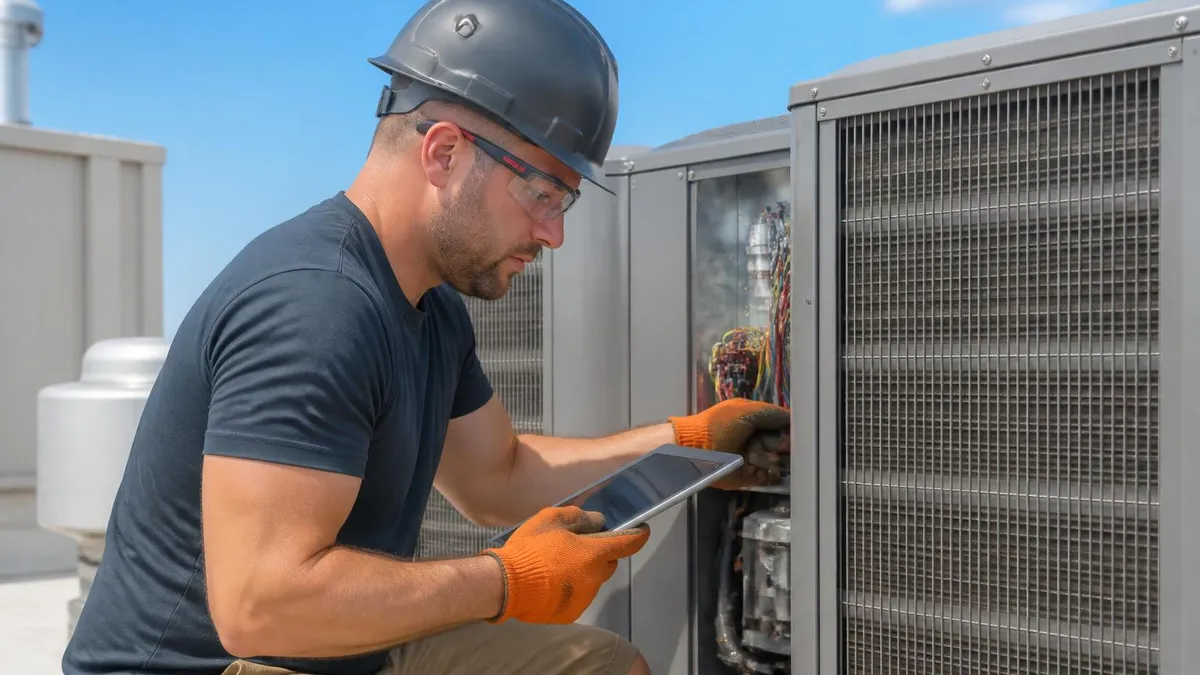
Core Tool Categories Every HVAC Tech Needs
Screwdrivers, nut drivers, pliers, wrenches, and tin snips form the foundation of every service call. Quality matters because cheap drivers strip screws and round off fasteners, costing time and creating callbacks.
Manifold gauges, vacuum pumps, recovery machines, tubing cutters, swaging kits, and torque wrenches. These are the specialty items that distinguish HVAC techs from general handymen and electricians.
Multimeters, clamp meters, capacitor testers, and non-contact voltage detectors. Modern systems are 70% electrical troubleshooting, so high-quality testers pay for themselves within weeks on the job.
Combustion analyzers, manometers, anemometers, thermal cameras, and psychrometers. These advanced tools let techs commission systems properly, verify airflow, and find hidden issues invisible to the eye.
Cut-resistant gloves, ANSI-rated safety glasses, fall uses, respirators, and ladders. Personal protective equipment is non-negotiable and often required by company policy and OSHA regulations.
Hand tools are the workhorses of any HVAC technician toolkit, and yet they are often the most underestimated category by newcomers. A complete hand tool set begins with insulated screwdrivers in Phillips, flat, and Robertson profiles, plus a full nut driver set in both standard and metric. Look for magnetic tips that hold sheet metal screws while you work overhead, and choose handles with non-slip rubber grips that perform well when coated in attic dust or condenser oil.
Pliers deserve special attention because cheap pliers fail spectacularly on the job. A working tech needs needle-nose pliers, lineman's pliers, diagonal cutters, tongue-and-groove (Channellocks), and a quality pair of strippers and crimpers. Brands like Klein, Knipex, and Channellock dominate the trade for good reason: their tools last decades, their jaws stay aligned, and their cutting edges remain sharp through thousands of cycles. Spending $40 once beats spending $12 four times.
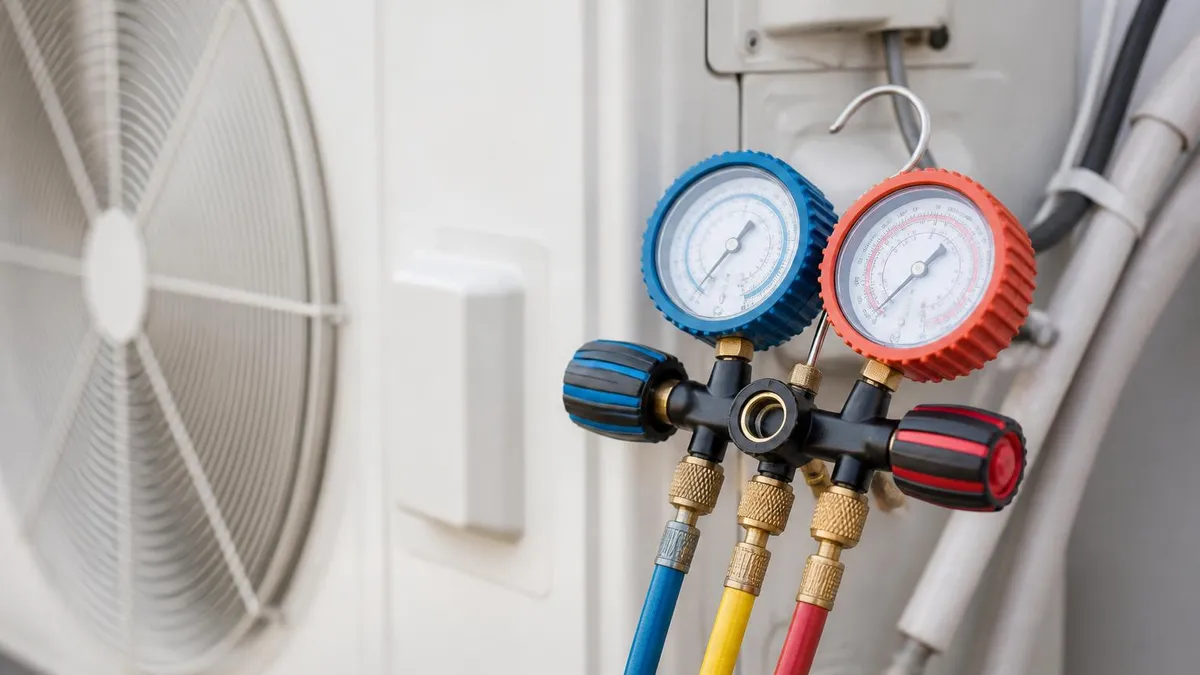
For refrigeration work, your manifold gauge set is the single most important investment. Analog gauges still have a place, but most pros today carry wireless digital manifolds from Fieldpiece, Testo, or Yellow Jacket. These units display superheat, subcooling, saturation temperatures, and target values directly on a screen or phone app, eliminating mental math errors and printed PT charts. They also record data for service reports and reduce the chance of cross-contamination between refrigerants.
Vacuum pumps and micron gauges are equally critical and frequently misused. A two-stage rotary vane pump rated for at least 6 CFM is the standard for residential and light commercial work. Pair it with a digital micron gauge that reads below 500 microns and you can verify a proper evacuation every time. Cheap analog vacuum gauges cannot read below 1,000 microns reliably, which means systems get released to service while still holding moisture and non-condensables that cause failure months later.
Refrigerant recovery machines round out the refrigeration category. EPA Section 608 regulations require recovery from any system being opened, and modern low-loss machines pull down faster, recover liquid more efficiently, and have built-in safeguards against overpressure. A self-clearing model saves time between jobs and reduces refrigerant cross-mixing. Add a quality recovery cylinder with current DOT certification and you have the legal and practical capability to handle any service call. To understand why proper airflow matters as much as charge, review the CFM HVAC basics that govern every system.
Specialty refrigeration tools should not be overlooked. Tubing cutters, deburring tools, flaring kits, swaging kits, and torque wrenches all play a role in producing leak-free joints. The ACR (air conditioning and refrigeration) standard 45-degree flare requires a specific tool with proper eccentric design, and torque wrenches keep mini-split flares within manufacturer specs. Sloppy flares cause more callbacks in mini-split work than any other single failure, and the right tools eliminate that risk almost entirely.
Brazing equipment is the final piece of the refrigeration kit. Oxygen-acetylene or air-acetylene torches with proper turbo tips, nitrogen purge regulators with flowmeters, and silver-bearing brazing rod for copper-to-copper joints are all required. Nitrogen purge during brazing prevents black oxidation scale inside the tubing, which causes TXV blockages and compressor failures. A tech who skips the nitrogen purge to save time is creating future callbacks for their own company.
HVAC Practice Test Questions
Prepare for the HVAC - Heating Ventilation and Air Conditioning exam with our free practice test modules. Each quiz covers key topics to help you pass on your first try.
HVAC Air Conditioning
HVAC Exam Questions covering Air Conditioning. Master HVAC Test concepts for certification prep.
HVAC Code Compliance
Free HVAC Practice Test featuring Code Compliance. Improve your HVAC Exam score with mock test prep.
HVAC Electrical Controls
HVAC Test Prep for Electrical Controls. Practice HVAC Quiz questions and boost your score.
HVAC Energy Efficiency
HVAC Questions and Answers on Energy Efficiency. Free HVAC practice for exam readiness.
HVAC Heating Systems
HVAC Mock Test covering Heating Systems. Online HVAC Test practice with instant feedback.
HVAC Load Calculations
Free HVAC Quiz on HVAC Load Calculations. HVAC Exam prep questions with detailed explanations.
HVAC Tools and Equipment
HVAC Practice Questions for HVAC Tools and Equipment. Build confidence for your HVAC certification exam.
HVAC Refrigeration
HVAC Test Online for Refrigeration. Free practice with instant results and feedback.
HVAC Safety Practices
HVAC Study Material on Safety Practices. Prepare effectively with real exam-style questions.
HVAC System Design
Free HVAC Test covering System Design. Practice and track your HVAC exam readiness.
HVAC Thermodynamics
HVAC Exam Questions covering Thermodynamics. Master HVAC Test concepts for certification prep.
Electrical Testing Tools for HVAC Technicians
A true-RMS digital multimeter is the single most-used electrical tool in any HVAC tech's pouch. Modern systems include variable-frequency drives and ECM motors that distort the AC waveform, and a standard meter will read incorrect voltage on those circuits. True-RMS meters from Fluke, Klein, or Fieldpiece read accurately regardless of waveform shape, which is essential for troubleshooting inverter compressors and ECM blower motors.
Look for CAT III 600V or CAT IV 600V safety ratings, low-impedance modes to eliminate ghost voltage readings, and capacitance functions that read up to 1,000 microfarads. Auto-ranging saves time, and a backlight matters more than you might think when working in dim mechanical rooms. Expect to spend $200 to $400 for a meter that lasts ten or more years of daily field use.
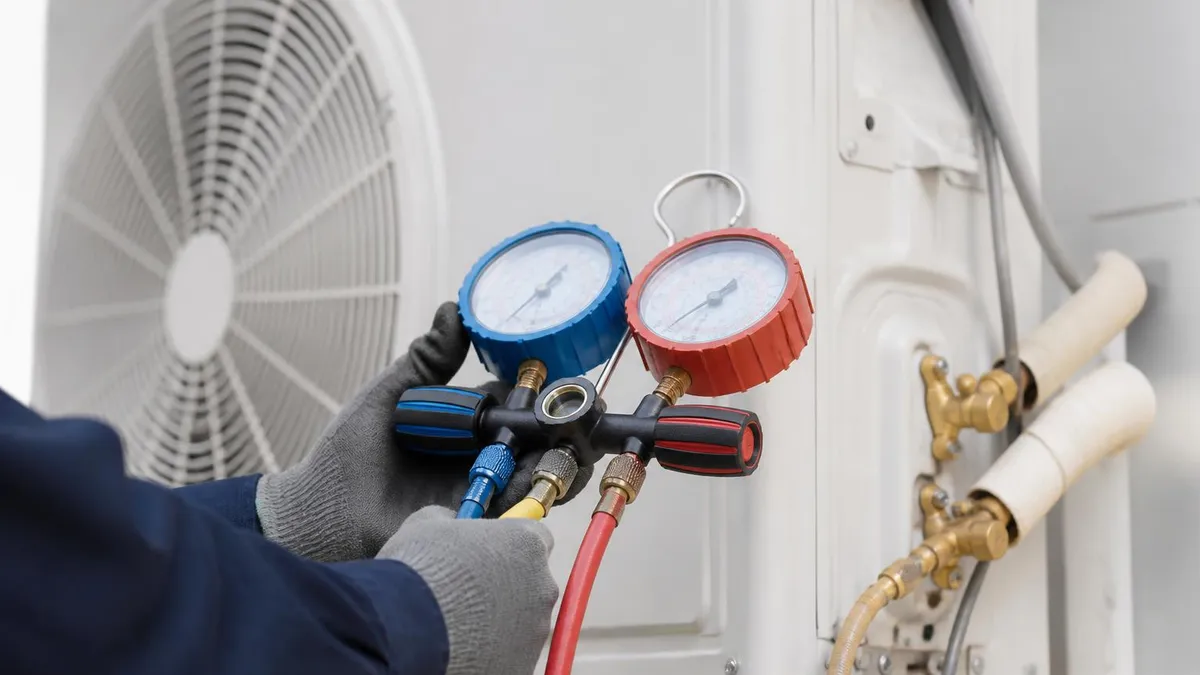
Wireless Digital Tools vs Traditional Analog Equipment
- +Real-time data logging creates documented service reports
- +Superheat and subcooling calculated automatically with no PT chart errors
- +Bluetooth and Wi-Fi connectivity to smartphone apps for live readings
- +Multiple parameters displayed simultaneously on one screen
- +Cloud storage and customer email reports build trust and repeat business
- +Firmware updates extend tool lifespan as refrigerants and standards change
- −Higher upfront cost: $800-$1,500 vs $200-$400 for analog gauges
- −Batteries can die mid-job without warning if not charged regularly
- −Bluetooth connection failures in metal-heavy mechanical rooms
- −Steeper learning curve for older technicians transitioning from analog
- −Repair costs higher and parts not always field-replaceable
- −Drop damage more catastrophic than ruggedized analog gauge sets
Complete First-Year HVAC Technician Tool Checklist
- ✓Insulated screwdriver set (Phillips, flat, square) with magnetic tips
- ✓Nut driver set in both SAE and metric sizes from 1/4 inch to 1/2 inch
- ✓Lineman's pliers, needle-nose pliers, and diagonal cutters from a reputable brand
- ✓True-RMS multimeter with CAT III rating, capacitance, and microamps functions
- ✓Clamp meter with AC/DC current, inrush capture, and flexible jaw accessory
- ✓Wireless digital manifold gauge set with refrigerant database updates
- ✓Two-stage vacuum pump rated 6 CFM minimum with isolation valve
- ✓Digital micron gauge reading accurately below 500 microns
- ✓EPA-compliant refrigerant recovery machine with self-clearing function
- ✓Tubing cutters, deburring tool, flaring block, and mini-split torque wrenches
- ✓Personal protective equipment: safety glasses, gloves, hearing protection, hard hat
- ✓Sturdy tool bag or backpack with reinforced bottom and multiple compartments
Buy once, cry once
Seasoned techs universally recommend buying the best tool you can afford the first time rather than upgrading later. A $350 Fluke multimeter purchased on day one will outlast three or four budget meters over a career, saves money on replacements, and builds the muscle memory that comes from using one consistent instrument across thousands of service calls.
Smart and connected tools have fundamentally changed how HVAC service is delivered in the past five years. What used to require a manifold, a clipboard, and a calculator is now performed by a single wireless probe broadcasting live data to a tablet that prints branded customer reports automatically. Apps like the MeasureQuick platform integrate with probes from multiple manufacturers, calculating delivered capacity, system efficiency, and ASHRAE 221-compliant commissioning metrics in real time.
Wireless refrigerant probes are the most popular entry point into connected tools. Brands like Fieldpiece JobLink, Testo Smart Probes, and Yellow Jacket ManTooth replace the bulky manifold with two small clamp-on probes that read pressure and temperature simultaneously. The probes communicate via Bluetooth to your phone, where the app displays superheat, subcooling, and target values based on outdoor temperature and indoor wet bulb. Charge accuracy improves dramatically because techs are no longer doing math under pressure on a hot rooftop.
Smart manometers and combustion analyzers handle the air side and the gas side of the equation. A connected manometer measures static pressure across coils, filters, and duct runs while logging readings to a system commissioning report. Combustion analyzers from Testo, Bacharach, and UEi measure oxygen, carbon monoxide, flue temperature, and combustion efficiency on gas appliances. These instruments are required for proper tune-ups and increasingly mandated by state code on new installations. For accurate duct sizing during installations, an HVAC duct calculator paired with smart static pressure tools dramatically reduces guesswork.
Thermal imaging cameras have dropped in price to the point where mid-priced FLIR or Hikmicro units cost less than $400. These cameras instantly reveal blocked evaporator coils, kinked refrigerant lines, missing insulation, energized electrical components running hot, and air leaks in ducts and building envelopes. A thermal image attached to a service report turns an invisible problem into a visible one for the customer, which dramatically improves close rates on recommended repairs and upgrades.
System monitoring devices represent the next frontier in connected HVAC tools. Permanent monitors installed on customer equipment send data back to the contractor's cloud platform, flagging issues like low refrigerant, dirty filters, or failing capacitors before they cause comfort complaints. Some platforms predict compressor failure weeks in advance using vibration and current signature analysis, allowing proactive replacements rather than emergency callouts during the hottest week of summer.
The downside of smart tools is the learning curve and the maintenance burden. Apps require updates, probes require firmware patches, and Bluetooth pairing failures can frustrate techs mid-call. Battery management becomes a daily routine, and dropped probes are expensive to replace. Most contractors handle this by standardizing on a single manufacturer ecosystem so every tech on the team uses the same workflow, app, and reporting platform. Standardization also lets supervisors review captured data and coach techs on diagnostic patterns.
Finally, smart tools generate data that powers business intelligence. Average system efficiency by neighborhood, common failure modes by manufacturer, and tech performance metrics all flow naturally from connected diagnostics. Contractors who invest in connected platforms typically see callback rates drop 20 to 40 percent, first-time-fix rates climb, and average ticket value increase as documented findings justify recommended work. The tools pay for themselves quickly when the business is set up to use what they capture.

Federal law requires EPA Section 608 certification before purchasing or handling refrigerants. Working without certification carries fines up to $46,989 per violation per day. Universal certification covers all appliance types and is recommended for any tech buying recovery equipment or refrigerant cylinders.
Safety gear is the most overlooked category of hvac technician tools, yet it is the only category that protects your ability to keep working a physically demanding trade for decades. The HVAC profession exposes techs to electrical hazards, refrigerant burns, sharp sheet metal, heavy lifting, fall risks on roofs and ladders, confined spaces, asbestos in older buildings, and gas fumes. Each hazard requires specific personal protective equipment, training, and habits that good companies enforce as non-negotiable.
Eye protection starts every conversation about HVAC safety. ANSI Z87.1-rated safety glasses block sheet metal fragments, refrigerant spray, brazing flux, and insulation fibers. Wraparound styles outperform standard glasses because particles can enter from the side, and tinted or photochromic lenses help when transitioning between dark attics and bright rooftops. A face shield adds protection during brazing or pressurized leak checks where flying debris or sudden refrigerant release is possible.
Hand protection covers a wider range than most apprentices realize. Cut-resistant gloves rated ANSI A4 or higher protect against sheet metal edges during duct fabrication. Insulated rubber gloves rated for the voltage you work on protect against electrical shock when measuring live circuits or pulling disconnects. Chemical-resistant nitrile gloves protect skin from refrigerant oils, flux, and cleaning chemicals. No single glove handles every situation, so a working tech carries two or three pairs in the truck and rotates based on task. Reliable certified HVAC contractors enforce glove policies and document compliance through job safety briefings.
Fall protection is mandated by OSHA whenever working at heights of six feet or more in construction or four feet in general industry. Rooftop service on commercial units, attic work, and ladder use all qualify. A full-body use with shock-absorbing lanyard and anchor point is the baseline, and proper training in how to inspect, don, and connect the use is just as important as owning it. Ladders should be inspected before each use for broken rungs, damaged feet, and proper duty rating for the combined weight of tech and tools.
Respiratory protection becomes critical in older buildings, attic crawls, and during refrigerant recovery from leaking systems. N95 respirators block insulation fibers and dust, while half-face respirators with chemical cartridges handle refrigerant fumes, mold, and solvent vapors during cleaning. Asbestos requires specialized abatement contractors, not HVAC techs, but recognizing the material is part of every technician's basic safety knowledge. Companies should provide annual respiratory fit testing and medical clearance for any employee required to wear a respirator.
Heat illness prevention deserves explicit attention in a trade where attic temperatures routinely exceed 130 degrees Fahrenheit. Heat exhaustion and heat stroke send hundreds of HVAC techs to emergency rooms every summer, and prevention requires hydration, electrolyte replacement, work-rest cycles, and recognition of early warning signs. A cooling vest, ice water cooler, and shaded rest area are all reasonable items to include in a summer service truck. Good supervisors track outdoor heat index and adjust schedules accordingly.
Finally, safety culture matters more than safety equipment. A tech who owns top-tier PPE but skips wearing it because the call is rushed gains nothing. Good HVAC companies build in pre-job hazard assessments, lockout-tagout procedures for electrical work, two-person rules for confined space and rooftop service, and post-incident reviews that drive process improvements. Tools are only effective when used consistently, and consistency comes from leadership that models safe behavior every single day.
Building your hvac technician tools collection efficiently requires a strategic approach rather than panic-buying everything in the first month. Most working pros recommend a three-phase buying plan that spreads cost across your first two years while ensuring you have what you need to perform on each new type of call. Phase one covers your daily hand tools and basic electrical testers, phase two adds refrigeration instruments as you start handling charge and recovery work, and phase three brings in specialty equipment as your skills broaden.
In the first 30 days on the job, focus exclusively on hand tools, a quality multimeter, a non-contact voltage tester, and basic personal protective equipment. This kit alone runs about $600 to $900 and lets you support a journeyman on virtually any service or installation call. Skip the manifold gauges, vacuum pump, and recovery machine until your mentor signals you are ready to work refrigerant calls solo, because using those tools incorrectly causes more harm than not having them at all.
Around the 90-day mark, add your manifold gauge set, micron gauge, vacuum pump, and basic refrigeration hand tools. This is the critical investment that lets you handle full service calls and start charging systems independently. Choose the wireless digital manifold over analog if your budget allows, because the time savings on calculations and the data logging features pay back the difference within six months on residential service. Pair the manifold with a quality nitrogen regulator and proper torch setup for brazing.
By month six to twelve, evaluate which specialty tools match the work your company actually performs. A residential service tech needs a combustion analyzer if your area has gas appliances. A commercial tech needs phase rotation meters, three-phase clamp meters, and heavy-duty recovery equipment. An installation specialist benefits from a thermal camera, smart manometer, and laser duct sizing tools. Match your specialty purchases to your specialty work rather than buying based on what looks impressive in the truck.
Tool storage and organization is its own discipline that separates pros from amateurs. A good tool bag has dedicated pockets for each instrument, prevents impact damage during transport, and lets you locate items by feel rather than searching. Many techs use a combination: a backpack for hand tools and meters carried into every call, a rolling tool bag for refrigeration-specific items used on AC and heat pump calls, and stationary truck storage for vacuum pumps, recovery machines, and reclaim cylinders. Labeling and inventorying gear monthly prevents the slow loss of small items.
Maintenance of your tools is non-negotiable for long-term reliability. Manifold gauges should have hose seals replaced annually, micron gauges should be calibrated yearly, and vacuum pumps need oil changes after every recovery job that pulled significant moisture. Multimeter batteries should be replaced before they die and probes should be tested against a known voltage source weekly. Cleaning tools at the end of each day removes flux residue, refrigerant oils, and dust that degrade performance and shorten lifespan considerably.
Finally, consider tool insurance and warranty registration seriously. Most professional brands offer lifetime warranties on hand tools and multi-year warranties on instruments, but only if you register at purchase. Tool insurance through trade-specific carriers like American Society of HVAC&R Engineers or commercial tool floaters costs $100 to $300 annually and covers theft, fire, and accidental damage. Vans get broken into and tools get stolen regularly across the country, and one claim pays for years of premium coverage.
HVAC Questions and Answers

HVAC Duct Supplies: The Complete Buyer's Guide to Ductwork Components, Sizing, and Installation Materials
CFM HVAC Basics: How Airflow, Sizing, and System Performance Work Together
HVAC Duct Calculator: The Complete Guide to Sizing Ductwork for Airflow, Static Pressure, and System Efficiency
Certified HVAC Contractors: How to Find, Vet, and Hire the Right Professional for Your Home or Business
HVAC Repair Philadelphia: The Complete Homeowner's Guide to Finding, Hiring, and Working With Local Heating and Cooling Pros
About the Author

NATE Certified HVAC Technician & Licensing Exam Trainer
Universal Technical InstituteMike Johnson is a NATE-certified HVAC technician and EPA 608 universal-certified refrigerant handler with a Bachelor of Science in HVAC/R Technology. He has 19 years of commercial and residential HVAC installation and service experience and specializes in preparing technicians for NATE certification, EPA 608, A2L refrigerant safety, and state HVAC contractor licensing examinations.