
HVAC Johnson City: Complete Guide to Local Heating, Cooling, and Service Companies
HVAC Johnson City guide: 🗨️ find trusted local heating and cooling companies, compare costs, services, certifications, and seasonal maintenance tips.
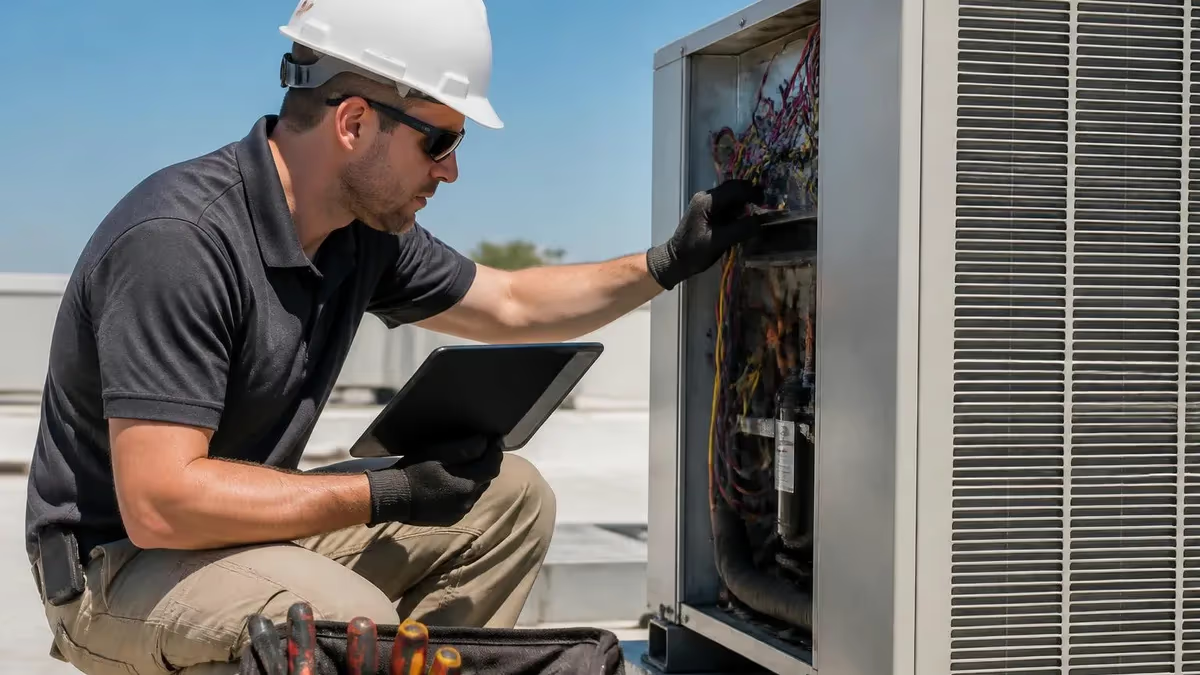
Finding reliable HVAC Johnson City service can feel overwhelming hvac emergency repair mc lean furnace quits on the coldest night of January or your air conditioner sputters during a humid August afternoon in Tennessee. The Tri-Cities region has dozens of heating and cooling companies competing for your business, and the quality gap between them is significant. This guide walks you through how to evaluate local hvac service co by location, what services they typically offer, fair pricing benchmarks, and the credentials that separate a true professional from a weekend handyman with a van.
Johnson City sits in a climate zone that demands serious HVAC capability. Summer humidity routinely pushes dew points above 70 degrees, while winter lows in the upper valleys can dip into the teens. Your system has to handle both extremes without breaking your budget. That dual demand is exactly why choosing a competent local contractor matters more here than in milder regions where a marginal install might never get truly stress-tested.
Local service companies in the Johnson City, Kingsport, and Bristol corridor range from family-owned shops with two trucks to regional chains operating across East Tennessee and Southwest Virginia. Each model has trade-offs. Smaller operators often deliver more personalized scheduling and continuity of technicians. Larger firms offer 24/7 dispatch, financing programs, and broader equipment inventory. Knowing what you actually need before you call helps you avoid being upsold on a service tier that does not match your situation.
This article is built for homeowners, small business managers, property landlords, and aspiring HVAC technicians researching the local market. We cover what to ask during the first phone call, how to read a written estimate, when a repair makes more sense than replacement, and how seasonal timing affects both pricing and appointment availability. We also pull in real data on labor rates, equipment lifespan in this climate, and the certifications Tennessee requires for contractors operating legally.
If you are studying for an HVAC certification or considering a career change, you will also find guidance on what local companies look for when hiring. Several Johnson City firms run apprenticeship pipelines and partner with Northeast State Community College for technical training. The local labor market is tight, which means qualified technicians have use, and homeowners benefit from understanding what kind of training stands behind the person walking through their door.
By the time you finish reading, you should be able to shortlist three or four contractors, request meaningful quotes, and confidently make a decision about repair, replacement, or maintenance plans. We will not push you toward any specific brand or company. Instead, we focus on the framework you can apply whether you live downtown, in Boones Creek, Gray, Jonesborough, or out toward Elizabethton.
Let us start by looking at the local market in numbers, then build out a practical evaluation process you can follow this week.
HVAC Johnson City by the Numbers
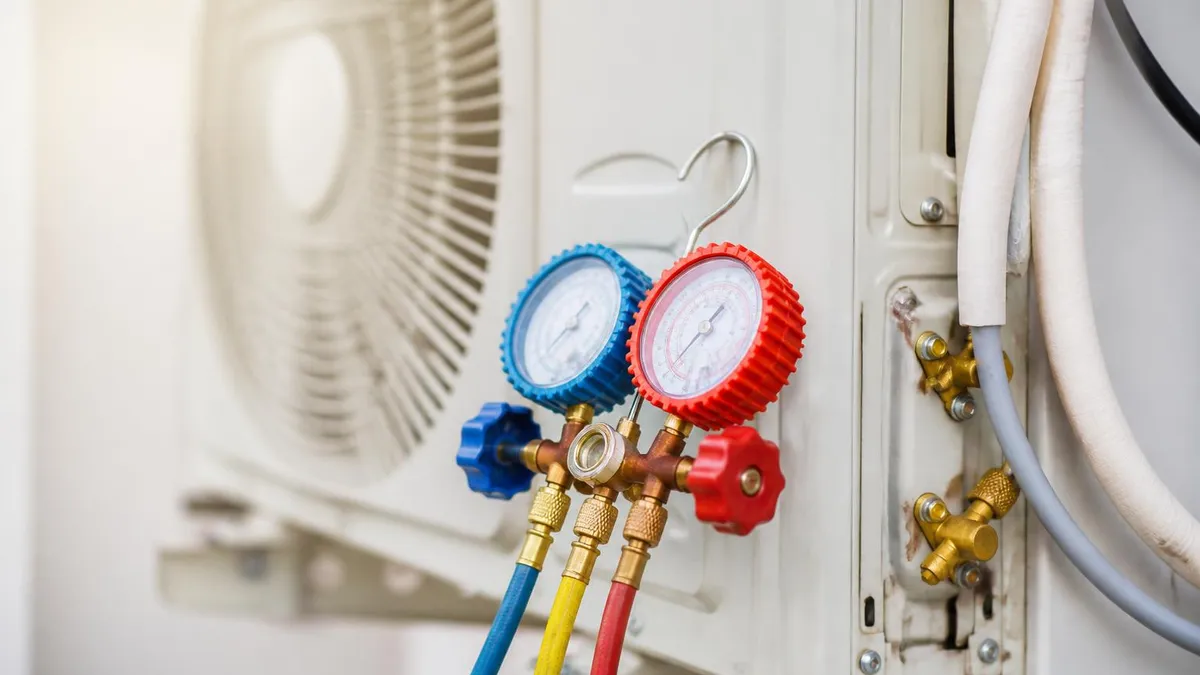
Core Services Local HVAC Companies Offer
Same-day or next-day diagnosis and repair for failed units, refrigerant leaks, burner problems, or thermostat failures. Most Johnson City companies charge a flat diagnostic fee, which is typically waived if you proceed with the repair through the same technician.
Full removal and install of furnaces, heat pumps, central air, and ductless mini-splits. Includes load calculations, permit pulls, refrigerant charging, and startup commissioning. Reputable installers provide a Manual J calculation rather than rule-of-thumb sizing.
Twice-yearly tune-ups covering coil cleaning, capacitor testing, refrigerant pressure checks, combustion analysis, and filter replacement. Annual contracts typically run $150 to $300 and often include priority scheduling and parts discounts.
Duct sealing, insulation, replacement, and balancing. Critical for older Johnson City homes with original 1960s and 1970s ductwork that often leaks 20 to 30 percent of conditioned air into attics and crawl spaces.
Whole-home dehumidifiers, UV light installations, media filtration, and ventilation upgrades. Demand has grown since 2020, especially for homes near agricultural areas where pollen and dust loads run high in spring and fall.
Choosing an HVAC contractor in Johnson City starts with verifying the basics. Tennessee requires HVAC contractors performing work over $25,000 to hold a state contractor license issued by the Tennessee Board for Licensing Contractors. For mechanical work, the classification you want to see is CMC (Mechanical Contractor). Anyone touching refrigerant must also hold EPA Section 608 certification. These two credentials are non-negotiable starting points for any company you consider.
Beyond licensing, look at how long a company has operated under its current name and ownership. HVAC firms in this region churn through branding changes, sometimes to reset online reviews. A business that has held the same name and address for ten years is generally a safer bet than one with a brand-new entity formed last quarter. The Tennessee Secretary of State business search lets you verify formation dates in about thirty seconds.
Insurance coverage matters more than most homeowners realize. Ask for a certificate of insurance showing both general liability and workers compensation coverage. If a technician falls off your roof installing a heat pump and the company carries no comp policy, the injury claim can land on your homeowners insurance. Reputable contractors email a current certificate without hesitation, while sketchy operators stall or change the subject.
Look at the depth of the technical team. A one-truck operation can do excellent work, but if your install requires a crane lift for a packaged rooftop unit, the small shop may subcontract that piece to someone you never met. Ask directly how many full-time technicians the company employs, whether they use subcontractors, and how disputes about workmanship are handled. The answers tell you a lot about accountability.
Pay attention to how the company handles your first phone call. Did the dispatcher ask about the age, brand, and model of your existing equipment? Did they probe for symptoms before quoting a flat repair price sight unseen? Good companies gather information before committing to anything. Poor ones quote a complete system replacement over the phone based on the equipment's age alone, which is a red flag for high-pressure sales tactics.
If you want a broader framework for vetting professionals beyond Johnson City, review our guide to Certified HVAC Contractors, which covers credential verification, contract review, and the common scams homeowners encounter nationwide. The principles apply locally, but the local market quirks here in Northeast Tennessee deserve specific attention too.
Finally, request references from jobs completed within the past 12 months and in your specific neighborhood if possible. Soil conditions, home age, and prior contractor work vary block by block in older Johnson City neighborhoods like Tree Streets or Southside. A contractor who has installed equipment three streets over knows what to expect.
HVAC Practice Test Questions
Prepare for the HVAC - Heating Ventilation and Air Conditioning exam with our free practice test modules. Each quiz covers key topics to help you pass on your first try.
HVAC Air Conditioning
HVAC Exam Questions covering Air Conditioning. Master HVAC Test concepts for certification prep.
HVAC Code Compliance
Free HVAC Practice Test featuring Code Compliance. Improve your HVAC Exam score with mock test prep.
HVAC Electrical Controls
HVAC Test Prep for Electrical Controls. Practice HVAC Quiz questions and boost your score.
HVAC Energy Efficiency
HVAC Questions and Answers on Energy Efficiency. Free HVAC practice for exam readiness.
HVAC Heating Systems
HVAC Mock Test covering Heating Systems. Online HVAC Test practice with instant feedback.
HVAC Load Calculations
Free HVAC Quiz on HVAC Load Calculations. HVAC Exam prep questions with detailed explanations.
HVAC Tools and Equipment
HVAC Practice Questions for HVAC Tools and Equipment. Build confidence for your HVAC certification exam.
HVAC Refrigeration
HVAC Test Online for Refrigeration. Free practice with instant results and feedback.
HVAC Safety Practices
HVAC Study Material on Safety Practices. Prepare effectively with real exam-style questions.
HVAC System Design
Free HVAC Test covering System Design. Practice and track your HVAC exam readiness.
HVAC Thermodynamics
HVAC Exam Questions covering Thermodynamics. Master HVAC Test concepts for certification prep.
Heating, Cooling, and Indoor Air Services in Johnson City
Heat pumps dominate new installations in the Johnson City area because winters here are mild enough that backup electric resistance heat only runs occasionally. Most homes built since 2005 use a 14 to 18 SEER heat pump paired with a variable-speed air handler. Older homes still running natural gas furnaces typically replace them with 95 percent or higher AFUE condensing units, which require dedicated PVC venting and condensate drainage.
Service issues tend to cluster around ignition components, inducer motors, flame sensors, and reversing valves on heat pumps. Local technicians who specialize in heating carry universal control board parts and common motor sizes on the truck, which means most no-heat calls get resolved on the first visit rather than waiting three days for a parts order.

Local Family-Owned vs Regional Chain HVAC Companies
- +Family-owned shops often send the same technician on every visit, building continuity
- +Smaller companies typically have lower overhead and can price competitively on simple repairs
- +Local owners live in the community and have reputational skin in the game
- +Decision-making is faster when the owner is on-site or one phone call away
- +Custom or unusual installations get more thoughtful design attention from small teams
- +Family-owned firms often offer more flexible payment arrangements without third-party financing
- +Technicians at smaller shops typically wear more hats and develop broader skill sets
- −Smaller companies may have limited after-hours availability during peak season
- −Equipment inventory is narrower, occasionally delaying parts for specific brands
- −Vacation coverage and continuity during owner absence can be inconsistent
- −Larger chains offer extended warranties backed by stronger financial guarantees
- −National chains have more standardized training and consistent service protocols
- −Big firms typically carry more extensive insurance and bonding for commercial work
- −Financing options at large companies often include longer terms and promotional rates
Pros and Cons at a Glance
| Pros | Cons |
|---|---|
| Family-owned shops often send the same technician on every visit, building continuity | Smaller companies may have limited after-hours availability during peak season |
| Smaller companies typically have lower overhead and can price competitively on simple repairs | Equipment inventory is narrower, occasionally delaying parts for specific brands |
| Local owners live in the community and have reputational skin in the game | Vacation coverage and continuity during owner absence can be inconsistent |
| Decision-making is faster when the owner is on-site or one phone call away | Larger chains offer extended warranties backed by stronger financial guarantees |
| Custom or unusual installations get more thoughtful design attention from small teams | National chains have more standardized training and consistent service protocols |
| Family-owned firms often offer more flexible payment arrangements without third-party financing | Big firms typically carry more extensive insurance and bonding for commercial work |
HVAC Johnson City Hiring Checklist
- ✓Verify Tennessee state contractor license (CMC classification) at the Board of Licensing Contractors website
- ✓Confirm EPA Section 608 certification for any technician handling refrigerant
- ✓Request a certificate of insurance showing general liability and workers compensation
- ✓Read at least 20 recent reviews across Google, BBB, and Angi for pattern recognition
- ✓Get three written estimates with itemized labor, equipment model numbers, and warranty terms
- ✓Ask for a Manual J load calculation before any replacement install over $5,000
- ✓Confirm permits will be pulled with the City of Johnson City or applicable jurisdiction
- ✓Verify the equipment brand registration warranty will be filed in your name within 60 days
- ✓Ask whether the company uses W-2 employees or 1099 subcontractors for installs
- ✓Request references from jobs completed in the past 12 months in your neighborhood
- ✓Get the start and completion dates in writing along with cleanup expectations
- ✓Confirm financing terms in writing if not paying cash, including APR after promotional period
Always get three written quotes for any job over $2,500
The single biggest mistake Johnson City homeowners make is accepting the first quote from the first contractor they call. Pricing for identical equipment can vary by 25 to 40 percent between local companies, and the highest quote is not always the highest quality. Three written estimates give you use, market context, and a defense against high-pressure same-day sales tactics that target homeowners during system emergencies.
Pricing for HVAC services in Johnson City tends to fall within predictable ranges, but exceptions are common. A standard service call runs $95 to $165 for the diagnostic visit, with most companies applying that fee toward the repair if you authorize work the same day. Hourly labor rates after the initial diagnostic average $120 to $180 per technician hour, with overtime and after-hours rates running 1.5 to 2 times the standard rate. Always confirm the rate before approving work that may exceed an hour.
Full system replacements are where homeowners see the widest pricing variance. A basic 3-ton heat pump and air handler installed in a single-story home typically runs $7,500 to $11,000. Stepping up to a high-efficiency variable-capacity inverter system from Carrier, Trane, or Lennox pushes the total to $13,000 to $18,000 once you account for line set replacement, condensate pumps, and any duct modifications required to meet the new equipment specifications.
Financing has become a major factor in how homeowners pay for replacement systems. Most local contractors partner with GreenSky, Synchrony, or Wells Fargo to offer promotional financing, typically 12 to 24 months at zero percent interest if paid off within the promotional period. Read the fine print carefully because deferred interest plans charge retroactive interest from day one if the balance is not zeroed out by the deadline. That mistake can add thousands to your effective cost.
Federal tax credits and utility rebates can substantially reduce out-of-pocket cost. The Inflation Reduction Act provides up to $2,000 in tax credits for qualifying heat pump installations through 2032. TVA does not offer a direct rebate, but local power providers including Johnson City Power Board, BrightRidge, and Holston Electric occasionally run efficiency rebates for ductless mini-splits and smart thermostats. Ask your contractor to confirm current eligibility before signing the contract.
Repair-versus-replace decisions deserve careful math. The general rule is that if the repair cost exceeds 50 percent of the cost of a new system and the unit is more than 10 years old, replacement is usually the better long-term choice. However, the calculation changes if the existing unit uses R-22 refrigerant, which is no longer manufactured and now costs $150 or more per pound when available at all. R-22 systems should generally be replaced rather than recharged.
Maintenance plans typically pay for themselves if you would have called for service anyway. A $200 annual contract that includes two tune-ups, priority scheduling, and 15 percent off repairs effectively covers the cost of one major capacitor or contactor replacement. Skip the contract if you are diligent about DIY filter changes and condenser coil cleaning, but enroll if HVAC maintenance is the kind of task you tend to forget until something breaks.
Finally, beware of any quote that pressures you to sign today for a discount that expires by morning. Legitimate equipment manufacturers do not run 24-hour promotions that vanish overnight. That tactic is a classic high-pressure sales script designed to bypass your three-quote rule. A real contractor will hold a quote open for 30 to 90 days without dramatic price swings.

If a technician tells you your AC just needs a refrigerant top-off without finding the leak, push back. Refrigerant does not get consumed by a properly sealed system, so any low charge means there is a leak that must be located and repaired. Recharging without leak repair is a temporary fix that wastes hundreds of dollars and is increasingly being flagged by EPA enforcement.
Seasonal maintenance scheduling matters more in Johnson City than in regions with milder year-round climates. The best time to schedule cooling system tune-ups is March or April, before the first 85-degree day creates a rush of emergency calls that fills technician schedules for weeks. Heating tune-ups should be done in September or October before the first hard freeze. Off-season scheduling also typically comes with lower pricing and more flexibility for appointment windows.
For homeowners interested in long-term system performance, understanding airflow basics changes how you evaluate contractor recommendations. Our guide to CFM HVAC Basics walks through how airflow, sizing, and ductwork interact. A perfectly sized condenser paired with restrictive or leaky ducts will never deliver the comfort or efficiency the equipment is rated for, which is why duct evaluation should be part of any major replacement decision.
Filter changes are the single highest-impact maintenance task homeowners control. A clogged one-inch pleated filter can reduce airflow by 30 percent within 60 days in a dusty environment. In Johnson City, with pollen counts improved from March through May and again in September, monthly filter changes during shoulder seasons make a measurable difference in both efficiency and equipment lifespan. MERV 8 to MERV 11 filters strike the right balance between filtration and airflow for most residential systems.
Condenser coil cleaning is the second high-impact homeowner task. A garden hose and a soft brush, with the disconnect pulled for safety, removes most surface debris. Cottonwood seeds in late May and early June and grass clippings in summer mowing season are the biggest offenders. Cleaning the outdoor coil twice during the cooling season can lower your electric bill by 5 to 10 percent during peak months.
Thermostat upgrades deliver some of the highest returns per dollar spent in the entire HVAC category. Smart thermostats from Ecobee, Nest, or Honeywell typically pay back their installed cost within 18 to 30 months through better scheduling, geofencing, and remote adjustments. Local utilities occasionally offer rebates of $50 to $100 for installing qualifying smart thermostats, which further accelerates the payback.
Annual professional maintenance still has a role even if you handle filters and coil cleaning yourself. A trained technician checks refrigerant pressures, capacitor microfarad ratings, contactor wear, blower motor amperage, condensate drain integrity, and combustion analysis on gas equipment. Those measurements catch small problems before they become emergency calls, which is the entire economic argument for a maintenance contract.
Building a relationship with one trusted local contractor over multiple years tends to deliver better outcomes than chasing the lowest price every season. Once a company knows your equipment, your duct layout, and your preferences, diagnostics get faster, recommendations get more accurate, and you spend less time explaining the same backstory to a new technician on every visit.
Putting all of this into a practical action plan looks something like this. Start by spending an hour gathering basic information about your existing system. Find the model and serial number plates on both the indoor and outdoor units. Note the installation date if you have records or by reading the serial number date code. Write down any recent symptoms, the rooms that struggle to heat or cool, and your monthly electric bill range across both summer and winter. This baseline turns vague problems into specific data contractors can respond to.
Next, build your shortlist of three local companies. Use Google Maps to find HVAC contractors within a 20-mile radius of your zip code. Filter for businesses with at least 50 reviews and a rating of 4.5 stars or higher. Cross-reference the list against the Tennessee licensing database to confirm active CMC credentials. Skip any company without an active license, regardless of how good the reviews look. Once you have three to five qualified candidates, you are ready to make calls.
When you call, describe your situation factually and ask each company the same set of questions. What is the diagnostic fee, and is it waived with repair? How soon can a technician arrive? Do you provide written estimates before starting work? Are your installers W-2 employees or subcontractors? What manufacturer brands do you typically install, and what warranty terms come with each? Apples-to-apples answers across three companies reveal which one fits your priorities.
For replacement projects specifically, insist on a load calculation rather than rule-of-thumb sizing based on square footage. A proper Manual J calculation accounts for window orientation, insulation levels, infiltration rates, internal heat gains, and local design temperatures. Skipping this step results in oversized equipment that short-cycles, dehumidifies poorly, and wears out faster than properly sized equipment. The calculation typically takes 30 to 60 minutes during the in-home estimate.
Pay attention to how the salesperson or technician communicates. Do they answer your questions directly, or do they redirect to their preferred topic? Do they explain technical concepts in plain language without condescension? Do they leave you with a written estimate you can take time to review, or do they push for a same-day signature with a vanishing discount? Communication style during the sales process usually predicts communication during installation and service.
For deeper research before signing any contract, review our comprehensive resource on hvac installation leeds, which covers permits, line set specifications, refrigerant charging protocols, startup commissioning, and the documentation you should receive at job completion. Walking into the contractor conversation with that level of background dramatically changes the dynamic in your favor.
Finally, plan ahead rather than reacting to emergencies. A heat pump installed in October when contractors have open schedules will cost less and get more careful installation attention than the same equipment installed during a July heat wave when crews are exhausted and rushing to the next call. Lifespan management means tracking your system's age and starting the replacement evaluation process at year 12 to 14, not waiting until it dies entirely in the middle of a holiday weekend.
Sample HVAC Practice Questions
Try these questions from our free HVAC practice tests. The correct answer and an explanation follow each question.
What is the purpose of the Schrader valve core on a refrigerant service port?
- A. To regulate refrigerant flow rate during normal operation
- B. To prevent refrigerant from escaping when service hoses are not connected
- C. To filter moisture from the refrigerant
- D. To act as a check valve preventing liquid refrigerant backflow
Answer: B. To prevent refrigerant from escaping when service hoses are not connected
The Schrader valve core acts as a check valve in the service port, preventing refrigerant loss when service hoses or gauges are not connected.
A packaged rooftop unit produces insufficient cooling. Subcooling is 5°F and superheat is 18°F. What does this suggest?
- A. Refrigerant overcharge
- B. Refrigerant undercharge
- C. Faulty condenser fan motor
- D. Dirty condenser coil
Answer: B. Refrigerant undercharge
Low subcooling combined with elevated superheat indicates a refrigerant undercharge, reducing system capacity and efficiency.
What is the value of continuing education in ductwork for HVAC professionals?
- A. It is only needed for recertification
- B. It keeps professionals current with evolving standards and practices
- C. It is primarily a social activity
- D. It replaces workplace experience
Answer: B. It keeps professionals current with evolving standards and practices
Continuing education ensures professionals stay current with the latest developments, standards, and best practices in their field.
A heat pump has a heating COP of 3.5. What does this mean?
- A. It delivers 3.5 units of heat for every 1 unit of electrical energy consumed
- B. It uses 3.5 kW of power at full load
- C. Its efficiency is 350% above baseline
- D. It operates at 3.5 tons of capacity
Answer: A. It delivers 3.5 units of heat for every 1 unit of electrical energy consumed
A COP of 3.5 means the heat pump delivers 3.5 units of thermal energy for every 1 unit of electrical energy input.
HVAC Questions and Answers
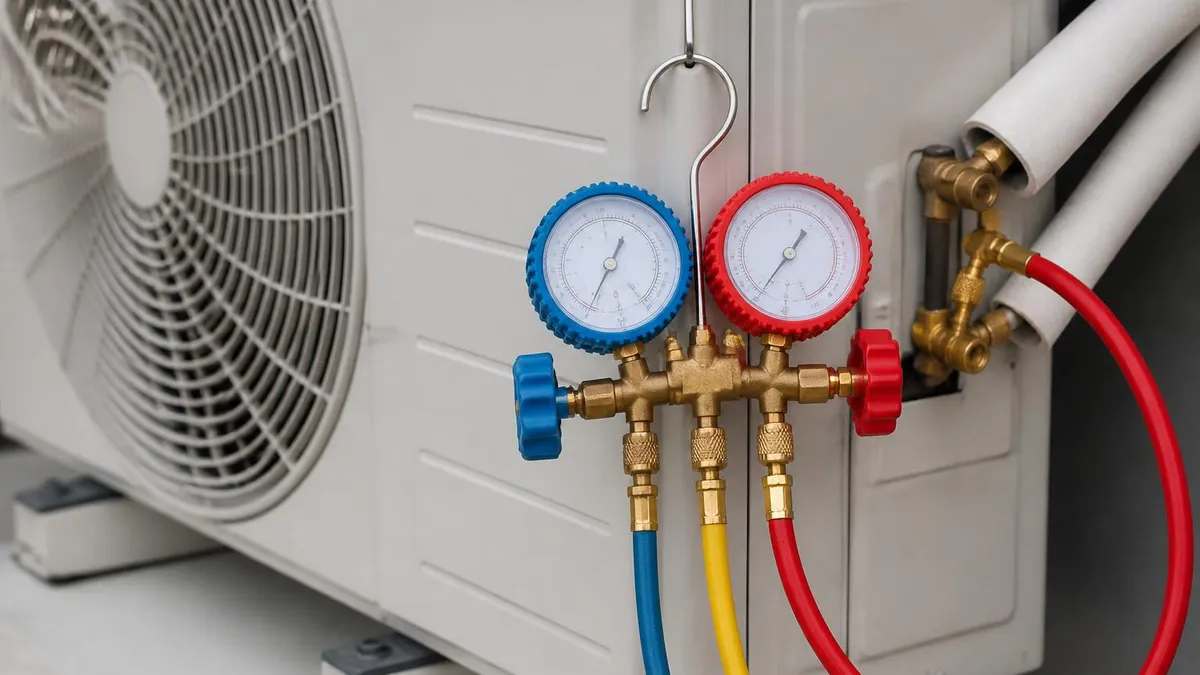
HVAC Technician Jobs Near Me: How to Find, Land, and Grow in Local HVAC Careers
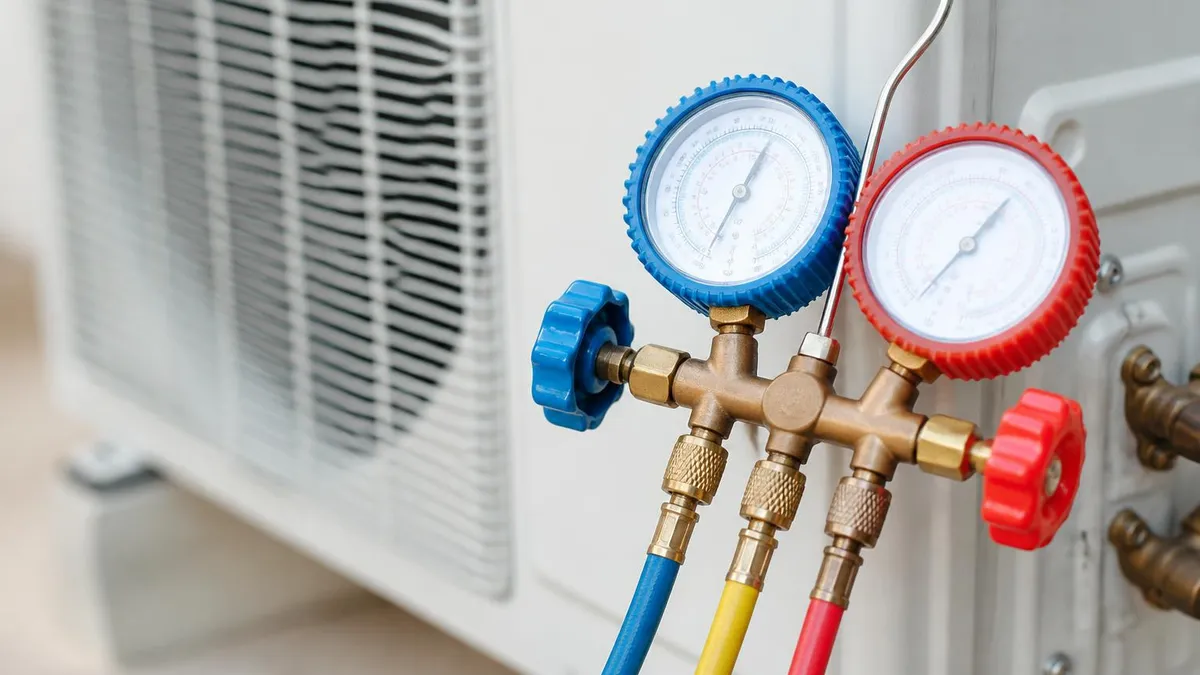
CFM HVAC Basics: How Airflow, Sizing, and System Performance Work Together
Certified HVAC Contractors: How to Find, Vet, and Hire the Right Professional for Your Home or Business

Best HVAC Repair in Bandon, OR: Local Services Near Me Guide
HVAC Installations: The Complete Guide to Planning, Pricing, and Getting It Right the First Time
About the Author

NATE Certified HVAC Technician & Licensing Exam Trainer
Universal Technical InstituteMike Johnson is a NATE-certified HVAC technician and EPA 608 universal-certified refrigerant handler with a Bachelor of Science in HVAC/R Technology. He has 19 years of commercial and residential HVAC installation and service experience and specializes in preparing technicians for NATE certification, EPA 608, A2L refrigerant safety, and state HVAC contractor licensing examinations.