
HVAC Service Companies: How to Choose, Compare, and Hire the Right Professionals for Your Home or Business
🔎 Compare HVAC service companies, learn what to look for, understand pricing, and discover how to hire trusted pros for repair, install, and maintenance.
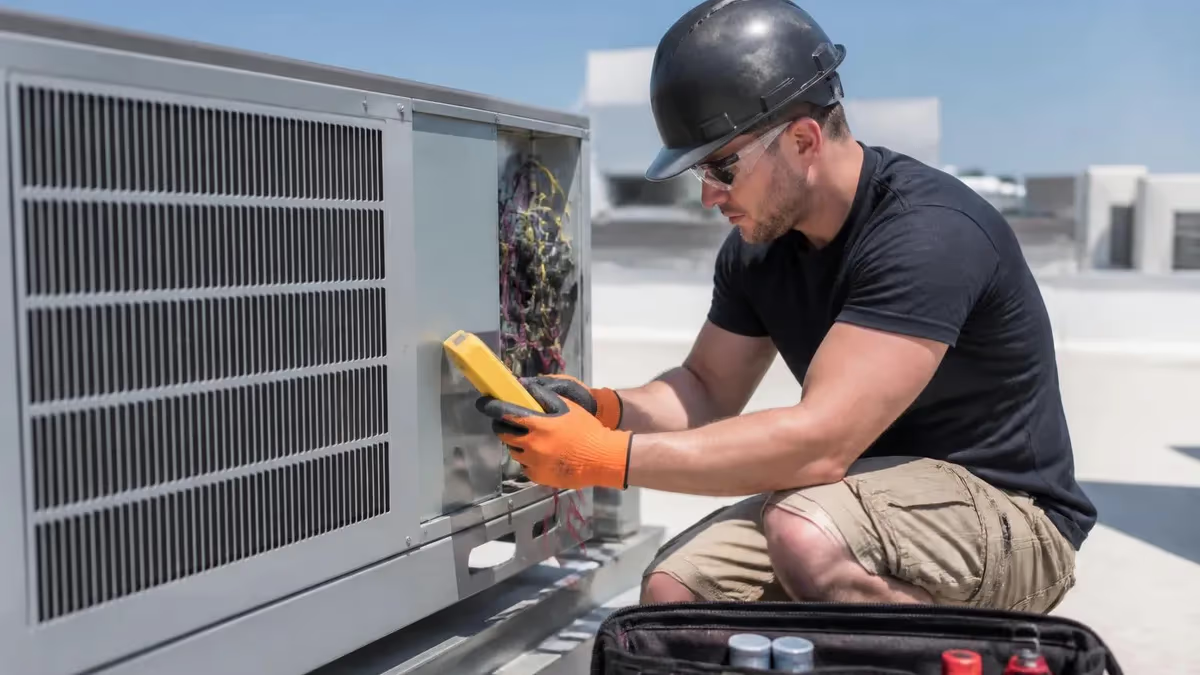
Choosing among the many hvac service companies operating across the United States can feel overwhelming, especially when your air conditioner quits during a July heatwave or your furnace dies on the coldest night of January. The right contractor protects your comfort, your energy bills, your indoor air quality, and your equipment investment, which can run anywhere from a few hundred dollars for a simple repair to twelve thousand dollars or more for a full system replacement. The wrong contractor can leave you with mismatched equipment, voided warranties, and recurring breakdowns.
This guide walks you through everything you need to evaluate, compare, and confidently hire a residential or commercial HVAC company. You will learn how to verify licensing and insurance, decode estimates, understand pricing models, recognize red flags, and ask the right questions before signing anything. Whether you need an hvac emergency repair mc lean, a planned installation, a maintenance contract, or a second opinion on a major quote, the framework here applies.
The HVAC industry in the U.S. includes more than 120,000 active businesses, ranging from one-truck independent operators to national franchises with hundreds of branches. Each model has tradeoffs in price, response time, technician quality, and warranty backing. Knowing the differences helps you match the company type to your specific situation, budget, and equipment.
You will also see how reputable service companies structure their estimates, what NATE certification and EPA Section 608 mean for the technician at your door, and how seasonal demand affects scheduling and price. We will cover preventive maintenance plans, refrigerant handling rules, ductwork inspections, and warranty registration so you understand the full scope of services a quality contractor should deliver.
If you are new to hiring HVAC professionals, start by reading about Certified HVAC Contractors for a deeper look at credentials and vetting. That guide pairs nicely with this overview of how service companies operate, price their work, and structure their crews.
By the end of this article, you will have a clear checklist, realistic price expectations, a sense of which questions separate professionals from order takers, and the confidence to either sign a service agreement or walk away. We will also share practical scripts you can use on the phone, a side-by-side comparison framework for multiple bids, and a maintenance calendar that extends equipment life by years.
HVAC decisions are long-term decisions. A properly sized, professionally installed, and routinely maintained system can last 15 to 20 years, while a rushed install with a low-bidder contractor often fails inside a decade. The information below is designed to push you toward the first outcome and protect you from the second.
HVAC Service Industry by the Numbers
Types of HVAC Service Companies
One to ten trucks, owner-operated, deeply familiar with local building codes, climate, and common equipment brands in your area. Often the most flexible on scheduling and price negotiation for repeat customers.
20 to 100 technicians, multiple service trucks, in-house duct fabrication, and dedicated install crews separate from service crews. Strong warranty backing and 24/7 dispatch are common at this tier.
Brands like One Hour, Aire Serv, and Service Experts operate under standardized pricing books, branded trucks, and corporate training programs. Consistent processes but often higher flat-rate pricing.
Carrier Factory Authorized Dealers, Trane Comfort Specialists, and Lennox Premier Dealers carry extended warranties, factory training, and brand-specific parts inventory but typically install only that brand.
Focused on rooftop units, chillers, boilers, and VRF systems for offices, schools, and industrial buildings. Carry mechanical and refrigeration licenses beyond residential HVAC scope.
Vetting HVAC service companies starts with three non-negotiables: state mechanical contractor license, general liability insurance of at least one million dollars, and workers compensation coverage for every technician who will set foot on your property. A company missing any of these can leave you personally liable if an employee is injured or your home is damaged. Ask for the license number, then verify it on your state contractor board website rather than trusting a card or brochure. This step takes under five minutes and eliminates roughly a quarter of unqualified bidders immediately.
Next, look for technical credentials carried by the technicians themselves. NATE certification, EPA Section 608 universal certification for refrigerant handling, and manufacturer-specific training all signal a company invested in skill development. Ask how often techs attend continuing education and whether the company sponsors industry conferences. A shop that answers "we send everyone to the Carrier training every spring" is markedly different from one that says "our guys learn on the job."
Online reviews matter but only if you read them critically. Look for patterns rather than individual five-star or one-star outliers. Pay attention to how the company responds to complaints. Professional, specific, accountable responses indicate a culture of ownership. Defensive or absent responses suggest you may encounter the same posture during a dispute. Google, Yelp, the Better Business Bureau, and Angi typically present a balanced picture when reviewed together.
Ask for at least three recent customer references, ideally from jobs similar in size and scope to yours. A 1,800-square-foot single-family replacement is a different beast from a rooftop package unit on a strip mall. References should be willing to share what went well, what did not, and whether they would hire the company again. If a contractor stalls on producing references, treat it as a major warning sign rather than a logistical issue.
Request multiple bids, but resist the temptation to award the job to whoever quotes lowest. The cheapest estimate often reflects undersized equipment, omitted permits, no startup commissioning, or aggressive subcontracting to unvetted labor. A bid that is twenty to thirty percent below the rest is rarely a bargain and usually signals corner-cutting that becomes expensive in years two through five. Use bids to compare scope and value, not just bottom-line price.
Pay close attention to how each company conducts the initial site visit. A real load calculation, duct inspection, static pressure reading, and discussion of your comfort complaints should take at least 45 to 60 minutes. A rep who walks in, glances at your nameplate, and writes a number on the back of a business card has not earned your business. For more depth on credential verification and selection, see this guide on hvac installation leeds, which expands on the planning side.
Finally, trust your gut on communication. The contractor you choose will be in your home, accessing your attic, your basement, and your electrical panel. Clear scheduling, on-time arrival, clean uniforms, shoe covers, and respectful explanations of the work are not nice-to-haves. They are baseline indicators of how the company treats its customers, its employees, and its craft.
HVAC Practice Test Questions
Prepare for the HVAC - Heating Ventilation and Air Conditioning exam with our free practice test modules. Each quiz covers key topics to help you pass on your first try.
HVAC Air Conditioning
HVAC Exam Questions covering Air Conditioning. Master HVAC Test concepts for certification prep.
HVAC Code Compliance
Free HVAC Practice Test featuring Code Compliance. Improve your HVAC Exam score with mock test prep.
HVAC Electrical Controls
HVAC Test Prep for Electrical Controls. Practice HVAC Quiz questions and boost your score.
HVAC Energy Efficiency
HVAC Questions and Answers on Energy Efficiency. Free HVAC practice for exam readiness.
HVAC Heating Systems
HVAC Mock Test covering Heating Systems. Online HVAC Test practice with instant feedback.
HVAC Load Calculations
Free HVAC Quiz on HVAC Load Calculations. HVAC Exam prep questions with detailed explanations.
HVAC Tools and Equipment
HVAC Practice Questions for HVAC Tools and Equipment. Build confidence for your HVAC certification exam.
HVAC Refrigeration
HVAC Test Online for Refrigeration. Free practice with instant results and feedback.
HVAC Safety Practices
HVAC Study Material on Safety Practices. Prepare effectively with real exam-style questions.
HVAC System Design
Free HVAC Test covering System Design. Practice and track your HVAC exam readiness.
HVAC Thermodynamics
HVAC Exam Questions covering Thermodynamics. Master HVAC Test concepts for certification prep.
Core Services Offered by HVAC Companies
Most service calls start as repairs. A technician arrives, runs a diagnostic that typically costs $89 to $149, and identifies the failed component. Common repairs include capacitor replacement, contactor swaps, blower motor service, refrigerant leak detection, control board diagnostics, and condensate drain clearing. A well-run shop carries roughly 80 percent of common parts on the truck so most repairs finish in a single visit rather than requiring a return trip.
Reputable companies provide written diagnostics that explain what failed, what caused it, and what the customer should consider for related components nearing end of life. Flat-rate pricing books standardize repair costs across customers, while time-and-materials shops charge labor by the hour plus parts at markup. Either model is fine when transparently disclosed before work begins, but surprise add-ons mid-job are a major red flag.

National Chains vs. Local Independents: Which Should You Hire?
- +Local shops typically offer 10–25% lower install prices than national franchises
- +Independent owners often handle complaints personally, leading to faster resolution
- +Local technicians know regional code quirks, climate patterns, and common equipment brands
- +Smaller shops are more flexible on scheduling, custom solutions, and creative payment terms
- +Owners build long-term relationships and remember your equipment history without a CRM lookup
- +Local companies reinvest in your community through sponsorships and local hiring
- −Independents may lack 24/7 dispatch and after-hours coverage during peak season
- −Smaller shops may not carry as deep a parts inventory for unusual or commercial equipment
- −Warranty backing depends on the shop staying in business — risky for 10-year labor warranties
- −Less standardized processes can mean inconsistent quality between different technicians
- −Smaller crews may struggle with large commercial jobs or multi-zone luxury home projects
- −Online review presence and digital booking tools are often weaker than national competitors
Hiring Checklist for HVAC Service Companies
- ✓Verify state mechanical contractor license number on the state board website
- ✓Confirm general liability insurance of at least $1 million and request a current certificate
- ✓Verify active workers compensation coverage for all field technicians
- ✓Ask whether technicians hold NATE certification and EPA Section 608 universal
- ✓Request a written, itemized estimate with model numbers, scope, and warranty terms
- ✓Confirm permits will be pulled and the work will be inspected by the local jurisdiction
- ✓Get at least three recent customer references for jobs similar to yours
- ✓Read Google, Yelp, and BBB reviews looking for response patterns to complaints
- ✓Confirm whether the company performs Manual J load calculations on replacements
- ✓Ask about post-install commissioning, warranty registration, and 30-day follow-up policy
Never accept "we just match what you have now" as a sizing answer
The single biggest predictor of long-term comfort, efficiency, and equipment life is correct sizing. A contractor who refuses to run a Manual J load calculation — or who quotes a system based on square footage alone — is gambling with your money. Oversized systems short-cycle, fail to dehumidify, and wear out compressors years early. Insist on the calculation in writing before signing anything.
Understanding HVAC pricing structures will save you thousands of dollars and many hours of frustration. Most service companies use one of three models: flat-rate (also called task-based or book-pricing), time-and-materials, or hybrid. Flat-rate pricing assigns a fixed dollar amount to each repair task regardless of how long it takes the technician. Time-and-materials bills labor by the hour, typically $95 to $175, plus parts marked up 30 to 100 percent. Hybrid models use flat-rate for common repairs and time-and-materials for unusual diagnostics. Knowing which model your contractor uses lets you compare bids apples-to-apples.
Diagnostic fees almost always apply for repair calls, ranging from $79 to $149 in most U.S. markets. Quality companies waive or credit this fee toward the repair if you authorize the work. Beware of free diagnostic offers, which often come bundled with high-pressure sales of unnecessary services, replacement quotes, or membership programs. A modest diagnostic fee paid to an honest technician saves money compared to a free visit that produces an inflated quote.
Installation pricing depends on equipment efficiency, capacity, brand, regional labor costs, and the complexity of removal and replacement. A basic 14 SEER2 14-3 ton split system installed in the same location as the existing equipment typically runs $5,500 to $8,500. A high-efficiency 18 SEER2 variable-speed system with new line sets, modifications to plenum and return, and a smart thermostat can run $9,500 to $14,500. Geothermal, ductless mini-split conversions, and full duct replacements push prices higher still.
Always insist on written estimates that itemize equipment model numbers, indoor and outdoor unit AHRI match number, labor warranty length, parts warranty length, permit fees, sales tax, removal of old equipment, and any allowance for unexpected conditions like rusted line sets or rotted plenum framing. Vague estimates that say "new system installed" with one number are designed to create wiggle room for the contractor and unpleasant surprises for the homeowner. Demand specifics.
Financing is widely available through HVAC service companies, with promotional 0 percent offers from manufacturers like Carrier, Lennox, and Trane lasting 12 to 24 months. Read the terms carefully because some offers are deferred-interest plans that retroactively charge full interest if the balance is not paid in full by the end of the promo period. Other plans are true 0 percent with no penalty. Both can be valuable when used intentionally; both can be expensive traps when used carelessly.
Many states, utilities, and the federal Inflation Reduction Act offer rebates and tax credits for high-efficiency heat pumps, smart thermostats, and weatherization work. The federal 25C tax credit covers up to 30 percent of qualifying heat pump costs to a maximum of $2,000 per year. A knowledgeable contractor will identify available rebates, file paperwork on your behalf, and ensure the equipment selected qualifies. Less-informed shops will leave thousands of dollars in incentives on the table.
Contracts and proposals should be signed only after you have reviewed them carefully, asked questions, and slept on the decision when possible. Avoid same-day signing pressure from a salesperson who offers a deep discount only if you sign before they leave. Legitimate companies honor their pricing for at least 30 days because they want long-term customers, not high-pressure conversions. The right contractor earns your trust by giving you time, not by removing it.

Door-to-door sales pitches, requests for full payment up front, pressure to sign the same day, missing license numbers on trucks and paperwork, refusal to pull permits, no written warranty terms, and quotes scrawled on the back of a business card all indicate a company you should not hire. Trust contractors who behave like professionals at every step of the engagement.
A preventive maintenance plan is the most underrated relationship a homeowner can have with an hvac service co. For roughly $150 to $300 per year, you receive two professional tune-ups, priority scheduling during peak season heat waves and cold snaps, and discounts of 10 to 20 percent on any repairs needed during the contract period. Most plans also waive after-hours and weekend emergency dispatch fees, which can otherwise add $150 or more to a single late-night call.
Spring tune-ups focus on the cooling side: condenser coil cleaning, refrigerant pressure verification, capacitor testing under load, contactor inspection, condensate drain clearing and treatment, blower amperage measurement, and a static pressure reading across the air handler. Fall tune-ups address heating: combustion analysis on gas furnaces, heat exchanger inspection for cracks, ignition system testing, gas pressure verification, flue draft confirmation, and carbon monoxide testing in the living space.
Plan members also benefit from documented service history. After three to five years of records, the company can spot trends like declining capacitor microfarad readings or rising static pressure, then recommend targeted repairs before a major failure occurs on the worst possible day. This proactive posture is impossible without a continuous relationship and is one of the strongest reasons to commit to a single contractor rather than shopping every repair.
For households with vulnerable occupants — infants, elderly relatives, anyone with respiratory conditions — a maintenance plan also addresses indoor air quality. Quality contractors include filter audits, humidity verification, UV lamp inspections, and recommendations for media air cleaners or whole-home ventilators where appropriate. A maintenance visit is not just about equipment longevity; it is about the air your family breathes for thousands of hours every year.
If you own rental properties or manage a small commercial building, ask whether the company offers a tiered commercial maintenance agreement. These typically include quarterly visits, belt and bearing changes, economizer calibration, and refrigerant logging required by EPA recordkeeping rules. The cost is higher than residential plans but materially lower than the equivalent of paying for individual emergency calls plus the cost of equipment shortened by neglect.
When evaluating a maintenance plan, read what is included and excluded with the same care you would apply to a service contract on a car. Some "plans" are little more than a discount card. Others are comprehensive agreements with documented checklists, photo records of work performed, and labor warranties extended on installed equipment. The cheapest plan is rarely the best value. For a deeper dive into how local providers structure these agreements, browse this guide on Best HVAC Repair Near Me for additional context.
Finally, treat your HVAC contractor like a trusted advisor rather than a vendor of last resort. Call them when you are planning a renovation, adding a finished basement, converting an attic, or installing solar. Their input early in the project usually saves money compared to retrofitting ductwork or upsizing equipment after the fact. The companies worth hiring are the ones happy to take that call and give honest, useful advice — even when no immediate work is on the table.
When you are ready to start contacting HVAC service companies, set up a simple comparison spreadsheet before you make the first call. List four columns: company name, license number verified, written estimate received, and three reference calls completed. Building this structure first prevents the common mistake of forgetting which company said what after you have spoken to four or five sales reps. It also lets you objectively rank bidders on something other than gut feeling at the moment of decision.
Call during business hours and pay attention to how the phone is answered. Professional companies greet you by name of the business, identify the person speaking, and ask qualifying questions about your equipment age, fuel type, square footage, and the issue you are experiencing. They will schedule an in-home estimate appointment for a specific two-hour window rather than "sometime Tuesday afternoon." These small details signal operational discipline that carries through to the actual installation.
During the in-home visit, walk the technician through your home and show them every room — including the attic, basement, and any problem areas like rooms that run hot or cold. A real assessment includes opening the existing equipment panels, measuring ductwork, checking insulation, and asking about your comfort priorities. If the rep is in and out in 15 minutes with a number on the way, you have just experienced a transactional sales call, not a professional evaluation.
Ask each bidder the same set of questions in the same order so you can compare answers directly. Useful questions include: What size system are you proposing and why? What is the AHRI match number? Will you pull permits? What is the labor warranty length? Who performs the install — your employees or subcontractors? What happens if I have a callback within the first year? Their answers — and their willingness to put answers in writing — reveal more than any sales pitch can hide.
Once you have collected bids, give each company a final opportunity to address questions or sharpen pricing before you decide. Reputable contractors appreciate the chance to clarify rather than feel insulted by the comparison process. The contractor who responds with frustration, ultimatums, or a sudden "today only" discount has revealed information about how they will behave during a future warranty dispute. Believe what they show you.
After the install or repair is complete, follow through on the warranty registration personally. Confirm the company filed the registration with the manufacturer within the required window, usually 60 to 90 days from installation. Save the AHRI certificate, all model and serial numbers, the original proposal, the final invoice, and any commissioning reports in a single folder. This paperwork can be worth thousands of dollars if you ever need to invoke a warranty or sell the home.
The investment of two to four hours of homework before signing an HVAC contract pays off across the entire 15- to 20-year life of the equipment. Comfort, reliability, energy bills, indoor air quality, and resale value all hinge on the contractor you choose today. Take the process seriously, hold every bidder to the same standard, and refuse to be rushed. The best HVAC service companies will not only accept your scrutiny — they will respect you for it and reward you with the kind of long-term service relationship that quietly disappears the comfort problems most homeowners learn to tolerate.
HVAC Questions and Answers
HVAC Technician Jobs Near Me: How to Find, Land, and Grow in Local HVAC Careers
CFM HVAC Basics: How Airflow, Sizing, and System Performance Work Together
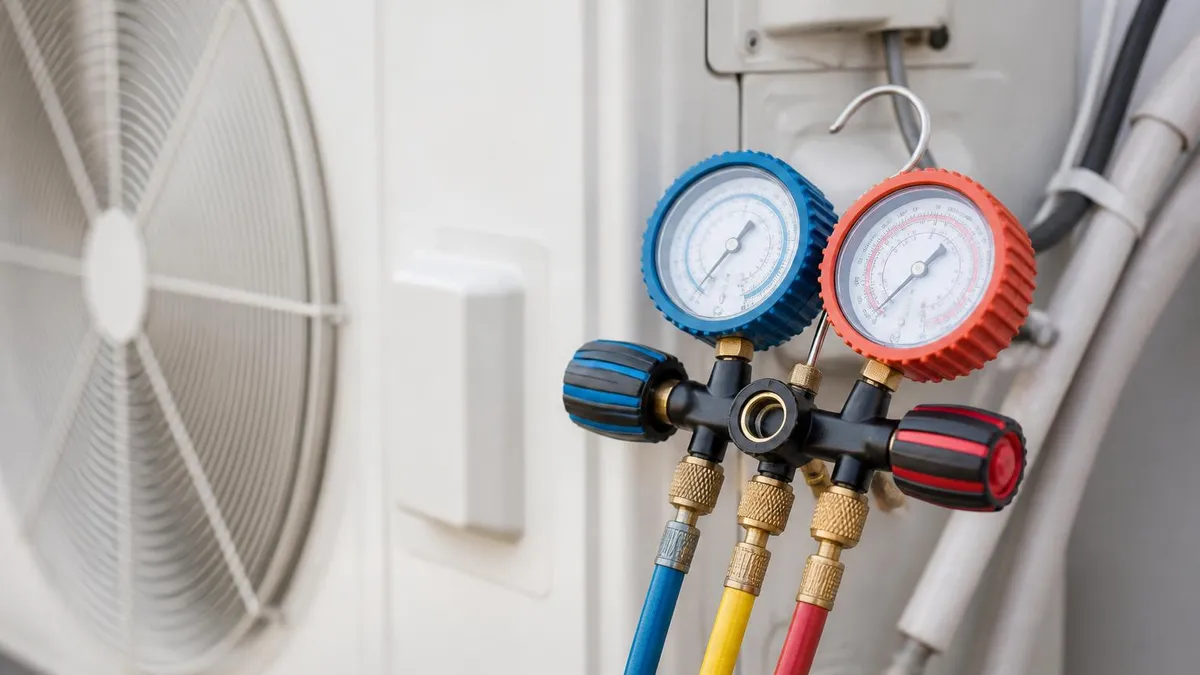
Certified HVAC Contractors: How to Find, Vet, and Hire the Right Professional for Your Home or Business

Best HVAC Repair in Bandon, OR: Local Services Near Me Guide
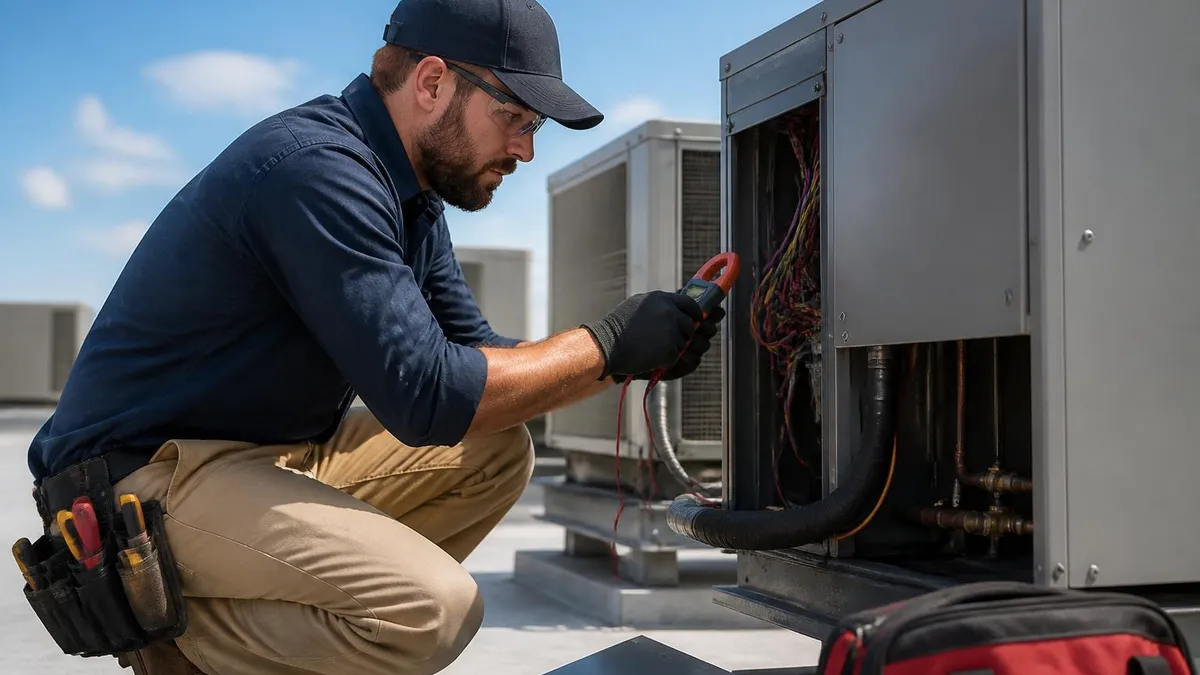
HVAC Installations: The Complete Guide to Planning, Pricing, and Getting It Right the First Time
About the Author

NATE Certified HVAC Technician & Licensing Exam Trainer
Universal Technical InstituteMike Johnson is a NATE-certified HVAC technician and EPA 608 universal-certified refrigerant handler with a Bachelor of Science in HVAC/R Technology. He has 19 years of commercial and residential HVAC installation and service experience and specializes in preparing technicians for NATE certification, EPA 608, A2L refrigerant safety, and state HVAC contractor licensing examinations.