
HVAC Service Atlanta: The Complete Homeowner's Guide to Heating, Cooling, Maintenance, and Hiring the Right Contractor
HVAC service Atlanta guide: costs, seasonal maintenance, repair vs replacement, and how to hire a trusted local heating and cooling contractor. ❓
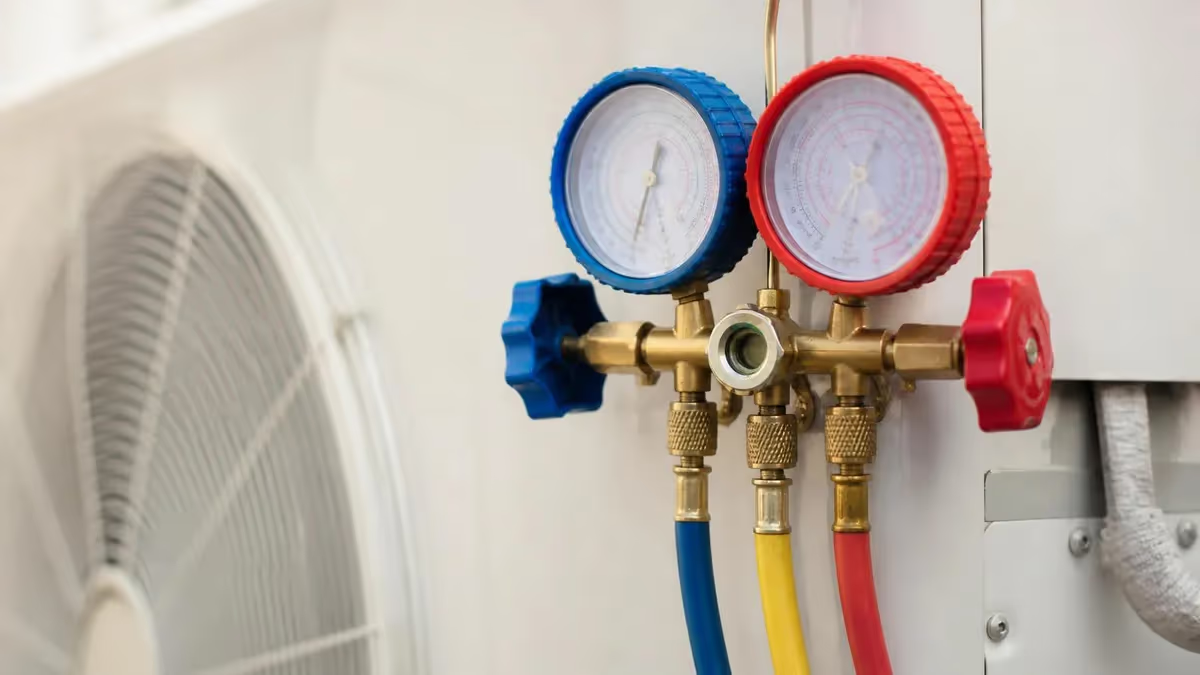
Finding reliable hvac service atlanta homeowners can trust feels overwhelming when your air conditioner quits during a 95-degree July afternoon or your furnace dies on a cold January morning. Atlanta's humid subtropical climate puts unusual strain on heating and cooling equipment, forcing systems to run hard for both long, sticky summers and short but sharp winters. Understanding how local service works, what it should cost, and how to spot a qualified contractor protects your wallet and your comfort year-round.
The metro Atlanta region spans dozens of neighborhoods, from Buckhead high-rises to Decatur bungalows to sprawling Gwinnett subdivisions, and each housing type carries different HVAC demands. Older intown homes often have aging ductwork and undersized returns, while newer suburban builds may have oversized units that short-cycle. A good service company evaluates your specific situation rather than pushing a one-size-fits-all solution, which is exactly what separates a trustworthy pro from a high-pressure salesperson.
Atlanta's climate matters more than most homeowners realize. The region logs roughly 90 days above 90 degrees annually, paired with relentless humidity that makes proper dehumidification essential. That means your cooling system isn't just lowering temperature; it's pulling moisture from the air to prevent mold, musty smells, and that clammy indoor feeling. A system sized or maintained incorrectly cools the air but leaves humidity behind, creating comfort and health problems that no thermostat setting can fix.
Service needs fall into three broad buckets: routine maintenance, emergency repair, and full system replacement. Maintenance keeps equipment running efficiently and catches small problems early. Repair addresses sudden breakdowns like refrigerant leaks, failed capacitors, or frozen coils. Replacement becomes the smart choice when a system is past its useful life or repair costs climb too high. Knowing which category you're in helps you ask the right questions and avoid paying for work you don't need.
Cost transparency is a recurring concern across Atlanta. Prices vary widely between companies, and the same repair can be quoted at dramatically different rates depending on the contractor's overhead, licensing, and sales philosophy. Throughout this guide we break down realistic price ranges, explain what drives those numbers, and show you how to read an estimate so you can compare apples to apples instead of getting lost in confusing line items and vague labor charges.
Finally, the relationship you build with a service provider pays dividends for years. The best outcomes come from homeowners who schedule regular tune-ups, ask questions, keep records, and stick with a licensed company that knows their equipment history. This article walks you through every stage of that journey, from your first phone call to long-term efficiency, so you can make confident decisions whether you're facing an emergency today or simply planning ahead for the next Georgia heat wave.
Atlanta HVAC Service by the Numbers
The Main Types of HVAC Service in Atlanta
Scheduled tune-ups that clean coils, check refrigerant, test electrical components, and replace filters. Maintenance extends equipment life, preserves efficiency, and catches small issues before they become expensive emergency repairs during peak season.
Fast response to sudden breakdowns like a unit that won't cool, strange noises, or a tripping breaker. Atlanta summers make same-day or next-day repair critical to protect health and comfort.
Full removal and installation of furnaces, heat pumps, or air conditioners. Replacement includes load calculations, equipment selection, and code-compliant installation that dramatically improves efficiency over aging systems.
Services like duct cleaning, sealing, dehumidifier installation, and air purification. Given Atlanta's humidity, IAQ work tackles mold, allergens, and moisture that standard cooling alone cannot fully control.
Understanding what hvac service in Atlanta actually costs starts with separating the diagnostic fee from the repair itself. Most reputable companies charge a service call or diagnostic fee between $79 and $150 to send a licensed technician to your home, evaluate the problem, and provide a quote. Some firms waive this fee if you approve the repair, while others apply it as credit. Always ask up front so there are no surprises when the invoice arrives at your door.
Common repairs fall within predictable ranges. Replacing a failed capacitor typically runs $150 to $400, while a contactor replacement lands around $150 to $350. Refrigerant recharges vary based on type and amount, often $200 to $600 or more for systems using older R-22. Blower motor replacement can reach $450 to $1,200, and a failed compressor — one of the most expensive repairs — frequently exceeds $1,500, which often pushes homeowners toward replacement instead.
Maintenance agreements offer strong value for Atlanta homeowners. Annual plans usually cost $150 to $300 and include two visits, priority scheduling, and discounts on repairs. Because our climate forces systems to run hard, these plans frequently pay for themselves by catching refrigerant leaks, dirty coils, and worn parts before they cause a mid-summer failure. When comparing companies near you, you can also research local HVAC technicians near me to gauge typical pricing and reputation in your specific neighborhood.
Full system replacement represents the largest expense most homeowners face. A standard central air conditioner installation runs roughly $5,000 to $9,000, while a complete heat pump or dual-fuel system can reach $8,000 to $14,000 depending on size, efficiency rating, and ductwork condition. High-efficiency variable-speed equipment costs more upfront but delivers meaningful savings on Georgia Power bills, especially during those long stretches of triple-digit heat index days.
Several factors drive Atlanta pricing beyond the equipment itself. Permit fees, code-required upgrades, difficult attic or crawlspace access, and the need to modify undersized ductwork all add cost. Brand selection matters too — premium manufacturers carry higher prices but often better warranties. Labor rates also reflect a company's licensing, insurance, and training investment, so the cheapest quote rarely represents the best long-term value once reliability and warranty support are weighed.
To protect yourself, always collect at least two or three written estimates for major work and insist on itemized line items rather than a single lump sum. A trustworthy estimate specifies equipment model numbers, SEER2 ratings, warranty terms, labor scope, and permit handling. If a contractor refuses to break down the numbers or pressures you to sign immediately, treat that as a warning sign. Informed comparison shopping is the single most effective way Atlanta homeowners control their HVAC service spending.
HVAC Practice Test Questions
Prepare for the HVAC - Heating Ventilation and Air Conditioning exam with our free practice test modules. Each quiz covers key topics to help you pass on your first try.
HVAC Air Conditioning
HVAC Exam Questions covering Air Conditioning. Master HVAC Test concepts for certification prep.
HVAC Code Compliance
Free HVAC Practice Test featuring Code Compliance. Improve your HVAC Exam score with mock test prep.
HVAC Electrical Controls
HVAC Test Prep for Electrical Controls. Practice HVAC Quiz questions and boost your score.
HVAC Energy Efficiency
HVAC Questions and Answers on Energy Efficiency. Free HVAC practice for exam readiness.
HVAC Heating Systems
HVAC Mock Test covering Heating Systems. Online HVAC Test practice with instant feedback.
HVAC Load Calculations
Free HVAC Quiz on HVAC Load Calculations. HVAC Exam prep questions with detailed explanations.
HVAC Tools and Equipment
HVAC Practice Questions for HVAC Tools and Equipment. Build confidence for your HVAC certification exam.
HVAC Refrigeration
HVAC Test Online for Refrigeration. Free practice with instant results and feedback.
HVAC Safety Practices
HVAC Study Material on Safety Practices. Prepare effectively with real exam-style questions.
HVAC System Design
Free HVAC Test covering System Design. Practice and track your HVAC exam readiness.
HVAC Thermodynamics
HVAC Exam Questions covering Thermodynamics. Master HVAC Test concepts for certification prep.
Seasonal HVAC Maintenance for Atlanta Homes
Spring is the ideal time to prepare your air conditioner before Atlanta's brutal summer arrives. A technician cleans the outdoor condenser coil, checks refrigerant pressure, tests the capacitor and contactor, and verifies that the system cools and dehumidifies properly. Scheduling this visit in March or April beats the rush and ensures your unit is ready before the first 90-degree stretch hits the metro region.
Homeowners can help by clearing leaves and debris from around the outdoor unit, replacing filters, and ensuring registers stay unblocked. Catching a weak capacitor or low refrigerant in spring prevents a far more stressful breakdown in July, when service companies are slammed and emergency wait times stretch into days during heat waves.

Should You Sign an Annual HVAC Maintenance Agreement?
- +Two scheduled tune-ups keep equipment efficient and reliable
- +Priority scheduling during peak summer and winter demand
- +Discounts on parts and repair labor throughout the year
- +Early detection of refrigerant leaks and worn components
- +Extends equipment lifespan and protects manufacturer warranties
- +Documented service history supports future warranty claims
- −Annual fees of $150–$300 add a recurring expense
- −Some plans auto-renew without clear notice
- −Value depends on the company actually performing thorough work
- −Newer systems may need less frequent professional attention
- −Plans may push upsells during otherwise routine visits
- −Switching companies can forfeit prepaid plan benefits
Checklist for Hiring an HVAC Service Company in Atlanta
- ✓Verify a valid Georgia HVAC contractor license and state registration
- ✓Confirm liability insurance and workers' compensation coverage
- ✓Read recent Google and BBB reviews from local customers
- ✓Request at least two or three itemized written estimates
- ✓Ask whether the diagnostic fee applies toward the repair
- ✓Confirm technicians are EPA-certified to handle refrigerant
- ✓Check that the company pulls required permits for installations
- ✓Ask about labor and equipment warranty terms in writing
- ✓Verify experience with your specific brand and system type
- ✓Avoid contractors who pressure you to sign immediately
Always confirm EPA Section 608 certification before any refrigerant work
Federal law requires technicians handling refrigerant to hold EPA Section 608 certification. In Atlanta's cooling-heavy climate, most repairs touch the refrigerant circuit, so this credential is non-negotiable. Asking to see it weeds out unqualified handymen and protects you from improper, illegal, or environmentally harmful work that could void your warranty.
One of the toughest decisions Atlanta homeowners face is whether to repair an aging system or replace it entirely. The right answer depends on the system's age, the cost of the repair, and how often it has broken down recently. A useful rule of thumb is the 5,000 rule: multiply the equipment's age by the repair cost, and if the result exceeds 5,000, replacement usually makes more financial sense than another expensive patch on tired equipment.
Age is the single biggest factor. Air conditioners and heat pumps typically last 10 to 15 years in Atlanta, though our long cooling seasons can shorten that range for hard-working units. Once a system passes the 12-year mark, major repairs like compressor or coil failures rarely pay off, because the surrounding components are also nearing the end of their service life and will likely fail soon afterward, stacking repair bills.
Repair frequency tells its own story. If you've called for service two or three times in a single season, the system is signaling that it's wearing out. Each visit costs money and disrupts your comfort, and the cumulative total often approaches what a portion of a new, efficient system would cost. Tracking your repair history gives you concrete evidence to weigh against a replacement quote instead of relying on guesswork.
Efficiency gains strongly favor replacement for older equipment. A system installed 15 years ago might operate at a SEER rating around 10, while modern SEER2 equipment reaches the high teens or low twenties. In Atlanta's punishing summers, that efficiency jump can cut cooling costs by 30 to 50 percent, meaning a new system partially pays for itself through lower Georgia Power bills over its lifetime, especially for households that run AC nearly half the year.
Refrigerant type is another hidden factor. Systems built before 2010 often use R-22, which is no longer produced and has become extremely expensive. A significant leak in an R-22 system can cost hundreds of dollars to recharge with no guarantee the leak won't return. When you face a major R-22 repair, replacement with a modern R-410A or newer-refrigerant system is frequently the smarter long-term investment for your home.
That said, repair remains the right call in many situations. A relatively young system with a single failed capacitor, contactor, or fan motor is well worth fixing, since those parts are affordable and the rest of the equipment has years of life left. If you're weighing a major decision, reviewing detailed HVAC replacement services information helps you understand the full scope, timeline, and costs before committing thousands of dollars to new equipment.

During Atlanta heat waves, emergency service demand spikes and wait times can stretch from hours to days. Companies prioritize maintenance-plan members first. Scheduling spring tune-ups and addressing warning signs early prevents you from waiting in a sweltering home during the busiest, most expensive time of year for repairs.
Maximizing comfort and efficiency in an Atlanta home goes far beyond simply running the air conditioner harder. The humidity that defines our climate is often the real culprit behind discomfort, and proper moisture control transforms how a home feels at the same thermostat setting. A correctly sized system that runs longer, lower cycles removes more humidity than an oversized unit that blasts cold air and shuts off quickly, leaving the air clammy and the home feeling sticky.
Ductwork condition has an outsized impact on both comfort and energy bills. Many Atlanta homes lose 20 to 30 percent of conditioned air through leaky, disconnected, or poorly insulated ducts running through hot attics and crawlspaces. Sealing those leaks delivers immediate improvement, and homeowners exploring HVAC air duct sealing often find it one of the highest-return investments available, fixing uneven room temperatures and slashing wasted energy without touching the main equipment at all.
Thermostat strategy makes a measurable difference too. A programmable or smart thermostat lets you ease back cooling when the house is empty and pre-cool before you return, capturing savings without sacrificing comfort. In Atlanta, setting the thermostat around 78 degrees while home and a few degrees higher when away balances efficiency with livability. Smart models also track runtime and send maintenance reminders, helping you stay ahead of problems before they escalate into failures.
Airflow and filtration deserve regular attention. A clogged filter forces the blower to work harder, reduces cooling capacity, and can freeze the evaporator coil on humid days. Replacing filters on schedule, keeping supply and return registers unobstructed, and ensuring adequate return air pathways all help the system breathe. During heavy pollen season, upgrading to a quality filter improves indoor air quality, though excessively dense filters can restrict airflow if the system isn't designed for them.
Insulation and home sealing work hand in hand with your HVAC equipment. Adding attic insulation, sealing gaps around windows and doors, and shading west-facing windows reduces the cooling load your system must overcome. The less heat that sneaks into your home, the shorter and more efficient your cooling cycles become. These improvements compound with efficient equipment, often allowing a properly sized system to maintain comfort using significantly less energy throughout the long Georgia summer.
Finally, dehumidification deserves dedicated consideration in our climate. Some Atlanta homes benefit from a whole-house dehumidifier that works alongside the air conditioner, particularly in spring and fall shoulder seasons when temperatures are mild but humidity stays high. Controlling moisture independently prevents that muggy indoor feeling, discourages mold growth, and lets you keep the thermostat slightly higher while still feeling comfortable, which saves energy and protects both your home's structure and your family's health.
Putting everything together, the most successful Atlanta homeowners treat HVAC service as an ongoing relationship rather than a series of panicked emergency calls. Start by selecting a licensed, insured, well-reviewed company before you need them urgently, so you already have a trusted partner when something fails. Save their number, keep your equipment model and serial numbers handy, and document every service visit. This preparation turns a stressful breakdown into a quick, manageable phone call instead of a frantic scramble.
Schedule maintenance proactively rather than reactively. Booking your cooling tune-up in early spring and your heating inspection in early fall keeps you ahead of the seasonal rush and ensures problems surface during mild weather, not during an extreme heat advisory. Set calendar reminders or enroll in a maintenance plan so these visits never slip. Consistent upkeep is the cheapest insurance you can buy against the most expensive and disruptive HVAC failures.
When a repair need arises, resist the urge to accept the first quote out of relief. Ask the technician to explain exactly what failed, why, and what your options are. Request the diagnosis in writing, and for any repair over a few hundred dollars, consider a second opinion. Reputable Atlanta companies welcome questions and never pressure you. High-pressure tactics, vague explanations, and refusal to itemize costs are reliable signals to call someone else.
Keep a simple home comfort log throughout the year. Note when rooms feel uneven, when bills spike unexpectedly, when you hear new noises, or when humidity feels high despite the AC running. These observations are gold for a technician trying to diagnose intermittent problems quickly. They also help you recognize gradual decline that might otherwise go unnoticed until the system fails completely on the worst possible day.
Invest in the improvements that pay back. Duct sealing, attic insulation, a smart thermostat, and a properly sized replacement system all deliver measurable returns in an Atlanta climate that demands so much from cooling equipment. Prioritize fixes that address root causes — like air leaks and oversized units — rather than chasing symptoms. The goal is a home that stays comfortable and efficient through both summer humidity and winter cold snaps without constant intervention.
Finally, stay informed and ask for credentials. Understanding the basics of how your system works, what licensing and certification mean, and what fair pricing looks like makes you a far better customer and a harder target for upselling. The knowledge you've gathered here — about costs, maintenance timing, repair-versus-replacement math, and efficiency upgrades — puts you firmly in control of every HVAC decision your Atlanta home will require for years to come.
HVAC Questions and Answers
HVAC Technicians Near Me: The Complete Homeowner's Guide to Finding, Vetting, and Hiring Local Heating and Cooling Pros

HVAC Replacement Services: Complete Guide to System Replacement, Costs, and What to Expect

HVAC Air Duct Sealing: The Complete Homeowner and Contractor Guide to Sealing Ductwork for Efficiency, Comfort, and Indoor Air Quality
HVAC Solutions: The Complete Guide to Heating, Cooling, and Indoor Air Quality Systems for Homes and Buildings
HVAC Sales: The Complete Guide to Selling Heating and Cooling Systems, Building Customer Trust, and Closing More Deals
About the Author

NATE Certified HVAC Technician & Licensing Exam Trainer
Universal Technical InstituteMike Johnson is a NATE-certified HVAC technician and EPA 608 universal-certified refrigerant handler with a Bachelor of Science in HVAC/R Technology. He has 19 years of commercial and residential HVAC installation and service experience and specializes in preparing technicians for NATE certification, EPA 608, A2L refrigerant safety, and state HVAC contractor licensing examinations.