HVAC School Cost: The Complete Guide to Training Program Tuition, Financial Aid, and Maximizing Your Return on Investment
Discover the real HVAC school cost in 2026 August. Compare trade school, 💯 community college, and apprenticeship tuition with financial aid tips to reduce expenses.
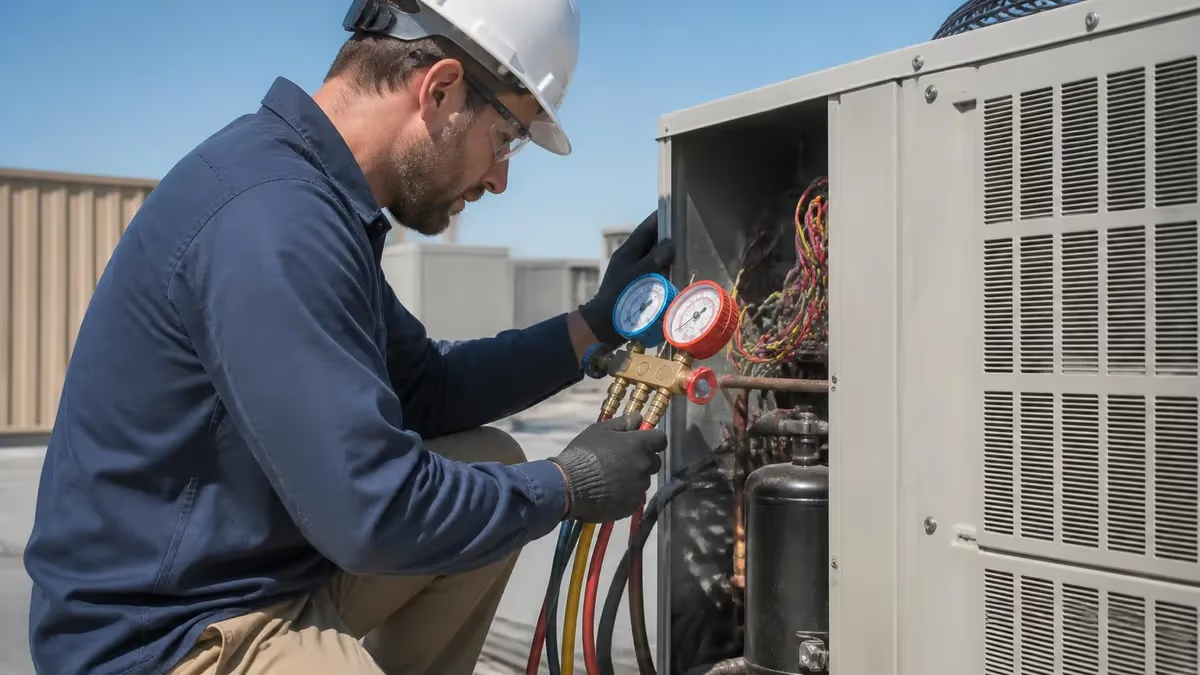
Understanding HVAC school cost is one of the most important steps you can take before committing to a career in heating, ventilation, and air conditioning. The investment required varies dramatically depending on the type of program you choose, where you live, and whether you attend a private trade school or a publicly funded community college. In 2026, prospective HVAC students can expect to pay anywhere from a few thousand dollars to more than fifteen thousand dollars for a complete training program, making it essential to research thoroughly before enrolling.
The demand for skilled HVAC technicians continues to climb as older professionals retire and new construction projects expand across the United States. The Bureau of Labor Statistics projects that HVAC mechanic and installer jobs will grow by approximately six percent through 2032, which is faster than the average for all occupations. This strong job outlook means that an investment in HVAC training today can translate into stable employment and competitive wages for decades to come, but only if you choose the right program at a price that makes financial sense.
Many students are surprised to learn that HVAC school cost encompasses far more than just tuition. Books, tools, lab fees, certification exam fees, and even transportation expenses can add hundreds or thousands of dollars to the total price tag. Some programs require students to purchase their own tool kits, which can run between three hundred and eight hundred dollars depending on the brand and quality. Understanding these hidden costs upfront prevents unpleasant financial surprises halfway through your education and allows you to budget more accurately.
Trade schools and vocational institutions represent the most common pathway into the HVAC profession. These programs typically last between six months and two years and focus heavily on hands-on technical skills rather than general education coursework. Tuition at private trade schools tends to be higher than at community colleges, but many graduates appreciate the accelerated timeline and industry-specific curriculum. Community colleges, on the other hand, offer lower tuition rates and the option to earn an associate degree, which can open doors to supervisory roles later in your career.
Apprenticeship programs offer a third path that allows you to earn money while you learn on the job under the supervision of experienced technicians. While apprenticeships typically involve little to no tuition cost, they do require a significant time commitment of four to five years before you achieve journeyman status. Many apprenticeships are sponsored by unions or large HVAC contractors who cover training expenses in exchange for your labor, making this an attractive option for students who cannot afford traditional tuition payments.
Financial aid plays a critical role in making HVAC education affordable for a broad range of students. Federal Pell Grants, state workforce development grants, GI Bill benefits for veterans, and institutional scholarships can reduce out-of-pocket costs by thousands of dollars. Many accredited HVAC programs also accept federal student loans, though borrowing should always be approached cautiously. The key is to fill out the Free Application for Federal Student Aid early and explore every scholarship opportunity available in your state and community.
This comprehensive guide breaks down every aspect of HVAC school cost so you can make an informed decision about your education. We will examine tuition ranges for different program types, explore the hidden expenses that catch students off guard, compare financial aid options, and calculate the return on investment you can expect from an HVAC career. Whether you are a recent high school graduate, a career changer, or a veteran transitioning to civilian employment, the information ahead will help you navigate the financial landscape of HVAC training with confidence.
HVAC School Cost by the Numbers
HVAC School Tuition Breakdown by Program Type
Community college HVAC programs consistently offer the lowest tuition rates for students seeking formal classroom training. Public community colleges receive state and local funding that allows them to keep tuition well below what private institutions charge. A typical certificate program at a community college runs between twelve hundred and five thousand dollars, while an associate degree program that includes general education courses alongside HVAC coursework costs between thirty-five hundred and ten thousand dollars. These programs often have articulation agreements with four-year universities for students who want to pursue a bachelor's degree in facilities management or mechanical engineering technology.
Private trade schools and vocational institutions charge significantly more than community colleges, with tuition ranging from six thousand to fifteen thousand dollars for programs that last between six and eighteen months. The higher price tag often reflects smaller class sizes, newer equipment, and a curriculum designed in partnership with major HVAC manufacturers like Carrier, Trane, and Lennox. Some private schools also include industry certifications like EPA Section 608 and OSHA 10 in their tuition, whereas community college students may need to pay for these exams separately at approximately one hundred to two hundred dollars each.
Apprenticeship programs represent the most affordable path into HVAC work because apprentices earn wages from their very first day on the job. Union apprenticeships through organizations like the United Association of Plumbers and Pipefitters or Sheet Metal Workers International Association typically cover all classroom instruction costs, and apprentices receive incremental pay raises as they progress through the program. Starting wages for first-year HVAC apprentices average between fourteen and eighteen dollars per hour in most metropolitan areas, which means you can support yourself financially while gaining the skills you need to become a licensed technician.
Online and hybrid HVAC programs have grown in popularity since 2020, and their costs fall somewhere between community college and private trade school rates. Programs from institutions like Penn Foster and Ashworth College charge between two thousand and eight thousand dollars for certificate-level coursework that covers theory, system design, and troubleshooting fundamentals. However, it is important to understand that HVAC work is inherently hands-on, and most employers prefer candidates who have completed programs with substantial lab or field components. Many hybrid programs address this by requiring students to complete practical hours at a local partner facility.
Beyond tuition, students at every type of HVAC program should budget for additional expenses that are not always included in the advertised price. Textbooks and course materials typically cost between two hundred and six hundred dollars per year, depending on the program. Safety equipment including steel-toed boots, safety glasses, and work gloves adds another one hundred to three hundred dollars. Many programs also charge technology fees, lab fees, and student activity fees that can total anywhere from one hundred and fifty to five hundred dollars per semester, adding substantially to the overall cost of attendance.
Geographic location has a significant impact on HVAC school cost. Programs in major metropolitan areas like New York City, Los Angeles, and Chicago tend to charge higher tuition than schools in smaller cities or rural areas, partly due to higher operating costs and partly because of stronger local demand for trained technicians. However, students in expensive areas may also find more generous financial aid packages and employer-sponsored tuition assistance programs. It is worth comparing schools within a reasonable commuting distance to find the best combination of quality instruction and affordable pricing.
The length of the program directly correlates with total cost. A six-month certificate program focused exclusively on residential HVAC systems will cost considerably less than a two-year associate degree program that covers commercial refrigeration, building automation systems, and project management. While shorter programs get you into the workforce faster, longer programs often provide a broader skill set that leads to higher starting salaries and faster career advancement. Calculating the total cost of each option alongside expected starting wages helps you determine which path delivers the best value for your individual circumstances.
HVAC Practice Test Questions
Prepare for the HVAC - Heating Ventilation and Air Conditioning exam with our free practice test modules. Each quiz covers key topics to help you pass on your first try.
HVAC Air Conditioning
HVAC Exam Questions covering Air Conditioning. Master HVAC Test concepts for certification prep.
HVAC Code Compliance
Free HVAC Practice Test featuring Code Compliance. Improve your HVAC Exam score with mock test prep.
HVAC Electrical Controls
HVAC Test Prep for Electrical Controls. Practice HVAC Quiz questions and boost your score.
HVAC Energy Efficiency
HVAC Questions and Answers on Energy Efficiency. Free HVAC practice for exam readiness.
HVAC Heating Systems
HVAC Mock Test covering Heating Systems. Online HVAC Test practice with instant feedback.
HVAC Load Calculations
Free HVAC Quiz on HVAC Load Calculations. HVAC Exam prep questions with detailed explanations.
HVAC Tools and Equipment
HVAC Practice Questions for HVAC Tools and Equipment. Build confidence for your HVAC certification exam.
HVAC Refrigeration
HVAC Test Online for Refrigeration. Free practice with instant results and feedback.
HVAC Safety Practices
HVAC Study Material on Safety Practices. Prepare effectively with real exam-style questions.
HVAC System Design
Free HVAC Test covering System Design. Practice and track your HVAC exam readiness.
HVAC Thermodynamics
HVAC Exam Questions covering Thermodynamics. Master HVAC Test concepts for certification prep.
Financial Aid Options for HVAC Students
The Federal Pell Grant is the most valuable form of financial aid for HVAC students because it does not need to be repaid. Eligible students can receive up to seven thousand three hundred ninety-five dollars per year in 2026, which can cover the entire tuition cost at many community college programs. To qualify, you must demonstrate financial need by completing the FAFSA form. Students whose expected family contribution falls below a certain threshold automatically receive the maximum award amount available for the academic year.
Federal Direct Subsidized and Unsubsidized Loans are available to HVAC students attending accredited institutions. Subsidized loans do not accrue interest while you are enrolled at least half-time, making them the better option when borrowing is necessary. First-year dependent students can borrow up to three thousand five hundred dollars in subsidized loans and an additional two thousand in unsubsidized loans. Before accepting any federal loans, compare the total repayment amount including interest against your expected starting salary to ensure the debt remains manageable after graduation.

Trade School vs. Community College for HVAC Training
- +Shorter program duration at trade schools means faster entry into the workforce and earlier earning potential
- +Trade schools often feature industry partnerships that provide access to the latest HVAC equipment and technology
- +Community colleges offer significantly lower tuition rates due to public funding and state subsidies
- +Associate degrees from community colleges can qualify graduates for supervisory and management positions
- +Community college credits may transfer to four-year universities for students pursuing advanced degrees
- +Both program types qualify for federal financial aid including Pell Grants and student loans
- −Private trade school tuition can be three to five times higher than comparable community college programs
- −Community college programs often take longer to complete due to general education course requirements
- −Trade school credits rarely transfer to other institutions if you decide to continue your education
- −Community college HVAC programs may have larger class sizes and longer waitlists for enrollment
- −Some trade schools have aggressive recruitment practices and may overstate job placement statistics
- −Evening and weekend scheduling options may be limited at both trade schools and community colleges
HVAC School Enrollment Checklist
- ✓Verify that the school holds accreditation from HVAC Excellence or a regional accrediting body recognized by the Department of Education.
- ✓Complete the FAFSA application to determine your eligibility for federal grants, loans, and work-study programs.
- ✓Request a detailed cost breakdown from each school including tuition, fees, books, tools, and certification exam costs.
- ✓Visit the campus in person to inspect lab facilities, equipment condition, and classroom learning environments.
- ✓Ask the admissions office for documented job placement rates and average starting salaries of recent graduates.
- ✓Confirm that the program includes EPA Section 608 certification preparation and testing in its curriculum.
- ✓Research whether your state offers workforce development grants or training vouchers for HVAC students.
- ✓Compare at least three different programs before making a final enrollment decision to ensure best value.
- ✓Verify that financial aid disbursement timelines align with tuition payment deadlines to avoid late fees.
- ✓Ask current students and recent alumni about their experience with instructors, curriculum quality, and career support services.
The Real Cost May Be Lower Than You Think
After applying federal Pell Grants, state workforce grants, and institutional scholarships, many community college HVAC students pay less than one thousand dollars out of pocket for their entire certificate program. Even at private trade schools, the average student receives between three thousand and five thousand dollars in grant aid that does not need to be repaid. Always complete the FAFSA before assuming you cannot afford HVAC training.
Calculating the return on investment for HVAC school requires you to weigh the total cost of your education against the lifetime earnings premium you gain by entering the profession. The median annual salary for HVAC mechanics and installers reached fifty-seven thousand seven hundred ninety dollars in 2024 according to the Bureau of Labor Statistics, with the top ten percent earning more than eighty thousand dollars per year.
When you consider that many HVAC technicians begin their careers within six to eighteen months of starting school, the payback period on a five thousand to fifteen thousand dollar education investment is remarkably short compared to four-year college degrees.
Starting salaries for newly graduated HVAC technicians vary by region, employer, and specialization but typically fall between thirty-five thousand and forty-five thousand dollars annually. Technicians working in metropolitan areas with high demand and elevated costs of living tend to command higher starting wages.
Within three to five years of entering the field, most technicians earn between forty-five thousand and sixty-five thousand dollars as they gain experience, earn additional certifications, and take on more complex service and installation projects. This rapid wage growth means that even students who borrowed money for school can typically repay their loans within two to three years of graduation.
Specialization dramatically increases earning potential in the HVAC industry. Technicians who obtain certifications in commercial refrigeration, building automation systems, or energy management can command salaries well above the industry median. Commercial HVAC technicians working on large-scale systems in hospitals, data centers, and industrial facilities often earn between seventy thousand and ninety thousand dollars annually. Controls technicians who program and maintain building management systems represent one of the highest-paid specialties, with experienced professionals earning upward of eighty-five thousand dollars in major markets.
The HVAC industry also offers substantial opportunities for self-employment and business ownership that further amplify the return on your educational investment. Many technicians who start their own HVAC companies within five to ten years of entering the field report annual revenues exceeding two hundred thousand dollars. While running a business involves additional expenses and responsibilities, the profit margins in residential HVAC service work are typically strong, ranging from fifteen to twenty-five percent for well-managed companies. Your HVAC school education forms the technical foundation upon which you can build a thriving business.
Comparing the HVAC career path to other options reveals just how favorable the investment equation is. A four-year college degree costs an average of over one hundred thousand dollars at public universities and significantly more at private institutions, yet many college graduates struggle to find employment in their field. HVAC students invest a fraction of that amount and enter a field with near-universal demand and strong job security. The combination of low educational costs, short training timelines, strong starting wages, and excellent career growth makes HVAC one of the most financially rewarding trade careers available in the United States today.
Overtime pay and seasonal bonuses further boost the financial returns of an HVAC career. The summer cooling season and winter heating season create predictable spikes in service demand that often result in overtime hours for technicians. At time-and-a-half pay rates, a technician earning thirty dollars per hour base pay receives forty-five dollars per hour for overtime work. Many technicians report earning an additional five thousand to fifteen thousand dollars annually from overtime alone, particularly those working for service-focused companies that operate emergency repair lines during evenings and weekends throughout peak seasons.
Geographic relocation represents another strategy for maximizing your return on HVAC school investment. States like Texas, Florida, Arizona, and Nevada consistently rank among the highest-demand markets for HVAC technicians due to extreme summer temperatures and rapid population growth. Technicians willing to relocate to these high-demand markets often find signing bonuses, relocation assistance, and wages that are ten to twenty percent above the national median. Before enrolling in school, research the job market conditions in areas where you would be willing to work to ensure your investment aligns with the strongest possible employment outcomes.

Only HVAC programs at institutions accredited by agencies recognized by the U.S. Department of Education qualify for federal financial aid including Pell Grants and student loans. Before enrolling, verify the school's accreditation status on the Department of Education's database. Attending an unaccredited program means you will pay the full cost out of pocket with no access to federal grants or subsidized loans, potentially costing you thousands of dollars in missed financial aid opportunities.
Choosing the right HVAC school involves evaluating multiple factors beyond just the sticker price of tuition. Accreditation should be your first priority because it guarantees that the program meets minimum quality standards and qualifies you for federal financial aid. Look for institutional accreditation from regional accrediting bodies as well as programmatic accreditation from HVAC Excellence, which specifically evaluates heating, ventilation, air conditioning, and refrigeration training programs. Schools that hold both types of accreditation have demonstrated a commitment to educational quality that translates into better outcomes for their graduates.
The curriculum structure and content should closely align with the skills that employers in your area actually demand. A strong HVAC program covers residential and commercial heating systems, air conditioning and refrigeration, electrical fundamentals, ductwork design, indoor air quality, and building codes. Programs that include hands-on lab hours representing at least fifty percent of total instructional time produce more job-ready graduates than those that rely heavily on classroom lectures. Ask each school for a detailed syllabus and compare it against the competencies listed in local HVAC job postings to ensure alignment.
Instructor qualifications directly affect the quality of education you receive. The best HVAC programs employ instructors who hold current industry certifications such as NATE, EPA Section 608, and relevant state licenses, in addition to their teaching credentials. Instructors with recent field experience can share practical insights about troubleshooting, customer interactions, and emerging technologies like heat pumps and smart thermostats that textbooks alone cannot provide. During your campus visit, ask to observe a class session and speak with instructors about their professional backgrounds and teaching philosophies.
Job placement rates and employer partnerships are among the most reliable indicators of program quality. Schools that maintain strong relationships with local HVAC contractors, mechanical firms, and property management companies can connect graduates with employment opportunities more effectively than those without industry connections. Ask the admissions office for specific placement rate data from the most recent graduating class, and verify those numbers by contacting recent alumni. A job placement rate above eighty percent generally indicates a program that employers trust and value when making hiring decisions.
Scheduling flexibility matters enormously for students who need to work while attending school. Many HVAC programs offer evening and weekend class options that allow students to maintain part-time or even full-time employment during their training. Some programs operate on accelerated schedules with classes meeting four or five days per week, enabling completion in as little as six months. Others follow traditional semester schedules that spread coursework over two years. Consider your personal financial situation, family obligations, and learning style when evaluating which schedule format will allow you to succeed academically without excessive stress.
The condition and modernity of lab equipment directly impacts your educational experience and preparation for the workforce. Schools that invest in current-generation HVAC systems from major manufacturers give students exposure to the equipment they will actually encounter on job sites. Look for labs that include both residential and commercial units, multiple refrigerant types, digital diagnostic tools, and building automation system trainers. Outdated equipment that no longer reflects industry standards can leave graduates feeling unprepared when they encounter modern systems during their first weeks on the job with an employer.
Finally, consider the total value proposition by calculating the cost per instructional hour at each school you are evaluating. Divide the total program cost by the total number of classroom and lab hours to determine how much you are paying for each hour of instruction.
A program that costs ten thousand dollars for twelve hundred hours of training delivers better value per hour than one costing eight thousand dollars for only six hundred hours. This calculation helps you see beyond headline tuition numbers and make a truly apples-to-apples comparison that accounts for the depth and breadth of training each program provides.
Reducing your total HVAC school cost starts with strategic planning well before the first day of classes. Begin by creating a comprehensive budget that accounts for every expense including tuition, fees, books, tools, transportation, and living costs during the training period. Contact the financial aid offices of your top three schools at least six months before your intended start date to understand application deadlines and required documentation. Many grant and scholarship programs operate on first-come, first-served funding cycles, which means early applicants have the best chance of receiving the largest possible awards.
Purchasing used textbooks and tools can save you hundreds of dollars without compromising the quality of your education. Check online marketplaces, campus bulletin boards, and social media groups for HVAC students selling their materials at discounted prices. Many HVAC textbooks remain current for multiple editions because fundamental principles of thermodynamics, refrigeration, and electrical theory do not change from year to year. For tools, consider starting with a basic kit and adding specialized instruments as your coursework requires them rather than purchasing an expensive comprehensive set upfront.
Working part-time in a related field while attending school provides both income and relevant experience that enhances your resume upon graduation. Many HVAC companies hire helpers and assistants who perform basic tasks like loading equipment, pulling wire, and assisting technicians with installations. These entry-level positions typically pay between twelve and sixteen dollars per hour and give you firsthand exposure to the daily realities of HVAC work. Some employers will even offer tuition assistance to part-time employees who are enrolled in HVAC training programs, creating a dual benefit of earned wages and reduced educational costs.
Certification exam preparation should begin during your program rather than after graduation to avoid additional costs and delays. The EPA Section 608 certification is required by federal law for anyone who handles refrigerants, and the exam fee typically ranges from twenty to forty dollars when taken through an approved testing center. NATE certification, while not legally required, significantly boosts your employability and often qualifies you for higher starting wages. Many HVAC programs include certification prep materials in their curriculum, so take full advantage of these resources while they are available to you as a student.
Networking with classmates, instructors, and industry professionals during your training creates connections that pay dividends throughout your career. Attend any career fairs, industry events, or manufacturer training sessions that your school organizes. Join student chapters of professional organizations like ASHRAE or the Refrigeration Service Engineers Society, which offer discounted student memberships. These connections often lead to job offers, mentorship opportunities, and insider knowledge about which employers offer the best compensation packages and working conditions in your area.
Consider the timing of your enrollment strategically to maximize both financial aid and job prospects. Starting an HVAC program in the fall semester often provides access to the largest pool of financial aid because institutional scholarship budgets are freshest at the beginning of the academic year. Graduating in the spring positions you to enter the job market just as the summer cooling season begins, which is when HVAC companies do their heaviest hiring. This timing strategy ensures you transition from student to employed technician with minimal gap time and maximum leverage in salary negotiations.
Building strong study habits and maintaining high grades throughout your program pays off in ways that extend beyond academic achievement. Many scholarship programs require minimum GPA thresholds for renewal, so strong grades keep your financial aid intact for the duration of your training. Excellent academic performance also catches the attention of instructors who serve as references and employment contacts after graduation. Employers frequently ask HVAC schools to recommend their top students for open positions, and technicians who demonstrate dedication and aptitude during their education often receive the most attractive job offers upon completing their program.
HVAC Questions and Answers
HVAC Sales: The Complete Guide to Selling Heating and Cooling Systems, Building Customer Trust, and Closing More Deals

HVAC Technicians Near Me: The Complete Homeowner's Guide to Finding, Vetting, and Hiring Local Heating and Cooling Pros

HVAC Air Duct Sealing: The Complete Homeowner and Contractor Guide to Sealing Ductwork for Efficiency, Comfort, and Indoor Air Quality

HVAC Replacement Services: Complete Guide to System Replacement, Costs, and What to Expect