
HVAC Repair in Columbia, SC: What to Expect, What It Costs, and How to Find the Right Technician
Need hvac repair columbia sc? Learn what repairs cost, when to call a pro, and how to choose a trusted technician in the Midlands. ✅
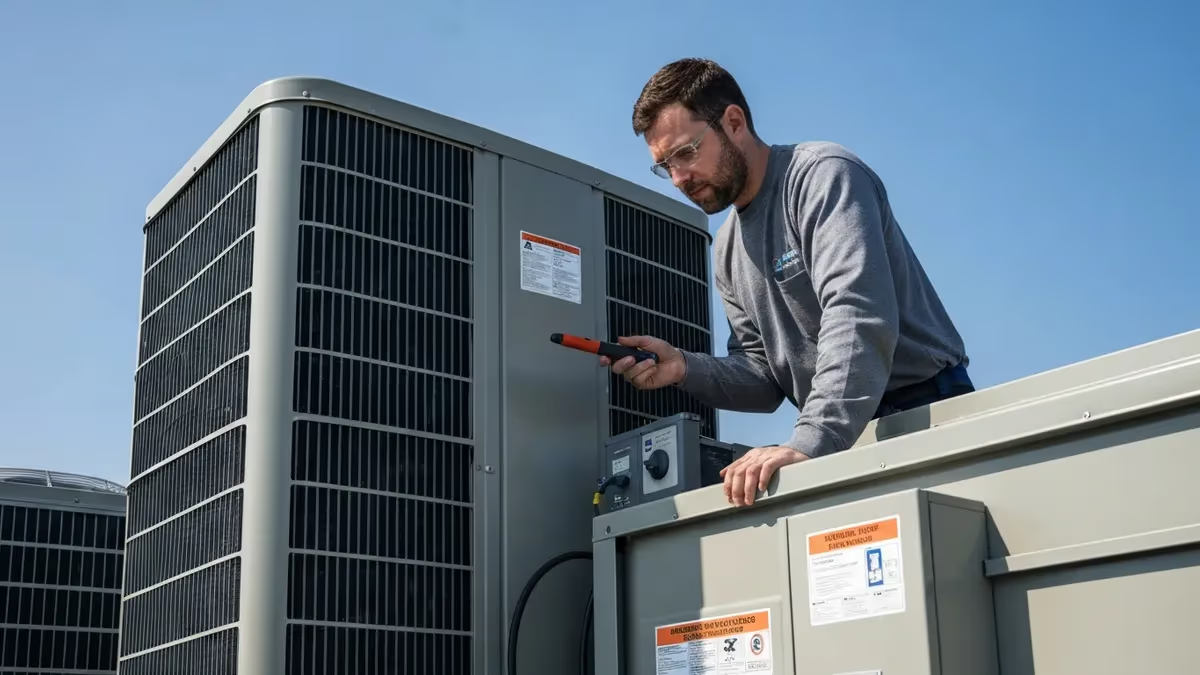
If you have ever faced a broken air conditioner in the middle of a South Carolina summer, you already know that hvac repair columbia sc is not just a convenience — it is an urgent necessity.
Columbia sits in the humid subtropical climate zone, where July and August temperatures routinely push past 95°F with dew points that make the air feel closer to 105°F. When your system fails during those peak weeks, indoor temperatures can become dangerous within hours, especially for children, older adults, and anyone with respiratory conditions. Understanding the local repair landscape before a crisis hits gives you real power to act quickly and avoid overpaying.
Columbia's HVAC market is large and competitive, with dozens of licensed contractors serving Richland and Lexington counties. That competition is generally good for homeowners: it keeps prices honest and means most companies offer same-day or next-day emergency appointments during the busy season.
However, it also means you need a framework for evaluating technicians quickly, because when your unit stops working at 9 p.m. on a Tuesday, you may not have time for leisurely research. Knowing what credentials to look for, what questions to ask, and what a fair price looks like can save you hundreds of dollars and a lot of stress.
The types of repairs Columbia homeowners most commonly need reflect the demands this climate places on HVAC equipment. Refrigerant leaks are extremely common because systems run nearly year-round and the constant cycling accelerates wear on copper lines and fittings. Capacitor failures are likewise frequent — capacitors are relatively inexpensive parts, but the heat inside outdoor condenser cabinets degrades them faster than manufacturers' rated lifetimes would suggest. Dirty evaporator and condenser coils, clogged condensate drain lines, and blower motor issues round out the top five most frequent service calls across the Midlands region.
Beyond breakdowns, Columbia residents deal with a unique maintenance challenge: the combination of high humidity and pine pollen. The Midlands sits in one of the highest pollen-production regions in the eastern United States, and that fine particulate matter clogs filters, coats coil fins, and reduces airflow efficiency faster than in drier climates.
Homeowners who change filters every 30 days during spring and fall — rather than every 90 days as the package suggests — consistently report fewer emergency service calls and lower utility bills. This single habit can extend the life of an average residential system by two to three years.
Seasonal timing also affects both the urgency and the cost of repairs in Columbia. Technicians are in extremely high demand from late May through early September and again during January cold snaps. Booking a repair during these peaks often means waiting one to three days unless you pay an emergency or after-hours premium, which typically adds $75–$150 to the base service call fee.
If your system is showing early warning signs — strange noises, uneven cooling, higher-than-usual energy bills — scheduling a diagnostic visit in April or October can get you faster service at standard rates and prevent a failure at the worst possible time.
Understanding the difference between a repair and a replacement is one of the most financially significant decisions a Columbia homeowner makes. The general industry rule of thumb is the "5,000 rule": multiply the age of the system in years by the estimated repair cost in dollars, and if the result exceeds $5,000, replacement is likely the smarter investment.
A 12-year-old system needing a $450 repair scores 5,400 — a borderline case worth discussing with your technician. A 15-year-old system needing a $600 compressor replacement scores 9,000 — almost certainly a replacement scenario, especially given the efficiency gains modern systems offer over equipment manufactured before 2015.
Columbia also benefits from several utility and federal incentive programs that can offset the cost of upgrading aging equipment. SCE&G (now Dominion Energy South Carolina) has historically offered rebates for high-efficiency central air conditioners and heat pumps.
The federal Inflation Reduction Act extended and expanded tax credits for qualifying HVAC equipment through 2032, allowing homeowners to claim up to 30% of the cost of a heat pump installation, capped at $2,000 per year. Pairing these incentives with a competitive contractor quote can make a new system surprisingly affordable, turning what feels like an emergency expense into a planned home improvement with a clear return on investment.
HVAC Repair in Columbia, SC — By the Numbers
What HVAC Repairs Cost in Columbia, SC
Finding a trustworthy HVAC contractor in Columbia requires more than reading a handful of Google reviews. The state of South Carolina requires HVAC technicians to hold a valid mechanical contractor's license issued by the South Carolina Contractors Licensing Board.
Before you authorize any work, ask the technician for their license number and verify it takes less than two minutes at the SCLLR online portal. Unlicensed work is not only a legal risk for the contractor; it can void your equipment warranty and create problems if you ever sell your home. This is a non-negotiable first step, regardless of how polished a company's website looks.
Beyond licensing, look for technicians who hold NATE (North American Technician Excellence) certification. NATE is the most widely recognized third-party credentialing body in the residential and commercial HVAC industry, and earning a NATE credential requires passing a rigorous exam covering real-world installation, service, and troubleshooting scenarios. A NATE-certified tech is not automatically better than a skilled non-certified one, but the certification signals a commitment to professional development and a demonstrated baseline of technical knowledge that matters when diagnosing complex problems.
When collecting quotes, ask each contractor to provide a written estimate that itemizes parts and labor separately. This transparency makes comparison shopping far more meaningful than a single bottom-line number. It also protects you from the common practice of "parts padding," where a contractor marks up the cost of a capacitor or contactor by 200–300% without disclosing the markup. Knowing that a 45/5 MFD dual-run capacitor retails for $20–$40 at a supply house lets you have an informed conversation if a quote lists it at $180. Contractors who refuse to itemize should raise a red flag.
Manufacturer warranties and labor warranties are two separate things, and many homeowners discover this difference at the worst possible moment. Equipment warranties — typically 5 to 10 years on parts — are issued by the manufacturer and cover the cost of replacement parts.
Labor warranties, which cover the technician's time to diagnose and install those parts, are issued by the contractor and vary widely: some offer 30 days, others offer one year. Always ask for both warranty terms in writing before authorizing a repair. A quality shop will stand behind its work for at least 90 days on labor without hesitation.
References and tenure in the Columbia market are valuable signals, but they need to be interpreted carefully. A company that has operated in Richland or Lexington County for 15 or more years has likely built its reputation on repeat customers and word-of-mouth referrals — both of which are harder to sustain than purchased online reviews. Ask neighbors in your subdivision or community Facebook group for firsthand recommendations. Real estate agents who work in your neighborhood often maintain short lists of reliable tradespeople they trust with their clients' homes, and they are usually willing to share those names.
Maintenance agreements are worth considering if you plan to stay in your home long-term and want to build a relationship with a single contractor. Most Columbia HVAC companies offer annual or semi-annual maintenance plans that include a tune-up in spring (before cooling season) and fall (before heating season), priority scheduling during peak demand, and discounts on parts and labor. These plans typically run $150–$300 per year for a standard residential system. The peace of mind and preferred scheduling access during a Columbia summer heatwave can easily be worth that investment, independent of any maintenance benefits to the equipment itself.
Energy efficiency ratings should factor into any repair or replacement conversation. Modern central air conditioners are rated by SEER2 (Seasonal Energy Efficiency Ratio, second generation), with minimum federal standards for the Southeast set at 15.2 SEER2 for split systems as of January 2023.
Older systems installed before 2010 often carry SEER ratings of 10–13, meaning a new system could use 30–40% less electricity to produce the same cooling output. In Columbia, where air conditioning accounts for 40–50% of the average household's summer electricity bill, that efficiency gap translates to real monthly savings that offset a portion of the replacement investment over time.
Common HVAC Repair Types Explained
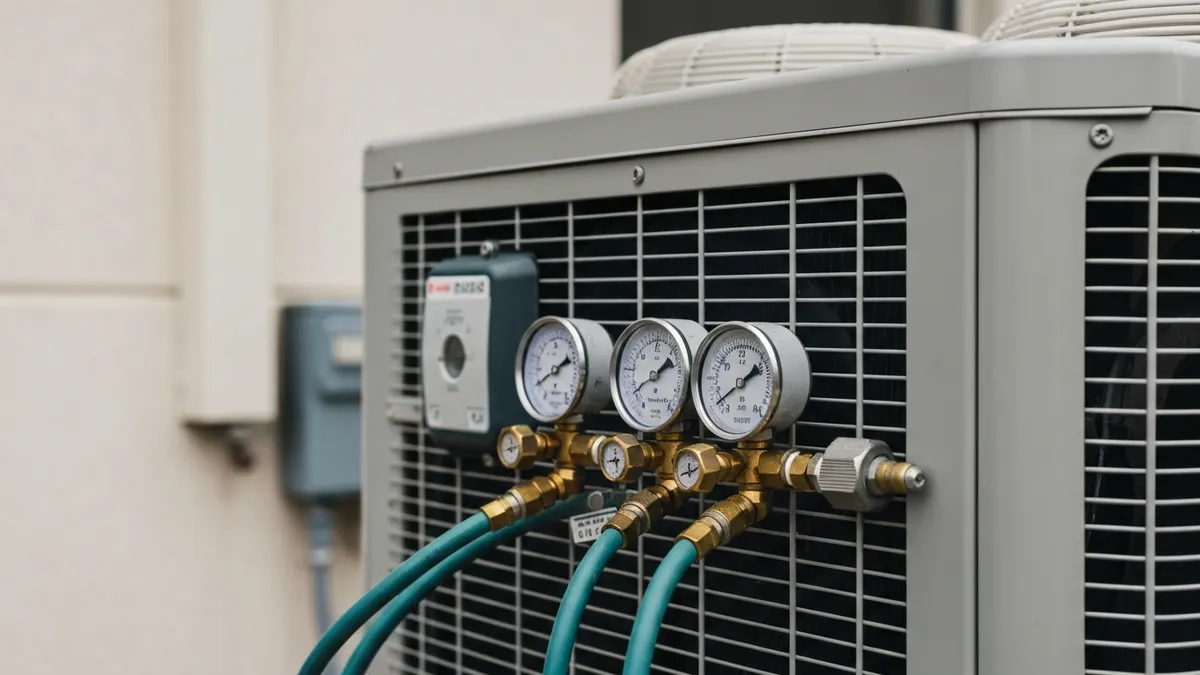
Refrigerant leaks are among the most common HVAC problems in Columbia, driven by the intense year-round operating cycles that stress copper lines and fittings. Signs include ice forming on the refrigerant line, warm air blowing from supply vents, and hissing or bubbling sounds near the air handler. A technician must locate and repair the leak before recharging — simply adding refrigerant without fixing the source is a temporary and legally questionable fix under EPA Section 608 rules.
The cost of a refrigerant repair depends heavily on the type of refrigerant your system uses. Older systems charged with R-22 (now phased out) face dramatically higher recharge costs because R-22 is no longer manufactured domestically and must be recovered and reclaimed. Systems using R-410A are less expensive to recharge but will eventually transition to R-454B or similar lower-GWP alternatives as federal phase-down rules take effect through 2025–2036. If your system uses R-22 and needs a significant recharge, replacement is almost always the financially smarter choice.
Repair vs. Replace: Weighing Your Options in Columbia
- +Lower upfront cost — most repairs run $150–$650 versus $4,000–$8,000 for a new system
- +Faster resolution — a capacitor or drain fix can restore cooling within hours
- +No installation disruption — no crew working in your home for a half or full day
- +Preserves existing ductwork and thermostat compatibility in most cases
- +Buys time to plan and budget for a replacement on your own schedule
- +Manufacturer parts warranties may still cover the failed component if system is under 10 years old
- −Older systems (12+ years) repaired today often fail again within one or two cooling seasons
- −Repairing an inefficient older system does not improve its SEER rating — energy costs stay high
- −R-22 refrigerant repairs are expensive and push toward replacement anyway
- −Emergency repair markups during peak Columbia summer heat can dramatically inflate costs
- −Some repairs — especially compressor replacements — approach the cost of a new system
- −Repeated repairs signal systemic degradation that no single fix permanently addresses
Pros and Cons at a Glance
| Pros | Cons |
|---|---|
| Faster resolution — a capacitor or drain fix can restore cooling within hours | Repairing an inefficient older system does not improve its SEER rating — energy costs stay high |
| No installation disruption — no crew working in your home for a half or full day | Emergency repair markups during peak Columbia summer heat can dramatically inflate costs |
| Preserves existing ductwork and thermostat compatibility in most cases | Some repairs — especially compressor replacements — approach the cost of a new system |
| Buys time to plan and budget for a replacement on your own schedule | Repeated repairs signal systemic degradation that no single fix permanently addresses |
HVAC Repair Readiness Checklist for Columbia Homeowners
- ✓Verify the technician holds an active South Carolina mechanical contractor's license before any work begins.
- ✓Ask specifically whether the technician is NATE-certified in the relevant specialty (air conditioning, heat pumps, etc.).
- ✓Request an itemized written estimate that separates parts costs from labor costs.
- ✓Confirm the contractor's labor warranty in writing — look for at least 90 days on the repair.
- ✓Check that the equipment manufacturer's parts warranty will be honored and ask if registration is required.
- ✓Ask whether the diagnostic fee is waived or applied to the repair total if you proceed with the work.
- ✓Change or inspect your air filter before the technician arrives — a dirty filter often worsens or mimics other problems.
- ✓Clear a three-foot radius around the outdoor condenser unit so the technician can work safely and efficiently.
- ✓Check your condensate drain line for visible blockage before scheduling — this five-minute fix can save a service call.
- ✓Note and document any error codes displayed on your thermostat or air handler before the technician arrives.
The 5,000 Rule: Your Repair-or-Replace Threshold
Multiply your system's age in years by the estimated repair cost in dollars. If that number exceeds $5,000, replacement is almost always the better financial decision. A 14-year-old system needing a $400 repair scores 5,600 — a strong signal to start getting replacement quotes alongside repair quotes so you can make an informed, pressure-free choice rather than a reactive one.
The repair-versus-replace decision is rarely as simple as a single formula suggests, and Columbia homeowners benefit from thinking through several overlapping factors simultaneously. System age is the most obvious variable, but equipment condition often matters more.
A 10-year-old system that has received annual professional maintenance, had its coils cleaned regularly, and operated in a home with good filtration practices may have substantially more useful life remaining than an 8-year-old system that has been neglected, run with a dirty filter for months at a time, and never had a tune-up. Age is a proxy for wear; actual wear varies considerably based on how a system has been operated and maintained.
Comfort performance is another factor that often gets overlooked in purely financial analyses. If your current system struggles to maintain target temperatures on Columbia's hottest days — say, it cannot keep the house below 78°F when it's 97°F outside — that is a performance symptom worth taking seriously. It may indicate an undersized system, a refrigerant charge that has slowly leaked down over years, or degraded compressor capacity.
A repair might restore basic function, but it will not fix a fundamental sizing mismatch. A Manual J load calculation performed by a qualified contractor can determine whether your home's current system is appropriately sized, which is a valuable diagnostic regardless of whether you ultimately repair or replace.
Indoor air quality is increasingly part of the HVAC conversation for Columbia families, particularly those with allergy sufferers or asthma. Older systems typically do not accommodate advanced filtration products like MERV-13 filters or whole-home air purifiers without ductwork modifications, because the existing blower motors lack the static pressure capacity to push air through denser filter media. A replacement system, properly specified, can be paired with a high-efficiency variable-speed air handler that handles higher-MERV filtration with no performance penalty. For families prioritizing air quality, this capability alone can justify the premium of a new system over repairing an older one.
Humidity control is a particular concern in Columbia, where the combination of outdoor humidity and heavily wooded neighborhoods creates persistent moisture challenges. Modern variable-capacity systems and two-stage compressors are dramatically better at dehumidification than older single-stage units, because they can run at lower capacity for longer cycles, removing more moisture per BTU of cooling. If your home feels clammy even when the thermostat shows the target temperature — a common complaint in older Columbia homes with single-stage systems — replacing your unit with a two-stage or variable-speed model can transform indoor comfort without requiring a separate whole-home dehumidifier.
Financing options have become an important part of the replacement conversation. Many Columbia contractors offer in-house financing through third-party lenders, with promotional periods of 12 to 24 months at zero percent interest for qualified buyers. National lenders like Greensky and Service Finance Company are commonly used in the Midlands HVAC market.
Beyond contractor financing, Dominion Energy South Carolina has offered on-bill financing for qualifying energy efficiency upgrades in the past, and the federal IRA tax credits can be structured as a direct point-of-sale discount at participating contractors. Stacking a utility rebate, a manufacturer rebate, and a federal tax credit against a 0% financing offer can make a new system genuinely affordable on a monthly payment basis.
The heat pump option deserves specific attention in the Columbia climate analysis. The Midlands' mild winters — average January lows hover around 32–35°F — sit squarely in the efficiency sweet spot for modern cold-climate heat pumps, which maintain strong performance down to 5°F. A heat pump serves as both your cooling system and your primary heating system, replacing both the air conditioner and the gas furnace with a single electric unit.
Given Columbia's relatively modest heating load compared to northern markets, the all-in economics of a heat pump often pencil out better than a traditional split system, especially when combined with the available federal tax credits that cap at $2,000 for heat pump installations.
Whatever decision you reach, documenting your HVAC system's repair history creates long-term value. Keep receipts, warranty cards, and service records in a dedicated folder — physical or digital. This documentation supports warranty claims, helps the next technician diagnose recurring problems more efficiently, and adds verifiable value if you ever list your home for sale.
Real estate agents in the Columbia market consistently report that buyers respond positively to documented HVAC maintenance records, particularly when the system is more than eight years old, because it signals that the home has been well-cared-for and reduces the buyer's perceived risk of an early replacement expense.
Columbia HVAC companies are heavily booked from late May through early September. After-hours and weekend emergency calls typically carry a $75–$150 surcharge on top of the standard diagnostic fee. If your system is showing early warning signs — weak airflow, short cycling, unusual sounds — schedule a diagnostic appointment in April or October to avoid peak-season delays and emergency pricing premiums.
Staying cool long-term in Columbia is less about responding to crises and more about building a proactive maintenance rhythm that keeps your system running efficiently through season after season of demanding subtropical heat. The single most impactful habit any homeowner can develop is consistent filter changes.
In Columbia, where pine pollen peaks in March and April and continues through May, standard 1-inch pleated filters should be checked monthly and replaced whenever they appear gray or significantly loaded with debris. Homeowners who keep a six-pack of filters in a closet and set a monthly phone reminder report noticeably fewer emergency service calls and consistently lower utility bills compared to those who change filters on a seasonal or annual basis.
Coil cleaning is the second pillar of long-term HVAC health in the Columbia climate. The evaporator coil inside your air handler and the condenser coil in your outdoor unit both accumulate dust, pollen, and organic debris over time. A dirty evaporator coil reduces heat transfer efficiency, causing the system to run longer to achieve the same cooling effect.
A dirty condenser coil — clogged with cottonwood fluff, pollen, and leaves — forces the compressor to work harder against elevated head pressure, which accelerates wear and increases electricity consumption. Professional coil cleaning, performed annually as part of a spring tune-up, addresses both and is one of the highest-return maintenance investments a Columbia homeowner can make.
Shade landscaping around the outdoor condenser unit is an underappreciated strategy for improving efficiency and extending equipment life in Columbia's relentless summer sun. A condenser operating in direct afternoon sun works significantly harder than one shaded by a tree or shrub, because it must reject heat into already-hot ambient air.
Strategically planted deciduous trees or tall shrubs on the west and southwest sides of the unit — positioned to provide shade without restricting airflow — can reduce condenser inlet air temperatures by 5–10°F, measurably improving system efficiency. The key is maintaining at least two feet of clear space around all sides of the unit so airflow is not restricted by overgrowth.
Smart thermostat programming is a practical efficiency tool that is widely underused in the Columbia market. Many homeowners install a smart thermostat and then use it in a manual mode that mimics how they used their old programmable thermostat, missing most of the energy-saving potential.
Modern smart thermostats from brands like Ecobee and Google Nest can learn your household's occupancy patterns, integrate weather forecast data to pre-cool your home before the hottest part of the afternoon, and use geofencing to begin cooling as you drive home without running the system all day during work hours. In Columbia's climate, a well-programmed smart thermostat can reduce cooling energy consumption by 10–15% annually compared to a poorly managed manual schedule.
Duct integrity is a frequently overlooked contributor to HVAC performance problems in Columbia homes, particularly in older subdivisions where flex duct was installed quickly during the building boom of the 1980s and 1990s. Ducts that leak conditioned air into unconditioned attic spaces — which reach 140–160°F in a Columbia summer — can reduce system delivery efficiency by 20–30%, meaning your system does significant work that never reaches your living space.
A duct leakage test, performed by a contractor using a blower door or duct blaster apparatus, can quantify the problem precisely. Sealing identified leaks with mastic sealant (not standard duct tape, which fails quickly) is a high-ROI improvement that makes every subsequent cooling dollar go further.
Annual professional maintenance visits should be scheduled in both spring and fall to align with the beginning of each major season. The spring visit should include refrigerant charge verification, coil cleaning, capacitor and contactor inspection, condensate drain flushing, and a blower wheel cleaning if needed.
The fall visit should include heat exchanger inspection (for gas furnace systems), heat pump reversing valve verification, filter replacement, and thermostat calibration. A technician who performs these checks conscientiously will catch the vast majority of impending failures while the parts are still available at standard prices and the scheduling pressure is low — before the summer crisis season hits.
Finally, building a relationship with a single trusted HVAC contractor over multiple years is genuinely valuable in a market like Columbia. A technician who has serviced your specific system for three or four years knows its quirks, its history, and its components in a way that a first-time technician cannot.
They are better positioned to recognize an emerging problem before it becomes a failure, to make informed recommendations about whether a borderline repair is worth attempting, and to advocate for you with manufacturers on warranty claims. Loyalty in a service relationship, when the contractor is genuinely competent and honest, pays dividends that are real but difficult to quantify on a spreadsheet.
Practical preparation before a technician arrives can make the service visit more efficient and help you get better information from the interaction. Before calling for service, walk through your home and note which rooms are not cooling adequately, what temperatures you are observing on your thermostat versus the set point, and how long the problem has been present.
These observations help a technician narrow the diagnostic focus quickly rather than starting from scratch. If your system is producing any unusual sounds — clicking, banging, squealing, or a continuous hum — record a short audio clip on your phone to share with the technician, since intermittent sounds often stop when a tech is present.
Checking the basics before calling can sometimes resolve the problem without a service visit at all. Verify that the thermostat is set to cooling mode and the set point is below the current room temperature. Check that the circuit breaker serving the air handler and the separate breaker serving the outdoor condensing unit are both in the ON position — compressor motors draw a large starting current that can trip breakers, especially on older electrical panels.
Inspect the condensate drain pan under the air handler for standing water, which indicates a float switch shutdown. And check the outdoor unit for visible ice formation on the refrigerant lines, which suggests low airflow or a refrigerant issue worth describing to the technician when you call.
Documenting your equipment information before the technician arrives saves time and avoids confusion. Locate the data plate on your outdoor unit and air handler and record the model number, serial number, and rated refrigerant type. Most manufacturers encode the production date in the serial number — your technician can decode it, but having the information readily available speeds the process.
If your system is still under a manufacturer's parts warranty, this information is required to initiate a warranty claim, and having it on hand before the technician arrives means you are not hunting for it while the tech is on the clock.
Understanding the repair invoice before you sign is a final but important step. Ask the technician to walk through each line item, explain what failed and why, and describe what they did to fix it. A quality technician will welcome this conversation — it demonstrates their competence and builds trust.
Ask whether any other components showed signs of wear during the service visit, and request that they prioritize any concerns by urgency: what needs attention now, what should be addressed within six months, and what is worth simply monitoring. This conversation transforms a single repair visit into a broader picture of your system's health and helps you plan proactively rather than reactively.
Budgeting for HVAC costs as a regular household expense — rather than treating every service call as an unexpected emergency — is a mindset shift that reduces financial stress significantly. A reasonable rule of thumb is to budget 1–2% of your system's replacement value annually for maintenance and minor repairs.
For a $6,000 system, that means setting aside $60–$120 per month in a dedicated home maintenance account. Over the 15–20 year life of the system, that fund absorbs the routine repairs and the cost of a professional tune-up, and it means that when the inevitable larger repair arrives, you have resources to respond thoughtfully rather than urgently.
Columbia's growing population and active real estate market mean that HVAC considerations are increasingly prominent in home purchase and sale transactions. Buyers' agents routinely recommend HVAC inspections as a separate, specialized assessment during the due diligence period — a qualified HVAC technician can assess a system's true condition far more thoroughly than a general home inspector.
Sellers who have maintained documentation of regular professional service are in a stronger negotiating position when HVAC concerns arise during inspection. And buyers who understand the repair cost landscape described in this guide are better equipped to evaluate whether a seller's concession on an aging system is adequate or whether they are assuming more financial exposure than the deal price reflects.
The fundamentals of HVAC care in Columbia ultimately come down to three things: consistent filter maintenance, annual professional tune-ups, and a trusted contractor relationship. Everything else — smart thermostats, duct sealing, shade landscaping, humidity control upgrades — is a worthwhile enhancement that builds on that foundation.
Homeowners who get those three basics right consistently report better comfort, lower utility bills, fewer emergency calls, and longer equipment life than those who neglect the fundamentals and rely on reactive repairs to keep their systems running. In a climate as demanding as Columbia's, that foundation is not optional — it is the price of entry for reliable year-round comfort.
Sample HVAC Practice Questions
Try these questions from our free HVAC practice tests. The correct answer and an explanation follow each question.
What is the value of continuing education in electrical controls for HVAC professionals?
- A. It is only needed for recertification
- B. It keeps professionals current with evolving standards and practices
- C. It is primarily a social activity
- D. It replaces workplace experience
Answer: B. It keeps professionals current with evolving standards and practices
Continuing education ensures professionals stay current with the latest developments, standards, and best practices in their field.
A technician finds high suction pressure and high discharge pressure with low superheat on an R-410A system. What is the most likely problem?
- A. Refrigerant overcharge
- B. Restricted metering device
- C. Refrigerant undercharge
- D. Failed compressor
Answer: A. Refrigerant overcharge
Both elevated suction and discharge pressures combined with low superheat are classic signs of an overcharged refrigerant system.
What is 'underfloor air distribution' (UFAD) and what are its IAQ and energy advantages?
- A. Air distribution through trenches cut into the floor for industrial applications
- B. A system where conditioned supply air is delivered through floor diffusers at low velocity and low temperature differential, rising naturally through the occupied zone to ceiling-level return
- C. A method of running ductwork below the floor slab to avoid ceiling space conflicts
- D. A hydronic system using underfloor pipes rather than conventional distribution piping
Answer: B. A system where conditioned supply air is delivered through floor diffusers at low velocity and low temperature differential, rising naturally through the occupied zone to ceiling-level return
UFAD delivers supply air through floor diffusers at low velocity, using the natural buoyancy of slightly cooler air to sweep the occupied zone from floor to ceiling—providing better ventilation efficiency and occupant control.
A technician is troubleshooting a system where the compressor runs but the condenser fan does not. The fan capacitor tests good. What is the next component to check?
- A. Thermostat heat anticipator
- B. Condenser fan motor windings
- C. Suction line filter drier
- D. High-pressure switch
Answer: B. Condenser fan motor windings
If the capacitor is good and voltage is present at the fan motor, failed motor windings (open winding) would prevent the fan from running.
HVAC Questions and Answers
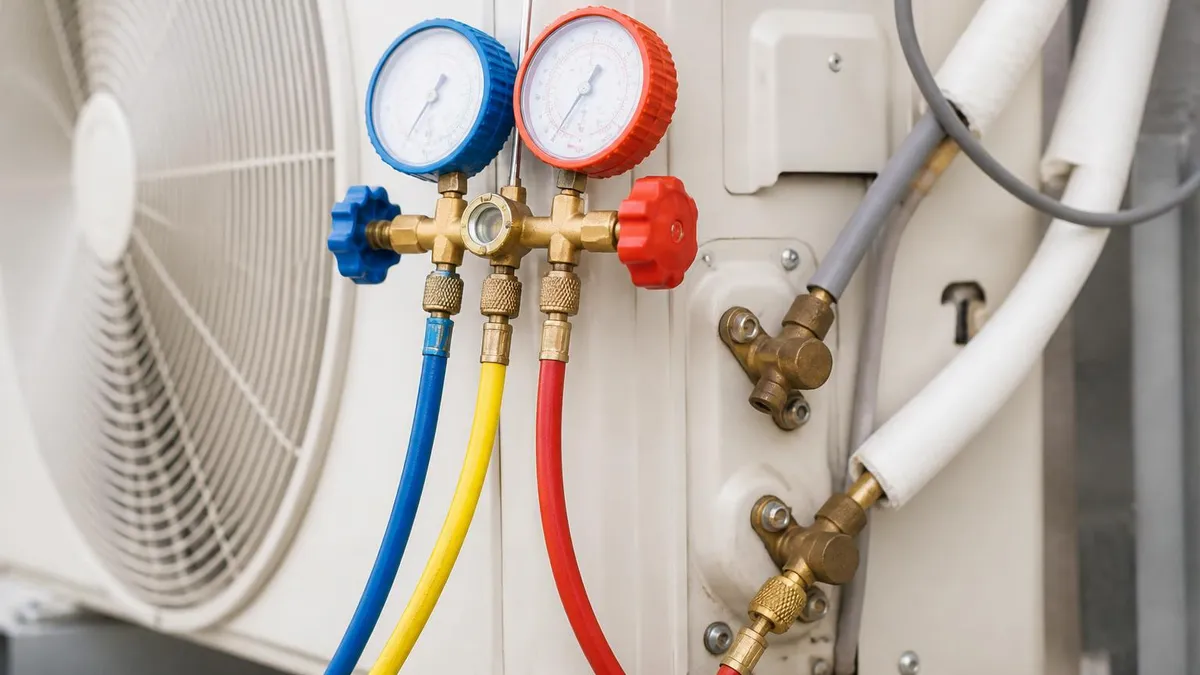
FCU HVAC: The Complete Guide to Fan Coil Units, How They Work, Where They Excel, and How to Choose the Right System
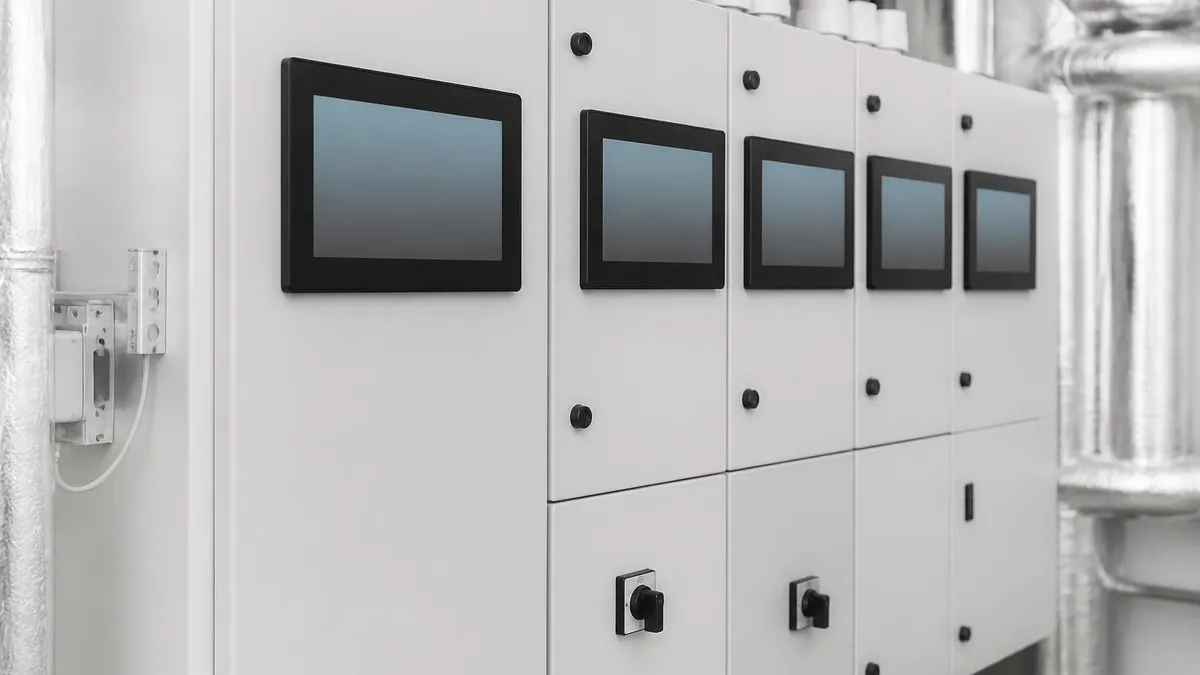
Finance a New HVAC System: 2026 Loans, 0% APR, and Rebates
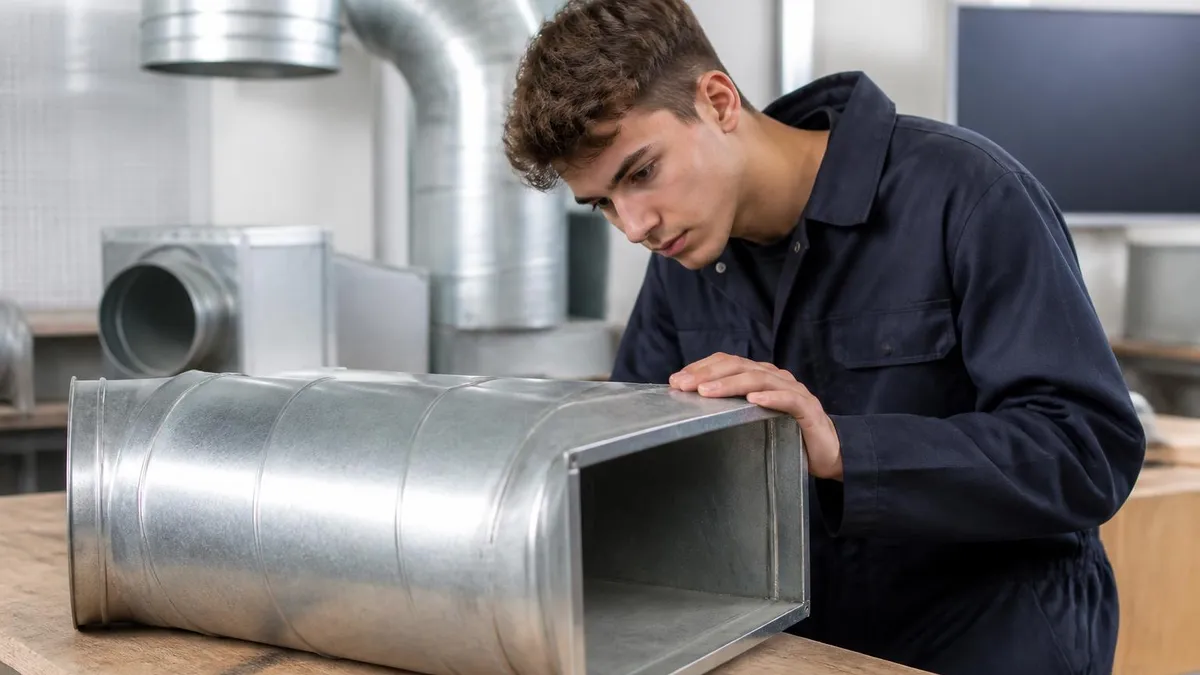
HVAC Duct Repair: Common Issues, Costs, and DIY vs Professional
HVAC School -- Programs, Costs, and Career Paths in 2026
HVAC Advertising: The Complete Playbook for Generating Leads, Booking Calls, and Growing Your Heating and Cooling Business
About the Author

NATE Certified HVAC Technician & Licensing Exam Trainer
Universal Technical InstituteMike Johnson is a NATE-certified HVAC technician and EPA 608 universal-certified refrigerant handler with a Bachelor of Science in HVAC/R Technology. He has 19 years of commercial and residential HVAC installation and service experience and specializes in preparing technicians for NATE certification, EPA 608, A2L refrigerant safety, and state HVAC contractor licensing examinations.