
HVAC Motor: The Complete Guide to Blower Motors, Condenser Fan Motors, ECM vs PSC, Troubleshooting, and Replacement
Complete guide to HVAC motor types, ECM vs PSC, blower and condenser fan motors, troubleshooting symptoms, replacement costs, and wiring basics. 💯
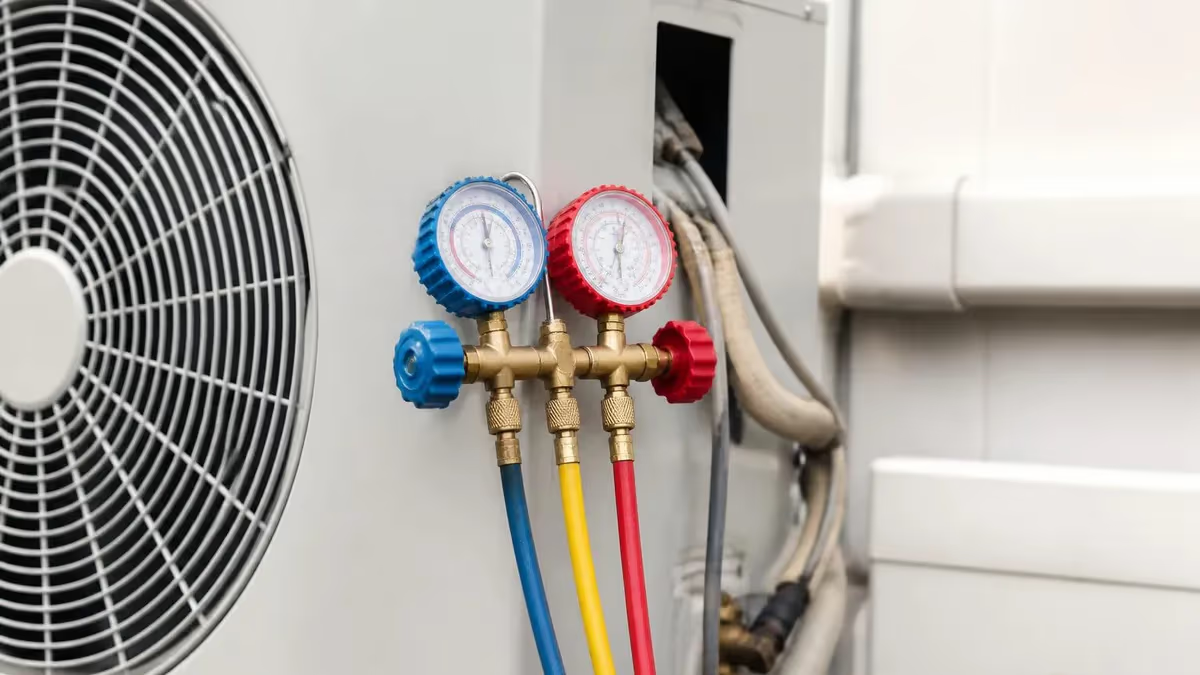
The hvac motor is the mechanical heart of every heating and cooling system, converting electrical energy into the rotational force that moves air and refrigerant through your home. Whether you're staring at a stalled blower wheel in the basement or trying to diagnose a condenser fan that hums but won't spin, understanding how these motors work — and why they fail — saves hundreds of dollars in service calls. This guide walks technicians, homeowners, and apprentices through every major motor type used in residential and light commercial HVAC equipment today.
HVAC motors come in several distinct families: permanent split capacitor (PSC) motors, shaded pole motors, electronically commutated motors (ECMs), and three-phase induction motors used on larger commercial gear. Each family has unique starting characteristics, efficiency profiles, and failure modes. A 1/3 horsepower PSC blower might run for fifteen years on a furnace, while an ECM module can fail in five if voltage spikes hit it during a storm. Knowing the difference between these technologies is the first step toward accurate diagnosis.
The shift from PSC to ECM technology over the past two decades represents the single biggest change in residential HVAC airflow. ECMs use a permanent magnet rotor and a microprocessor-controlled inverter to deliver variable speeds, soft starts, and constant airflow regardless of static pressure. They draw roughly 60 to 75 percent less power than a PSC at low speed, which is why modern variable-capacity furnaces and air handlers rely on them. But they're also more expensive to replace and require specific programming or model matching.
Condenser fan motors, on the other hand, live outdoors and face brutal conditions: temperature swings, rain intrusion, insect nests, and constant UV exposure. Most are still PSC designs because the application demands a sealed, weatherproof, single-speed motor that can handle a heavy aluminum or steel fan blade. When a condenser motor seizes or its capacitor weakens, the compressor often runs without proper heat rejection and trips on high-pressure lockout — a symptom many technicians initially misdiagnose as a refrigerant problem.
Inducer motors, draft motors, and combustion blower motors form a third critical category found inside gas furnaces. These small motors pull combustion gases through the heat exchanger and out the flue, and they're tied directly into the safety circuit through a pressure switch. When an inducer fails, the furnace will not fire at all because the pressure switch never closes. Understanding this safety interlock is essential for anyone working on modern condensing or non-condensing gas equipment.
This guide also covers the practical side of motor work: how to read a nameplate, match horsepower and frame size, wire a replacement capacitor, identify rotation direction, and decide when a universal replacement motor is appropriate versus an OEM-only part. We'll look at real failure patterns, current draw measurements, and the diagnostic steps that separate a quick fix from a comeback call. By the end, you'll be able to approach any motor problem with a clear method rather than guesswork.
Whether you're prepping for an EPA 608 certification, studying for a state journeyman exam, or just trying to keep your own furnace running through winter, motors deserve focused attention. They're often the most expensive single component to replace in a residential system after the compressor, and they're frequently misdiagnosed. The pages ahead break down each motor family, the test procedures that apply, and the safety practices that protect both you and the equipment.
HVAC Motors by the Numbers
Major HVAC Motor Types and Where They're Used
Permanent split capacitor motors used in standard efficiency furnaces and air handlers. They use a run capacitor for starting, offer multiple speed taps, and typically last 10-15 years. Simple to diagnose and inexpensive to replace.
Electronically commutated motors with onboard microprocessors that maintain constant airflow against static pressure. Found in 90+ AFUE furnaces and high-efficiency air handlers. Dramatically more efficient but costlier to replace.
Outdoor PSC motors that drive the condenser fan blade. Rated for high ambient temperatures and weather exposure. Usually 1/4 to 1/3 horsepower, totally enclosed, with a separate run capacitor mounted in the unit's electrical box.
Small shaded-pole or PSC motors that pull combustion gases through the heat exchanger. Tied to a pressure switch safety circuit. When they fail, the furnace will not light because the call for heat is blocked at the inducer prove step.
Squirrel-cage induction motors used on rooftop units, large air handlers, and commercial compressors. Sized 1 HP and up, wired to magnetic starters or VFDs. Require phase-rotation checks and overload protection sized to nameplate FLA.
The most important distinction in modern residential motors is ECM versus PSC. A PSC motor is essentially a single-phase induction motor with a run capacitor permanently wired in series with an auxiliary winding. It produces a fixed torque curve at a fixed line frequency, which is why it has discrete speed taps — usually labeled high, medium-high, medium, medium-low, and low. You select the tap by moving the appropriate colored wire to the speed terminal on the control board, and that's the speed you get regardless of duct conditions.
An ECM is fundamentally different. It uses a brushless DC permanent magnet rotor controlled by an onboard inverter that takes line voltage AC, rectifies it to DC, and then electronically commutates the stator windings to spin the rotor. The inverter accepts low-voltage control signals from the furnace board — either a PWM signal, a 24V tap signal, or a serial communication protocol — and adjusts torque or speed continuously. The result is true variable airflow that can compensate for dirty filters, closed registers, or duct restrictions.
From a service standpoint, the diagnostic approach differs dramatically. A PSC motor failure is usually mechanical: seized bearings, an open winding, or a weak capacitor that prevents starting. You can test it with a multimeter, an ammeter, and a capacitor tester in about three minutes. An ECM failure, by contrast, can be in the motor itself, in the separate control module bolted to the back of the motor, in the low-voltage signal from the furnace board, or in the bus voltage supplied to the module.
ECMs are also extremely sensitive to voltage problems. A nearby lightning strike, a loose neutral, or even a generator that produces dirty power can fry the control module. Smart technicians always check incoming voltage stability and ground integrity before condemning an ECM. Many comeback calls happen because a tech replaces a module without addressing the underlying voltage issue, and the new module fails within weeks.
Cost matters too. A universal PSC blower motor runs roughly $100 to $180 at the supply house. A replacement ECM control module is typically $300 to $500, and a full motor-and-module assembly can exceed $700 for variable-speed applications. This pricing reality drives a lot of conversations with homeowners about whether to repair an older system or upgrade. For technicians sourcing parts, working with a reliable HVAC wholesale supply partner keeps motor pricing competitive and inventory consistent across job sites.
Programming is another ECM consideration. Some ECMs are model-specific and ship pre-programmed for a particular blower wheel, cabinet size, and tonnage. If you install the wrong part number, the airflow tables won't match, and you may get noisy operation, premature blower wheel wear, or a system that won't deliver rated capacity. Always cross-reference the OEM part number against the manufacturer's parts list rather than relying solely on horsepower and voltage matching.
Finally, understand that ECMs do not necessarily save energy on every system. The savings come primarily during low-speed continuous fan operation and during the long ramp-up and ramp-down profiles used by two-stage and modulating equipment. On a single-stage furnace running at full blast for a 30-minute cycle, the ECM advantage shrinks considerably. Set realistic expectations with customers and base ROI conversations on actual run-time patterns.
HVAC Practice Test Questions
Prepare for the HVAC - Heating Ventilation and Air Conditioning exam with our free practice test modules. Each quiz covers key topics to help you pass on your first try.
HVAC Air Conditioning
HVAC Exam Questions covering Air Conditioning. Master HVAC Test concepts for certification prep.
HVAC Code Compliance
Free HVAC Practice Test featuring Code Compliance. Improve your HVAC Exam score with mock test prep.
HVAC Electrical Controls
HVAC Test Prep for Electrical Controls. Practice HVAC Quiz questions and boost your score.
HVAC Energy Efficiency
HVAC Questions and Answers on Energy Efficiency. Free HVAC practice for exam readiness.
HVAC Heating Systems
HVAC Mock Test covering Heating Systems. Online HVAC Test practice with instant feedback.
HVAC Load Calculations
Free HVAC Quiz on HVAC Load Calculations. HVAC Exam prep questions with detailed explanations.
HVAC Tools and Equipment
HVAC Practice Questions for HVAC Tools and Equipment. Build confidence for your HVAC certification exam.
HVAC Refrigeration
HVAC Test Online for Refrigeration. Free practice with instant results and feedback.
HVAC Safety Practices
HVAC Study Material on Safety Practices. Prepare effectively with real exam-style questions.
HVAC System Design
Free HVAC Test covering System Design. Practice and track your HVAC exam readiness.
HVAC Thermodynamics
HVAC Exam Questions covering Thermodynamics. Master HVAC Test concepts for certification prep.
Blower, Condenser, and Inducer Motors Explained
The blower motor moves conditioned air through the supply ductwork and back through the return. Residential blowers are typically 1/3 to 1 horsepower and operate at speeds from roughly 600 to 1200 RPM depending on the speed tap or ECM programming. The blower wheel is balanced at the factory, so any debris buildup on the squirrel cage blades creates vibration that destroys bearings prematurely. Annual cleaning is one of the highest-value preventive maintenance tasks.
Most blower failures start as noise: a rumble that grows louder over weeks, a chirp from worn bearings, or a hum without rotation indicating a failed capacitor or seized shaft. A useful field test is to spin the wheel by hand with power off. It should rotate freely for several seconds. If it stops abruptly or feels gritty, the bearings are done and the motor needs replacement rather than just a capacitor swap.
ECM vs PSC Motors: Which Should You Specify?
- +ECMs deliver constant CFM regardless of static pressure, ideal for high-efficiency systems
- +60-75% lower power draw at low and medium speeds during continuous fan operation
- +Soft-start operation reduces inrush current and electrical stress on the system
- +Variable speed enables true two-stage and modulating comfort with humidity control
- +Quieter at low speeds because the motor ramps up slowly instead of starting at full RPM
- +Better dehumidification because the blower can run at reduced airflow during cooling
- +Compatible with modern communicating thermostats and zoning control panels
- −Replacement cost is 2-4 times higher than equivalent PSC motors
- −Sensitive to voltage spikes, dirty power, and lightning damage
- −Require specific programming or OEM part matching for proper airflow
- −More complex diagnostics requiring specialized test tools and procedures
- −Control modules often fail before the motor itself, requiring component-level repair
- −Limited universal replacement options compared to standard PSC inventory
HVAC Motor Diagnostic Checklist
- ✓Verify line voltage at the unit disconnect matches the nameplate within +/- 10 percent
- ✓Check capacitor microfarad rating against nameplate using a capacitance meter, not just continuity
- ✓Measure motor current draw with a clamp meter and compare to nameplate FLA
- ✓Spin the motor shaft by hand with power off to feel for bearing roughness or seizure
- ✓Inspect blower wheel and fan blades for debris, imbalance, or cracks before condemning the motor
- ✓Confirm proper rotation direction matches the arrow stamped on the motor housing
- ✓Test motor windings to ground with a megohmmeter — readings should exceed 1 megohm
- ✓Check the pressure switch hose and port on inducer motor calls before replacing the motor
- ✓For ECM faults, verify 24V signal from the furnace board and 120/240V bus voltage to the module
- ✓Inspect motor mounts and isolation rubber for cracks that allow vibration into the cabinet
- ✓Document part number, horsepower, voltage, speed, frame, and rotation when sourcing a replacement
- ✓Always replace the run capacitor when replacing a PSC motor — never reuse the old one
A weak capacitor can read 'good' on a basic meter but still fail under load.
Capacitors degrade gradually. A 45 microfarad capacitor that reads 38 microfarads is technically failed even though the motor may still start in mild weather. Tolerance is typically +/- 6 percent, so anything below 42.3 MFD on a 45 MFD cap should be replaced. This single test prevents dozens of comeback calls every cooling season.
Replacing an HVAC motor is straightforward when you approach it methodically, but small mistakes create big problems. The first step is always documentation: photograph the existing wiring before you disconnect anything, write down every wire color and its terminal, and capture the nameplate so you can verify the replacement matches. Modern phones make this trivial, and it has saved countless technicians from staring at a tangle of unmarked leads after the old motor is already out of the cabinet.
Match the replacement motor on six specifications: horsepower, voltage, RPM, rotation direction, frame size, and shaft diameter. Universal motors often advertise broad compatibility, but the devil is in the details. A 48-frame motor will not bolt into a 56-frame mount without an adapter. A counterclockwise-rotation motor installed where a clockwise motor belongs will push air the wrong direction. And a 5/8-inch shaft motor with a 1/2-inch blower wheel will not seat properly even if every other specification matches.
Wiring varies by motor type. A standard PSC condenser motor has three or four leads: line, common, capacitor, and sometimes a separate ground. The common lead ties to one side of the contactor, the line lead ties to the other side of the contactor, and the capacitor lead ties to the appropriate terminal on the dual run capacitor. ECM wiring is more complex because you have separate high-voltage power leads, a low-voltage harness, and sometimes a model-specific communications connector.
For multi-tap PSC blower motors, the speed tap selection is critical. Heating mode typically uses a lower tap to keep supply air temperature comfortable, while cooling mode uses a higher tap to maintain the 400 CFM per ton standard. Moving wires to the wrong terminals can cause coil freezing in cooling or excessive temperature rise in heating. Always reference the manufacturer's installation instructions or the furnace's airflow chart on the inside of the access panel.
Mounting hardware matters more than most people realize. Rubber isolation grommets dampen vibration that would otherwise transmit into ductwork and become whole-house noise. When they're missing or cracked, you'll hear a hum or rumble throughout the building during blower operation. Replace these grommets whenever you change a motor, and torque the mounting bolts to a snug-but-not-crushing fit. Overtightening compresses the rubber and defeats the isolation.
Don't forget to verify proper rotation after installation but before final reassembly. With the cabinet open, energize the motor briefly and confirm the fan blade or blower wheel turns in the direction the airflow arrow indicates. If you have a three-phase motor and it's running backward, swap any two of the three line leads. For single-phase PSC motors, rotation is fixed by internal winding configuration — if it's wrong, you have the wrong motor and need to exchange it.
After installation, measure current draw and compare to nameplate FLA. A motor pulling significantly above nameplate is loaded too heavily — usually a blocked duct, dirty filter, or wrong blade pitch — and will overheat. A motor pulling significantly below nameplate may indicate a winding problem or a loose load coupling. Both conditions shorten lifespan dramatically and should be addressed before the customer signs the work order.

Run capacitors store dangerous voltage even after power is removed from the unit. A 440-volt rated capacitor can deliver a painful or lethal shock minutes after disconnect. Use an insulated screwdriver with a 20K-ohm resistor across the terminals to safely discharge before touching any motor leads. Never short capacitor terminals with a bare screwdriver — the arc flash can damage eyes and equipment.
Motor pricing varies widely based on technology, brand, and sourcing channel. A standard 1/2 horsepower PSC blower motor typically retails between $130 and $220 at a contractor supply house, with universal replacement brands like A.O. Smith Century, US Motors, and Mars usually running 20 to 30 percent less than OEM-branded equivalents from Carrier, Trane, Lennox, or Goodman. The trade-off is that universal motors may require minor adapter kits or wiring modifications, while OEM motors are plug-and-play.
ECM pricing is a different conversation entirely. A full ECM motor and module assembly for a residential variable-speed furnace can run $550 to $900 in parts alone. The control module by itself, when sold separately, typically falls between $280 and $480. Labor for an ECM replacement averages 1.5 to 2.5 hours including diagnostics, programming verification, and airflow setup, so the total invoice to a homeowner commonly lands between $750 and $1,400 for residential variable-speed applications.
Lifespan expectations differ by motor type and application. A condenser fan motor that runs 800 hours per cooling season should last 12 to 18 years in a moderate climate. A blower motor running 2,000 hours per year — common in homes with continuous fan operation — typically lasts 10 to 15 years. ECMs tend to fail in two distinct patterns: the module fails early from voltage damage within the first 5 to 8 years, or the motor windings outlast the surrounding equipment and run for 15+ years if power quality is good.
Sourcing strategy matters for contractors. Stocking 5 to 8 common universal motor sizes on the truck eliminates same-day return trips to the supply house and lets you close out emergency calls faster. The most common stocking sizes for residential work are 1/3 HP 1075 RPM condenser, 1/4 HP 825 RPM condenser, 1/2 HP 4-speed blower, 1/3 HP 4-speed blower, and one universal inducer motor. Building this inventory pays for itself within the first cooling season.
Warranty coverage varies. Most universal motors carry a one-year parts warranty from the manufacturer, while OEM parts purchased through authorized distributors may carry the longer factory warranty matching the original equipment — sometimes 5 or 10 years. Always document part numbers, install dates, and serial numbers in your service software so you can pull warranty replacements quickly when premature failures occur. For homeowners researching options, a thorough hvac maintenance service often catches motor issues before they cause complete system failure.
When deciding between repair and replacement of an entire system, motor age and type are key factors. Replacing a $200 PSC blower in a 12-year-old furnace makes sense. Replacing a $900 ECM assembly in a 14-year-old furnace usually does not — the surrounding heat exchanger, gas valve, and control board are all aging toward their own failures. A good rule of thumb is the 50 percent rule: if the repair exceeds 50 percent of the system's replacement cost and the system is more than 10 years old, recommend replacement.
Finally, consider the broader system context. A motor failure is often a symptom of an underlying airflow problem — restricted ductwork, undersized return, a clogged evaporator coil, or a customer who runs the system with a dirty filter for months. Fixing the motor without addressing the root cause guarantees a return visit. Document static pressure readings, filter condition, and airflow measurements with every motor replacement so you have evidence to support the conversation about system health and preventive maintenance.
Practical motor work rewards preparation. Before you ever leave the shop, your truck should be stocked with a true RMS multimeter, a clamp-on ammeter capable of reading down to 0.1 amps, a capacitance meter, an insulated capacitor discharge tool, a megohmmeter for winding insulation tests, and a small assortment of common run capacitors in 5, 7.5, 10, 35, 40, 45, and 50 microfarad ratings. These tools cover roughly 90 percent of residential motor calls.
On arrival, run a complete intake before opening the panel. Ask the homeowner when the problem started, what they noticed first — noise, no airflow, warm air, tripping breaker — and whether anyone has worked on the system recently. This conversation often surfaces clues that save 30 minutes of diagnostic time. A breaker that tripped during a thunderstorm points toward ECM module damage. A gradual reduction in airflow over months points toward a dirty filter, a clogged coil, or a worn blower wheel.
Safety first, every time. Lock out the disconnect, verify zero voltage with your meter at the load side, and discharge every capacitor before touching motor leads. The few seconds this takes are non-negotiable. Even after years in the trade, the techs who skip these steps are the ones who eventually take a shock or destroy a meter. Build the habit and protect both yourself and your tools.
When measuring motor current, take the reading after the system has been running for at least three minutes. Initial inrush current can read 4 to 7 times nameplate FLA, but should settle to within nameplate spec within seconds for PSC motors and within 30 to 60 seconds for ECMs ramping to full speed. Sustained current significantly above nameplate indicates either mechanical overload, voltage problems, or a degraded motor — never ignore this signal.
For ECM diagnostics, use the manufacturer's troubleshooting flowchart whenever possible. Most major OEMs publish detailed flowcharts in their installation manuals, and many have updated digital versions with LED blink code interpretations. The diagnostic LEDs on ECM modules tell you which input is missing or which fault has triggered — read them before you reach for the test leads. A 30-second LED check often replaces 20 minutes of voltage probing.
Communicate clearly with homeowners about repair-versus-replace decisions. When a motor fails on a 14-year-old system, walk through the costs and risks honestly. Show them the motor, explain what failed, and offer both options with realistic timelines and price ranges. Customers respect transparency, and an informed decision today reduces complaints six months from now when something else fails on the same aging system. For larger jobs, recommending licensed hvac contractors for full system evaluation can help homeowners make smarter long-term decisions.
Finally, document everything. Take photos before and after, write down current draw and capacitance readings on the invoice, note part numbers and warranty terms, and explain in writing what you did and why. This documentation protects you from disputes, builds customer trust, and creates a service history that helps hvac terms who visits the home in the future. Motors are mechanical components that wear out — the goal is to extend their life through good practice and to replace them efficiently when they finally fail.
HVAC Questions and Answers
HVAC Wholesale Direct: The Complete Guide to Sourcing Equipment, Parts, and Supplies at Distributor Pricing
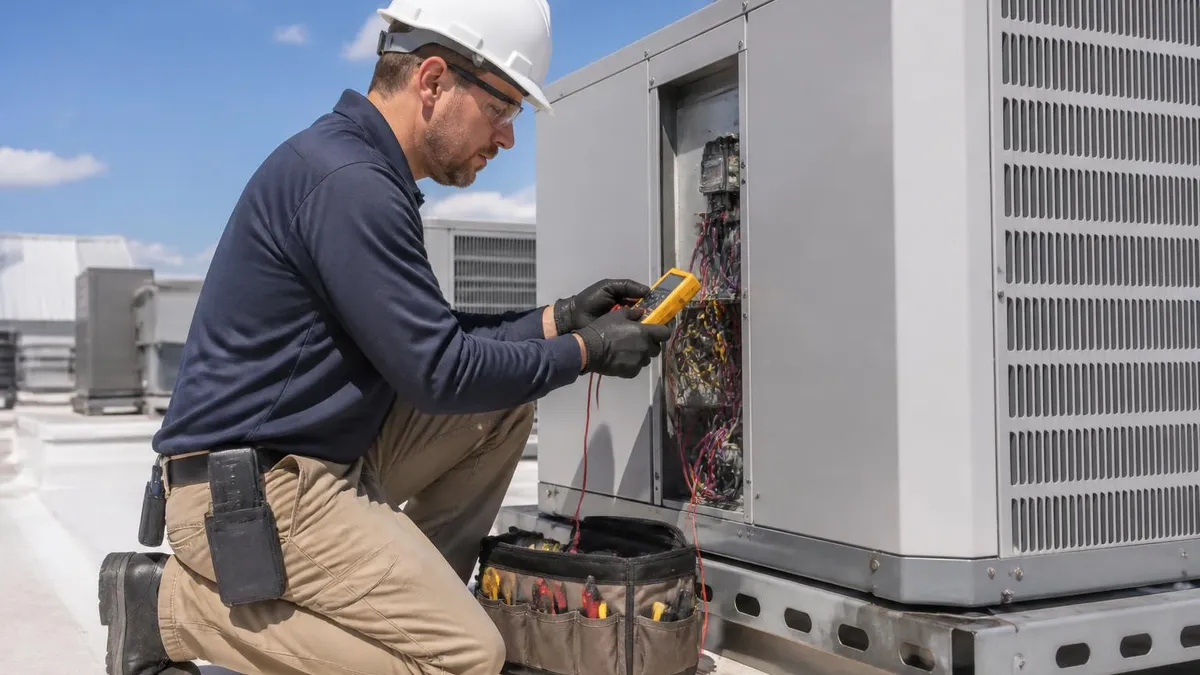
HVAC Repair Portland: The Complete 2026 Homeowner's Guide to Furnace, AC, and Heat Pump Service in the Rose City

HVAC Tune Up Service: The Complete Guide to Professional HVAC Maintenance and Why It Pays for Itself
HVAC Solutions: The Complete Guide to Heating, Cooling, and Indoor Air Quality Systems for Homes and Buildings
Certified HVAC Contractors: How to Find, Vet, and Hire the Right Professional for Your Home or Business
About the Author

NATE Certified HVAC Technician & Licensing Exam Trainer
Universal Technical InstituteMike Johnson is a NATE-certified HVAC technician and EPA 608 universal-certified refrigerant handler with a Bachelor of Science in HVAC/R Technology. He has 19 years of commercial and residential HVAC installation and service experience and specializes in preparing technicians for NATE certification, EPA 608, A2L refrigerant safety, and state HVAC contractor licensing examinations.