
HVAC Memes: The Ultimate Guide to Heating and Cooling Humor, Tech Culture, and Viral Trade Jokes
🗨️ HVAC memes that techs actually share — viral jokes about ductwork, refrigerant, callbacks, and apprentice life. Plus the meme culture behind the trade.
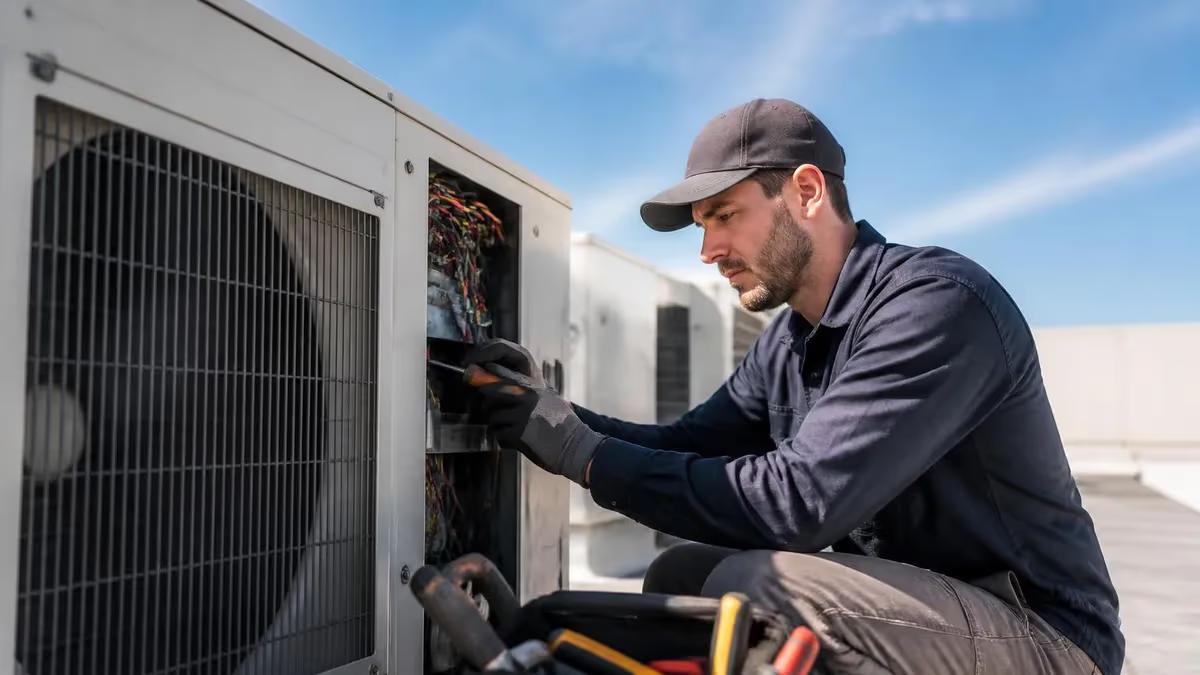
HVAC memes have quietly become one of the most beloved corners of trade humor on the internet, and if you have spent any time crawling through an attic in July or chasing a refrigerant leak at 2 a.m., you already know why. The jokes hit different when you have lived them. From the infamous "it ran when I left" punchline to the eternal battle between thermostat-stealing spouses, these viral posts capture the daily reality of being a heating and cooling technician in a way no manufacturer brochure ever could.
The HVAC meme ecosystem spans Instagram pages with hundreds of thousands of followers, Reddit threads that climb to the top of r/HVAC every week, TikTok accounts run by apprentices, and Facebook groups where seasoned journeymen swap photos of butchered installs. What started as a few photos of duct tape disasters has grown into a full subculture with recurring characters, in-jokes, and a shared vocabulary that outsiders rarely decode on the first read.
Beyond the laughs, these memes serve a real purpose. They help apprentices feel less alone when their first solo service call goes sideways. They give veteran techs a release valve for frustration that would otherwise build up after a 16-hour day. They also quietly teach safety, code awareness, and pride in craftsmanship by mocking the shortcuts that get people hurt or houses flooded.
This guide walks through the entire universe of HVAC memes — where they come from, why hvac pressure switch the categories every tech recognizes, and how meme culture has influenced training, recruitment, and even how customers perceive the trade. Whether you are a homeowner trying to understand why your contractor keeps muttering about "hvac pricing vs T&M," or a third-year apprentice building your own page, you will find the references decoded here.
We will also cover the unwritten rules of posting trade humor without burning bridges, the lines you should not cross, and how some of the biggest HVAC influencers turned a hobby of cracking jokes into legitimate side businesses with merch lines and sponsorship deals. The economics of meme accounts are wilder than most people realize.
By the time you finish reading, you will recognize the recurring formats, understand the cultural shorthand, and probably have a dozen new accounts to follow. You might even start drafting your own posts. Just remember: every great HVAC meme starts with something that actually happened, usually on a Friday afternoon, usually involving someone else's brother-in-law who "used to do this kind of work."
Let's dive into the world where R-22, brazing torches, and burned-out blower motors become punchlines that 100,000 people laugh at before scrolling on to the next gut-buster.
HVAC Meme Culture by the Numbers
Main Categories of HVAC Memes
Memes about being sent for blinker fluid, holding the flashlight wrong, digging trenches in 100-degree heat, and learning that 'just hand me the 10mm' actually means searching the truck for 45 minutes.
Direct screenshots and reenactments of homeowners saying things like 'my unit makes a clicking noise once a year' or 'the last guy said it was the freon.' Often paired with a deadpan reaction image.
Pictures of unbelievable installations — flex duct stuffed into return chases, condensers wired with extension cords, sheet metal held together with foil tape and prayer. Captioned with the eternal 'who hurt you?'
The endless Carrier vs Trane vs Lennox vs Goodman debates, with each tribe defending their gear and roasting the others. Bonus points for mocking proprietary boards and overpriced parts.
First 95-degree day of summer memes, the dread of January cold snaps, and the universal experience of being booked solid the moment temperatures swing. Includes the 'phone ringing nonstop' format.
The reason HVAC memes resonate so deeply comes down to one truth: this trade contains experiences that almost nobody outside of it can fully understand. When a tech posts a photo of a condenser buried under six feet of overgrown shrubs with the caption "customer says it just stopped working," everyone in the comments knows that customer also blamed the last three companies for not solving it. The shared frustration becomes a punchline only insiders can deliver.
Trade humor also fills a psychological gap that the industry rarely talks about openly. HVAC work involves long hours, physical risk, complex problem-solving under pressure, and customers who often see you as either a hero or a thief depending on the invoice. Memes give technicians a low-cost way to vent, bond, and reframe stressful days as collective experiences rather than personal failures. Laughing at the chaos turns it from trauma into a story.
There is also a craft pride angle that gets overlooked. When a meme roasts a hack job — say, a 90-degree elbow stacked directly onto a return plenum — the underlying message is that real technicians know better. The humor reinforces standards. Apprentices scrolling these accounts at lunch absorb what good work looks like by seeing what bad work gets ridiculed. It is informal mentorship at scale, delivered one share at a time.
The recruitment effect surprises people the most. Industry leaders have noted that meme pages do more to attract Gen Z into the trades than glossy corporate ad campaigns ever did. A 19-year-old who sees a relatable, funny, no-BS account from a working tech is far more likely to consider HVAC than one who watches a polished commercial. The trade looks human, accessible, and even cool — exactly the perception the industry has been trying to build for years.
Customer-facing humor also subtly educates. When a meme jokes about the customer who refuses to change their filter for two years, homeowners reading it absorb the maintenance lesson without feeling lectured. Same with the running joke about closing supply registers in unused rooms, which actually damages static pressure. The comedy delivers information that a service brochure could never get across.
For business owners and contractor leadership, watching these memes is also strategic intelligence. The complaints that show up repeatedly — about pay structures, broken trucks, dispatcher chaos, micromanagement — are the same issues driving real-world turnover. Smart owners read the comments more carefully than they read employee surveys, because the anonymity of meme threads pulls out unfiltered truth.
If you ever wonder why HVAC memes hit harder than memes from most other industries, remember that this trade combines extreme physical conditions, life-safety responsibility, and constant customer-facing emotional labor. That cocktail produces stories so absurd that comedy is almost the only sane response. Working with quality HVAC duct supplies instead of butchered scraps is part of what separates the pros from the meme-fodder.
HVAC Practice Test Questions
Prepare for the HVAC - Heating Ventilation and Air Conditioning exam with our free practice test modules. Each quiz covers key topics to help you pass on your first try.
HVAC Air Conditioning
HVAC Exam Questions covering Air Conditioning. Master HVAC Test concepts for certification prep.
HVAC Code Compliance
Free HVAC Practice Test featuring Code Compliance. Improve your HVAC Exam score with mock test prep.
HVAC Electrical Controls
HVAC Test Prep for Electrical Controls. Practice HVAC Quiz questions and boost your score.
HVAC Energy Efficiency
HVAC Questions and Answers on Energy Efficiency. Free HVAC practice for exam readiness.
HVAC Heating Systems
HVAC Mock Test covering Heating Systems. Online HVAC Test practice with instant feedback.
HVAC Load Calculations
Free HVAC Quiz on HVAC Load Calculations. HVAC Exam prep questions with detailed explanations.
HVAC Tools and Equipment
HVAC Practice Questions for HVAC Tools and Equipment. Build confidence for your HVAC certification exam.
HVAC Refrigeration
HVAC Test Online for Refrigeration. Free practice with instant results and feedback.
HVAC Safety Practices
HVAC Study Material on Safety Practices. Prepare effectively with real exam-style questions.
HVAC System Design
Free HVAC Test covering System Design. Practice and track your HVAC exam readiness.
HVAC Thermodynamics
HVAC Exam Questions covering Thermodynamics. Master HVAC Test concepts for certification prep.
Top Platforms for HVAC Memes
Instagram remains the heavyweight home of HVAC meme culture, dominated by accounts like @hvac.memes, @hvacshorts, @hvacschool_official, and dozens of regional pages. The visual format suits the trade perfectly — a single photo of a botched install paired with a savage caption gets thousands of shares before lunch. Stories and Reels expand the format, with techs posting quick clips of their daily disasters and triumphs.
The platform's algorithm rewards niche communities, which means HVAC techs see almost exclusively HVAC content once they engage with a few pages. Sponsored partnerships with tool brands like Klein, Yellow Jacket, and Veto Pro Pac have turned the bigger accounts into legitimate businesses. The comment sections become micro-classrooms where experienced techs explain why something is wrong and apprentices ask follow-up questions in real time.
Are HVAC Memes Good for the Industry?
- +Builds community and reduces isolation for solo techs working remote routes
- +Provides informal training by ridiculing bad practices everyone should avoid
- +Recruits younger workers into the trades far more effectively than traditional ads
- +Gives technicians a healthy outlet for daily frustrations and stress
- +Educates homeowners indirectly about maintenance, etiquette, and what to expect
- +Creates side income opportunities through merch, sponsorships, and content deals
- +Surfaces real industry problems that companies might otherwise ignore
- −Occasional viral posts spread misinformation about diagnostics or code requirements
- −Public shaming of specific jobs can violate professional ethics and customer privacy
- −Constant complaining content can sour the mood of newer apprentices
- −Some accounts exaggerate or fabricate stories for engagement
- −Brand-bashing memes can damage relationships with suppliers and manufacturers
- −Time spent scrolling cuts into actual learning and skill-building hours
HVAC Meme Posting Etiquette Checklist
- ✓Never include identifiable customer information, addresses, or invoice details in posts
- ✓Blur or crop out anything that could identify the homeowner or property
- ✓Avoid posting jobs you actually completed without first changing identifying details
- ✓Skip memes that mock entire ethnicities, regions, or religious groups
- ✓Do not call out specific companies or competitors by name in butchery posts
- ✓Credit original creators when reposting — screenshot watermarks are not optional
- ✓Keep safety-related humor accurate so apprentices don't learn the wrong lesson
- ✓Avoid posting while still on the clock or in a customer's home
- ✓Check your own company's social media policy before going public with trade content
- ✓Remember that hiring managers and future customers can see everything you post
Punch up, not down
The best HVAC memes mock bad practices, lazy shortcuts, and the systems that fail workers — never the apprentice still learning or the customer who simply doesn't know better. Accounts that punch down at green techs or struggling homeowners burn out fast and damage the trade's reputation in the process.
Certain HVAC memes have achieved legendary status, repeated across platforms for years and recognized instantly by anyone in the trade. Decoding them requires understanding both the technical reality and the cultural shorthand that built up around each one. The classics endure because they capture truths so universal that the joke lands no matter how many times you have seen it.
Take the "it ran when I left" meme. Every tech has uttered this line at some point, usually after a recent install or repair starts acting up the next morning. The phrase has become shorthand for the comedic helplessness of dealing with intermittent problems, ghost faults, and the cosmic timing of HVAC equipment that decides to fail the moment you pull out of the driveway. Variations include "it was fine when I tested it" and the ultimate cope: "must be the thermostat."
The "customer turned off the disconnect" meme series captures another universal experience. A homeowner calls complaining the system is dead, the tech drives 45 minutes, walks to the unit, and discovers the disconnect was pulled or the breaker was tripped. The visual usually shows a tech staring at the disconnect with the caption "another satisfied customer" or "that'll be $150 please." Every veteran has lived this exact moment at least a dozen times.
Then there is the entire genre dedicated to flex duct abuse. Photos of flex duct stretched, crushed, kinked into impossible angles, or duct-taped together circulate constantly with captions like "engineered for maximum airflow" or "static pressure is just a suggestion." The humor reinforces the importance of proper installation while letting everyone bond over the shared horror of inheriting a previous contractor's disasters.
The brazing torch meme — usually a photo of someone wearing zero PPE while holding a flame inches from copper next to insulation — exists in dozens of forms. The captions range from "OSHA who?" to elaborate fictional dialogues between the tech and the foreman. Underneath the humor is genuine safety messaging, since the trade loses techs to preventable burns, electrical contact, and confined-space incidents every year.
Apprentice memes form their own deep universe. The endless errands for fictional parts (blinker fluid, flux capacitor, left-handed screwdriver), the early-morning truck cleaning, the confused stare when a journeyman asks for a specific fitting by slang name — every veteran lived this phase, and the memes commemorate the rite of passage. New apprentices reading them feel seen, and old hands smile remembering when they were on the receiving end.
Finally, the homeowner-quote memes deserve their own category. Direct screenshots of texts saying "can you come today, it's not urgent" or voicemails describing symptoms in impossible terms have become an art form. The humor never punches at the customer for not knowing — it gently mocks the gap between technical reality and how non-techs experience their equipment. The best examples teach without shaming.
HVAC techs have been fired, sued, and even prosecuted for posts that revealed customer information, mocked clients by name, or showed unsafe practices the company can no longer defend. Before you hit publish, ask yourself: would my boss, my customer, and a hiring manager three years from now still find this funny? If the answer is anything other than yes, leave it in the drafts folder.
If you want to build your own HVAC meme page, the playbook is straightforward but the execution requires patience. The accounts that hit 100,000 followers did not get there overnight. They posted consistently, found a voice that felt authentic to the trade, and resisted the temptation to chase trends that did not fit the niche. Your audience can smell inauthenticity from three states away, so start with content that comes from your actual work life.
The biggest mistake new creators make is posting only complaints. Negativity-only feeds burn out fast, and the algorithm de-prioritizes accounts that depress viewers. Balance the frustrations with wins — clean installs you are proud of, tools that genuinely impressed you, customers who restored your faith in humanity. The contrast makes the gripe posts hit harder and keeps your feed sustainable for years.
Format matters more than people realize. The best hvac company memes use simple visual structures that work on a phone screen at arm's length: a clear photo, a short caption, and ideally a single punchline at the end. Wall-of-text rants do not perform. Multi-slide carousels work when you have a setup-punchline-payoff structure, but single images with crisp captions still win the engagement battle on most platforms.
Consistency is non-negotiable. The biggest accounts post daily, sometimes multiple times per day, and they have done so for years. You do not need to match that pace, but you need a schedule your audience can rely on. Three quality posts a week beats fifteen scattered posts in a single weekend followed by silence. Use scheduling tools like Later or Buffer to maintain rhythm even when you are pulling 70-hour weeks in the field.
Engagement is where the real growth happens. Reply to comments, follow other trade pages, and participate in the larger conversation. The HVAC meme ecosystem is genuinely collaborative — bigger pages routinely share content from smaller creators they discover in their comments. Treating the platform like a community rather than a megaphone accelerates your growth more than any paid promotion ever will.
Monetization comes later, but it is real. Once you cross around 20,000 engaged followers, brands start reaching out. Tool companies, refrigerant suppliers, training programs, and even larger contractors looking for recruiting visibility all pay for sponsored posts. Merch lines selling t-shirts and hats with inside-joke phrases can add meaningful side income. Some creators have parlayed their pages into full-time content businesses, but the foundation is always the day job — the moment you stop turning wrenches, the credibility fades.
Finally, remember the goal. The best HVAC meme accounts make the trade feel like a community worth joining, a craft worth mastering, and a job worth showing up for. If your content moves the needle on even one apprentice deciding to stay, or one homeowner finally understanding their system, you are doing real work — work that goes beyond likes and shares into the actual future of the trade. Reliable techs who use proper HVAC duct calculator tools deliver better outcomes than the ones starring in butchery memes.
Bringing HVAC meme culture into a productive routine takes a little discipline but pays off in unexpected ways. The techs who use meme accounts well treat them as part of their continuing education, not a distraction from it. Scroll through your favorite pages while you eat lunch in the truck, but bookmark the ones that reference actual code sections, refrigerant handling rules, or diagnostic procedures so you can dig deeper later. The jokes are the hook — the real value is what they point you toward.
Use meme content as conversation starters with your crew. The next time you see a viral post about static pressure or about a particular brand's recall, bring it up at the morning meeting. You will be surprised how much technical knowledge surfaces when veterans start dissecting why a joke works. The same goes for safety memes — turning them into five-minute toolbox talks reinforces the lesson without the lecture format that puts everyone to sleep.
For apprentices specifically, follow a mix of meme pages and legitimate education accounts. Channels like HVAC School, AC Service Tech, and Quality HVAC follow the same platforms where memes thrive, and the algorithm will start serving you both once you engage. The combination of humor and instruction is how the most successful new techs are training themselves outside of formal apprenticeship hours, and the trade is better for it.
Homeowners reading this should know that the HVAC meme world has shifted how technicians think about customer interactions. Many techs now arrive at jobs already aware that their work might end up online — sometimes as the hero post of the week, sometimes as the cautionary tale. That visibility quietly raises standards across the industry. The phrase "don't be a meme" has become real professional motivation for thousands of techs.
When you are looking to hire, the meme pages can also serve as a vetting tool. Browse a contractor's social presence before you call them. Do their techs post photos of clean installs they are proud of? Do they mock other contractors' work in ways that feel ethical, or do they punch down at customers? The tone of a company's social footprint reveals more about their culture than their reviews. Pair that with vetted resources like our guide to finding HVAC contractors and you will land on a pro you can actually trust.
Going forward, expect HVAC meme culture to keep evolving. AI-generated content is already creeping into the space, and the community is figuring out how to police authenticity. Short-form video continues to overtake static images, especially for younger techs. Cross-trade collaborations with plumbing, electrical, and welding meme pages are becoming more common, with everyone benefiting from the larger audience that emerges when trades support each other rather than compete for attention.
The bottom line: HVAC memes are not just jokes. They are recruitment, education, mental-health support, and quality control wrapped in 30-second laughs. Engage with them thoughtfully and they will make you a better tech, a better business owner, or a better-informed homeowner. Engage with them carelessly and they will waste your evening and teach you nothing. Treat the genre with the same craft mentality you bring to a brazing joint, and the rewards keep compounding for years.
HVAC Questions and Answers

HVAC Duct Supplies: The Complete Buyer's Guide to Ductwork Components, Sizing, and Installation Materials
HVAC Duct Calculator: The Complete Guide to Sizing Ductwork for Airflow, Static Pressure, and System Efficiency
Certified HVAC Contractors: How to Find, Vet, and Hire the Right Professional for Your Home or Business
HVAC Repair Philadelphia: The Complete Homeowner's Guide to Finding, Hiring, and Working With Local Heating and Cooling Pros
Best HVAC Repair in Bandon, OR: Local Services Near Me Guide
About the Author

NATE Certified HVAC Technician & Licensing Exam Trainer
Universal Technical InstituteMike Johnson is a NATE-certified HVAC technician and EPA 608 universal-certified refrigerant handler with a Bachelor of Science in HVAC/R Technology. He has 19 years of commercial and residential HVAC installation and service experience and specializes in preparing technicians for NATE certification, EPA 608, A2L refrigerant safety, and state HVAC contractor licensing examinations.