
Best HVAC Company: How to Find, Vet, and Hire the Right Contractor for Your Home
✍🏼 Find the best HVAC company with our complete guide to licensing, certifications, pricing, warranties, and red flags. Hire smart and save thousands.

Choosing the best HVAC company is one of the most consequential home decisions you will make this decade, because heating and cooling equipment routinely lasts fifteen to twenty years and the installation quality determines how much of that life you actually get. A poorly sized furnace or a leaky duct system will quietly drain your wallet every single month, while a properly engineered installation pays you back through lower bills, quieter operation, and consistent comfort across every room of your home.
The challenge is that the HVAC industry is enormous, fragmented, and stocked with companies whose marketing budgets vastly outweigh their technical competence. There are over 120,000 HVAC contractors in the United States, ranging from one-truck operations run out of a garage to nationally franchised brands with hundreds of locations. Quality varies wildly within every tier, and the cheapest quote is almost never the best value over the life of the system.
This guide will walk you through every signal that separates a truly excellent HVAC contractor from a mediocre one, including licensing requirements, NATE certifications, Manual J load calculations, warranty structures, financing transparency, and the subtle red flags that experienced homeowners learn to recognize. By the end, you should be able to interview three candidates and confidently pick the right one for your home, climate, and budget.
We will cover residential and light commercial scenarios, new installations and emergency replacements, and both single-stage and high-efficiency variable-speed systems. Whether you are replacing a thirty-year-old gas furnace, upgrading to a heat pump to capture federal tax credits, or installing central air for the first time in an older home, the evaluation framework is largely the same. The vocabulary changes, but the principles do not.
You will also learn how to read a written proposal critically. Most homeowners glance at the bottom-line price and sign, but the real story is told in the line items: equipment model numbers, refrigerant type, duct modifications, thermostat brand, electrical work, permit fees, and the specific language around the labor warranty. Companies that hide these details are usually hiding margin or cutting corners somewhere you will not see until something fails.
If you want to verify credentials on the ground, the certified HVAC contractors directory in our resources section walks through state-by-state license lookup tools. We recommend running that check before any technician sets foot in your mechanical room, because an unlicensed installation can void your equipment warranty, fail a home inspection during a future sale, and expose you to liability if a gas leak or electrical fire occurs.
Finally, remember that the best HVAC company for your neighbor may not be the best HVAC company for you. Climate zone, fuel availability, ductwork condition, electrical service capacity, and personal comfort preferences all shape the recommendation. The goal of this article is not to name a single brand but to give you the questions, benchmarks, and red flags that let you make a confident, evidence-based decision.
Best HVAC Companies by the Numbers
Credentials That Actually Matter When Choosing a Best HVAC Company
Required in 38 states for any mechanical work. Verify the license number on the state contractor board website, not just the company truck. An expired or borrowed license voids warranties and insurance.
Federally required to handle refrigerants. Every technician touching R-410A or R-454B must hold this card. Ask to see it before they open the service valves on your condenser.
North American Technician Excellence is the industry's most respected voluntary credential. NATE-certified techs score 30% higher on diagnostic accuracy in independent studies. Look for it in service and installation roles.
Carrier Factory Authorized, Trane Comfort Specialist, Lennox Premier Dealer. These designations require ongoing training and minimum customer satisfaction scores. They unlock extended warranties unavailable elsewhere.
Minimum $1 million coverage plus workers' compensation. Request a Certificate of Insurance directly from their carrier, not a photocopy. Without it, an injury on your property becomes your problem.
Vetting an HVAC company does not require a contractor's license of your own, but it does require thirty focused minutes and a willingness to ask uncomfortable questions. The companies that respond with patience, documentation, and concrete answers are almost always the ones that will treat your installation with the same rigor. The companies that bristle, deflect, or push you toward a same-day signature are telling you exactly what kind of experience you are about to have.
Start with the basics: company name, physical address, years in business, and ownership. A real HVAC contractor has a brick-and-mortar location with parts inventory, not just a phone number and a wrapped van. Search the business name on your state's Secretary of State portal to confirm it is registered, in good standing, and operating under the name printed on the proposal. Sole proprietors using a DBA are fine, but the names should match.
Next, ask for three references from installations completed within the past six months in your zip code. Good contractors hand these over without hesitation because their customers are happy to talk. Call at least two of them, and ask specific questions: Did the crew arrive on time? Did they protect the floors and clean up after themselves? Did the final invoice match the quote? Has the system performed as promised through extreme weather?
Check online reviews across multiple platforms, not just the one linked on the company website. Google Business Profile, Better Business Bureau, Angi, and Nextdoor each surface different review populations. Pay attention to how the company responds to negative reviews. A professional, factual response that acknowledges the issue and describes the resolution is a green flag. Defensive, accusatory, or legalistic responses are a serious warning.
Request a copy of the technician's certifications before the in-home assessment. NATE cards have a verifiable ID number and expiration date. EPA 608 cards are issued by the certifying organization and should be carried on the technician's person. Manufacturer training certificates expire annually and must be renewed, so check the date on any plaque or banner the company displays.
Confirm that the company will pull permits for the work. Equipment replacement triggers a mechanical permit in most jurisdictions, and gas or electrical modifications add additional permits. Contractors who suggest skipping permits to save money are admitting they are willing to break local code. That decision will haunt you when you sell the home and the buyer's inspector flags unpermitted work.
Finally, get at least three written quotes for the same scope of work. Use the same equipment tier, the same warranty terms, and the same accessories on each request so the comparison is apples-to-apples. If you need help making sense of the documents, our guide to hvac installations breaks down every line item you should expect to see. The lowest quote is rarely the best, but the highest is not automatically the most thorough either.
HVAC Practice Test Questions
Prepare for the HVAC - Heating Ventilation and Air Conditioning exam with our free practice test modules. Each quiz covers key topics to help you pass on your first try.
HVAC Air Conditioning
HVAC Exam Questions covering Air Conditioning. Master HVAC Test concepts for certification prep.
HVAC Code Compliance
Free HVAC Practice Test featuring Code Compliance. Improve your HVAC Exam score with mock test prep.
HVAC Electrical Controls
HVAC Test Prep for Electrical Controls. Practice HVAC Quiz questions and boost your score.
HVAC Energy Efficiency
HVAC Questions and Answers on Energy Efficiency. Free HVAC practice for exam readiness.
HVAC Heating Systems
HVAC Mock Test covering Heating Systems. Online HVAC Test practice with instant feedback.
HVAC Load Calculations
Free HVAC Quiz on HVAC Load Calculations. HVAC Exam prep questions with detailed explanations.
HVAC Tools and Equipment
HVAC Practice Questions for HVAC Tools and Equipment. Build confidence for your HVAC certification exam.
HVAC Refrigeration
HVAC Test Online for Refrigeration. Free practice with instant results and feedback.
HVAC Safety Practices
HVAC Study Material on Safety Practices. Prepare effectively with real exam-style questions.
HVAC System Design
Free HVAC Test covering System Design. Practice and track your HVAC exam readiness.
HVAC Thermodynamics
HVAC Exam Questions covering Thermodynamics. Master HVAC Test concepts for certification prep.
Warranties, Permits, and Insurance from a Best HVAC Company
Manufacturer parts warranties typically run ten years on residential equipment, but only if you register the system online within sixty to ninety days of installation. If your contractor fails to register, the warranty defaults to a base period of five years or less. Reputable companies handle registration for you and provide written confirmation with the registration number attached to your closeout packet.
Labor warranties are separate and entirely contractor-controlled. The industry standard is one year of labor included with installation, but the best HVAC companies offer two to ten years of bundled labor coverage, sometimes for an additional fee. Read the fine print on what triggers a labor claim, whether maintenance is required to keep coverage active, and how warranty service is prioritized against new sales calls.

Large National HVAC Brands vs. Local Independent Contractors
- +Local independents typically offer more competitive pricing on equivalent equipment
- +Independents often have lower technician turnover, meaning the same tech services your system for years
- +National chains usually have 24/7 dispatch, financing partnerships, and faster parts access
- +Manufacturer-authorized dealers (whether local or national) unlock extended warranties unavailable elsewhere
- +Local companies tend to have deeper relationships with permit offices and utility rebate programs
- +Both tiers can be excellent — the brand matters less than the individual technician and installation crew
- −National chains often use commissioned sales reps who pressure same-day decisions on financed deals
- −Small independents may lack the cash flow to honor multi-year labor warranties if business slows
- −Franchise locations can vary wildly in quality even under the same national brand name
- −Independent shops sometimes lack after-hours emergency coverage during peak season
- −Large companies may subcontract installations to crews you never meet during the sales process
- −Both can be problematic if you do not verify credentials independently before signing a contract
Pros and Cons at a Glance
| Pros | Cons |
|---|---|
| Local independents typically offer more competitive pricing on equivalent equipment | National chains often use commissioned sales reps who pressure same-day decisions on financed deals |
| Independents often have lower technician turnover, meaning the same tech services your system for years | Small independents may lack the cash flow to honor multi-year labor warranties if business slows |
| Manufacturer-authorized dealers (whether local or national) unlock extended warranties unavailable elsewhere | Franchise locations can vary wildly in quality even under the same national brand name |
| Local companies tend to have deeper relationships with permit offices and utility rebate programs | Independent shops sometimes lack after-hours emergency coverage during peak season |
| Both tiers can be excellent — the brand matters less than the individual technician and installation crew | Large companies may subcontract installations to crews you never meet during the sales process |
Best HVAC Company Selection Checklist
- ✓Verify the state contractor license number on the official state board website, not the company brochure
- ✓Confirm general liability insurance of at least $1 million plus workers' compensation directly with the insurance carrier
- ✓Request EPA 608 and NATE certification cards for every technician who will touch your equipment
- ✓Obtain three written quotes for identical scope, equipment tier, and warranty terms
- ✓Demand a Manual J load calculation in writing rather than equipment sizing by rule of thumb
- ✓Read the labor warranty in full and confirm what voids it, especially missed annual maintenance
- ✓Confirm in writing that the contractor will pull all required mechanical, gas, and electrical permits
- ✓Call at least two recent references and ask about cleanup, communication, and post-install service
- ✓Review Google, BBB, and Angi profiles for response patterns to negative feedback
- ✓Verify manufacturer-authorized dealer status on the manufacturer's website, not just the contractor's marketing
Always Demand a Manual J Load Calculation in Writing
Manual J is the ACCA-published standard for residential heating and cooling load calculations. A contractor who sizes your system by square footage alone is guessing, and oversized equipment short-cycles, fails early, and produces uneven temperatures. The Manual J should account for insulation R-values, window U-factors, orientation, infiltration, and occupant load. If the contractor cannot produce the calculation on request, walk away.
Most HVAC disasters share a common origin story: the homeowner ignored, rationalized, or did not recognize a red flag during the sales process. The contractor was friendly, the price was attractive, and the urgency felt real. Two years later, the system is short-cycling, the warranty paperwork was never filed, and the company has either disappeared or refuses to return calls. Almost every one of these outcomes is preventable if you know what warning signs to watch for during the initial assessment.
The most common red flag is sizing by rule of thumb. A salesperson who looks at your existing equipment and says I will quote you the same size is admitting they will not perform a Manual J load calculation. Existing equipment is often wrong, especially in homes that have added insulation, replaced windows, or finished basements since the last installation. Oversized systems cost more upfront, run shorter cycles, dehumidify poorly, and wear out faster.
Same-day pricing pressure is another classic warning. Legitimate proposals are valid for thirty to sixty days because equipment costs and labor schedules do not change overnight. Sales reps who insist the price is only good today are using urgency to prevent you from comparison shopping. The discount they offer for signing immediately is almost always built into the original inflated quote and will reappear in any second proposal you request.
Cash-only or wire-transfer payment requests are an immediate disqualifier. Reputable contractors accept checks, credit cards, and financed payments through legitimate lenders. Cash deals leave no paper trail for warranty claims, tax credits, or insurance disputes. They also strongly suggest the contractor is operating off the books, which raises serious questions about licensing, insurance, and tax compliance.
Be cautious of contractors who refuse to itemize the proposal. A line that simply reads complete HVAC system installation with no model numbers, accessory list, or scope breakdown gives you nothing to compare or enforce. Equipment brands and exact model numbers should appear in writing, along with thermostat make, refrigerant type, line set length, electrical disconnect specifications, and duct modifications. Vague proposals enable substitution after signing.
Pressure to finance through a specific lender at a high interest rate is another caution sign. Many HVAC companies partner with third-party lenders that offer promotional zero-percent terms that retroactively apply interest if the balance is not paid in full by a deadline. Read the loan documents as carefully as the equipment contract. If the financing structure looks like a trap, it probably is, and the contractor knows it.
Finally, watch how the company handles your questions. The best HVAC company will welcome scrutiny because they have nothing to hide. They will produce credentials, references, insurance certificates, and Manual J calculations on request. Contractors who get defensive, claim trade secrets, or imply you are being unreasonable for asking are telling you exactly what kind of post-installation experience you are about to have. Trust that signal.
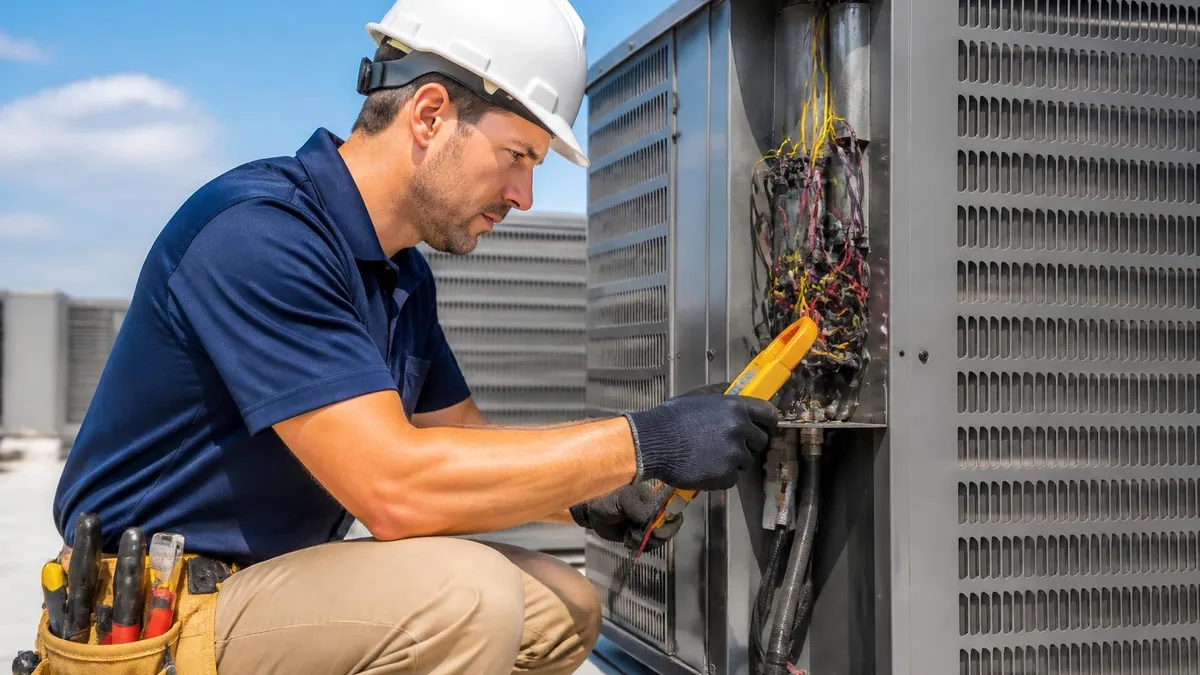
Industry standard is a 10-30% deposit at contract signing, with the remainder due upon successful inspection and system commissioning. Contractors demanding 50% or more up front are either undercapitalized or planning to disappear with your deposit. If a contractor insists on a large advance, treat it as a financial red flag and walk away.
HVAC pricing in the United States has shifted dramatically over the past three years, driven by refrigerant regulation, equipment efficiency mandates, and labor shortages that show no sign of easing. A complete furnace and air conditioner replacement that cost $6,000 in 2019 now typically runs $8,500 to $12,000 for equivalent equipment and installation quality. Heat pump conversions, especially cold-climate variable-speed models, can easily exceed $15,000 before federal tax credits and utility rebates are applied.
Pricing varies by region, fuel type, equipment tier, and the complexity of your existing home infrastructure. A straightforward furnace swap with no ductwork modifications and an accessible mechanical room might come in at the low end of the range. Adding ductwork repairs, electrical service upgrades, condensate pump installation, or zoning controls can push the same project significantly higher. The hvac duct calculator in our resources section can help you understand whether your existing ductwork is sized for the new equipment.
Equipment tier matters more than most homeowners realize. Entry-level single-stage furnaces and 14-15 SEER2 air conditioners are perfectly adequate for many homes, especially smaller properties in moderate climates. Mid-tier two-stage equipment offers better comfort and humidity control at a modest premium. High-end variable-speed inverter systems deliver the best comfort, lowest operating costs, and longest equipment life, but they require precise installation and command a significant price premium.
Financing has become a standard part of HVAC sales, with most companies offering promotional zero-percent terms through third-party lenders like Synchrony, Wells Fargo, or Service Finance. These programs can be excellent if you read the fine print and pay off the balance within the promotional window. They become predatory if you miss the deadline and retroactive interest kicks in at twenty-eight percent or higher. Always calculate the true cost over the loan term, not just the monthly payment.
Tax credits and utility rebates can dramatically reduce the effective price of efficient equipment. The federal Energy Efficient Home Improvement Credit currently offers up to two thousand dollars for qualifying heat pumps and three hundred dollars for high-efficiency furnaces and air conditioners. State and utility rebates layer on top of federal credits and sometimes exceed the federal benefit. The best HVAC companies know these programs cold and handle the paperwork as part of the project.
Beware of bundled package pricing that obscures the real cost of individual components. A proposal that lists complete system with installation for one price tells you nothing about what you are actually buying. Reputable contractors break out equipment cost, labor, accessories, permit fees, removal and disposal of old equipment, and any electrical or plumbing modifications. This transparency makes apples-to-apples comparison possible and prevents surprise charges during installation.
Finally, remember that the true cost of an HVAC system is not the installation price but the total cost of ownership over fifteen to twenty years. A two-thousand-dollar premium for higher efficiency equipment, paired with rebates and tax credits, can pay back in three to seven years and continue saving money for the rest of the system's life. Conversely, a cheap installation by an unqualified contractor can cost you the full system replacement five years early. Buy quality the first time and you will rarely regret it.
Once you have selected a contractor and signed the agreement, your job is not finished. The installation day itself reveals more about a company's quality than any sales conversation. Plan to be home, or at least available by phone, for the entire installation. Walk through the work plan with the lead installer before they unbox equipment, and confirm the scope matches what you signed. Last-minute substitutions of equipment models or accessories should require written authorization, not a verbal nod.
Pay close attention to how the crew protects your home. Drop cloths, shoe covers, and corner guards on door frames are signs of a professional outfit. Crews that drag dirty equipment across hardwood floors or leave refrigerant oil on the carpet are demonstrating exactly how much care they will put into the actual mechanical work. The cleanup at the end of the day should leave your space cleaner than they found it, with old equipment, packaging, and debris removed entirely from the property.
Ask to see the commissioning steps performed at startup. A proper commissioning includes refrigerant subcooling and superheat measurements, static pressure readings across the air handler, temperature split across the evaporator coil, gas pressure verification on furnaces, and final airflow calibration at each register. A crew that fires up the system and leaves within thirty minutes has not commissioned anything. Demand the measurements in writing before signing off on the job.
Confirm that the manufacturer warranty registration was completed before the crew leaves. This is non-negotiable. The contractor should provide a confirmation number or screenshot showing the equipment is registered to your address with the correct serial numbers and installation date. Without this step, your ten-year parts warranty may quietly default to a five-year base warranty, costing you thousands if a compressor or heat exchanger fails in year six or seven.
Schedule the first annual maintenance visit before the install crew leaves. Most labor warranties and many manufacturer extended warranties require documented annual professional maintenance to remain in effect. Putting the appointment on the calendar immediately, ideally as part of a discounted maintenance plan, ensures you do not lose coverage through inaction. Reputable companies offer maintenance plans for one fifty to three hundred dollars annually that cover precision tuneups, priority service, and discounted repairs.
Keep every piece of paperwork in a single project folder, digital or physical. Include the signed contract, equipment specifications, Manual J calculation, permit documentation, inspection sign-off, warranty registration confirmation, commissioning measurements, and any utility rebate or tax credit paperwork. When you sell the home, or when you need to file a warranty claim ten years from now, this folder is worth thousands of dollars in proof and process. Treat it accordingly.
If you do all of this and still have doubts about a particular component or finding, get a second opinion. Independent HVAC inspectors and home performance contractors charge two to four hundred dollars for a comprehensive system evaluation. That investment, on a ten-thousand-dollar installation, is cheap insurance against an installation defect that would otherwise compound for the next two decades. The best HVAC company will welcome this scrutiny, because they know their work will pass it.
Sample HVAC Practice Questions
Try these questions from our free HVAC practice tests. The correct answer and an explanation follow each question.
What type of heat pump system is BEST suited for a home without ductwork?
- A. Packaged terminal heat pump
- B. Mini-split ductless heat pump
- C. Water-source heat pump
- D. Dual-fuel heat pump
Answer: B. Mini-split ductless heat pump
Mini-split ductless heat pumps deliver conditioned air directly to individual zones without requiring ductwork, making them ideal for homes without existing ducts.
When measuring voltage on an energized 208V/3-phase disconnect, a technician finds 208V L1-L2, 208V L2-L3, but 0V L1-L3. The most likely cause is:
- A. Open fuse on L3
- B. Open fuse on L2
- C. Shorted capacitor on L3
- D. Loose neutral connection
Answer: A. Open fuse on L3
An open L3 fuse would cause L1-L3 to read 0V while L1-L2 and L2-L3 still show voltage through the remaining phases.
A technician finds high suction pressure and high discharge pressure with low superheat on an R-410A system. What is the most likely problem?
- A. Refrigerant overcharge
- B. Restricted metering device
- C. Refrigerant undercharge
- D. Failed compressor
Answer: A. Refrigerant overcharge
Both elevated suction and discharge pressures combined with low superheat are classic signs of an overcharged refrigerant system.
A technician measures 350 CFM at a supply register designed for 400 CFM. After checking the duct system, they find a collapsed section of flex duct. What is the most likely effect on system static pressure?
- A. Static pressure decreases upstream of the restriction
- B. Static pressure increases upstream of the restriction
- C. Static pressure remains unchanged throughout the system
- D. Static pressure drops to zero at the register
Answer: B. Static pressure increases upstream of the restriction
A restriction (collapsed flex duct) increases resistance, causing static pressure to build up upstream of the blockage while reducing airflow downstream.
HVAC Questions and Answers

HVAC Duct Supplies: The Complete Buyer's Guide to Ductwork Components, Sizing, and Installation Materials

HVAC Duct Calculator: The Complete Guide to Sizing Ductwork for Airflow, Static Pressure, and System Efficiency
Certified HVAC Contractors: How to Find, Vet, and Hire the Right Professional for Your Home or Business

Best HVAC Repair in Bandon, OR: Local Services Near Me Guide
HVAC Installations: The Complete Guide to Planning, Pricing, and Getting It Right the First Time
About the Author

NATE Certified HVAC Technician & Licensing Exam Trainer
Universal Technical InstituteMike Johnson is a NATE-certified HVAC technician and EPA 608 universal-certified refrigerant handler with a Bachelor of Science in HVAC/R Technology. He has 19 years of commercial and residential HVAC installation and service experience and specializes in preparing technicians for NATE certification, EPA 608, A2L refrigerant safety, and state HVAC contractor licensing examinations.