
HVAC Electrician: Roles, Skills, Licensing, and Career Path Guide 2026 September
Everything about being an HVAC electrician — licensing, skills, salary, and career path. ✅ Learn what it takes to work in HVAC electrical systems.
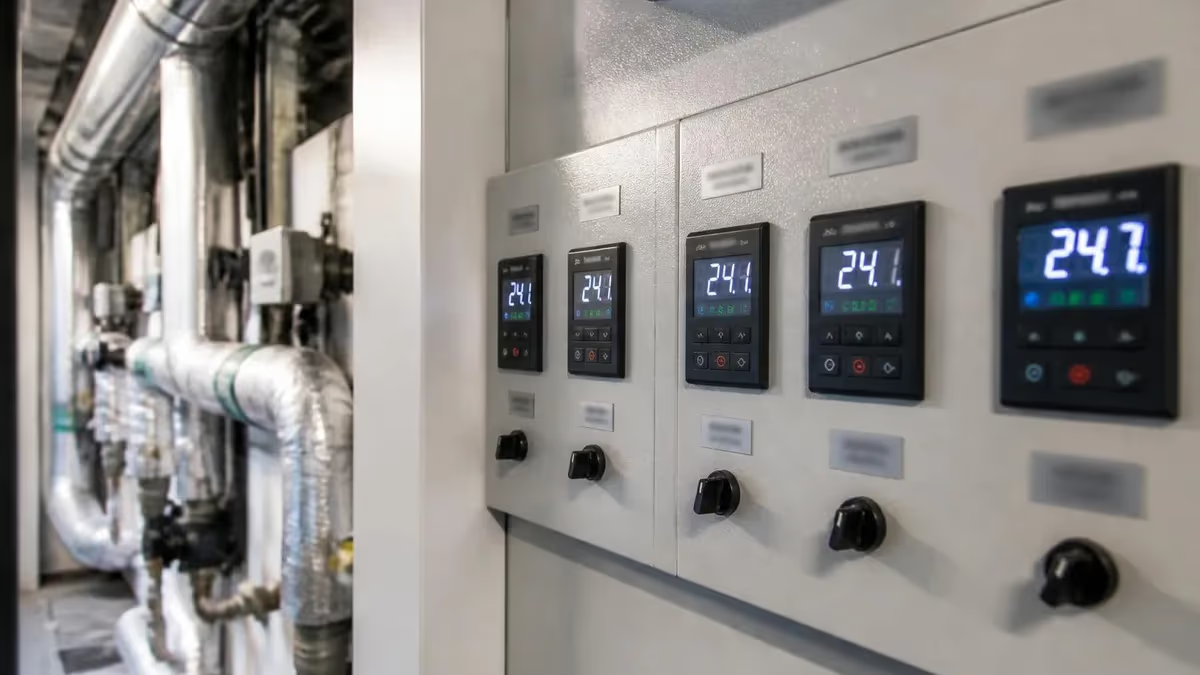
An hvac electrician sits at the crossroads of two skilled trades, combining deep knowledge of heating, ventilation, and air conditioning systems with expertise in electrical wiring, controls, and circuitry. Unlike a general electrician who handles a broad range of commercial and residential electrical work, an HVAC electrician focuses specifically on the power systems that keep climate control equipment running safely and efficiently. This specialization is increasingly in demand as modern HVAC systems grow more sophisticated, incorporating variable-frequency drives, smart thermostats, building automation systems, and complex multi-stage compressors that all require precise electrical work.
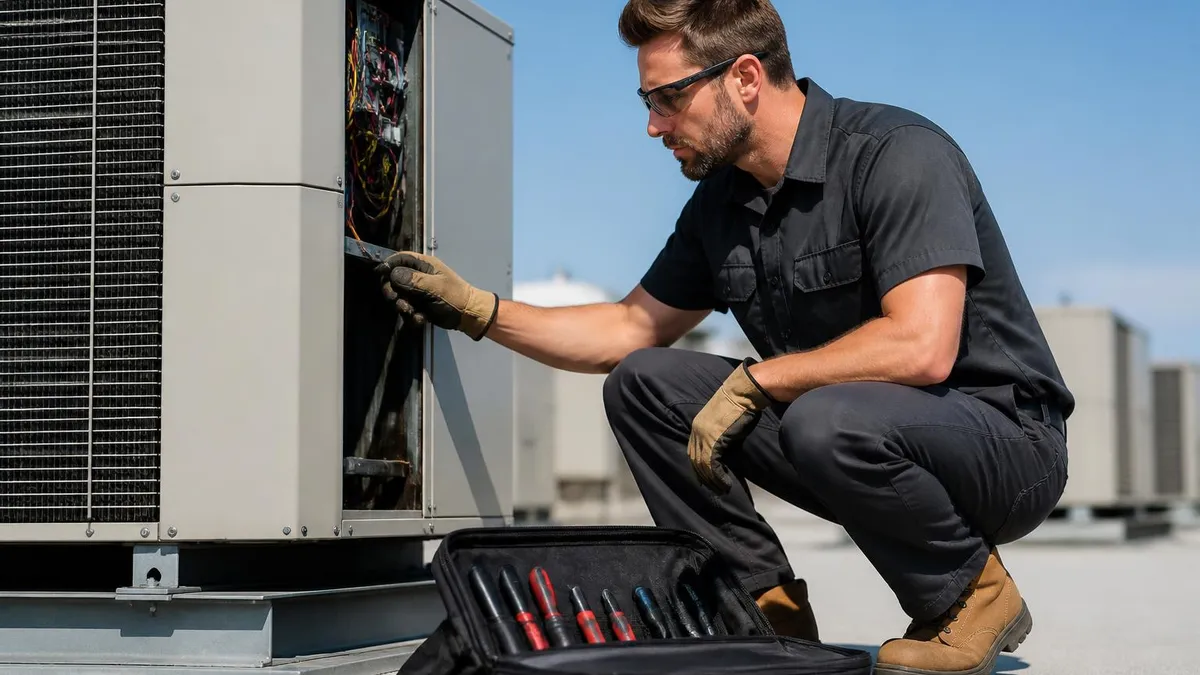
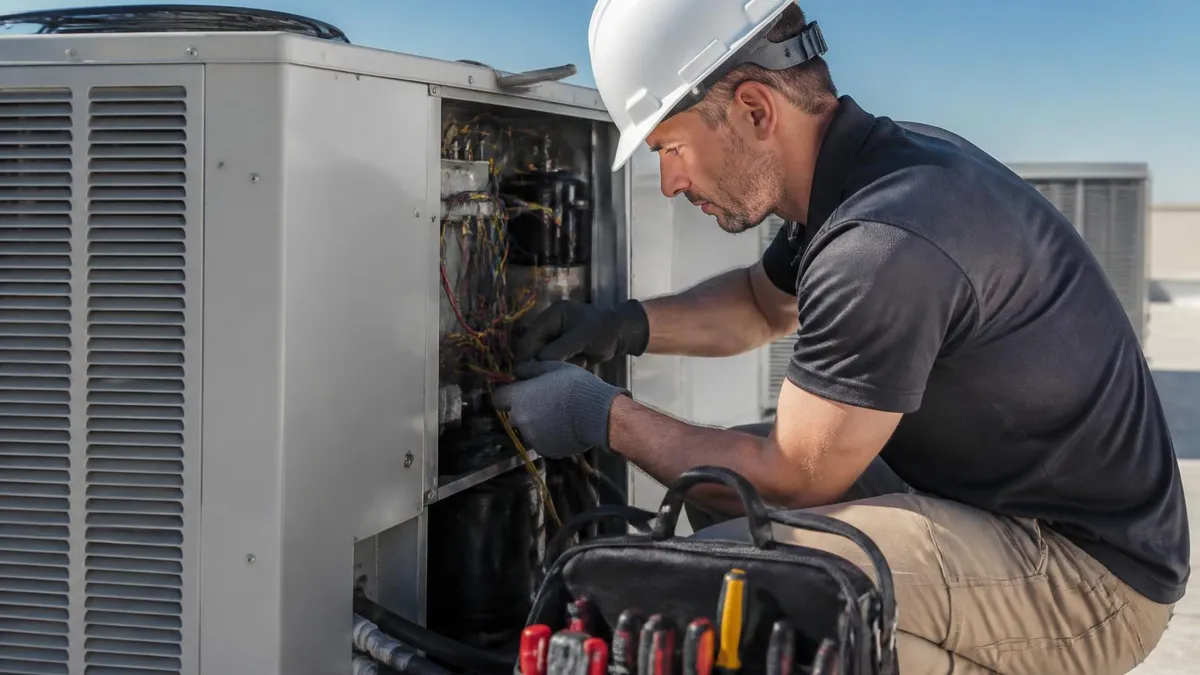
The day-to-day responsibilities of an HVAC electrician span installation, troubleshooting, repair, and preventive maintenance. On any given day, a technician in this role might run conduit and pull wire for a new rooftop unit on a commercial building, then diagnose a failed contactor on a residential air handler, and later program a digital control board on a chiller system. This variety is one of the reasons so many tradespeople are drawn to HVAC electrical work — no two service calls are exactly alike, and problem-solving skills get sharpened continuously through real-world challenges.
Understanding the distinction between an HVAC technician and an HVAC electrician is important for anyone considering this career path. A standard HVAC technician typically handles refrigerant management, mechanical components like compressors and coils, and basic electrical troubleshooting. An HVAC electrician goes further, often holding both an HVAC license and a state electrical license, allowing them to legally perform the full scope of electrical work associated with heating and cooling systems. In many jurisdictions, connecting a new HVAC unit to the electrical panel, running service entrance conductors, or installing dedicated circuits legally requires an electrician's license.
The salary potential for professionals who can bridge both trades is notably higher than for those who specialize in only one area. Bureau of Labor Statistics data shows that HVAC technicians earn a median annual wage of around $57,000, while electricians earn approximately $61,000. Skilled HVAC electricians who hold credentials in both fields regularly command $70,000 to $90,000 or more, especially in metropolitan markets or industrial settings where complex building systems demand dual expertise. Union positions and government contract work can push total compensation even higher when benefits and overtime are factored in.
Training pathways into HVAC electrical work vary, but the most common route is completing an accredited HVAC program at a community college or trade school, followed by an electrical apprenticeship or coursework that leads to a journeyman electrician license. Some employers offer earn-while-you-learn apprenticeships that train workers in both trades simultaneously over a four- to five-year period. Vocational high school programs have also expanded their offerings in recent years, giving young people a head start on the foundational skills needed before entering a formal apprenticeship.
The job market outlook for HVAC electricians is exceptionally strong heading into the second half of the 2020s. The U.S. Department of Labor projects 9% growth for HVAC technicians and 11% growth for electricians over the next decade, both faster than the average for all occupations.
Climate change, new federal energy efficiency mandates, and the accelerating shift toward electrification of home heating — particularly through heat pumps — are creating fresh demand for workers who understand both the mechanical and electrical sides of climate control. Skilled professionals entering this field today are positioned to enjoy long, stable careers with excellent earning potential.
Whether you are just starting to explore trade careers or are an experienced HVAC technician looking to expand your qualifications, understanding what HVAC electricians do, what credentials they need, and how to build a career in this niche is the first step. The sections below walk through every key aspect of the profession, from required licenses and core technical skills to the specific types of systems you will work on and the steps needed to advance from entry-level helper to master-level specialist.
HVAC Electrician by the Numbers

Core Responsibilities of an HVAC Electrician
Running conduit, pulling wire, making load calculations, and connecting new HVAC equipment to electrical panels. Includes installing dedicated circuits, disconnect switches, and line-voltage control wiring for residential and commercial units.
Using multimeters, clamp meters, and oscilloscopes to trace faults in motors, contactors, capacitors, transformers, and control boards. Diagnosing both low-voltage control circuits and high-voltage power circuits is essential.
Configuring thermostats, variable-frequency drives (VFDs), programmable logic controllers (PLCs), and building automation system (BAS) nodes. Modern HVAC increasingly relies on digital controls rather than purely mechanical components.
Checking electrical connections for tightness, measuring motor amperage against nameplate ratings, testing capacitors for proper microfarad values, and verifying safety switch and contactor operation before seasonal startup.
Pulling electrical permits, adhering to NEC (National Electrical Code) requirements, and ensuring all HVAC electrical work passes local authority having jurisdiction (AHJ) inspections. Documentation and label accuracy are critical in this area.
Licensing requirements for HVAC electricians vary significantly by state, but virtually every jurisdiction in the United States requires some combination of HVAC credentials and electrical licensing before a technician can legally perform the full scope of work associated with this career. At the federal level, the EPA Section 608 certification is mandatory for anyone who handles refrigerants — a requirement that applies to essentially all HVAC technicians regardless of their electrical duties. This credential alone does not cover electrical work; it simply establishes the baseline for refrigerant handling competency.
The electrical licensing side of the equation typically follows a structured tiered system. Most states start with a journeyman electrician license, which requires completing a state-approved apprenticeship or accumulating a set number of on-the-job training hours — commonly between 4,000 and 8,000 hours depending on the state — along with passing a written examination based on the National Electrical Code.
After a defined period of journeyman-level field experience, typically two to four years, a technician becomes eligible to sit for the master electrician examination, which covers broader code knowledge and business practices. Holding a master electrician license is often required to pull permits independently and supervise electrical work on job sites.
On the HVAC side, many states require a separate HVAC contractor or technician license that covers refrigeration systems, load calculations, duct design, and mechanical codes. Some states issue combined mechanical/electrical licenses, while others treat them as entirely separate credentials managed by different licensing boards. Before starting any dual-license pursuit, it is essential to check with your state's contractor licensing board and electrical licensing board to understand exactly which credentials are recognized, which examinations are required, and whether you need separate bonds and insurance policies for each license class.
Certification from industry organizations adds professional credibility beyond state licensing. NATE (North American Technician Excellence) offers specialty certifications in areas like air conditioning, heat pumps, commercial refrigeration, and gas heating, each requiring a proctored exam and ongoing continuing education. NATE certification is widely recognized by HVAC employers and utility companies and can directly influence hiring decisions and starting wage rates. Similarly, HVAC Excellence and the Refrigerating Engineers and Technicians Association (RETA) offer recognized credentials for professionals working in commercial refrigeration and industrial HVAC applications.
Continuing education is not just a best practice — it is a licensing requirement in most states. Electrical license holders typically must complete between eight and twenty-four hours of approved continuing education every one to two years to maintain their license in active status. These requirements are designed to keep practitioners current with National Electrical Code updates, which are published every three years, as well as changes to local amendments and new product technologies. Many community colleges, trade associations, and online platforms offer approved CEU courses specifically tailored to HVAC electrical topics.
For technicians who want to move into supervisory or contracting roles, earning a contractor's license is the logical next step. Contractor licenses generally require proof of journeyman or master licensure, a minimum number of years of field experience, passing a business and law examination, submitting proof of general liability insurance and a contractor's bond, and in some states completing a background check.
The investment in obtaining a contractor's license opens the door to operating your own HVAC electrical business, bidding government contracts, and supervising other licensed technicians on projects where a licensed contractor must be on record as the responsible party.
Finally, staying current with the rapid evolution of HVAC technology is a form of continuous professional development that licensing requirements alone cannot fully capture. Variable refrigerant flow (VRF) systems, geothermal heat pumps, demand-controlled ventilation, and advanced motor technologies like electronically commutated motors (ECMs) all require specific training beyond what standard apprenticeship programs covered even a decade ago. Manufacturers regularly offer factory training and certification programs for their specific equipment lines, and attending these programs — whether in person or online — ensures that an HVAC electrician can service the newest generation of systems competently and safely.
Key Electrical Skills for HVAC Work
HVAC systems rely on single-phase and three-phase power circuits to run compressors, condenser fans, air handlers, and auxiliary electric heating elements. An HVAC electrician must be comfortable sizing conductors using NEC ampacity tables, selecting overcurrent protection devices, and installing the correct disconnect means within sight of every motor-driven piece of equipment. Understanding motor starting current (which can be six to eight times the running current) is critical when sizing breakers and wiring to avoid nuisance trips during startup.
Three-phase power is common in commercial and industrial HVAC applications, where large chillers, cooling towers, and rooftop units draw significant amperage. Reading three-phase power quality with a power analyzer — checking for voltage imbalance, harmonic distortion, and power factor — is an advanced skill that helps HVAC electricians diagnose motor failures caused by poor power quality rather than mechanical defects. Voltage imbalance as small as two percent can reduce a three-phase motor's efficiency and lifespan significantly.
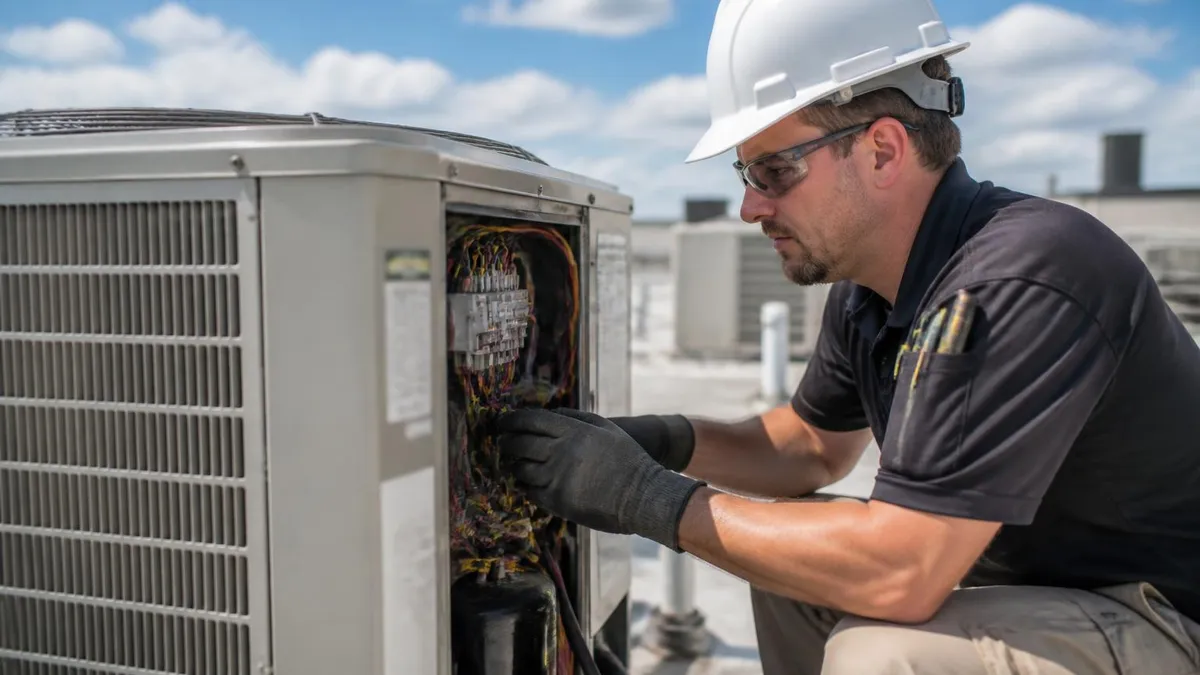
Pros and Cons of Becoming an HVAC Electrician
- +Higher earning potential than single-trade technicians, often $70,000–$90,000+ with dual credentials
- +Strong and growing job market driven by heat pump adoption and building electrification trends
- +Diverse daily work that blends mechanical problem-solving with electrical diagnostics
- +Clear career advancement path from apprentice to journeyman to master to contractor
- +Recession-resistant demand — HVAC systems require maintenance regardless of economic conditions
- +Opportunities to work in commercial, industrial, and residential sectors based on preference
- −Lengthy training period — four to five years minimum to obtain both HVAC and electrical credentials
- −Licensing fees, exam costs, and continuing education requirements add ongoing expenses
- −Physically demanding work involving confined spaces, rooftop units, and heavy equipment
- −On-call emergency service is common, including nights, weekends, and holidays during peak seasons
- −Keeping up with rapidly evolving technology like VRF systems, VFDs, and smart controls requires continuous learning
- −Electrical work carries inherent safety risks — arc flash, electrocution, and fall hazards require strict protocol adherence
HVAC Electrician Career Checklist
- ✓Complete an accredited HVAC program (associate degree or trade school certificate, typically 1–2 years)
- ✓Obtain EPA Section 608 Universal certification before handling any refrigerants
- ✓Enroll in a state-approved electrical apprenticeship or accumulate required on-the-job training hours
- ✓Pass the journeyman electrician exam in your state, based on the current National Electrical Code
- ✓Accumulate required journeyman field experience (typically 2–4 years) before applying for master exam
- ✓Pursue NATE certification in at least one specialty (Air Conditioning, Heat Pumps, or Commercial Refrigeration)
- ✓Complete manufacturer training programs for major equipment brands (Carrier, Trane, Lennox, Daikin, etc.)
- ✓Learn to read and interpret wiring schematics, ladder diagrams, and sequence of operations documents
- ✓Study VFD commissioning, BAS networking basics, and low-voltage control circuit troubleshooting
- ✓Complete continuing education hours each license cycle to maintain both HVAC and electrical credentials
Dual Licensing Is the Real Competitive Advantage
Technicians who hold both a state electrical license and an HVAC license can legally perform end-to-end system installations without subcontracting any portion of the work. This makes them far more valuable to employers and allows independent contractors to keep more revenue in-house. In states where electrical work on HVAC systems must be performed by a licensed electrician, having that credential eliminates a scheduling bottleneck that slows down single-trade HVAC companies on every installation job.
Salary and advancement opportunities for HVAC electricians are among the most compelling aspects of pursuing this dual-trade career path. Entry-level apprentices typically start at $18 to $22 per hour, which is already competitive with many jobs that require a four-year college degree when the absence of student loan debt is factored into the comparison. As technicians progress through their apprenticeship and acquire field experience, wages climb steadily. Journeyman-level HVAC electricians in most metropolitan markets earn between $28 and $42 per hour, depending on the region, the employer (union versus non-union), and whether they specialize in commercial or residential work.
Geographic location plays a significant role in determining compensation. HVAC electricians in high cost-of-living markets like New York City, San Francisco, Seattle, and Boston consistently earn wages at the top of the national range, with journeyman rates in union shops sometimes exceeding $50 per hour when fringe benefits are included.
In contrast, rural areas and smaller markets typically pay less, though the lower cost of living in those regions partially offsets the wage difference. Technicians who are willing to travel for contract work — particularly for large commercial construction projects — can earn substantial per diem allowances on top of their base wages, significantly boosting total annual compensation.
Industrial HVAC electrical work is among the highest-paying subspecialties within the field. Technicians who work on process cooling systems, cleanroom HVAC, data center cooling infrastructure, or pharmaceutical-grade climate control equipment operate in environments where system downtime can cost hundreds of thousands of dollars per hour. That high-stakes context commands premium wages and often involves shift differentials, hazardous material pay, and other compensation enhancements not found in standard residential service work. Industrial positions typically require additional safety training, including OSHA 10 or 30 certification, confined space entry, and lockout/tagout (LOTO) procedures.
Specialization within the HVAC electrical field creates additional earning potential and career differentiation. VRF (variable refrigerant flow) system specialists are in particularly high demand as these sophisticated multi-zone systems have gained popularity in commercial construction. Because VRF systems combine complex refrigerant circuits with sophisticated electrical controls and network communication, technicians who can install and service them command premium rates. Similarly, geothermal heat pump specialists, chiller plant operators, and building automation system integrators all occupy high-value niches that pay significantly above the median for general HVAC work.
The path from field technician to management or ownership is well-traveled in the HVAC electrical trades. Many successful HVAC electrical contractors started as apprentices and worked their way up over fifteen to twenty years, progressively taking on more complex projects, earning advanced credentials, and eventually transitioning into estimating, project management, or business ownership.
The business skills required to run an HVAC electrical contracting company — estimating job costs, managing crews, maintaining relationships with suppliers and general contractors, and navigating licensing and insurance requirements — are learnable, and many trade associations offer formal business training programs specifically designed for journeyman technicians who want to make this transition.
The emergence of energy efficiency programs and utility rebates has created a growing niche for HVAC electricians with expertise in energy auditing and retrofit work. Programs offered through utilities, state energy offices, and federal initiatives like the Inflation Reduction Act incentivize building owners to replace aging HVAC equipment with high-efficiency alternatives. Technicians who can assess existing systems, calculate potential energy savings, specify qualifying replacement equipment, and handle the paperwork for rebate applications add substantial value beyond basic installation work. This type of advisory role commands higher margins than commodity service calls and builds long-term client relationships.
Retirement security is another significant financial advantage of the HVAC electrical trades, particularly for union members. Union HVAC electrical workers in the United States typically receive defined benefit pension plans, annuity fund contributions, and employer-paid health insurance — benefits that have largely disappeared in many white-collar professions. Even in non-union settings, established HVAC electrical companies increasingly offer 401(k) matching, health benefits, and paid training time as part of competitive compensation packages designed to attract and retain skilled dual-licensed technicians in a tight labor market.
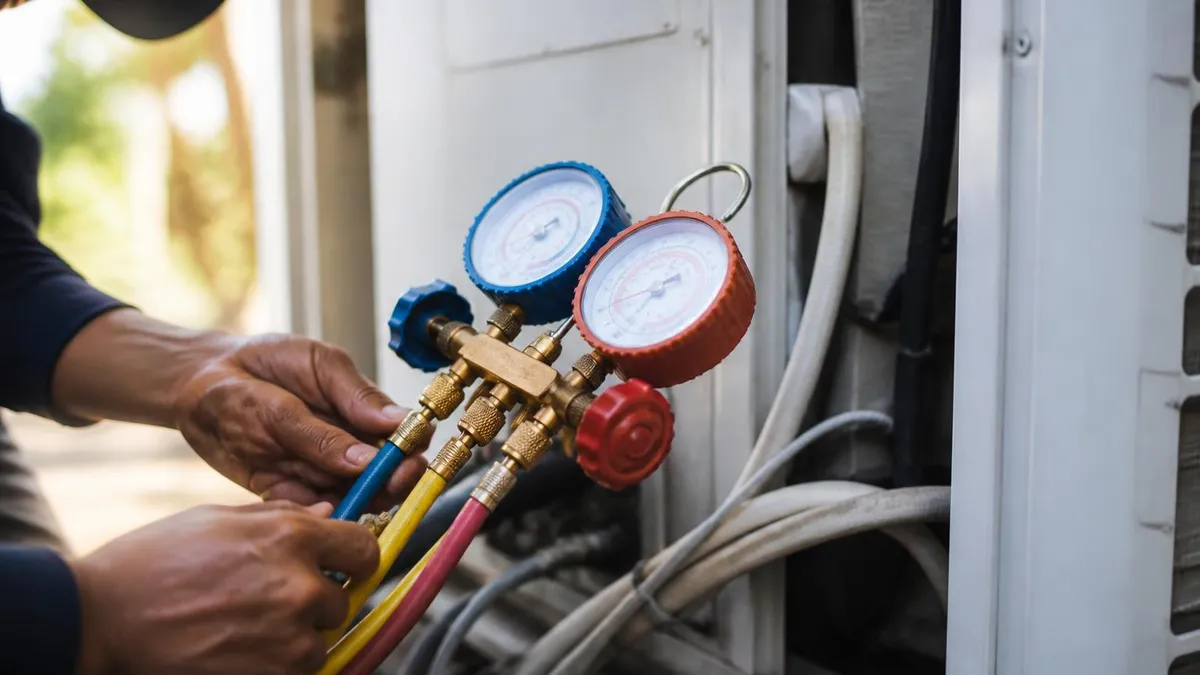
In most U.S. states, connecting HVAC equipment to the electrical panel, running branch circuits, or installing service disconnects without a valid electrical license is illegal and can result in fines, license revocation, and liability exposure if an electrical fire or injury occurs. Some HVAC technicians mistakenly assume their HVAC contractor's license covers electrical work — it typically does not cover line-voltage electrical installations. Always verify your state's specific scope-of-work rules with the licensing board before performing electrical work on HVAC systems.
Preparing for HVAC electrician licensing exams requires a structured approach that balances theoretical knowledge with practical application. Most state journeyman electrician exams are open-book, meaning candidates can bring a copy of the National Electrical Code to the testing center, but this does not make them easy — the NEC is a dense, 900-plus-page document, and knowing how to navigate it quickly and accurately under time pressure is a skill that takes deliberate practice to develop. The exam typically contains 80 to 100 multiple-choice questions covering calculations, code requirements, equipment grounding, overcurrent protection, and motor circuit rules.
One of the most effective exam preparation strategies is working through a large volume of practice questions grouped by NEC article or topic. This approach helps candidates identify knowledge gaps early and focus study time on the areas where they are weakest rather than reviewing material they already know well.
Practice tests that mirror the format and difficulty level of the actual state exam — mixing straightforward recall questions with multi-step calculation problems — build both the content knowledge and the test-taking stamina needed to succeed. PracticeTestGeeks offers a range of HVAC practice tests covering electrical controls, air conditioning, energy efficiency, and code compliance that align closely with the content tested in real licensing exams.
For the HVAC portion of credentialing, candidates should focus on refrigeration cycle theory, load calculations using Manual J methodology, duct design principles, equipment selection, and the specific requirements of ASHRAE standards and the International Mechanical Code. The EPA Section 608 exam covers refrigerant types, recovery procedures, safety, and regulations under the Clean Air Act. Study materials published by ESCO Institute, Ferris State University, and major HVAC manufacturers provide comprehensive coverage of these topics in formats ranging from textbooks to online video courses.
Time management during exam preparation is critical. Candidates who are simultaneously working full-time apprenticeships while studying for licensing exams need realistic schedules that fit study sessions into available time without causing burnout. A common approach is dedicating thirty to forty-five minutes of focused study each weekday evening and a longer two-hour session on one weekend day. This cadence allows for steady knowledge accumulation over several months without requiring sacrifices that are unsustainable alongside full-time work and personal responsibilities.
Understanding how the NEC is organized accelerates exam performance significantly. The Code is structured into chapters: Chapter 1 covers general definitions, Chapter 2 covers wiring and protection, Chapter 3 covers wiring methods and materials, Chapter 4 covers equipment for general use, Chapter 5 covers special occupancies, Chapter 6 covers special equipment (which includes HVAC-related articles), Chapter 7 covers special conditions, and Chapter 8 covers communications systems.
HVAC electricians should pay particular attention to Article 430 (Motors), Article 440 (Air-Conditioning and Refrigerating Equipment), Article 250 (Grounding and Bonding), and Article 310 (Conductors for General Wiring), as these articles appear repeatedly on licensing exams.
After passing the journeyman exam, many HVAC electricians continue their education in preparation for the master electrician examination. Master exams are generally more comprehensive, covering business law, contract administration, estimating, plan reading, and advanced code applications in addition to the technical content tested at the journeyman level. Some states also require a formal application demonstrating documented field experience before allowing candidates to sit for the master exam, so maintaining accurate records of work performed is important throughout the journeyman phase of a career.
Finally, mock exam conditions during practice improve real exam performance. Taking timed practice tests in a quiet environment, using the same Code book and tabbing system planned for the actual exam, reduces anxiety and builds confidence. Candidates who have completed three to five full-length timed practice exams before sitting for the actual test typically report feeling more comfortable with the pace and format, leading to better results. Combining structured study materials, consistent practice testing, and hands-on field experience creates the strongest possible foundation for HVAC electrician licensing success.
Building a long-term career as an HVAC electrician requires more than technical skill — it demands ongoing professional development, strong communication with clients and contractors, and the ability to adapt to a rapidly changing technology landscape.
Technicians who thrive in this field over twenty or thirty year careers share several common traits: they stay curious about new equipment and systems, they invest in relationships with suppliers and colleagues, and they treat every service call as an opportunity to diagnose problems systematically rather than relying on guesswork or habit. This professional mindset separates truly excellent HVAC electricians from those who plateau early in their careers.
One of the most practical skills that distinguishes top performers is the ability to read and interpret equipment documentation accurately and efficiently. Every piece of HVAC equipment ships with installation manuals, wiring diagrams, and sequence of operations documents that describe exactly how the system is designed to function and how the electrical controls interact with the mechanical components.
Technicians who treat these documents as primary references — rather than improvising from memory or generic knowledge — make fewer wiring errors, commission systems more quickly, and identify faults more accurately. Developing the habit of always consulting equipment documentation before starting any installation or repair pays dividends throughout an entire career.
Customer communication is another underrated skill in the HVAC electrical trades. Residential and commercial clients often have limited technical knowledge but significant financial stakes in the health of their HVAC systems. An HVAC electrician who can explain a failed component in plain language, describe the repair process clearly, and provide an honest assessment of whether repair or replacement makes more economic sense builds the kind of trust that generates repeat business and referrals. Poor communicators who perform technically excellent work often lose customers to less skilled competitors who simply communicate better, illustrating that soft skills matter even in hands-on trades.
Safety culture is non-negotiable in HVAC electrical work. Working with voltages ranging from 24 volts on control circuits to 480 volts or higher on commercial three-phase systems creates real electrocution and arc flash hazards that demand strict adherence to safety procedures every single day.
OSHA 1926 (construction) and OSHA 1910 (general industry) electrical standards, NFPA 70E (electrical safety in the workplace), and equipment-specific lockout/tagout procedures must be followed without exception. Technicians who take shortcuts on electrical safety — skipping proper PPE, working on energized equipment without authorization, or failing to verify zero energy state before opening panels — put themselves and coworkers at serious risk.
Networking within the industry accelerates career growth in ways that solitary skill development cannot. Joining local chapters of trade associations like ACCA (Air Conditioning Contractors of America), IBEW (International Brotherhood of Electrical Workers), or ASHRAE (American Society of Heating, Refrigerating and Air-Conditioning Engineers) connects technicians with peers, mentors, and potential employers. These organizations also offer access to industry publications, technical seminars, and certification programs that keep members current with evolving standards and best practices. Many career opportunities in commercial and industrial HVAC electrical work are filled through professional networks rather than formal job postings.
The integration of digital tools into HVAC electrical work is accelerating. Service management software, mobile diagnostic apps, cloud-connected equipment monitoring platforms, and digital permitting systems are now standard parts of the workflow in many companies. Technicians who are comfortable using tablets and smartphones for field documentation, work order management, and equipment commissioning are more productive and more attractive to employers than those who resist adopting these tools. Learning basic data analysis skills — understanding equipment runtime data, energy consumption trends, and fault code histories — enables predictive maintenance approaches that prevent failures rather than simply responding to them.
Ultimately, the most successful HVAC electricians approach their career as a lifelong learning journey. The combination of physical craftsmanship, analytical problem-solving, technical knowledge, and interpersonal skills required to excel in this trade is genuinely challenging to master, and that challenge is precisely what makes the work rewarding. Every new system type, every unfamiliar fault code, and every complex commercial installation is an opportunity to expand competence and increase value. Embracing that orientation — rather than seeking comfort in familiar routines — is the single most reliable predictor of long-term success in the HVAC electrical field.
HVAC Questions and Answers
HVAC Industry Trends 2026: The Complete Guide to Heat Pumps, Refrigerant Changes, Smart Controls, and Workforce Shifts Reshaping Heating and Cooling
HVAC Advertising: The Complete Playbook for Generating Leads, Booking Calls, and Growing Your Heating and Cooling Business
HVAC License: State Requirements, EPA 608 and Career Path Guide
EPA Certification for HVAC: The Complete Guide to Section 608 Requirements, Exam Prep, and Career Impact
HVAC Parts and Supply: The Complete Guide to Sourcing, Identifying, and Buying Heating and Cooling Components in 2026
About the Author

NATE Certified HVAC Technician & Licensing Exam Trainer
Universal Technical InstituteMike Johnson is a NATE-certified HVAC technician and EPA 608 universal-certified refrigerant handler with a Bachelor of Science in HVAC/R Technology. He has 19 years of commercial and residential HVAC installation and service experience and specializes in preparing technicians for NATE certification, EPA 608, A2L refrigerant safety, and state HVAC contractor licensing examinations.