
HVAC Deals: The Complete Guide to Saving Money on Heating and Cooling Systems, Installations, and Maintenance
HVAC deals guide: learn how to find seasonal discounts, rebates, financing, and contractor promotions to save thousands on heating and cooling systems. 🆕
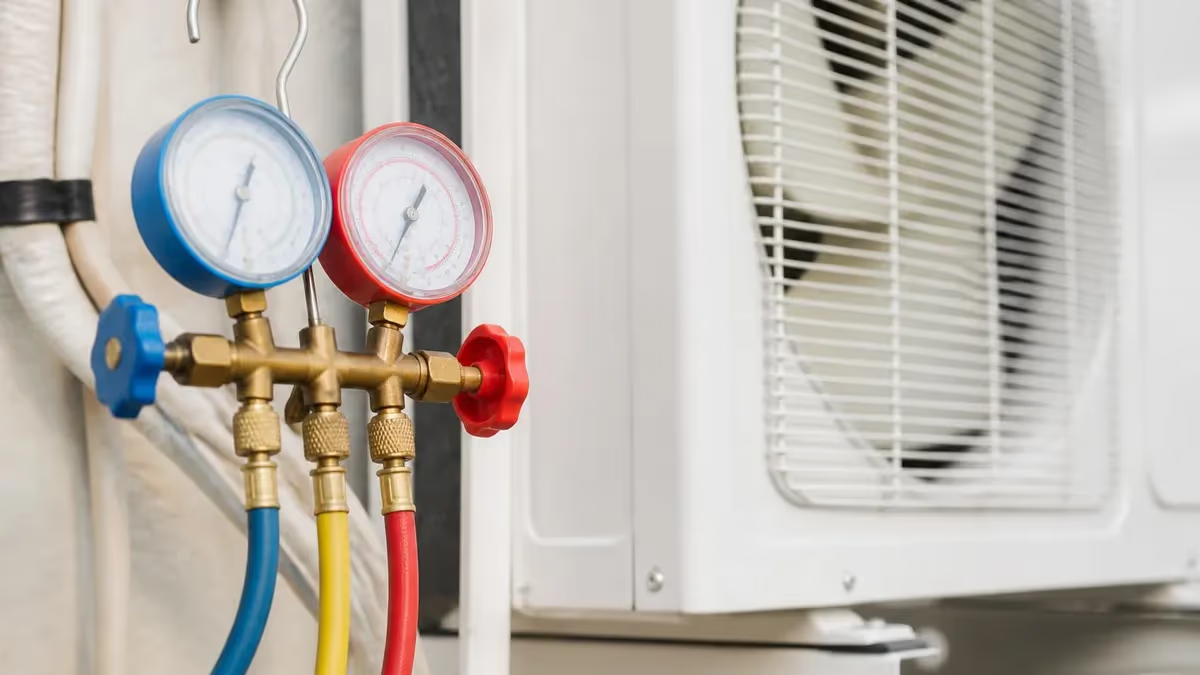
Finding the best HVAC deals can save a typical homeowner anywhere from a few hundred dollars on a tune-up to several thousand dollars on a complete system replacement. Heating and cooling equipment represents one of the largest mechanical investments most households ever make, and prices swing dramatically based on timing, manufacturer promotions, utility rebates, and local competition. Understanding how the HVAC pricing world actually works gives you real leverage, letting you negotiate from a position of knowledge rather than guessing whether a quote is fair.
The HVAC market is unusually seasonal, and that seasonality is the single biggest factor driving discounts. Air conditioner demand spikes in summer, while furnace demand peaks in winter, so contractors and distributors slash prices during shoulder seasons to keep crews busy. A savvy buyer who schedules a furnace install in late spring or an air conditioner swap in early fall often pays noticeably less than someone forced to buy during a mid-July heat wave when every company in town is booked solid.
Beyond timing, HVAC deals come from a stacking of multiple incentive sources. Manufacturer rebates, federal tax credits, state energy programs, utility company cash-back offers, and contractor-specific promotions can all be combined on a single purchase. When you understand how to layer these incentives, a system that lists for $9,000 can realistically drop to $6,000 or less after every credit is applied, transforming an intimidating expense into a far more manageable one.
It also helps to know what you are actually buying. HVAC pricing is not just about the equipment box on your wall or pad. Labor, ductwork modifications, permits, refrigerant line sets, electrical upgrades, and warranty registration all factor into the final number. Two quotes for the "same" 16 SEER system can differ by thousands of dollars because one includes proper load calculations and code-compliant work while the other cuts corners that cost you later.
Researching HVAC replacement services before you commit is one of the smartest moves you can make. Reputable companies publish transparent pricing tiers, offer free in-home estimates, and explain exactly what each line item covers. Comparing several detailed estimates not only reveals the genuine market rate in your area but also exposes which contractors pad their numbers and which deliver honest, competitive value backed by solid workmanship guarantees.
This guide walks you through every angle of finding genuine HVAC deals, from decoding seasonal pricing cycles and rebate programs to evaluating financing offers and spotting promotions that are too good to be true. Whether you need a quick repair, a maintenance plan, or a full system replacement, the strategies below help you keep money in your pocket while still getting reliable, efficient equipment that keeps your home comfortable for the next fifteen to twenty years.
HVAC Deals by the Numbers
When to Buy: Seasonal Timing for the Best HVAC Deals
The sweet spot for air conditioner deals. Demand hasn't peaked, crews have open schedules, and manufacturers roll out spring promotions to clear inventory. Expect the deepest discounts on cooling equipment and bundled installation labor before the summer rush begins.
The worst time to buy AC and the best time for furnace deals. Cooling prices spike with demand, but contractors discount heating systems heavily to fill slow calendar slots. Plan ahead and buy your furnace while everyone else thinks about cooling.
Prime furnace and heat pump season for promotions. As AC demand fades, you can snag cooling equipment leftovers cheaply while manufacturers push fall heating rebates. Many utility rebate programs also refresh their budgets in the new fiscal cycle.
Slowest overall season means motivated contractors and year-end clearance pricing. Companies eager to hit annual sales targets often negotiate aggressively. The tradeoff is emergency premiums if your system fails during a cold snap and you can't wait.
Rebates and incentives are where HVAC deals get genuinely exciting, because they stack on top of whatever sticker discount you negotiate. The federal Energy Efficient Home Improvement Credit, often called the 25C credit, currently offers up to $2,000 for qualifying heat pumps and up to $600 for high-efficiency air conditioners and furnaces. These are dollar-for-dollar reductions on your tax bill, not deductions, which makes them far more valuable than many homeowners initially assume when planning a purchase.
On top of federal credits, the High-Efficiency Electric Home Rebate program and state energy offices distribute point-of-sale rebates that can cover thousands of dollars for income-qualified households. These programs vary widely by state and are funded in waves, so availability changes throughout the year. Checking your state energy office website and the Database of State Incentives for Renewables and Efficiency before buying ensures you don't leave money on the table that you could have claimed instantly at purchase.
Utility companies run their own rebate programs separate from government incentives, often paying $300 to $1,200 for installing high-efficiency equipment. These rebates exist because utilities are legally required to promote energy conservation, and helping you buy an efficient system reduces strain on the power grid during peak demand. Your installer usually handles the paperwork, but always confirm the equipment model you choose actually qualifies before signing anything, since efficiency thresholds matter.
Manufacturer rebates form the third major layer. Brands like Carrier, Trane, Lennox, and Goodman run seasonal cash-back promotions, frequently offering $500 to $1,650 on qualifying complete systems. These promotions rotate quarterly and are designed to move inventory during slow periods. Because they originate from the manufacturer rather than the contractor, you can typically combine them with dealer discounts and government incentives without any conflict, multiplying your total savings substantially on a single purchase.
Financing promotions count as deals too, even though they don't reduce the price directly. Zero-percent interest offers for twelve to sixty months effectively give you free use of the lender's money, preserving your savings while spreading payments out. Just read the fine print carefully, because deferred-interest plans can retroactively charge interest from day one if you miss the payoff deadline. Genuine zero-percent financing differs sharply from deferred-interest traps disguised with similar marketing language.
To capture every available incentive, document your purchase thoroughly. Keep itemized invoices, AHRI certificate numbers, model and serial numbers, and proof of payment. Some credits require the Manufacturer's Certification Statement, while others need the contractor's license information. Exploring detailed HVAC solutions from reputable providers helps because established companies maintain organized rebate-processing systems and know exactly which forms each program demands, sparing you hours of frustrating administrative legwork.
HVAC Practice Test Questions
Prepare for the HVAC - Heating Ventilation and Air Conditioning exam with our free practice test modules. Each quiz covers key topics to help you pass on your first try.
HVAC Air Conditioning
HVAC Exam Questions covering Air Conditioning. Master HVAC Test concepts for certification prep.
HVAC Code Compliance
Free HVAC Practice Test featuring Code Compliance. Improve your HVAC Exam score with mock test prep.
HVAC Electrical Controls
HVAC Test Prep for Electrical Controls. Practice HVAC Quiz questions and boost your score.
HVAC Energy Efficiency
HVAC Questions and Answers on Energy Efficiency. Free HVAC practice for exam readiness.
HVAC Heating Systems
HVAC Mock Test covering Heating Systems. Online HVAC Test practice with instant feedback.
HVAC Load Calculations
Free HVAC Quiz on HVAC Load Calculations. HVAC Exam prep questions with detailed explanations.
HVAC Tools and Equipment
HVAC Practice Questions for HVAC Tools and Equipment. Build confidence for your HVAC certification exam.
HVAC Refrigeration
HVAC Test Online for Refrigeration. Free practice with instant results and feedback.
HVAC Safety Practices
HVAC Study Material on Safety Practices. Prepare effectively with real exam-style questions.
HVAC System Design
Free HVAC Test covering System Design. Practice and track your HVAC exam readiness.
HVAC Thermodynamics
HVAC Exam Questions covering Thermodynamics. Master HVAC Test concepts for certification prep.
Types of HVAC Deals and Discounts
Equipment deals focus on the hardware itself: the condenser, furnace, air handler, or heat pump. These come from manufacturer overstock, discontinued model-year inventory, and seasonal price drops. Buying a previous-year model that's mechanically identical to the current one can cut equipment costs fifteen to twenty-five percent with no downside in performance or warranty coverage.
Watch for bundled system deals, where a matched condenser and air handler sell together for less than buying the components separately. Matched systems also run more efficiently and qualify more easily for rebates. Always verify the AHRI certified match number, because mismatched components can void warranties and disqualify you from the incentive programs that make the deal worthwhile in the first place.

Buying During an HVAC Promotion: Pros and Cons
- +Significant upfront savings on equipment and labor costs
- +Ability to stack manufacturer, utility, and government incentives
- +Better contractor availability and scheduling flexibility off-season
- +Access to extended or upgraded warranty bundles at no extra cost
- +Zero-percent financing options preserve your cash reserves
- +Higher-efficiency models become affordable, lowering monthly utility bills
- −Limited-time pressure can push rushed, poorly researched decisions
- −Some 'free' offers hide costs inside inflated equipment pricing
- −Discontinued or overstock models may have limited future parts availability
- −Deferred-interest financing can backfire if not paid off in time
- −Off-season buying requires planning ahead before equipment fails
- −Deep discounts sometimes signal rushed installs or inexperienced crews
Your HVAC Deal-Hunting Checklist
- ✓Get at least three detailed, itemized written estimates from licensed contractors.
- ✓Confirm the contractor performed a Manual J load calculation for proper sizing.
- ✓Verify equipment model numbers qualify for every rebate you plan to claim.
- ✓Check federal 25C tax credit eligibility and keep the certification statement.
- ✓Search your utility company's website for current cash-back rebate offers.
- ✓Look up state incentives on the DSIRE database before signing anything.
- ✓Ask whether the quote includes permits, disposal, and warranty registration.
- ✓Confirm the SEER2, AFUE, or HSPF2 rating matches what you're paying for.
- ✓Read financing terms carefully to distinguish true 0% from deferred interest.
- ✓Schedule off-season installation when contractor demand and pricing are lowest.
Stack your incentives instead of chasing one big discount
Most homeowners hunt for one large discount and stop there. The real savings come from layering a contractor promotion, a manufacturer rebate, a utility cash-back offer, and a federal tax credit on the same purchase. Stacked correctly, these can reduce a $9,000 system to under $6,000 — far more than any single deal delivers alone.
Evaluating HVAC quotes properly is what separates a true deal from an expensive mistake dressed up as a bargain. The first thing to scrutinize is whether the contractor performed a Manual J load calculation, which determines the correct system size for your home's square footage, insulation, window count, and climate. An oversized or undersized system costs more to run, wears out faster, and delivers poor comfort regardless of how cheap the initial price tag looked on paper.
Itemization is your best friend when comparing estimates. A trustworthy quote breaks out equipment cost, labor, refrigerant line sets, ductwork modifications, electrical work, permit fees, and old-equipment disposal. When one contractor presents a single lump sum and another provides a detailed breakdown, the detailed quote almost always reveals better value and fewer hidden surprises. Lump-sum pricing makes it impossible to know whether you're overpaying for labor or getting shortchanged on equipment quality.
Pay close attention to efficiency ratings, because they directly affect both rebate eligibility and long-term operating costs. Air conditioners are rated by SEER2, furnaces by AFUE, and heat pumps by HSPF2. A 15.2 SEER2 air conditioner might cost more upfront than a 13.4 SEER2 unit, but the efficiency difference can save $150 or more annually on cooling bills while also unlocking incentives that offset the higher purchase price within just a few years of normal use.
Financing deserves careful analysis because the structure dramatically affects total cost. Genuine zero-percent promotional financing is excellent, letting you keep cash invested or in reserve while paying nothing extra. Deferred-interest plans, however, look identical in advertising but retroactively charge interest on the entire balance from day one if you miss the payoff deadline by even a single day. Always confirm in writing which type you're being offered before agreeing to any financed purchase.
Warranty terms separate good deals from great ones. Most quality equipment carries a ten-year parts warranty, but only if you register the product within sixty to ninety days of installation. Labor warranties vary by contractor, ranging from one year to ten years. A slightly higher quote that includes a ten-year labor warranty often beats a cheaper quote with one-year coverage, since a single major repair can cost more than the price difference between the two.
Finally, verify the contractor's credentials, insurance, and reputation before chasing the lowest number. Comparing local HVAC technicians near me through reviews, license lookups, and references protects you from fly-by-night operators whose rock-bottom prices reflect unlicensed work, skipped permits, and no accountability when problems surface. The cheapest quote becomes the most expensive one when shoddy installation forces premature repairs or complete replacement years ahead of schedule.

A "no interest for 18 months" offer is often deferred interest, not true zero percent. If you don't pay the entire balance before the promotional period ends, the lender charges interest retroactively on the full original amount from day one. Always get the financing type confirmed in writing and calculate a payoff schedule that finishes before the deadline.
Avoiding deal traps is just as important as finding genuine savings, because the HVAC industry attracts its share of high-pressure sales tactics and misleading promotions. The most common trap is the "today only" discount, where a salesperson insists the special price disappears if you don't sign immediately. Legitimate companies honor fair pricing for days or weeks, so any pressure to decide on the spot is a red flag that you're being manipulated rather than served with honesty.
Another frequent trap is the suspiciously low advertised price that balloons once the technician arrives. A $49 furnace tune-up special can morph into hundreds of dollars in "recommended" repairs that may not be necessary. While some upsells are legitimate, watch for vague claims about cracked heat exchangers or failing components without clear visual evidence. Always request to see the problem yourself and get a second opinion before authorizing any expensive repair you didn't anticipate.
Be wary of contractors who skip the load calculation and simply replace your old system with the same size. Homes change over time through added insulation, new windows, or room additions, and the original equipment may have been wrong to begin with. A contractor offering a fast, cheap "like-for-like" swap without measuring anything is prioritizing speed over correctness, which often leaves you with an improperly sized system that costs more to operate for its entire lifespan.
Unlicensed and uninsured operators represent the most dangerous trap. Their prices look attractive because they avoid the overhead of proper licensing, insurance, permits, and trained technicians. If something goes wrong during or after installation, you have no recourse, and unpermitted work can create problems when you sell your home or file an insurance claim. The savings vanish instantly the moment a refrigerant leak, electrical fault, or carbon monoxide issue emerges from substandard work.
Refrigerant and equipment authenticity matter more than many buyers realize. Some bargain operators install gray-market equipment not authorized for sale in your region, which voids manufacturer warranties entirely. Others reclaim and reuse old refrigerant or install counterfeit parts. Verify that your equipment is new, properly registered, and sourced through authorized distribution channels. Proper HVAC air duct sealing and complete system work should always accompany a quality install rather than being treated as an optional add-on used to inflate the bill.
Finally, beware of deals that ignore your existing ductwork and infrastructure. A new high-efficiency system connected to leaky, undersized, or poorly designed ducts will never deliver its rated performance or savings. Honest contractors inspect the entire system, test airflow, and recommend duct repairs when needed. A deal that focuses solely on swapping the equipment box while ignoring obvious distribution problems is incomplete, and the comfort and efficiency gains you paid a premium for will largely evaporate.
Putting everything together into a practical action plan transforms abstract advice into real savings. Start by establishing a realistic timeline. If your current system is more than twelve years old or showing signs of failure, begin shopping during the next shoulder season rather than waiting for a complete breakdown. Proactive buyers in spring or fall command far better pricing than panic buyers facing a dead furnace in January or a failed air conditioner during a July heat wave with no time to compare options.
Build a comparison spreadsheet as you gather quotes. List each contractor, their itemized equipment and labor costs, efficiency ratings, warranty terms, included extras, and any promotions. Seeing the numbers side by side reveals patterns instantly, exposing which company offers genuine value and which inflates one category to disguise weakness in another. This simple organizational step alone often saves homeowners over a thousand dollars by making hidden costs and padding immediately obvious during the decision process.
Research available incentives before, not after, you commit. Visit your utility company's rebate page, check the DSIRE database for state programs, and confirm federal tax credit eligibility for the specific models you're considering. Bring this information to your contractor and ask them to recommend equipment that maximizes your total rebate capture. A knowledgeable installer becomes a partner in saving money rather than just a vendor selling whatever sits in their warehouse that month.
Negotiate confidently once you understand the genuine market rate in your area. Contractors expect negotiation and frequently have room to move, especially during slow periods or near the end of a sales quarter. Politely mentioning competing quotes, asking whether any additional promotions apply, and inquiring about price matching often yields a few hundred dollars in additional savings. The worst outcome is hearing no, while the upside is meaningful money returned directly to your budget.
Consider the total cost of ownership rather than fixating solely on the purchase price. A system that costs five hundred dollars more upfront but runs at higher efficiency, carries a longer labor warranty, and comes from a reputable installer often proves dramatically cheaper over its fifteen-to-twenty-year lifespan. Operating costs, repair frequency, and reliability matter enormously, and the cheapest sticker price frequently leads to the most expensive overall experience when factoring in years of higher utility bills and premature failures.
Finally, lock in your savings by documenting everything and following through on the paperwork. Register your warranty promptly, submit rebate applications before deadlines, retain all invoices for tax filing, and schedule your first maintenance visit. The best HVAC deal isn't just a low price on installation day; it's the combination of a fair purchase, fully captured incentives, dependable equipment, and a maintenance routine that protects your investment and keeps it delivering comfort and efficiency for decades to come.
HVAC Questions and Answers
HVAC Sales: The Complete Guide to Selling Heating and Cooling Systems, Building Customer Trust, and Closing More Deals
HVAC Technicians Near Me: The Complete Homeowner's Guide to Finding, Vetting, and Hiring Local Heating and Cooling Pros
HVAC Air Duct Sealing: The Complete Homeowner and Contractor Guide to Sealing Ductwork for Efficiency, Comfort, and Indoor Air Quality

HVAC Replacement Services: Complete Guide to System Replacement, Costs, and What to Expect
HVAC Solutions: The Complete Guide to Heating, Cooling, and Indoor Air Quality Systems for Homes and Buildings
About the Author

NATE Certified HVAC Technician & Licensing Exam Trainer
Universal Technical InstituteMike Johnson is a NATE-certified HVAC technician and EPA 608 universal-certified refrigerant handler with a Bachelor of Science in HVAC/R Technology. He has 19 years of commercial and residential HVAC installation and service experience and specializes in preparing technicians for NATE certification, EPA 608, A2L refrigerant safety, and state HVAC contractor licensing examinations.