
HVAC Academy: Complete Guide to Training Programs, Requirements, Costs, and Certification
🎓 How an HVAC academy works: requirements, costs, EPA 608 certification, apprenticeships, and the steps to start a heating and cooling career.
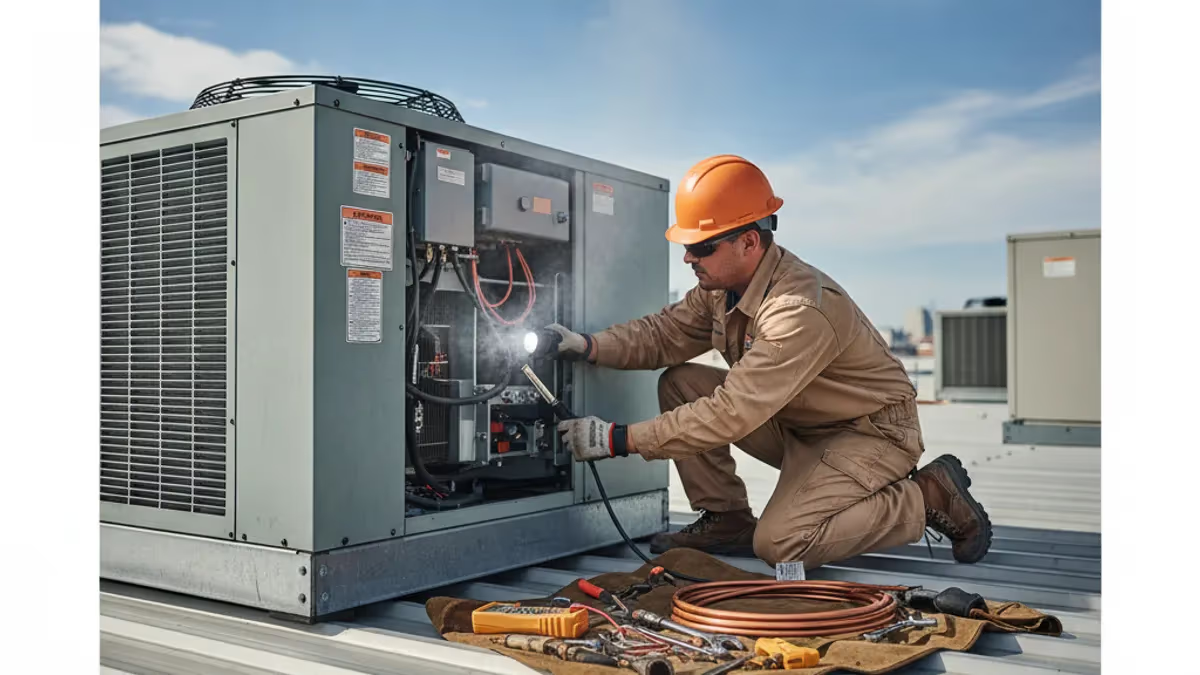
An HVAC academy is a structured training program that teaches you to install, maintain, and repair heating, ventilation, air conditioning, and refrigeration systems. It might be a standalone school, a community college program, a union apprenticeship, or an employer-run training center, but the goal is always the same: move you from curious beginner to job-ready technician. A good hvac academy combines classroom theory, hands-on lab time, and preparation for the certifications employers expect.
Demand explains why so many people explore this path. Every home, hospital, warehouse, and school depends on climate control, and the installed equipment keeps aging. The Bureau of Labor Statistics reports median pay near $60,000 a year for HVAC mechanics and installers, with employment projected to grow about 8 percent over the decade. That growth is well above the average for all occupations, and it does not require a four-year degree.
Most students enter with one of three goals. Some want the fastest route into a paid job, often within six to twelve months. Others want an associate degree that opens doors to estimating, building controls, or management. A third group hopes to open a contracting business someday and needs the technical foundation first. Knowing your goal before you enroll matters, because program length, cost, and curriculum vary widely, and the cheapest option is not always the best fit.
Every HVAC academy in the United States must prepare you for federal rules, even when state rules differ. The key requirement is EPA Section 608 certification, which is legally required to purchase refrigerant and to work on equipment that could release it. Many states and cities also require a trade license or registration for contractors. Your academy should tell you which credentials are mandatory where you live and which, like NATE certification, are optional resume boosters.
Admission standards are usually modest. Most programs ask for a high school diploma or GED, a valid driver's license, and the ability to lift roughly 50 pounds. Some require a basic math or reading placement test, and a few union programs add an aptitude exam and an interview. You generally do not need prior experience, because good programs start with safety, electrical basics, and refrigeration fundamentals before moving on to complex diagnostics and system design.
This guide walks through what an HVAC academy teaches, how long it takes, what it costs, and how to judge quality. You will also find a step-by-step path from enrollment to your first job, a comparison of training formats, and practical advice for passing certification exams. Use the practice quizzes linked throughout to test yourself as you go, since early exposure to exam-style questions makes the real tests far less stressful.
A word of caution before you start: not every program deserves your money. Some for-profit schools advertise high placement rates but offer outdated equipment or very little lab time. Ask for graduation numbers, employer partners, and the share of graduates who pass EPA 608 on the first attempt. Visit the lab in person, talk with current students, and compare at least three options before signing any enrollment agreement or financing paperwork.
HVAC Academy Training by the Numbers
Your Path from HVAC Academy Enrollment to First Job
Confirm the Basic Requirements
Choose a Program Format
Complete Coursework and Lab Hours
Earn EPA Section 608 Certification
Land Your First Position
Add Advanced Credentials
The curriculum at a quality HVAC academy follows a logical progression. You begin with trade math, shop safety, tools, and basic electricity, because nearly every service call involves electrical diagnosis. Next come refrigeration fundamentals: compressors, condensers, metering devices, and evaporators. Only then do you study residential air conditioning, gas and electric heating, heat pumps, and commercial systems. Skipping ahead rarely works, which is why strong programs enforce the sequence and test each stage before moving on.
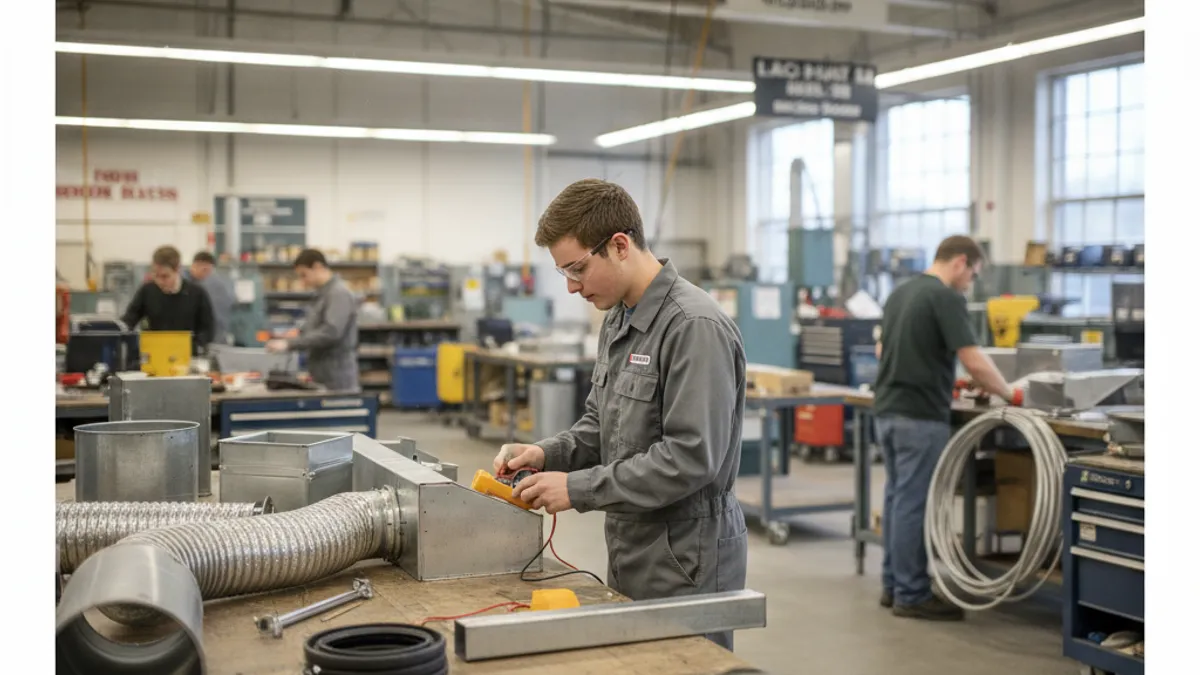
Electrical training deserves special attention. Expect to learn Ohm's law, series and parallel circuits, capacitors, contactors, relays, transformers, and how to read ladder diagrams. Students practice with multimeters and clamp meters until measuring voltage, amperage, and resistance feels routine. This knowledge is what separates a technician who swaps parts blindly from one who finds the actual fault. It also underpins safe work around live 240-volt equipment, which is one of the trade's biggest hazards.
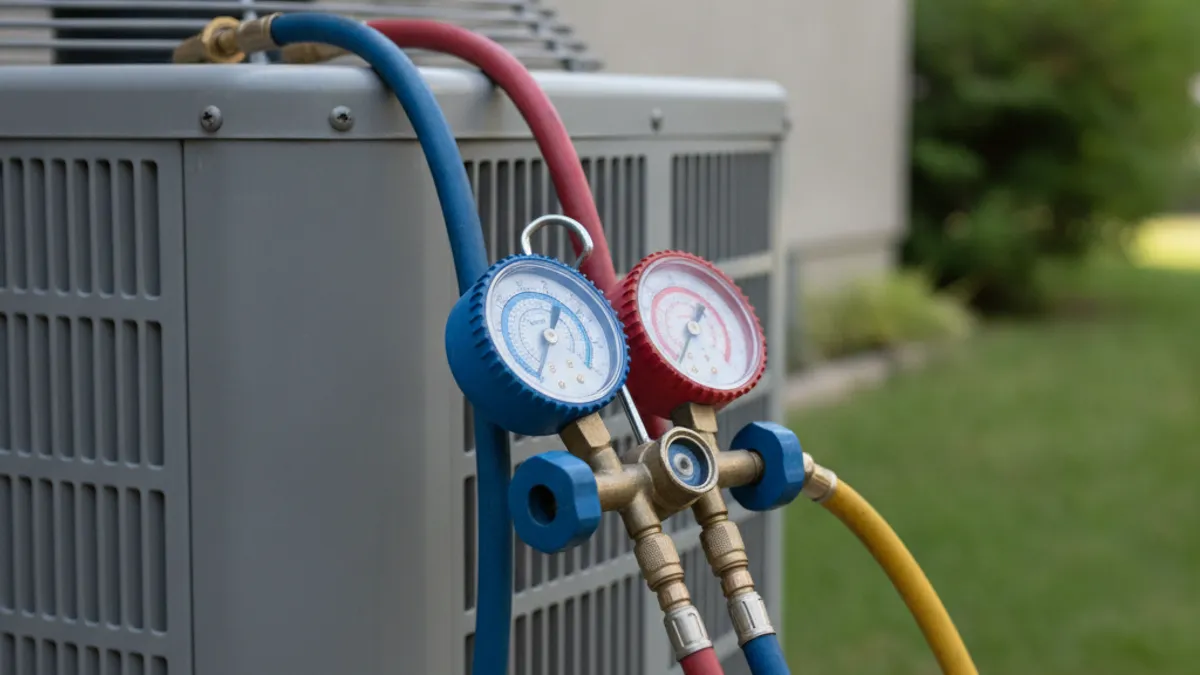
Refrigeration and air conditioning make up the heart of most programs. You will study the vapor compression cycle, superheat and subcooling, pressure-temperature relationships, and how to charge a system by weight or by measured values. Labs typically include recovering refrigerant, pulling a deep vacuum, brazing copper lines with nitrogen purge, and leak testing. These skills line up directly with the EPA 608 exam, so lab hours double as exam preparation.
Heating instruction covers gas furnaces, electric resistance heat, heat pumps, boilers, and sometimes oil systems depending on your region. Students learn ignition sequences, flame sensors, pressure switches, heat exchangers, and combustion analysis. Carbon monoxide safety gets heavy emphasis, since a cracked heat exchanger or blocked flue can endanger a household. Northern programs usually spend more time on hydronic heating, while Sun Belt programs lean toward heat pumps and high-efficiency air conditioning.
Airflow and ductwork are often underrated but crucial. Good programs teach load calculations, duct sizing, static pressure measurement, and balancing. A perfectly charged system will still perform poorly if the ducts leak or the blower is undersized. Students learn to measure airflow, interpret manufacturer data, and recognize why comfort complaints often trace back to distribution rather than equipment. Many academies introduce Manual J load calculation software here, which contractors increasingly use to justify equipment sizing.
Modern programs also cover controls and diagnostics. You may work with programmable and smart thermostats, variable-speed motors, inverter-driven compressors, zoning panels, and building automation basics. Customer service gets a place as well, including writing clear estimates, explaining repairs in plain language, and documenting work. Employers consistently say that technicians who communicate well and arrive prepared advance faster than those with equal technical skill but poor customer habits.
Finally, expect regulation and code content. Instructors cover refrigerant handling rules, local mechanical codes, permitting, and the shift toward lower-global-warming-potential refrigerants such as R-454B and R-32. Newer A2L refrigerants are mildly flammable, so training now includes specific storage, recovery, and leak-detection practices. Staying current on these changes is part of the job for the entire career, which is why quality academies treat learning as ongoing rather than finished at graduation.
HVAC Academy Formats: Trade School, College, or Apprenticeship
Trade schools offer the fastest classroom route, with certificate or diploma programs running roughly six to twelve months. Instruction is concentrated on job skills, with little general education. Class sizes are small, labs are equipment-heavy, and many schools run evening or weekend sections so working adults can enroll. Costs commonly range from about $5,000 to $20,000 depending on location and length.
The tradeoff is variation in quality. Reputable schools hold accreditation, publish placement data, and maintain relationships with local contractors who hire graduates. Weaker schools lean on marketing instead of results. Credits from trade schools may not transfer to a degree later, so ask about articulation agreements if you might continue your education. Financial aid is available at accredited institutions through federal programs.
Is an HVAC Academy Worth It? Pros and Cons
- +Short training time compared with a four-year degree
- +Strong demand and steady job growth across the country
- +Hands-on labs build skills employers can use immediately
- +Programs prepare you directly for EPA 608 certification
- +Many schools offer job placement help and employer connections
- +Clear career ladder from helper to lead tech to business owner
- −Tuition can reach $20,000 or more at private schools
- −The work is physically demanding and often hot, cold, or cramped
- −On-call, weekend, and peak-season overtime are common
- −Program quality varies a great deal between schools
- −Some graduates still start in low-paid helper roles
- −Continuing education is constant as refrigerants and codes change
HVAC Academy Enrollment Checklist
- ✓Verify the school's accreditation with the Department of Education or a recognized agency.
- ✓Ask for graduation, job placement, and EPA 608 pass rates in writing.
- ✓Tour the lab and check that equipment is modern and in working order.
- ✓Confirm how many hours are hands-on versus lecture.
- ✓Get the full cost, including tools, books, exam fees, and uniforms.
- ✓Ask whether EPA 608 testing is proctored on campus.
- ✓Speak with at least two current students or recent graduates.
- ✓Research which licenses your state requires for technicians and contractors.
- ✓Apply for FAFSA, scholarships, and employer tuition assistance early.
- ✓Compare at least three programs before signing an enrollment agreement.
Lab hours matter more than brochure promises
Two programs can both advertise a nine-month certificate, yet one may offer 400 hands-on lab hours and the other only 150. Ask for the exact split between classroom and lab time. Students who handle real compressors, gauges, and furnaces every week finish noticeably more confident and are hired faster.
Cost is the question most people ask first, and the honest answer is a wide range. Short certificate programs at private trade schools often run $5,000 to $20,000. Community college certificates and associate degrees can cost less, especially for in-district residents, sometimes landing between $4,000 and $15,000 in total tuition. Apprenticeships typically charge little or nothing for classes because you are paid during on-the-job training. Always request an itemized cost sheet instead of relying on advertised tuition.
Hidden costs can add up quickly. Budget for a basic tool set, which may run $300 to $1,500 depending on what the school includes. Add textbooks, safety gear, work boots, uniforms, and certification fees. EPA 608 exams generally cost between $25 and $150 depending on the proctor, and NATE exams carry their own fees. Transportation matters too, because many programs require commuting to a campus lab several days a week for months.
Federal financial aid is available at accredited schools. Completing the FAFSA can unlock Pell Grants, which do not need to be repaid, as well as federal student loans. Some states offer workforce grants for skilled trades, and the Workforce Innovation and Opportunity Act can fund training for eligible dislocated workers and low-income adults. Check with your local American Job Center, which can often connect you with approved training providers and cover part or all of the tuition.
Scholarships exist for HVAC students too. Industry associations, manufacturers, and local contractors frequently fund awards ranging from a few hundred to several thousand dollars. Veterans may use GI Bill benefits at approved programs, and some employers offer tuition reimbursement after you work for them for a set period. Ask each school's financial aid office which funding sources apply, and apply early, since many scholarship pools are limited and close months before classes start.
Consider the return on investment carefully. If a program costs $15,000 and leads to an entry-level job paying $38,000 to $45,000, you can recover the expense within a few years, especially as raises arrive with experience and certification. Experienced technicians in many metro areas earn $70,000 or more, and lead techs and installers with overtime can earn considerably higher. Debt matters, though, so avoid borrowing more than you can realistically repay on a starting salary.
Watch out for predatory financing. Be wary of schools that pressure you to sign immediately, guarantee jobs, or push private loans with high interest rates. Read every line of the enrollment agreement, including refund policies if you withdraw. Compare the total cost across schools, and calculate cost per hands-on lab hour as a rough value check. A slightly more expensive program with excellent employer partnerships can be the better deal than a cheaper one with weak placement.
Finally, think about opportunity cost. A full-time program means months without a full paycheck, while an apprenticeship pays from day one but takes longer to complete. Some students choose part-time evening classes while working a day job as a helper, combining income with training. There is no single right answer, so map out your monthly expenses, your savings, and your timeline before choosing the format that fits your financial situation.
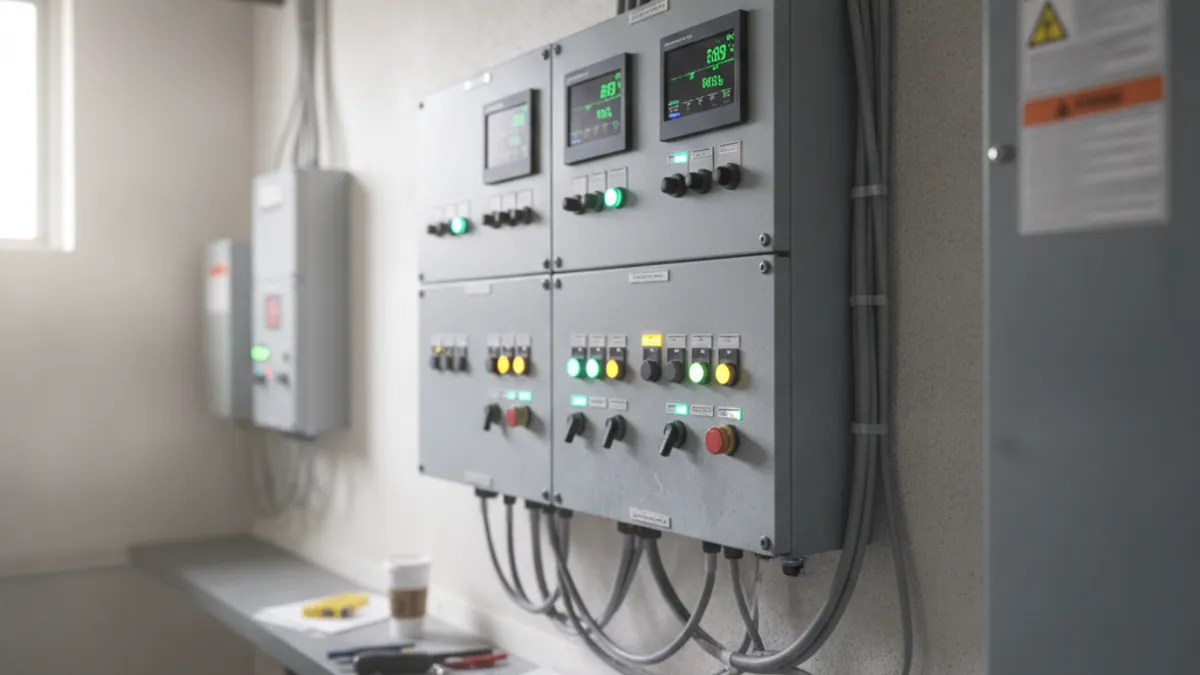
Federal law requires EPA Section 608 certification to buy refrigerant or to service equipment that contains it. Working without it can bring fines that reach tens of thousands of dollars per violation. Confirm that your academy includes exam preparation, and keep your certification card with you on every job.
Certification is where training turns into credentials employers recognize. The most important is EPA Section 608, offered in four forms: Type I for small appliances, Type II for high-pressure systems, Type III for low-pressure systems, and Universal, which covers all three. Each exam section has 25 multiple-choice questions, and you need 18 correct to pass. The Core section tests ozone depletion, regulations, recovery techniques, and safety, and it is required for every type.
Most technicians aim for Universal certification, because it lets them work on any equipment without restrictions. Passing is very achievable with preparation, and many academies report first-attempt pass rates above 90 percent. The exam is open-book in some formats but is generally proctored and timed, so memorization of key numbers like recovery levels and leak repair thresholds still helps. Practice questions are especially useful, since the wording of the exam can be tricky.
Beyond EPA 608, NATE certification is the most widely recognized voluntary credential. It tests real-world knowledge in specialties such as air conditioning, heat pumps, gas heating, and air distribution, and requires passing a core exam plus a specialty exam. Employers often pay higher wages or bonuses to NATE-certified technicians, and some manufacturers favor them for warranty work. HVAC Excellence and other organizations offer similar credentials that suit different career paths, including commercial refrigeration.
State licensing varies enormously. Some states require technicians to hold a license, others license only contractors, and a few leave regulation to cities or counties. Contractor licenses commonly require several years of documented experience, a trade exam, a business and law exam, and proof of insurance. Check your state licensing board's website before choosing a program, because some academies are designed to meet specific state hour requirements, which can shorten the time before you can work independently.
Regulation is also changing the equipment you will service. Under the AIM Act, the EPA is phasing down hydrofluorocarbons, which is why newer residential air conditioners and heat pumps use lower-global-warming-potential refrigerants such as R-454B and R-32. These are classified as A2L, meaning mildly flammable, so technicians need updated training on recovery equipment, leak detection, and ventilation. Efficiency standards have also moved to the SEER2 testing method, which affects sizing, installation, and customer expectations.
Continuing education keeps your skills current and your credentials valid. NATE certifications, for example, must be renewed through testing or approved training hours on a set cycle, and many state licenses require periodic continuing education. Manufacturers also run training on specific product lines, including variable-speed heat pumps and smart controls. Treat these courses as career investments: each one expands the equipment you can service confidently, which makes you more valuable to an employer or a customer.
For deeper reading on the policy side, the related guides listed at the end of this article cover federal efficiency rules, refrigerant transition timelines, and how trade schools prepare students for them. Understanding regulation does not need to be intimidating. Start with the fundamentals, practice with exam-style questions, and use your instructors as a resource. The technicians who thrive are usually those who stay curious and keep learning well after the first certificate arrives.
Succeeding in an HVAC academy starts with treating it like a job. Show up on time, in work-ready clothes, every day. Instructors often serve as references and job connectors, and employers frequently call them first when hiring. Students who are punctual, engaged, and helpful in the lab build reputations that follow them into the field. Reliability is one of the most common reasons contractors hire one graduate over another with similar grades.
Build a study routine early. Spend thirty to forty-five minutes each evening reviewing what you covered, and use flashcards for pressure-temperature relationships, wiring symbols, and refrigerant types. Take practice quizzes weekly instead of cramming before exams. Spaced repetition works well for the large vocabulary of the trade, from superheat to static pressure. If a concept confuses you, ask the instructor right away, since later lessons build directly on earlier ones.
Maximize your lab time. Volunteer to run the gauges, braze the joints, and wire the control board instead of watching a classmate do it. Ask the instructor to introduce faults into a training unit so you can practice troubleshooting. Document what you learn in a notebook with sketches, readings, and lessons from mistakes. Many successful technicians keep this notebook for years because it records the practical details that textbooks overlook.
Network aggressively while you study. Attend local trade association meetings, supply house open houses, and school job fairs. Introduce yourself to contractors who visit your campus, and ask whether they offer ride-alongs or part-time helper roles. Even a few hours a week of paid or unpaid exposure can accelerate learning and lead to a job offer on graduation day. A polite follow-up message after meeting someone makes a lasting impression.
Prepare for the EPA 608 exam in the final weeks. Review the Core material on ozone depletion, the Montreal Protocol, recovery requirements, and safe handling. Memorize the leak repair thresholds, evacuation levels, and cylinder color codes. Take several full-length practice tests under timed conditions and review every missed question until you understand why the correct answer is right. Aim for scores of 85 percent or higher before sitting for the real exam.
Plan your job search before graduating. Update your resume with lab skills, certifications, and any related experience such as construction, mechanical, or military work. Prepare for interview questions about safety, customer service, and troubleshooting logic. Many contractors test basic knowledge, so be ready to explain the refrigeration cycle simply. Be open to starting as a helper or installer, since field experience in the first year often matters more than the initial hourly rate.
Keep your long-term goals in sight. After a year or two in the field, consider NATE certification, manufacturer training, or a specialty such as commercial refrigeration, building automation, or testing and balancing. Save for your own tools, and keep records of hours worked toward licensing. With steady effort, a graduate of a solid HVAC academy can progress from entry-level technician to lead tech, supervisor, or business owner within a decade, often with strong income and security.
HVAC Questions and Answers
HVAC Training Near Me: Complete Guide to Local Programs, Costs, and Career Paths in 2026

HVAC Technical Academy: Your Complete Guide to Programs, Requirements, and Career Success

DOE HVAC Regulations News: The Complete 2026 Guide to Federal Efficiency Standards, SEER2 Updates, and Refrigerant Transition Rules

HVAC Trade Schools: The Complete Guide to Training Programs, Costs, Certifications, and Launching Your Career
HVAC Parts and Supply: The Complete Guide to Sourcing, Identifying, and Buying Heating and Cooling Components in 2026
About the Author

NATE Certified HVAC Technician & Licensing Exam Trainer
Universal Technical InstituteMike Johnson is a NATE-certified HVAC technician and EPA 608 universal-certified refrigerant handler with a Bachelor of Science in HVAC/R Technology. He has 19 years of commercial and residential HVAC installation and service experience and specializes in preparing technicians for NATE certification, EPA 608, A2L refrigerant safety, and state HVAC contractor licensing examinations.