
What Does a Home Health Aide Do? Complete Guide to Daily Duties, Skills, and Career Path
What does a home health aide do? Complete guide to HHA duties, daily tasks, required skills, certification, and career outlook for 2026 September. ❓

What does a home health aide do on any given day? In short, a home health aide (HHA) provides hands-on personal care, basic clinical support, light housekeeping, and emotional companionship to clients who want to remain safely in their own homes rather than move to a facility. The role blends caregiving, observation, documentation, and human connection — and it is one of the fastest growing occupations in the United States, with the Bureau of Labor Statistics projecting roughly 800,000 new openings each year through 2032.
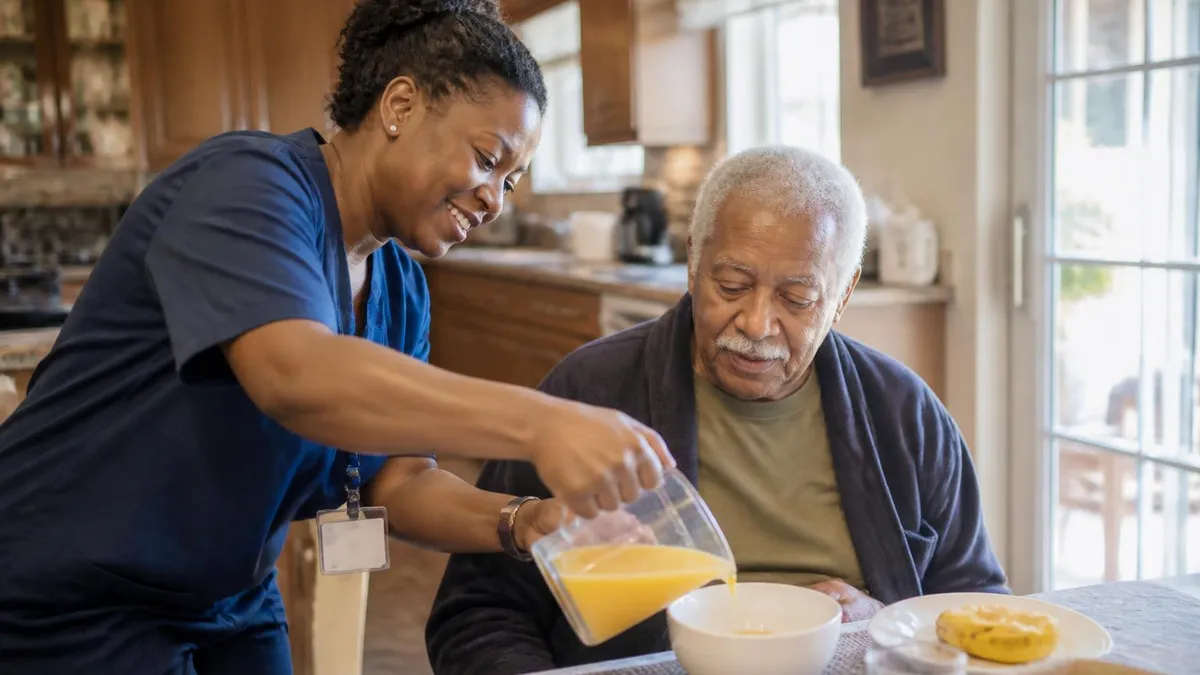
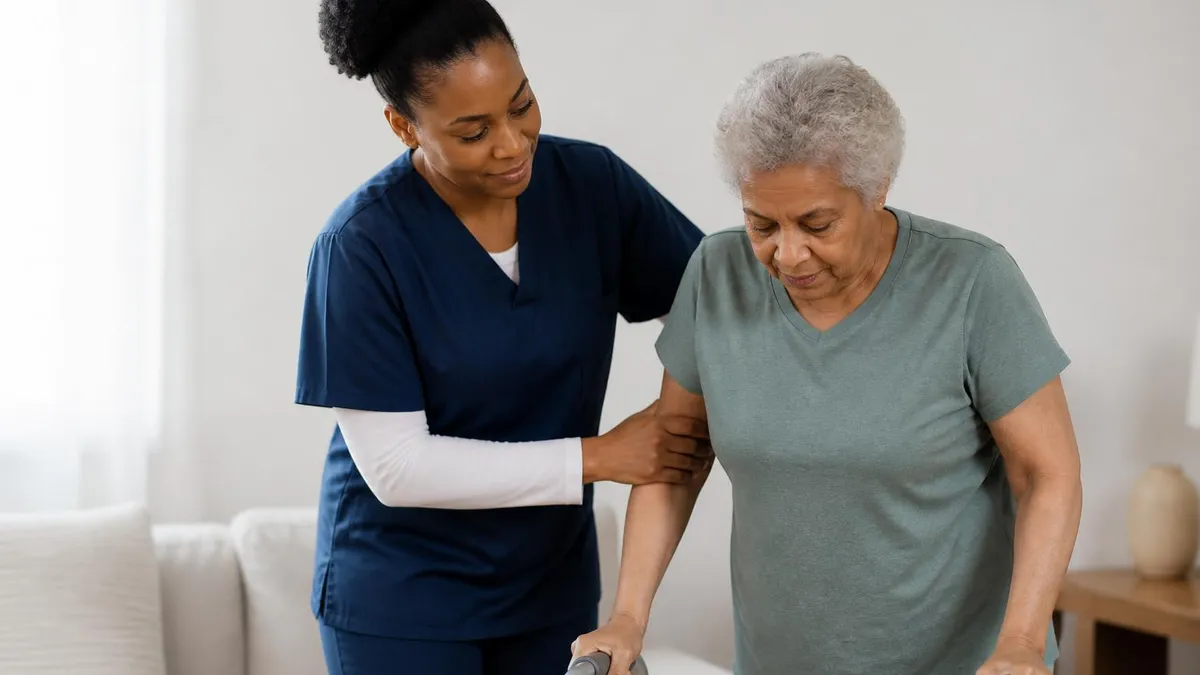
A typical HHA serves seniors recovering from surgery, adults living with chronic conditions like diabetes or Parkinson's, people with disabilities, and individuals receiving end-of-life hospice care. The work happens in private homes, assisted living apartments, and group residences. Each shift might include helping a client bathe, dress, eat breakfast, take medications on time, walk safely with a cane, and laugh through a crossword puzzle before the next aide arrives.
Unlike a registered nurse, an HHA does not diagnose conditions, give injections, or change sterile dressings. But aides are the eyes and ears of the care team. They notice when a client's appetite drops, when bruising appears, or when confusion worsens. Because they spend more time with the client than any other professional, their observations often trigger the earliest interventions — preventing falls, infections, and hospital readmissions.
Most HHAs work for licensed home care agencies that hold Medicare or Medicaid certification. Those agencies typically use scheduling and visit-verification platforms — the most widely used being hha exchange — to assign cases, document care, and bill insurance. Aides clock in by phone or tablet, complete a task checklist for each visit, and submit notes the supervising nurse reviews.
The pay reflects a fast-changing labor market. The national median wage in 2025 sits around $16.60 per hour, with experienced aides in metro areas earning $22 to $28. Overtime, weekend differentials, and live-in rates push earnings higher, and the role offers a low-barrier entry point: 75 to 120 hours of training, a competency exam, and you can begin working within two months.
This guide breaks down exactly what a home health aide does — task by task, hour by hour, and skill by skill. By the end you will understand the daily routine, the legal scope of practice, the documentation requirements, the emotional demands, and how the role compares to a CNA, PCA, or nurse. If you are considering this career, you will leave with a clear picture of whether it fits your strengths.
Whether you are exploring a first job, returning to work after raising children, or transitioning from retail or food service, understanding the real day-to-day duties matters more than any glossy recruiting brochure. Let us look at what the job actually involves.
Home Health Aide Career by the Numbers

Core HHA Job Duties — The Five Pillars
Bathing, dressing, grooming, toileting, transferring, and mobility assistance. These activities of daily living are the heart of the HHA role and account for roughly 40% of shift time.
Taking vital signs, observing skin condition, watching for falls, tracking food and fluid intake, and reporting changes to the supervising nurse. Aides are the early-warning system of home care.
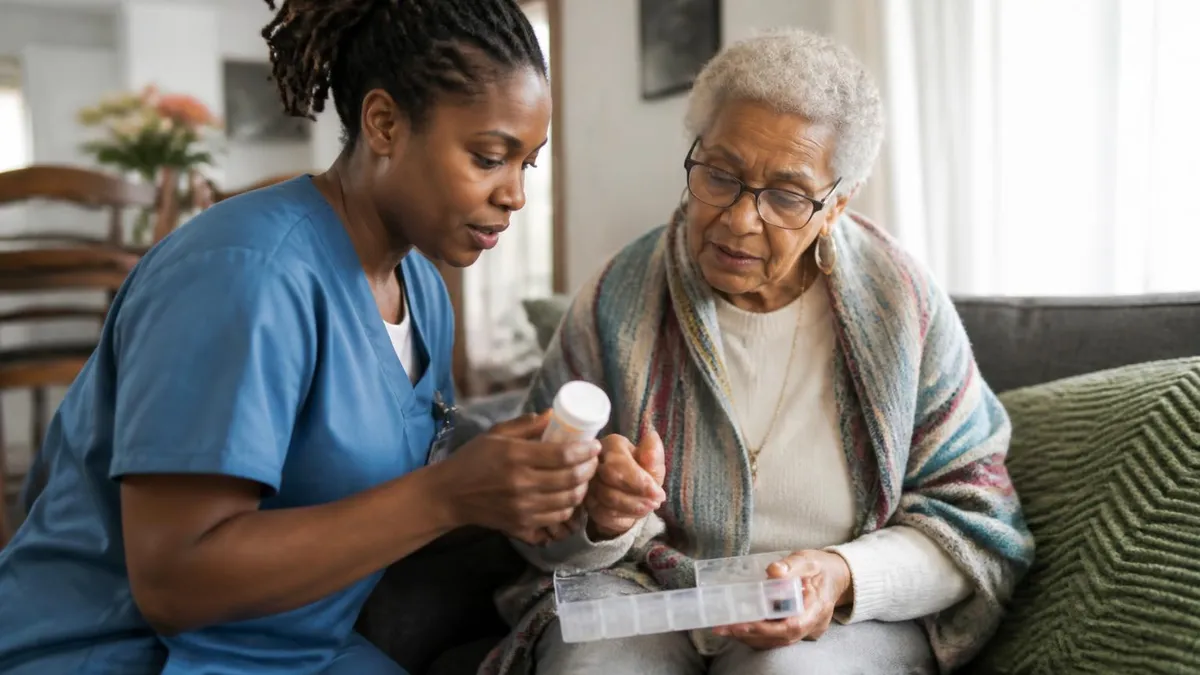
HHAs do not administer medications but they remind clients to take pre-poured doses on schedule, observe whether they were swallowed, and report missed or refused doses to the care team.
Preparing nutritious meals according to dietary restrictions, washing dishes, changing linens, doing laundry related to the client, and keeping care spaces clean and safe.
Engaging the client socially, accompanying them to appointments, and completing visit notes through systems like HHA Exchange so the agency can bill insurance accurately.
A typical morning shift starts at 7:00 or 8:00 a.m. The aide arrives at the client's home, washes hands, and clocks in through the agency app — most often using hha exchange login on a phone. The electronic visit verification (EVV) timestamp is required by federal law for Medicaid-funded visits, so punching in correctly is the first task before any care begins.
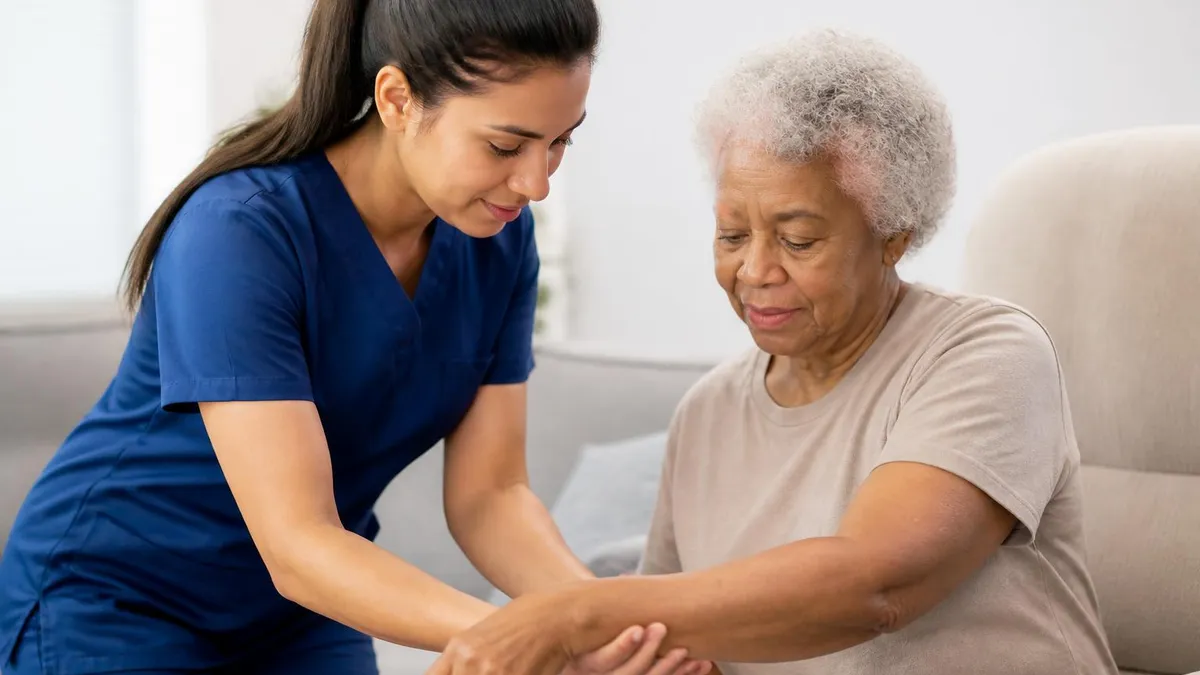
The first 30 minutes usually focus on personal care. The aide helps the client out of bed, assists with toileting, and provides a bed bath or shower depending on mobility. Safety matters: a non-slip mat goes down, the water temperature is tested with the elbow, and a transfer belt is used to move the client from bed to wheelchair. For clients with limited range of motion, the aide performs passive range-of-motion exercises prescribed by the physical therapist.
Breakfast comes next. The aide prepares a meal that matches the client's care plan — perhaps oatmeal and scrambled eggs for a diabetic client whose carbohydrates must be counted, or a soft diet for someone recovering from a stroke. The aide observes how much the client eats and drinks, notes any swallowing difficulty, and documents intake. After breakfast, the aide reminds the client to take their pill organizer doses and confirms they were swallowed.
Mid-morning is for light housekeeping and laundry. The aide changes the bed linens, wipes the bathroom, runs a load of the client's personal laundry, and tidies the kitchen. While doing this, they keep ears open — listening for confusion, watching for unsteady gait, and noticing if a usually social client seems withdrawn. Small changes are documented in the visit note.
The middle hours often include a walk, a doctor's appointment escort, or a grocery run. The aide may drive the client (if the agency permits and insurance covers it) or accompany them on a paratransit van. During the outing, the aide carries a list of current medications, an emergency contact card, and a copy of the care plan in case anything happens away from home.
Lunch, a rest period, and afternoon care round out a typical day. The aide may help the client to a recliner, offer reading material, or sit and chat for 20 minutes — companionship is a documented part of the care plan for many clients with cognitive decline. Before clocking out, the aide completes the task checklist in the EVV app, writes a short narrative note about any changes observed, and locks the door behind them.
Evening and overnight shifts look different. Live-in aides handle dinner, bedtime routines, and overnight monitoring — checking on a client every two hours, repositioning to prevent pressure ulcers, and being available if the client wakes confused. The pace is slower but the responsibility is constant.
HHA Practice Test Questions
Prepare for the HHA - Home Health Aide exam with our free practice test modules. Each quiz covers key topics to help you pass on your first try.
HHA Basic Care and Comfort
HHA Exam Questions covering Basic Care and Comfort. Master HHA Test concepts for certification prep.
HHA Basic Care and Comfort Questions and A...
Free HHA Practice Test featuring Basic Care and Comfort Questions and Answers. Improve your HHA Exam score with mock test prep.
HHA Communication and Interpersonal Skills
HHA Mock Exam on Communication and Interpersonal Skills. HHA Study Guide questions to pass on your first try.
HHA Communication and Interpersonal Skills...
HHA Test Prep for Communication and Interpersonal Skills Questions and Answers. Practice HHA Quiz questions and boost your score.
HHA Infection Control and Safety
HHA Questions and Answers on Infection Control and Safety. Free HHA practice for exam readiness.
HHA Infection Control and Safety Questions...
HHA Mock Test covering Infection Control and Safety Questions and Answers. Online HHA Test practice with instant feedback.
HHA Mental and Emotional Support
Free HHA Quiz on Mental and Emotional Support. HHA Exam prep questions with detailed explanations.
HHA Mental and Emotional Support Questions...
HHA Practice Questions for Mental and Emotional Support Questions and Answers. Build confidence for your HHA certification exam.
HHA Mobility and Transfer Techniques
HHA Test Online for Mobility and Transfer Techniques. Free practice with instant results and feedback.
HHA Mobility and Transfer Techniques Quest...
HHA Study Material on Mobility and Transfer Techniques Questions and Answers. Prepare effectively with real exam-style questions.
HHA Nutrition and Hydration
Free HHA Test covering Nutrition and Hydration. Practice and track your HHA exam readiness.
HHA Nutrition and Hydration Questions and ...
HHA Exam Questions covering Nutrition and Hydration Questions and Answers. Master HHA Test concepts for certification prep.
HHA Observation and Reporting
Free HHA Practice Test featuring Observation and Reporting. Improve your HHA Exam score with mock test prep.
HHA Observation and Reporting Questions an...
HHA Mock Exam on Observation and Reporting Questions and Answers. HHA Study Guide questions to pass on your first try.
HHA Patient Rights and Ethics
HHA Test Prep for Patient Rights and Ethics. Practice HHA Quiz questions and boost your score.
HHA Patient Rights and Ethics Questions an...
HHA Questions and Answers on Patient Rights and Ethics Questions and Answers. Free HHA practice for exam readiness.
HHA Personal Care and Hygiene
HHA Mock Test covering Personal Care and Hygiene. Online HHA Test practice with instant feedback.
HHA Personal Care and Hygiene Questions an...
Free HHA Quiz on Personal Care and Hygiene Questions and Answers. HHA Exam prep questions with detailed explanations.
HHA Home Health Aide Certification Practic...
HHA Practice Questions for Home Health Aide Certification Practice Test. Build confidence for your HHA certification exam.
HHA Home Health Aide Certification Practic...
HHA Test Online for Home Health Aide Certification Practice Test #1. Free practice with instant results and feedback.
HHA Home Health Aide Certification Practic...
HHA Study Material on Home Health Aide Certification Practice Test #2. Prepare effectively with real exam-style questions.
HHA Home Health Aide Certification Practic...
Free HHA Test covering Home Health Aide Certification Practice Test #3. Practice and track your HHA exam readiness.
HHA Home Health Aide Certification Practic...
HHA Exam Questions covering Home Health Aide Certification Practice Test #4. Master HHA Test concepts for certification prep.
HHA HOME HEALTH AIDE COMPETENCY TEST
Free HHA Practice Test featuring HOME HEALTH AIDE COMPETENCY TEST. Improve your HHA Exam score with mock test prep.
HHA HOME HEALTH AIDE COMPETENCY TEST #1
HHA Mock Exam on HOME HEALTH AIDE COMPETENCY TEST #1. HHA Study Guide questions to pass on your first try.
HHA Home Health Aide Competency Test
HHA Test Prep for Home Health Aide Competency Test. Practice HHA Quiz questions and boost your score.
HHA Home Health Aide Competency Test #2
HHA Questions and Answers on Home Health Aide Competency Test #2. Free HHA practice for exam readiness.
Home Health Aide Training and HHA Certification Explained
The federal floor for home health aide training is set by the Centers for Medicare and Medicaid Services (CMS) under the Conditions of Participation. Agencies that receive Medicare funding must employ aides who completed at least 75 hours of approved training, including 16 hours of supervised hands-on practical work and a competency evaluation covering 17 specific subject areas.
After training, aides must pass a written or oral competency exam plus a skills demonstration in front of a registered nurse. Once certified, an HHA must complete 12 hours of continuing education each year to stay on the active registry, plus annual TB screening and a criminal background check renewal in most states.
Is Working as a Home Health Aide Right for You?
- +Low barrier to entry — start working in 8-10 weeks with no degree required
- +Strong job security with 21% projected growth and constant openings
- +Flexible scheduling including part-time, weekend, evening, and live-in shifts
- +Meaningful one-on-one relationships with clients you genuinely help
- +Clear ladder upward to CNA, LPN, RN, or care coordinator roles
- +Many agencies offer free training, paid orientation, and tuition reimbursement
- +Work in the community rather than a fluorescent-lit facility
- −Pay starts modestly — $14 to $17 per hour in most regions
- −Physical demands include lifting, transferring, and long periods on your feet
- −Emotionally heavy when clients decline or pass away
- −Travel between cases can eat into earnings if mileage is unreimbursed
- −Some clients live in cluttered or unsafe homes you must navigate
- −Documentation burden through EVV apps adds 20-30 minutes per shift
Essential Skills Every Certified Home Health Care Aide Needs
- ✓Take and record vital signs (blood pressure, pulse, respiration, temperature) accurately
- ✓Safely transfer clients using gait belts, slide boards, and mechanical lifts
- ✓Recognize signs of stroke, dehydration, infection, and pressure injury
- ✓Provide perineal care, catheter care, and ostomy support within scope of practice
- ✓Prepare meals matching diabetic, low-sodium, renal, and pureed diet plans
- ✓Document visits accurately in EVV systems like HHA Exchange or Sandata
- ✓Communicate clearly with clients who have dementia, hearing loss, or aphasia
- ✓Follow standard precautions for infection control including PPE and handwashing
- ✓Respond calmly to falls, choking, seizures, and other emergencies
- ✓De-escalate tension with confused, agitated, or grieving family members
Your observations are clinical data
The single most important thing an HHA does is notice changes. A subtle drop in appetite, a new bruise, a slightly slurred word, or a change in bowel pattern can be the earliest signal of stroke, infection, or medication problems. Report every change to your supervising nurse on the same shift — that one phone call often prevents an ER visit.
Compensation for home health aides varies more by state, agency type, and shift than by experience. The 2025 BLS median is $16.60 per hour, but actual paychecks span $13.50 in rural Mississippi to $24 in Massachusetts and $26 in Manhattan when you include shift differentials. Live-in aides typically earn a daily rate of $200 to $325 rather than hourly, with sleep time excluded from the count.
Hours are flexible by design. Most HHAs work either four-hour or eight-hour visits. Some clients need a 30-minute medication check twice daily. Others need 24-hour coverage split across three aides. Weekend rates run 10-25% higher at most agencies. Holiday pay is usually time-and-a-half. Overtime kicks in after 40 hours a week, but be careful — companion-exemption rules in some states let agencies avoid overtime, so read your employment agreement.
Settings shape the work as much as pay does. Private-pay clients hired through boutique agencies typically have nicer homes, lighter physical demands, and more companionship hours — but the agency expectations for polish and discretion are higher. Medicaid-funded clients often have more complex medical needs, less stable housing, and tighter time limits per visit, but the volume of cases is steady year-round.
Some aides work for hospitals or home health agencies attached to a health system. These positions are usually intermittent — short visits of 30 to 90 minutes focused on a specific clinical need following discharge. The pay is similar but benefits, paid time off, and 401(k) matching are often better than at small private agencies.
Hospice HHA work is its own niche. Aides visit terminally ill clients on a regular schedule, typically two to three times per week, providing bathing, mouth care, and comfort positioning. The work is emotionally intense but the team support — bereavement counseling, peer debriefs, smaller caseloads — is the strongest in the industry. Many aides specialize in hospice for life.
Benefits depend on hours. Aides working 30 or more hours per week at larger agencies typically receive health insurance, dental, paid time off, and sometimes a 401(k). Per-diem and on-call aides usually receive none of these. Always ask about the benefits threshold during your interview, because falling just below 30 hours per week is common and costly.
Geography matters more than people expect. The states with the highest demand and pay are California, Washington, Massachusetts, New York, New Jersey, Minnesota, and Colorado. Texas and Florida have huge volumes of openings but lower median wages. Cost of living matters too — a $17 wage in Tampa buys a different lifestyle than $24 in Boston.
Home health aides cannot legally administer medications by injection, perform sterile dressing changes, insert catheters, or assess wounds. Doing any of these — even at a family member's request — can result in losing your certification and facing criminal charges. When in doubt, call your supervising nurse before acting. Document the call and the nurse's instructions in your visit note.
A home health aide role is rarely the end of a career — for most people it is the first rung. The most common upward path runs HHA → CNA → LPN → RN, with each step adding clinical scope, pay, and autonomy. Becoming a CNA usually adds another 40-80 hours of training on top of your HHA certification because most of the personal-care curriculum overlaps. Some states allow direct HHA-to-CNA challenge testing without retaking the basic skills modules.
From CNA, aides who want to keep advancing pursue LPN (practical nurse) school — typically a 12-to-18-month program at a community college. LPN graduates can administer medications, perform sterile procedures, and supervise HHAs. Pay typically jumps from $17 to $26 per hour. Many agencies hire their best HHAs into part-time LPN scholarship programs in exchange for two years of employment after graduation.
RN is the next step for ambitious aides. An associate degree in nursing (ADN) takes two years and opens the door to supervisor, case manager, and care coordinator roles inside the same home care company. Wages typically double from the HHA starting rate. Many agencies pay for ADN tuition outright if you commit to staying for three years post-graduation.
Not everyone wants more clinical work. Other career paths from HHA include scheduler, care coordinator, recruiter, clinical educator, and field supervisor. These office-based roles use the field experience an HHA already has. The pay is usually salaried at $45,000 to $65,000 and the schedule is Monday-through-Friday with no weekend on-call.
Specialty certifications add earning power without nursing school. Examples include the Certified Dementia Practitioner (CDP), Certified Hospice and Palliative Nursing Assistant (CHPNA), and the Home Care Aide Specialist certification offered by several state associations. Each typically takes 8 to 20 hours of training and bumps hourly pay by $1 to $3.
If you prefer flexibility over a traditional ladder, consider the private-duty path. Experienced HHAs with strong references often build a roster of direct private-pay clients, charging $25 to $40 per hour and keeping nearly all of it (vs. about half through an agency). The trade-off is handling your own taxes, insurance, scheduling, and backup coverage when you are sick — find more guidance on agency vs. private routes through our directory of hha employers near you.
Whatever direction you choose, the home health aide role provides something rare in healthcare: a low-cost, low-risk way to discover whether bedside care is genuinely your calling. Aides who love the work usually know within their first 90 days, and the certifications and connections they build open every door that follows.
If you are seriously considering becoming a home health aide, a few practical steps will make your first 90 days far easier. First, choose a training program that holds state approval and offers job placement assistance. Free agency-sponsored training is the fastest route to a paycheck, but compare the post-training pay rate — some agencies underpay aides who took their free course. A community college program costs more upfront but often produces better-paid hires.
Second, get your paperwork in order before classes start. You will need a government-issued ID, Social Security card, two forms of proof of address, a current TB test (within the past 12 months), a recent physical exam, and a clean criminal background check. Some states also require a flu shot, COVID vaccine documentation, and proof of MMR/varicella immunity. Gathering these in advance can save two weeks of delay.
Third, prepare for the competency exam strategically. The written portion tests vital signs, infection control, body mechanics, nutrition, and communication. The skills test requires you to perform 5 to 7 randomly selected tasks in front of a registered nurse — typically handwashing, blood pressure measurement, transferring, perineal care, and feeding. Practice each skill 10 times before exam day. Use free practice tools like hha login question banks and watch real exam demo videos.
Fourth, build the soft skills as deliberately as the clinical ones. Active listening, calm body language, and clear documentation save jobs. New aides who lose positions in their first 90 days almost never lose them for clinical errors — they lose them for being late, missing visits without calling, or having boundary disputes with family members. Treat punctuality and communication as core skills.
Fifth, learn the agency's EVV system before your first solo shift. Most agencies use HHA Exchange, Sandata, or CareBridge. Ask for a 30-minute walkthrough before you go into the field. Know how to clock in, clock out, document tasks, add a narrative note, and send a message to your supervisor. Documentation problems are the number one reason new aides have paychecks delayed.
Sixth, take care of your body. The leading workplace injury for HHAs is back strain from improper lifting. Use the gait belt every time, ask for two-person assists when needed, and refuse a transfer your gut says is unsafe. The agency must provide a mechanical lift for clients above a certain weight — request one if the home does not have it.
Finally, find a mentor in your first month. Most agencies pair new aides informally with a veteran; if yours does not, ask. A 20-year HHA knows the shortcuts, the difficult clients, the family dynamics, and the documentation tricks that keep you out of trouble. One coffee with the right mentor saves you a year of mistakes — and may be the single best investment you make in your new career.
HHA Questions and Answers
HHA Agencies Near Me: How to Find, Vet, and Choose the Right Home Health Aide Employer
HHA Practice Test Video Answers

HHA Jobs Near Me — How to Find, Train, and Start Your Career
HHA Video Questions and Answers — What You'll Actually Face
What Is a HHA? Complete Career Overview, Duties, and Path to Certification
About the Author

Registered Nurse & Healthcare Educator
Johns Hopkins University School of NursingDr. Sarah Mitchell is a board-certified registered nurse with over 15 years of clinical and academic experience. She completed her PhD in Nursing Science at Johns Hopkins University and has taught NCLEX preparation and clinical skills courses for nursing students across the United States. Her research focuses on evidence-based exam preparation strategies for healthcare certification candidates.
Join the Discussion
Connect with other students preparing for this exam. Share tips, ask questions, and get advice from people who have been there.
View discussion (8 replies)