
Home Health Aide Requirements: Qualifications, Training, and Certification Explained
Home health aide qualifications explained: 💯 training hours, certification, HHA Exchange login, and the steps to launch your career as a certified aide.
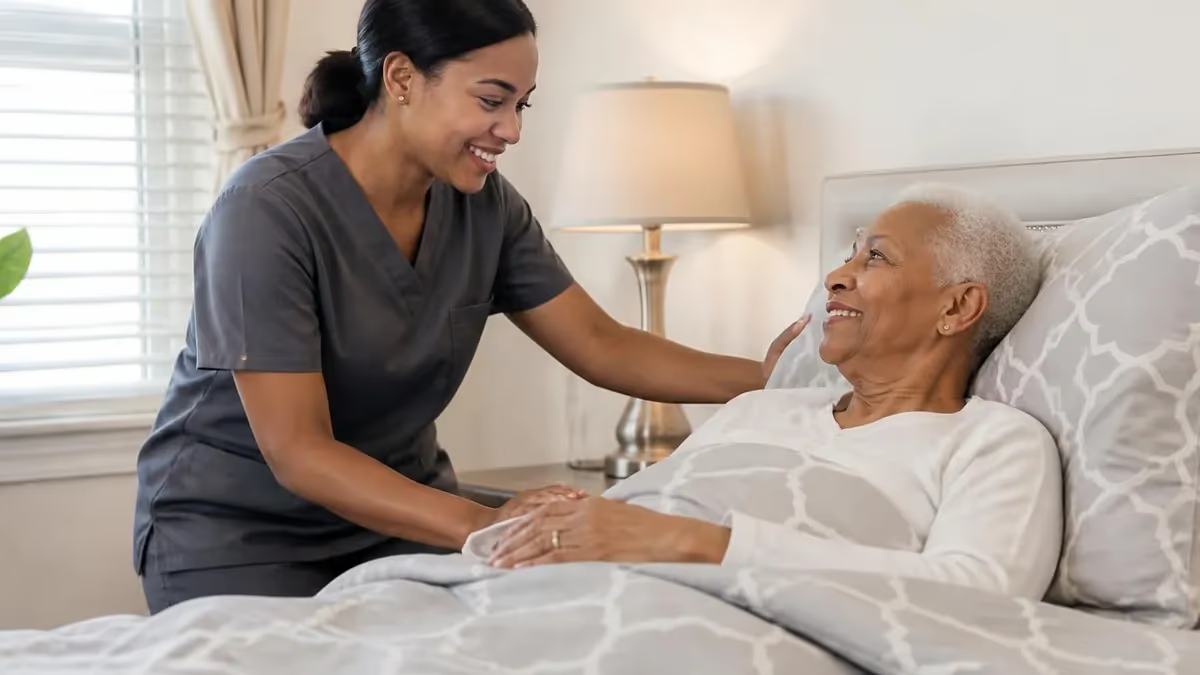
Understanding home health aide qualifications is the first step toward a rewarding career caring for older adults, people with disabilities, and patients recovering at home. The role of an HHA continues to grow faster than almost any other occupation in the United States, and demand shows no sign of slowing through 2026 and beyond. Before you can clock your first shift or log in to a scheduling platform like HHA Exchange, you must meet a clear set of federal and state requirements that protect both you and the people you serve.
At its core, becoming a home health aid means completing approved training, passing a competency evaluation, and clearing a background check. The federal floor set by Medicare requires at least 75 hours of training, including 16 hours of supervised hands-on practice, but many states layer additional hours on top of that baseline. Knowing exactly what your state demands prevents wasted time and money, and it ensures the agency you join can place you with clients quickly and without compliance headaches.
This guide walks through every requirement in plain language: the education and age minimums, the training program structure, the certification and competency testing process, and the documentation you must keep current. We also explain how digital tools fit into daily work, since most agencies now manage visits, electronic visit verification, and timesheets through software. If you have ever searched for an hha login portal, you have already seen how central these systems are to modern home care.
The primary keyword readers search for is home health aide qualifications, and that phrase covers more than a checklist. It includes the soft skills that separate a good aide from a great one: patience, communication, observation, and the ability to stay calm during a medical emergency. Employers screen for these traits during interviews and probationary periods, so building them early gives you a real advantage when applying for jobs.
It also helps to understand why these rules exist. Home health aides often work alone in a client's residence without a nurse standing beside them. That independence carries responsibility. The training hours, the supervised practice, and the periodic in-service education all exist to make sure you can recognize warning signs, follow a care plan, and document accurately when something changes. Regulators treat these standards as patient-safety measures, not bureaucratic hurdles.
Throughout this article you will find practice quizzes, checklists, and side-by-side comparisons to help you prepare for both the competency exam and the realities of the job. Whether you are exploring the field for the first time or you already work in caregiving and want formal credentials, the sections below give you a complete roadmap from application to your first paycheck.
Finally, remember that requirements evolve. States periodically update training hours, registry rules, and renewal timelines, so always confirm current details with your state health department or the agency hiring you. Use this guide as a thorough orientation, then verify the specifics that apply to where you plan to work and live.
Home Health Aide Requirements by the Numbers
Eligibility and Basic Requirements
Most states require candidates to be at least 18 years old with a valid government-issued photo ID and a Social Security number to enroll in training and work legally.
A high school diploma or GED is preferred but not always mandatory. Strong reading comprehension helps you follow care plans, medication notes, and written agency instructions accurately.
Expect a TB test, proof of immunizations, and sometimes a physical exam. Agencies must confirm you are healthy enough to assist with transfers and lifting safely.
A criminal background check and abuse-registry screening are mandatory. Certain convictions can disqualify applicants, so review your state's exclusion list before applying.
Basic English proficiency is typically required to read care plans and communicate with nurses, though bilingual aides are in high demand across many communities.
The heart of every home health aide career is training, and a quality home health aide training program builds the skills you will use every single shift. Federal Medicare rules establish the 75-hour minimum, but states like New York require 76 hours and others, such as California, push the total higher with additional supervised practice. Before enrolling, confirm that your chosen course is state-approved and that its certificate is accepted by the registry where you intend to work, because an unapproved program leaves you unable to take the competency exam.
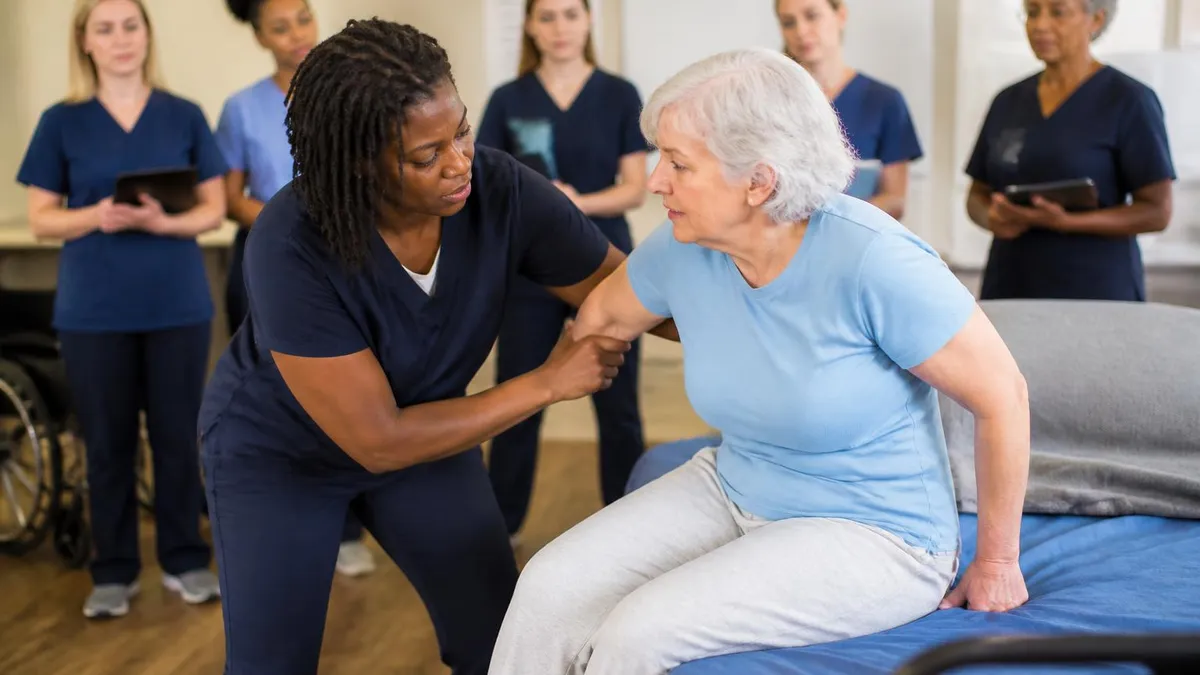
A typical curriculum blends classroom instruction, skills-lab demonstration, and supervised clinical hours. In the classroom you learn the fundamentals of personal care, infection control, nutrition, body mechanics, and recognizing emergencies. The lab is where theory becomes muscle memory: you practice transferring a client from bed to wheelchair, taking vital signs, and assisting with bathing on mannequins or volunteer partners. Finally, supervised clinical hours place you with real patients under a registered nurse's watchful eye, the closest preview of daily work you can get.
Cost and length vary widely. Community colleges, vocational schools, the American Red Cross, and many home care agencies all offer programs, with prices ranging from free employer-sponsored training to several hundred dollars. Some agencies will train you at no cost in exchange for a commitment to work for them after certification. If you want a deeper breakdown of how programs are structured and what each module covers, our home health aide training program resource explains the typical sequence in detail.
Scheduling flexibility matters too. Full-time daytime courses can finish in two to four weeks, while part-time evening and weekend options stretch across two months to accommodate students who already work. Online hybrid programs handle the classroom theory remotely but still require you to attend in-person lab and clinical sessions, because no employer will certify hands-on competency through a screen alone.
Pay attention to the instructor-to-student ratio and the quality of the skills lab. Programs that crowd thirty students around one demonstration bed give you far less practice time than smaller cohorts with multiple stations. When you tour a school or read reviews, ask how many supervised clinical hours you personally will log and whether graduates pass the competency exam at a high rate. These details predict how prepared you will feel on your first solo visit.
Many programs also cover documentation, professional boundaries, and client rights, which regulators increasingly emphasize. You will learn how to chart what you observe without making medical diagnoses, how to maintain confidentiality under HIPAA, and how to report suspected abuse or neglect. These topics may feel less hands-on than a transfer technique, but they protect your license and your clients just as much as proper handwashing does.
Once you complete training, the school issues a certificate of completion. This document is not the same as state certification, but it is the prerequisite that lets you sit for the competency evaluation. Keep multiple copies, store a digital scan, and confirm the program reports your completion to the state registry, since a missing report can stall your hiring for weeks.

HHA Practice Test Questions
Prepare for the HHA - Home Health Aide exam with our free practice test modules. Each quiz covers key topics to help you pass on your first try.
HHA Basic Care and Comfort
HHA Exam Questions covering Basic Care and Comfort. Master HHA Test concepts for certification prep.
HHA Basic Care and Comfort Questions and A...
Free HHA Practice Test featuring Basic Care and Comfort Questions and Answers. Improve your HHA Exam score with mock test prep.
HHA Communication and Interpersonal Skills
HHA Mock Exam on Communication and Interpersonal Skills. HHA Study Guide questions to pass on your first try.
HHA Communication and Interpersonal Skills...
HHA Test Prep for Communication and Interpersonal Skills Questions and Answers. Practice HHA Quiz questions and boost your score.
HHA Infection Control and Safety
HHA Questions and Answers on Infection Control and Safety. Free HHA practice for exam readiness.
HHA Infection Control and Safety Questions...
HHA Mock Test covering Infection Control and Safety Questions and Answers. Online HHA Test practice with instant feedback.
HHA Mental and Emotional Support
Free HHA Quiz on Mental and Emotional Support. HHA Exam prep questions with detailed explanations.
HHA Mental and Emotional Support Questions...
HHA Practice Questions for Mental and Emotional Support Questions and Answers. Build confidence for your HHA certification exam.
HHA Mobility and Transfer Techniques
HHA Test Online for Mobility and Transfer Techniques. Free practice with instant results and feedback.
HHA Mobility and Transfer Techniques Quest...
HHA Study Material on Mobility and Transfer Techniques Questions and Answers. Prepare effectively with real exam-style questions.
HHA Nutrition and Hydration
Free HHA Test covering Nutrition and Hydration. Practice and track your HHA exam readiness.
HHA Nutrition and Hydration Questions and ...
HHA Exam Questions covering Nutrition and Hydration Questions and Answers. Master HHA Test concepts for certification prep.
HHA Observation and Reporting
Free HHA Practice Test featuring Observation and Reporting. Improve your HHA Exam score with mock test prep.
HHA Observation and Reporting Questions an...
HHA Mock Exam on Observation and Reporting Questions and Answers. HHA Study Guide questions to pass on your first try.
HHA Patient Rights and Ethics
HHA Test Prep for Patient Rights and Ethics. Practice HHA Quiz questions and boost your score.
HHA Patient Rights and Ethics Questions an...
HHA Questions and Answers on Patient Rights and Ethics Questions and Answers. Free HHA practice for exam readiness.
HHA Personal Care and Hygiene
HHA Mock Test covering Personal Care and Hygiene. Online HHA Test practice with instant feedback.
HHA Personal Care and Hygiene Questions an...
Free HHA Quiz on Personal Care and Hygiene Questions and Answers. HHA Exam prep questions with detailed explanations.
HHA Home Health Aide Certification Practic...
HHA Practice Questions for Home Health Aide Certification Practice Test. Build confidence for your HHA certification exam.
HHA Home Health Aide Certification Practic...
HHA Test Online for Home Health Aide Certification Practice Test #1. Free practice with instant results and feedback.
HHA Home Health Aide Certification Practic...
HHA Study Material on Home Health Aide Certification Practice Test #2. Prepare effectively with real exam-style questions.
HHA Home Health Aide Certification Practic...
Free HHA Test covering Home Health Aide Certification Practice Test #3. Practice and track your HHA exam readiness.
HHA Home Health Aide Certification Practic...
HHA Exam Questions covering Home Health Aide Certification Practice Test #4. Master HHA Test concepts for certification prep.
HHA HOME HEALTH AIDE COMPETENCY TEST
Free HHA Practice Test featuring HOME HEALTH AIDE COMPETENCY TEST. Improve your HHA Exam score with mock test prep.
HHA HOME HEALTH AIDE COMPETENCY TEST #1
HHA Mock Exam on HOME HEALTH AIDE COMPETENCY TEST #1. HHA Study Guide questions to pass on your first try.
HHA Home Health Aide Competency Test
HHA Test Prep for Home Health Aide Competency Test. Practice HHA Quiz questions and boost your score.
HHA Home Health Aide Competency Test #2
HHA Questions and Answers on Home Health Aide Competency Test #2. Free HHA practice for exam readiness.
Home Health Aide Certification Pathways
After finishing an approved program, you must pass a competency evaluation to earn home health aide certification. The exam has two parts: a written or oral knowledge test and a practical skills demonstration. The written portion covers infection control, nutrition, safety, and emergency response, while the skills test asks you to perform tasks like handwashing, measuring blood pressure, and assisting with ambulation in front of an evaluator.
A registered nurse typically administers the skills portion and scores each step against a checklist. You usually must pass every critical step, such as maintaining infection control, to be certified. Most candidates who attended their training consistently and practiced in the lab pass on the first attempt, and retakes are allowed if you fall short on a section.
Is a Career as a Certified Home Health Care Aide Right for You?
- +Short, affordable training gets you working in weeks, not years
- +Strong job demand means stable employment across the country
- +Flexible shifts, including part-time, evenings, and weekends
- +Meaningful, one-on-one relationships with the people you help
- +Clear path to advance into CNA, LPN, or nursing roles
- +Employer-sponsored training often eliminates upfront cost
- +Skills transfer to hospital, hospice, and assisted-living settings
- −Physically demanding work involving lifting and transfers
- −Pay starts modest compared with some healthcare roles
- −Emotional strain from caring for declining or terminal clients
- −Travel between client homes adds unpaid commute time
- −Exposure to illness requires strict infection-control habits
- −Irregular schedules can make work-life balance harder
Your Home Health Aide Certification Checklist
- ✓Confirm you meet the minimum age and ID requirements for your state
- ✓Gather your Social Security card and proof of legal work eligibility
- ✓Verify a high school diploma or GED if your program requires one
- ✓Choose a state-approved home health aide training program
- ✓Complete all classroom, lab, and supervised clinical hours
- ✓Pass a TB test and submit required immunization records
- ✓Clear your criminal background and abuse-registry screening
- ✓Pass the written and practical competency evaluation
- ✓Confirm your name appears on the state home health aide registry
- ✓Apply to agencies and prepare for an HHA Exchange login setup
- ✓Schedule your first 12 hours of annual in-service education
- ✓Keep digital copies of every certificate and renewal document
Free training is often closer than you think
Many home care agencies sponsor 75-hour training at no cost in exchange for a short work commitment after you certify. This route eliminates tuition, guarantees a job offer, and frequently includes paid orientation. Before paying for a private course, ask three local agencies whether they run free in-house programs.
Once you are certified and hired, your day-to-day work runs largely through scheduling and visit-verification software, and HHA Exchange is one of the most widely used platforms in the industry. The phrase hha exchange shows up in thousands of searches each month because aides, coordinators, and agency administrators all rely on it to manage shifts, confirm visits, and process payroll. Understanding how it works before your first day removes a layer of stress and helps you focus on the client instead of fumbling with technology.
The hha exchange login is typically provided by your employer after onboarding, not created independently by you. Your agency registers you in the system, assigns your role, and links your profile to the clients on your caseload. When you arrive at a visit you clock in through the mobile app or the client's landline, and when you finish you clock out and record the tasks you completed. This process, known as electronic visit verification, is a federal Medicaid requirement designed to confirm that scheduled care actually happened.
If you ever struggle to reach the right portal, remember that searching for a generic hha login can surface dozens of unrelated systems. Always use the exact link and credentials your agency supplies, and bookmark it on your phone. Coordinators can reset passwords and fix scheduling errors, so report any login trouble immediately rather than skipping a clock-in, because missed verification can delay your pay and create compliance problems for the agency.
Beyond clocking in and out, these platforms store the client care plan, which lists exactly which tasks you are authorized to perform on each visit. Following the plan precisely matters: doing tasks outside your scope, even helpfully, can violate regulations and put your certification at risk. The app also lets you flag changes in a client's condition so a nurse can follow up, turning routine documentation into a genuine patient-safety tool.
Accuracy in this software protects you as much as it protects the agency. Your recorded hours determine your paycheck, and your documented observations become part of the legal medical record. Charting honestly and promptly, rather than reconstructing a visit from memory hours later, keeps your notes defensible and reliable. If you understand what tasks fall within your role, our overview of the hha certificate responsibilities clarifies the boundaries of the position.
Technology can feel intimidating at first, especially for aides who did not grow up with smartphones, but the systems are designed to be simple. Most agencies provide a short tutorial during orientation, and the apps walk you through clock-in screens with large buttons and clear prompts. Within a week or two the routine becomes second nature, and many aides come to appreciate how the digital schedule reduces confusion about where and when they are expected to work.
If your agency offers optional training on the software, take it. Knowing how to view your upcoming schedule, request time off, and review your logged hours puts you in control of your own work life. It also signals professionalism to coordinators, who tend to offer the best shifts and most stable clients to aides who manage their documentation reliably and communicate clearly through the platform.
Failing to clock in or out through your agency's app can delay your paycheck and trigger Medicaid compliance issues for your employer. If the app fails or you lose signal, contact your coordinator immediately and follow the manual backup procedure. Reconstructed visits without verification are a leading cause of payroll disputes and audit flags.
A home health aide role is rarely a dead end; for many people it is the doorway to a long healthcare career. Once you have logged experience and proven yourself reliable, several advancement paths open up. The most common next step is becoming a Certified Nursing Assistant, which often requires only a modest amount of additional training because your existing skills overlap heavily. From CNA, motivated aides frequently pursue Licensed Practical Nurse or Registered Nurse credentials, dramatically increasing both responsibility and pay.
Salary grows with experience, specialization, and location. While the national median sits around $33,530 per year, aides in high-cost states and those with night, weekend, or specialized dementia-care assignments often earn meaningfully more. Picking up hospice, pediatric, or complex-care cases can raise your hourly rate, and aides who become reliable enough to train newcomers sometimes move into mentor or scheduling-coordinator positions within their agencies, blending caregiving with administrative work.
Specialization is one of the smartest ways to boost income without years of additional schooling. Clients with Alzheimer's disease, those recovering from strokes, and individuals needing palliative support all require aides with extra knowledge, and agencies pay a premium for it. Pursuing short certificate courses in dementia care or end-of-life support makes you more valuable and more employable, and it deepens the satisfaction you get from doing the work well.
Reliability and reputation matter enormously in this field. Because aides work independently in private homes, agencies depend on staff who show up on time, document accurately, and communicate proactively. Aides who build that trust receive steadier hours, preferred clients, and first consideration when better-paying assignments open. Word travels fast within an agency, so professionalism early in your career compounds into real financial and scheduling benefits over time.
Geographic flexibility expands your options too. Demand for home care is intense almost everywhere as the population ages, which means a certified aide can usually find work after relocating, though you may need to transfer your certification or re-register in a new state. Researching reciprocity rules before a move prevents an unexpected gap in employment and keeps your registry status active wherever you land.
If you are still mapping out where to apply, understanding what employers expect helps you target the right openings. Reviewing a detailed home health aide job description shows the duties, physical demands, and soft skills hiring managers prioritize, so you can tailor your resume and interview answers to match exactly what local agencies need.
Finally, treat your first year as an investment. The clients you serve, the nurses you learn from, and the documentation habits you build all shape the trajectory of your career. Many of today's nurses and care managers started as home health aides, and the empathy and hands-on experience they gained early made them better clinicians later. The role rewards those who approach it as a foundation rather than a stopgap.
With the requirements and career picture clear, the final piece is preparing well for both the competency exam and your first weeks on the job. Start by treating the practice quizzes seriously rather than as casual reading. Working through scenario-based questions on basic care, comfort, and communication trains your brain to recall the correct response under pressure, which is exactly what the practical skills evaluation demands. Aim to score consistently high before exam day rather than cramming the night before.
Master the hands-on skills through repetition, not memorization. Recruit a friend or family member and practice transferring them safely, taking a pulse, and walking through a proper handwashing sequence until each step feels automatic. Evaluators score critical steps strictly, especially anything involving infection control or client safety, so the muscle memory you build in practice directly translates into points on the practical test and confidence on real visits.
Organize your paperwork early. Create a single folder, both physical and digital, containing your training certificate, immunization records, TB test results, photo ID, Social Security card, and any certifications. Agencies move quickly once they decide to hire you, and having every document ready can mean starting work a week sooner. Scanning everything to your phone also protects you if a paper copy is lost or an HR system misplaces a file.
Prepare thoughtful questions for your interview and orientation. Ask how the agency handles emergencies, what the typical caseload looks like, how scheduling and mileage work, and which software platform you will use to clock in. Demonstrating curiosity about logistics signals that you take the job seriously and helps you avoid surprises during your first solo visit, when you will be operating largely on your own in a client's home.
In your early shifts, prioritize listening and observation. Every client has preferences, routines, and a care plan that you must respect. Take notes during your orientation visits, confirm anything unclear with the supervising nurse, and never perform a task outside your authorized scope, even if a client requests it. Building this disciplined habit protects your certification and earns the trust of both clients and coordinators from day one.
Take care of yourself, because burnout is real in caregiving. Wear supportive shoes, use proper body mechanics to protect your back during transfers, and set emotional boundaries when caring for declining clients. Aides who manage their own physical and mental health last longer in the field and provide more consistent, compassionate care. Lean on coworkers and supervisors when a difficult case weighs on you; experienced aides understand exactly what you are feeling.
Above all, stay current. Complete your annual in-service hours on time, keep your registry status active, and watch for state updates that change training or renewal rules. The aides who treat ongoing learning as part of the job, rather than an afterthought, are the ones who advance fastest, earn the most trust, and find the deepest satisfaction in a profession built entirely around helping people live with dignity at home.
HHA Questions and Answers


About the Author

Registered Nurse & Healthcare Educator
Johns Hopkins University School of NursingDr. Sarah Mitchell is a board-certified registered nurse with over 15 years of clinical and academic experience. She completed her PhD in Nursing Science at Johns Hopkins University and has taught NCLEX preparation and clinical skills courses for nursing students across the United States. Her research focuses on evidence-based exam preparation strategies for healthcare certification candidates.
Join the Discussion
Connect with other students preparing for this exam. Share tips, ask questions, and get advice from people who have been there.
View discussion (8 replies)