
HazMat Endorsement License: Complete Study Guide & Certification Prep
Pass your hazardous materials endorsement test with our complete guide. Requirements, TSA steps, practice tests & renewal tips. ✅

Earning your hazmat endorsement license is one of the most valuable career moves a commercial truck driver can make. The hazardous materials endorsement is a federally mandated add-on to your CDL that authorizes you to transport regulated hazardous materials — everything from flammable liquids and compressed gases to explosive materials and radioactive substances.
Without this credential, carriers are legally prohibited from assigning you loads that contain any of the nine federally recognized hazard classes. Demand for qualified HazMat drivers consistently outpaces supply, which translates directly into higher pay, greater route variety, and stronger job security across virtually every freight sector in the United States.
The process of obtaining a hazmat endorsement license involves several distinct steps that differ from any other CDL endorsement you may have pursued. Unlike endorsements such as doubles/triples or tank vehicles — which require only a written knowledge test — the hazardous materials endorsement demands a full Transportation Security Administration background check, fingerprinting at an approved enrollment center, and a state-issued knowledge exam. This layered security requirement exists because HazMat loads represent potential public safety and national security risks. Understanding what to expect at each stage prevents costly delays and keeps your application moving forward smoothly.
Many drivers underestimate how comprehensive the knowledge exam is. The hazardous materials endorsement test covers shipping papers, placarding rules, emergency response procedures, bulk and non-bulk packaging standards, vehicle inspections specific to HazMat loads, and the precise definitions established in 49 CFR Parts 171 through 180. States typically administer between 25 and 35 multiple-choice questions, and most require you to answer at least 80 percent correctly to pass. Thorough preparation using a quality hazardous materials endorsement study guide dramatically increases your first-attempt pass rate and reduces the time you spend waiting to retake a failed exam.
The CDL hazardous materials endorsement is nationally recognized but administered at the state level, which means specific fees, testing procedures, and renewal timelines vary by jurisdiction. For instance, Texas, California, and Florida each have their own scheduling systems, DMV fee structures, and approved fingerprinting vendors.
That said, the underlying federal knowledge requirements are identical across all 50 states because they derive from the Federal Motor Carrier Safety Administration (FMCSA) regulations and the Hazardous Materials Regulations (HMR) published by the Pipeline and Hazardous Materials Safety Administration (PHMSA). This federal consistency is actually good news for drivers — the same study material applies no matter where you hold your CDL.
Financial considerations matter as well. Total out-of-pocket costs for a first-time applicant typically range from $80 to $200 when you add the TSA background check fee ($86.50 as of 2025), the state knowledge test fee, and any required fingerprinting service charges. Some employers reimburse these costs as part of onboarding incentives, particularly large carriers that regularly move hazardous freight. Either way, the investment pays for itself quickly: HazMat-endorsed drivers routinely earn $5,000 to $15,000 more per year than non-endorsed peers operating in comparable markets and regions.
Renewal is another critical milestone. The hazardous materials endorsement does not last indefinitely — most states require renewal every five years, which includes a fresh TSA background check and, in many jurisdictions, a new knowledge exam. Letting your endorsement lapse creates a gap in your employable status that can disrupt ongoing contracts or long-term carrier relationships. Planning your renewal well in advance — ideally 90 to 120 days before expiration — ensures continuous authorization and eliminates the stress of emergency re-qualification on a tight timeline.
This comprehensive guide walks you through every aspect of the hazmat endorsement license process: federal requirements, TSA background check procedures, state-specific exam details, proven study strategies, renewal protocols, and the salary premiums you can expect once you hold this credential. Whether you are applying for the first time or preparing for renewal, the information here will help you pass with confidence and maintain compliance throughout your career.
HazMat Endorsement License by the Numbers
Key Facts at a Glance
| Item | Value | Details |
|---|---|---|
| Exam Questions | 25–35 | Varies by state |
| Minimum Pass Score | 80% | Required by most states |
| TSA Background Check Fee | $86.50 | Federal flat rate, 2025 |
| Endorsement Validity | 5 Years | Renewal required |

HazMat Endorsement License Requirements at a Glance
You must hold a valid Class A, B, or C CDL before applying for the hazardous materials endorsement. Your license must be current and in good standing with no active disqualifying violations on your driving record.
All applicants must complete a federal TSA Threat Assessment screening. This involves fingerprinting at an approved IDEMIA enrollment center, submission of the $86.50 federal fee, and identity verification using government-issued identification.
Pass a written multiple-choice exam covering 49 CFR HazMat regulations. Questions address hazard classification, placarding, shipping papers, emergency response, and vehicle inspection. Most states require a minimum 80% score to pass.
Federal law limits the HazMat endorsement to U.S. citizens, U.S. nationals, and lawful permanent residents. Non-immigrant visa holders are not eligible under current TSA security threat assessment rules.
Certain felony convictions — including terrorism-related offenses, murder, and weapons charges — permanently disqualify applicants. Other offenses carry a seven-year lookback window. Review 49 CFR Part 1572 for the full disqualifying offense list.
The TSA security threat assessment is the step that surprises most CDL drivers applying for their HazMat endorsement for the first time. Unlike a simple DMV records check, this federal screening involves biometric fingerprinting, a criminal history review dating back seven years (or permanently for certain offenses), an immigration status verification, and a check against multiple federal terrorism watchlists. The entire process is administered by TSA through its approved contractor, IDEMIA, which operates enrollment centers in every state. You must complete your fingerprinting in person — there is no remote or mail-in option.
Scheduling your fingerprinting appointment is the logical first step once you decide to pursue the endorsement. Visit the IDEMIA enrollment center locator through your state DMV website or the TSA HazMat Endorsement program page. Bring two forms of government-issued identification, including at least one photo ID such as a passport or state-issued driver license. The fingerprinting appointment itself takes approximately 15 to 20 minutes, but allow extra time for potential wait periods, especially at high-volume locations in metro areas during peak morning hours.
After your fingerprints are submitted, TSA typically completes its initial determination within 10 to 15 business days, though complex cases involving prior criminal records can take up to 30 days or longer. During this waiting period you cannot legally drive HazMat loads, but you can and should use the time productively by studying for the state knowledge exam. If TSA issues an Initial Determination of Threat Assessment, you have the right to appeal and provide additional documentation. Many initial denials are resolved through the appeal process when applicants supply certified court records showing dismissed charges or expungements.
Once TSA clears you, your state DMV is notified electronically, and you then schedule your knowledge exam. The hazardous materials endorsement requirements tested on the state exam are drawn directly from the FMCSA Commercial Driver License Manual — specifically the HazMat section, which most states publish as a standalone PDF. Reading this official manual cover to cover is non-negotiable. It contains the exact language, definitions, and regulatory frameworks from which test questions are written, and some questions are lifted nearly verbatim from its content.
State exam scheduling systems vary considerably. Some states, like Texas and Ohio, allow online scheduling through their DMV portals with appointments available within a few days. Others, particularly states with smaller populations or fewer testing facilities, may require walk-in visits or phone reservations. California applicants schedule through DMV field offices and frequently encounter multi-week waits during busy periods. Regardless of your state, confirm whether you need to present your TSA clearance documentation at the testing center or whether it is automatically transmitted to DMV examiners electronically.
On exam day, arrive early and bring your current CDL, your TSA clearance letter if your state requires it in person, and the applicable testing fee. Most state knowledge exams for the hazmat endorsement are now administered on computer terminals at DMV testing stations rather than on paper. The computer format is actually advantageous — you receive your pass or fail result instantly rather than waiting days for paper grading. If you fail, most states impose a waiting period of 14 to 30 days before you can retake the exam, and some charge an additional fee for each subsequent attempt.
Employers often play an active role in supporting drivers through the TSA and testing process. Large carriers like Werner, Schneider, and J.B. Hunt frequently maintain relationships with HR teams that track expiration dates, coordinate fingerprinting appointments at enrollment centers near home terminals, and even provide on-site study sessions using company-licensed HazMat training programs. If your employer offers this support, take full advantage of it — their internal study materials are often calibrated specifically to the exam questions used in your state and can complement your independent preparation significantly.
Hazardous Materials Endorsement Study Guide: Topic Breakdown
The nine hazard classes — explosives, gases, flammable liquids, flammable solids, oxidizers, toxic materials, radioactive materials, corrosives, and miscellaneous dangerous goods — form the foundation of every HazMat knowledge exam. You must know not only what each class contains but also the specific placard shapes, colors, and numerical codes that identify them. For example, Class 3 flammable liquids require a diamond-shaped red placard with the number 3, while Class 8 corrosives display a black-and-white placard with a depiction of a hand and metal being damaged by liquid.
Placard thresholds are equally important. Under federal rules, any amount of certain highly dangerous materials — like explosives, poison gases, or radioactive materials — requires placarding regardless of total weight. For most other hazard classes, placards are required when the combined gross weight of hazardous materials in one vehicle reaches or exceeds 1,001 pounds. Mastering these thresholds through repeated practice prevents placarding errors that result in citations, fines, and failed roadside inspections — all of which can jeopardize your CDL status and endorsement eligibility.

Is the HazMat Endorsement Worth Pursuing?
- +Significantly higher annual earning potential — endorsed drivers average $5,000–$15,000 more per year
- +Opens access to specialized freight sectors including fuel delivery, chemical transport, and defense contracts
- +Increases your value to carriers, improving job security and leverage in wage negotiations
- +Broadens the range of loads you can legally haul, reducing dead miles and improving route efficiency
- +Demonstrates regulatory knowledge that can accelerate advancement into dispatch or fleet safety roles
- +Federal credential recognized across all 50 states with no additional testing required when transferring CDL to a new state
- −TSA background check adds weeks to the application timeline and cannot be expedited
- −Disqualifying criminal history — including offenses from decades ago — can permanently bar eligibility
- −Out-of-pocket application costs of $80–$200 before any training expenses
- −Knowledge exam is more comprehensive and demanding than other CDL endorsement tests
- −Renewal every five years requires repeating the TSA background check and, in many states, the full written exam
- −Heightened liability exposure — HazMat violations and accidents carry severe federal penalties and civil litigation risk
HazMat Endorsement License Pre-Test Preparation Checklist
- ✓Download and read the HazMat section of your state's official CDL Driver Manual in full at least twice
- ✓Complete at least five full-length hazardous material endorsement practice tests under timed conditions
- ✓Memorize all nine hazard classes, their placard colors, shapes, and associated UN identification number ranges
- ✓Study the placard threshold rules — know when any quantity requires placarding versus the 1,001-pound rule
- ✓Review shipping paper requirements: proper shipping name, hazard class, UN/NA number, packing group, quantity, and emergency contact
- ✓Schedule your TSA fingerprinting appointment at least 30 days before your desired exam date to account for processing time
- ✓Confirm your state's specific testing fee, scheduling system, and required identification documents before your appointment
- ✓Study at least three realistic HazMat emergency response scenarios involving spills, fires, and chemical leaks
- ✓Review the segregation and compatibility rules for the most commonly tested class combinations on state exams
- ✓Verify your current CDL is valid and that there are no administrative holds or violations that could delay endorsement issuance
The 1,001-Pound Threshold Is One of the Most Tested Rules
More than 60 percent of state HazMat knowledge exams include at least one question about placarding thresholds. Remember: for most hazard classes, placards are required when combined hazardous materials gross weight in a single vehicle reaches or exceeds 1,001 pounds. However, certain materials — including all explosives, poison gases, and radioactive materials — require placards regardless of quantity transported.
Renewing your hazmat endorsement license requires the same level of advance planning that went into obtaining it the first time — arguably more, because a lapsed endorsement directly impacts your ability to work. The standard validity period in most states is five years from the date of issuance, which aligns with the TSA's security threat assessment renewal cycle.
Because the TSA screening can take 10 to 30 business days to complete, you should initiate your renewal application no later than 90 days before your current endorsement expires. Some drivers start the process 120 to 150 days out to build in a safety buffer.
The renewal process closely mirrors the initial application. You must return to an IDEMIA enrollment center for fresh fingerprinting, pay the TSA background check fee (currently $86.50 federally, plus any state-assessed fingerprinting service charges), and wait for TSA clearance. Once cleared, most states also require you to retake the state knowledge exam before issuing a renewed endorsement. This exam requirement at renewal catches drivers who have grown rusty on regulatory details — particularly the updates and amendments to 49 CFR that PHMSA releases periodically to address new materials, revised placard requirements, and updated emergency response protocols.
States that do NOT require a retake of the knowledge exam at renewal still expect drivers to stay current with regulatory changes on their own. PHMSA publishes all HMR amendments in the Federal Register, and FMCSA issues guidance documents through its website. Subscribing to email alerts from both agencies costs nothing and keeps you informed of changes before they become exam topics or enforcement priorities at roadside inspections. Professional associations like the American Trucking Associations (ATA) and Owner-Operator Independent Drivers Association (OOIDA) also distribute regulatory updates to their members.
Some states have streamlined online renewal systems that allow drivers to initiate paperwork digitally, reducing the number of in-person DMV visits required. California, Texas, Florida, Illinois, and New York — the five largest CDL-issuing states — all offer at least partial online renewal workflows. Even in these states, in-person fingerprinting at an IDEMIA center remains mandatory. If you have relocated since your last renewal and your CDL was issued in a different state, be aware that your new state's DMV will treat you as a first-time endorsement applicant and require a full initial application rather than a renewal workflow.
Employers operating large fleets typically maintain internal calendars tracking every driver's endorsement expiration date. If you drive for a carrier with a dedicated compliance team, you may receive automated notifications well in advance of your expiration. For owner-operators and independent contractors, this tracking responsibility falls entirely on you. Setting a recurring calendar reminder 120, 90, and 60 days before expiration is a simple but effective safeguard. Some fleet management software platforms, including ones used by mid-size regional carriers, also offer endorsement expiration alerts as a built-in feature.
There is no grace period for a lapsed HazMat endorsement. If your credential expires and you transport hazardous materials — even a single load — you are in violation of 49 USC 5103, which carries civil penalties of up to $84,425 per violation per day under current federal penalty schedules. Your carrier can also face parallel penalties. Insurance implications are equally serious: a lapsed endorsement may void your cargo insurance coverage for that shipment, exposing both you and your employer to uncovered liability. The math is simple: renew early, renew thoroughly, and never allow your credential to expire.
For drivers approaching renewal who are concerned about the knowledge exam component, treat it as an opportunity to refresh your regulatory knowledge rather than a burden. Regulations do change over the five-year endorsement cycle — new materials get classified, packaging requirements are updated, and emergency response procedures are revised.
A driver who passed the exam five years ago and has not actively followed regulatory updates may find the renewed exam slightly more challenging than expected. Budgeting two to three weeks of structured study in the period immediately before your renewal exam is a prudent approach that protects your pass rate and reinforces best practices for the next five years of HazMat hauling.

Transporting hazardous materials with an expired endorsement violates federal law and can result in civil penalties up to $84,425 per violation per day. There is no grace period — your authorization ends the moment your endorsement lapses. Start the TSA renewal process at least 90 days before expiration to avoid any gap in your credential.
State-specific nuances in the hazmat endorsement license process can trip up drivers who assume the procedure is uniform everywhere. While the federal requirements — TSA background check, knowledge of 49 CFR HazMat regulations — apply nationwide, the mechanics of scheduling, fees, and retesting vary substantially. Understanding your state's specific requirements before you begin the process saves time, prevents surprises, and helps you build a realistic timeline from application to endorsement in hand.
Texas is one of the most active HazMat endorsement markets in the country due to its massive petrochemical industry concentrated along the Gulf Coast. The Texas hazardous materials endorsement test consists of 30 questions drawn from the Texas CDL Handbook's HazMat section, and applicants need at least 24 correct answers to pass.
Texas uses an online scheduling system through the Texas DPS for knowledge tests, and testing appointments in Houston, Beaumont, and Corpus Christi are often available within a week. The state fee for the endorsement addition is typically $11 to $15, separate from the TSA fee and fingerprinting service charge.
California presents a more complex landscape. The California DMV administers the HazMat knowledge test as part of its standard CDL testing program, but appointment availability at field offices in the Los Angeles and San Francisco Bay areas can extend four to six weeks during peak periods. California also has state-specific hazardous materials transportation regulations under Title 13 of the California Code of Regulations that supplement federal HMR requirements — California-based drivers should study both the federal CDL Manual and the California-specific supplement to avoid blind spots on the state exam.
The hazardous material endorsement cost structure also differs significantly by state. In Georgia, the total state fee is approximately $5, making it one of the lowest in the country. New York charges closer to $25 for the endorsement addition. Florida falls in the middle at around $10 to $15.
Fingerprinting service fees at IDEMIA centers add another $10 to $20 in most markets on top of the $86.50 federal TSA fee. When you add everything together, plan for a total out-of-pocket range of $100 to $150 in most states, with slightly higher totals in high-cost metro areas where IDEMIA service fees trend upward.
From a salary perspective, the hazmat endorsement license delivers its biggest pay premium in specialized freight niches rather than general flatbed or dry van operations. Fuel and petroleum transport drivers — particularly those serving fuel stations, airports, and industrial facilities — consistently earn among the highest wages in the CDL driver profession. According to Bureau of Labor Statistics data and industry salary surveys, hazardous materials haulers in the tank truck sector earn median annual wages between $60,000 and $80,000, with experienced drivers in high-demand markets exceeding $90,000 when overtime and hazard pay are included.
Chemical and specialty cargo transport represents another high-paying niche. Drivers hauling industrial chemicals, compressed gases, and agricultural chemicals for dedicated contract carriers often receive additional hazard pay on top of their mileage or hourly base rate. Defense and government contractors transporting military explosives or radioactive materials are at the highest end of the pay spectrum, though these positions typically require additional security clearances beyond the standard TSA HazMat screening and come with stringent background investigation requirements that exceed civilian standards.
Regional and local HazMat routes — particularly local fuel delivery and propane distribution — offer attractive compensation with the added benefit of home time most nights. These routes have grown substantially in importance with the expansion of residential propane markets in rural areas and the increase in industrial compressed gas demand. If maximizing home time is a priority alongside higher wages, local HazMat delivery positions represent an excellent balance, and the hazardous materials endorsement application process is exactly the same regardless of whether you plan to run regional or over-the-road loads.
Building a winning study plan for the hazardous materials endorsement test requires more than passive reading. Active recall — the practice of testing yourself repeatedly on material rather than just re-reading it — is the single most effective study technique supported by cognitive science research.
Every time you answer a practice question, your brain encodes the answer more deeply than it would from passive review. This is why taking multiple timed practice tests is more valuable per hour invested than rereading the CDL Manual a third or fourth time. Aim to complete at least 200 to 250 unique practice questions across multiple sessions before your exam date.
Organize your study sessions by topic rather than working through the manual sequentially from start to finish. Begin with the material you find most challenging — typically placarding rules and shipping paper requirements — and allocate more study time to those areas before moving to topics that feel more intuitive. Many drivers find hazard classification relatively easy to master because the nine classes map logically to the types of freight they already know from daily operations. Shipping paper formatting and segregation rules, by contrast, involve more precise regulatory language that requires deliberate memorization and repeated practice to internalize reliably.
Use spaced repetition to review material over increasing intervals. Study placarding rules on day one. Review them again briefly on day three. Check your recall again on day seven. This spaced approach exploits the psychological spacing effect, which research consistently shows doubles long-term retention compared to massed study sessions. Free flashcard apps like Anki support custom decks that you can populate with HazMat-specific terms, class codes, placard thresholds, and shipping paper elements — building the deck yourself reinforces the material through the act of creation before you even begin reviewing it.
Practice tests under realistic conditions are essential in the final week before your exam. Set a timer for the same duration your state allows (typically 45 to 60 minutes for 30 to 35 questions), work in a quiet environment free from distractions, and resist the urge to look up answers mid-test.
After each practice test, conduct a thorough review of every question you missed — not just a quick glance at the correct answer, but a full investigation of why you missed it and what the underlying regulation says. This error analysis process is where most of your learning happens in the final week.
On the morning of your exam, eat a solid meal, arrive 15 minutes early, and bring all required identification documents plus your TSA clearance letter if your state requires it in person. Avoid cramming new material the night before — at that point, rest and mental clarity are more valuable than attempting to absorb additional content. Review your flash cards lightly, focusing on your most common error categories, then shift your focus entirely to physical preparation: get enough sleep, minimize alcohol and caffeine, and plan your route to the testing center in advance to avoid transportation stress.
During the exam itself, read each question carefully before looking at the answer choices. HazMat questions are frequently worded with deliberate precision — the difference between "any amount" and "1,001 pounds or more" can determine the correct answer entirely. If a question references a specific regulation number like 49 CFR 172.504, that is a direct signal to recall the placarding table rather than general knowledge. When in doubt between two similar answers, eliminate the options you know are wrong and apply regulatory logic to the remaining choices rather than guessing randomly.
After you pass, request your updated CDL with the H endorsement code as quickly as possible. In most states, the DMV issues an updated CDL card on the spot at the testing center or mails it within 7 to 14 business days. Keep a photocopy of your old CDL until your new one arrives, and notify your employer's compliance team of the issuance date and expiration so they can update your driver file.
With your hazmat endorsement license in hand, you are now qualified for some of the highest-demand, highest-paying CDL freight in the country — a credential that will serve your career for decades to come with proper renewal management.
HazMat Questions and Answers

HazMat Training Requirements: Complete Guide to Getting Your Hazardous Materials Endorsement
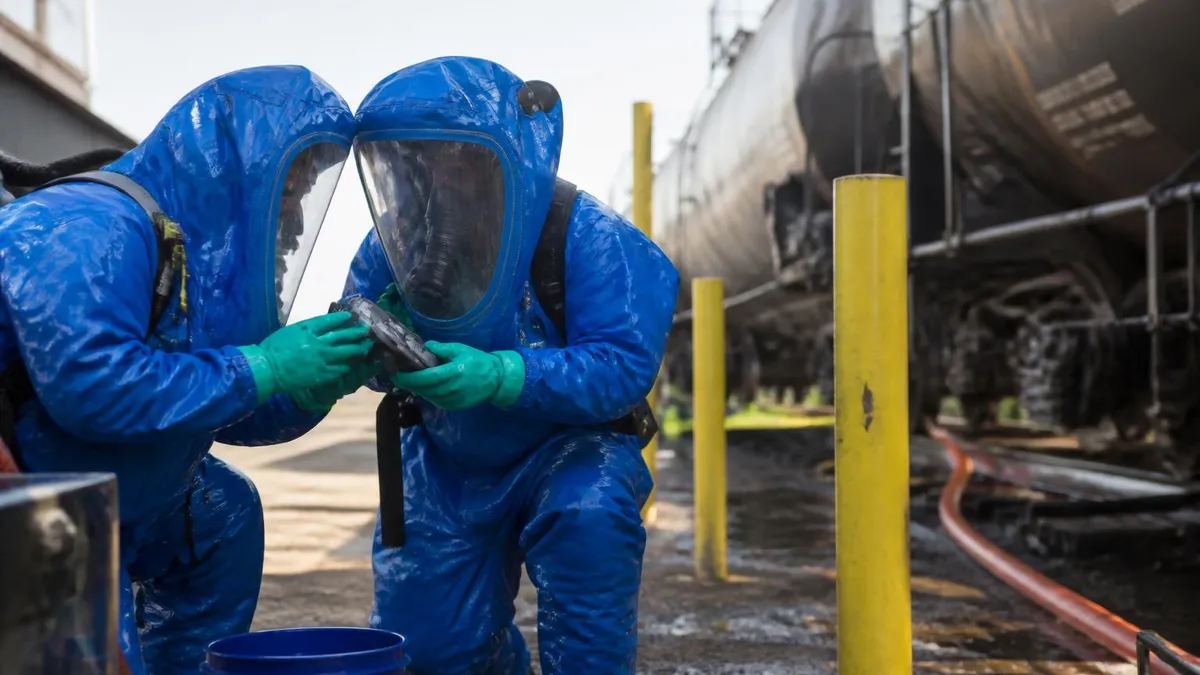
HazMat Classification: Complete Guide to the 9 Hazard Classes for CDL Drivers

HazMat Endorsement Cost: Complete Breakdown of Fees, Training, and TSA Requirements

CDL HazMat Practice Test 2026: Free 30-Question Quiz + Study Guide

Hazmat Endorsement Practice Test — Free Questions & Answers (2026)
About the Author

Educational Psychologist & Academic Test Preparation Expert
Columbia University Teachers CollegeDr. Lisa Patel holds a Doctorate in Education from Columbia University Teachers College and has spent 17 years researching standardized test design and academic assessment. She has developed preparation programs for SAT, ACT, GRE, LSAT, UCAT, and numerous professional licensing exams, helping students of all backgrounds achieve their target scores.
Join the Discussion
Connect with other students preparing for this exam. Share tips, ask questions, and get advice from people who have been there.
View discussion (8 replies)